
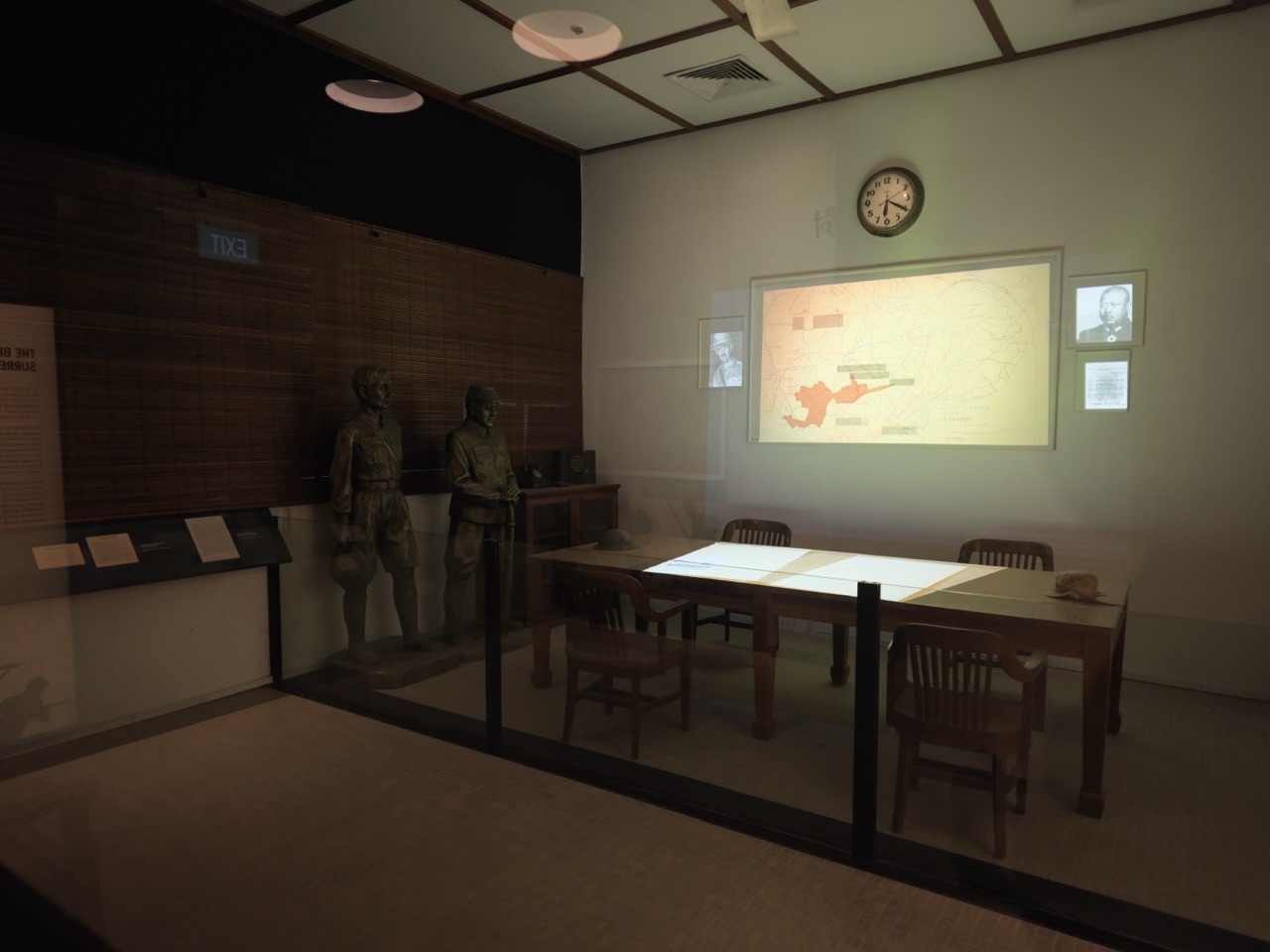
Start your visit to the Former Ford Factory with the Surrender Room, where British forces surrendered to the Imperial Japanese Army on 15 February 1942. Then read the records and personal accounts in the National Archives of Singapore’s exhibition, Surviving the Japanese Occupation: War and its Legacies, to see how the occupation affected people in Singapore.
The exhibition is at 351 Upper Bukit Timah Road. You can make a focused visit around the room, one wartime account and one display about the aftermath. If you have more time, use those stops to frame a fuller reading of the galleries.
- Check the National Archives visitor page for hours, admission and tour arrangements.
- Use the Surrender Room to place the events of 15 February 1942.
- Read at least one personal account alongside a dated record or object.
- Preview the exhibition if you are bringing younger visitors.
Plan your visit
Plan the visit · Read the Surrender Room · Explore wartime accounts
When to visit the Former Ford Factory
The National Archives lists regular opening hours of Tuesday to Sunday, 9am to 5.30pm, with last admission half an hour before closing. Check its current holiday exceptions and admission categories before travelling. The archives also publishes tour information and an online view of the exhibition.

Set your map to the exact building address. Allow time for the approach and entry if you are following a schedule. The gallery opening hours include the full building visit, so someone who arrives near last admission will have less time for the sections they want to read.
Read the separate Hume MRT to Former Ford Factory walking guide
What to look for in the Surrender Room
The room was the factory boardroom. Its significance comes from the surrender that took place there on 15 February 1942. Read the introductory panel, then find the record or footage used by the exhibition to explain the events leading to the meeting. Notice which details come from the record and which come from the exhibition’s explanation.
Ask three concrete questions as you read. What happened here? Who had the authority to make the decision? What does the material on display tell us about the events immediately before it? Keeping those questions together helps you connect the room to the campaign outside it.
If you are looking at furniture, a photograph or a reconstructed arrangement, use its label to identify what you are seeing. A room can be historically important even when individual items have different histories. The date and the description attached to each object are part of the evidence.
Contents · Previous section · Next section
How to read the occupation accounts
The galleries use oral histories, archival records and published material to describe the occupation. Pick one short account and identify the person speaking, the experience they describe and the period they remember. Then look for a record or object nearby that gives context to that experience.
An oral history can tell you how someone remembered daily life, fear or a change to their routine. A dated notice or official record can tell you what a rule said or when it was issued. Putting the two kinds of evidence together gives you a clearer account of the distance between policy and daily experience.

The museum addresses severe wartime violence, including Sook Ching. Adults planning a family visit can preview the operator’s exhibition materials and decide which sections fit the child’s age and questions. Give children room to pause or move on from a display.
Contents · Previous section · Next section
Follow one thread into the aftermath
The surrender marks a turning point. It gives you a date around which to organise what came before and what followed. As you go through the remaining galleries, choose one thread to follow, such as how a family adapted to wartime conditions or how people later recorded and remembered their experiences.
For a short visit, make one clear comparison. Find a record about the surrender and one account of life during the occupation. Describe what each can tell you and what further evidence you would need to answer a question about the other. That takes only a few minutes and gives the visit a clear shape.
For a longer visit, read one account from beginning to end before moving on. Use the online exhibition afterward to revisit a detail you missed. An ordinary question such as ‘When was this account recorded?’ can change how you read a story and the context in which it was preserved.
Contents · Previous section · Common questions
Common questions
Is the Surrender Room at the Former Ford Factory?
Yes. The former boardroom at the site is where the British surrender took place on 15 February 1942. The National Archives includes it in the exhibition.
Is the whole exhibition about the surrender?
The exhibition also covers the Japanese Occupation and its legacies through records, objects and personal accounts.
Is there a way to see the exhibition before visiting?
The National Archives offers an online exhibition and a virtual view. These can help you choose what to focus on in person.
What can students look for on a first visit?
Find the date and setting of the surrender, then read one personal account and one archival item. Use the labels to establish where the evidence came from.