
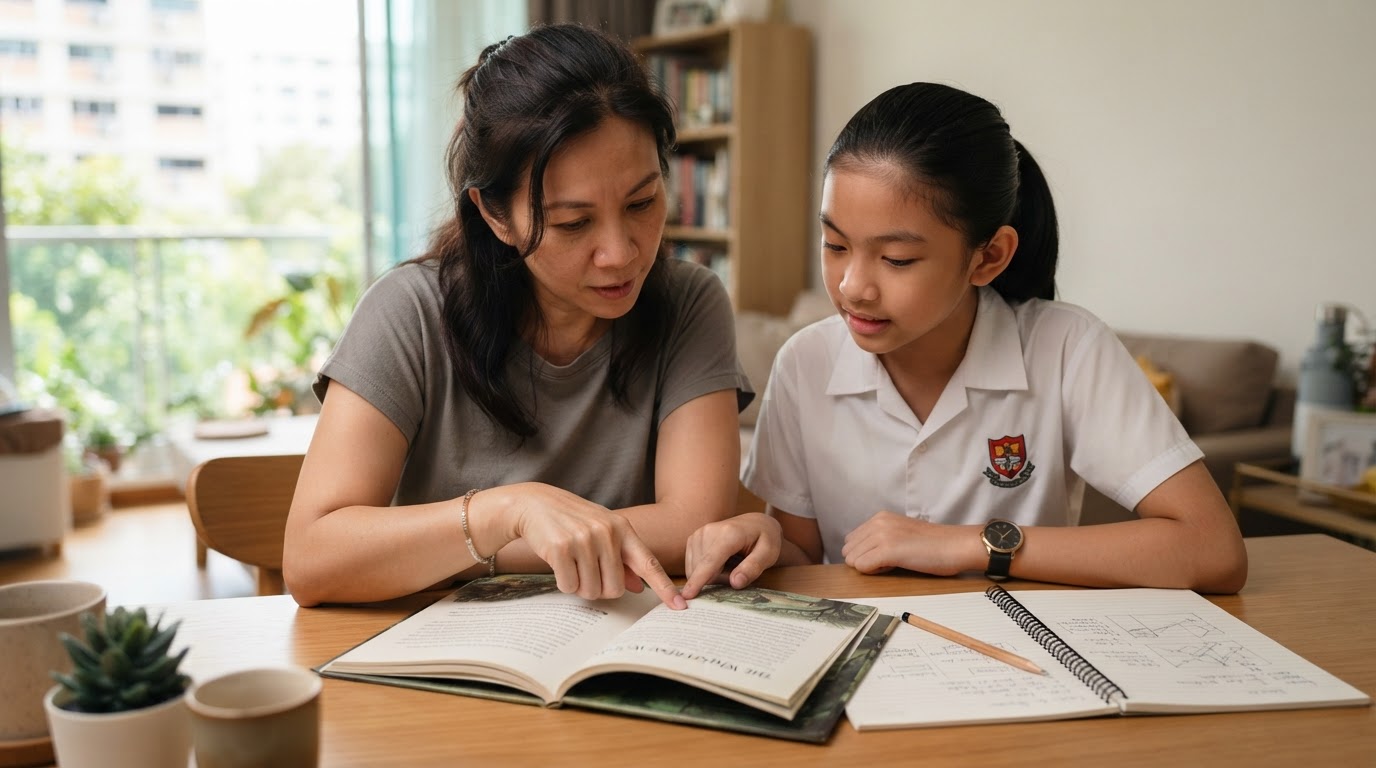
A child who cannot finish compositions on time may need help with planning, idea development or writing fluency. The difficulty does not automatically indicate that G3 English is unsuitable.
Compare untimed and timed independent writing to locate the bottleneck. Practise a manageable planning routine and ask the English teacher for feedback on actual school tasks.
- Identify where time is lost.
- Practise concise planning.
- Build writing fluency gradually.
- Review complete independent drafts.
Understanding PG3 and G3
PSLE Scores 4–20 qualify for PG3, while Scores 21–22 offer a PG2 or PG3 choice. PG3 guides admission and the initial level of most subjects. G3 describes an individual subject level. A historical school cut-off is not a guaranteed admission threshold.
Diagnose the bottleneck
Ask the child to write a short response independently and note whether time is spent choosing ideas, drafting sentences or repeatedly editing. Different bottlenecks require different practice.
Plan before drafting
For a narrative, identify the situation, conflict, response and outcome. For an argumentative task, identify the position and supporting reasons. Match the structure to the question rather than forcing every composition into one template.
Practise in stages
Begin with a brief outline and one coherent paragraph. Progress to a complete response with a reasonable time allowance. Review relevance, development and clarity before increasing speed.
Use school feedback
Check the actual task requirements and marking guidance. Ask the teacher whether incomplete responses reflect planning, language or another difficulty. Avoid memorising entire essays as a substitute for independent writing.
Parent checklist
- Check official eligibility and the correct programme.
- Compare relevant previous-year score ranges.
- Include two or three suitable historically less stringent choices where possible.
- Compare support, travel and subject offerings.
- Rank six acceptable schools in genuine preference order.
Looking ahead to the SEC
The SEC begins in 2027. A child entering Secondary 1 in 2027 will sit the national examination in a later year. Check the applicable examination-year syllabus when published.