
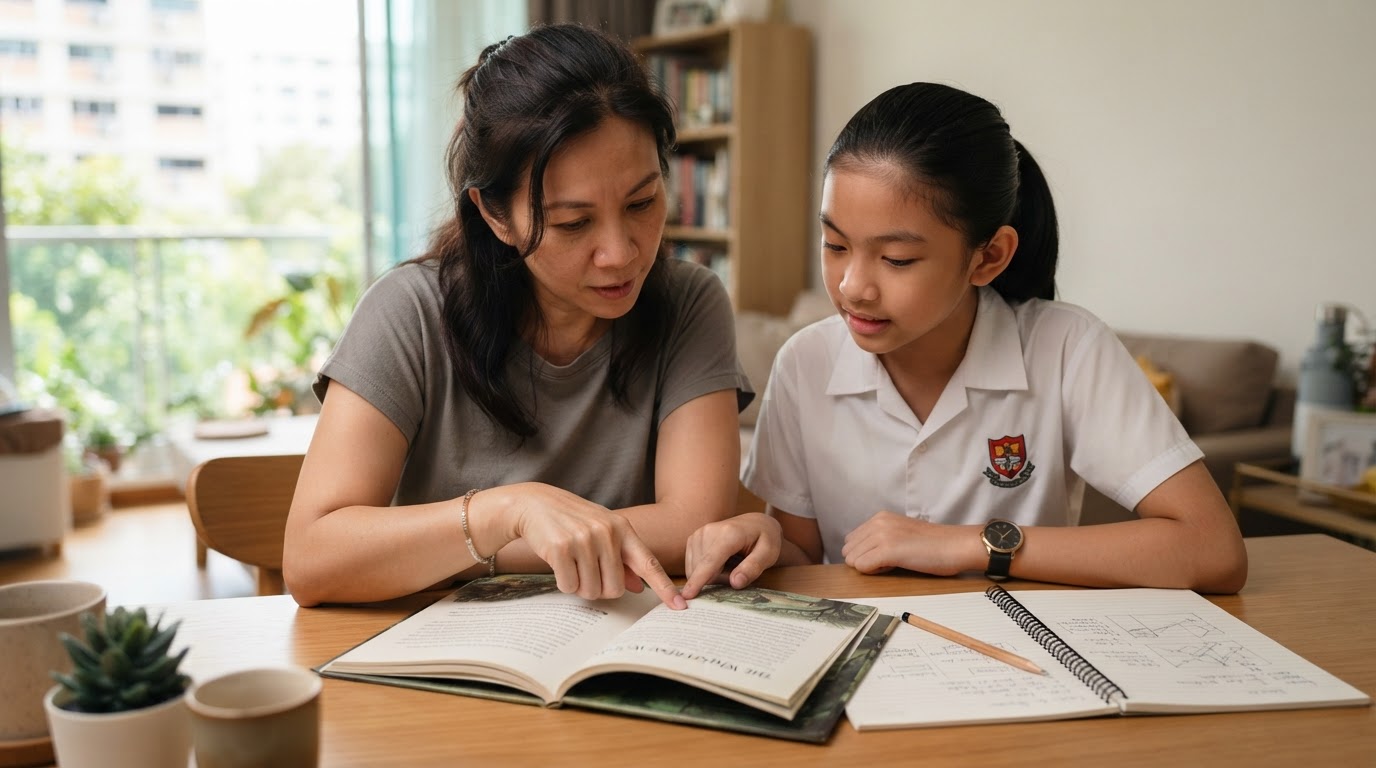
A child does not need to enjoy every novel to develop literary reading skills. Literature involves interpreting language, character, perspective and themes using evidence from texts.
Start with accessible short passages and discuss how particular words shape meaning. Check the school’s lower-secondary curriculum and later Literature subject options rather than assuming every pupil follows the same combination.
- Start with manageable texts.
- Discuss character and perspective.
- Support interpretations with evidence.
- Check actual curriculum requirements.
Understanding PG3 and G3
PSLE Scores 4–20 qualify for PG3, while Scores 21–22 offer a PG2 or PG3 choice. PG3 guides admission and the initial level of most subjects. G3 describes an individual subject level. A historical school cut-off is not a guaranteed admission threshold.
Begin with a short passage
Read a brief scene and ask what the character wants, what prevents them from achieving it and which words reveal their feelings. Encourage the child to explain an interpretation rather than guessing the teacher’s preferred answer.
Examine language
Compare a character who walks into a room with one who creeps into it. Discuss how the verb changes the reader’s impression. Ask for another plausible interpretation supported by context.
Build written reasoning
Use a short paragraph containing an interpretation, relevant textual evidence and an explanation of the connection. Avoid treating this structure as a substitute for thoughtful reading.
Review school feedback
Ask the teacher which reading and writing skills need attention. A historical school COP does not predict a child’s literary interests or achievement.
Parent checklist
- Check official eligibility and the correct programme.
- Compare relevant previous-year score ranges.
- Include two or three suitable historically less stringent choices where possible.
- Compare support, travel and subject offerings.
- Rank six acceptable schools in genuine preference order.
Looking ahead to the SEC
The SEC begins in 2027. A child entering Secondary 1 in 2027 will sit the national examination in a later year. Check the applicable examination-year syllabus when published.