
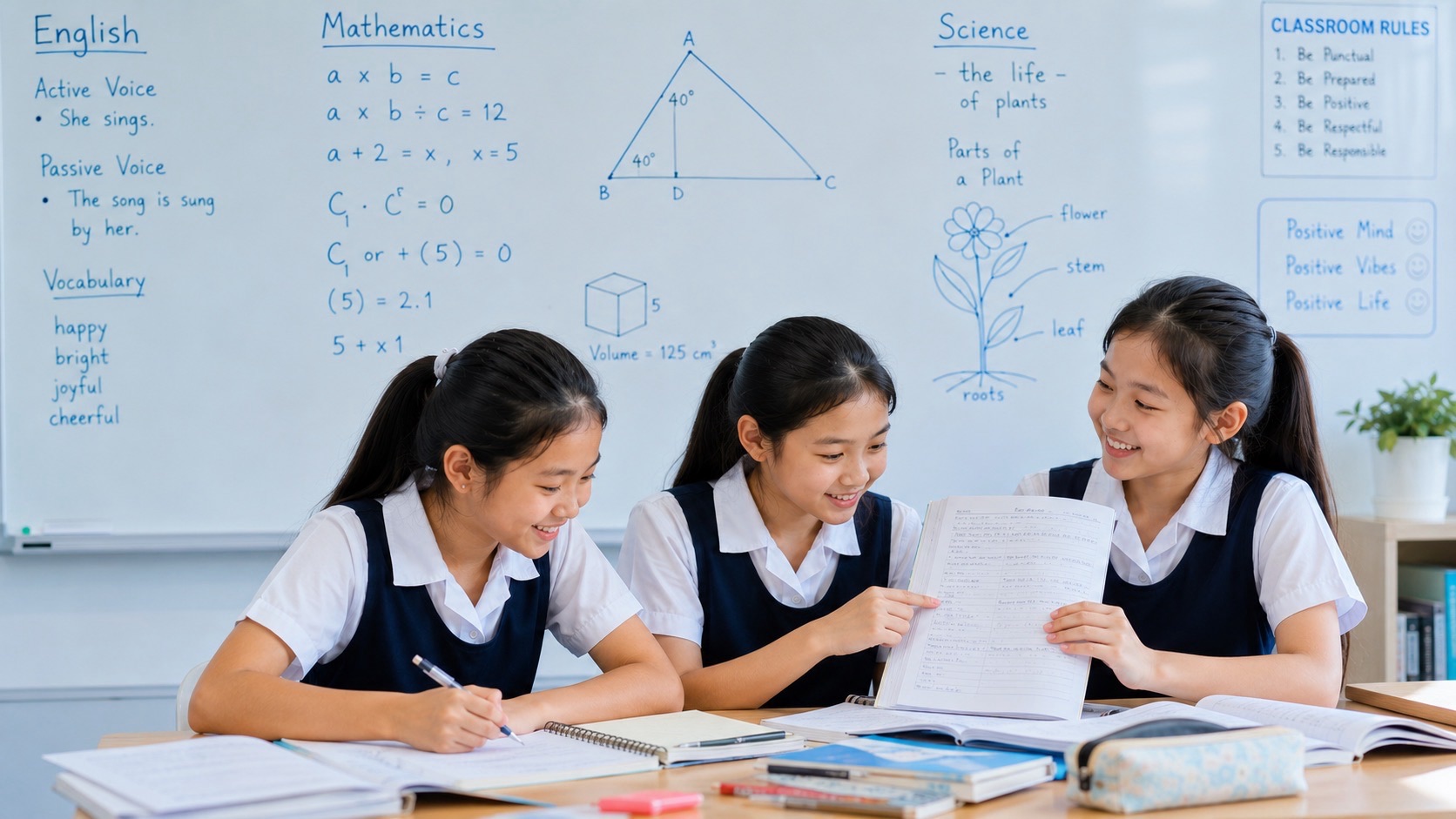
Primary 1 and Primary 2 children learn through games, movement, outdoor exploration and the arts as part of Singapore’s Programme for Active Learning (PAL). The goal is not merely keeping pupils entertained. PAL sits within Character and Citizenship Education (CCE), helping children explore interests, work with others and reflect on experiences. If your child enjoys an activity but struggles to share ideas, take turns or explain what they learned, begin with one specific skill rather than a criticism of their personality.
Tonight, ask what your child tried, what happened when another person had a different idea and what they might change next time. Short reflection and a fresh attempt can make learning visible without turning play into a worksheet. MOE’s Primary CCE syllabus is the curriculum reference, while schools implement PAL through different modules. PAL is not a separate SEAB examination subject.
At a glance
• Scope: PAL for Primary 1–2, part of the CCE curriculum; not a standalone PSLE subject.
• Four activity domains: Sports and Games, Outdoor Education, Visual Arts, Performing Arts.
• Common concern: child enjoys an activity but struggles to share, plan, adapt or reflect.
• First parent step: describe an observed action rather than label the child.
• Teaching sequence: understand → model → participate → reflect → try again in a changed setting.
• Progress signal: one relevant action with less prompting, not a national score.
• Use the child’s actual school programme; module details vary.
‘Latent energy’ here means curiosity and willingness to participate, not a scientific measurement. ‘Syllabus engineering’ means designing a manageable sequence around a teachable need and checking later independence. These are practical eduKate teaching terms, not separate MOE qualifications or a promise of perfect behaviour.

Find the next useful step
Start with finding the exact difficulty, try a shared paper-tower task, use reflection prompts, or follow the four-week family plan. View complete contents.
Article contents
- 1. Why playful activities can be serious learning
- 2. What PAL is—and the curriculum it belongs to
- 3. No PAL PSLE paper or national PAL examination
- 4. What Primary 1 and Primary 2 may need differently
- 5. Find the first point where a group activity becomes difficult
- 6. Worked example: two children plan a paper tower
- 7. A clear instruction is part of the learning design
- 8. Joining a group without forcing an outgoing personality
- 9. Listening to another idea does not mean giving up your own
- 10. Turn-taking is a skill, not a moral label
- 11. Trying again should follow useful feedback
- 12. Sports and Games: fairness, movement and safety
- 13. Outdoor Education: curiosity with boundaries
- 14. Visual Arts: let the child make the visual decision
- 15. Performing Arts: expression does not require a perfect show
- 16. Reflection: show the child what they actually learned
- 17. The difference between confidence and being loud
- 18. When a child becomes upset after losing a game
- 19. Support different bodies, languages and sensory needs
- 20. Why home behaviour and school behaviour can differ
- 21. A short record that is better than a behaviour score
- 22. Four weeks of small, low-pressure PAL learning
- 23. Questions to ask the Primary 1 or 2 teacher
- 24. Does private enrichment help with PAL?
- 25. What changes when the child moves into Primary 3?
- 26. Frequently asked parent questions
- 27. Official sources, linked guides and the next action
1. Why playful activities can be serious learning
Parents may hear that a child played games, moved outside or made a picture and wonder what was taught. An active experience can develop observation, self-expression, cooperation and the ability to try again. The learning is not automatically present in every enjoyable moment; good teaching makes a skill visible and gives pupils opportunities to reflect.
Consider two children who complete the same shared drawing. One quietly follows every adult instruction. The other proposes an idea, listens when a classmate disagrees and adapts the plan. The finished pictures might look similar, yet the children have demonstrated different participation skills. Ask what happened during the activity, not only whether the product looks tidy.
Begin with an ordinary parent question: ‘What did you try, and what did you do when the plan changed?’ Accept a brief explanation, a drawing or a demonstration. If your child cannot recall the experience, do not fill in a story for them. A later small activity can give you an observable opportunity to practise one skill.
2. What PAL is—and the curriculum it belongs to
The Programme for Active Learning (PAL) is part of Singapore’s 2021 Primary Character and Citizenship Education curriculum for Primary 1 and Primary 2. It is a school learning platform, not a separate national subject with its own SEAB code. Corporation Primary School’s PAL explanation describes hands-on experiences and reflection across four activity domains.
Those domains are Sports and Games, Outdoor Education, Visual Arts and Performing Arts. They offer different ways to explore interests and practise social-emotional competencies. A child may express an idea through movement while another makes an artwork or discusses a place. The underlying learning includes confidence, curiosity and cooperation.
Actual school module names, logistics and examples vary. The water-conservation activities described on one school’s page are not compulsory projects for every Singapore school. Parents should use their own school’s current communications and recognise that PAL complements Art, Music, PE and wider CCE rather than replacing those subject syllabuses.
Back to contents · Previous · Next
3. No PAL PSLE paper or national PAL examination
The SEAB 2026 PSLE examination formats do not list a PAL paper. There is no PAL Achievement Level to add to the four PSLE academic subjects. Primary 1 and 2 schools also no longer conduct weighted assessments and examinations, so PAL should not be presented as early preparation for a fictitious national test.
Teachers can still notice and discuss learning: how a pupil tries something new, follows a safe instruction, shares equipment, considers another person or reflects on a group result. These observations help teaching and family conversations. They are not a national character ranking.
Avoid providers offering guaranteed PAL examination grades or compulsory private tuition for a subject that is not separately examined. If a child needs support, the meaningful decision is which observable skill is difficult and whether the school, family or a suitable specialist can provide it.
Back to contents · Previous · Next
4. What Primary 1 and Primary 2 may need differently
A new Primary 1 pupil may still be learning school routines: following a group instruction, recognising a stop signal, waiting for shared materials and asking a new adult for help. These skills are not trivial, and their development varies with familiarity, language, confidence and previous experiences.
By Primary 2, a child may be ready to take more ownership: suggest a plan, explain a choice, negotiate a change or reflect on a group outcome. That is a reasonable progression, not a rule that every P2 pupil should manage the same complex group task independently.
Ask which module your child is taking now and what the teacher wants them to practise. The P1 PAL learning guide and P2 PAL learning guide provide individual level examples. This article concentrates on a cross-level parent problem: making cooperation and reflection visible when an enjoyable activity ends.
Back to contents · Previous · Next
5. Find the first point where a group activity becomes difficult
A child may eagerly begin a task but leave when classmates offer different ideas. Another may want to participate but be unable to find an entry point. A third understands the goal yet struggles with the order of steps. Calling all three ‘poor teamwork’ hides important differences.
Observe whether the child understands the instructions, knows how to request a turn, can explain one idea, can listen without agreeing immediately and can resume after a setback. Do not test everything in the same session. Choose the step most relevant to a recent school observation.
Record assistance honestly. ‘Joined after the adult introduced her’ differs from ‘asked to join independently’. ‘Finished after I assigned every role’ differs from ‘made a fair plan with a partner’. These distinctions allow parents to support growth without attaching a fixed personality label to one moment.
Back to contents · Previous · Next
6. Worked example: two children plan a paper tower
Original optional home activity: Two family members receive a few sheets of scrap paper and are invited to build a tower that can stand on a table without being held. Agree that no staples, sharp tools or unsafe climbing are allowed. This is not an official PAL school challenge.
Before building, ask both participants for an idea. One suggests rolling the paper; the other suggests folding broad bases. An adult can help them test one idea at a time. Notice whether the child offers a choice and responds when the first version falls. A tower that collapses provides information; it is not evidence that the pupil is incapable.
Afterwards, ask ‘What worked?’, ‘Whose idea did we try?’, and ‘What would we change next time?’ A young child may need to point, draw or answer in a few words. Repeat on another day with a different material arrangement and look for a new independent plan, not simply a taller tower.
Back to contents · Previous · Next
7. A clear instruction is part of the learning design
Some group difficulties begin before collaboration. A child cannot cooperate confidently if the task instruction remains unclear. Separate the goal from the constraints: what should the group make or do, which materials are available, where is it safe to work and when should the activity stop?
Use a simple demonstration, then ask the child to explain the next step rather than repeating a long speech. If two instructions are confusing, break them apart. Later return responsibility to the pupil by asking what must happen first and which rule keeps everyone safe.
An adult who supplies every step may produce smooth activity but conceal independent understanding. During teaching, support is useful; during a later check, let the child initiate one step and record what happened. The goal is gradually clearer, more independent participation, not proving that a child never needs help.
Back to contents · Previous · Next
8. Joining a group without forcing an outgoing personality
A quiet child may be interested in joining a game but uncertain how to start. Practise one simple social action with a trusted person: move closer appropriately, wait for a suitable pause, ask politely and listen to the reply. A short sentence such as ‘May I join the next round?’ can be rehearsed without turning it into a performance.
Being invited into a group also depends on other pupils. If classmates refuse or exclude a child repeatedly, adults should not treat the child’s shyness as the only problem. The teacher can examine how group participation is organised and whether clear, fair entry points are provided.
Practise accepting an ordinary ‘not this round’ response while identifying another safe option. Do not teach a child to endure bullying or exclusion silently. The aim is a usable joining skill in a supportive environment, not changing the child’s personality.
Back to contents · Previous · Next
9. Listening to another idea does not mean giving up your own
Young pupils sometimes experience a different suggestion as rejection. Help them separate ‘my idea was not selected’ from ‘I am not wanted’. A group may have several workable plans and still need to choose one for the activity.
Try a simple two-choice conversation: one person wants to draw a garden, the other a playground. Ask what they share, what differs and whether both can contribute. They might make separate areas or agree on a combined scene. The pupil should be able to explain why the chosen plan includes each participant.
Do not demand that one child always surrender because they are quieter. Fair collaboration involves hearing, explaining and sometimes adjusting different ideas. Later change the scenario and see whether the child can offer a respectful reason or compromise without the adult scripting the entire exchange.
Back to contents · Previous · Next
10. Turn-taking is a skill, not a moral label
A child may grab the only marker because they are excited, not because their entire character is selfish. Teach an observable routine: identify the shared item, ask for it, agree on when it will be available and choose another task while waiting. Use language suited to the child’s age and ability.
Original example: Two people need one blue pencil. One uses it to draw water; the other wants it for a sign. Decide whether to take turns, share tasks or choose another colour temporarily. Ask the child how the arrangement affects both people rather than announcing that the fastest person deserves the pencil.
Acknowledge specific actions: ‘You asked before taking it and waited for an answer.’ If the arrangement fails, discuss which instruction was unclear. A repeated difficulty across settings is worth bringing to the teacher for support, but one incident does not establish a lasting trait.
Back to contents · Previous · Next
11. Trying again should follow useful feedback
PAL activities can create a safe opportunity to practise persistence. That does not mean telling a distressed child to try indefinitely. If a paper structure falls, a movement is hard or an idea fails, ask what can be changed and whether the task should become smaller.
Useful feedback identifies an observable cause or a next experiment: ‘The base folded inward when we added the top’ is more useful than ‘You did not try hard enough’. Invite the pupil to propose one change. If they cannot, demonstrate a small adjustment and let them test it.
Stop if an activity becomes unsafe or overwhelming. Resilience can include asking for help, taking an appropriate break and returning when ready. A positive outcome is not always completing the original product; sometimes it is learning to recognise a workable next step.
Back to contents · Previous · Next
12. Sports and Games: fairness, movement and safety
PAL’s Sports and Games experiences can expose pupils to movement, rules and interaction. The focus is broad participation and opportunity, not ranking a Primary 1 pupil against elite athletes. A child might need to learn a start signal, respond to a teammate or move safely in shared space.
Original family task: Pass a soft object gently across a short distance while taking turns. Agree on a stop signal and a simple rule that each participant must have a chance. Change the distance only if it remains safe and comfortable. Ask whether both players knew when to begin.
Children with mobility, coordination or health needs may require adapted activities. The school can advise on inclusive participation and relevant support. Avoid forcing intense exertion, using exercise as punishment or assuming a weak movement skill proves a lack of character.
Back to contents · Previous · Next
13. Outdoor Education: curiosity with boundaries
PAL outdoor learning invites pupils to notice places and develop responsible behaviour. Curiosity is useful when combined with safe instructions. A pupil may notice insects, leaves or paths, but the task should not require handling unknown animals, entering hazardous areas or leaving adult supervision.
Use an optional observation from a familiar safe location, perhaps the view of a tree from a sheltered walkway. Ask what is visible, what the child wonders and how they could learn more reliably. ‘The leaves move in the wind’ is an observation; ‘This must be a particular species’ requires evidence.
Discuss respecting shared spaces and the environment. School programmes may connect outdoor modules to different local themes; one school’s conservation project is not a national PAL assignment. Let the child ask one question and acknowledge when an adult also needs to check the answer.
Back to contents · Previous · Next
14. Visual Arts: let the child make the visual decision
An art-based PAL experience can provide room to explore lines, shapes, materials and expression while practising shared space and cooperation. A parent who draws every important detail for the child may create an impressive picture but remove the child’s opportunity to make choices.
Original activity: Invite the child to create a two-colour picture representing a safe place. Let them choose colours and marks, then ask what part they want the viewer to notice. The answer may be simple. The goal is noticing and expressing an idea, not diagnosing emotions from a drawing.
If two pupils share materials, add a clear request-and-turn routine. Keep art materials age-appropriate and avoid sharp tools or chemical products. For the wider P1–P6 Art curriculum, use the official Art guide rather than treating PAL as a replacement for subject Art learning.
Back to contents · Previous · Next
15. Performing Arts: expression does not require a perfect show
PAL performing-arts activities can use movement, sound, drama or other creative expression according to the school’s programme. A child might be comfortable expressing an idea through a gesture but uncertain about speaking in front of classmates. Help the pupil begin with one accessible form of participation.
Original home prompt: Two people invent a gentle start-and-stop movement to represent a seed growing. Agree on a signal. One person leads, then the other leads. Ask which signal was clear and whether both people had a chance to contribute. This is not an official choreography or music assessment.
Respect privacy, accessibility and sensory comfort. A pupil should not have to perform publicly for relatives to prove progress. A meaningful improvement may be choosing a gesture, following the sequence or explaining the intention with less support.
Back to contents · Previous · Next
16. Reflection: show the child what they actually learned
Young children may reply ‘It was fun’ when asked about PAL. That can be a genuine emotional report and a useful beginning. A second question can make the learning more visible: ‘What did you try?’, ‘What surprised you?’, or ‘What did you do when the other person had a different idea?’
Teach three brief sentence openings: ‘I tried…’, ‘I noticed…’, ‘Next time I would…’. The child might say, ‘I tried to build a tower. It fell when I added a big top. Next time I would make the bottom wider.’ This connects action with evidence and a next decision.
Do not insist on an elaborate written reflection for every P1 child. Drawing, gesture and a short conversation are appropriate entry points. A follow-up activity later lets the pupil apply the chosen improvement, which is stronger evidence than merely repeating a reflection sentence.
Back to contents · Previous · Next
17. The difference between confidence and being loud
A child who speaks first, moves fastest or volunteers often may seem confident, but these actions do not establish that they can listen, cooperate or follow a safe plan. A quieter child may participate thoughtfully when given a clear role and enough time to respond.
Observe whether the pupil can make one choice, ask for help appropriately, try a manageable unfamiliar activity and recover from a small change. Confidence can be situational. One performance in front of an audience should not define the child.
Parents can support a quiet learner by rehearsing a request or choosing an accessible role. For a child who dominates group activity, practise leaving space for another idea. Both are teaching tasks; neither requires a fixed personality label.
Back to contents · Previous · Next
18. When a child becomes upset after losing a game
Losing can be frustrating, particularly when a child is still learning game rules or how to manage a disappointment. First establish safety and acknowledge the immediate emotion without requiring the pupil to pretend the experience was pleasant.
After the child is ready, discuss a specific action: pause, put down equipment safely, use a short phrase such as ‘I want to try again later’ and return to an appropriate activity. Model the response yourself when you make a mistake. Avoid moral lectures while the child is overwhelmed.
Check the game design too. If rules are confusing, turns are unfair or older participants consistently dominate, the child’s response occurs in a difficult environment. Appropriate teaching adjusts both the skill and the conditions. Persistent distress or peer conflict should be discussed with the school.
Back to contents · Previous · Next
19. Support different bodies, languages and sensory needs
PAL is intended to offer broad participation; pupils do not enter Primary 1 with identical movement, language, sensory or social experiences. One child may find noisy games overwhelming; another may follow directions better after a visual demonstration. Adaptations can make the intended learning accessible.
Ask what the essential skill is. If the target is choosing a fair turn, the activity can be practised seated with a shared object. If the target is noticing nature, a safe photo may substitute for an uncomfortable outdoor task where appropriate. The child can still make a meaningful decision.
Do not diagnose developmental or medical conditions from one PAL observation. Where concerns persist or affect daily life, seek the school’s view and appropriate professional guidance. Reasonable support should help the child participate with dignity, not conceal an unmet need under a demand to ‘fit in’.
Back to contents · Previous · Next
20. Why home behaviour and school behaviour can differ
A child may share easily with a sibling yet struggle in a group of unfamiliar classmates. The school setting adds noise, multiple instructions, different turn expectations and peer dynamics. Success at home shows a capability in one setting; it does not automatically mean the same skill is independent everywhere.
Ask the teacher for concrete examples of when participation changes. Can the child request a turn during calm play but not during a competitive game? Can they explain an idea with an adult but not with a peer? These distinctions help identify which situation needs support.
Practise the specific component in a manageable home or school-approved situation, then coordinate a later check in a more similar context. Avoid blaming the child for a skill that has not yet transferred across settings. The aim is to understand what needs to be added, not create a second punishment system.
Back to contents · Previous · Next
21. A short record that is better than a behaviour score
Parents can keep a tiny learning record: date, task, what the pupil attempted, what adult help was given and one next step. ‘Shared materials after a reminder’ is more informative than ‘Good at teamwork: 7/10’. The first phrase describes an action that can be practised.
For a reflection target, write down the child’s exact words, even if they are imperfect. ‘I changed the bottom because the tower fell’ demonstrates a link between observation and decision. ‘It was fun’ tells you about experience but may not yet show the reflective skill.
Do not make every home activity a hidden test or publish records about the child. A few notes that help a conversation with the teacher are enough. Improvement means doing one relevant action with less assistance across appropriate contexts, not collecting a larger pile of evidence.
Back to contents · Previous · Next
22. Four weeks of small, low-pressure PAL learning
This is a suggested home routine for one child and one skill, not a national PAL timetable or a four-week guarantee. Select a practical target from recent school feedback: taking turns, proposing a plan, asking to join, adjusting after a setback or reflecting on what was learned.
Week 1 — Understand: Observe a familiar activity and identify where adult prompts are needed. Week 2 — Model: Rehearse the missing action with a clear demonstration and a simple choice. Week 3 — Transfer: Change the activity, partner or material one feature at a time. Week 4 — Review: Offer a fresh, manageable activity and ask the child to describe one decision without being told what to say.
Keep activities brief and safe; stop when the task no longer serves learning. Celebrate a concrete improvement such as ‘asked to join without a prompt’ rather than a global label. If the child still needs the same help after several varied attempts, discuss the target and classroom conditions with the teacher.
Back to contents · Previous · Next
23. Questions to ask the Primary 1 or 2 teacher
Ask which PAL module the class is exploring and which social-emotional or practical learning outcome matters in that module. A useful reply might be that pupils are learning to share roles or reflect on an attempt. Avoid relying only on photographs of happy activities to infer what was taught.
Bring one specific observation: ‘My child can explain the goal but cannot suggest a turn-taking arrangement unless I propose one.’ Ask whether the same pattern appears at school, what support helps and how to recognise improvement. The teacher may have a different but complementary view.
Discuss adaptations, preparation or participation concerns early. If a child is struggling with bullying, safety or significant distress, do not treat it as a routine PAL skills exercise. Appropriate adult response and school support come first.
Back to contents · Previous · Next
24. Does private enrichment help with PAL?
Optional art, dance, movement or drama classes may suit a child’s interests, but they are not required simply because PAL exists. Enrichment can provide further experiences; it does not replace school CCE or ensure that a pupil will share fairly in every unfamiliar group.
Evaluate a programme through the specific task and support. Does the teacher allow beginners to participate, explain rules clearly, make room for different abilities and offer usable feedback? Is travel, cost and fatigue manageable? Avoid ‘guaranteed leadership’ claims based on a handful of classes.
Families can practise many foundational actions through everyday routines: taking turns choosing a book, planning a safe household task, describing an observation and reflecting on a small adjustment. Ordinary life provides practice without treating the home as a second full-time school.
Back to contents · Previous · Next
25. What changes when the child moves into Primary 3?
PAL is specifically a Primary 1–2 programme within CCE. In Primary 3, pupils continue learning through other curriculum subjects, CCE experiences and school activities; they do not simply stop learning to cooperate, explore or reflect. The named PAL provision should not be described as a Primary 1–6 examination track.
A child who learnt to make a simple plan with a partner can use the same habit in a Science observation, group reading or an Art project later. The details and academic demands become more complex, but clear instructions, fair participation and reflection remain useful.
Parents can discuss this continuity without promising a particular CCA, enrichment placement or examination result. Ask the P3 teacher what is expected in group activities and what support might help the child transfer strengths from lower primary into the new routines.
Back to contents · Previous · Next
26. Frequently asked parent questions
Is PAL the same as playtime? No; its activities are intentionally designed around learning and social-emotional development, though enjoyment is important. Is PAL a PSLE subject? No. Does every school use the same activity names? No, school implementation differs. Do children need to be sporty or artistic? No; the programme provides varied exposure.
What if my child will not share? Check whether the turn arrangement and request language are clear, model the action and observe change. What if my child is shy? Provide a manageable role or joining phrase; quietness is not failure. Should every session produce a worksheet? No; an experience and a short reflection can be worthwhile learning.
Can a child be upset and still learn resilience? Yes, when adults help the child recover safely and choose an appropriate next step. Do I need paid PAL tuition? No. What should I do tonight? Ask one question about a real activity and help the child identify one action they might try differently next time.
Back to contents · Previous · Next
27. Official sources, linked guides and the next action
MOE’s 2021 Primary Character and Citizenship Education Syllabus identifies PAL as a CCE learning platform. Corporation Primary and Ai Tong School describe implementation and the four activity domains; each school’s timetable and specific project choices belong to that school. SEAB’s 2026 PSLE format list confirms there is no standalone PAL examination.
For connected articles, see P1 PAL learning examples, P2 PAL learning examples and the broader Primary CCE parent guide. The tower, group drawing, movement and reflection tasks in this article are original optional home examples, not compulsory MOE activities or official diagnostic tests.
Source check: 26 November 2026. Start with one small question: ‘What did you try today, what happened when someone else had a different idea, and what would you do next time?’ The next learning step comes from the child’s real response. Enjoyment matters, and so does growing independence in decisions that extend beyond a single activity.