
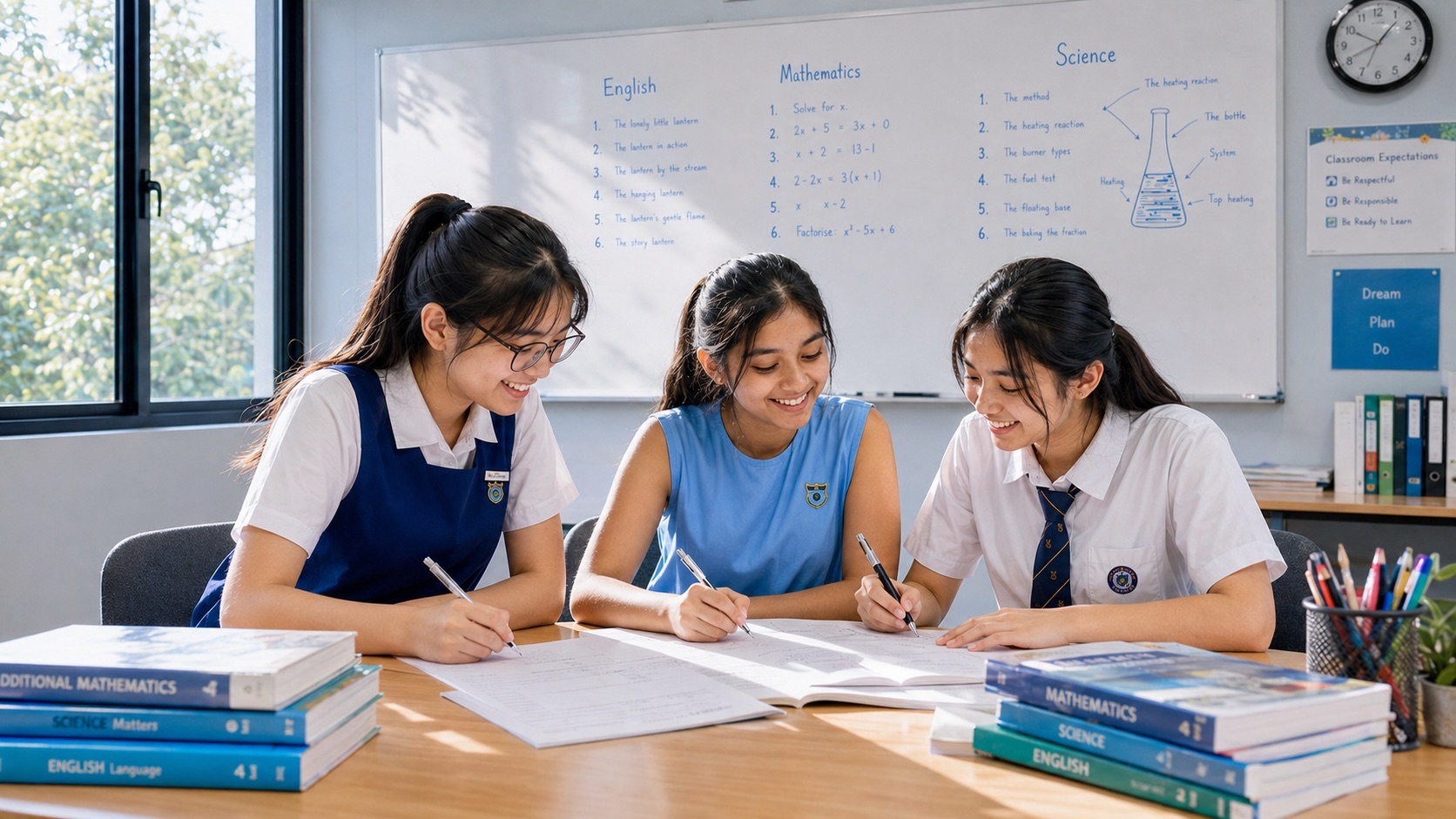
Case 1 — Student Stalls Despite Tuition
Why it matters: Proves Education OS failure signatures (foundation hollowing, transfer collapse, burnout, meaning collapse, talent misalignment) and shows recovery + probes.
Case 2 — School Improves Scores but Real Capability Drops
Why it matters: Proves Governance OS failure (truth decay + incentive inversion / Goodhart) inside education systems.
Case 3 — Company Looks Successful but Is Hollowing Out
Why it matters: Proves extraction lock-in + feedback collapse patterns in institutions.
Case 4 — Maintenance Debt Spiral in Infrastructure / Operations
Why it matters: Proves Production OS entropy win; shows renewal vs expansion trade-off.
Case 5 — Supply Chain Fragility Cascade
Why it matters: Proves Production OS resilience logic; redundancy vs efficiency.
Case 6 — Scarcity Bind and Volatility Spiral
Why it matters: Proves Constraint OS pressure signals and demand shaping recovery.
Case 7 — Late Correction and Time Irreversibility
Why it matters: Proves point-of-no-return curve, and why repair must happen early.
Case 1 — Student Stalls Despite Tuition (Civilisation OS Execution v0.4)
Block 1 — System Boundary
System: One student (Primary/Secondary level) receiving tuition but showing limited improvement.
Included: learning foundations, study habits, motivation, stress load, family schedule, tuition design, school assessment environment.
Excluded: medical diagnosis (unless professionally assessed), major trauma events, unrelated family crises.
Goal: Restore trajectory (capability growth) without burnout.
Block 2 — DLR Scores by OS (0–5)
OS-1 Education OS
- D (Depth): 2/5 — weak foundations; relies on templates; shaky “why” understanding
- L (Load): 4/5 — heavy schedule + emotional pressure; low recovery bandwidth
- R (Repairability): 2/5 — avoids retest; low self-correction; fear/shame loop present
OS-2 Governance OS (micro-governance: school/parents/tuition rules)
- D: 2/5 — rules focus on grades more than capability
- L: 3/5 — expectations high; comparison pressure
- R: 2/5 — feedback often punitive; errors treated as identity threat
OS-3 Production OS (household execution capacity)
- D: 3/5 — resources exist (tuition, materials)
- L: 3/5 — time fragmentation; inconsistent routines
- R: 3/5 — can adjust timetable if guided
OS-4 Constraint OS (time/energy limits)
- D: 3/5 — constraints understood loosely
- L: 4/5 — sleep/time budget tight
- R: 2/5 — little slack; small shocks derail the plan
Dominant problem: High Load + low Repairability causing trajectory stall.
Block 3 — Dominant Collapse Signature(s)
Primary signature: CS-03 Burnout Spiral (Load Overrun)
Secondary signatures (observed patterns):
- CS-01 Foundation Hollowing (brittle competence)
- CS-04 Meaning Collapse (“I’m not good at this”)
- sometimes CS-05 Talent Misalignment (method mismatch)
But we choose one primary to repair first.
Block 4 — Recovery Mode (Exactly One)
✅ RM-03 — Load Pressure Relief Mode
Reason: No foundation repair will stick while the student is overloaded and repairability is collapsing. The first job is to reduce load and restore the ability to retest and self-correct.
Block 5 — OSME-e/t Plan
O — Outcome (4 weeks)
- Student completes a stable weekly learning cycle (study → test → repair) without avoidance.
- Observable improvements in self-correction and consistency.
- No burnout escalation.
S — System Boundary
- Student + parent schedule + tuition method + weekly routines.
M — Mechanism
Load exceeds recovery capacity, causing avoidance and R collapse. Reduce load to restore repair loops.
E — Execution (What changes now)
- Cut scope: choose one subject priority for 4 weeks (or one weakest component inside the subject).
- Restore slack: minimum sleep window protected; remove one optional demand if needed.
- Short cycles: daily 25–40 min focused sessions, not long marathons.
- Error-safe feedback: mistakes are treated as signals, not identity.
- Tuition redesign: tuition becomes repair and retest, not more content.
e/t — Energy over Time Budget
- Energy: low–moderate, consistent (avoid spikes)
- Time: 4 weeks minimum to restore R; then foundations can be rebuilt
Block 6 — Retest Probes + Thresholds (Minimum 3)
Probe 1 (Short-horizon, R)
Self-Correction Frequency (E-R1)
- Pass: student corrects ≥ 5 errors/week without prompting by week 2
- Fail: correction remains near zero
Probe 2 (Mid-horizon, L → stability)
Consistency Rate (E-L2)
- Pass: ≥ 80% of planned sessions executed for 2 consecutive weeks
- Fail: avoidance increases week-to-week
Probe 3 (Long-horizon, Depth/Transfer)
Novel Problem Transfer Rate (E-D2)
- Pass: +15–20% improvement by week 4 on unseen questions
- Fail: flat despite consistency (suggests foundation/talent mismatch next)
Optional safety probe:
Sleep Stability (E-L1)
- Pass: stable sleep window 10/14 days
- Fail: chronic sleep debt continues
Block 7 — Version + Status
Version: Civilisation OS v0.4
Status: Active Repair (RM-03)
Next Retest Date: Week 2 checkpoint, Week 4 decision point
Decision rule at Week 4:
- If R rises and load stabilises → move to RM-01 Foundation Rebuild next run.
- If load stabilises but progress remains low → run RM-05 Talent Alignment next.
- If R remains low → rerun RM-00 Stabilise the Loop (system still unstable).