
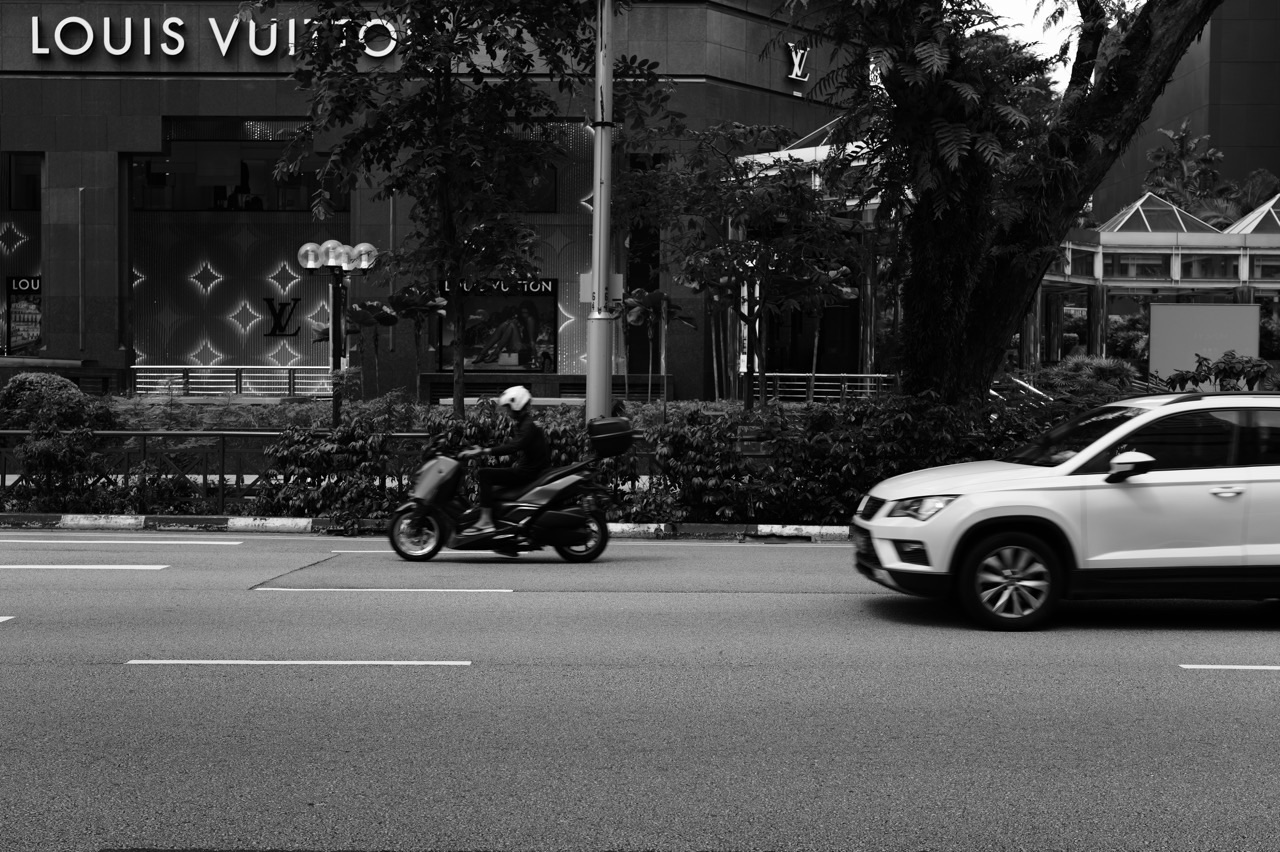
A commerce-and-leisure organ — how a city converts footfall into economic energy, identity, and recovery
Definition Lock
Orchard Road OS: The operating system of a high-density urban commerce district that converts attention + footfall + retail/service capability + place-making into reliable economic throughput and social recovery under hard constraints (rent, competition, crowd flow, changing tastes), using closed-loop control: Attract → Serve → Circulate → Reality Responds → Adapt.
Start Here for Lattice Infrastructure Connectors
- https://edukatesg.com/singapore-city-os/
- https://edukatesg.com/singapore-parliament-house-os/
- https://edukatesg.com/smrt-os/
- https://edukatesg.com/singapore-port-containers-os/
- https://edukatesg.com/changi-airport-os/
- https://edukatesg.com/tan-tock-seng-hospital-os-ttsh-os/
- https://edukatesg.com/bukit-timah-os/
- https://edukatesg.com/bukit-timah-schools-os/
- https://edukatesg.com/bukit-timah-tuition-os/
- https://bukittimahtutor.com
- https://edukatesg.com/punggol-os/
- https://edukatesg.com/tuas-industry-hub-os/
- https://edukatesg.com/shenton-way-banking-finance-hub-os/
- https://edukatesg.com/singapore-museum-smu-arts-school-district-os/
- https://edukatesg.com/orchard-road-shopping-district-os/
- https://edukatesg.com/singapore-integrated-sports-hub-national-stadium-os/
Why a Shopping District Needs an “OS”
A shopping district is not just “shops.”
It is a civilisation organ that performs three underrated functions:
- Economic conversion
It turns time and attention into jobs, wages, and tax base (the city’s operating fuel). - Lifestyle recovery
It provides safe, repeatable leisure and social bonding—one of the ways a high-load city prevents chronic burnout. - Identity and trust
It becomes a shared civic space: a place where people feel the city is coherent, safe, and alive.
If the district collapses, it’s not only “retail decline.”
It signals that the city’s cost structure, consumer rhythm, and service pipelines are drifting.
Orchard Road as a Lattice (not a street)
Orchard works as a lattice because it is a tightly coupled system of lanes:
- malls and anchor tenants
- F&B and hospitality
- entertainment and events
- tourism flows
- logistics and supply delivery
- staffing pipelines (service workforce)
- transport connectors (MRT, buses, taxis, walkability)
- safety/security and public realm management
The district is “alive” when this lattice stays synchronised under load.
The Five Sub-OS Modules (District Loop Stack)
1) Education OS (Service Capability Regeneration)
Retail and hospitality are high-skill in reality:
- customer experience, sales competence
- service recovery under stress
- inventory ops, visual merchandising
- security, crowd control, event support
If staffing pipelines thin, the district’s “service Phase” drops and footfall converts poorly.
2) Governance OS (Rules + Coordination)
A district needs coordination:
- event calendars and crowd routing
- safety standards and incident escalation
- tenant mix strategy and district-level partnerships
- public-space management (cleanliness, security, walkways)
Governance OS is what prevents crowd surges, conflicts, and chaos from eroding trust.
3) Production/Tech OS (Throughput Engine)
The conversion layer:
- point-of-sale systems, payment reliability
- logistics delivery slots and inventory systems
- mall ops systems (AC, escalators, lifts, cleaning)
- digital discovery layers (maps, online-to-offline funnels)
This is where footfall becomes revenue, not just “people walking.”
4) Constraints OS (Reality Boundary)
The non-negotiables:
- rent and cost pressure (what must be earned daily)
- changing consumer preferences and e-commerce pressure
- tourism cycles, currency cycles, macro shocks
- crowd physics (peak seasons, events)
A shopping district dies when constraint pressure rises faster than adaptation and conversion can respond.
5) Adaptation OS (Repositioning + Recovery)
The resilience layer:
- tenant mix evolution (retail → lifestyle → experience)
- event strategies to reshape footfall rhythms
- pricing and leasing adaptations
- redesign of public realm to improve dwell time and circulation
- rapid response to shocks (pandemic-style demand collapse, travel disruption)
Adaptation is the difference between “decline” and reinvention.
What “High Phase” Looks Like for Orchard Road (human terms)
A high-Phase district shows these signatures:
- consistent footfall that converts into healthy tenant economics
- low “dead zones” and good pedestrian circulation
- service quality stays stable during peak load
- the district remains safe, clean, and coherent
- constant refresh without losing identity
- tourism and local demand can substitute for each other when one drops
In short: Orchard stays “alive” as a run, not just a postcard.
How Orchard Road OS plugs into Singapore’s larger OS stack
Orchard is downstream of many organs and also feeds them:
- depends on SMRT + Bus Transport OS for access and footfall rhythms
- depends on Changi Airport OS for tourism inflow (a major coupling input)
- depends on Finance Hub OS (consumer confidence, payments, business financing)
- depends on Town OS (local lifestyle demand and routines)
- feeds Education/Workforce OS through service jobs and training lanes
- feeds the city’s recovery capacity (mental health, leisure, social bonding)
Orchard Road is a “soft” organ with hard effects: it stabilises city energy and trust.
Closing bridge
Civilisation isn’t only maintained by ports, trains, and hospitals. It is also maintained by the everyday systems that keep people stable, bonded, and willing to participate. Orchard Road is one of those organs: a place where the city converts attention into economic fuel and converts leisure into recovery.
Master Spine
https://edukatesg.com/civilisation-os/
https://edukatesg.com/what-is-phase-civilisation-os/
https://edukatesg.com/what-is-drift-civilisation-os/
https://edukatesg.com/what-is-repair-rate-civilisation-os/
https://edukatesg.com/what-are-thresholds-civilisation-os/
https://edukatesg.com/what-is-phase-frequency-civilisation-os/
https://edukatesg.com/what-is-phase-frequency-alignment/
https://edukatesg.com/phase-0-failure/
https://edukatesg.com/phase-1-diagnose-and-recover/
https://edukatesg.com/phase-2-distinction-build/
https://edukatesg.com/phase-3-drift-control/
Block B — Phase Gauge Series (Instrumentation)
Phase Gauge Series (Instrumentation)
https://edukatesg.com/phase-gauge
https://edukatesg.com/phase-gauge-trust-density/
https://edukatesg.com/phase-gauge-repair-capacity/
https://edukatesg.com/phase-gauge-buffer-margin/
https://edukatesg.com/phase-gauge-alignment/
https://edukatesg.com/phase-gauge-coordination-load/
https://edukatesg.com/phase-gauge-drift-rate/
https://edukatesg.com/phase-gauge-phase-frequency/
The Full Stack: Core Kernel + Supporting + Meta-Layers
Core Kernel (5-OS Loop + CDI)
- Mind OS Foundation — stabilises individual cognition (attention, judgement, regulation). Degradation cascades upward (unstable minds → poor Education → misaligned Governance).
- Education OS Capability engine (learn → skill → mastery).
- Governance OS Steering engine (rules → incentives → legitimacy).
- Production OS Reality engine (energy → infrastructure → execution).
- Constraint OS Limits (physics → ecology → resources).
Control: Telemetry & Diagnostics (CDI) Drift metrics (buffers, cascades), repair triggers (e.g., low legitimacy → Governance fix).
Supporting Layers (Phase 1 Expansions)
- Medical OS: Bio-repair for Mind/capability.
- Technology & Infrastructure OS: Amplifies all layers.
- Culture & Language OS: Norms, trust, meaning. •
- Security & Stability OS: Threat protection.
- Planetary & Ecological OS: Biosphere constraints.
- https://edukatesg.com/additional-mathematics-os/
- https://edukatesg.com/secondary-math-os/
- https://edukatesg.com/vocabulary-os/
- https://edukatesg.com/what-regeneration-means-in-civilisation-in-simple-terms/
- https://edukatesg.com/the-root-of-civilisation-why-everything-depends-on-regeneration/