
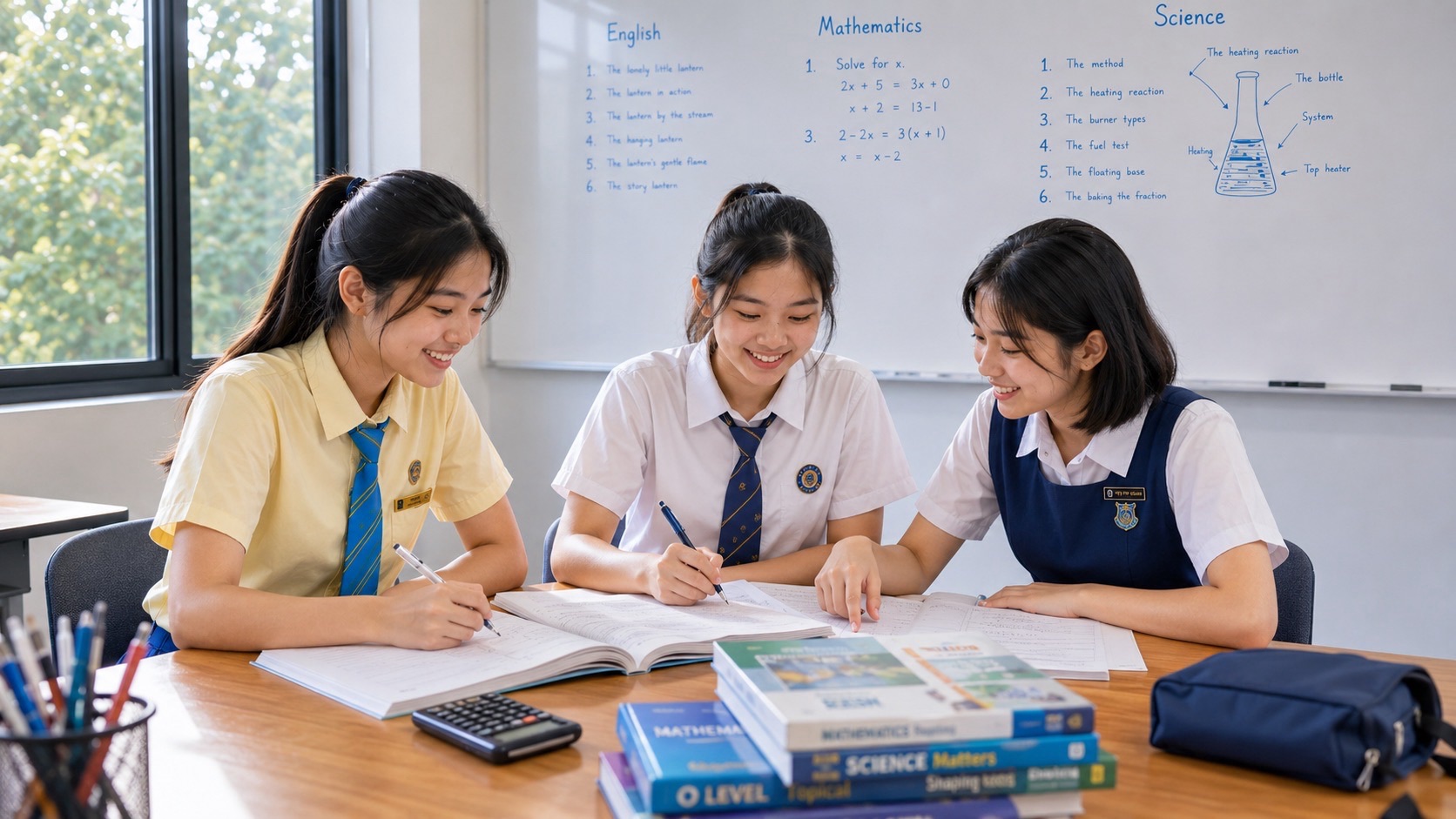
A student’s life in Dover is built from more than school hours. It is the complete sequence of waking, travelling, learning, eating, moving, resting, revising, attending CCA, meeting friends and returning home with enough energy to begin again the next day.
In Dover, Dover MRT, Singapore Polytechnic, nearby schools, one-north, Clementi and the education corridor toward Kent Ridge give students a neighbourhood where formal learning institutions are unusually visible in everyday life.
The neighbourhood matters because place changes the shape of the school day. Every walk, transfer, meal stop, study space and after-school activity consumes real time and attention.
This guide looks at Dover from the student’s point of view: how the day moves, how the week becomes crowded, how study fits around transport and family life, and how a student can gradually become more independent.
A Student’s Life in Dover Begins Before School
The school day begins before the first lesson. A student wakes, checks the timetable, packs the correct materials, eats, leaves home and enters the transport system.
Dover is strongly shaped by education traffic. Students often share the MRT and bus routes with polytechnic and university learners, especially during peak periods. A calm morning depends on allowing enough time for those predictable surges.
A smooth morning gives the student a quieter first lesson. A rushed morning uses attention before school has even begun.
- pack school materials the night before;
- wake early enough that one delay does not become a crisis;
- eat and hydrate before a long school morning;
- know the normal route and one practical alternative;
- arrive with enough time to settle; and
- protect the first useful attention of the day from unnecessary phone distraction.
These habits look ordinary because they are ordinary. Their strength comes from repetition.
Dover as a Learning Environment
Dover feels different from a conventional town centre because large education institutions occupy much of the surrounding landscape. The neighbourhood itself is quieter, while major student activity concentrates around campuses and transport nodes.
Students can reach public libraries in nearby Clementi, Queenstown and Buona Vista-area reading spaces, while school and campus facilities often provide additional study environments.
The Rail Corridor, one-north public spaces and nearby parks give students accessible places for walking and decompression after long periods of concentrated work.
The important distinction is between access and use. A student may live near excellent transport, green space, schools and public facilities, yet still have no stable study routine. Infrastructure creates opportunity. Habits convert opportunity into learning.
The Local Anchors That Shape Student Life
Transport
Dover MRT on the East–West Line is the principal rail anchor, with bus connections toward Clementi, Buona Vista, one-north and Kent Ridge.
Reading and study
Students can use nearby public libraries in Clementi and Queenstown, school or campus study facilities, or a quiet home environment depending on the task.
Movement and recovery
The nearby Rail Corridor and green spaces around one-north and the western education belt provide useful walking routes and recovery opportunities.
Neighbourhood life
Dover itself is less retail-heavy than many town centres. Students often travel to Clementi, Buona Vista or one-north for meals and errands, which makes destination planning more important.
These anchors matter because they give families options. A strong routine is easier to build when different parts of the week have places that match their purpose.
The School Day Is Only the First Half of the Work
For many students, dismissal is not the end of work. It is the beginning of the second half of the day.
There may be CCA, project work, lunch, transport, tuition, homework, revision, family responsibilities and preparation for tomorrow.
The problem is often not laziness. It is fragmentation.
- What must be completed today?
- What can wait until the next planned study block?
- What needs real understanding rather than copying?
- What subject is becoming unstable?
- What small task can be closed quickly?
- What can be removed instead of squeezed in?
A student who can answer these questions is beginning to operate independently.
Transport Time Is Real Time
Dover’s location between Clementi and Buona Vista makes many education destinations easy to reach, but a student can still lose substantial time by making repeated short trips between campuses, meals, tuition and home.
The mistake is to count only the train ride and ignore walking, waiting, transfers and the final journey home. These minutes change how much usable attention remains in the evening.
Not every commute needs to become revision.
- read a few pages when concentration is good;
- review a short set of flashcards;
- check the next task without trying to complete it;
- eat and hydrate before the next activity;
- use the journey as decompression; or
- do nothing academic and allow attention to reset.
A commute becomes useful when the student knows what it is for.
Studying Outside Home
A public library, school study area or quiet public environment can help because it changes the behavioural signal around the student. The space says: this is where focused work happens.
The place matters, but the rules matter more.
- choose the exact subject before sitting down;
- bring only the materials needed for that block;
- set a stopping condition;
- keep the phone out of immediate reach;
- attempt questions before checking answers;
- record repeated errors; and
- leave when the planned work is complete.
The goal is not to stay for the longest time. It is to leave more capable than when the student arrived.
Primary School Life in Dover
A Primary-school student should not live like a miniature examination candidate. The aim is to build dependable foundations while preserving curiosity, reading, movement and ordinary family life.
- daily reading;
- short Mathematics practice with proper correction;
- Science observation connected to real objects and events;
- regular outdoor movement;
- consistent homework habits;
- responsibility for packing school materials;
- a stable bedtime; and
- time to talk about what happened in school.
The long-term direction is increasing independence. A Primary 1 child may need direct supervision. A Primary 6 child should increasingly know what is unfinished, what is difficult and what kind of help is needed.
Upper Primary and PSLE: More Load, Better Control
Primary 5 and Primary 6 often bring more content, more assessment pressure and more family decisions about revision and tuition.
The answer is not automatically more worksheets.
If a student keeps forgetting, the repair may be retrieval. If the student cannot start a problem, the repair may be concept teaching. If the student understands but loses marks, the repair may be accuracy and checking routines.
- Can the student explain the method without looking?
- Can the student identify why an answer was wrong?
- Are corrections revisited later?
- Is revision distributed across the week?
- Is sleep being traded away for low-value work?
PSLE preparation becomes more sustainable when revision is a continuing process rather than a final emergency.
Secondary School Life: Independence Becomes Academic
Secondary school increases both freedom and hidden load. There are more subjects, teachers, deadlines, devices, CCA responsibilities and social decisions.
Students may also take subjects at different G1, G2 or G3 levels under Full Subject-Based Banding. The week therefore contains different subject demands rather than one identical academic lane.
- keep one trusted system for deadlines;
- review lessons before forgetting becomes expensive;
- separate concept errors from execution errors;
- begin assessment preparation before the final week;
- ask teachers specific questions;
- protect CCA and exercise without losing all study capacity; and
- use tuition only when an additional teaching loop has a defined purpose.
Organisation becomes part of academic performance.
Tuition Should Have a Clear Job
Tuition is useful when the family can state what the class is meant to do.
The purpose may be to repair a foundation, keep pace with school, receive more feedback, practise under guidance, rebuild confidence or extend a strong student. These are different needs.
Adding tuition without removing anything else can turn the timetable into a capacity problem.
- define the learning need first;
- choose a class format that can address that need;
- leave time for consolidation after teaching;
- avoid duplicating several programmes with the same purpose; and
- check whether the student is becoming more independent over time.
Good tuition should reduce confusion rather than simply increase activity.
Being Busy Is Not the Same as Learning
A student can work for a long time and still learn very little.
Copying notes, switching between tasks, checking the answer key too early and repeating only comfortable questions can create the appearance of study without much change in capability.
- What can I now do without help?
- What can I now explain?
- What mistake can I now detect?
- What can I retrieve tomorrow?
- What is the next weakness?
These questions turn study into evidence.
Food, Sleep and Recovery
Student life is physical. Attention is affected by hunger, dehydration, sleep, movement and accumulated fatigue.
- regular meals;
- water during the day;
- a short transition after school;
- movement several times a week;
- a realistic stopping time at night;
- protected sleep before school days; and
- lighter recovery after unusually demanding periods.
Recovery is maintenance for the next learning cycle.
Friendships and Belonging in Dover
Students experience a neighbourhood through people as much as through buildings. A familiar route with classmates, a meal after school, a study session or a sports activity can become part of the student’s sense of belonging.
Healthy social connection can support persistence. Constant comparison can drain it.
Parents do not need to control every friendship. They do need to notice when the social environment begins to change sleep, attendance, confidence or willingness to participate.
Phones and the Attention Problem
A smartphone can hold the timetable, class chat, learning documents, games and an endless stream of interruption. Its usefulness is also what makes it difficult to manage.
- turn off unnecessary notifications;
- separate school messaging from entertainment where possible;
- avoid starting homework inside a high-distraction app;
- charge the phone away from the bed if sleep is affected; and
- notice when a five-minute check repeatedly becomes a long diversion.
Attention improves when the environment stops demanding self-control every few seconds.
Exam Season in Dover
During examinations, ordinary places acquire new importance. Libraries become revision anchors. Travel feels more expensive. Quiet tables matter more.
- keep sleep and wake times reasonably consistent;
- retrieve from memory instead of only rereading;
- use timed practice after understanding is secure;
- mark and revisit mistakes;
- alternate demanding and lighter tasks;
- plan travel before the day becomes crowded; and
- avoid making late-night panic the normal revision method.
The final week should sharpen performance rather than exhaust the student.
A Practical Weekly Rhythm
Monday to Thursday
School, CCA on designated days, homework triage, one or two focused study blocks, dinner, preparation for tomorrow and a protected sleep time.
Friday
Close small unfinished loops, organise materials and allow some recovery where possible.
Saturday
Complete one serious academic block early enough that the whole day is not lost to anticipation. Tuition, enrichment or sport can fit here when recovery still exists.
Sunday
Use a shorter consolidation block, reading and preparation for the week. Sunday night should not become the emergency repair shift for everything postponed since Monday.
The principle is rhythm, not rigidity.
What Parents Can Notice Without Micromanaging
- Is the student starting work independently?
- Are the same mistakes repeating?
- Does the student know upcoming deadlines?
- Is travel using more energy than expected?
- Is tuition reducing confusion?
- Is the child sleeping enough?
- Can the student describe one current weakness accurately?
- Is there still time in the week that feels like ordinary life?
These questions reveal more than repeatedly asking only for marks.
Common Failure Patterns and Repairs
The student reaches home and cannot start
Create a short transition ritual—food, shower, rest—then begin with one defined task rather than an entire subject.
The student studies but forgets
Replace some rereading with retrieval. Close the notes and produce the method, definition or explanation from memory.
The student is always behind
Reduce work in progress. Finish the most important current obligations before adding optional work.
The student needs help for every question
Require an honest first attempt and a precise question.
The student is exhausted by the timetable
Treat the week as finite capacity. Remove, shorten or consolidate commitments before demanding better concentration.
The student performs well at home but poorly in tests
Add timed, mixed and closed-book practice so retrieval becomes reliable under assessment conditions.
What Progress Should Look Like
- the student starts with less resistance;
- materials are easier to find;
- questions become more specific;
- mistakes are corrected with less drama;
- revision begins earlier;
- travel and tuition are planned rather than improvised;
- sleep becomes more regular;
- the student can explain current priorities; and
- results become more stable because the process is more stable.
The strongest sign of progress is increasing independence.
Frequently Asked Questions
Is Dover a good place for students?
Yes. Dover is unusually well placed for students because of its MRT access and proximity to major education institutions, Clementi, one-north and Kent Ridge.
Where can students study outside home in Dover?
Students can use school or campus study facilities and nearby public libraries in Clementi or Queenstown depending on the task and travel time.
Should students revise during the commute?
Sometimes. A short review can be useful, but recovery may be more valuable after a demanding school day.
How much tuition is too much?
It becomes too much when extra classes remove sleep, independent practice, recovery or the ability to consolidate what was taught.
What should Primary students focus on?
Reading, numerical fluency, clear language, curiosity, consistent homework habits and increasing responsibility for school preparation.
What changes in Secondary school?
There are more subjects, deadlines, teachers, CCA demands and independent decisions. Organisation becomes part of academic performance.
How early should examination revision begin?
Revision should begin while teaching is still happening. Small retrieval and correction cycles across the term are more reliable than rebuilding everything at the end.
Is a library automatically better than home?
No. The best place is the one where the student can follow a clear plan with fewer distractions.
What if the student says they are tired all the time?
Look at the whole week: sleep, travel, CCA, homework, tuition, meals and late-night screen use.
What is the goal of a healthy student life?
To build a student who can learn, recover, make decisions, ask for help and manage increasing responsibility without making the week permanently unsustainable.
Helpful Reading for Students and Parents
- Education Hub | eduKateSG
- How School Works | School Life Explained Through One Ordinary Day
- Stages of Mathematical Learning in a Student’s Life
- National Library Board | Public Libraries
- Ministry of Education Singapore
A Student’s Life in Dover
A student’s life is not one lesson. It is the route between lessons.
It is the morning before school, the journey home, the hour after CCA, the decision to start homework, the correction after a mistake, the quiet reading block, the conversation with a parent and the sleep that makes tomorrow possible.
In Dover, the defining student lesson is learning among learners. The area is saturated with education, but strong student life still depends on personal routine rather than the number of institutions nearby.
The neighbourhood can provide transport, public spaces, food and community. The student still has to learn how to use them.
That is part of education too.
Speak With eduKateSG
If your child needs help with English, Mathematics, Science or Additional Mathematics, begin with the student’s current school level, recent work, learning gaps and weekly capacity. The aim is to add the right support without making the whole system heavier.
Arrange a parent–student consultation with eduKate Singapore
Chat with eduKateSG on WhatsApp
Properly taught kids shine a bright light into the future.