
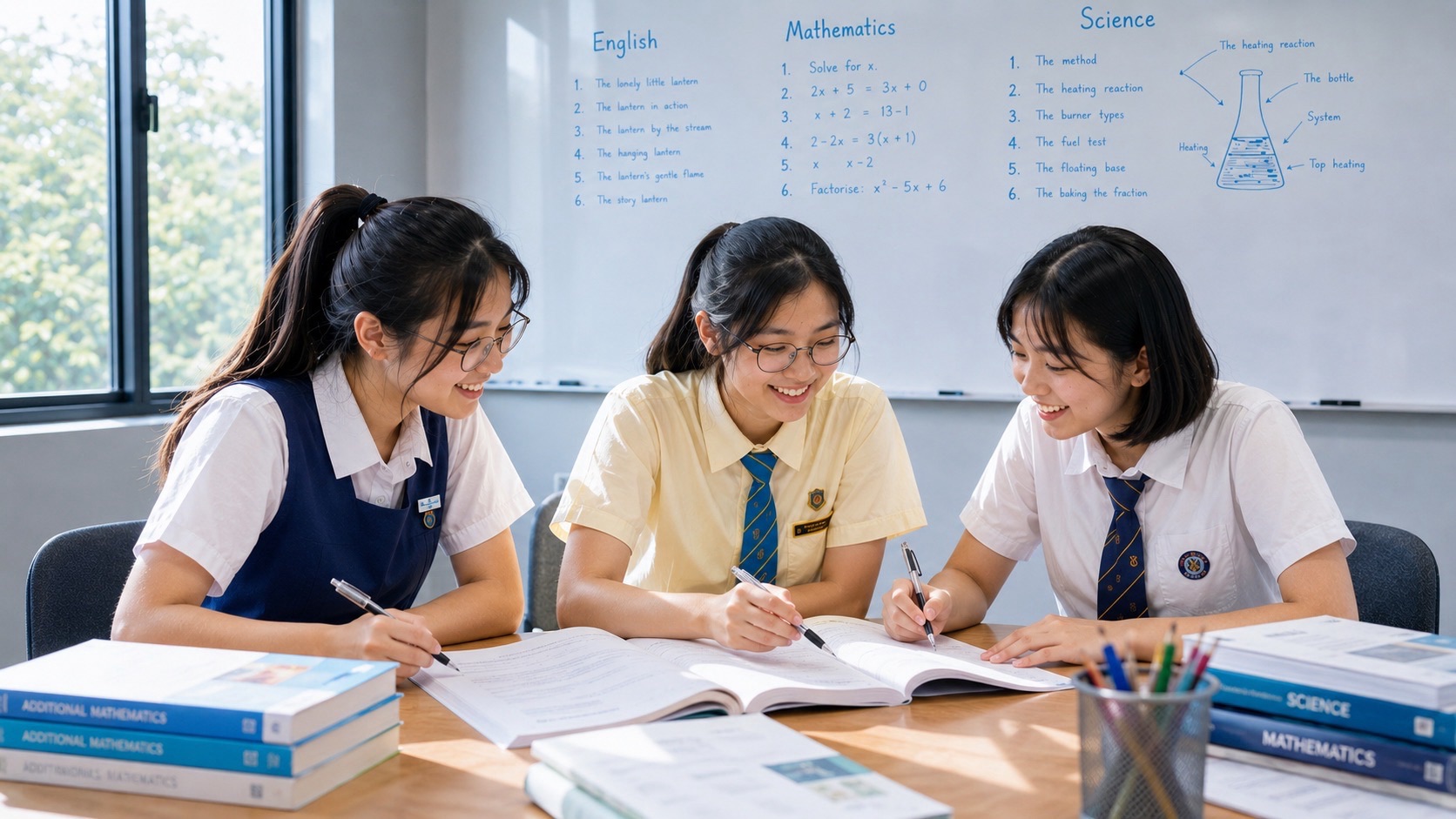
A student’s life through Pesta Ubin is a lesson in participatory learning. NParks describes Pesta Ubin as a yearly four-week celebration in which Pulau Ubin volunteers and stakeholders organise activities that help the public learn about the island’s nature, culture and community.
The programme matters educationally because people do not merely receive information. Volunteers guide, explain, organise and share.
For students, that creates a useful model: knowledge becomes stronger when it can be communicated, tested in conversation and connected to a wider community of practice.
This guide uses Pesta Ubin to explore how participation, explanation and collaboration can deepen school learning without replacing the need for individual mastery.
Pesta Ubin Learning Spine
- Identify the central learning principle: knowledge deepens when learners participate, explain, collaborate and contribute rather than only receive.
- Use the operating lens: learn, contribute, explain, listen, compare and improve.
- Separate direct evidence from inference.
- Translate the principle into one visible student behaviour.
- Check the behaviour through independent performance and correction.
Pesta Ubin’s Student Lesson: Participation Changes Learning
Listening is useful, but learning becomes more demanding when the student must contribute.
A learner who has to explain a concept, compare two methods or help a peer locate an error discovers whether the idea is actually organised in memory.
Participation creates output, and output creates evidence.
What NParks Says About Pesta Ubin
NParks’ Pesta Ubin & Ubin Day page describes Pesta Ubin as a yearly celebration involving volunteers and stakeholders on Pulau Ubin.
NParks says the festival has run since 2017 as a four-week programme with activities organised for and by the community, including nature and cultural experiences.
For students, the valuable educational feature is participation: knowledge is activated through doing, explaining and engaging with other people.
Teach Back What You Learned
After studying a concept, explain it aloud to an imaginary younger student. Do not read the notes.
Where the explanation becomes vague, stop and identify the missing link. Then repair it and explain again.
Teach-back is not performance. It is a retrieval test with immediate diagnostic value.
A Mathematics Example: Explain Why, Not Only How
A student may remember a procedure without understanding the relationship underneath it.
Ask the student to explain why the same operation is performed on both sides of an equation, why a negative sign changes an expression or why a formula fits the shape.
Explanation exposes whether the method is connected to structure or merely memorised as a sequence.
A Reading Example: Compare Voices
When several sources discuss one event, do not merge them immediately. Identify who is speaking, what evidence each source uses and where their emphases differ.
Then build a synthesis that preserves meaningful disagreement.
Community knowledge is richest when multiple voices can be heard without pretending they are identical.
Use Peer Learning Without Outsourcing Thinking
Group work becomes weak when one student supplies the answer and everyone else copies it.
A stronger structure assigns each learner a thinking job: explain a step, challenge an assumption, verify evidence or produce an alternative method.
Collaboration should increase the amount of thinking in the room, not concentrate it in one person.
Build an Audience for Writing
A student who writes only for marks may focus narrowly on what the teacher expects.
Occasionally ask the student to write for a younger sibling, a classmate or a parent who does not know the topic.
The change of audience forces clearer definitions, better sequencing and fewer hidden assumptions.
Contribution Creates Ownership
When students help create a revision map, question bank, glossary or worked-example set, they become contributors to the learning system.
Contribution should not replace expert teaching, but it can increase ownership because the student must decide what deserves inclusion and how it should be explained.
The act of organising knowledge is itself a form of learning.
A Student’s Life Is a Whole System
A school timetable shows lessons and activities, but not the whole student day. The complete system includes waking, meals, travel, school, CCA, messages, family responsibilities, homework, reading, tuition, revision, recovery and sleep. Pesta Ubin gives us a useful way to think about that whole system because a community programme becomes richer when many people contribute different knowledge, activities and perspectives around a shared purpose.
When adults plan only the visible academic blocks, hidden transitions still consume time and attention. A student may technically have several free hours and still possess much less usable concentration once travel, meals, preparation and recovery are counted.
A realistic plan begins with the capacity that actually exists. The purpose is not to fill every gap. The purpose is to preserve enough attention for difficult work, correction, retrieval and rest to happen repeatedly.
Students become more independent when they can see these trade-offs themselves. A full calendar can look impressive while producing weak learning if the student never has enough uninterrupted attention to think.
A Prepared Morning Begins the Night Before
Morning organisation protects attention. Searching for a missing worksheet, discovering an uncharged device or remembering a deadline during breakfast spends mental energy before the first lesson begins.
A short evening close should reduce tomorrow’s friction: check the timetable, pack required materials, charge devices, record special instructions and identify the first after-school priority.
The long-term goal is decreasing dependence on adult reminders. A Primary student may need a visible checklist. A Secondary student should increasingly operate the checklist, notice where it fails and improve it.
After School: Recover, Prioritise, Define
The first decision after school is recovery. Food, water, a shower, a short walk or a few quiet minutes may be useful. Recovery should solve a real need rather than become an undefined delay.
The second decision is priority. Which task would suffer most if pushed later? Difficult Mathematics, writing or a new Science concept may deserve fresher attention than routine filing.
The third decision is definition. “Study English” is vague. “Rewrite the introduction using the teacher’s comment and one stronger example” is visible enough to begin.
Recover, prioritise and define. These three moves organise an afternoon without turning the student into a productivity machine.
Available Time Is Not the Same as Study Time
Suppose a student has 180 minutes before the next fixed commitment. Food and washing use 40 minutes, preparation uses 30 and recovery uses 20. Ninety minutes remain. This is an illustration, not a local travel-time estimate.
Plan with the ninety minutes, not the original 180. One demanding forty-five-minute block, a short pause and a correction block can produce more learning than opening three subjects and completing none properly.
Realistic planning protects confidence because the student measures success against time and attention that actually existed.
Use the Place as a Thinking Lens
Pesta Ubin is not included here as decoration. Its educational value comes from a specific reasoning idea: knowledge deepens when learners participate, explain, collaborate and contribute rather than only receive. The place becomes useful when that idea improves how a student reads, solves, writes, revises or evaluates evidence.
A locality should never be forced into every subject. The stronger approach is to extract a defensible learning principle and test whether that principle transfers. If it does, the place becomes a genuine educational model.
For this guide, the working lens is: learn, contribute, explain, listen, compare and improve.
Primary School Life: Build Foundations Without Overloading the Child
Primary students need academic consistency, but also reading, movement, conversation, play and sleep. These are part of development.
Daily reading should be ordinary enough to survive busy weeks. Mathematics practice should emphasise accurate thinking. Science should remain connected to curiosity, but curiosity should lead toward evidence rather than unsupported certainty.
Responsibility should grow too. Packing the school bag, starting homework and checking a planner are small acts that prepare the child for heavier academic demands later.
Upper Primary and PSLE: Four Jobs, Not One
Completion
Finish assigned work properly so there is evidence to inspect. Incomplete work hides the point at which understanding failed.
Repair
Find the first wrong step or missing concept and correct the cause. Repair is different from merely copying the correct answer.
Review
Return after a delay and retrieve the knowledge without the original source. The delay forces memory to reconstruct the idea.
Transfer
Use the idea in a changed context to test whether it remains usable. A method that works only on the original worksheet is not yet secure.
A strong PSLE year repeats all four jobs. More worksheets alone cannot replace repair, retrieval or transfer.
Secondary School Life: Make the Next Action Visible
Secondary students manage more subjects, teachers, deadlines, CCA commitments and digital messages. A weekly plan should show deadlines and major commitments. A daily plan should show executable actions.
“Revise Chemistry” is a category. “Redo the two ionic-equation questions that were wrong and explain the first error beside each one” is an action.
When the next action is visible, starting becomes easier. When the student must stop, write the restart point before closing the book.
Reading: Build Language Through Daily Contact
Reading develops vocabulary, sentence familiarity, background knowledge and comprehension. A useful reading habit has three layers: understand what the text says, notice how the language works and retrieve one or two ideas after the text is closed.
For fiction, ask what changed and why. For non-fiction, ask what claim was made, what evidence supported it and what remained uncertain.
The Pesta Ubin lens asks what each voice contributes to the whole. In a multi-source text, students should compare perspectives rather than flatten them into one undifferentiated summary.
Writing: Structure Before Decoration
Students sometimes polish individual sentences before the argument or story has a clear structure. A stronger process identifies the purpose of the paragraph, the evidence or event that belongs there, and how it connects to what follows.
Once the structure is sound, vocabulary and sentence-level refinement become more useful. Good writing is not the accumulation of impressive sentences. It is a sequence of sentences doing the correct jobs.
Writing improves when the student imagines a real audience. A clear explanation should allow another person to follow the idea without sharing the writer’s private assumptions.
Mathematics: Repair the First Wrong Step
Consider 3(4x + 2) = 54. If a student writes 12x + 2 = 54, the first error is incomplete expansion. The correct expansion is 12x + 6 = 54. Therefore 12x = 48 and x = 4.
Checking by substitution gives 3(4 × 4 + 2) = 54. Mathematics trains evidence discipline because every conclusion should remain traceable to operations that support it.
The Mathematics connection is explanation as a test of understanding. If the student can show why a method works to another learner, hidden gaps often become visible.
Mathematics Checking Should Be Specific
“Check your work” is too broad to become a reliable habit. Use checks matched to the task: substitute the value back into the equation, verify units, estimate whether the magnitude is sensible, or redo one calculation independently.
A specific check is easier to remember and more likely to catch the relevant error. Over time, the appropriate check should become part of the method rather than an optional extra.
Science: Observation Is the Start, Not the Conclusion
Observation can begin a question. It cannot automatically establish a broad conclusion. Students should ask what evidence would be needed, what variables might matter and which reliable source could confirm a factual claim.
Science develops through shared methods, recorded evidence and reproducible explanation. Collaboration is useful when each observation remains traceable and disagreements lead back to evidence.
The sequence—observe, question, test, verify—matters because a vivid example can still mislead when the sample is too small or important variables are uncontrolled.
Humanities: Put Evidence in Time and Context
History and geography become stronger when students distinguish a place, a source, a process and an interpretation. A source can support one claim without supporting every possible claim.
Community events remind humanities students that heritage is carried through people, practices, memory and institutions. Multiple voices can enrich the record while still requiring careful source evaluation.
A strong humanities answer identifies what is directly supported, what is inferred and what would require another source.
Homework Should Produce Information
Homework is diagnostic evidence, not only a submission task. After completing it, classify the work: secure, uncertain or wrong. Secure work moves into spaced review. Uncertain work needs a targeted question. Wrong work needs repair.
Parents do not need to mark everything. Tutors do not need to reteach everything. Errors simply need to remain visible long enough to become useful information.
A smaller set of inspected questions often teaches more than a large worksheet completed and forgotten.
Use an Error Log to Remove Repeated Weaknesses
An error log should not become a museum of wrong answers. Its purpose is to reveal patterns. For each useful error, record the question type, the first wrong step, the reason and the corrected principle.
Then attempt a fresh example after a delay. If the error was conceptual, speed practice is unlikely to help. If it was careless, build a checking routine. If the instruction was misread, repair comprehension first.
Over time, the log should become shorter because recurring categories disappear.
Spaced Review: Return Before the Knowledge Disappears
A topic should not vanish after homework and return only before the examination. Bring important knowledge back after one day, later in the week and later again inside mixed review.
The delay forces memory to reconstruct the idea instead of leaning on recent exposure. Spaced review also exposes fragile knowledge earlier, while there is still time to repair it.
Mixed Practice: Recognise the Method Before Using It
Blocked practice gives away the method because every question looks similar. Mixed practice places different question types together so the student must recognise the structure before choosing the procedure.
This is closer to examination conditions, but mixing is most useful after individual methods are stable enough to choose between. The goal is flexible recognition, not random difficulty.
Tuition Should Have a Defined Job
Tuition should solve a specific learning problem: clearer explanation, close inspection of written work, repair of an earlier skill, guided practice with unfamiliar questions or a structured route toward independence.
The eduKateSG Secondary 1 Mathematics small-group guide describes movement from explanation to guided practice, independent application and correction. That sequence is useful beyond Mathematics because it turns support into capability rather than dependency.
A tuition lesson that creates more worksheets but leaves the original misconception untouched may increase workload without increasing capability.
Families should also count travel, recovery and independent practice required after tuition. The lesson is only one part of the learning cycle.
CCA, Enrichment and Tuition Share One Weekly Capacity
A valuable activity can still overload the week when combined with several other valuable activities. Count preparation, travel, the activity, return travel and recovery.
Leave enough open time for independent practice and sleep. A sustainable schedule protects the capacity required for learning to consolidate.
Phones: Convert Messages Into Closed Actions
Read the required school message, extract the deadline or action, record it, download what is needed, close unrelated conversations and return to the current task.
The objective is not to eliminate the phone. It is to stop useful communication from becoming endless partial attention.
Food, Movement and Sleep Are Academic Infrastructure
Hunger, dehydration and sleep debt can reduce attention and emotional regulation. Movement can help create a clean transition after a long school day.
These basics do not replace good teaching, but they influence how well teaching can be used. Late-night rescue should remain exceptional rather than becoming the normal study strategy.
The Parent–Student Weekly Review
Once a week, ask what improved, what repeated, what deadline is approaching and where the week felt overloaded. The conversation should produce one or two adjustments, not a long lecture.
Parents can see patterns across days; students can explain what the work feels like from inside the system. The direction should be increasing student ownership.
Exam Weeks: Reduce Novelty, Protect Reliability
As examinations approach, students often add new resources because more material feels safer. Too much novelty can create another learning burden.
Use known materials well: retrieve, attempt under time, correct and repeat. Prioritise weaknesses that are important and realistically repairable, while protecting sleep.
School Holidays: Repair Before Acceleration
Holidays are useful for repair because daily deadline pressure is lower. Identify a few high-leverage foundations and stabilise them before accelerating into new chapters.
Then extend with reading, mixed practice or ahead-of-school material if the base is secure. Leave enough genuine recovery that the student returns with usable attention.
Learning Independence Is Built in Layers
Independence begins with small responsibilities: bringing the correct file, recording a deadline and starting a known task. It develops into academic decisions: choosing what to repair, recognising when help is needed and sequencing the work.
Adults should transfer one responsibility at a time and check whether the student can carry it reliably. The goal is not a student who never needs help. It is a student who can identify the kind of help needed and use it effectively.
Protect the Restart Point
Long assignments and busy weeks create interruptions. Before stopping, write the exact next action.
“Continue project” is vague. “Compare the two sources and draft the paragraph explaining the main difference” is a restart point. This small habit preserves momentum and makes later work easier to begin.
Use Help Precisely
A useful question identifies the point of failure. “I do not understand” is broad. “I can set up the equation, but I do not know why the second term changes sign” gives the teacher a repair point.
After receiving help, attempt a fresh example independently. Support becomes powerful when it creates a bridge back to independent thinking.
Protect Ordinary Days
Academic systems are built on ordinary school days, not only in examination season. A student who can begin a focused block reliably on a normal Tuesday has a stronger base than one who works intensely only when anxiety becomes high.
Ordinary days are where reading accumulates, errors are repaired early and materials stay organised.
Decision Rules for Busy Evenings
When the evening becomes overloaded, protect genuinely due work first. Then protect the task needing the strongest attention. Then close the small preparation loops that prevent tomorrow-morning problems.
Everything else can be rescheduled deliberately rather than disappearing through indecision.
Measure Capability, Not Activity
A student can spend many hours arranging notes, opening resources and attending lessons without changing the capability that matters.
Ask what can now be done independently that could not be done before. Activity is useful only when it produces stronger capability.
A 30-Day Improvement Cycle
Week 1: Observe
Track one recurring academic weakness and one routine weakness. Use the Pesta Ubin lens—learn, contribute, explain, listen, compare and improve—to describe the pattern without rushing to a solution.
Week 2: Repair
Choose one intervention for each weakness. Make the intervention specific enough to test: a worked-example sequence, a checking routine, a new start cue or a shorter evening plan.
Week 3: Retrieve and Transfer
Return to the repaired idea after a delay, then use it in a different-looking task. If the student succeeds only on the original exercise, the repair is not yet stable.
Week 4: Review the System
Ask what became easier, what still repeats and which routine deserves to continue. Keep the useful change; remove any process that creates administration without improving learning.
Ten Questions Students Can Ask Themselves
- What exactly am I trying to be able to do?
- What is the first step I cannot perform reliably?
- What evidence shows that this method works?
- Can I explain the idea without looking at the source?
- Can I recognise the idea when the question looks different?
- What check matches this kind of task?
- What is my next visible action?
- What will I do if I get stuck?
- What can I postpone without creating a new problem?
- What can I now do independently that I could not do before?
Frequently Asked Questions
Why use Pesta Ubin in an education article?
Because Pesta Ubin carries a defensible learning principle rather than merely a decorative local reference. Its central lesson—knowledge deepens when learners participate, explain, collaborate and contribute rather than only receive—can be transferred into schoolwork when the connection is made carefully.
Does a student need to visit the place to use the lesson?
No. A visit can enrich observation, but the educational model can be understood from reliable descriptions and used independently. The important step is to keep factual claims tied to trustworthy sources.
Is this mainly for Primary or Secondary students?
The operating principles apply across age groups, but the level of independence should change. Younger students need more visible scaffolds. Older students should increasingly diagnose, plan, check and repair their own work.
How much homework is enough?
There is no single useful number. The better question is whether the work produces evidence, correction, retrieval and transfer. A smaller set of inspected questions can be more useful than a large set completed mechanically.
Should students study ahead?
They can, once prerequisite knowledge is stable. Teaching ahead should reduce future cognitive load, not create a second race through the syllabus. Test the foundation first.
What if the student is already far behind?
Find the earliest unstable prerequisite that is still affecting current work. Repair from there. Starting at the true fault line is faster than repeatedly rehearsing advanced questions whose foundation is missing.
How should parents give feedback?
Make feedback behavioural and specific. “Be more careful” is vague. “Circle the unit before calculating” or “quote the sentence that supports your inference” gives the student an action that can be repeated and checked.
What if a child works hard but results do not improve?
Inspect the learning process rather than adding hours automatically. The student may be rereading instead of retrieving, repeating comfortable questions, leaving errors unanalysed, or switching tasks so often that difficult thinking never stabilises.
When is tuition useful?
When it has a defined job and produces increasing independence. Good tuition should make the student better able to understand, attempt, check and repair work outside the lesson.
What should progress look like?
Look for changes in capability: faster recognition of familiar structures, fewer repeated errors, clearer written explanations, better checking, more accurate self-diagnosis and less dependence on reminders.
Helpful Reading Across the eduKateSG Learning Ecosystem
- A Student’s Life | Pulau Ubin
- A Student’s Life | Pulau Ubin Tree Trail
- A Student’s Life | Ubin Living Lab
- Secondary 1 Mathematics Tutor Clementi | Small Groups Tutorials
A Student’s Life | Pesta Ubin
The durable lesson from Pesta Ubin is knowledge deepens when learners participate, explain, collaborate and contribute rather than only receive. A student does not need a perfect timetable or a perfect set of notes. The student needs a system that can see evidence, identify the next useful action, correct error and return to important knowledge often enough for capability to grow.
Learning becomes more durable when knowledge can travel from one mind to another without losing its structure.
Arrange a Parent–Student Consultation
Properly taught kids shine a bright light into the future.