
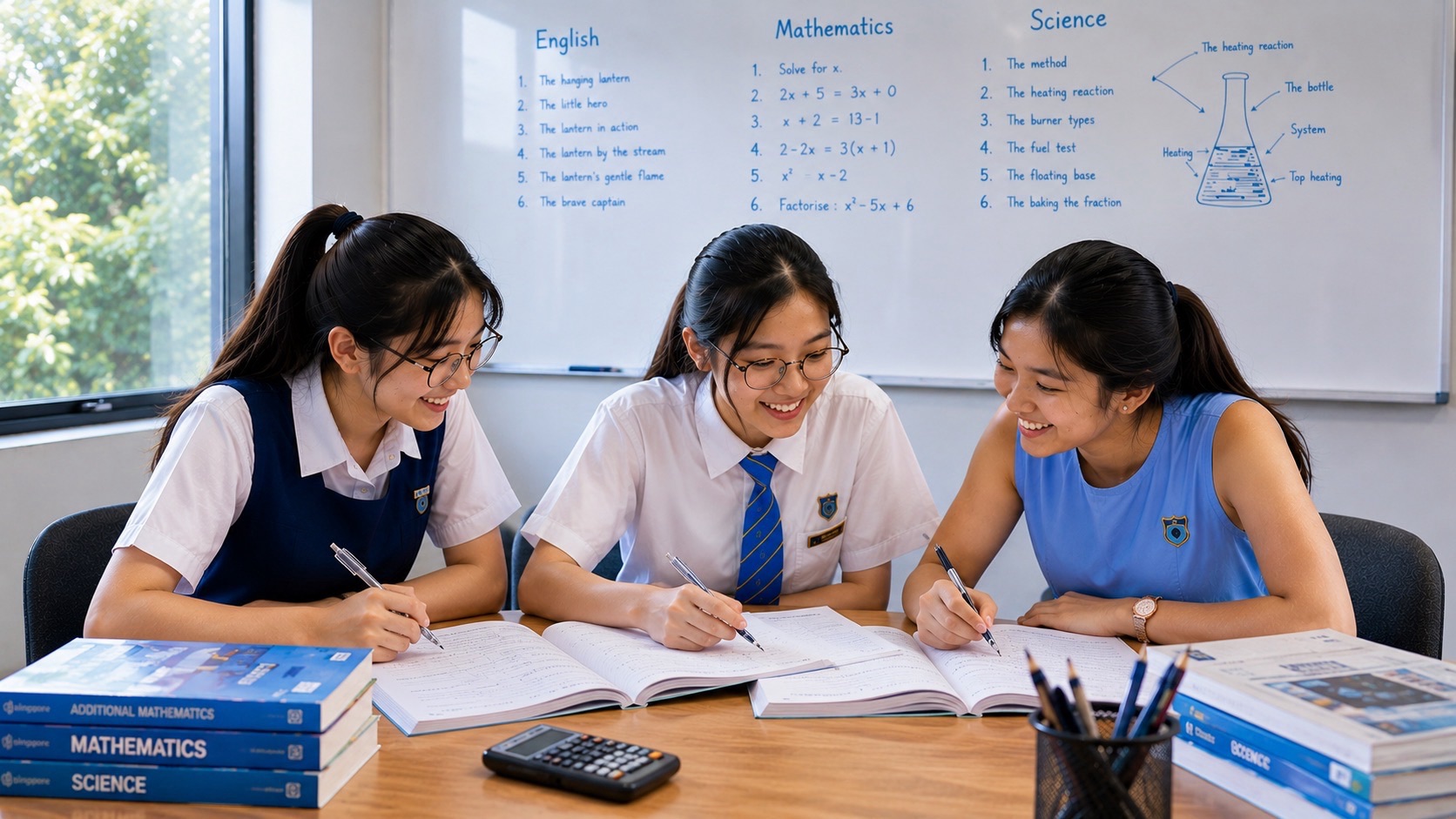
A student’s life in Queenstown is built from more than school hours. It is the whole pattern of waking, travelling, learning, eating, moving, resting, revising, attending CCA, meeting friends and returning home with enough energy to begin again the next day.
In Queenstown, the East–West Line, mature public housing, schools, Queenstown Public Library, community facilities and nearby one-north and Alexandra districts create a student environment where old and new Singapore sit side by side.
This guide looks at the area from the student’s point of view: the morning journey, school, the after-school window, public learning spaces, transport, tuition, revision, rest and the gradual growth of independence.
A strong student life is not created by filling every free hour. It is created by making the important hours work.
A Student’s Life in Queenstown Begins Before the First Bell
The school day begins before a teacher speaks. The student wakes, checks the timetable, packs the correct materials, eats and enters the transport system.
Queenstown’s residential areas extend beyond the immediate MRT station, so many students begin with walking or buses before reaching the rail line. The compact map can hide the time required for that first and last part of the journey.
- pack the school bag the night before;
- wake early enough to absorb a small delay;
- eat and hydrate before school;
- know the usual route and one practical alternative;
- arrive with enough time to settle; and
- protect the first useful attention of the day from unnecessary phone distraction.
These habits are simple, but they save mental effort before learning begins.
Queenstown as a Learning Environment
Queenstown is one of Singapore’s earliest new towns, and its student environment has a distinctive mixture of long-established neighbourhoods, schools, newer developments and major employment and research districts nearby.
Queenstown Public Library at Margaret Drive is historically significant as Singapore’s first full-fledged branch library and remains a recognisable learning anchor in the area.
The wider Queenstown district also connects toward Alexandra, one-north and the Rail Corridor, giving students access to both urban learning environments and outdoor movement.
The important distinction is between access and use. A neighbourhood can provide good transport, reading spaces, parks and schools, but the student still needs habits that convert those resources into learning.
The Local Anchors That Shape the Week
Transport
Queenstown MRT on the East–West Line connects the area efficiently with the city and western Singapore, while buses serve the residential pockets around Margaret Drive, Commonwealth and Alexandra.
Reading and study
Queenstown Public Library at 53 Margaret Drive gives students a dedicated public place for reading, research and quiet study within the neighbourhood.
Movement and recovery
The Rail Corridor and neighbourhood parks near Queenstown provide useful walking and cycling options after long school or screen-heavy days.
Town-centre life
Queenstown does not depend on one large mall in the same way as some towns. Students often move between smaller neighbourhood centres, which can make routines quieter but also more dispersed.
These anchors give families options. A strong routine is easier to build when different parts of the week have appropriate places to happen.
After School: Where the Timetable Becomes Complicated
For many students, dismissal is not the end of work. It is the start of the second half of the day.
There may be CCA, project work, lunch, transport, tuition, homework, revision, family responsibilities and preparation for tomorrow. The problem is often not effort. It is fragmentation.
- what must be completed today;
- what can wait until the next planned study block;
- what needs real understanding rather than copying;
- what subject is becoming unstable;
- what small task can be closed quickly; and
- what can be removed instead of squeezed in.
A student who can prioritise is becoming more independent.
Transport Time Is Real Time
Queenstown sits close to several major education and employment districts, which gives students many route options. The key is to count the full door-to-door journey rather than only the East–West Line segment.
Walking, waiting and transferring all consume time and attention. A student who plans only the train ride may underestimate how much energy the full journey requires.
- read a few pages when concentration is good;
- review a short set of flashcards;
- check the next task without trying to complete it;
- eat and hydrate before the next activity;
- use the journey as decompression; or
- do nothing academic and allow attention to reset.
A commute does not need to become a second classroom. It needs a purpose.
Studying Outside Home
A public library, reading node, school study area or quiet public environment can help because it changes the behavioural signal around the student.
The place matters, but the rules matter more.
- choose the exact subject before sitting down;
- bring only the materials needed for that block;
- set a stopping condition;
- keep the phone out of immediate reach;
- attempt questions before opening the answer key;
- record repeated errors; and
- leave when the planned work is complete.
The goal is not to stay for the longest time. It is to leave more capable than when the student arrived.
Primary School Life in Queenstown
A Primary-school student should not live like a miniature examination candidate. The aim is to build strong foundations while preserving reading, movement, curiosity and ordinary family life.
- daily reading;
- short Mathematics practice with proper correction;
- Science observation connected to real objects and events;
- regular outdoor movement;
- consistent homework habits;
- responsibility for packing school materials;
- a stable bedtime; and
- time to talk about what happened in school.
The long-term direction is increasing independence.
Upper Primary and PSLE: More Load, Better Control
Primary 5 and Primary 6 often bring more content, assessment pressure and family decisions about revision and tuition.
The answer is not automatically more worksheets.
- Can the student explain the method without looking?
- Can the student identify why an answer was wrong?
- Are corrections revisited later?
- Is revision spread across the week?
- Is sleep being traded away for low-value work?
A strong PSLE routine repairs the actual learning problem instead of simply adding volume.
Secondary School Life: Independence Becomes Academic
Secondary school brings more subjects, teachers, deadlines, devices, CCA responsibilities and independent decisions. Organisation becomes part of academic performance.
Students may also take subjects at different G1, G2 or G3 levels under Full Subject-Based Banding, so the week can contain different subject demands rather than one identical academic lane.
- keep one trusted system for deadlines;
- review classwork before forgetting becomes expensive;
- separate concept errors from execution errors;
- begin assessment preparation before the final week;
- ask teachers specific questions;
- protect CCA and exercise without losing all study capacity; and
- use tuition only where an additional teaching loop has a defined purpose.
Tuition Should Solve a Defined Problem
Tuition is useful when the family can explain what job the class is supposed to do.
The purpose might be repairing a weak foundation, keeping pace with school, receiving more feedback, rebuilding confidence or extending a strong student. Those are different needs.
- define the learning need first;
- choose a class format that can address the need;
- leave time to consolidate after teaching;
- avoid duplicating several programmes with the same purpose; and
- check whether the student is becoming more independent over time.
Good tuition should reduce confusion. It should not make the whole week more confusing.
Being Busy Is Not the Same as Learning
A student can spend three hours at a desk and learn less than another student who works carefully for forty-five minutes.
- What can I now do without help?
- What can I now explain?
- What mistake can I now detect?
- What can I retrieve tomorrow?
- What is the next weakness?
These questions turn study from activity into evidence.
Food, Sleep and Recovery
Student life is physical. Hunger, dehydration, sleep loss and accumulated fatigue change the quality of attention.
- regular meals;
- water during the day;
- a short transition after school;
- movement several times a week;
- a realistic stopping time at night;
- protected sleep before school days; and
- lighter recovery after unusually demanding periods.
Recovery is not the opposite of discipline. It is what allows discipline to continue.
Friendships and Belonging in Queenstown
Students experience a neighbourhood through people as much as through buildings. A familiar route with classmates, a meal after school, a study session or a sports activity can become part of the student’s sense of belonging.
Healthy social connection can support persistence. Constant comparison can drain it. Parents do not need to control every friendship, but they should notice when the social environment begins to change attendance, sleep, confidence or willingness to participate.
Phones and the Attention Problem
A smartphone can hold the timetable, class chat, learning documents, games and an endless stream of interruption. Its usefulness is also what makes it difficult to manage.
- turn off unnecessary notifications;
- separate school messaging from entertainment where possible;
- avoid starting homework inside a high-distraction app;
- charge the phone away from the bed if sleep is affected; and
- notice when a five-minute check repeatedly becomes a long diversion.
Attention improves when the environment stops demanding self-control every few seconds.
Exam Season in Queenstown
During examinations, ordinary places acquire new importance. Libraries become revision anchors. Travel feels more expensive. Quiet tables matter more.
- keep sleep and wake times reasonably consistent;
- retrieve from memory instead of only rereading;
- use timed practice after understanding is secure;
- mark and revisit mistakes;
- alternate demanding and lighter tasks;
- plan travel before the day becomes crowded; and
- avoid making late-night panic the normal revision method.
The final week should sharpen performance rather than exhaust the student.
A Practical Weekly Rhythm
Monday to Thursday
School, CCA on designated days, homework triage, one or two focused study blocks, dinner, preparation for tomorrow and a protected sleep time.
Friday
Close small unfinished loops, organise materials and allow some recovery where possible.
Saturday
Complete one serious academic block early enough that the whole day is not lost to anticipation. Tuition, enrichment or sport can fit here if recovery still exists.
Sunday
Use a shorter consolidation block, reading and preparation for the week. Sunday night should not become the emergency repair shift for everything postponed since Monday.
The principle is rhythm, not rigidity.
What Parents Can Notice Without Micromanaging
- Is the student starting work independently?
- Are the same mistakes repeating?
- Does the student know upcoming deadlines?
- Is travel using more energy than expected?
- Is tuition reducing confusion?
- Is the child sleeping enough?
- Can the student describe one current weakness accurately?
- Is there still time in the week that feels like ordinary life?
These questions reveal more than repeatedly asking only for marks.
Common Failure Patterns and Repairs
The student reaches home and cannot start
Create a short transition ritual—food, shower, rest—then begin with one defined task rather than an entire subject.
The student studies but forgets
Replace some rereading with retrieval. Close the notes and produce the method, definition or explanation from memory.
The student is always behind
Reduce work in progress. Finish the most important current obligations before adding optional work.
The student needs help for every question
Require an honest first attempt and a precise question.
The student is exhausted by the timetable
Treat the week as finite capacity. Remove, shorten or consolidate commitments before demanding better concentration.
The student performs well at home but poorly in tests
Add timed, mixed and closed-book practice so retrieval becomes reliable under assessment conditions.
What Progress Should Look Like
- the student starts with less resistance;
- materials are easier to find;
- questions become more specific;
- mistakes are corrected with less drama;
- revision begins earlier;
- travel and tuition are planned rather than improvised;
- sleep becomes more regular;
- the student can explain current priorities; and
- results become more stable because the process is more stable.
The strongest sign of progress is increasing independence.
Frequently Asked Questions
Is Queenstown a good place for students?
Yes. Queenstown combines strong rail access, a long-established public library, schools, neighbourhood amenities and easy connections to one-north and central Singapore.
Where can students study outside home in Queenstown?
Queenstown Public Library at Margaret Drive is the clearest public study anchor. Students can also use school spaces, home or nearby reading environments depending on the task.
Should students revise during the commute?
Sometimes. A short review can be useful, but recovery may be more valuable after a demanding school day.
How much tuition is too much?
It becomes too much when extra classes remove sleep, independent practice, recovery or the ability to consolidate what was taught.
What should Primary students focus on?
Reading, numerical fluency, clear language, curiosity, consistent homework habits and increasing responsibility for school preparation.
What changes in Secondary school?
There are more subjects, deadlines, teachers, CCA demands and independent decisions. Organisation becomes part of academic performance.
How early should examination revision begin?
Revision should begin while teaching is still happening. Small retrieval and correction cycles across the term are more reliable than rebuilding everything at the end.
Is a library automatically better than home?
No. The best place is the one where the student can follow a clear plan with fewer distractions.
What if the student says they are tired all the time?
Look at the whole week: sleep, travel, CCA, homework, tuition, meals and late-night screen use.
What is the goal of a healthy student life?
To build a student who can learn, recover, make decisions, ask for help and manage increasing responsibility without making the week permanently unsustainable.
Helpful Reading for Students and Parents
- Education Hub | eduKateSG
- How School Works | School Life Explained Through One Ordinary Day
- Stages of Mathematical Learning in a Student’s Life
- National Library Board | Queenstown Public Library
- Ministry of Education Singapore
A Student’s Life in Queenstown
A student’s life is not one lesson. It is the route between lessons.
It is the morning before school, the journey home, the hour after CCA, the decision to start homework, the correction after a mistake, the quiet reading block, the conversation with a parent and the sleep that makes tomorrow possible.
In Queenstown, the defining student lesson is continuity across generations. The neighbourhood has changed many times, but reading, transport and community spaces still give students a stable framework for daily learning.
The neighbourhood can provide transport, public spaces, food and community. The student still has to learn how to use them.
That is part of education too.
Speak With eduKateSG
If your child needs help with English, Mathematics, Science or Additional Mathematics, begin with the student’s current school level, recent work, learning gaps and weekly capacity. The aim is to add the right support without making the whole system heavier.
Arrange a parent–student consultation with eduKate Singapore
Chat with eduKateSG on WhatsApp
Properly taught kids shine a bright light into the future.