
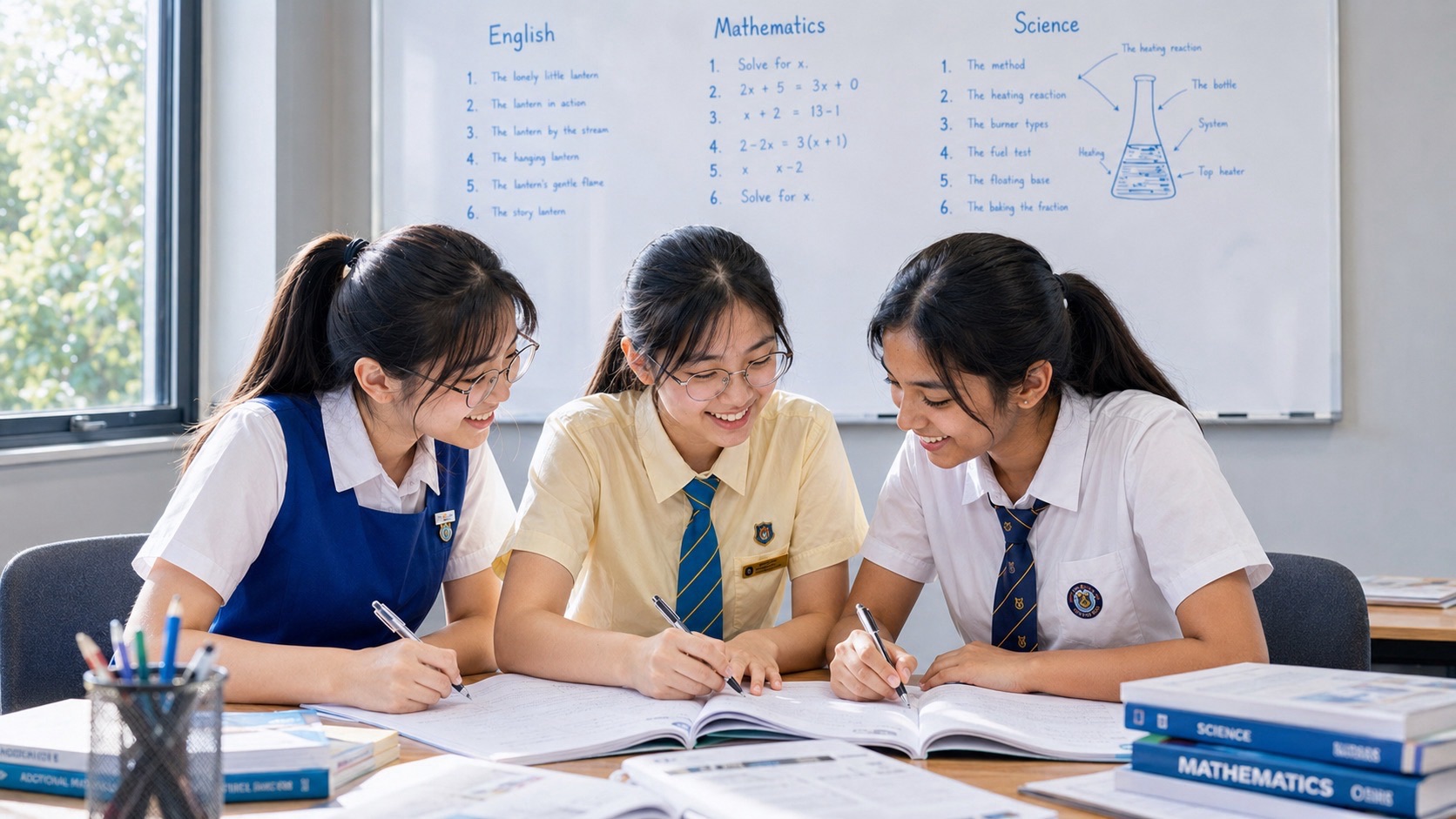
A student’s life in Serangoon is built from more than school hours. It is the full daily pattern of waking, travelling, learning, eating, moving, resting, revising, meeting friends, attending CCA, using public spaces and returning home with enough energy left to begin again the next day.
The neighbourhood matters because place changes the shape of a school day. In Serangoon, the North East and Circle lines cross at Serangoon MRT, the bus interchange and NEX form a busy transport centre, and the public library sits inside the same urban node. A student experiences the area not as a map, but as a sequence of decisions made under time pressure.
This guide looks at Serangoon from the student’s point of view: how the day moves, where time is gained or lost, how study fits around transport and family life, and what parents can observe before a small problem becomes a large one.
The purpose is not to romanticise a neighbourhood. It is to understand the learning environment around the child.
A Student’s Life in Serangoon Begins Before the First Bell
The school day starts before a teacher speaks. It starts when the student wakes, checks the time, chooses whether to eat properly, remembers the correct books, leaves the house and enters the transport system.
In Serangoon, many students move through NE12/CC13 or the bus interchange before the school day has fully begun. The advantage is connectivity; the challenge is that a busy interchange can make every transition feel fast even when the student needs a moment to settle. A smooth morning gives the student a quieter first lesson. A rushed morning uses attention before school has even begun.
This is one reason parents should not separate “school performance” from ordinary routines. Sleep, breakfast, travel, forgotten materials and repeated lateness all consume working attention. They do not appear on a report book, but they change the conditions under which learning occurs.
- wake with enough time to avoid a constant rush;
- eat and hydrate before a long school morning;
- pack by routine rather than by last-minute memory;
- know the normal route and a backup route;
- arrive with enough time to settle before lessons; and
- protect the first part of the day from unnecessary phone distraction.
A student who controls the beginning of the day is already practising self-management.
Serangoon as a Learning Environment
Serangoon has a useful dual character for students. The town centre is intensely connected and busy, while the surrounding residential streets can become much quieter within a short distance.
Serangoon Public Library sits on level 4R of NEX at 23 Serangoon Central. Its location is significant because reading and study are placed directly inside a major transport and retail node rather than separated from daily life.
For a student, that means the same trip can contain several different states: crowded commute, meal, study block, meeting with a friend and journey home. The skill is learning to change state deliberately instead of carrying the noise of one activity into the next.
The important distinction is between access and use. A student may live near excellent transport, a public library, sports facilities and quiet housing blocks, yet still have no stable study routine. Infrastructure creates opportunity. The student still needs habits that convert opportunity into learning.
The Local Anchors That Shape Student Life
Transport
Serangoon MRT connects the North East Line and Circle Line, with the bus interchange beside the town centre. Students can reach many parts of Singapore without travelling through the central business district, which can make cross-town school and CCA journeys more practical.
Reading and study
Serangoon Public Library is integrated into NEX and is designed for readers of different ages. Its position beside the interchange makes it practical for short, planned study blocks before travelling home or onward.
Movement and recovery
The wider Serangoon, Lorong Chuan and adjoining neighbourhoods contain sports, school and residential spaces that give students alternatives to remaining in a mall after school. The important habit is to preserve some movement in the week.
Town-centre life
NEX is convenient because food, transport and the library sit close together. It is also a strong distraction environment. A student who says “I will study after I walk around for a while” needs a clearer rule than intention alone.
These places do not need to become scheduled activities every day. Their value is that they give families options. A good student routine is easier to build when the neighbourhood contains several usable settings instead of one overloaded setting trying to do everything.
The School Day Is Only the First Half of the Student’s Work
When students leave school, adults often describe the day as if the difficult part is over. For many students, the second half is where the schedule becomes more complicated.
After school there may be travel, lunch, CCA, project work, homework, tuition, revision, family obligations, exercise and preparation for the next day. The student is now managing several systems at once.
The danger is not always laziness. It is fragmentation.
A student who moves from school to a crowded transport node, eats late, attends one more class, reaches home tired and then tries to complete several subjects at night may appear busy while retaining very little.
- school work that must be completed today;
- work that can wait until the next planned study block;
- revision that needs retrieval rather than rereading;
- CCA or physical activity that supports rather than destroys recovery;
- tuition that solves a defined learning need;
- screen time that genuinely restores rather than extends mental noise; and
- sleep that protects the next day.
The schedule should make these categories visible.
Transport Time Is Part of the Learning System
Students often treat travel as empty time. It is not empty. It can either drain the student or become a buffer between activities.
In Serangoon, students can switch between the North East Line, Circle Line and buses in one place. That makes the town highly connected, but a highly connected student can also become a highly scheduled student if every convenient route becomes another commitment.
The goal is not to turn every train ride into revision. That usually produces a child who never feels off duty. A better approach is to decide deliberately what the commute is for.
- a short review of flashcards when energy is good;
- reading a few pages of a book;
- checking the next task rather than doing the whole task;
- quiet decompression after a demanding school day;
- a snack and water before the next activity; or
- simply looking out of the window and letting attention reset.
A commute becomes useful when it has a purpose. It becomes exhausting when every minute is treated as available capacity.
After-School Study: Where Matters Less Than the Rules
A student may study at home, in a library, at school, in a learning centre or occasionally in a quiet public space. The room matters, but the rules matter more.
The strongest study block has a clear start, a visible task and a stopping condition.
- Know the exact subject and task before sitting down.
- Remove the phone from immediate reach unless it is required.
- Work in a block long enough to make progress but short enough to preserve attention.
- Check answers only after an honest attempt.
- Record recurring mistakes instead of repeatedly rediscovering them.
- Stop when the planned work is complete, not when exhaustion finally wins.
Public libraries are useful because they provide a different behavioural cue from home. The student enters a space where reading and concentration are normal. But a library cannot create focus if the student arrives without a plan.
Primary School Life in Serangoon
For a Primary-school student, the main task is not to live like a miniature examination candidate. It is to build dependable foundations while keeping learning emotionally safe enough to continue.
A healthy Primary routine in Serangoon should still contain reading, play, movement, conversation and ordinary family time. These are not distractions from education. They are part of the environment in which language, curiosity, self-control and confidence grow.
- daily reading in English and the Mother Tongue where appropriate;
- short Mathematics practice with clear correction;
- Science observation connected to real objects and events;
- regular outdoor movement;
- a consistent bedtime;
- simple responsibility for packing and school preparation; and
- time to speak about what happened in school.
The objective is gradual independence. A Primary 1 child may need a parent beside the school bag. A Primary 6 child should increasingly know how to check the bag, identify unfinished work and ask for help with a specific problem.
Upper Primary and PSLE: The Week Starts to Tighten
By Primary 5 and Primary 6, the student’s week often becomes denser. More content has to be held at the same time, mistakes become more expensive, and families begin to feel the pressure of PSLE.
The answer is not automatically to add more hours.
The first question is whether the existing hours are working.
- Does the student remember last week’s material?
- Can the student start questions without waiting for help?
- Are corrections understood or merely copied?
- Can the student explain why an answer was wrong?
- Is revision distributed through the week or concentrated before tests?
- Is sleep being traded away to finish low-value work?
When the answers are weak, the repair should target the learning process. More worksheets placed on top of a broken process usually create more unfinished worksheets.
Secondary School Life: More Freedom, More Hidden Load
Secondary school changes the student’s daily operating environment. There are more teachers, subjects, deadlines, devices, friendships, CCA demands and independent decisions.
Full Subject-Based Banding also means students may study subjects at different G1, G2 or G3 levels according to their learning needs and readiness. The timetable can therefore feel less like one single cohort moving identically and more like a set of subject journeys that must be managed together.
The student who succeeds is not necessarily the one who studies every night for the longest time. It is often the student who knows what is due, what is weak, what should be reviewed and what can safely wait.
- keep one reliable system for deadlines;
- review classwork before the topic becomes unfamiliar;
- separate concept errors from careless execution errors;
- begin weighted-assessment preparation before the final week;
- protect CCA and exercise without allowing them to erase all study capacity;
- ask teachers specific questions; and
- use tuition only where an additional teaching loop is genuinely useful.
Secondary school is where self-management becomes part of academic performance.
Tuition in a Student’s Life: Extra Help Should Have a Job
Tuition is common in Singapore, but the useful question is not whether tuition is common. The useful question is what a particular tuition lesson is supposed to fix or extend.
A student may need tuition because a foundation is weak, because school pace is too fast, because the child needs more guided practice, because confidence has collapsed, or because the student is ready for deeper work. Those are different needs.
A timetable becomes unhealthy when tuition is added without removing anything else. The student then carries school, homework, CCA, multiple tuition classes and revision inside the same finite week.
- Define the learning problem before adding the class.
- Check that the class size allows the help the student actually needs.
- Leave enough time after tuition to consolidate rather than only commute.
- Avoid duplicating several programmes that teach the same thing in slightly different ways.
- Review whether the student is becoming more independent over time.
Good tuition should reduce confusion. It should not make the whole week more confusing.
The Difference Between Being Busy and Learning
A student can be very busy and still be learning badly.
Busyness is visible. Learning is not always visible.
A long evening may contain copying notes, scrolling between tasks, checking answer keys too early, repeating comfortable questions and worrying about difficult work without starting it.
A shorter evening may contain one careful retrieval test, one set of Mathematics corrections, one paragraph rewritten properly and a clear plan for tomorrow.
The second evening may produce more learning because the work has better structure.
- What changed in what I can now do?
- What mistake can I now detect?
- What idea can I explain without looking?
- What can I retrieve tomorrow that I could not retrieve yesterday?
- What is the next weak point?
These questions turn study from activity into evidence.
Food, Rest and the Small Decisions That Protect Learning
Student life is physical. Attention is not separate from the body.
A child who has skipped lunch, carried a heavy school day, travelled across town and reached an evening lesson dehydrated is not entering that lesson with the same capacity as a rested student.
Families do not need a perfect wellness programme. They need simple reliability.
- regular meals rather than long gaps;
- water available during the day;
- a short transition after school before demanding work;
- movement several times a week;
- sleep protected before major school days;
- a realistic stopping time at night; and
- permission to recover after unusually heavy periods.
Recovery is not the opposite of discipline. It is what allows discipline to continue.
Friendships, Belonging and the Social Side of Serangoon
Students do not experience Serangoon only through buildings. They experience it through friends.
A short walk after school, a meal with classmates, a library visit, a sports session or the familiar route home can become part of how the student understands the neighbourhood and themselves.
Social life can support learning when it gives the student belonging, perspective and a reason to stay engaged with school. It can also create pressure when comparison becomes constant.
Parents should listen for the difference between normal social friction and a pattern that is changing attendance, sleep, appetite, confidence or willingness to participate. The aim is not to control every friendship. It is to notice when the social environment begins to alter the learning environment.
Phones, Screens and the Attention Problem
A smartphone can help a student check a timetable, message a classmate, read a document, photograph notes or access learning platforms. The same device can also fragment a study block into dozens of small interruptions.
The most effective rule is usually physical, not moral.
If the phone is not needed for the next thirty minutes, put it somewhere that requires a deliberate decision to retrieve it.
- use notifications selectively;
- separate study chat groups from entertainment feeds where possible;
- avoid beginning homework inside the same app used for endless short-form content;
- charge the phone outside the bed area at night if sleep is being affected; and
- teach the student to notice when a five-minute check repeatedly becomes thirty minutes.
Attention improves when the environment makes the correct behaviour easier.
Exam Season in Serangoon: The Town Does Not Change, but the Student’s Route Does
During examination periods, the same neighbourhood begins to feel different. Libraries seem more important. Travel time feels more expensive. A quiet table becomes valuable. Weekends become revision windows.
This is when students often make the mistake of changing everything at once.
A better exam routine protects a few stable anchors.
- keep wake and sleep times reasonably steady;
- revise through retrieval, not only rereading;
- do timed practice after the material is understood;
- mark mistakes and revisit them after a delay;
- alternate demanding and lighter tasks;
- plan travel so the day is not repeatedly broken into unusable fragments; and
- stop late-night panic from becoming the normal preparation method.
The final week should sharpen the student. It should not dismantle the student.
A Practical Week for a Student in Serangoon
There is no single perfect timetable, but a workable week usually has visible rhythms.
Monday to Thursday
School, CCA on designated days, homework triage, one or two focused study blocks, dinner, preparation for the next day and a protected sleep time.
Friday
A lighter evening where possible. Close small unfinished loops, organise materials and allow some social or family recovery.
Saturday
One serious academic block early enough that the whole day is not lost to anticipation. Tuition, sports or enrichment can fit here if the student still has recovery time.
Sunday
A shorter consolidation block, reading, planning for the week and early preparation of school materials. Sunday night should not become the emergency repair shift for everything ignored since Monday.
The principle is rhythm, not rigidity.
What Parents in Serangoon Can Notice Without Micromanaging
Parents often know something is wrong before they know what is wrong.
The child takes longer to start. The bag stays unpacked. Small tests are hidden. The student says there is “nothing to do” and then panics late at night. Or the opposite happens: the child works constantly but appears increasingly tired and less effective.
- Is the student starting work independently?
- Are the same mistakes repeating?
- Does the student know upcoming deadlines?
- Is school travel consuming more energy than expected?
- Is tuition reducing confusion or merely filling time?
- Is the child sleeping enough to learn the next day?
- Can the student describe one current weakness accurately?
- Is there still some time in the week that feels like ordinary life?
These questions create a better conversation than asking only, “How many marks did you get?”
Common Failure Patterns and Simple Repairs
The student reaches home and cannot start
Repair: create a short transition ritual—food, shower, twenty minutes of rest—then begin with one clearly defined task instead of an entire subject.
The student studies but forgets
Repair: replace some rereading with retrieval. Close the notes and produce the answer, method, definition or explanation from memory.
The student is always behind
Repair: reduce open tasks. Finish the most important current obligations before adding optional work.
The student needs help for every question
Repair: require a first attempt and a precise question. “I do not know” should become “I understand this step, but I do not know why the sign changes here.”
The student is exhausted by the timetable
Repair: treat the week as finite capacity. Remove, shorten or consolidate commitments before expecting better concentration.
The student performs well at home but poorly in tests
Repair: add timed, closed-book and mixed practice so the student learns to retrieve under conditions closer to assessment.
What Progress Should Look Like
Progress in student life appears before it appears in a major examination result.
- the student starts earlier and with less resistance;
- school materials are easier to find;
- questions become more specific;
- mistakes are corrected with less emotional drama;
- revision begins before the final few days;
- travel and tuition are planned rather than improvised;
- sleep becomes more regular;
- the student can explain current priorities; and
- results become more stable because the process is more stable.
The strongest sign is increasing independence. The student still needs adults, teachers and tutors, but the student can do more of the operating work without being carried through every step.
Frequently Asked Questions
Is Serangoon a good place for students?
It can be. Serangoon has strong interchange transport, a public library within NEX, food, services and quick connections to several parts of Singapore. A good neighbourhood helps most when the family converts access into repeatable routines.
Where can students study outside home in Serangoon?
Serangoon Public Library at NEX is the most obvious public study anchor. Students can also use school facilities or home when those environments provide better continuity and fewer transitions.
Should students revise during the commute?
Not always. A short review can be useful, but travel can also be recovery time. The decision should depend on energy and what comes next.
How much tuition is too much?
There is no universal number. It becomes too much when extra classes remove sleep, independent practice, recovery or the student’s ability to consolidate what was taught.
What should a Primary student focus on?
Reading, numerical fluency, clear language, curiosity, consistent homework habits and increasing responsibility for school preparation.
What changes in Secondary school?
The student manages more subjects, teachers, deadlines, CCA demands and independent decisions. Organisation becomes part of academic performance.
How early should exam revision start?
Revision should begin while teaching is still happening. Short retrieval and correction cycles across the term are more reliable than trying to rebuild the subject in the final week.
Is a library automatically better than studying at home?
No. The best place is the one where the student can follow a clear plan with fewer distractions. Libraries are useful when home conditions are noisy or when a change of environment helps concentration.
What should parents do when a child says they are tired all the time?
Look at the whole week: sleep, travel, CCA, homework, tuition, meals and late-night screen use. A timetable problem cannot always be solved with a motivation lecture.
What is the main goal of a healthy student life?
To build a student who can learn, recover, make decisions, ask for help, manage increasing responsibility and continue developing without the week becoming permanently unsustainable.
Helpful Reading for Students and Parents
- Education Hub | eduKateSG
- How School Works | School Life Explained Through One Ordinary Day
- Stages of Mathematical Learning in a Student’s Life
- National Library Board | Public Libraries
- Ministry of Education Singapore
A Student’s Life in Serangoon
A student’s life is not one lesson.
It is the route between lessons.
It is the morning before school, the journey home, the hour after CCA, the decision to begin homework, the correction after a mistake, the quiet reading block, the conversation with a parent and the sleep that makes tomorrow possible.
In Serangoon, the central student lesson is switching. Serangoon can move a young person rapidly from school to transport to food to study to home. Strong routines make those switches clean instead of letting every part of the day bleed into the next.
The neighbourhood can provide transport, libraries, public spaces, sports facilities, food and community. The student still has to learn how to use them.
That is part of education too.
Speak With eduKateSG
If your child needs help with English, Mathematics, Science or Additional Mathematics, begin with the student’s current school level, recent work, learning gaps and weekly capacity. The aim is to add the right support without making the whole system heavier.
Arrange a parent–student consultation with eduKate Singapore
Chat with eduKateSG on WhatsApp
Properly taught kids shine a bright light into the future.