
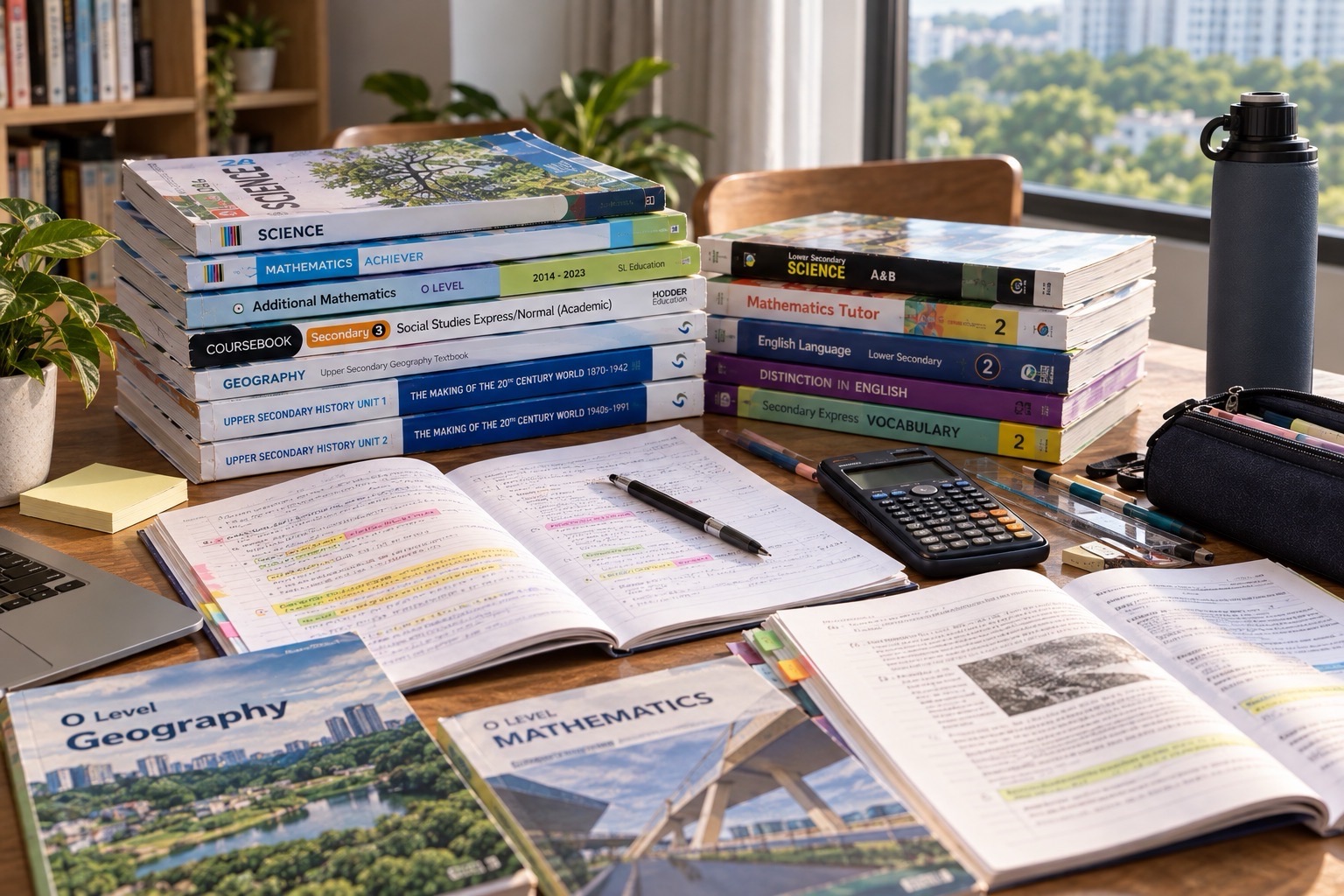
A family guide to subject foundations, 90 hectares of gardens, 13 nature-play stations, water science, creativity and realistic routines. All types of tuition and enrichment for Lakeside include preschool phonics, stories and number play, Primary English, Mathematics, Science and Mother Tongue, PSLE preparation, Secondary G1/G2/G3 and SEC study from 2027, suitable IP, JC and polytechnic-pathway enquiry, literature, speaking, creative writing, music, art, robotics, coding, safe sport and practical life skills. The wide menu is meant to guide selection, not to fill every afternoon.
Remedial teaching addresses an observed missing academic foundation; subject tuition consolidates or extends a current syllabus; enrichment develops artistic, physical, scientific or technical curiosity; student care and organisation respond to daily needs. A child struggling to interpret graphs requires different instruction from one who reads fluently and wants to draw landscapes or learn music. The most useful activity leads to independence beyond the lesson.
Families living around Lakeside MRT, Yuan Ching Road and Taman Jurong may enjoy access to the extensive Jurong Lake Gardens, but not every attraction lies beside the station. A lesson or outing’s real cost includes walking, waiting, CCAs, meals, homework, weather and sleep. A realistic plan preserves unstructured time for the child to read, practise or simply recover.
Jurong Lake Gardens currently spans 90 hectares across Lakeside Garden and the Chinese and Japanese Gardens. Lakeside Garden itself covers 60 hectares, with Forest Ramble, the Butterfly Maze, Clusia Cove and other attractions maintaining separate opening and maintenance schedules. NParks’ most recent visitor notice, updated 20 October 2026, lists several temporary closures and a suspended shuttle on specific dates. This provides unusually good opportunities to teach careful reading of current evidence alongside meaningful recreation.
Begin with the child’s objective, not the programme’s name
- Repair a foundation: teach the first repeated misconception and check independent transfer.
- Consolidate school subjects: practise accurately at the learner’s level and current syllabus.
- Extend a secure strength: use fresh reasoning, research or purposeful new constraints.
- Explore an interest: allow expression, technology, sport, reading and making to grow for their own purposes.
- Support everyday life: care, planning, adequate rest and independence can be the most useful priorities.
This guide compares potential learning types for households around Lakeside MRT, Yuan Ching Road, Taman Jurong, Jurong Lake Gardens, Lakeside Garden and the residential streets near Jurong West. It is not a promise of locally available class sessions or an instruction to enrol every child in the complete menu. The child should remain able to pursue interests and act independently after learning.
Compare all 68 programme types
- Early childhood, preschool play and Primary One readiness (8 types)
- Primary English, Mathematics, Science, Mother Tongue and PSLE (10 types)
- Secondary G1/G2/G3, SEC, IP, JC and post-secondary foundations (15 types)
- Reading, literature, speaking and meaningful language (5 types)
- Computing, coding, robotics, enquiry and maker learning (8 types)
- Art, music, dance, drama and creative expression (6 types)
- Sports, physical confidence, nature and safe outdoor movement (6 types)
- Practical life skills, organisation, care and inclusive learning (10 types)
Early childhood, preschool play and Primary One readiness
Preschool learning can happen through stories, number sense, play, safe movement and small routines. A garden’s nature-inspired playground can support curiosity without requiring every child to sit an early academic examination.
Play-based parent-and-child learning
Programme focus: Young children explore sounds, objects, turn-taking and simple stories through guided play rather than a miniature school lesson. Possible learner need: A child learns best by joining an adult in play but is not ready for long desk tasks.
Evidence of progress: Joining a game, naming ideas and taking turns more comfortably. A modest practical trial: Ask whether there is time to explore freely rather than merely copy an adult. Nature-inspired play can develop number sense and cooperation. For Lakeside families, include the whole school journey, CCAs and recovery before committing to a permanent class. An independent changed task after some time is a stronger measure of learning than repeating a familiar example.
Sensory and movement discovery
What children practise: Movement, textures, rhythm and spatial play create opportunities to coordinate body and attention, with activities adapted to developmental readiness. Suitable starting signal: A preschooler wants to move, build and investigate instead of sit for extended instruction.
Evidence of progress: More confident movement, imitation and curiosity in everyday settings. A modest practical trial: Watch the child’s comfort and safety rather than counting completed crafts. A young child may choose one safe station rather than attempt all thirteen.
Preschool language-rich storytelling
Central capability: Picture books, puppets, conversations and retelling invite children to build vocabulary and narrative sequence in meaningful situations. Who may benefit: A child enjoys stories but answers mostly with isolated words or guesses.
Evidence of progress: Explaining who did what, why it happened and what may happen next. A modest practical trial: Retell one familiar picture-book scene at home without supplying the words. Stories about fictional wildlife can be engaging without fieldwork.
Early numeracy and mathematical play
Core learning: Sorting, matching, counting, comparing sets, repeating patterns and measuring with objects develop number sense before formal written arithmetic. When it may fit: A child recites numbers but does not reliably connect them with quantities.
Evidence of progress: Matching objects to numerals and explaining which group has more. A modest practical trial: Change the counters or containers and see whether understanding survives. An enjoyable outing should not become another graded performance. An independent changed task after some time is a stronger measure of learning than repeating a familiar example.
Phonological awareness and phonics
Programme focus: Listening for speech sounds and linking sounds with letters supports beginning reading, alongside oral language and enjoyable shared books. Possible learner need: A child finds it hard to blend sounds or distinguish similar words.
Evidence of progress: Reading unfamiliar decodable words without memorising an entire page. A modest practical trial: Use a new word rather than repeatedly testing a rehearsed flashcard. A young child may choose one safe station rather than attempt all thirteen.
Fine-motor and handwriting readiness
What children practise: Drawing, tracing, cutting, building and playful mark-making can strengthen control and confidence before extended handwriting tasks are expected. Suitable starting signal: Writing tires the hand quickly or letter formation consumes all attention.
Evidence of progress: Comfortable grip, purposeful strokes and legible short written messages. A modest practical trial: Check whether the child is relaxed rather than pushing for neat pages. Stories about fictional wildlife can be engaging without fieldwork. For Lakeside families, include the whole school journey, CCAs and recovery before committing to a permanent class.
Mother Tongue conversational exposure
Central capability: Songs, stories, games and real exchanges in Chinese, Malay or Tamil can support listening and speaking before written accuracy becomes the focus. Who may benefit: The child understands familiar household phrases but avoids responding independently.
Evidence of progress: Initiating simple exchanges and understanding meaning beyond a memorised dialogue. A modest practical trial: Try a real family conversation about food or a favourite story. An enjoyable outing should not become another graded performance. An independent changed task after some time is a stronger measure of learning than repeating a familiar example.
Primary One transition and routines
Core learning: Activities model instructions, packing, listening, asking for help, handling a short task and recovering when something goes wrong. When it may fit: A child is curious about school but needs help starting and finishing routines.
Evidence of progress: Managing small transitions with fewer adult prompts while remaining cheerful. A modest practical trial: Practise packing a bag and asking a clear question in a calm setting. Nature-inspired play can develop number sense and cooperation.
Primary English, Mathematics, Science, Mother Tongue and PSLE
Primary students need different teaching for decoding, comprehension inference, fraction and ratio reasoning, scientific evidence and question-reading. Diagnose the earliest wrong idea and use an unfamiliar transfer task.
Reading fluency and independent reading
What children practise: Repeated meaningful reading, decoding strategies and discussion gradually make text easier to navigate without turning every book into a test. Suitable starting signal: Reading is slow enough that the child loses the meaning of a paragraph.
Evidence of progress: Reading unfamiliar passages with improving accuracy and comprehension. A modest practical trial: Offer two different books and listen for meaning, not just speed. A whole garden and one section involve parts of a whole. For Lakeside families, include the whole school journey, CCAs and recovery before committing to a permanent class. An independent changed task after some time is a stronger measure of learning than repeating a familiar example.
English reading comprehension
Central capability: Children learn to locate textual evidence, infer reasons, compare information and explain an answer that matches what a question asks. Who may benefit: A student understands a story socially but loses marks on inference or vocabulary-in-context questions.
Evidence of progress: Pointing to evidence and justifying an answer in a complete explanation. A modest practical trial: Ask what in the passage changed their mind about a character. Units such as hectares and cubic metres must not be confused.
Composition and creative writing
Core learning: Idea generation, concrete detail, story structure, revision and editing help writers express something worth reading instead of recycling a memorised template. When it may fit: A child has ideas when talking but produces thin or repetitive compositions.
Evidence of progress: Planning a coherent scene and revising it for clarity and effect. A modest practical trial: Compare first and revised drafts rather than counting fancy phrases. A comprehension inference needs supporting text evidence.
English oral and listening practice
Programme focus: Spoken interaction, active listening, clear reading aloud and reasoned conversation develop communication beyond memorised sample speeches. Possible learner need: A child knows an answer but freezes or gives only one-sentence responses.
Evidence of progress: Speaking audibly, responding to follow-up questions and giving examples. A modest practical trial: Ask a genuine question and listen for a spontaneous reply. Changing a model after instruction demonstrates real understanding. An independent changed task after some time is a stronger measure of learning than repeating a familiar example.
Chinese, Malay and Tamil literacy
What children practise: Mother Tongue reading and writing programmes combine vocabulary, comprehension, composition and functional language use suited to each learner’s exposure. Suitable starting signal: A student performs exercises but struggles to understand a new passage or communicate naturally.
Evidence of progress: Using words correctly across a new topic, conversation and written task. A modest practical trial: Ask for an explanation in the language rather than an English translation alone. Units such as hectares and cubic metres must not be confused.
Primary Mathematics number foundations
Central capability: Place value, four operations, fractions, decimals, ratio and measurement require connected understanding before speed and examination routines. Who may benefit: The child obtains answers by guessing a formula or making repeated calculation errors.
Evidence of progress: Explaining why a method works, choosing suitable units and checking reasonableness. A modest practical trial: Change the numbers and request a different valid method. A comprehension inference needs supporting text evidence. For Lakeside families, include the whole school journey, CCAs and recovery before committing to a permanent class.
Problem-solving and PSLE Mathematics
Core learning: Heuristics such as models, diagrams, systematic listing and working backwards become useful only when the student knows why to choose them. When it may fit: Routine sums are fine, but unfamiliar multi-step word problems cause confusion.
Evidence of progress: Selecting a method independently and interpreting the final answer in context. A modest practical trial: Give a novel problem rather than another clone of the class example. Changing a model after instruction demonstrates real understanding. An independent changed task after some time is a stronger measure of learning than repeating a familiar example.
Primary Science investigation
Programme focus: Observing, predicting, controlling variables, reading results and explaining relationships support scientific thinking alongside factual knowledge. Possible learner need: A child remembers keywords but cannot explain a simple experiment or data table.
Evidence of progress: Distinguishing observations from inferences and making evidence-linked explanations. A modest practical trial: Ask what changed, what stayed constant and what the results suggest. A whole garden and one section involve parts of a whole.
Homework consolidation and targeted remediation
What children practise: Short structured sessions identify the precise missing concept, then practise it and check whether that error disappears in fresh work. Suitable starting signal: A repeated mistake persists despite long revision periods.
Evidence of progress: Fewer recurring errors in ordinary school tasks after the scaffold is removed. A modest practical trial: Keep an error log with dates and revisit an old example two weeks later. A comprehension inference needs supporting text evidence.
Upper-primary exam literacy
Central capability: Students learn to read command words, allocate time, show working, review errors and recognise the difference between understanding and exam presentation. Who may benefit: A capable student loses marks through misreading, omissions or poor time control.
Evidence of progress: Improved checking habits and clear working under reasonable conditions. A modest practical trial: Run a brief timed mixed task and review the process, not only the score. Changing a model after instruction demonstrates real understanding. An independent changed task after some time is a stronger measure of learning than repeating a familiar example.
Secondary G1/G2/G3, SEC, IP, JC and post-secondary foundations
Full SBB offers individual subjects at G1, G2 or G3, with the first SEC in 2027. Alternative secondary and post-secondary pathways may differ. Academic acceleration should follow sound foundations and the relevant assessment demands.
Secondary One academic transition
Programme focus: Bridging introduces symbolic algebra, longer texts, subject-specific vocabulary, scientific reports and the independence expected after PSLE. Possible learner need: A student feels unexpectedly lost despite being comfortable in Primary Six.
Evidence of progress: Explaining new school methods and organising unfamiliar work independently. A modest practical trial: Use one actual school task to identify the new expectation. The 2027 SEC needs each subject’s actual G1/G2/G3 level. For Lakeside families, include the whole school journey, CCAs and recovery before committing to a permanent class. An independent changed task after some time is a stronger measure of learning than repeating a familiar example.
Secondary Mathematics G1 G2 G3
What children practise: Number and algebra, graphs, geometry, statistics and problem-solving are taught at an appropriate subject level and pace under Full SBB. Suitable starting signal: The learner needs support with concepts at the current subject level, not a generic worksheet pack.
Evidence of progress: Accurate reasoning and transferable methods on new questions of suitable demand. A modest practical trial: Check the school’s actual subject level and latest topic sequence first. A strong student may prefer creative enrichment rather than another paper set.
Additional Mathematics readiness
Central capability: Algebraic manipulation, functions, equations, indices and coordinate ideas form the language for later Additional Mathematics study. Who may benefit: A learner is considering A-Math but is uncertain about factorisation and algebra basics.
Evidence of progress: Explaining each algebraic step and manipulating expressions reliably. A modest practical trial: Begin with a readiness check, not a pile of advanced exercises. Scientific graphs and algebra need different feedback.
Lower-secondary integrated Science
Core learning: Scientific inquiry, measurement, models, cells, energy and matter build the reasoning needed before more specialised science subjects. When it may fit: The student can recite definitions but struggles to connect concepts to observations.
Evidence of progress: Selecting evidence, using correct terms and drawing sensible conclusions. A modest practical trial: Use a familiar everyday phenomenon and require a causal explanation. Older learners should gain independence in their revision. An independent changed task after some time is a stronger measure of learning than repeating a familiar example.
Physics and quantitative scientific reasoning
Programme focus: Forces, energy, circuits, waves and other topics connect models, measurements and calculations; exact coverage depends on syllabus and level. Possible learner need: A student knows equations yet cannot decide which physical relationship applies.
Evidence of progress: Drawing useful diagrams, handling units and explaining a calculation. A modest practical trial: Ask for a prediction before writing down a formula. A strong student may prefer creative enrichment rather than another paper set.
Chemistry concepts and laboratory reasoning
What children practise: Particles, bonding, reactions, acids, rates, practical observations and chemical representations need conceptual links rather than isolated memorisation. Suitable starting signal: Chemical symbols and explanations seem disconnected from what happens in an experiment.
Evidence of progress: Balancing ideas and equations while interpreting evidence accurately. A modest practical trial: Ask what particles or changes would account for the observed result. Scientific graphs and algebra need different feedback. For Lakeside families, include the whole school journey, CCAs and recovery before committing to a permanent class.
Biology concepts and data explanations
Central capability: Cells, human systems, genetics, ecology and experimental reasoning involve processes, labelled diagrams and evidence-based explanation. Who may benefit: A student recognises a diagram but cannot explain a process or unfamiliar question.
Evidence of progress: Using correct causal links and interpreting graphs independently. A modest practical trial: Have the learner explain one process from start to finish without notes. Older learners should gain independence in their revision. An independent changed task after some time is a stronger measure of learning than repeating a familiar example.
History and source-based inquiry
Core learning: Chronology, context, provenance, inference, comparison and evaluation help students work with sources instead of memorising essays. When it may fit: The learner describes a source but cannot substantiate an inference or compare perspectives.
Evidence of progress: Making a claim supported by specific source detail and context. A modest practical trial: Provide two sources and ask what they agree and disagree about. The 2027 SEC needs each subject’s actual G1/G2/G3 level.
Geography and spatial inquiry
Programme focus: Maps, fieldwork, geographical data, physical processes and human-environment relationships require describing patterns and explaining causes. Possible learner need: A student remembers case examples but cannot interpret a new map or data display.
Evidence of progress: Identifying spatial patterns and explaining them with relevant concepts. A modest practical trial: Change the location or dataset and see whether reasoning transfers. Scientific graphs and algebra need different feedback.
Social Studies and argumentation
What children practise: Students integrate extracts, viewpoints and contextual knowledge to construct balanced explanations and supported judgements. Suitable starting signal: Answers become one-sided, generic or weakly supported by given sources.
Evidence of progress: Explaining multiple perspectives and citing relevant evidence appropriately. A modest practical trial: Ask how a different stakeholder might understand the same issue. Older learners should gain independence in their revision. An independent changed task after some time is a stronger measure of learning than repeating a familiar example.
Principles of Accounts and business numeracy
Central capability: Recording transactions, understanding accounting relationships and interpreting business information combine procedure with explanation. Who may benefit: A student follows a format but confuses what an entry means or where it belongs.
Evidence of progress: Checking that entries balance and interpreting what figures signify. A modest practical trial: Explain the business event before writing the account entry. The 2027 SEC needs each subject’s actual G1/G2/G3 level. For Lakeside families, include the whole school journey, CCAs and recovery before committing to a permanent class.
SEC examination preparation and study planning
Core learning: Singapore-Cambridge SEC preparation should match the relevant subject level, syllabus version, assessment mode and year of examination. When it may fit: A family is using older papers or advice without checking whether it applies to the student’s cohort.
Evidence of progress: A study plan grounded in current school evidence and authentic requirements. A modest practical trial: Compare the school’s subject level and SEAB syllabus before selecting papers. A strong student may prefer creative enrichment rather than another paper set.
Integrated Programme extension
Programme focus: IP learners may benefit from inquiry, deeper transfer, non-routine problems and independent research beyond routine examination drilling. Possible learner need: A student completes basic tasks easily but finds open-ended extension work unfamiliar.
Evidence of progress: Defending a method, testing an idea and working productively with ambiguity. A modest practical trial: Offer a problem with several plausible approaches and ask for justification. Older learners should gain independence in their revision. An independent changed task after some time is a stronger measure of learning than repeating a familiar example.
Junior College H1 and H2 subject support
What children practise: Pre-university work often demands precise definitions, extended reasoning, complex quantitative chains and disciplined independent revision. Suitable starting signal: A JC learner understands a lecture but cannot apply ideas in unseen contexts.
Evidence of progress: Producing rigorous solutions or arguments and diagnosing own gaps. A modest practical trial: Use actual H1 or H2 syllabus requirements rather than assuming subjects are interchangeable. The 2027 SEC needs each subject’s actual G1/G2/G3 level.
Research, projects and information literacy
Central capability: Research instruction teaches question formation, evidence quality, note-taking, citation and synthesis without substituting generated text for student thinking. Who may benefit: A project contains many facts but no defensible question or coherent explanation.
Evidence of progress: Tracing claims to sources and explaining the student’s contribution. A modest practical trial: Ask the learner to defend one source choice and one limitation. A strong student may prefer creative enrichment rather than another paper set.
Reading, literature, speaking and meaningful language
Language and writing become meaningful when learners explain evidence, interpret unfamiliar ideas, listen and revise for a reader. A memorised descriptive passage is not enough to show independent communication.
Public speaking and presentation
Programme focus: Structured speaking programmes develop audience awareness, coherent points, examples, voice and constructive handling of questions. Possible learner need: A learner avoids class presentations or reads every slide verbatim.
Evidence of progress: Explaining a point directly to listeners and adapting after feedback. A modest practical trial: Invite one unexpected question and notice whether the speaker responds naturally. Opening schedules require reading the relevant current notice and date. For Lakeside families, include the whole school journey, CCAs and recovery before committing to a permanent class. An independent changed task after some time is a stronger measure of learning than repeating a familiar example.
Debate and critical discussion
What children practise: Claims, reasons, rebuttals, evidence and respectful listening turn disagreement into a structured intellectual exchange. Suitable starting signal: A student has strong opinions but weak reasoning or difficulty hearing another view.
Evidence of progress: Anticipating counterarguments and responding fairly with evidence. A modest practical trial: Debate a familiar issue where both sides have reasonable claims. A story can be imaginative while a science claim requires evidence.
Creative reading and literature circles
Central capability: Discussing novels, poetry and drama builds interpretation, empathy, vocabulary and the ability to support a reading with textual detail. Who may benefit: A willing reader wants deeper discussion but treats every interpretation as equally supported.
Evidence of progress: Connecting an interpretation to language, form and context. A modest practical trial: Compare two passages and explain the difference in mood. Mother Tongue learning benefits from meaningful listening.
Additional languages and intercultural learning
Core learning: A non-school language may be learned through stories, songs, conversation and cultural context, with realistic goals for each stage. When it may fit: A family wants communication or cultural familiarity beyond school Mother Tongue study.
Evidence of progress: Using phrases spontaneously and understanding their social meaning. A modest practical trial: Test a simple unscripted exchange before choosing the next level. A well-argued response should handle unfamiliar questions. An independent changed task after some time is a stronger measure of learning than repeating a familiar example.
Drama, improvisation and storytelling
Programme focus: Role-play, expression, character choices and collaborative scenes support language, confidence and attentive responsiveness. Possible learner need: A child enjoys imaginative play or wants to speak more confidently with others.
Evidence of progress: Building a believable scene and responding to other participants. A modest practical trial: Watch for flexibility and collaboration rather than a polished recital. A story can be imaginative while a science claim requires evidence.
Computing, coding, robotics, enquiry and maker learning
Maker and computing skills are useful when learners predict, test and debug an idea safely. Nature-based inspiration does not grant permission to disturb protected habitat or collect material.
Coding and computational thinking
Central capability: Programming develops sequencing, patterns, decomposition, debugging and logical explanation, using tools appropriate to the learner’s age. Who may benefit: A child enjoys puzzles or wants to make interactive creations rather than only use apps.
Evidence of progress: Locating an error and explaining how a program produces an output. A modest practical trial: Change one instruction and predict the effect before running it. Water-play equipment is not an open laboratory for experiments. For Lakeside families, include the whole school journey, CCAs and recovery before committing to a permanent class. An independent changed task after some time is a stronger measure of learning than repeating a familiar example.
Robotics and physical computing
Core learning: Building and programming devices connects sensors, mechanisms, design trade-offs and troubleshooting with tangible outcomes. When it may fit: A learner prefers hands-on construction and learns through testing prototypes.
Evidence of progress: Explaining design decisions and correcting a mechanism after failure. A modest practical trial: Set a new physical constraint rather than repeating a kit demonstration. A safe paper model can illustrate flow or volume.
Artificial intelligence and data literacy
Programme focus: Learners explore datasets, pattern recognition, model mistakes, privacy and critical evaluation of AI-generated responses at an age-appropriate level. Possible learner need: A student relies on digital tools without distinguishing confident output from justified evidence.
Evidence of progress: Checking sources, recognising uncertainty and explaining when a tool may be wrong. A modest practical trial: Give two contradictory outputs and ask what evidence is missing. A programmer should explain why debugging fixed a problem.
Digital design, photography and media
What children practise: Visual communication uses framing, editing, typography, audience and ethical publication choices rather than effects for their own sake. Suitable starting signal: A young person likes making posters, videos or photographs but wants stronger design reasoning.
Evidence of progress: Producing work with a clear purpose and explaining editing choices. A modest practical trial: Compare an early draft with a more readable, intentional revision. The limits of observed evidence are part of scientific reasoning. An independent changed task after some time is a stronger measure of learning than repeating a familiar example.
Maker projects and engineering design
Central capability: Hands-on making with paper, recycled materials, craft tools or safe fabrication develops planning, iteration and materials awareness. Who may benefit: The learner is curious about how everyday products and structures are built.
Evidence of progress: Prototyping, testing and improving a design against a stated need. A modest practical trial: Set a weight, size or user constraint and test the new design. A safe paper model can illustrate flow or volume.
Chess, logic and strategy games
Core learning: Games can practise planning, visualisation, working memory and learning from mistakes when the focus remains reasoning rather than status. When it may fit: A child enjoys structured games and benefits from thinking ahead.
Evidence of progress: Explaining alternative moves and revising a plan after feedback. A modest practical trial: Discuss one choice and its consequences instead of focusing only on wins. A programmer should explain why debugging fixed a problem. For Lakeside families, include the whole school journey, CCAs and recovery before committing to a permanent class.
Mathematical olympiad and puzzle enrichment
Programme focus: Non-routine puzzles invite pattern finding, proof, creative decomposition and perseverance beyond syllabus rehearsal. Possible learner need: A learner enjoys challenging mathematics and already has secure basics.
Evidence of progress: Explaining why a solution works and checking special cases. A modest practical trial: Ask for a second method rather than faster completion. The limits of observed evidence are part of scientific reasoning. An independent changed task after some time is a stronger measure of learning than repeating a familiar example.
Environmental science and sustainability projects
What children practise: Observation, measurement, materials choices and local ecological questions connect scientific learning with responsible action. Suitable starting signal: A learner is fascinated by plants, water, waste or environmental change.
Evidence of progress: Maintaining a small evidence log and explaining what observations support. A modest practical trial: Compare observations from two visits or two simple conditions. Water-play equipment is not an open laboratory for experiments.
Art, music, dance, drama and creative expression
Visual arts, drama and music develop craft, expression, listening and original choices in their own right. They do not need guaranteed gains in unrelated test results to matter.
Visual art and drawing
Core learning: Observation, composition, colour, materials and experimentation help children develop expressive decisions instead of merely copying a sample picture. When it may fit: A child sketches frequently or enjoys exploring images and tactile materials.
Evidence of progress: Making intentional choices and explaining how a piece changed during creation. A modest practical trial: Keep early sketches and let the learner describe a revision. Landscape sketching and music develop craft and individual expression. For Lakeside families, include the whole school journey, CCAs and recovery before committing to a permanent class. An independent changed task after some time is a stronger measure of learning than repeating a familiar example.
Painting, sculpture and craft
Programme focus: Working in two and three dimensions develops manipulation of materials, spatial thinking and patience through design and revision. Possible learner need: The child enjoys constructing tangible objects and exploring texture or form.
Evidence of progress: Completing a thoughtful work while coping with an unexpected material result. A modest practical trial: Offer open-ended materials rather than one compulsory finished model. Feedback should lead to a deliberate creative decision.
Music literacy and instrumental learning
What children practise: Rhythm, listening, notation, technique and musical phrasing develop gradually through careful practice and enjoyable performance. Suitable starting signal: A learner repeatedly returns to sounds or instruments and accepts small daily practice.
Evidence of progress: Keeping a steady pulse and applying a correction in a fresh phrase. A modest practical trial: Invite a short home performance without interrupting every mistake. Arts may be worthwhile without a competition.
Choir, ensemble and collaborative music
Central capability: Group music involves listening across parts, blending, timing, interpretation and responsibility to fellow performers. Who may benefit: A child enjoys music socially and learns through shared participation.
Evidence of progress: Following a cue and adjusting to the ensemble, not simply singing louder. A modest practical trial: Ask what the student needed to hear from someone else. Working with others can build attentive cooperation. An independent changed task after some time is a stronger measure of learning than repeating a familiar example.
Dance and creative movement
Core learning: Movement vocabulary, rhythm, balance, choreography and expressive choice support physical confidence and artistry. When it may fit: A child moves naturally to music or wants a creative physical activity.
Evidence of progress: Learning sequences safely and interpreting an unfamiliar rhythm. A modest practical trial: Observe comfort, coordination and enjoyment rather than comparing bodies. Feedback should lead to a deliberate creative decision.
Theatre production and stagecraft
Programme focus: Beyond acting, theatre offers lighting, sound, set design, script work, organisation and collaborative problem solving. Possible learner need: A young person wants creative participation without necessarily performing in front of an audience.
Evidence of progress: Helping deliver a scene or production through reliable teamwork. A modest practical trial: Ask which production choice made the audience understand the story. Arts may be worthwhile without a competition. For Lakeside families, include the whole school journey, CCAs and recovery before committing to a permanent class.
Sports, physical confidence, nature and safe outdoor movement
Sport and nature learning require safe routes, attraction-specific hours, suitable equipment and appropriate recovery. The biggest park is not necessarily the best activity for a tired child.
Team sports and game intelligence
Central capability: Football, basketball, volleyball and other team games build movement skills, spatial awareness, decisions and cooperation. Who may benefit: A child wants vigorous activity and opportunities to contribute with others.
Evidence of progress: Recognising play situations, cooperating and recovering after errors. A modest practical trial: Ask what they noticed about teamwork rather than only the score. Lakeside Garden’s all-day grounds do not override attraction-specific hours. For Lakeside families, include the whole school journey, CCAs and recovery before committing to a permanent class. An independent changed task after some time is a stronger measure of learning than repeating a familiar example.
Individual sports and physical disciplines
Core learning: Athletics, racquet sports, gymnastics and other disciplines develop technique, safe conditioning, goal setting and bodily awareness. When it may fit: A learner enjoys measurable physical challenges and steady personal improvement.
Evidence of progress: More confident technique, balanced effort and responsible warm-ups. A modest practical trial: Check qualified supervision, suitable equipment and recovery time. Temporary maintenance notices matter for family safety.
Swimming and water safety
Programme focus: Age-appropriate swimming builds confidence in water, breathing control, strokes and practical safety judgement with appropriate supervision. Possible learner need: A child needs basic water confidence or wants to improve technique progressively.
Evidence of progress: Using safe habits and demonstrating a skill in a controlled setting. A modest practical trial: Treat certificates as milestones, never as substitutes for supervision. Water play needs appropriate adult oversight.
Martial arts and self-regulation
What children practise: Structured movement, controlled partner practice and respectful routines can develop coordination, discipline and confident boundaries. Suitable starting signal: A child likes structured movement with clear sequences and partner rules.
Evidence of progress: Following safety expectations and demonstrating control rather than aggression. A modest practical trial: Observe instruction quality and how mistakes are handled. The trip from Lakeside MRT depends on which entrance is the destination. An independent changed task after some time is a stronger measure of learning than repeating a familiar example.
Outdoor education and nature exploration
Central capability: Nature walks, navigation, field observation and supervised outdoor challenges connect attention, ecology, responsibility and resilience. Who may benefit: A learner is energised by being outdoors and enjoys noticing the environment.
Evidence of progress: Recording observations, planning safely and caring for shared spaces. A modest practical trial: Choose conditions suitable for weather, age and accessibility needs. Temporary maintenance notices matter for family safety.
Cycling, skating and movement confidence
Core learning: Progressive practice in balance, braking, steering and situational awareness can broaden safe independent recreation. When it may fit: A child wants to master a practical movement skill in manageable stages.
Evidence of progress: Demonstrating control and making sensible decisions about risk. A modest practical trial: Use protective equipment and an appropriate supervised practice area. Water play needs appropriate adult oversight. For Lakeside families, include the whole school journey, CCAs and recovery before committing to a permanent class.
Practical life skills, organisation, care and inclusive learning
Organisation, care, life skills and accessible participation should build capabilities used outside coaching. Scheduling visits and reading current notices can itself be worthwhile practical learning.
Study skills and metacognition
What children practise: Planning revision, spacing practice, self-testing, reviewing errors and reflecting on strategies help learners become less dependent on reminders. Suitable starting signal: A student spends many hours studying but cannot explain what improved.
Evidence of progress: A realistic self-made plan and evidence of later retrieval. A modest practical trial: Review what was recalled after several days without rereading notes. Comparing shuttle dates is a practical information-literacy exercise. For Lakeside families, include the whole school journey, CCAs and recovery before committing to a permanent class. An independent changed task after some time is a stronger measure of learning than repeating a familiar example.
Executive-function and organisation coaching
Central capability: Routines for starting work, breaking tasks down, packing materials and monitoring deadlines can reduce everyday friction. Who may benefit: A capable learner repeatedly forgets tasks or becomes stuck at the start.
Evidence of progress: Beginning independently and finishing a short planned sequence. A modest practical trial: Try one visible checklist across home and school for a fortnight. Care and organisation are not the same as subject tuition.
Learning-difference-sensitive instruction
Core learning: Accessible pacing, multisensory explanations and appropriate scaffolding may support learners with distinct educational needs without making a diagnosis. When it may fit: Ordinary teaching methods repeatedly fail to provide access to content.
Evidence of progress: Meaningful participation and independent use of a helpful strategy. A modest practical trial: Coordinate with the school and qualified professionals when indicated. A child should have time for reading and independent practice.
Social and emotional learning
Programme focus: Activities around naming feelings, listening, managing conflict, teamwork and self-awareness can strengthen everyday classroom and peer interactions. Possible learner need: A child wants structured practice navigating groups or handling disappointment.
Evidence of progress: Using a coping or communication strategy in a real-life situation. A modest practical trial: Notice whether the child feels respected and safe, not labelled. A healthy programme can be reduced after its objective is achieved. An independent changed task after some time is a stronger measure of learning than repeating a familiar example.
Leadership, service and volunteering
What children practise: Planning a small service project, leading responsibly and reflecting on impact can teach initiative, humility and collaboration. Suitable starting signal: A teenager wants purposeful contribution beyond exams and competitions.
Evidence of progress: Taking ownership of a task while listening to the needs of others. A modest practical trial: Discuss who benefited, what evidence exists and what should change. Care and organisation are not the same as subject tuition.
Financial literacy and everyday numeracy
Central capability: Budgeting, saving, comparing value, reading quantities and understanding trade-offs connect school maths with daily decisions. Who may benefit: A student can calculate percentages but struggles to apply them to purchases or planning.
Evidence of progress: Explaining a budget choice and its opportunity cost. A modest practical trial: Plan a modest hypothetical event budget and revise it after a constraint. A child should have time for reading and independent practice. For Lakeside families, include the whole school journey, CCAs and recovery before committing to a permanent class.
Food, cooking and nutrition literacy
Core learning: Safe preparation, measurement, recipe adaptation, planning and practical food knowledge connect literacy, science and everyday independence. When it may fit: A child likes practical tasks and is ready for supervised responsibility.
Evidence of progress: Using measurements accurately and following hygiene and safety routines. A modest practical trial: Invite the learner to explain a recipe adjustment and its effect. A healthy programme can be reduced after its objective is achieved. An independent changed task after some time is a stronger measure of learning than repeating a familiar example.
Homework supervision and student care
Programme focus: After-school care, homework time and structured enrichment serve different functions; supervision need not involve specialised concept teaching. Possible learner need: A family primarily needs a safe transition from school to home and a stable afternoon routine.
Evidence of progress: Better organisation, rest and timely homework with appropriate adult oversight. A modest practical trial: Separate questions about care and safety from questions about academic diagnosis. Comparing shuttle dates is a practical information-literacy exercise.
Holiday exploration workshops and camps
What children practise: Short blocks allow children to sample arts, sport, science, language or outdoor activities without immediately committing to a long-term pathway. Suitable starting signal: The learner wants to discover a new interest or try a creative project during school breaks.
Evidence of progress: Returning with a question, a skill or a stronger sense of preferred activities. A modest practical trial: Check the duration, adult supervision, inclusivity and actual learning objective. A child should have time for reading and independent practice.
Independent reading, libraries and family projects
Central capability: Borrowing books, discussing ideas, observing local life and making projects together can be powerful enrichment without a weekly class. Who may benefit: A family wants curiosity and autonomy to grow while preserving unstructured time.
Evidence of progress: A child independently choosing a question, book or project and following through. A modest practical trial: Let the learner select the next topic and explain the choice. A healthy programme can be reduced after its objective is achieved. An independent changed task after some time is a stronger measure of learning than repeating a familiar example.
Lakeside: eight local questions that change the family decision
Jurong Lake Gardens’ 90 hectares and Lakeside Garden’s 60 hectares are not interchangeable
NParks identifies Jurong Lake Gardens as 90 hectares in total, comprising Lakeside Garden, Chinese Garden, Japanese Garden and connecting green spaces. Lakeside Garden alone is described as the 60-hectare western section, centred on nature, play and community. The difference matters in Mathematics: a whole area and one portion are not the same quantity, and neither directly reveals walking distance.
A Primary pupil can colour 60 of 90 equal imaginary area squares and simplify the fraction to two-thirds. A Secondary student could ask why this does not mean that two-thirds of the visitor paths lie in Lakeside Garden. Path length, accessibility and shape need other measurements. The grid is an illustration, not a surveyed map.
A family should choose a specific entrance and attraction rather than assume that 90 hectares must all be covered to enjoy one meaningful experience. Short supervised play can be worthwhile without a full-day itinerary.
Forest Ramble has thirteen stations, but some features are closed
NParks describes Forest Ramble as a 2.3-hectare nature playgarden with thirteen adventure stations inspired by wildlife, such as herons, squirrels and otters. Its regular public hours are Tuesday to Sunday and public holidays from 8 a.m. to 10 p.m., with Monday closure for maintenance in ordinary weeks. The current official page additionally lists Heron Play and Snake Play as closed until further notice.
A young child can choose a suitable station, practise turn-taking and notice a pattern, while an older child might compare movements or design a fictional play structure. A student should learn that the number of stations on a brochure does not guarantee that all of them are available on the date of a visit. Safety and age suitability determine which activities are reasonable.
Forest Ramble is an outdoor play space, not an automatic private coaching programme. A family that chooses only one suitable feature and returns home rested may have made an excellent educational decision.
Clusia Cove and Forest Ramble have different purposes and hours
Clusia Cove is a three-hectare water-playground environment where designed water movements mimic coastal waves and currents while circulating through a natural treatment system. Its regular hours are 8 a.m. to 7 p.m. from Tuesday to Sunday and public holidays, with Monday maintenance arrangements. Forest Ramble remains open later on operating days, so the facilities should not be treated as one continuous attraction with a single timetable.
A Primary student can compare the two closing times and explain the difference without assuming they can stay at every feature until 10 p.m. A Science learner might ask how water-treatment systems are intended to work and what measurements would be necessary to evaluate water quality. Watching water flow is not itself a measured test of treatment efficiency.
Supervision, hygiene, equipment rules and weather remain important. A child can learn about water systems through a school-safe paper model without touching sensitive equipment or collecting samples from the attraction.
Butterfly Maze has a seven-to-seven daylight schedule
NParks’ September 2026 page lists the Butterfly Maze as open daily from 7 a.m. to 7 p.m. Its landscape includes paths, gentle mounds, slides and information about butterfly life cycles and pollination. Visitors are discouraged from entering after 7 p.m. because lighting becomes dim, even though Lakeside Garden’s general grounds are open twenty-four hours.
A child may discuss the stages of a butterfly life cycle using a reliable printed guide, then explain why a decorative picture does not guarantee that a particular species will appear. A Secondary student could distinguish a factual lifecycle claim from a hypothesis about what attracts butterflies to a location. An observation needs context and cannot establish cause alone.
Families should choose the appropriate feature for the child’s physical ability, weather and energy. A full park-opening statement never supersedes an attraction-specific safety restriction.
Different gardens have different operating hours
The current NParks visitor page lists Lakeside Garden’s grounds as open twenty-four hours, while the Chinese and Japanese Gardens open from 5:30 a.m. until midnight. A single Jurong Lake Gardens title therefore covers different opening arrangements. Inside these areas, the Bonsai Gallery, Breathing Gallery and other specialist attractions maintain their own shorter schedules and maintenance days.
A teenager might produce a table with four columns: area, general hours, attraction-specific hours and temporary closure notes. This is practical data handling and reading comprehension. A family can then check the current information rather than relying on the time shown in an old review or an image of a closed feature.
Maps and schedules are real sources that need dates and correct attribution. Being careful with them helps in Mathematics word problems, Geography fieldwork, Science observations and daily planning.
The 20 October 2026 notice changes the shuttle plan
NParks’ operating-hours page, last updated 20 October 2026, states that the Garden Shuttle Service trial is suspended on 23, 29 and 30 October, and 3 November 2026. As this article is reviewed on 24 October, the 23 October suspension is in the past while the others lie ahead. Those dates are not evidence that the shuttle is suspended every day, nor a guarantee that unlisted days are unaffected by new notices.
The published service normally loops through three gardens at approximately thirty-minute intervals during its trial operating blocks. A child could use a fictional timetable to discuss intervals, but real trip planning should follow the current operator information. A student interested in data literacy can compare a general schedule with exception dates and explain which statement applies.
Families with young children or mobility needs should never assume shuttle availability without checking the latest status, especially for a longer park outing. Choosing the correct entrance and a small manageable route may be more useful.
Lakeside MRT is not the same as every garden’s visitor pavilion
NParks’ getting-here page identifies Lakeside MRT as approximately a three-minute walk to the Lakeside Plaza entrance and approximately a twelve-minute walk to the Entrance Pavilion information counter. Chinese Garden MRT serves the Chinese Garden Bridge entrance, while Jurong East MRT has a different route to Japanese Garden. The station name does not settle which gate a family should choose.
A Primary student can compare the two published walking estimates and explain that the destinations differ, so the minutes are not conflicting measurements of one identical path. A Secondary student could plan an imaginary garden visit with different destinations, while noting that travel times vary by pace and accessibility.
Parents should use the current official map and consider the learner’s energy, age and mobility. A family outing is not a competition to reach the farthest attraction.
A Lakeside pupil’s 2027 SEC plan should still begin with schoolwork
A Primary Five learner may know how to multiply fractions but fail to recognise which quantity is the original whole in a word problem. That pupil needs appropriate models and changed examples. At Secondary One, another might write 3(x+4)=3x+4, showing a misunderstanding of distributive multiplication. Neither problem is repaired automatically by an enjoyable park activity.
Under Full Subject-Based Banding, students may take subjects at different G1, G2 and G3 levels, with the first SEC in 2027. A teenager’s school syllabus and actual weak reasoning step should determine revision, not how many public enrichment opportunities are visible near their home.
Outdoor play, art, music and reading can continue alongside purposeful academic help when the weekly load is sustainable. The ideal result is a learner who uses the skill independently and still has room for interests and adequate sleep.
Six steps toward purposeful and sustainable learning
Identify one real outcome
A useful goal describes what the child can demonstrate, not merely what programme name sounds attractive. Examples include explaining a fraction comparison, selecting evidence for an inference, revising a small design or performing a movement safely. The goal should reflect a genuine gap or an interest the learner wishes to pursue.
Use actual schoolwork and the child’s explanation
A disappointing mark can arise from a misunderstood concept, a misread instruction, weak language or rushing. Ask the learner to explain a short unfamiliar question before deciding whether support is needed. An independent learner may need enrichment or rest more than another syllabus class.
Recognise existing school and family learning
CCAs, school clubs, practical household tasks, books and safe play can already contribute to development. A new programme should provide a distinct opportunity or suitable feedback. It is unhelpful to duplicate every experience simply because the family wants a full calendar.
Trial the smallest suitable intervention
A missing academic prerequisite calls for accurate explanation and a few varied questions. An art or computing interest may begin with one small project and a deliberate revision. A sport activity should prioritise safe progressive technique, age suitability and the learner’s enjoyment.
Check transfer, not only rehearsed success
After guidance, change the numbers, data, passage, audience or model and ask the learner to work with fewer hints. Revisit the idea after a delay where appropriate. An answer that transfers reliably is stronger evidence than repeating the teacher’s original example perfectly.
Consider travel, meals, homework, sleep and voice
Map a real weekday from school dismissal to bedtime. Include CCAs, waiting, transfers and time to practise independently. After four to six weeks, ask what the learner can now do, whether the activity remains enjoyable and what it has displaced. Continue, adjust or taper based on evidence and wellbeing.
Six mistakes families can avoid
Do not confuse more difficult chapters with stronger foundations
A child with weak place value, equation balance or reading inference will not necessarily improve by racing into advanced topics. Teach the prerequisite before increasing difficulty.
Do not assume worksheet volume repairs the problem
A wrong mathematical model can become more fluent through repeated papers. Show why the method is valid and check a changed example before focusing on examination speed.
Do not mistake a polished final project for independent understanding
A model assembled primarily by adults may look impressive without showing which decisions the learner made. Ask for an explanation of one prediction, failure and revision.
Do not make creative interests justify themselves through unrelated scores
Art, music, dance, language, sport and coding can develop craft, personal meaning, cooperation and enjoyment. They do not need an unsupported promise of better marks in another subject.
Do not assume every public venue offers formal lessons
Parks, libraries, courts and public facilities have different eligibility, booking, access and safety rules. A public attraction is not automatically a coached programme or an unrestricted teaching venue.
Do not schedule away the time needed for real learning
Travel, homework, meals, sleep and recovery are part of an activity’s cost. An effective short intervention should eventually build independence rather than permanent dependence on a packed timetable.
What progress looks like in different learning domains
- Early childhood: meaningful language, age-appropriate number relationships, cooperative play and small routines.
- Primary languages: accurate unfamiliar reading, supported inferences, clear original writing and responsive Mother Tongue communication.
- Primary Mathematics and Science: well-chosen diagrams, correct units, valid quantities and conclusions grounded in evidence.
- Secondary SEC, IP and JC: accurate subject-level reasoning, independent self-checking and retention after a delay.
- Technology and research: testable ideas, safe investigation, source evaluation and well-explained revisions.
- Arts and performance: deliberate expressive decisions, practice, listening and constructive collaboration.
- Sport and outdoors: safe technique, attention to conditions, responsible participation and sustainable enjoyment.
- Organisation and life skills: useful habits and everyday decisions that work with fewer adult prompts.
These are possible indicators rather than guaranteed improvements within a fixed number of sessions. A useful review combines a truthful starting point, an independent unfamiliar task, the learner’s own voice and an assessment of sleep, school commitments, transport and family wellbeing.
Frequently asked questions from Lakeside parents
How large is Jurong Lake Gardens?
NParks lists 90 hectares overall, while Lakeside Garden is the 60-hectare western section.
How many play stations are in Forest Ramble?
NParks describes thirteen wildlife-inspired stations over 2.3 hectares.
Are all Forest Ramble stations open in October 2026?
No. NParks currently lists Heron Play and Snake Play as closed for maintenance until further notice.
What time does Clusia Cove close?
Regular hours end at 7 p.m. on operating days, with Monday maintenance arrangements.
Can families enter Butterfly Maze after 7 p.m.?
NParks discourages entry after 7 p.m. because lighting is dim, even though the wider garden grounds are open all day.
Are the Chinese and Japanese Gardens open all night?
No. NParks lists both from 5:30 a.m. to midnight, while Lakeside Garden’s grounds open twenty-four hours.
Is the shuttle suspended every day in October?
No. The 20 October notice names 23, 29 and 30 October and 3 November 2026; check for later updates.
Is Lakeside MRT three minutes from every attraction?
No. The three-minute estimate is to Lakeside Plaza entrance; the information counter and other gardens are farther away.
Can park water-play replace school Science teaching?
No. It can motivate questions, but reliable experimental concepts and data explanation need explicit teaching when weak.
How do G1/G2/G3 affect Lakeside SEC revision?
Use each actual school subject and level with the correct 2027 SEAB syllabus.
Official local sources and current arrangements
Visitor access, operating notices, programme availability and school requirements may change. The public sources here substantiate local details but do not establish that any private lesson or enrichment provider currently runs classes at those places in Lakeside.
- NParks: Jurong Lake Gardens and its 90-hectare extent
- NParks: Lakeside Garden, 60 hectares and attractions
- NParks: Forest Ramble, thirteen stations and partial closures
- NParks: Clusia Cove water play, hours and maintenance
- NParks: Butterfly Maze daylight operating rules
- NParks: current garden hours and shuttle suspensions
- NParks: separate garden entrances from Lakeside MRT
The 2027 SEC: match each subject and syllabus
Under Full Subject-Based Banding, subjects may be offered at G1, G2 or G3 levels. The Singapore Examinations and Assessment Board confirms that the first Singapore-Cambridge SEC examinations are in 2027. Check the official school-candidate syllabuses and the child’s actual subject levels rather than assuming an old stream-based paper is perfectly interchangeable. IP, IGCSE and JC have separate curricular requirements.
Continue to related subject and parent guides
- Lakeside Primary School: water lilies and capacity models
- Lakeside Primary School and parent school-fit choices
- Primary 4 English tuition choices in Lakeside
- Secondary 3 G3 Additional Mathematics in Lakeside
- All Types of Tuition and Enrichment for Jurong West
- Tuition, enrichment and remediation: how these differ
- Study effectively under Full SBB G1/G2/G3
- PSLE Standard and Foundation Mathematics explained
- SEAB: the first Singapore-Cambridge SEC in 2027
- SEAB: SEC school-candidate syllabus library
Explore other Singapore neighbourhood guides
- All Types of Tuition and Enrichment for Jurong West
- All Types of Tuition and Enrichment for Jurong East
- All Types of Tuition and Enrichment for Boon Lay
- All Types of Tuition and Enrichment for West Coast
- All Types of Tuition and Enrichment for Clementi
Editorial information checked on 24 October 2026. This learning-category guide is written to help parents compare educational purposes; it does not advertise or guarantee any particular tuition centre, provider, course, booking, fee or location. Verify public access and school syllabuses before acting.