
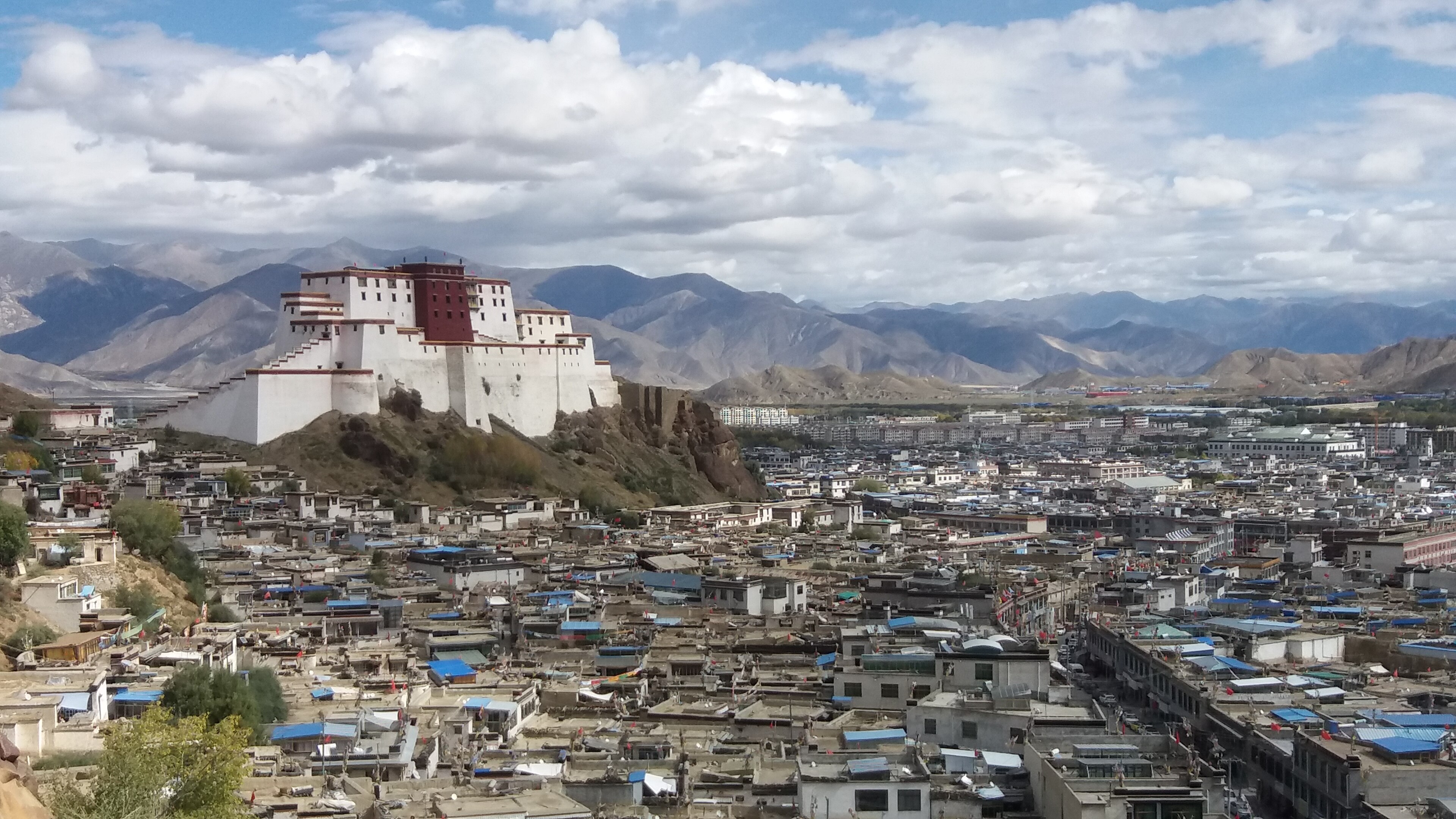
The Fastest Way to Improve Shigatse
Civilisation OS Recommendation | Immediate Boost of Shigatse
Quick Read
If Shigatse wanted the largest realistic improvement in the shortest useful sequence, the answer would probably not be another single road, railway, solar farm, hospital, tourism district or smart-city platform.
Shigatse already possesses substantial infrastructure, institutions, agricultural production, cultural capital, transport connections, energy resources and regional importance.
The faster gain is to make more of what already exists become usable capability for actual people.
The Immediate Boost becomes much more powerful when it stops being a one-time planning exercise and becomes a permanent operating system for Shigatse.
The recommendation is to create a small Capability Conversion Unit (CCU) that continuously asks:
Where is existing infrastructure, investment or institutional capacity failing to become useful capability for people?
Instead of automatically responding with another large project, the CCU traces the failure through a Conversion Ticket, identifies the precise weak link, places it into a prioritised Repair Queue, and applies the smallest intervention likely to restore the capability.
The operating sequence is:
Sense the loss → locate the conversion failure → repair the weakest interface → measure the receiver outcome → retain the learning → repeat.
Over time, Shigatse develops:
- shared capability maps;
- loss heatmaps;
- seasonal operating modes;
- failure alerts;
- local feedback points;
- retention audits;
- cross-system multiplier detection;
- a rule preventing broken systems from being expanded.
The objective is not to maximise construction.
It is to make more of what Shigatse already possesses actually reach the people who need it.
Once this system becomes routine, Shigatse moves from managing isolated development projects to running a self-correcting capability system.
That creates the foundation for the next stage—the Best Boost, where the question changes from repairing lost capability to deliberately generating new capability.
The recommendation is therefore:
The Shigatse Capability Conversion Programme
Its task is simple:
Find the places where an existing asset, service or resource fails to become a useful human outcome—and repair those interfaces first.
Examples include:
electricity → dependable household warmth
electricity → working water pumps
hospital capacity → treatment that a distant patient can actually reach
agricultural output → stored, processed and saleable food
railway and roads → usable market access
telecommunications → understandable Tibetan-language services
tourism → income and capability retained locally
scientific activity → local jobs, skills and institutions
heritage investment → living cultural continuity
This is the Immediate Boost.
Once the strongest conversion points work, they can then be connected through a wider Shigatse Community Continuity Grid.
The difference matters.
Shigatse should first improve the transformers.
Then it should connect them.
1. The Recommendation
The fastest broad improvement for Shigatse is to establish a permanent Capability Conversion Programme responsible for one outcome:
Increase the percentage of Shigatse’s existing resources, infrastructure and institutions that become useful, accessible and retainable capability for its people.
The programme should not begin by asking:
What should we build?
It should begin by asking:
Where is useful capability currently being lost?
That changes the order of development.
Instead of:
Project
→ construction
→ completion
→ hope for benefit
the sequence becomes:
Human need
→ existing capability
→ conversion failure
→ precise repair
→ measured outcome.
This is the central recommendation of this report.
2. Why Shigatse Is Different
Shigatse is not simply one compact city.
Its urban centre sits inside a much larger high-altitude civilisation system containing:
- farms;
- villages;
- county towns;
- pastoral areas;
- monasteries;
- transport corridors;
- water systems;
- energy systems;
- mountain environments;
- border and trade routes;
- scientific observation sites;
- cultural institutions.
The urban centre concentrates services such as:
- advanced healthcare;
- administration;
- education;
- markets;
- warehousing;
- railway access;
- technical expertise.
The wider region contains much of the:
- agricultural production;
- environmental resources;
- cultural landscape;
- local knowledge;
- settlement network;
- strategic geography.
The problem is therefore rarely only:
Does Shigatse possess an asset?
The more important question is:
Can that asset successfully reach the receiver who needs it?
3. Infrastructure Is Not the Same as Capability
A road is infrastructure.
Being able to reach healthcare, school or market reliably is capability.
Electricity is infrastructure.
Being warm during winter is capability.
A hospital is infrastructure.
Receiving treatment before a condition becomes dangerous is capability.
Agricultural production is output.
Being able to store, process and sell that output at useful value is capability.
A communications tower is infrastructure.
Being able to obtain understandable help when something fails is capability.
This distinction can be compressed into one chain:
Asset
→ Access
→ Conversion
→ Usability
→ Receiver
→ Capability.
A failure anywhere in that chain reduces the final result.
Shigatse can therefore improve substantially without first constructing another enormous system.
It can improve by reducing losses in the conversion chain.
4. Shigatse as a Civilisation Power Plant
Civilisation OS treats a city-region partly like a power plant.
The analogy is not that people are machines.
It is that places receive inputs, convert them and produce outcomes.
Shigatse possesses unusually strong inputs.
These include:
- high-altitude land;
- solar radiation;
- water systems;
- agricultural knowledge;
- highland barley and other plateau crops;
- livestock systems;
- Tibetan language and culture;
- monasteries and accumulated institutional memory;
- strategic location;
- transport corridors;
- scientific value created by altitude and environmental conditions.
These inputs enter conversion systems:
- households;
- farms;
- schools;
- clinics;
- hospitals;
- monasteries;
- markets;
- transport networks;
- utilities;
- government;
- research institutions.
The desired outputs are not merely GDP or physical production.
They include:
- health;
- warmth;
- food security;
- income;
- knowledge;
- education;
- cultural continuity;
- resilience;
- employment;
- mobility;
- scientific capability;
- human choice.
The Immediate Boost therefore asks:
Where does Shigatse possess strong inputs but obtain weak useful output?
Those are the first places to repair.
5. The First Conversion Interface: Energy to Human Use
Shigatse has strong solar potential and substantial modern electricity infrastructure.
But electricity generation is not the final human outcome.
The conversion chain is:
electricity
→ distribution
→ building
→ appliance or heating system
→ affordability
→ reliable warmth, water or service.
The programme should therefore measure outcomes such as:
- dependable winter heating;
- protected clinic power;
- water-pump continuity;
- medicine refrigeration;
- communications backup;
- food-storage continuity.
If more electricity is generated but the weak link is insulation, storage, wiring or affordability, adding generation alone produces a smaller gain.
The Immediate Boost repairs the limiting interface first.
6. The Second Conversion Interface: Agriculture to Household Prosperity
Shigatse is one of Tibet’s important agricultural regions.
That means agricultural development should not be judged only through tonnes produced.
The complete conversion chain is:
land
→ crop
→ harvest
→ storage
→ processing
→ transport
→ market
→ household income
→ reinvestment.
Loss can occur at every step.
A farmer may produce more but still gain little if:
- storage is inadequate;
- transport is unreliable;
- processing happens elsewhere;
- machinery cannot be repaired;
- market information is weak;
- buyers capture most of the margin.
The fastest agricultural improvement may therefore not be higher yield.
It may be:
- local storage;
- processing;
- machinery repair;
- market access;
- transport coordination;
- better buyer competition.
The correct intervention depends on where the conversion chain currently loses the most value.
7. The Third Conversion Interface: Healthcare to Reachable Care
A regional hospital can contain advanced capability.
But that capability has little value to a patient who cannot reach it in time.
The health conversion chain is:
medical knowledge
→ facility
→ local assessment
→ referral
→ transport
→ treatment
→ recovery.
Shigatse should therefore improve the connection between:
- village health workers;
- township clinics;
- county hospitals;
- the urban specialist system;
- telemedicine;
- emergency transport.
The objective is not simply more hospitals.
It is:
The correct level of care reaching the patient at the correct time.
This may allow many consultations to remain local while preserving rapid access to advanced treatment when required.
8. The Fourth Conversion Interface: Transport to Actual Access
Shigatse has significant road and railway infrastructure.
Transport infrastructure becomes capability only when it allows people and goods to reach useful destinations.
The relevant chain is:
road or railway
→ feeder connection
→ reliable service
→ affordable journey
→ destination
→ useful outcome.
A railway may connect Shigatse to a major corridor.
But a farmer still requires access from field to collection point.
A patient still requires transport from home to clinic.
A student still requires reliable access to school.
A warehouse still requires local distribution.
The Immediate Boost therefore asks:
Where does the transport network stop being useful?
That point—not simply the absence of another major road—is the conversion bottleneck.
9. The Fifth Conversion Interface: Digital Infrastructure to Understandable Service
Connectivity is useful.
But digital connectivity is not the same as usable access.
A resident must be able to:
- understand the system;
- communicate in an appropriate language;
- know where to ask for help;
- obtain a response;
- use an offline alternative when technology fails.
For Shigatse, Tibetan-language capability is therefore part of system performance.
A digital system translated only after design is complete can remain structurally inaccessible.
The stronger model is:
Tibetan-language design
- Mandarin interoperability
- human assistance
- offline fallback.
The purpose is not merely multilingual display.
It is usable service.
10. Culture Is Not a Side Constraint
A conventional development model might treat Tibetan culture as something that must be protected while economic development proceeds.
That is incomplete.
Culture itself is part of Shigatse’s productive capacity.
Tibetan language, monasteries, religious institutions, crafts, historical memory and accumulated knowledge perform functions including:
- knowledge retention;
- social trust;
- education;
- community organisation;
- cultural production;
- identity;
- historical memory;
- tourism value;
- interpretation of the environment.
Tashilhunpo Monastery is therefore not merely a monument requiring preservation.
It forms part of a wider living institutional system.
If an intervention increases physical output while weakening these capabilities, the city may record a gain while the civilisation system experiences a loss.
The Immediate Boost must therefore count cultural capability as an output.
11. Shigatse Should Not Remove All Friction
Development is often described as reducing friction.
But the Shigatse analysis reveals that not every constraint should be removed.
Civilisation OS separates three forms.
Destructive friction
This wastes useful capability.
Examples:
- avoidable medical delay;
- unreliable repairs;
- unnecessary administrative complexity;
- preventable agricultural spoilage.
Reduce it.
Protective friction
This deliberately slows activity to protect another capability.
Examples might include:
- ecological limits;
- heritage protection;
- controlled visitor loads;
- restrictions around sensitive scientific sites.
Manage and preserve it where justified.
Productive friction
Some difficult conditions create specialisation.
Shigatse’s altitude, climate and geography have encouraged distinctive:
- agriculture;
- physiology;
- construction knowledge;
- environmental understanding;
- logistical adaptation.
Removing every difficult condition is neither possible nor desirable.
The correct objective is not zero friction.
It is:
The right friction in the right place at the right level.
12. Why Maximum Development Is Not the Target
Suppose Shigatse maximised everything.
Maximum:
- tourism;
- road penetration;
- agricultural output;
- connectivity;
- energy extraction;
- scientific use;
- urban concentration;
- data collection.
The result could eventually become destructive.
Too much tourism can damage cultural and environmental value.
Too much agricultural intensity can weaken soil and water systems.
Too much centralisation can hollow out peripheral settlements.
Too much connectivity can destroy useful isolation.
Too much external research can extract knowledge without building local capability.
Too much data visibility can weaken privacy and trust.
The target therefore cannot be:
Maximum development.
It should be:
Maximum Sustainable Useful Capability
This means increasing useful human outcomes while keeping the systems that produce them healthy enough to continue.
13. The Human Receiver Test
Every proposed conversion project should answer:
Who actually receives the improvement?
An investment may produce strong aggregate numbers while leaving important groups with little benefit.
The programme should therefore test impacts on:
- urban households;
- rural households;
- farmers;
- pastoral communities;
- students;
- elderly residents;
- patients;
- women and caregivers;
- monasteries;
- local businesses;
- remote settlements;
- younger workers.
The objective is not perfect equality of every outcome.
It is to prevent a system from claiming success because total output rises while important receivers become worse off.
14. The Retention Test
Shigatse can attract:
- capital;
- research;
- tourism;
- technology;
- external expertise.
But external connection is useful only if part of the resulting capability remains.
Every major project should therefore ask:
What is still present in Shigatse after the outside project, contractor, researcher or investor leaves?
Possible retained capability includes:
- trained technicians;
- local firms;
- datasets;
- equipment;
- repair ability;
- professional careers;
- operating knowledge;
- research institutions;
- cultural skills;
- supplier networks;
- income;
- decision-making authority.
If little remains, the project may have produced activity without development.
15. What Should Be Installed First?
The Shigatse Capability Conversion Programme should begin with one pilot area.
It should not begin by assuming the winning intervention.
The pilot first measures conversion losses across:
- water and heating;
- healthcare;
- agriculture;
- transport;
- communications;
- public services;
- local economic retention.
Then it identifies the earliest bottleneck that affects several downstream outcomes.
For example, suppose one township reveals:
strong agricultural output
- adequate road connection
- weak storage
- processing far away
- high post-harvest loss.
Then the Immediate Boost may be:
storage + processing + energy + logistics.
Another location may reveal:
adequate electricity
- clinic present
- poor winter access
- slow referral.
Its Immediate Boost may be:
local diagnostics + telemedicine + medical transport + protected clinic power.
The programme therefore installs different repairs under one common method.
That is stronger than imposing one identical project everywhere.
16. The Smallest Viable Installation
The first complete demonstration should be:
One Capability Conversion Corridor
It should connect:
one cluster of households
→ one local institution
→ one township or county service
→ one regional capability.
It should repair one important conversion chain from beginning to end.
For example:
farm
→ storage
→ processing
→ transport
→ buyer
→ household income.
Or:
patient
→ local assessment
→ remote specialist
→ referral
→ transport
→ treatment.
The first corridor should be chosen by:
Largest receiver gain
× fastest feasible repair
× downstream multiplier
÷ cost, friction and risk.
Prestige should not enter the equation.
17. What Happens After the First Conversion Works
Once several conversion points become reliable, the next layer becomes valuable.
That layer is the:
Shigatse Community Continuity Grid
The Grid connects successful capability nodes.
Its purpose is to preserve useful capability during:
- winter;
- road interruption;
- power failure;
- earthquake;
- communications failure;
- local shortages.
This is where the earlier Shigatse recommendation survives.
But its role is now clearer.
The Capability Conversion Programme makes the nodes work.
The Continuity Grid routes capability between them.
18. Why the Obvious Alternatives Are Weaker as the First Move
Another major road
Useful where access is genuinely the bottleneck.
But it may simply move the bottleneck to:
- storage;
- healthcare;
- markets;
- local transport;
- affordability.
Another railway project
Potentially transformative for a corridor.
But railway access does not automatically become household capability.
More electricity generation
Useful if supply is limiting.
Weak if the real losses are heating efficiency, storage, distribution or affordability.
More tourism
Can create employment and income.
But benefits may leak outward while cultural and environmental burdens remain local.
More agriculture
Higher production is valuable.
But production without storage, processing and market conversion may yield surprisingly little household gain.
Another major hospital
Can expand specialist capability.
But may not solve distance, referral or local diagnosis.
A smart-city platform
Can reveal where failures occur.
It cannot repair the failure itself.
A research centre
Potentially important for Shigatse’s future.
But as an Immediate Boost it risks becoming an enclave unless local education and retention systems are ready.
The common weakness is that each alternative increases one input.
The Capability Conversion Programme asks whether Shigatse is already failing to convert inputs it possesses.
19. Measurement
The programme should not be rewarded primarily for:
- kilometres built;
- megawatts installed;
- buildings completed;
- money spent;
- applications launched.
Its main measurements should be receiver outcomes.
Examples include:
Energy
- households with dependable winter warmth;
- essential facilities maintaining service during outages.
Agriculture
- reduction in post-harvest loss;
- increase in locally retained agricultural value;
- farmer access to processing and markets.
Healthcare
- time to diagnosis;
- time to appropriate treatment;
- avoidable long-distance journeys.
Transport
- time and cost required to reach essential services and markets.
Digital service
- proportion of important services genuinely usable in Tibetan;
- successful offline fallback.
Retention
- locally trained technicians;
- locally retained income;
- local firms and suppliers;
- local knowledge and datasets.
The central measurement is:
How much more usable capability reaches the human receiver because of the repair?
20. The Operating Envelope
The programme must remain between two failure conditions.
At one extreme:
Too little connection
→ isolation
→ weak access
→ capability loss.
At the other:
Too much extraction or integration
→ ecological damage
→ cultural erosion
→ centralisation
→ dependency.
Shigatse therefore requires a useful operating envelope containing:
- enough connectivity;
- enough autonomy;
- enough production;
- enough reserve;
- enough outside connection;
- enough local retention;
- enough cultural and ecological protection.
There is no permanent maximum setting.
The correct configuration changes with circumstances.
21. Shigatse Must Be Able to Change Mode
During ordinary periods, the system may prioritise:
- agriculture;
- education;
- trade;
- health;
- culture;
- research.
During severe winter conditions, priorities shift towards:
- heating;
- water;
- food stocks;
- medical access;
- route reliability.
During an earthquake:
- life safety;
- shelter;
- communications;
- water;
- medical routing.
During recovery:
- housing;
- livelihoods;
- education;
- repair;
- cultural continuity.
The city-region therefore needs something similar to an engine control unit.
It must sense conditions and change its operating map.
A civilisation is not one fixed configuration.
It survives by adapting.
22. The Immediate Boost Should Prepare the Best Boost
The Capability Conversion Programme is not an isolated repair project.
Each successful repair should accumulate:
- skills;
- technicians;
- data;
- institutional knowledge;
- local firms;
- trust;
- operating experience.
These become the foundation for Shigatse’s longer-term development.
The sequence is:
Repair conversion
→ connect successful nodes
→ retain knowledge
→ accumulate capability
→ specialise.
That specialization leads towards the Best Boost:
The Shigatse Plateau Capability System
Its potential long-term branches include:
- high-altitude agriculture;
- plateau medicine;
- water and climate science;
- earthquake and cold-region engineering;
- distributed renewable energy;
- mountain logistics;
- astronomical and environmental observation;
- Tibetan civilisational knowledge.
The Immediate Boost therefore does two jobs.
It improves life now.
And it builds the capability required for Shigatse’s strongest future.
The Recommendation in One Diagram
SHIGATSE TODAY
Existing resources
- infrastructure
- institutions
- culture
- knowledge
↓
MEASURE CONVERSION LOSSES
↓
IMMEDIATE BOOST
Shigatse Capability Conversion Programme
↓
Repair the highest-loss interfaces
↓
More existing capacity becomes usable human capability
↓
CONNECT
Shigatse Community Continuity Grid
↓
RETAIN
skills
- knowledge
- firms
- institutions
- cultural capability
↓
ACCUMULATE
↓
BEST BOOST
Shigatse Plateau Capability System
Conclusion
The fastest way to improve Shigatse is not necessarily to build the largest new project.
Shigatse already possesses substantial capability upstream.
The more important question is how much of that capability survives the journey to the human receiver.
Electricity must become warmth.
Agriculture must become food security and household value.
Hospitals must become reachable healthcare.
Transport must become access.
Digital infrastructure must become understandable service.
Scientific activity must become local knowledge and careers.
Tourism must leave useful value behind.
Heritage investment must sustain living culture.
The Immediate Boost is therefore:
The Shigatse Capability Conversion Programme
Its instruction is:
Find where existing capability is being lost.
Repair the highest-leverage conversion interface first.
Measure what actually reaches people.
Connect successful interfaces.
Retain the knowledge locally.
Then build new capability.
This is faster than treating every problem as a demand for another large input.
And it creates a direct route towards the larger destination.
Shigatse does not need to maximise construction, connectivity, tourism, energy or growth.
It needs to maximise:
Sustainable Useful Human Capability
That is the Immediate Boost.
And that is the foundation from which Shigatse’s Best Boost can begin.
30. Transition to the Operating Layer
Once the Immediate Boost framework is understood conceptually, the next step is to convert it from a methodology into a standing operating layer inside Shigatse’s governance system.
Without this transition, the programme remains an analysis tool.
With it, it becomes a continuous capability engine.
The key shift is this:
From “projects that are designed”
to “systems that continuously repair themselves”.
31. Establish the Capability Conversion Unit (CCU)
A small permanent unit should be created to run the programme.
It should not be a large ministry.
It should function more like a diagnostic nerve centre.
Its responsibilities are:
- maintain conversion maps;
- identify weak links across sectors;
- coordinate pilot selection;
- run evaluation gates;
- archive learning outcomes;
- recommend next interventions.
It does not execute large infrastructure itself.
It ensures that execution is always targeted at the correct conversion failure.
32. Embed CCU Inside Existing Institutions
The CCU should not sit outside government, culture, or service systems.
It should be embedded across them:
- health system liaison;
- agriculture liaison;
- energy liaison;
- education liaison;
- cultural heritage liaison;
- municipal infrastructure liaison.
Each liaison acts as a translation node between lived reality and system design.
This prevents the programme from becoming abstract or detached.
33. Introduce the “Conversion Ticket” System
Every proposed intervention should begin as a Conversion Ticket.
A ticket contains:
- receiver definition;
- capability chain;
- identified loss point;
- proposed repair;
- expected gain;
- risk classification;
- cultural and ecological notes.
No project proceeds without a ticket.
This ensures that:
every intervention is traceable back to a real human capability gap.
34. Create a Shared Shigatse Capability Map
All conversion chains should be visualised in a shared system.
Not as static infrastructure diagrams, but as:
living flows of capability.
The map should show:
- where capability enters;
- where it is lost;
- where it is retained;
- where it is amplified;
- where it is blocked.
Over time, this becomes the operational memory of Shigatse.
35. Introduce “Loss Heatmaps”
To prioritise interventions, the system should generate heatmaps of:
- post-harvest loss;
- medical delay;
- energy inefficiency at household level;
- education access drop-off;
- tourism value leakage;
- infrastructure underutilisation.
These heatmaps identify:
where Shigatse is already investing capability but not receiving it back.
36. Shift Budget Logic From Inputs to Conversions
Traditional budgeting asks:
How much do we spend on roads, hospitals, schools?
The Conversion System asks:
How much capability is actually delivered to the receiver per unit of investment?
This changes funding logic from:
- construction volume
to - conversion efficiency.
A small intervention with high conversion gain becomes more valuable than a large one with weak receiver impact.
37. Introduce Seasonal Capability Planning
Shigatse’s environment requires temporal intelligence.
The system should plan in seasonal capability cycles:
Winter Cycle
- warmth
- access
- medical continuity
- supply stability
Spring Cycle
- agriculture preparation
- infrastructure repair
- training cycles
Summer Cycle
- production
- tourism
- construction
- research activity
Autumn Cycle
- storage
- consolidation
- evaluation
- learning capture
This ensures interventions are not misaligned with environmental reality.
38. Create “Failure-to-Conversion” Alerts
The system should detect when:
infrastructure exists but capability does not arrive.
Examples:
- hospital built but diagnosis delayed;
- road built but market access unchanged;
- electricity available but heating still insufficient;
- school present but attendance low.
These are conversion failures, not infrastructure failures.
Each triggers an automatic review.
39. Introduce Local Feedback Capture Points
Every major service node should include:
- patient feedback points;
- farmer feedback points;
- student feedback points;
- visitor feedback points;
- technician feedback points.
But the key design rule is:
feedback must be tied to a specific conversion chain step.
Not general satisfaction.
This ensures feedback is actionable.
40. Build a “Repair Queue”
All identified weak links enter a structured queue:
Tier 1: Critical Loss
Immediate human impact (health, warmth, safety)
Tier 2: High Economic Loss
Agriculture, logistics, income leakage
Tier 3: Medium Efficiency Loss
Delays, duplication, inefficiencies
Tier 4: Cultural or Long-Term Loss
Language, heritage, institutional continuity
The queue ensures prioritisation is explicit, not political or arbitrary.
41. Introduce “Minimum Effective Intervention” Rule
Every repair must pass a constraint:
It must be the smallest intervention that produces a measurable improvement in receiver capability.
This prevents:
- over-engineering;
- oversized infrastructure;
- unnecessary complexity;
- dependency creation.
It enforces precision over scale.
42. Create Cross-Chain Synergy Detection
Some interventions unlock multiple chains simultaneously.
The system should actively search for:
- shared bottlenecks;
- shared infrastructure;
- shared training systems;
- shared energy dependencies.
Example:
energy storage improves healthcare, education, agriculture, and communications simultaneously.
These become priority multiplier nodes.
43. Introduce Capability Retention Audits
Every completed project must be audited after 6–18 months:
- Is local staff still operating it?
- Is knowledge retained locally?
- Are spare parts locally available?
- Is decision-making local or external?
- Has dependency increased or decreased?
If retention is low, the system flags a structural failure, even if output is high.
44. Establish “Non-Expansion Principle”
A critical governance rule:
No system should expand until its conversion efficiency is proven.
This prevents scaling broken systems.
It ensures:
- pilot first;
- proof second;
- expansion last.
45. Define the End State of the Immediate Boost Layer
The system is considered fully operational when:
- every major service has a conversion map;
- weak links are continuously identified;
- repair cycles are routine;
- local operators manage systems independently;
- feedback loops are active;
- expansion is conditional on conversion success.
At this point, Shigatse is no longer running isolated projects.
It is running a self-correcting capability system.
46. Transition to the Best Boost Layer
Once the Immediate Boost layer stabilises, a new question becomes possible:
Not “where is capability being lost?”
but “what new forms of capability should be created?”
This marks the shift from:
- repair logic
to - generative logic.
From:
fixing conversion failures
to
designing new capability futures.
Final Statement
The Immediate Boost is not a development programme in the traditional sense.
It is a governance transformation.
It replaces:
- infrastructure-first thinking
with - receiver-first intelligence.
It replaces:
- project accumulation
with - conversion optimisation.
And it replaces:
- static planning
with - continuous repair and learning.
Once installed, Shigatse no longer asks only:
“What should we build?”
It begins to ask, continuously and operationally:
“Where is capability failing to reach people—and how do we restore it fastest, cleanest, and closest to the receiver?”
The Best Way to Improve Shigatse
Civilisation OS Recommendation | Best Boost of Shigatse
Quick Read
The fastest way to improve Shigatse is to make its existing infrastructure, resources and institutions convert more effectively into usable human capability.
But that is not necessarily the best long-term way to develop Shigatse.
Once the Immediate Boost is working, the question changes.
It is no longer:
Where is capability being lost?
It becomes:
What new capability should Shigatse become exceptionally good at generating?
After reconstructing Shigatse from its geography, history, culture, economy, infrastructure, environmental conditions and present development trajectory, the strongest long-term opportunity is not to turn Shigatse into another generic industrial city, tourism centre or technology hub.
The recommendation is:
Build the Shigatse Plateau Capability System
Its long-term purpose would be to make Shigatse one of the world’s strongest centres for understanding, developing and applying the capabilities required for human societies to live, produce, build, heal, learn and remain resilient at extreme altitude.
This system could connect:
- plateau agriculture;
- high-altitude health;
- Tibetan medicine;
- water and climate science;
- earthquake-resilient construction;
- cold-region engineering;
- distributed renewable energy;
- mountain logistics;
- astronomy and atmospheric observation;
- Tibetan language and civilisational knowledge;
- cultural conservation;
- education and technical training.
These are not unrelated industries.
They share the same underlying environment.
That is the opportunity.
1. Why the Best Boost Is Different From the Immediate Boost
The Immediate Boost repairs.
The Best Boost generates.
The Immediate Boost asks:
How can Shigatse obtain more useful capability from what it already has?
The Best Boost asks:
What capabilities should Shigatse deliberately create that it does not yet possess at sufficient scale?
The difference is important.
If Shigatse remains permanently focused on repairing:
- heating;
- roads;
- healthcare access;
- agricultural storage;
- communications;
- public-service delivery;
then daily life can improve substantially.
But Shigatse could still remain dependent on other places for:
- advanced research;
- specialised engineering;
- technical design;
- high-value processing;
- advanced medicine;
- data analysis;
- equipment development;
- specialist education.
Repairing the present system is therefore necessary.
It is not the final destination.
2. Start With Shigatse’s Actual Substrate
A long-term strategy should not begin by asking:
Which industries are fashionable?
It should begin with:
What does this place possess that cannot easily be reproduced elsewhere?
Shigatse’s substrate includes:
- extreme altitude;
- strong solar radiation;
- large temperature variation;
- mountain environments;
- distinctive atmospheric conditions;
- earthquake exposure;
- important river and water systems;
- high-altitude agriculture;
- pastoral environments;
- Tibetan settlement knowledge;
- centuries of cultural adaptation;
- monasteries and institutional memory;
- strategic transport geography.
Some of these conditions create hardship.
But they also create information.
A society that has lived for centuries under extreme conditions accumulates knowledge about:
- food;
- architecture;
- clothing;
- medicine;
- movement;
- water;
- livestock;
- seasonal risk;
- community organisation.
Modern science can add another layer.
The opportunity is to connect inherited knowledge with modern scientific and engineering capability.
3. Do Not Treat Altitude Only as a Disadvantage
Many development strategies implicitly assume that Shigatse’s altitude is a cost to overcome.
It certainly creates costs.
Altitude affects:
- oxygen availability;
- agriculture;
- transport;
- construction;
- health;
- energy demand;
- logistics.
But those same constraints can produce specialisation.
The question is:
What becomes valuable precisely because Shigatse operates under conditions that are difficult elsewhere?
Possible answers include:
- high-altitude crop research;
- cold-resistant agriculture;
- high-altitude medicine;
- physiology;
- resilient construction;
- low-temperature energy systems;
- mountain logistics;
- atmospheric observation;
- astronomy;
- environmental monitoring.
This is an example of productive friction.
The constraint itself can create knowledge.
The correct development strategy therefore does not attempt to erase the plateau.
It learns how to become exceptionally capable within it.
4. The Central Recommendation
The Best Boost should develop a distributed:
Shigatse Plateau Capability System
It should not be one giant research park.
It should be an ecosystem connecting:
communities
- farms
- hospitals
- monasteries
- schools
- technical institutes
- universities
- laboratories
- businesses
- infrastructure operators.
The objective is to create a circular capability system:
local conditions
→ observation
→ knowledge
→ research
→ tools
→ local application
→ improved outcomes
→ further knowledge.
The system learns from Shigatse.
Then Shigatse benefits from what is learned.
5. Branch One: Plateau Agriculture
Agriculture should become one of the foundational branches.
Shigatse already possesses strong agricultural significance.
The Best Boost would move beyond producing more crops.
It would build knowledge around:
- highland barley;
- cold-tolerant crops;
- drought resilience;
- soil management;
- greenhouse systems;
- water efficiency;
- livestock health;
- seed development;
- storage;
- food processing;
- high-altitude agricultural machinery.
This creates a progression:
Farmer
→ field observation
→ agricultural research
→ improved method
→ local testing
→ local production
→ commercial product.
Over time, Shigatse could export not only food.
It could export:
knowledge of plateau agriculture.
That is a much higher-value capability.
6. Branch Two: Plateau Health
High-altitude living creates distinctive medical challenges.
These include:
- oxygen physiology;
- cardiovascular stress;
- respiratory conditions;
- maternal health;
- emergency medicine;
- chronic disease;
- occupational health;
- remote healthcare delivery.
Shigatse could develop a specialised health system connecting:
- community healthcare;
- county hospitals;
- regional specialists;
- Tibetan medicine;
- modern clinical medicine;
- physiology research;
- telemedicine;
- emergency response.
The long-term ambition should not simply be:
better healthcare for Shigatse.
It should become:
Shigatse generates knowledge about healthcare in high-altitude environments.
That knowledge could be valuable across other mountain regions worldwide.
7. Tibetan Medicine
Tibetan medicine should not be positioned as a decorative cultural branch separate from modern healthcare.
It contains accumulated:
- pharmacological knowledge;
- diagnostic traditions;
- environmental knowledge;
- medical texts;
- institutional practice.
The opportunity is not to claim that all traditional treatments are automatically scientifically valid.
Nor should modern science automatically dismiss them.
The correct architecture is:
preserve
→ document
→ investigate
→ test
→ validate where evidence supports
→ reject where evidence does not
→ retain cultural and historical knowledge regardless.
This creates a knowledge bridge without confusing cultural respect with scientific proof.
8. Branch Three: Water and Climate
Shigatse exists inside one of the world’s most consequential high-altitude water environments.
Changes in:
- snow;
- glaciers;
- rainfall;
- river behaviour;
- temperature;
- evaporation;
can affect communities far beyond the immediate region.
Shigatse could therefore build capability in:
- hydrology;
- glacier observation;
- water allocation;
- drought monitoring;
- flood risk;
- agricultural water efficiency;
- high-altitude climate measurement.
The local benefit is better water security.
The wider benefit is improved understanding of plateau water systems.
9. Water Must Remain a Protection Constraint
This creates an important boundary.
A successful plateau economy could increase:
- agriculture;
- tourism;
- research;
- construction;
- industry.
All can increase water demand.
Therefore, water cannot simply become another input to be maximised.
It must function as a governing constraint.
Growth should remain inside a water-safe operating envelope.
This is protective friction.
The limit is part of the system.
10. Branch Four: Plateau Engineering
Shigatse’s physical environment creates engineering problems that many cities do not face simultaneously.
These include:
- seismic risk;
- extreme temperature variation;
- altitude;
- difficult terrain;
- long-distance infrastructure;
- remote maintenance;
- seasonal access.
That creates an opportunity for specialisation in:
- earthquake-resistant construction;
- cold-region materials;
- modular buildings;
- distributed utilities;
- remote monitoring;
- low-maintenance systems;
- mountain roads;
- resilient bridges;
- water systems.
Instead of importing every advanced solution, Shigatse should gradually become capable of designing more of them itself.
11. The Earthquake Laboratory Principle
The January 2025 Dingri earthquake caused severe loss of life and destruction across parts of the Shigatse region.
The wrong response would be to view earthquakes only as unfortunate interruptions.
The correct long-term response is to learn systematically.
Every significant earthquake should improve:
- construction standards;
- building assessment;
- emergency planning;
- communications;
- shelter systems;
- reconstruction methods;
- heritage conservation.
This creates:
shock
→ observation
→ learning
→ improved design
→ lower future loss.
The objective is not to exploit disaster.
It is to refuse to waste the information contained in failure.
12. Branch Five: Plateau Energy
Shigatse has strong renewable-energy potential.
But the Best Boost should not simply maximise generation.
A stronger specialisation would include:
- solar generation;
- energy storage;
- efficient heating;
- building insulation;
- microgrids;
- remote maintenance;
- cold-weather battery performance;
- distributed resilience.
The research question becomes:
How can high-altitude communities obtain reliable, affordable and locally maintainable energy?
Solutions developed for Shigatse could become useful in other remote high-altitude environments.
13. Branch Six: Mountain Logistics
Distance and terrain create persistent logistical challenges.
These affect:
- food;
- medicine;
- construction;
- emergency response;
- commerce;
- maintenance.
Shigatse could develop expertise in:
- distributed warehousing;
- route optimisation;
- seasonal logistics;
- remote inventory management;
- modular transport;
- emergency supply systems;
- mountain mobility.
Again, the difficult environment creates the field of expertise.
14. Branch Seven: Astronomy and Observation
Shigatse’s physical environment can also provide valuable scientific observation conditions.
Recent scientific infrastructure demonstrates that Shigatse already participates in advanced astronomical observation.
This creates a possible branch around:
- radio astronomy;
- atmospheric observation;
- environmental monitoring;
- geodesy;
- earth observation.
But the Best Boost should avoid the enclave model.
The weak model is:
outside scientists arrive
→ collect data
→ leave.
The stronger model is:
scientific infrastructure
→ local technical training
→ local education
→ local data capability
→ research careers
→ local institutions.
Observation becomes capability only when some of the knowledge-production system remains.
15. Branch Eight: Tibetan Civilisational Knowledge
This may be the most distinctive branch.
Shigatse contains centuries of accumulated:
- language;
- texts;
- monastery systems;
- religious knowledge;
- artistic practice;
- architecture;
- medical knowledge;
- agricultural knowledge;
- historical memory.
A modern capability system should not merely conserve these as heritage objects.
It should strengthen:
- scholarship;
- Tibetan-language education;
- digitisation;
- translation;
- archival practice;
- conservation;
- craft training;
- cultural research;
- intergenerational transmission.
The objective is a living knowledge system.
Not a museum.
16. Tashilhunpo as a Knowledge Institution
Tashilhunpo Monastery should therefore be understood through several lenses simultaneously.
It is:
- a religious institution;
- a historic institution;
- a major architectural complex;
- a centre of Tibetan Buddhist learning;
- a repository of cultural memory.
The Best Boost should not convert it into a development instrument.
But the wider Shigatse system can strengthen the capabilities surrounding it:
- conservation;
- manuscript preservation;
- historical research;
- craft training;
- Tibetan-language scholarship;
- visitor management;
- disaster protection.
The monastery remains a religious institution.
The surrounding capability system becomes stronger.
17. Education Becomes the Conversion Engine
None of the Best Boost works without education.
Shigatse would require progressively stronger training pathways in:
- agriculture;
- medicine;
- engineering;
- energy;
- water science;
- logistics;
- data;
- astronomy;
- conservation;
- Tibetan scholarship.
Education therefore becomes the main conversion mechanism between:
local conditions
and:
local expertise.
The long-term objective should be:
A student in Shigatse can progress from local school to advanced plateau-related expertise without needing to leave permanently to obtain every serious opportunity.
External education remains valuable.
Permanent capability leakage is the problem.
18. Create the Plateau Capability Institute Network
The system should probably not begin with one enormous new university.
A more resilient structure is a network.
Possible institutes could include:
Plateau Agriculture Institute
High-Altitude Health Institute
Water and Climate Institute
Plateau Engineering Institute
Renewable Energy and Remote Systems Institute
Tibetan Knowledge and Conservation Institute
These could connect existing:
- schools;
- hospitals;
- research centres;
- agricultural stations;
- monasteries where appropriate;
- universities elsewhere.
The network can grow before a large new campus is justified.
19. The Institutes Must Solve Real Shigatse Problems
This is critical.
Research should not be judged primarily by:
- number of buildings;
- publications;
- international partnerships.
It should also be judged by whether it improves:
- farmer productivity;
- water security;
- household warmth;
- healthcare;
- earthquake resilience;
- local employment;
- cultural continuity.
This connects the Best Boost back to the Immediate Boost.
The research system continuously feeds the Capability Conversion Programme.
20. Create the Knowledge Return Rule
Every externally partnered research project should answer:
What capability remains in Shigatse?
Possible requirements include:
- local co-researchers;
- training places;
- shared equipment;
- locally accessible datasets;
- Tibetan-language public summaries;
- technical apprenticeships;
- local maintenance capability;
- institutional partnerships.
This is the research equivalent of the Retention Test.
21. Build Local Firms Around the Knowledge System
Research alone does not create an economy.
Knowledge must sometimes become:
- products;
- services;
- equipment;
- engineering firms;
- food businesses;
- health services;
- conservation firms;
- software;
- specialised tourism.
The goal is to create a local enterprise layer around plateau capability.
For example:
agricultural research
→ greenhouse technology
→ local manufacturing or maintenance company.
Or:
earthquake research
→ building techniques
→ local engineering firms.
This keeps more value inside the region.
22. Tourism Becomes a Secondary Output
Tourism should not be the primary Best Boost.
Shigatse has substantial tourism potential.
But tourism is more useful as an output of a healthy civilisation system than as its main purpose.
A strong Shigatse produces:
- living culture;
- beautiful landscapes;
- functioning monasteries;
- interesting agriculture;
- knowledge;
- history.
People will want to visit.
The tourism system should therefore support rather than determine the region.
Its goal should be:
higher retained value per unit of visitor pressure.
Not maximum visitor numbers.
23. Protect the Cultural Operating Envelope
Tourism, infrastructure and research can all increase pressure on cultural systems.
Therefore, the Best Boost needs cultural thresholds.
Indicators might include:
- Tibetan-language use;
- local ownership;
- housing affordability;
- neighbourhood continuity;
- monastery function;
- craft survival;
- resident access to significant places.
If economic growth systematically weakens these indicators, the system is moving outside its safe operating envelope.
24. Protect the Ecological Operating Envelope
The same applies environmentally.
The Plateau Capability System must monitor:
- water use;
- soil;
- grassland;
- waste;
- habitat;
- construction footprint;
- energy impacts;
- visitor pressure.
A development strategy built around understanding plateau systems would contradict itself if it degraded the plateau.
Environmental integrity is therefore not a side constraint.
It is part of the productive asset.
25. Avoid the Extraction Trap
The greatest long-term risk is that Shigatse becomes valuable to everyone except Shigatse.
The pattern could be:
plateau data extracted
energy exported
tourism profits extracted
scientific careers located elsewhere
agricultural value captured downstream
cultural products commercialised externally.
Gross activity could rise considerably.
Local capability might rise much less.
The Best Boost must therefore measure:
Capability Retention Rate
How much of the generated value becomes:
- local knowledge;
- local income;
- local firms;
- local technical ability;
- local institutional strength?
26. External Connection Is Still Essential
Retention does not mean isolation.
Shigatse should connect strongly with:
- Lhasa;
- other Tibetan regions;
- Chinese research institutions;
- Himalayan regions;
- international mountain research;
- medical networks;
- agricultural research;
- astronomy;
- climate science.
The aim is not:
keep everything inside.
It is:
connect outward without becoming a passive extraction site.
Healthy exchange moves in both directions.
27. The Distributed Model
The Best Boost should not concentrate everything inside central Shigatse.
Different capabilities belong in different places.
Agricultural knowledge should remain connected to farms.
Water research should remain connected to watersheds.
Healthcare should connect urban specialists to county systems.
Cultural knowledge should remain connected to living institutions.
This creates:
specialised nodes
- strong connections
- local retention.
That is more resilient than one giant central campus.
28. The Role of the Community Continuity Grid
The Community Continuity Grid now becomes important again.
It provides the routing layer connecting:
- research;
- farms;
- clinics;
- schools;
- businesses;
- communities.
The Immediate Boost creates reliable conversion nodes.
The Continuity Grid connects them.
The Best Boost uses the connected network to generate new capability.
These are now three different layers:
Convert.
Route.
Generate.
29. The Role of the CCU
The Capability Conversion Unit from the Immediate Boost remains active.
Its job changes slightly.
At first it asks:
Where is existing capability being lost?
Later it also asks:
Is the new capability generated by the Best Boost reaching people?
This protects the Best Boost from becoming detached from ordinary life.
30. Build the Generative Layer
A second operating structure eventually becomes useful.
Call it provisionally the:
Plateau Capability Generator
Its role is not to repair existing systems.
It asks:
What new capability should Shigatse develop next?
It scans:
- emerging science;
- local problems;
- local strengths;
- global demand;
- environmental change;
- accumulated research.
It then creates candidate capability programmes.
31. The Generator Does Not Pick Winners Blindly
It should produce hypotheses.
Examples:
Can Shigatse develop better cold-region greenhouse systems?
Can local earthquake knowledge become improved construction technology?
Can plateau medical research improve remote health services?
Can Tibetan-language archives become a major digital scholarship resource?
The hypotheses are tested.
Only successful ones scale.
The Best Boost therefore remains experimental and adaptive.
32. Capability Portfolio
Shigatse should not bet everything on one sector.
Its Best Boost should operate as a portfolio.
Possible portfolio:
- agriculture;
- health;
- water;
- engineering;
- energy;
- observation;
- culture.
Some will mature faster.
Some may fail.
The portfolio reduces strategic fragility.
33. ECU and Adaptation
The portfolio should change as conditions change.
Suppose:
- water stress increases;
- tourism demand changes;
- agricultural conditions shift;
- new scientific opportunities emerge.
Shigatse should reweight the portfolio.
This is the ECU function.
The Best Boost is not one permanent master plan.
It is a direction with adaptive configuration.
34. What Should Not Become the Best Boost
The scans reject several simpler futures.
Shigatse as a Tourism City
Too narrow and vulnerable to cultural extraction.
Shigatse as an Industrial City
Potentially poor fit with geography and environmental constraints if pursued generically.
Shigatse as an Energy Export Zone
May generate large gross output while retaining limited local capability.
Shigatse as a Science City
Stronger, but risks becoming an external research enclave.
Shigatse as an Agricultural Region
Too narrow.
Agriculture is foundational but does not capture the full opportunity.
The Plateau Capability System contains useful elements of all of them without allowing one to dominate.
35. What Success Would Look Like
Twenty years into a successful trajectory, Shigatse might have:
- stronger agricultural productivity with lower resource loss;
- recognised plateau-health expertise;
- local engineering firms specialising in cold and seismic environments;
- advanced water-monitoring capability;
- locally maintained renewable-energy systems;
- technicians supporting astronomy and observation infrastructure;
- strong Tibetan-language digital archives;
- viable conservation and craft professions;
- more advanced career pathways for local students;
- research that repeatedly solves local problems.
The important feature is not the exact list.
It is the pattern:
Shigatse increasingly solves difficult plateau problems itself.
36. The Best Boost Test
A candidate Best Boost project should pass six questions.
Does it use a genuine Shigatse advantage?
Does it increase useful local capability?
Does knowledge remain locally?
Can local people enter the capability pathway?
Does it remain inside ecological and cultural limits?
Does it strengthen adaptation to future change?
If not, it may be economically useful.
But it is not part of the Best Boost.
37. Immediate Boost to Best Boost
The two recommendations now connect directly.
Immediate Boost
Repair:
asset
→ human capability.
Continuity Layer
Connect:
capability
→ capability.
Retention Layer
Preserve:
capability
→ local accumulation.
Best Boost
Generate:
accumulated capability
→ new capability.
The sequence is therefore:
Repair
→ Route
→ Retain
→ Generate
→ Learn
→ Repeat.
38. The Long-Term Power Plant
The final system begins to resemble a mature civilisation power plant.
Inputs include:
- plateau conditions;
- culture;
- land;
- water;
- solar energy;
- knowledge;
- investment.
Conversion occurs through:
- education;
- science;
- engineering;
- healthcare;
- enterprise;
- cultural institutions.
Outputs include:
- food;
- health;
- technology;
- knowledge;
- resilience;
- cultural continuity;
- economic opportunity.
EnDist determines:
where those outputs travel.
Retention determines:
what stays.
The ECU determines:
how the configuration changes.
The human receiver determines:
whether any of it counts as improvement.
39. The Best Boost Is Not Maximum Growth
This is worth repeating.
The goal is not:
- maximum GDP;
- maximum tourism;
- maximum population;
- maximum construction;
- maximum energy;
- maximum research output.
The target remains:
Maximum Sustainable Useful Human Capability
A smaller economy with higher:
- resilience;
- knowledge;
- health;
- autonomy;
- cultural continuity;
- ecological stability;
can outperform a larger economy that damages the systems producing those capabilities.
40. Final Recommendation
The Best Boost for Shigatse is to build a:
Shigatse Plateau Capability System
Its central mission is:
Make Shigatse exceptionally capable of understanding and solving the problems of living, producing and thriving at extreme altitude.
The system should develop interconnected capability in:
- agriculture;
- health;
- water;
- engineering;
- energy;
- logistics;
- scientific observation;
- Tibetan knowledge.
It should be:
- distributed;
- locally accessible;
- scientifically rigorous;
- culturally grounded;
- ecologically bounded;
- internationally connected;
- locally retentive.
Conclusion
Shigatse’s strongest future does not lie in copying another successful city.
Its comparative advantage begins precisely where conventional development often sees inconvenience:
- altitude;
- distance;
- climate;
- difficult terrain;
- cultural distinctiveness;
- long historical adaptation.
These conditions create challenges.
They also create knowledge.
The Immediate Boost makes existing systems work better.
The Best Boost transforms accumulated experience into new capability.
Together they create a development sequence:
First, make what Shigatse already has reach its people.
Then connect what works.
Retain the knowledge created.
Finally, use that accumulated capability to become exceptionally good at solving plateau problems.
If successful, Shigatse would no longer be understood primarily as a remote high-altitude city requiring development.
It would become something much more interesting:
A place that teaches the world how complex human systems can flourish on the plateau.
How to Build the Best Boost of Shigatse
Civilisation OS Operating Report | Shigatse Plateau Capability System
The Best Boost recommendation proposes a long-term transformation:
Build the Shigatse Plateau Capability System
The objective is not simply to improve individual sectors.
It is to make Shigatse increasingly capable of:
understanding, solving and eventually exporting knowledge about the problems of living, producing and operating sustainably at extreme altitude.
The system could connect:
- plateau agriculture;
- high-altitude health;
- Tibetan medicine;
- water and climate;
- earthquake and cold-region engineering;
- renewable energy;
- mountain logistics;
- astronomy and environmental observation;
- Tibetan language, archives and civilisational knowledge.
But naming these fields does not create a capability system.
The difficult question is:
How does Shigatse move from having interesting assets to becoming capable of repeatedly generating new knowledge, skills, technologies, institutions and opportunities from them?
This article describes that operating layer.
1. Begin Where the Immediate Boost Ends
The Immediate Boost establishes a permanent repair mechanism.
Its Capability Conversion Unit continuously asks:
Where is existing capability failing to reach the receiver?
It maps conversion chains.
It identifies losses.
It issues Conversion Tickets.
It builds a Repair Queue.
It runs the smallest effective intervention.
It measures whether the repair worked.
Once this becomes routine, Shigatse possesses something important.
It has developed the ability to:
- sense;
- diagnose;
- repair;
- measure;
- retain;
- learn.
That capability should not be discarded when the immediate problems improve.
It becomes the foundation of the Best Boost.
The question simply changes.
From:
What capability are we losing?
to:
What capability should we create next?
2. Create the Plateau Capability Generator
The Best Boost requires a new operating function.
Call it the:
Plateau Capability Generator
Its role is different from the Capability Conversion Unit.
The CCU repairs.
The Generator explores.
The CCU asks:
Why is an existing system underperforming?
The Generator asks:
What could Shigatse become capable of doing that it cannot do sufficiently today?
The Generator should continuously scan:
- local problems;
- scientific opportunities;
- accumulated research;
- environmental change;
- emerging technologies;
- economic demand;
- cultural knowledge;
- unusual Shigatse advantages.
It converts those observations into candidate capability programmes.
3. Do Not Turn the Generator Into a Central Planning Ministry
The Generator should not attempt to predict Shigatse’s future from one office.
That would recreate the problem the Immediate Boost was designed to avoid.
It should operate as a network.
Possible participants include:
- farmers;
- hospitals;
- schools;
- technical institutes;
- universities;
- businesses;
- engineers;
- monasteries and scholars where appropriate;
- local government;
- outside research partners.
The system should generate hypotheses from multiple directions.
A farmer may identify a problem before a laboratory does.
A doctor may observe a high-altitude health pattern.
A monastery archive may contain knowledge relevant to historical climate or agriculture.
An engineer may discover a recurring cold-weather failure.
Capability generation begins with observation.
4. Introduce the Capability Hypothesis
Every new Best Boost programme should begin as a hypothesis.
For example:
Can Shigatse develop greenhouse systems better adapted to extreme altitude?
Or:
Can repeated earthquake reconstruction produce better plateau building systems?
Or:
Can high-altitude clinical experience produce specialised medical knowledge?
Or:
Can Tibetan-language archives become a major digital scholarship resource?
The hypothesis must state:
- Shigatse advantage;
- problem or opportunity;
- proposed capability;
- intended receiver;
- required knowledge;
- possible local application;
- possible wider application;
- cultural and ecological constraints.
This prevents vague innovation policy.
5. Create a Capability Experiment Queue
Hypotheses should enter an experiment queue.
They should not immediately become major projects.
The queue can be divided into stages.
Stage 0 — Observation
An interesting pattern or problem exists.
Stage 1 — Hypothesis
A possible new capability is identified.
Stage 2 — Small Experiment
Test whether the capability can work.
Stage 3 — Local Application
Apply it to a real Shigatse problem.
Stage 4 — Replication
Test it in several locations.
Stage 5 — Institutionalisation
Create training, standards and organisations around it.
Stage 6 — External Transfer
Export the knowledge, product or service elsewhere.
This prevents Shigatse from jumping directly from idea to prestige institution.
6. Demand a Local Problem Before a Global Ambition
One of the strongest safeguards should be:
The first customer of a new Shigatse capability should usually be Shigatse itself.
If Shigatse develops cold-region greenhouse technology, local farmers should benefit.
If it develops earthquake engineering, local communities should become safer.
If it develops remote healthcare systems, local patients should receive better care.
If it develops water monitoring, local water management should improve.
Only then does wider export become the next step.
This creates a healthy loop:
local problem
→ local experiment
→ local improvement
→ transferable capability.
7. Establish the Plateau Capability Portfolio
Shigatse should not bet its future on one industry.
The Best Boost should operate as a portfolio.
A first portfolio may contain:
Plateau Agriculture
Plateau Health
Water and Climate
Plateau Engineering
Distributed Energy
Mountain Logistics
Scientific Observation
Tibetan Civilisational Knowledge
Each field receives a different weight depending on:
- current evidence;
- maturity;
- local need;
- ecological limits;
- human capacity;
- economic opportunity.
The weights should change over time.
8. Build a Portfolio Dashboard
The dashboard should not rank sectors only by revenue.
Each capability field should be assessed across several dimensions:
Human Value
Does it improve people’s lives?
Knowledge Depth
Is Shigatse actually learning something difficult?
Local Participation
Can local people enter the capability pathway?
Retention
Does knowledge remain?
Economic Potential
Can the capability support employment or enterprise?
Cultural Fit
Does it strengthen or damage living cultural systems?
Ecological Fit
Can it operate inside plateau limits?
Transferability
Could the capability eventually help other regions?
This prevents one attractive metric from dominating the portfolio.
9. Build the Education Spine First
A capability system cannot grow faster than the people able to operate it.
Education therefore becomes the spine of the Best Boost.
For every capability programme, Shigatse should map:
student
→ foundational education
→ technical training
→ apprenticeship
→ advanced study
→ professional work
→ research or enterprise.
If one of these stages is missing, the capability leaks outward.
A young person may leave for advanced education and never find a pathway back.
That is not necessarily bad individually.
But at system scale, permanent one-way talent flow weakens local accumulation.
10. Create Plateau Apprenticeship Routes
Not every new capability requires a university degree.
Shigatse should deliberately build technical pathways for:
- agricultural machinery;
- greenhouse systems;
- solar and storage;
- water infrastructure;
- medical equipment;
- communications;
- construction;
- conservation;
- scientific instrumentation.
Apprenticeship creates local operating depth.
A city full of advanced equipment without technicians is technologically shallow.
11. Build the Research Ladder
Research capability should also develop in stages.
Level 1
Local observation and data collection.
Level 2
Participation in external projects.
Level 3
Local technical operation.
Level 4
Local analysis.
Level 5
Local research leadership.
Level 6
Shigatse-originated research programmes.
The Best Boost succeeds when Shigatse moves progressively upward through this ladder.
Hosting research is not the same as possessing research capability.
12. Introduce the Knowledge Return Contract
Every substantial external research partnership should contain a Knowledge Return Contract.
It should specify what remains locally.
Possible returns include:
- equipment;
- training;
- datasets;
- software;
- technical documentation;
- scholarships;
- apprenticeships;
- co-authorship;
- research positions;
- maintenance skills;
- public Tibetan-language explanations.
The principle is:
External connection must increase internal capability.
13. Protect Tibetan Knowledge From Extraction
The same principle applies even more strongly to Tibetan knowledge.
Traditional medicine, texts, agricultural practices, religious knowledge, oral histories and cultural materials should not simply become raw inputs for external research or commercialisation.
Projects involving cultural knowledge require:
- appropriate custodianship;
- informed participation;
- attribution;
- access rules;
- benefit-sharing where relevant;
- respect for sacred or restricted material.
Not all knowledge should be maximally digitised, published or commercialised.
Some friction is protective.
14. Build Tibetan-Language Knowledge Infrastructure
If Tibetan knowledge is going to remain generative, Tibetan must remain capable of carrying advanced thought.
The Best Boost should therefore support:
- technical terminology;
- digital fonts and tools;
- searchable corpora;
- dictionaries;
- scientific translation;
- Tibetan-language educational materials;
- archives;
- oral-history systems.
Language preservation should not mean only preserving old texts.
A living language must be able to describe new realities.
That includes:
- engineering;
- medicine;
- climate;
- computing;
- astronomy;
- agriculture.
15. Create the Plateau Agriculture Laboratory Network
Agriculture should remain close to farms.
Instead of one isolated research station, Shigatse could build a network linking:
- farmers;
- demonstration farms;
- agricultural schools;
- laboratories;
- machinery technicians;
- processors;
- markets.
Research topics might include:
- highland barley;
- crop resilience;
- water efficiency;
- greenhouse adaptation;
- soil;
- livestock;
- storage;
- processing.
The key loop is:
farmer observation
→ experiment
→ local test
→ farmer feedback
→ refinement.
16. Build the Plateau Health Network
Healthcare can operate similarly.
Connect:
- local health workers;
- township clinics;
- county hospitals;
- Shigatse specialists;
- Tibetan medicine practitioners;
- research institutions.
Possible research areas include:
- altitude physiology;
- respiratory health;
- maternal health;
- chronic disease;
- emergency medicine;
- telemedicine.
The health system should improve local care while producing new knowledge.
17. Build the Water Observatory
Water and climate should become a long-term observation system.
The Observatory might integrate:
- glaciers;
- snow;
- rainfall;
- rivers;
- groundwater;
- irrigation;
- household demand;
- ecosystem conditions.
But the goal is not simply data accumulation.
The chain should be:
observation
→ interpretation
→ decision
→ water management
→ measured outcome.
A beautiful dashboard that does not alter water decisions is not capability.
18. Build the Plateau Engineering Testbed
Shigatse can turn difficult construction conditions into an engineering advantage.
A testbed could evaluate:
- earthquake-resistant structures;
- insulation;
- cold-weather materials;
- modular buildings;
- distributed utilities;
- remote sensors;
- repair systems.
Real construction should feed data back into engineering research.
Each failure becomes information.
Each successful repair becomes a candidate standard.
19. Turn Reconstruction Into Learning
When earthquakes or other shocks occur, reconstruction should have two objectives.
First:
restore life quickly.
Second:
make the next system better.
Create structured after-action records covering:
- building failure;
- communications failure;
- water interruption;
- logistics;
- shelter;
- heritage damage;
- household recovery.
This knowledge enters the Plateau Capability System.
Shock becomes learning rather than repeated surprise.
20. Build the Energy Laboratory Around Use, Not Generation
Shigatse’s renewable-energy branch should focus strongly on conversion.
Research topics may include:
- cold-temperature storage;
- efficient electric heating;
- insulation;
- microgrids;
- remote maintenance;
- resilient water pumping.
The objective is not to become famous for installed megawatts.
It is to become good at:
making renewable energy genuinely useful under plateau conditions.
21. Build the Mountain Logistics Testbed
Shigatse’s geography makes logistics a natural capability field.
The testbed could explore:
- distributed storage;
- winter routes;
- emergency logistics;
- medical delivery;
- agricultural collection;
- remote inventory;
- multimodal transport.
Again, local operations become the laboratory.
The solution must first make Shigatse work better.
22. Build an Observation Capability Ladder
Astronomy and other observation sciences offer unusual opportunities.
But large facilities should deliberately create local pathways.
The ladder should include:
school exposure
→ technical training
→ instrumentation work
→ data handling
→ scientific analysis
→ research careers.
Without this ladder, scientific infrastructure may remain geographically in Shigatse while capability resides elsewhere.
23. Protect Scientific Environmental Conditions
Some scientific capabilities depend on environmental qualities.
These may include:
- low radio interference;
- dark skies;
- atmospheric conditions;
- low pollution.
Development can destroy those advantages.
Therefore, scientific zones may require protective friction:
- light management;
- radio controls;
- land-use boundaries;
- environmental monitoring.
Not every form of connectivity improves every system.
24. Build the Tibetan Knowledge and Conservation Network
This network could connect:
- monasteries;
- archives;
- museums;
- conservators;
- craftspeople;
- scholars;
- digital specialists;
- schools.
Its purpose would include:
- preservation;
- documentation;
- scholarship;
- training;
- disaster protection;
- intergenerational transmission.
But governance must respect different categories of knowledge.
Public historical material, sacred material and restricted institutional knowledge should not automatically follow the same access rules.
25. Create Capability Bridges Between Fields
The largest gains may occur where capability fields intersect.
Examples:
Agriculture + Water
Precision irrigation and drought resilience.
Health + Communications
Remote diagnosis.
Engineering + Energy
Better insulated buildings reduce heating demand.
Climate + Agriculture
Seasonal forecasting improves planting decisions.
Culture + Digital Systems
Archive preservation and language tools.
Astronomy + Engineering
Instrumentation and technical training.
These interface zones should be deliberately scanned for multiplier effects.
26. Create a Module Factory
When a successful solution appears, Shigatse should not repeatedly reinvent it.
It should convert the solution into a reusable module.
A module contains:
- problem definition;
- conditions;
- design;
- required skills;
- cost;
- failure modes;
- operating instructions;
- measurement;
- cultural and ecological constraints.
Examples could eventually include:
- Plateau Clinic Module;
- Cold-Region Greenhouse Module;
- Village Energy Module;
- Earthquake-Resilient School Module;
- Tibetan Archive Module.
Modules make learning portable.
27. Do Not Standardise Too Early
Module creation carries a danger.
A successful solution in one location may fail elsewhere.
Therefore every module should specify:
where it works
where it probably works
where it should not be assumed to work.
Universal grammar does not imply universal coefficients.
Shigatse’s own counties can differ in:
- climate;
- agriculture;
- population;
- access;
- culture;
- infrastructure.
Replication requires recalibration.
28. Build Local Enterprise Around Mature Modules
When a module matures, local firms should be able to:
- manufacture;
- install;
- maintain;
- adapt;
- export it.
This converts public learning into economic capability.
The sequence becomes:
problem
→ experiment
→ solution
→ module
→ training
→ enterprise.
This is how the Plateau Capability System starts generating durable economic value.
29. Introduce the Capability Retention Rate
Every major Best Boost programme should report a Capability Retention Rate.
It should not be one simplistic number.
It should examine retention across:
- employment;
- technical skill;
- knowledge;
- data;
- intellectual property where relevant;
- firms;
- income;
- decision capacity;
- cultural capability.
The question remains:
After activity occurs, what is Shigatse more capable of doing itself?
30. Introduce the Extraction Alarm
The system should flag patterns where:
local input rises
external output rises
local capability remains flat.
Examples:
- more research with no local researchers;
- more tourism with little local business ownership;
- more energy production with little local technical capability;
- more agricultural output with declining local margins.
This is an EnDist warning.
The flow is passing through Shigatse rather than accumulating inside it.
31. Connect the Generator Back to the CCU
The Best Boost must never separate from everyday life.
The Capability Conversion Unit should continuously test the Generator’s outputs.
The Generator asks:
What new capability can we create?
The CCU asks:
Did it actually reach people?
This produces a useful tension.
One system pushes the frontier.
The other checks the receiver.
Neither should dominate alone.
32. Build the Best Boost Decision Loop
The operating cycle becomes:
Sense
→ identify opportunity
→ generate hypothesis
→ experiment
→ test locally
→ measure receiver outcome
→ measure retention
→ scale or stop
→ learn.
This is fundamentally different from:
announce strategy
→ build programme
→ defend programme.
Failure becomes permissible while experiments remain small.
33. Introduce the Stop Rule
A Best Boost experiment should be stopped when:
- local value is weak;
- ecological burden is too high;
- cultural harm is significant;
- external dependency increases;
- the underlying hypothesis fails;
- another intervention clearly dominates it.
Ending a failed programme is not policy failure.
Continuing a failed programme because it has become prestigious is failure.
34. Introduce the Scale Rule
A programme scales only when it has demonstrated:
- useful local outcome;
- technical feasibility;
- human adoption;
- cultural compatibility;
- ecological compatibility;
- local operating capacity;
- retention.
This carries the Immediate Boost’s Non-Expansion Principle into the Best Boost.
Prove first.
Scale second.
35. Introduce the Portfolio Rebalancing Cycle
Every few years, Shigatse should reassess the capability portfolio.
Some fields may mature.
Others may weaken.
New conditions may appear.
For example:
- water stress may require greater hydrological capability;
- agricultural change may shift research priorities;
- scientific opportunities may emerge;
- tourism pressure may require tighter limits.
The portfolio should adapt.
A Best Boost is not a frozen twenty-year plan.
36. Install the ECU Layer
This portfolio rebalancing becomes part of the wider Shigatse ECU.
The ECU senses:
- environmental change;
- economic conditions;
- shocks;
- demographic changes;
- cultural indicators;
- capability gaps.
It then adjusts priorities.
The key rule is:
Adapt before changing conditions push the system outside its useful operating envelope.
37. Define the Safe Operating Envelope
Every capability field should have upper and lower bounds.
Too little agricultural development:
weak livelihoods.
Too much intensity:
soil or water damage.
Too little tourism:
missed economic opportunity.
Too much tourism:
cultural and ecological pressure.
Too little research connection:
isolation.
Too much external dominance:
extraction.
The Best Boost therefore does not maximise each variable.
It manages the portfolio inside a viable envelope.
38. Build the Burden Export Map
Every new capability should be checked across geography and time.
Ask:
Does central Shigatse gain while a remote county pays?
Does today’s income reduce tomorrow’s water security?
Does tourism benefit business while increasing resident housing pressure?
Does energy generation export electricity while local environmental burdens remain?
The Atlas must track these secondary and tertiary effects.
Improvement that merely moves harm is not improvement.
39. Build the Cultural Dashboard
Culture cannot remain an unmeasured footnote.
Useful indicators may include:
- Tibetan-language use;
- monastic vitality;
- craft transmission;
- neighbourhood continuity;
- Tibetan educational materials;
- local cultural ownership;
- accessibility of important places.
The purpose is not to reduce culture to numbers.
It is to ensure that economic metrics cannot silently erase cultural decline.
40. Build the Ecological Dashboard
Likewise monitor:
- water stress;
- soil;
- grasslands;
- waste;
- habitat;
- energy demand;
- construction footprint;
- visitor pressure.
The Plateau Capability System depends on the plateau remaining functional.
Ecological degradation is therefore a Power Plant failure.
41. Build the Human Capability Dashboard
The ultimate output should remain people.
Indicators might include:
- health;
- education;
- household security;
- meaningful employment;
- access;
- local professional pathways;
- cultural participation;
- resilience.
The Best Boost is successful only if these improve.
A city can generate excellent science while failing its residents.
That would be a partial success at best.
42. Create the Knowledge Warehouse
Every experiment should enter a persistent Warehouse.
Store:
- hypothesis;
- evidence;
- method;
- results;
- failures;
- local conditions;
- receiver effects;
- cultural effects;
- ecological effects;
- retention;
- transfer conditions.
Over time, Shigatse gains institutional memory.
Future projects begin from accumulated knowledge rather than zero.
43. Build the Full Learning Loop
The complete system now contains:
Capability Conversion Unit
repairs existing capability.
Continuity Grid
routes capability.
Retention Layer
keeps capability.
Plateau Capability Generator
creates new capability.
Module Factory
packages proven capability.
Warehouse
preserves learning.
ECU
changes configuration.
Atlas
watches external effects.
This is no longer a collection of development projects.
It is a capability-generation machine.
44. The First Best Boost Experiments
Shigatse should begin with a small number of experiments rather than launching the entire Plateau Capability System at once.
Strong early candidates might include:
Plateau Agriculture
One high-altitude greenhouse or crop-resilience programme connected directly to farmers.
Plateau Health
One high-altitude medicine and remote-health pathway connected to county clinics.
Plateau Engineering
One earthquake/cold-region building test programme attached to real reconstruction or public buildings.
Tibetan Knowledge
One carefully governed archival, conservation or technical-language programme.
The objective is not to prove which sector is fashionable.
It is to discover where Shigatse can genuinely generate distinctive capability.
45. What the First Experiments Should Produce
Each experiment must produce more than a result.
It should produce:
- trained people;
- operating knowledge;
- data;
- local tools;
- reusable methods;
- institutional relationships.
Even an experiment that fails technically can create value if Shigatse learns why.
The poorest experiment is one where outside specialists perform everything and only a final report remains.
46. When the Best Boost Becomes Self-Sustaining
The Plateau Capability System begins to mature when a new pattern appears:
Shigatse identifies its own problems.
Local institutions generate hypotheses.
Local people participate in research and design.
Solutions are tested locally.
Successful solutions become modules.
Local firms and institutions reproduce them.
Some capabilities are transferred outward.
External value returns inward.
At that point Shigatse is no longer only absorbing development.
It is generating it.
47. What Shigatse Should Eventually Export
The most valuable exports may not be raw materials or visitor experiences.
They may increasingly include:
- high-altitude agricultural systems;
- cold-region construction knowledge;
- remote healthcare methods;
- plateau energy systems;
- mountain logistics expertise;
- climate and water knowledge;
- conservation techniques;
- scientific observation capability;
- Tibetan scholarship.
This is a transition from:
resource export
towards:
capability export.
Capability exports often create deeper local learning because knowledge must continually develop to remain useful.
48. The Best Boost Is Complete Only When It Regenerates
A mature system should produce enough capability to reinforce itself.
For example:
research improves agriculture
→ agriculture creates higher retained value
→ value supports education
→ education produces researchers
→ research improves agriculture further.
Or:
engineering research
→ safer buildings
→ local engineering firms
→ stronger technical careers
→ more engineering capability.
This is regeneration.
The system begins generating more capability than it consumes.
49. Final Operating Architecture
The complete Shigatse sequence becomes:
Receiver
↓
Capability Conversion Unit
Repair existing losses.
↓
Community Continuity Grid
Route capability.
↓
Retention Layer
Keep knowledge, skills and value.
↓
Plateau Capability Generator
Create new capability.
↓
Experiment Queue
Test it.
↓
Module Factory
Package what works.
↓
Local institutions and enterprise
Reproduce it.
↓
External connection
Exchange it.
↓
Value and knowledge return
Reinvest.
↓
Warehouse
Remember.
↓
ECU
Adapt.
↺
The loop repeats.
50. Final Recommendation
Shigatse should not attempt to build its Best Boost as one enormous master project.
It should build a standing capability-generation architecture.
Start with:
- a small Plateau Capability Generator;
- several carefully selected experiments;
- education and apprenticeship pathways;
- Knowledge Return Contracts;
- capability retention measurements;
- a persistent Warehouse.
Connect this operating layer directly to the Immediate Boost’s Capability Conversion Unit.
Then allow successful capability fields to grow.
The objective is not to predict today exactly what Shigatse will be best at thirty years from now.
The objective is to build a system capable of discovering that answer repeatedly.
Conclusion
The Immediate Boost changes Shigatse from a place that accumulates projects into a place that continuously repairs capability.
The Best Boost makes the next transition.
It changes Shigatse from a place that repairs capability into a place that generates new capability.
The operating sequence is:
Observe the plateau.
Find a difficult problem.
Generate a hypothesis.
Test it locally.
Improve life locally.
Retain the knowledge.
Package what works.
Train people to reproduce it.
Connect outward.
Bring value back.
Learn.
Repeat.
The strongest future for Shigatse is therefore not one predetermined industry.
It is the ability to continually generate useful knowledge and capability from the distinctive conditions of the Tibetan Plateau.
That is what turns the Shigatse Plateau Capability System from a development vision into an operating civilisation system.