
The core aim of Bukit Timah Additional Mathematics tuition for SEC G2 and G3 students is to teach the right mathematics at the right subject level, without confusing a shared subject name with an identical examination. From 2027, Singapore’s Secondary Education Certificate includes G2 Additional Mathematics (K232) and G3 Additional Mathematics (K341). Their syllabuses overlap substantially, but important differences in content, examination length and assessment emphasis should guide revision.
If your Secondary 3 child brings home an A-Math worksheet on logarithms, should every classmate be practising it too? Not necessarily. Logarithms and exponential functions are explicitly in the 2027 G3 Additional Mathematics syllabus, but not the G2 Additional Mathematics syllabus. G2 versus G3 A-Math tuition in Bukit Timah should begin with this practical distinction: identify the student’s registered subject level and taught programme before buying revision books, assigning past-year papers or deciding what to learn next.

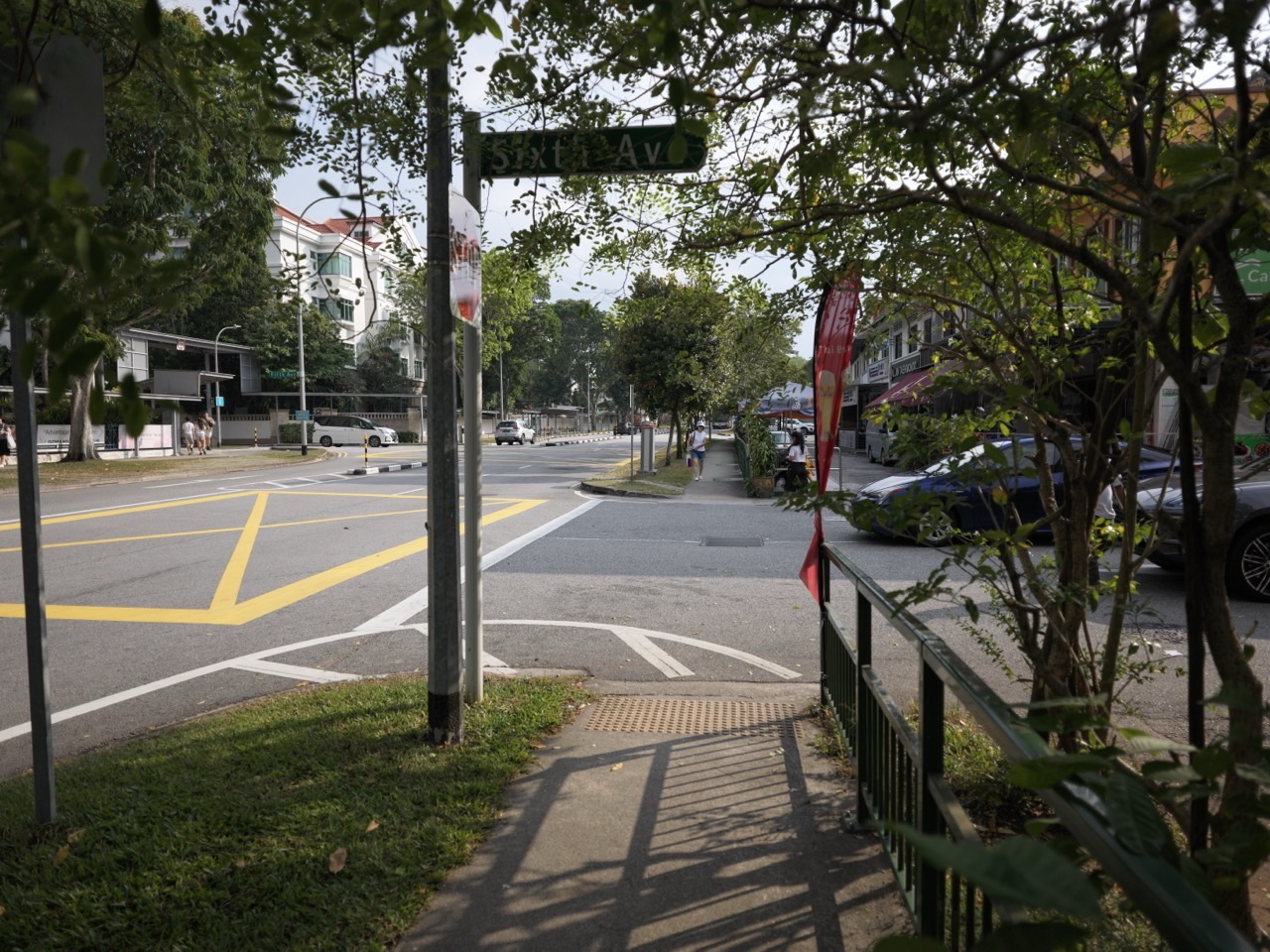
At eduKateSG, suitable students work in tutorials of up to three at 8 Fourth Avenue, Singapore 268674, near Sixth Avenue MRT. Weekly sessions are generally 1.5 hours. With a small group, a tutor can adapt diagnostic questions to the student’s pathway and present schoolwork without assuming that every student needs exactly the same chapter, pace or examination paper. This is a parent guide to syllabus alignment, not a claim that a particular subject level determines a student’s future or ability.
First, understand the 2027 subject codes
The official Singapore Examinations and Assessment Board (SEAB) lists K232 for SEC G2 Additional Mathematics and K341 for SEC G3 Additional Mathematics in 2027. Its listings show the respective 2026-and-earlier reference codes 4051 and 4049.
A useful first step for parents is to check the child’s current school subject offering, syllabus and examination year. Students in the 2026 examination cohort use the older GCE O-Level or N(A)-Level naming and subject codes as applicable, whereas the 2027 SEC listings use the K-codes.
The original documents are freely available from the official 2027 G2 school-candidate syllabus list and 2027 G3 school-candidate syllabus list. In particular, consult K232 G2 Additional Mathematics and K341 G3 Additional Mathematics.
These official sources should take priority over a revision book’s cover or an online post that uses the broad label “A-Math”.
The short answer: substantial shared foundations, but different boundaries
Both syllabuses include work on quadratic functions, equations and inequalities, surds, polynomials, partial fractions, trigonometric identities, coordinate geometry and calculus. That overlap matters: rigorous algebra and independent mathematical reasoning have value across both levels.
But G3 includes additional explicit content. Its Algebra strand has binomial expansions and exponential/logarithmic functions; the G2 syllabus does not list those strands. G3 also includes transforming relationships to a linear graph and a separate plane-geometry proof topic, while G2’s coordinate-geometry strand stops short of the linear-law content and has no separate plane-geometry proof strand.
The calculus comparison also matters. G2 includes polynomial/rational-power differentiation and integration alongside product, quotient and chain rules, stationary points and selected applications. G3 additionally specifies derivatives involving trigonometric, exponential and logarithmic functions; trigonometric/exponential integrals; regions below the x-axis; and motion of a particle in a straight line.
This does not mean that every topic common to the two levels is taught at the same depth or at the same pace. Use the official wording and school materials when planning a lesson.
The examination format: G2 and G3 are not the same papers
The published 2027 G2 K232 assessment has two written papers. Each lasts 1 hour 45 minutes, each carries 70 marks and each contributes 50% of the overall assessment. Paper 1 has 13–15 compulsory questions; Paper 2 has 8–10 compulsory questions.
The published 2027 G3 K341 assessment also has two written papers worth 50% each, but each lasts 2 hours 15 minutes and carries 90 marks. Paper 1 has 12–14 compulsory questions, up to 10 marks per question. Paper 2 has 9–11 compulsory questions, up to 12 marks per question.
Both schemes say an approved calculator may be used in both papers and that omission of essential working leads to lost marks. The difference is not merely a different examination time; the number, structure, depth and mathematical content of questions need level-appropriate preparation.
A 2027 G2 student should not be routinely timed against a full G3 paper as though it were the required examination. An extension problem can be useful when explicitly chosen, but it should not silently replace the actual syllabus.
Different assessment weightings change the teaching conversation
SEAB groups mathematical assessment into three objectives. AO1 concerns using and applying standard techniques. AO2 concerns solving problems in varied contexts. AO3 concerns reasoning and communicating mathematical arguments.
For 2027 G2 Additional Mathematics, the approximate weightings are AO1 50%, AO2 40%, AO3 10%. For 2027 G3 Additional Mathematics, they are AO1 35%, AO2 50%, AO3 15%.
These are approximate paper-level assessment weightings, not a ready-made way to assign marks to an individual worksheet. They do, however, tell parents something useful: both levels examine routine techniques and higher-order thinking, while the G3 scheme gives relatively more emphasis to contextual problem solving and mathematical reasoning.
A productive G2 lesson therefore should not consist solely of rote exercises. And a productive G3 lesson cannot be only a rapid sequence of difficult problems without reliable foundational techniques.
Shared algebra: the work every learner deserves to understand
Both K232 and K341 cover completing the square, the conditions for a quadratic to be always positive or negative, discriminant reasoning, quadratic inequalities, and simultaneous equations with a linear equation. Both include operations on surds and solving surd equations.
Both also include polynomial multiplication and division, remainder and factor theorems, cubic factorisation and specified partial-fraction forms. This is substantial mathematics in either pathway.
Consider 2x² − 8x + 3. Completing the square gives 2(x − 2)² − 5. The minimum is −5 when x = 2. A learner who can derive this, sketch the graph’s behaviour and interpret a related question is strengthening a shared Additional Mathematics foundation.
Or consider a surd equation that produces two algebraic candidates after squaring. A student at either level needs to check them against the original equation. Otherwise a procedurally convincing answer may include an extraneous root.
The core aim is not to teach G2 students “easy arithmetic” and G3 students “real reasoning”. The actual shared syllabus includes serious symbolic manipulation and logic at both levels.
Where G3 algebra extends further
The 2027 G3 K341 syllabus explicitly adds binomial expansions for positive integer powers, including factorial and combination notation and the general term. It also adds exponential and logarithmic functions, graphs, logarithm laws, changes of base, equations and modelling.
These are not listed as separate topics in the 2027 G2 K232 content. A G2 student who needs to strengthen quadratic inequalities or partial fractions should generally not be distracted by an advanced logarithm worksheet merely because it is popular online.
For G3 students, however, those chapters are core material. A learner who can factorise quadratics but cannot control an index law may struggle when logarithms are introduced.
The companion series includes our Binomial Expansion and Coefficients guide and Exponential and Logarithmic Functions. Read them as G3-specific core references where appropriate, not mandatory material for every G2 student.
Geometry and trigonometry: more overlap than some parents expect
Both the 2027 G2 and G3 Additional Mathematics syllabuses include trigonometric functions for angles measured in degrees or radians, principal values of inverse sine, inverse cosine and inverse tangent, exact standard angles, amplitude, periodicity, identities, angle addition, double-angle formulae and R-form.
Both also include solving simple trigonometric equations over specified intervals, proving simple identities and using trigonometric models.
That shared scope is important. A G2 student can need to understand why sin x = 1/2 has both 30° and 150° as solutions in 0° ≤ x < 360°. The student cannot obtain a complete answer by writing down the calculator’s principal value alone.
The G3 syllabus additionally includes a plane-geometry proof strand covering such methods as similarity, the midpoint theorem and the tangent-chord theorem. G2 K232 does not specify a corresponding standalone Additional Mathematics geometry-proofs strand.
Coordinate geometry: identify the added linear-law content
Both levels include conditions for parallel and perpendicular straight lines, midpoints, areas of rectilinear figures and standard equations of circles. Both exclude two-circle problems within that listed circle-equation topic.
But G3 also requires transformation of given relationships, including certain power and exponential relationships, into linear form to determine constants from a straight-line graph. G2 K232 does not list that extra linear-law requirement.
This distinction matters when comparing topical revision packs. A question asking for the gradient and midpoint of a segment may be suitable for either route. A question about transforming y = kbˣ into ln y = ln k + x ln b belongs naturally to the G3 content.
For the shared geometry foundation, use the Coordinate Geometry, Straight Lines and Circles guide and select its exercises by subject level.
Calculus: read the derivative list carefully
The 2027 G2 K232 syllabus includes derivatives of xⁿ for rational n, sums and differences, products, quotients and the chain rule. It includes increasing and decreasing functions, stationary points, second-derivative testing, gradients, tangents, normals, connected rates and maxima/minima applications.
G3 K341 contains those mathematical ideas, but it also explicitly adds derivatives of sin x, cos x, tan x, eˣ and ln x.
That means a G2 learner practising y = (3x + 1)⁴ can do relevant chain-rule work without needing to learn the derivative of e^(3x+1) as a required G2 topic.
The basic principle behind differentiation — using a derivative to describe a gradient or rate of change — is shared. The function families and full scope are not identical.
Integration: a second important level distinction
G2 K232 includes integration of powers xⁿ and (ax+b)ⁿ for rational exponents excluding n = −1, along with constant multiples, sums and differences. It also covers definite integrals and certain areas bounded by curves and lines.
G3 K341 additionally specifies integrals involving sin x, cos x, sec²x and eˣ, corresponding linear-argument forms, areas below the x-axis and displacement, velocity and acceleration applications for a particle moving in a straight line.
Both explicitly exclude the area of a region between two curves in the listed content. A revision plan that races beyond those limits without identifying an extension can create unnecessary stress.
A G2 learner who is not yet confident calculating ∫₁³(2x+1)² dx needs reliable reverse-chain-rule reasoning for that form, not a premature switch to unrelated trigonometric integrals.
Worked comparison 1: one foundation, two appropriate next questions
Start with a shared quadratic example: f(x)=x²−6x+5. The roots are 1 and 5; completing the square gives f(x)=(x−3)²−4, revealing the minimum at (3,−4).
A suitable follow-up for either level is to interpret the turning point, the inequality f(x) < 0, or a simple line-intersection condition. These draw on common content.
For a G3 learner ready to advance, the next topic might link algebraic fluency to logarithmic equations or a binomial coefficient problem. For a G2 learner, it may be more useful to strengthen a mixed question using quadratic inequalities and partial fractions.
The difference is not about having higher or lower expectations for effort. It is about targeting the outcomes that the child’s syllabus actually requires.
Worked comparison 2: one trigonometric question shared by both levels
Solve sin(2x)=1/2 for 0° ≤ x < 360°. Let θ=2x. Then 0° ≤ θ < 720°, which covers two cycles of sine.
The solutions for θ are 30°, 150°, 390°, 510°. Dividing each by 2 gives x=15°,75°,195°,255°.
The mathematical core is shared: transform the interval, find every allowed angle and return to x. A learner at either subject level should be able to justify why there are four answers rather than blindly copy the principal calculator angle.
This provides a useful reminder that the G2 subject still contains rich reasoning questions. It should not be described as an exercise in remembering easier formulas.
Worked comparison 3: calculus without mixing subject levels
For a shared polynomial-type calculus question, take y=(2x+1)³. The derivative is dy/dx=6(2x+1)², because the chain rule contributes the inner derivative 2. Its indefinite integral in the other direction is ∫(2x+1)²dx=(2x+1)³/6+C.
Both fit the calculus ideas found in the G2 and G3 routes.
Now consider ∫cos(3x)dx=(1/3)sin(3x)+C, using radian arguments. It illustrates the same reverse-chain-rule idea but with a trigonometric integrand specified in G3’s integration content.
The educational difference is one of prescribed function families and examination scope. A tutor can use extension material where pedagogically justified, but it must be labelled as an extension rather than mistaken for a G2 requirement.
What a first tuition diagnostic should contain
A diagnostic that ignores level is not a proper diagnostic. The tutor should first confirm whether the student is taking G2 or G3, the examination year, school sequence and the most recent marked topics.
Then select a short set of questions that exposes genuine foundations:
- A quadratic expression that requires completing the square and interpretation.
- A surd question involving a domain or sign check.
- A polynomial factorisation or remainder-theorem task.
- A trigonometric equation in a specified interval.
- A gradient or coordinate-geometry question.
- A differentiation or integration task from the student’s actual syllabus.
- One word problem that requires method selection rather than repeating an announced procedure.
For G3 candidates, additional short items can assess logarithms, binomial expansion or the extra calculus functions where school coverage is appropriate. The number of pages should not be the main measure of diagnostic quality.
Avoid the common trap: using the same practice book for every student
A book labelled “Additional Mathematics” may be intended for O-Level, G3 SEC, G2 SEC, IGCSE, a different examination year or a combined range of topics. A student can feel overwhelmed by pages that were never part of their registered syllabus.
Check the subject code, year and official topic list on the book before adopting it. Then compare the worked examples against the student’s school worksheets and assessment rubrics.
A mixed resource is not unusable. It simply needs an informed tutor or parent to label core content, prerequisites and optional extension clearly.
The eduKateSG Additional Mathematics hub can help parents navigate our wider articles, but the SEAB syllabuses remain the authority on examined content.
Plan practice for the specific paper length
Both examinations allocate roughly 1.5 minutes per mark on average: G2 has 105 minutes for 70 marks, and G3 has 135 minutes for 90 marks. This is a broad planning reference, not a rule that every question must be solved at the same pace.
A G2 student should practise completing the relevant 70-mark paper format in 1 hour 45 minutes. A G3 student should practise the 90-mark paper format in 2 hours 15 minutes when ready for full simulations.
Before adding full timed papers, make sure the student can perform the core algebra accurately without prompts. A stopwatch does not repair an incorrect factorisation method.
Track where time disappears: long calculations, failure to select a method, poor checking, or a habit of persevering on one low-yield section while more accessible questions remain.
What does good Bukit Timah small-group tuition do differently?
With up to three learners, a tutor can inspect the thinking rather than rely entirely on a class average. If two students take G3 and one takes G2, the content should not be pooled indiscriminately into a single uniform worksheet.
There may be useful common mini-lessons in algebra or trigonometry, but each student should receive appropriate independent work based on the syllabus, schoolwork and current weaknesses. Group fit, availability and subject level should guide placement.
For a G2 student, success may involve confident quadratic applications and polynomial manipulation under the G2 examination conditions. For a G3 student, the corresponding plan may also need explicit logarithmic modelling, binomial expansions and extra calculus applications.
The goal is not to accelerate everyone together. It is to help each learner become more independent in the mathematics they are accountable for.
Seven parent questions before enrolling in A-Math tuition
- Which exact subject code and examination year will the lessons prepare my child for?
- Which chapters overlap between G2 and G3, and which do not?
- What evidence from marked schoolwork determines the starting point?
- Does the tutor use full-length papers appropriate to the child’s level?
- How are foundational mistakes corrected and retested?
- How is the small-group teaching adjusted if students are at different stages?
- What indicators of independence will we review after several weeks?
A confident educational answer should explain the process, not promise a particular grade or make unsupported claims about admissions outcomes.
The first month: a practical plan by subject level
During the first week, identify the correct subject route and inspect current algebra work. During the second, repair the highest-impact foundation weakness — perhaps negative signs, completing the square or algebraic fractions. During the third, introduce level-appropriate mixed questions without telling the student which method every question requires.
In the fourth week, review the same error categories on fresh examples, then decide which topics should receive more time. For a G3 learner, the later plan may include the added strands. For a G2 learner, the time may be better spent consolidating the common and G2-specified topics.
This is an example structure, not a guarantee that every child will be ready on the same timetable. School coverage and individual starting points should lead.
How parents can see genuine progress
Ask the student to explain a method without the worked answer. Can they tell you why a quadratic minimum occurs at its turning point? Can they explain why a factor-theorem substitution works? Can they produce every trigonometric angle in a specified interval?
These capabilities matter across both subject levels and often improve before a major jump in grades appears.
For the extra G3 chapters, use analogous checks: can the learner explain a logarithm’s domain, identify the needed term in a binomial expansion or differentiate a composite trigonometric expression where required?
The most useful evidence is a correct independent solution to a changed question, not a notebook containing only beautifully copied demonstrations.
Frequently asked questions
Is G2 Additional Mathematics simply an easier version of G3?
The syllabuses share many important mathematical foundations, but they differ in explicit content, assessment objective weightings and examination structure. It is more accurate to prepare each as a distinct defined subject level rather than describe students by a simplistic label.
Does G2 A-Math include trigonometric identities and the double-angle formulae?
Yes. The 2027 K232 syllabus lists angle-addition and double-angle relationships, exact values, R-form, identities, models and equation solutions in stated intervals.
Does 2027 G2 A-Math include logarithms?
Exponential and logarithmic functions are listed in the G3 K341 Algebra strand but not in the G2 K232 subject-content list. Confirm the student’s actual syllabus before treating a logarithms exercise as required core work.
Is differentiation part of G2 Additional Mathematics?
Yes. G2 includes polynomial/rational-power derivatives, the product, quotient and chain rules, stationary points and applications. The detailed list of function families differs from G3.
Are the G2 and G3 A-Math papers the same length?
No. The published 2027 G2 papers are each 1 hour 45 minutes for 70 marks; the G3 papers are each 2 hours 15 minutes for 90 marks.
Should a strong G2 student begin G3 extension chapters immediately?
An extension can be worthwhile when the learner’s foundations, workload and educational goals support it. It should be an informed choice rather than something forced by an irrelevant revision pack. Consult the school on subject placement or progression decisions.
The core aim: precision about what a student needs to learn
There is no educational advantage in giving a child a harder worksheet that belongs to a different examination simply because the word “Additional Mathematics” appears on both covers. Good tuition identifies the student’s actual mathematical obligations, then builds accuracy, reasoning and independence within that pathway.
The aim of Bukit Timah Additional Mathematics tuition is therefore neither to lower expectations for G2 nor to drown G3 students in unnecessary difficulty. It is to set appropriate, demanding and achievable learning objectives and help every learner understand the work on their own page.
Continue with the Bukit Timah G3 Additional Mathematics parent guide, algebra fluency foundations, and the O-Level and SEC examination revision guide. Use the official G2 K232 syllabus and G3 K341 syllabus to finalise the study plan.