
The core aim of Bukit Timah Additional Mathematics tuition for O-Level A-Math Paper 1 and Paper 2 is to help Secondary 4 students prepare for both examinations with the right balance of mathematical fluency, multi-step reasoning, accurate working and calm time management. In the 2026 Singapore-Cambridge O-Level 4049 syllabus, each paper is 2 hours 15 minutes and worth 90 marks, carrying 50% of the subject assessment. The 2027 G3 SEC K341 syllabus retains that stated structure. Both papers assess Additional Mathematics; they are not officially separated into an “algebra paper” and a “calculus paper”.
Parents sometimes ask, “My child is doing well in A-Math Paper 1. Is Paper 2 a different syllabus?” The short answer is no. Good Additional Mathematics tuition in Bukit Timah should teach the learner to manage different question lengths and mathematical demands across both papers, rather than chase a mythical list of Paper 2-only chapters. One paper contains more questions with smaller stated maximum marks per question; the other has fewer questions and allows longer individual questions. The student’s preparation must still cover algebra, geometry and trigonometry, and calculus as one connected system.

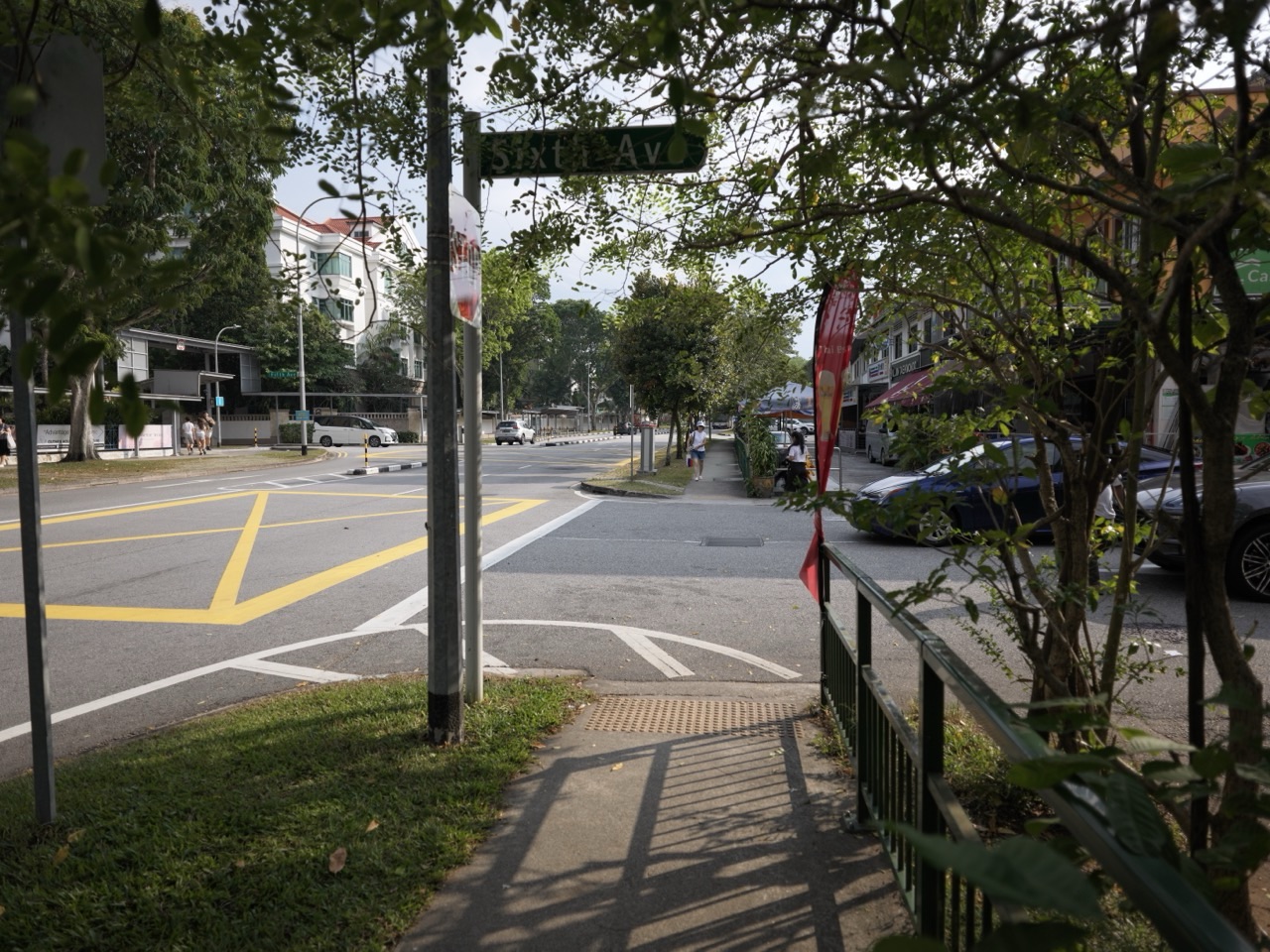
At eduKateSG, suitable students attend tutorials in groups of up to three at 8 Fourth Avenue, Singapore 268674, near Sixth Avenue MRT. Lessons are generally 1.5 hours weekly. The tutor can examine how a learner approaches an individual question, where their method breaks, and whether a lost mark arose from a concept, a calculation or insufficient written justification.
At a glance: what is the actual difference between the two papers?
- Paper 1: 2 hours 15 minutes, 90 marks and 50% of the assessment; 12–14 compulsory questions, with up to 10 marks per question.
- Paper 2: 2 hours 15 minutes, 90 marks and 50% of the assessment; 9–11 compulsory questions, with up to 12 marks per question.
- Common features: all questions are compulsory; relevant mathematical formulae are supplied; an approved calculator may be used in both papers.
- Accuracy instruction: unless otherwise specified, give non-exact numerical answers to 3 significant figures, or angles in degrees to 1 decimal place.
- Essential working: both syllabuses explicitly warn that omitting essential working results in lost marks.
These details are drawn from the published 2026 4049 syllabus and 2027 K341 syllabus. For an individual examination year, check that year’s official SEAB document rather than assuming formats will never change.
Why Paper 2 may feel different without being a different subject
The stated Paper 2 format contains fewer questions overall and permits individual questions worth up to 12 marks, rather than Paper 1’s maximum of 10. That makes it sensible to practise sustaining a mathematical argument across a longer question. However, the official format does not promise that all Paper 2 questions will be harder, nor that any particular chapter belongs only there.
A student who can finish a short differentiation exercise may still struggle when an unfamiliar question asks them to find the derivative, identify a stationary point and interpret an optimised value. The issue is not always missing content. It may be the coordination of several known techniques without a helpful chapter heading.
That distinction helps parents interpret practice scores. A weakness on longer questions may call for multi-step organisation and transfer, not another round of simple procedural drills.
What the examination objectives say about readiness
The official syllabus identifies three assessment objectives. AO1 concerns standard techniques: definitions, facts and routine procedures. AO2 concerns solving problems in different contexts, selecting mathematics and making connections between topics. AO3 concerns reasoning, explanation and mathematical proof. The published approximate weightings are AO1 35%, AO2 50% and AO3 15%.
These are approximate objective weightings across the assessment, not a promised mark allocation for each individual question or a declaration that one paper tests only one objective. A strong revision plan develops all three rather than treating the ability to remember formulas as the whole course.
The implication for tuition is clear: asking a learner to repeat the derivative of a polynomial tests valuable fluency, but not whether they can select that derivative in a modelling problem, justify a result or recognise an invalid domain.
How to budget 135 minutes without rushing
Each paper has 135 minutes for 90 marks. Dividing total time by total marks gives a rough average of 1.5 minutes per mark. This can serve as an initial pacing reference, but it is not a rule requiring every one-mark step to take exactly 90 seconds. Some direct calculations should be much faster; other questions may need time for interpretation or checking.
A student could aim to make an initial attempt at every question, avoid spending an excessive block of time on one stubborn part, and preserve a final margin to check unsolved or suspicious work. The actual allocation must be adjusted through timed practice based on the learner’s speed, not invented as a universal timetable.
For a six-mark question, the rough per-mark benchmark suggests about nine minutes. If a learner is stuck after that, it may be sensible to mark the unresolved part, move on and return later. But they should not abandon a question simply because a minute counter has expired; informed judgement matters.
A better routine when a question will not start
First, identify what the question provides: a function, a graph, a geometric configuration, a parameter or a real-world relationship. Second, write what the final part asks for. Third, decide what relationship links them. A student who cannot yet complete the algebra may still be able to establish the correct function or equation.
If the task is a line tangent to a curve, the useful starting pieces are the contact condition, derivative or discriminant, depending on the question. If it is a volume optimisation, the useful starting piece is the volume function and its permitted domain. If it is trigonometry, it may be the transformed angle interval.
Writing a legitimate first step is better than filling a page with unrelated formulas. The syllabus’s working requirement rewards showing valid reasoning, but we should not invent guarantees about how individual method marks will be awarded.
The importance of essential working
An accurate final answer can hide an invalid procedure or an unjustified guess. Conversely, a student’s correct setup may reveal a sound mathematical idea even if the arithmetic later goes wrong. This is why schools teach students to show the chain of reasoning rather than submitting only calculator numbers.
For example, a tangent-to-parabola question should show the equation formed by setting the line and curve equal, followed by the discriminant condition if that is the chosen method. A growth question should show its exponential model before a logarithmic answer. A definite-area question should show where the interval is split if the curve crosses the axis.
The aim is not unnecessarily long working. It is a solution another reader can understand and check. Students who practise this early are less likely to lose the structure of a long examination question.
Paper 1 and Paper 2: do not invent chapter boundaries
Both papers draw from the same published A-Math subject content. Families such as quadratics, partial fractions, binomial expansions, logarithms, trigonometric identities, coordinate geometry and calculus should be revised as necessary for the whole examination.
One learner may find Paper 1 particularly uncomfortable because they hesitate on short algebraic manipulations. Another may find Paper 2’s longer questions challenging because they cannot keep a multi-step plan coherent. Those are patterns diagnosed from an individual’s practice, not fixed properties of every year’s paper.
A tutor should compare attempts from both formats before deciding which skill to prioritise. Otherwise a parent may end up buying extra topical worksheets when the real need is method selection or time management.
A practical diagnostic from two timed papers
Choose an appropriate recent paper or representative school assessment for each format, and have the student attempt it under sensible conditions. Record the total result but do not stop at the score. Inspect every weak question for the first point where the work departed from a valid method.
- Knowledge gap: the student did not know a required theorem, derivative or algebraic technique.
- Translation gap: the student knew the topic but could not turn the question’s words into equations.
- Routing gap: several methods were available, and the student could not choose a productive one.
- Execution gap: the chosen method was sound but signs, indices or arithmetic failed.
- Checking gap: an extraneous root, undefined value or impossible physical answer went unnoticed.
- Time-management gap: a question consumed too long and prevented attempts elsewhere.
The pattern matters more than one isolated mark. If the same algebraic sign mistake affects four chapters, repairing that common prerequisite may recover more reliable performance than rehearsing four separate answer keys.
An example of a short question becoming a longer one
Start with the quadratic f(x)=x²−6x+5. A direct question might ask for its minimum, found by completing the square: f(x)=(x−3)²−4, so the minimum is −4 at x=3.
A connected question might instead give the same curve and a line y=k, asking for the values of k that produce no intersection. Setting the line equal to the curve gives x²−6x+(5−k)=0. Its discriminant is 36−4(5−k)=16+4k. For no real intersections, 16+4k<0, hence k<−4.
Both questions rely on the same quadratic minimum. The second requires the student to translate a geometric phrase into a root condition. This is a model of a multi-step skill difference, not a prediction that one particular paper will contain one version and the other paper the second.
How to practise long questions without endless full papers
A long question often contains a series of dependencies: an early part establishes a formula, a later part transforms it, and a final part asks for an application or interpretation. Students can practise recognising these dependencies even outside timed papers.
After solving a question, ask: “What result did part (b) need from part (a)?” Then change one coefficient and see whether the same structure works. This builds transfer. Copying the entire model answer may feel productive, but it often does not reveal whether the learner can make those connections independently.
Full timed papers remain useful once core methods are reasonably secure. Before that point, short linked sets of problems can target the exact weak skill without exhausting the student’s revision time.
A four-week practice sequence for parents to understand
During the first week, diagnose algebra, differentiation, trigonometry and graph interpretation using small tasks from both formats. In the second week, focus on the highest-leverage missing prerequisite and check progress with changed questions. In the third week, practise multi-part questions without topic labels. In the fourth week, complete appropriately timed paper practice and review pacing.
This is an illustrative learning sequence, not an official SEAB plan or a guarantee of a score improvement. A student facing an imminent examination may need a shorter cycle; one still rebuilding basic algebra may need longer before full-paper work is productive.
For every week, it is more important to know what changed than to count the number of completed worksheets. A small improvement in starting unfamiliar problems independently can be a meaningful sign of readiness.
Common mistakes when comparing paper scores
- Assuming subject segregation: believing all calculus belongs to one paper and all algebra to the other.
- Reading raw marks without context: comparing performances without inspecting which topics and skills were actually tested.
- Ignoring time lost: confusing slow but accurate work with conceptual inability.
- Using only full papers: repeating the same gaps without targeted correction.
- Using only topical worksheets: never practising selection of methods in unfamiliar contexts.
- Forgetting accuracy rules: rounding intermediate values early or giving incorrect final precision.
- Omitting working: placing a final numerical answer where a justified method is needed.
What a three-pax Bukit Timah tutorial can do differently
In a small group, each learner can be given a short and a multi-part question. The tutor observes the starting move, the written explanation and any hesitation, then compares how the same mathematical idea performs in different formats. Students can discuss one solution while still submitting their own independent working.
At eduKateSG, a sensible cycle is diagnose, repair the first unstable link, practise independently, test a changed question and check later recall. The benefit is not a magical exam shortcut. It is a more precise use of revision time.
Questions parents often ask
Is O-Level A-Math Paper 2 officially harder than Paper 1? The syllabus gives Paper 2 fewer questions and a higher maximum mark per question, but it does not label it universally harder. Individual difficulty varies by question, examination and learner.
Can my child ignore certain chapters for Paper 1? No safe official chapter split is stated. Prepare across the A-Math syllabus and diagnose weak topics from actual work.
Can students use calculators in both papers? Yes, approved calculators are allowed in both papers under the stated 2026 and 2027 syllabuses. Working and correct interpretation remain necessary.
Which paper should my child revise first? The one revealing the more urgent and repairable gaps, while ensuring that both are practised. A tutor should diagnose the cause rather than choose from the paper number alone.
The core aim: prepare for the same mathematics in different question shapes
Paper 1 and Paper 2 are two opportunities to demonstrate one connected body of Additional Mathematics. The shorter-looking question and the longer multi-part problem both reward clear mathematical foundations, correct choices and careful working.
That is what Bukit Timah Additional Mathematics tuition should build: a learner who knows the official paper structure, attempts unfamiliar questions calmly, preserves essential working and diagnoses weaknesses using evidence rather than fear. The goal is readiness for both papers, not a gamble on which chapter might appear.
Continue with the exam revision, timing and method-mark guide, AO1, AO2 and AO3 examination skills, spaced-practice timetable and the Additional Mathematics hub. Official references: 2026 O-Level 4049 syllabus and 2027 G3 SEC K341 syllabus.