
Bukit Timah Additional Mathematics tuition for trigonometric identities and equations should teach students a skill far more useful than memorising an impressive wall of formulas: recognising which trigonometric relationship is true, when it is valid and how to use it to solve a question accurately. For Secondary 3 and Secondary 4 A-Math students, the core aim is reliable reasoning with angles, identities and solutions.
Here is the familiar moment: a student knows sin²x + cos²x = 1, writes it at the top of a page and then stares at a trigonometric equation as though the formula has refused to help. The problem is rarely a lack of ink on the formula sheet. It is a missing bridge between knowing a relationship and deciding how to use it. Good A-Math tuition in Bukit Timah builds that bridge, one careful decision at a time.

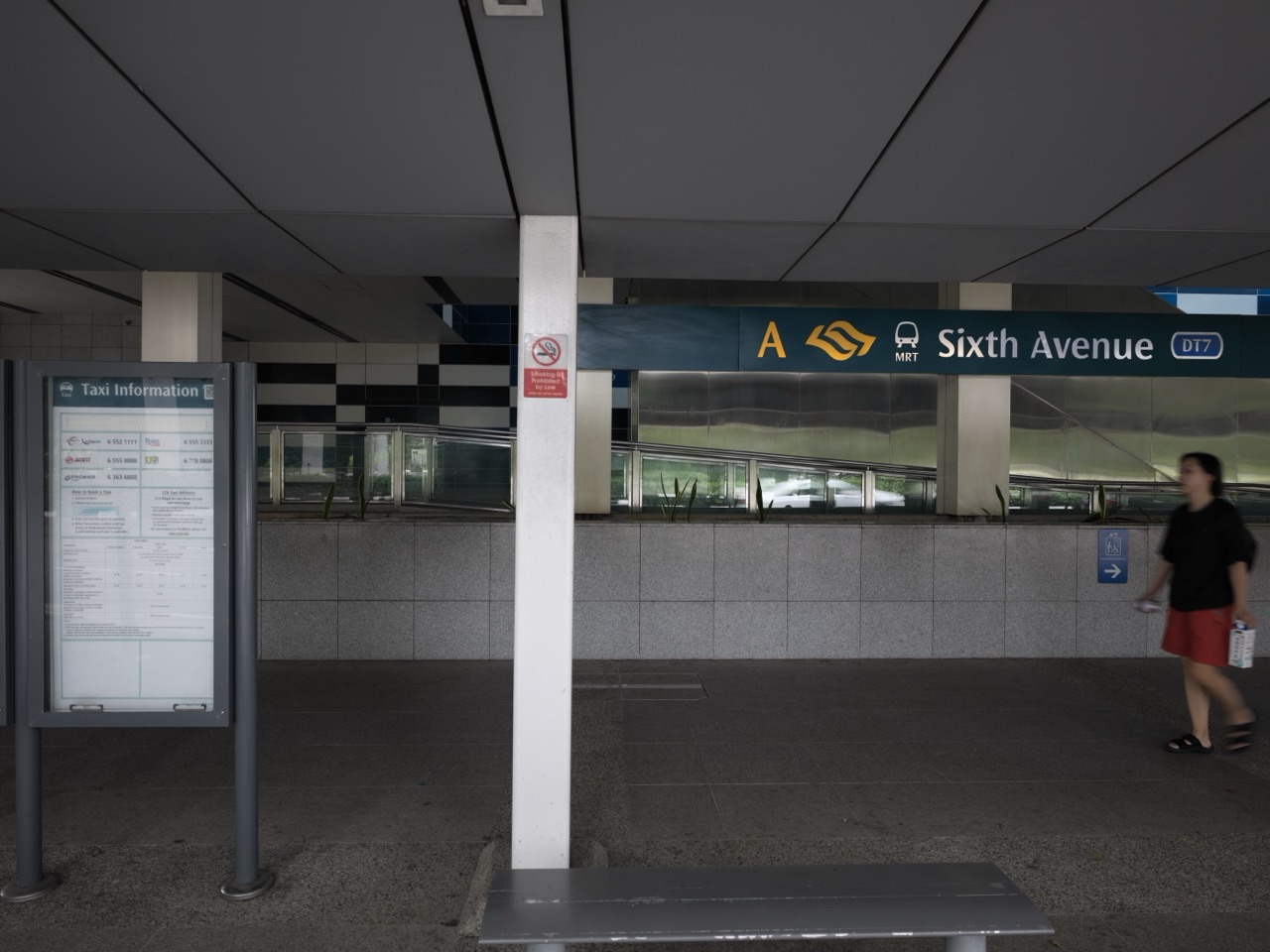
At eduKateSG, suitable students learn Additional Mathematics in small tutorials limited to three students, generally meeting for 1.5 hours weekly at 8 Fourth Avenue, Singapore 268674, near Sixth Avenue MRT. The small class allows the tutor to see every transformation on the page and ask the question that makes the difference: “Why is this step allowed?” For the overall subject journey, visit the Singapore Additional Mathematics hub.
The short answer: learn three jobs, not thirty disconnected formulas
Trigonometry is manageable when students understand that formulas do different jobs. Some identify a relationship that holds wherever both sides are defined. Others rewrite an expression into a more useful form. Still others help find angles satisfying an equation within a given interval.
This is a much better way to organise revision than trying to memorise identities in alphabetical order. Each question can begin with a diagnosis: Am I proving two expressions equivalent, simplifying a form, solving for an angle, or interpreting a graph?
- Identity: a relationship valid for all values in its stated domain, such as
sin²x + cos²x = 1. - Equation: a statement that may hold only for certain angles, such as
sin x = 1/2. - Transformation: a valid rewriting step that makes the next decision easier.
- Interval: the range of angles in which solutions must be found.
- Verification: substituting candidate answers into the original equation to ensure none are missing or invalid.
A learner who can distinguish these five ideas is already safer in examination questions than one who merely recognises formula names.
Why the transition into A-Math trigonometry can feel sudden
Earlier trigonometry often rewards identifying a right triangle, choosing sine, cosine or tangent and calculating a missing side or angle. Additional Mathematics requires greater comfort with angle values, algebraic manipulation, multiple solutions, and identities that must be justified.
A student may confidently solve a single acute-angle triangle and still struggle when sin x = 1/2 has more than one solution in the given interval. Another may manipulate fractions in algebra correctly but forget that dividing by sin x can remove legitimate solutions when sin x = 0.
That is why the algebra foundation matters so much. Trigonometric equations are still equations. The same rules about factoring, domains and logically equivalent steps continue to apply. The companion Bukit Timah A-Math algebra fluency guide addresses those earlier foundations.
An identity is a fact you can use, not a guess to try
Consider sin²x + cos²x = 1. It tells us that sin²x = 1 − cos²x and cos²x = 1 − sin²x. These are the same underlying relationship, rearranged for different purposes.
A student can use the form that matches the expression in front of them. If the question contains 1 − cos²x, recognising that it equals sin²x may remove an otherwise troublesome-looking expression. The tutor’s job is to help the student see the match rather than randomly test every memorised identity.
A powerful exercise is to give three expressions that all can be transformed, then ask students which identity changes the fewest terms. That teaches economy: good mathematical solutions are not only correct, but purposeful.
Worked example 1: simplify, and keep the restrictions
Simplify (1 − cos²x)/sin x. Using the identity 1 − cos²x = sin²x, rewrite the expression as sin²x/sin x. Where sin x ≠ 0, it simplifies to sin x.
The answer needs its condition. The original expression is undefined when sin x = 0. The simplified expression sin x alone is defined there, but that does not make the original fraction valid there.
This is the sort of small distinction that makes a large difference in Additional Mathematics. Students should learn to ask, “Did I divide by something that could be zero?” The same discipline protects algebraic fractions, rational equations and trigonometric proofs.
What this example should teach
- Identify the useful identity before manipulating symbols.
- Change one expression at a time so each step can be checked.
- Never cancel a factor across an addition sign.
- Retain domain restrictions after a valid cancellation.
- Explain the simplified result rather than merely writing it down.
The core aim is a student who can defend the method without asking the tutor for confirmation at every line.
Proving identities: why starting with one side is often clearer
In many “show that” or “prove that” questions, a reliable starting strategy is to choose the more complicated side and work toward the simpler side. Keep the chain of equalities legal. Use known identities and algebraic operations that preserve the intended equality within the domain.
Do not treat the printed answer as an excuse to rearrange both sides arbitrarily until matching symbols appear. A proof should be understandable to another student reading it from top to bottom.
For example, to show 1 − 2sin²x = cos 2x, a student should recognise a standard double-angle form rather than invent intermediate steps. To establish a more complicated identity, they may first rewrite a quotient in sine and cosine, simplify a numerator and then apply a known relationship.
The tutor should ask two questions after each proof: “Which identity was used here?” and “Are all the transformations valid for the angles under discussion?” This produces transferable proof habits, not a one-off model answer.
Worked example 2: a trigonometric equation has multiple angles
Solve sin x = 1/2 for 0° ≤ x < 360°. The reference angle is 30°, because sin 30° = 1/2. Sine is positive in the first and second quadrants, so the solutions are x = 30° and x = 150°.
A frequent error is to write only 30°, because that is what a calculator first displays. The calculator’s principal answer is not necessarily the complete answer for the interval.
A useful self-check is to picture the sine graph across one revolution: the horizontal line at 1/2 meets it twice. The graphical view explains why there are two answers instead of presenting “add another angle” as a mysterious instruction.
If the same question uses radians
On 0 ≤ x < 2π, the solutions become x = π/6 and x = 5π/6. The mathematical relationship is the same; only the angular unit has changed. A student should not mix a calculator in degree mode with an answer written in radians, or vice versa.
For revision, practise stating the unit before starting, then mark the interval boundaries carefully. In many questions, an otherwise correct angle is not an acceptable answer because it lies outside the stated interval.
Worked example 3: turn a trigonometric equation into algebra
Solve 2sin²x − 3sin x + 1 = 0 for 0° ≤ x < 360°. Think of sin x temporarily as one algebraic quantity. Factor the left-hand side as (2sin x − 1)(sin x − 1).
Therefore sin x = 1/2 or sin x = 1. The first condition gives x = 30° and x = 150°. The second gives x = 90°. The complete solution set is 30°, 90°, 150°.
This example is an excellent bridge between algebra and trigonometry. The factorisation method is familiar, yet solving the resulting equations requires understanding angle solutions. A student who treats the entire task as “just factorise” will stop too early.
Ask the student to substitute each candidate value into the original equation. This final step tests whether the algebraic roots were translated back into valid angular answers.
Worked example 4: division can quietly delete solutions
Consider sin 2x = sin x over 0° ≤ x < 360°. Use sin 2x = 2sin x cos x to obtain 2sin x cos x = sin x. Bring all terms to one side: sin x(2cos x − 1) = 0.
This creates two cases. First, sin x = 0, which gives x = 0° and x = 180° in the interval. Second, cos x = 1/2, which gives x = 60° and x = 300°. All four angles satisfy the original equation.
Now look at the tempting shortcut: divide both sides of 2sin x cos x = sin x by sin x. That would leave 2cos x = 1 and lose the valid cases where sin x = 0.
This is not a minor formatting issue. It is a change in the solution set. Good tuition teaches students when division is safe and when factoring is the better option.
Trigonometric graphs: use shape to check answers
The sine and cosine graphs are not decoration at the back of a chapter. They show why solutions repeat, why some equations have multiple answers and why an interval matters. A student who understands periodic behaviour can often predict whether a list of solutions is incomplete.
When solving an equation in a given interval, a sketch can reveal likely crossings. It does not replace exact algebraic reasoning where exact answers are required, but it can prevent the common mistake of reporting only a calculator’s first output.
A useful teaching conversation sounds like this: “Is the required value positive or negative?” “Which quadrants allow that sign?” “How much of the cycle are we considering?” “Have we checked the endpoints?” The answers give the student a route map before the calculation begins.
Degrees, radians and calculator discipline
Degree and radian measures describe angles in different units. They must not be mixed casually. Remember the anchor values: a half-turn is 180° = π radians, and a full turn is 360° = 2π radians.
A student working with a radian interval should label the question’s unit and check the calculator mode before evaluating approximate trigonometric values. In a degrees question, writing a radian result without a requested conversion may make an otherwise correct method look unfinished.
Even better, students should learn standard exact values, such as sin 30° = 1/2, so they can recognise when a calculator result is unreasonable. A calculator is a checking tool, not a replacement for understanding quadrants and periodicity.
A-Math calculus later makes accurate radian reasoning especially useful. Students studying derivatives of trigonometric functions should follow the conventions and exact requirements of their syllabus.
A trigonometry error ledger that really helps
Record errors by decision rather than by chapter name alone. “Trigonometry wrong” is too broad to be repaired. “Divided by sin x and lost the zero case” identifies the particular mathematical habit to change.
- Identity error: chose an invalid formula or forgot a condition.
- Algebra error: expanded, factorised or cancelled incorrectly.
- Solution-set error: reported the principal angle but missed another angle.
- Interval error: included an excluded endpoint or a value outside the requested range.
- Unit error: mixed degrees and radians.
- Verification error: did not check the candidate angles against the original equation.
The next practice question should intentionally test the same type of decision. If the error was a missing second-quadrant solution, changing only the numerical angle while retaining the same structural task makes a good diagnostic.
A three-stage practice system: identity, equation, mixed question
During the first stage, practise identifying and applying identities to simplify expressions, with full attention to restrictions. In the second, solve trigonometric equations over specified intervals and compare results with the graph. In the third, work on mixed questions where an identity must be chosen before the equation can be solved.
This sequencing is kinder and more effective than handing a student a thick stack of mixed questions on day one. Difficulty should rise because the learner is ready, not because the homework pile is growing.
- Stage 1 — recognition: write the identity in words, rearrange it and simplify expressions accurately.
- Stage 2 — complete solutions: solve equations, check quadrants and state every angle in range.
- Stage 3 — independent choice: combine identities with algebra, select methods and verify final solutions.
When the third stage is stable, return after several days with a new question. The delayed attempt reveals whether the method has been learned or merely recognised.
How a 3-pax tutorial can make thinking visible
In a group of up to three, one student can explain the identity, another can identify the possible angles, and a third can verify the completed solution. Each still needs to solve independently, but comparing reasoning makes misunderstandings easier to expose.
For example, if one learner divides by sin x too early, the tutor can ask the group whether any valid solutions could disappear. This invites reasoning rather than embarrassment. The mistake becomes a learning moment everyone can use.
Small-group learning is effective when the tutor uses the format to inspect working closely and adjust difficulty. The aim is not simply more conversation; it is a higher proportion of accurate student decisions.
What parents should do when marks do not improve immediately
Trigonometry often feels frustrating because students can remember several formulas yet still be unsure which one applies. Parents can help by focusing on explanations and progress markers before demanding a faster score increase.
Ask the learner to describe one error they can now prevent. Can they tell the difference between an identity and an equation? Can they show why a second angle is needed? Can they explain why a cancelled factor must not be zero? These are useful signs of growing control.
It is also important to protect short, repeatable practice slots. An exhausted student memorising identities late at night may recall the words but struggle to use them. Consistency and retrieval are better allies than occasional marathon revision.
For balancing schoolwork, CCA and tuition, see Secondary 3 A-Math weekday versus weekend tuition.
A useful five-question self-test
A student ready for mixed practice should be able to answer the following without reading an example first.
- What distinguishes a trigonometric identity from an equation?
- Why is
(1 − cos²x)/sin xnot defined at every angle? - How many solutions does
sin x = 1/2have on0° ≤ x < 360°, and why? - Which legitimate solutions may be lost by dividing
sin 2x = sin xbysin x? - What must be checked when the problem changes its angle unit from degrees to radians?
If these explanations are clear, the student has a more reliable foundation for harder identity and equation questions. If one is shaky, that question supplies the next targeted tuition objective.
Choosing the right O-Level or SEC Additional Mathematics materials
Singapore is moving to the Secondary Education Certificate from 2027. The official 2027 syllabuses distinguish G3 Additional Mathematics (K341) and G2 Additional Mathematics (K232). The 2026 GCE O-Level Additional Mathematics syllabus is 4049. Families should choose examples and examination papers that match the student’s actual subject level and year.
Not every trigonometric topic, formula requirement or question style is identical across subject levels. Use the student’s current syllabus and school programme rather than assuming that all resources labelled “A-Math” are interchangeable. Official references include the SEAB SEC G3 syllabuses and SEAB SEC G2 syllabuses.
Frequently asked questions about A-Math trigonometry
Why does my child know the formula but not know when to use it?
Recognition is easier than method selection. Practise questions that ask the student to explain the job of a formula before using it: simplify, prove, solve or interpret. Then remove the topic heading so the learner must choose independently.
Must every solution use a trigonometric graph?
No. Exact algebraic reasoning and standard-angle knowledge are often sufficient. A sketch is a valuable way to predict and check the number of solutions, particularly when a student is missing angles.
Should my child memorise every identity first?
Learn the identities required by the relevant syllabus, but connect memorisation with meaningful application. An identity remembered without its use or conditions is fragile knowledge.
Why are degree and radian mistakes so frequent?
Students may focus on manipulating symbols while forgetting the units and interval in the question. Establish a routine: mark the unit, record the interval, solve, then verify the form of the answers.
Can a Secondary 3 student begin harder trig identities early?
Yes, once fundamental algebra and angle solutions are sound. The best extension questions add a new reasoning challenge rather than several new formulas simultaneously.
The core aim: reasoning that survives a new question
The best sign of progress in Additional Mathematics trigonometry is not the ability to fill a page with identities. It is the moment when a learner can say, “This is an equation, I must find every angle in the interval,” or “I cannot divide by that expression until I consider when it might be zero.”
That is what Bukit Timah A-Math tuition should make possible. Students leave with mathematical judgement as well as knowledge: they can select an identity, use it legally, find all relevant solutions and check their answers.
To explore other parts of the learning pathway, read the quadratic functions and graphs guide, the Secondary 4 A-Math trigonometry guide and eduKateSG small-group tuition services.