
The core aim of Bukit Timah Additional Mathematics tuition for trigonometric R-form is to help Secondary 3 and Secondary 4 students rewrite a sum such as 3cosθ+4sinθ as one shifted sine or cosine function. In Singapore G2 and G3 A-Math, the method is used for simplification, exact maximum and minimum values and trigonometric equations over specified intervals. The skill is recognising the same wave in two different mathematical forms.
A student sees 3cosx+4sinx and asks which of the two terms can be made as large as possible. Setting both sine and cosine to one seems tempting — it would give seven — but no angle can make sinx=1 and cosx=1 simultaneously. R-form tuition in Bukit Timah shows why the actual maximum is five: the two parts combine into a single sine or cosine wave with amplitude √(3²+4²)=5. That discovery is a satisfying way to replace guessing with understanding.

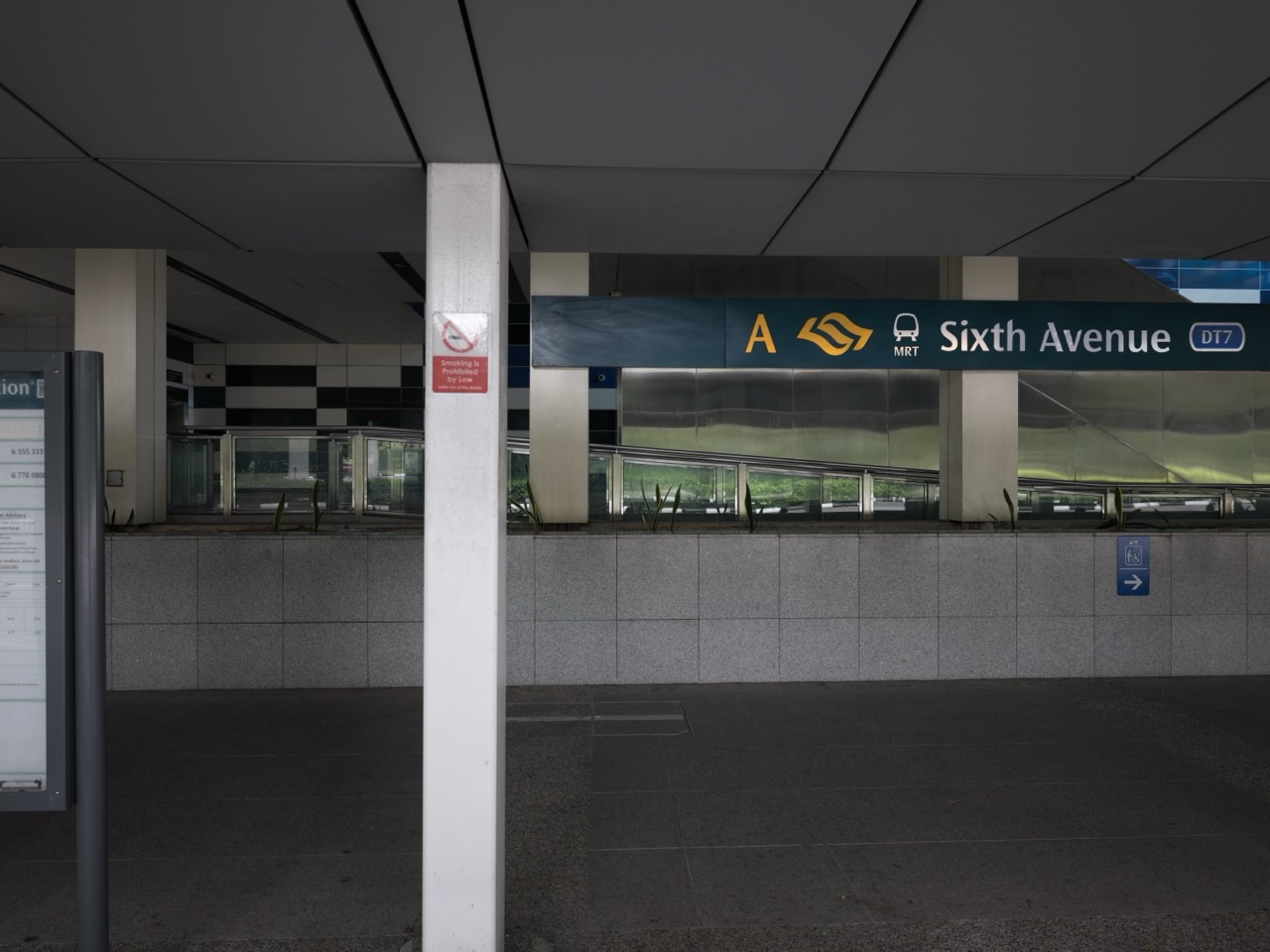
At eduKateSG, suitable learners study in groups of up to three at 8 Fourth Avenue, Singapore 268674, near Sixth Avenue MRT. Weekly tutorials are generally 1.5 hours. A tutor can see whether a student understands the coefficient matching or is only memorising an R-form layout, and can check whether interval restrictions have been handled correctly. This guide deepens our Trigonometric Graphs, Amplitude, Period and R-Form introduction with focused worked examples.
The short answer: R is the amplitude of one equivalent wave
The expression a cosθ+b sinθ, where a and b are real constants, can be written in a form such as R cos(θ−α), with
R=√(a²+b²).
For the cosine-difference form, expanding gives
R cos(θ−α)=R cosθ cosα+R sinθ sinα.
Matching coefficients with a cosθ+b sinθ requires R cosα=a and R sinα=b.
These two equations determine the magnitude R and an appropriate phase angle α. The angle must have signs consistent with both sine and cosine, rather than simply coming from a calculator without quadrant checks.
The method should leave a student able to:
- Identify a and b correctly, including negative signs.
- Calculate
R=√(a²+b²). - Choose the appropriate sine or cosine shifted form.
- Match the two coefficients to determine α.
- Confirm the angle’s quadrant.
- Use the single wave to find maxima, minima and solutions.
- Respect the question’s degree/radian convention and stated interval.
The purpose of R-form is simplification with preserved meaning, not introducing extra complexity.
Start from an addition identity, not a memorised trick
The identity cos(θ−α)=cosθ cosα+sinθ sinα explains exactly why R-form works.
Multiply by R and compare the coefficients:
R cosθ cosα+R sinθ sinα
must equal
a cosθ+b sinθ.
So a=R cosα and b=R sinα. Square and add:
a²+b²=R²(cos²α+sin²α)=R².
Because R represents a non-negative amplitude, R=√(a²+b²).
This derivation is short and powerful. If a student forgets the formula during revision, they can rebuild it using the ordinary addition identity and sin²α+cos²α=1.
Worked example 1: rewrite 3cosθ+4sinθ
Express 3cosθ+4sinθ in the form R cos(θ−α), where R is positive and α is an acute angle.
Calculate
R=√(3²+4²)=5.
Match coefficients:
5cosα=3 and 5sinα=4.
Thus cosα=3/5, sinα=4/5, and
α=tan⁻¹(4/3)≈53.13°.
The required equivalent form is
3cosθ+4sinθ≈5cos(θ−53.13°),
with α shown approximately. An exact statement can use α=tan⁻¹(4/3) without premature rounding.
Notice that 53.13 degrees lies in the first quadrant, where sine and cosine are both positive, as required by the matched coefficients.
A simple substitution check
At θ=0°, the original expression is 3cos0°+4sin0°=3.
The R-form expression gives 5cos(−α)=5cosα=3. They agree exactly.
One numerical check does not prove an identity, but here the coefficient matching has already established the identity. Substitution provides a convenient arithmetic check on the chosen angle and sign.
How R-form finds a maximum in one step
Because cosine lies between −1 and 1, the expression 5cos(θ−α) always lies between −5 and 5.
Therefore
−5≤3cosθ+4sinθ≤5.
Its maximum is 5 and its minimum is −5. They can both occur as θ runs through a complete cycle.
A student who predicts a maximum of 7 by adding 3 and 4 has ignored the relationship between sine and cosine. R-form captures the actual constraint that both functions come from the same angle.
This is the conceptual centre of the technique: two linked oscillating terms can be represented by a single wave with a precisely determined amplitude.
Worked example 2: find maximum and minimum angles
Using
3cosθ+4sinθ=5cos(θ−α),
where α≈53.13°, find the maximum and minimum values and their angles for 0°≤θ<360°.
The maximum occurs when the cosine equals 1. That is when θ−α=0° in the stated interval, giving θ≈53.13°.
The maximum value is 5.
The minimum occurs when the cosine equals −1, at θ−α=180°. Thus θ≈233.13°, and the minimum value is −5.
The full conclusion matters: if the question asks for both value and angle, giving only the amplitude 5 is incomplete.
Worked example 3: solve an R-form trigonometric equation
Solve 3cosθ+4sinθ=4 for 0°≤θ<360°.
Write the left-hand side as 5cos(θ−α), where α=tan⁻¹(4/3)≈53.1301°.
Then cos(θ−α)=4/5. Its reference angle is
β=cos⁻¹(4/5)≈36.8699°.
Cosine is positive at the two angles θ−α=β or θ−α=−β, interpreted over the complete interval. Hence
θ≈53.1301°+36.8699°=90°,
or
θ≈53.1301°−36.8699°≈16.2602°.
The solutions are θ≈16.3°, 90.0° to one decimal place.
Check θ=90°: 3cos90°+4sin90°=4. Both solutions also fit the stated interval.
This example shows why the problem is not finished when the calculator gives one inverse-cosine angle. The phase shift and both trigonometric branches must be considered.
An R-form expression with a vertical shift
Suppose
y=2+3cosx+4sinx.
Rewrite the oscillating part as 5cos(x−α), where α=tan⁻¹(4/3). Then
y=2+5cos(x−α).
Because cosine ranges from −1 to 1, y ranges from 2−5=−3 to 2+5=7.
Thus the maximum y-value is 7 and the minimum is −3.
The constant 2 changes the midline but not the amplitude. A student who says the amplitude is 7 has confused the maximum value with the size of the oscillation.
For graphical context, see Trigonometric Models, Amplitude and Periodic Change.
Worked example 4: a negative sine coefficient
Rewrite 5cosx−12sinx as R cos(x+α), with α acute.
Use R=√(5²+12²)=13.
Expand 13cos(x+α)=13cosx cosα−13sinx sinα. Matching coefficients gives 13cosα=5 and 13sinα=12.
Therefore cosα=5/13 and sinα=12/13, so α≈67.38°.
The result is
5cosx−12sinx≈13cos(x+67.38°).
The maximum is 13 and the minimum is −13 over a complete cycle.
This example is a good reminder that the sign inside the R-form bracket matters. A negative sine term naturally matches a cosine addition form with an acute α.
The sine version is equally valid
We can also express a combination as R sin(θ+α) when the coefficient signs support that choice.
Expand
R sin(θ+α)=R sinθ cosα+R cosθ sinα.
If the original expression is 4sinθ+3cosθ, the coefficient matching gives Rcosα=4 and Rsinα=3.
Thus R=5 and α=tan⁻¹(3/4)≈36.87°, giving
4sinθ+3cosθ≈5sin(θ+36.87°).
This is not a different mathematical phenomenon. It is another way to describe the same combined wave, with a different reference function and phase shift.
A tutor can let students compare the sine and cosine forms, then ask which is easier for the question being solved.
Worked example 5: solve using the sine form
Solve 4sinθ+3cosθ=0 for 0°≤θ<360°.
Rewrite the expression as 5sin(θ+α), with α≈36.8699°.
Then sin(θ+α)=0. Within the transformed interval, relevant zeros occur when θ+α=180° and θ+α=360°.
Thus
θ≈180°−36.8699°=143.1301°,
and
θ≈360°−36.8699°=323.1301°.
The solutions are 143.1° and 323.1° to one decimal place.
A useful second check comes from the original equation: 4sinθ=−3cosθ, and where cosθ is non-zero, tanθ=−3/4. Tangent is negative in quadrants II and IV, matching the two R-form solutions.
Why blindly using tan⁻¹(b/a) can give the wrong angle
The ratio tanα=b/a tells us the tangent of an angle, but tangent repeats every 180 degrees. The calculator’s principal inverse-tangent result alone may not have the sine and cosine signs required by the coefficient matching.
For example, if both a and b are negative, the vector of coefficients points into the third quadrant. A principal inverse-tangent angle in the first quadrant would have the same tangent ratio but the wrong sine and cosine signs.
A reliable student checks Rcosα=a and Rsinα=b with the chosen form. Alternatively, a shifted plus/minus form with a well-defined principal α can be selected deliberately.
The syllabus may specify a particular range for α in a question. Follow that condition rather than assuming there is one universally correct phase convention for every representation.
What if the question uses radians?
The coefficient matching works identically in radians. For 3cosθ+4sinθ, the phase may be written
α=tan⁻¹(4/3)≈0.9273 radians.
Then 3cosθ+4sinθ=5cos(θ−α), with all angle quantities in radians.
The maximum still equals 5; only the unit in which the phase is described changes. A student must not mix 53.13 degrees into a radian-mode calculator expression without converting it.
The correct unit should be chosen from the question before evaluating inverse trigonometric functions.
R-form is a useful method for a range inequality
Consider 3cosθ+4sinθ≥4 over one complete revolution.
Rewrite as 5cos(θ−α)≥4, so cos(θ−α)≥0.8. Let β=cos⁻¹0.8≈36.8699° and α≈53.1301°.
Around the maximum, the inequality holds when the shifted angle lies between −β and +β, interpreted modulo a full revolution.
Within 0°≤θ<360°, that gives approximately
16.3°≤θ≤90.0°.
The endpoints are included because the inequality is non-strict and equality holds there. A sketch of the cosine wave confirms the selected interval.
This is a more demanding application than finding a single maximum. The learner must convert an amplitude relation into an exact range of input angles.
How to remember the signs without guessing
Do not memorise R-form as a collection of arbitrary plus or minus patterns. Expand the proposed right-hand side and compare coefficients.
For R cos(θ−α), the cosine and sine contributions are both positive multiples of cosα and sinα when α is acute.
For R cos(θ+α), the sine contribution carries a minus sign.
For R sin(θ+α), both sine and cosine contributions carry positive multipliers.
Each form has a useful purpose. Expanding it takes only one line and quickly reveals whether the chosen signs match the original expression.
The most common R-form mistakes
- Maximum assumption: adds |a| and |b| as though sine and cosine could both equal one at the same angle.
- Wrong amplitude: calculates
a²+b²but forgets the square root. - Wrong coefficient pairing: uses
Rcosα=bwhen the chosen cosine form requires a. - Sign error: writes
cos(θ+α)for a positive sine coefficient without verifying. - Quadrant error: uses a principal inverse-tangent output inconsistent with the required signs.
- Lost phase: gives the correct maximum value but an incorrect angle.
- Interval error: reports one inverse-trig solution instead of every one within the range.
- Degree/radian confusion: mixes angle units in the same equation.
An effective correction focuses on the first wrong decision and ends with a changed example rather than simply repeating the original model solution.
A seven-day R-form practice pathway
- Day 1: revise sine/cosine addition and subtraction formulae.
- Day 2: derive
R=√(a²+b²)by matching coefficients. - Day 3: rewrite a positive-coefficient expression in cosine form.
- Day 4: handle a negative sine coefficient and verify the sign.
- Day 5: find maxima, minima and corresponding angles.
- Day 6: solve an equation or simple inequality in a specified interval.
- Day 7: solve a mixed unseen R-form question without the tutor’s example beside it.
A short but accurate independent retest can reveal much more than a large worksheet copied with its answers visible.
What three-student tuition offers for this topic
In a group of up to three, one student might derive R from the coefficient squares, another might check the phase signs and a third could interpret the maximum on a graph. Then each should solve a new example independently.
The tutor can distinguish a student who forgot an identity from one who cannot determine the correct quadrant. Those are different learning needs, even though both might produce the wrong α.
Good small-group teaching uses individual feedback to strengthen mathematical independence, not merely to create faster shared answers.
Parent questions after a trigonometry lesson
Ask, “Why isn’t the maximum of 3cosθ+4sinθ equal to seven?” A learner who explains that the two functions are linked by the same angle and the combined amplitude is five has grasped the key idea.
Then ask, “How did you know whether to use θ−α or θ+α?” A correct explanation should mention expanding and matching coefficients.
Parents need not learn the full trigonometric formula sheet. They can simply invite the child to explain the reasoning and check a changed example without notes.
The official Singapore G2 and G3 syllabus connection
The 2027 SEC G2 Additional Mathematics K232 syllabus and G3 Additional Mathematics K341 syllabus both include expression of a cosθ+b sinθ in the form R cos(θ±α) or R sin(θ±α).
Both also include trigonometric identities, solutions of simple equations in a given interval and trigonometric modelling. These are the examined foundations; students should not assume every advanced unrestricted identity or general solution is required.
For the 2026 GCE O-Level Additional Mathematics route, the subject code is 4049. Choose revision materials for the student’s examination year and level.
Frequently asked questions
What does R mean in A-Math R-form?
R is the amplitude of the equivalent single sinusoidal expression. For a cosθ+b sinθ, its value is √(a²+b²) when expressed with a positive amplitude.
Is R always the maximum of the original expression?
For a cosθ+b sinθ over a full cycle, the maximum is R and the minimum is −R. If an additional constant c is present, the maximum and minimum become c+R and c−R.
Why is the phase angle sometimes positive and sometimes negative?
The plus or minus depends on the chosen sine or cosine expansion and the coefficient signs. Expand the target form and match coefficients instead of guessing.
Do G2 students need R-form?
Yes. The 2027 G2 K232 syllabus expressly lists this R-form transformation alongside G3 K341.
How can my child check an R-form answer?
Expand the proposed shifted sine or cosine using an addition identity and compare the two coefficients with the original expression. A quick numerical substitution can provide an additional check.
The core aim: two terms become one understandable wave
R-form is a wonderfully efficient mathematical tool. A sum of sine and cosine terms becomes one shifted wave, making its amplitude, extrema and useful equation-solving strategy visible.
That is what Bukit Timah Additional Mathematics tuition should develop: understanding how the identity is built, confidence with coefficient matching and the ability to complete a full solution without losing angles or restrictions.
Continue with Trigonometric Graphs and R-Form, Trigonometric Addition and Double-Angle Formulae, Trigonometric Models and Periodic Change, and the Additional Mathematics hub.