
Choosing a Physics tutor in Bukit Timah should feel more like selecting a careful thinking partner than shopping for the thickest stack of revision worksheets. The best starting question is not simply, ‘How many students got an A?’ It is, ‘What will this tutor notice when my child writes a correct formula but still misunderstands the question?’
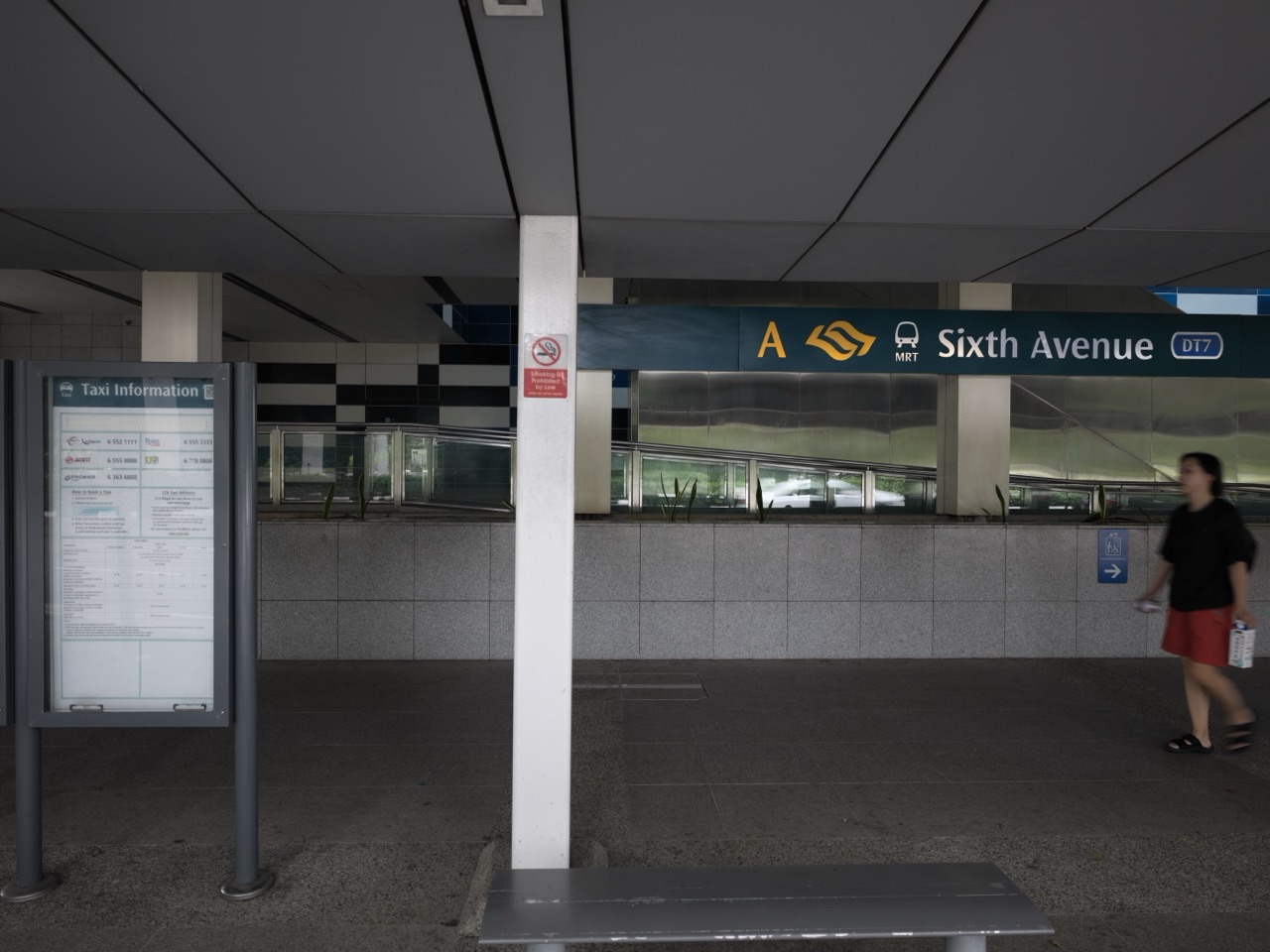
If you are looking for Physics tuition near Sixth Avenue MRT, Secondary 3 or Secondary 4 Physics tuition in Bukit Timah, O-Level Physics tuition or 2027 SEC G3 Physics K323 support, this guide gives you a practical set of questions to ask before enrolment. You will learn how to compare actual lesson methods, check syllabus fit, evaluate student–tutor compatibility, understand small-group class arrangements and decide whether the tuition will build independence rather than dependence.
eduKateSG runs small-group tutorials in Bukit Timah with a model of up to three students in a suitable class. Our location is 8 Fourth Avenue, Singapore 268674, near Sixth Avenue MRT. A particular Physics place, subject route and lesson timing depend on current availability and student fit. This guide explains what parents should check before committing, rather than making assumptions about any child or promising examination results.
The Short Answer: Choose a Tutor Who Can Show How Learning Changes
A good Physics tutor does not only explain the syllabus clearly. They listen to the student’s first attempt, identify which mental decision went wrong, teach the missing principle, then ask the learner to try a changed question without help.
It is surprisingly easy for a lesson to look impressive while the learner does most of the listening. The tutor completes a beautiful solution; the child nods; everyone leaves feeling productive. Then the school paper uses a new context, and the same confusion returns.
The better sign is a child who increasingly starts, checks and corrects their own work. Ask the tutor how they will collect evidence of that change.
What This Guide Owns—and Where to Go Next
This article owns the before-enrolment decision: how to choose a Physics tutor and check whether a class is genuinely suitable. It does not duplicate the specific small-group versus private-tutor comparison, which owns that teaching-format choice for Secondary 3 graphs and forces.
Once a student is learning with a tutor, the parent progress checklist owns how to evaluate ongoing results. If the child has already begun upper-secondary Physics and is struggling, the first-30-days diagnostic gives a focused starting route.
We keep those decisions in separate places because a parent who needs to choose a tutor today should not have to read the entire education library before taking one useful next step.
Question 1: Does the Tutor Know My Child’s Actual Physics Route?
In Singapore, ‘Physics’ can refer to standalone Pure Physics, Physics within a Combined Science subject, an Integrated Programme course or a curriculum such as IGCSE. Students may share important concepts, but the topic sequence, assessment breadth and paper requirements are not automatically identical.
Before discussing materials or timetable, tell the tutor the student’s school level, subject combination and examination year. Ask what will change in teaching if the learner takes Combined Science rather than standalone Pure Physics.
For the Singapore-Cambridge SEC starting in 2027, the official G3 standalone Physics syllabus is K323. G3 Combined Science routes containing Physics include K326 and K327. The official 2027 G2 combined routes containing Physics are K223 and K224. The earlier 2026 graduating cohort uses the applicable GCE assessment arrangements.
Ask the tutor to confirm the precise syllabus rather than assuming every worksheet labelled ‘O-Level Physics’ will match every student. SEAB’s SEC overview and 2027 G3 subject list are authoritative starting points.
Question 2: What Would You Diagnose in the First Lesson?
A useful Physics assessment is more than a timed test and a percentage. It might ask the student to explain a motion graph, draw a force diagram, interpret a data table, select a relationship and calculate with units. The tutor then observes where the reasoning changes direction.
A child who knows an equation but cannot choose it in an unfamiliar question needs a different intervention from a child who can select the correct model but mishandles decimals or unit conversions.
Ask for an example of how the tutor separates those problems. The answer should be specific enough that you can picture the actual student work and how it will be checked.
A thoughtful tutor is comfortable saying that the first lesson may reveal an unexpected prerequisite. In Physics, a shaky algebra skill can masquerade as conceptual confusion; a vocabulary difficulty can masquerade as a missing idea.
Question 3: Can My Child Explain a Result Without the Tutor?
Physics has an unusually good test of genuine understanding: present a new physical situation and ask the learner to explain it in their own words before calculating. Can they identify what is changing, name the relevant physical quantities and use a reasonable model?
If the tutor supplies the first three steps, a student may complete the rest and look very capable. Ask how the lesson gradually removes that support.
An excellent tutor will sometimes pause when the student hesitates rather than rescuing them immediately. That pause can reveal whether the learner has acquired a method of their own.
The goal is not to make a teenager anxious by forcing them to speak at every moment. It is to make their thinking visible and create supported opportunities to practise beginning independently.
Question 4: Does the Tutor Teach More Than Formula Substitution?
Secondary Physics depends on calculations, but it also asks students to interpret diagrams, recognise assumptions, reason from graphs and construct explanations. A tutor who teaches only formula substitution may leave the child helpless when a question provides unfamiliar information.
Consider a question about a moving object. A student should understand what velocity and acceleration mean before writing an equation. Consider a ray diagram: the student should know why an angle is measured from the normal, not merely reproduce a picture.
Ask whether lessons include multiple representations of the same principle. Words, sketches, physical scenarios, graphs and mathematical relationships should reinforce one another.
If the tutor can show how they vary questions deliberately after teaching an idea, that is a useful sign of depth.
Question 5: What Happens When a Student Gets It Wrong?
A productive correction identifies the first unreliable decision. Did the student read the question incorrectly? Choose an unsuitable model? Mislabel an axis? Rearrange the equation badly? Forget to connect the final number to its physical unit?
Those are different problems. A tutor who responds to all of them with ‘Do more practice’ has not yet explained the teaching plan.
Ask for a short example of error analysis. The strongest answer includes a correction, a changed question and a later retest without hints.
The learner should not feel that showing an error is a personal failure. Mistakes are valuable evidence precisely because they reveal what teaching needs to change.
Question 6: How Will You Balance School Work and Tuition?
Physics sits within a busy school timetable that may also include Mathematics, languages, humanities, laboratory work and CCAs. A tutor should understand that a child’s attention is limited and that long hours do not automatically produce good reasoning.
Ask how they will handle weeks with weighted assessments, school projects or unusually heavy commitments. Some weeks may call for urgent clarification of schoolwork; others may be better used for retrieval of an older topic.
A plan can be rigorous without being excessive. One carefully chosen unseen problem may tell a tutor more than two hours of repetitive calculations.
The aim is to create a rhythm the family can sustain instead of turning every school evening into another examination rehearsal.
Question 7: Will I Be Told What Actually Improved?
Parents deserve useful feedback, but not necessarily a long report after every lesson. A concise update can answer four questions: what concept improved, what independent work showed it, what remains uncertain and what the student should practise next.
For example: ‘Your child now distinguishes velocity from acceleration on a new graph. The next repair is rearranging the related equations without prompting.’ That tells the family what has changed.
Compare that with ‘We covered forces, energy and electricity this month.’ The second statement lists topics but does not establish student learning.
Ask the tutor how they will communicate evidence, not just what messaging platform they use.
Question 8: What Does a Lesson Look Like From Start to Finish?
A Physics tuition lesson often benefits from a clear arc: retrieve an earlier principle, diagnose the current difficulty, teach a precise idea, work through a guided problem, require an independent variation and set one next action.
The timing of each segment will vary. A struggling learner may need more concept-building; an exam-ready learner may benefit from timed integrated work. The important point is that the tutor can explain why the activities are chosen.
A parent can reasonably ask, ‘What would my child be doing while you explain, and what would they be doing independently?’ Both should have convincing answers.
In a small group, also ask how the tutor keeps the quietest child involved without allowing the most confident student to complete everyone else’s thinking.
Question 9: Are the Timetable and Journey Sustainable?
A centre near Sixth Avenue MRT may be convenient for students travelling from the wider Bukit Timah area, but convenience needs to be tested against the family’s actual week. School release times, traffic, CCAs, meals, homework and sleep all affect the child’s ability to learn.
A lesson directly after a demanding school day can be productive for one child and exhausting for another. A weekend slot can provide a calmer block, or it can take away the only recovery time the student has.
Ask the student when they feel most alert. Then compare the proposed class time with the journey and commitments. The best slot is the one the child can attend consistently with enough energy left to think.
For an existing comparison of the two dayparts, see Secondary 3 Physics tuition: weekday or weekend after CCA?.
Question 10: What Exactly Is Included in the Tuition Arrangement?
Before enrolment, ask plainly about the current fee structure, frequency and length of lessons, class size, materials, replacement policies, missed lessons and expectations for homework. These details can change; avoid relying on prices or policies remembered from older promotions.
A lower fee is not automatically better value if a student receives little targeted feedback. A higher fee is not automatically evidence of superior teaching. Value depends on whether the arrangement fits the learner and produces independent progress.
Ask who will be teaching the actual class. A brochure may describe a programme very well, but the student’s experience depends on the person delivering it.
If the centre offers consultations or trial arrangements, ask what those include and whether any conditions apply. Do not infer that a particular trial offer or appointment is currently available unless confirmed.
The Ten Questions at a Glance
| What to ask | What a useful answer should show |
|---|---|
| Which syllabus will my child follow? | An exact subject route and appropriate materials |
| What do you diagnose first? | Inspection of reasoning, not marks alone |
| How do students learn to start independently? | Planned removal of prompts |
| How are unfamiliar questions used? | Transfer across wording, diagrams and data |
| What happens after an error? | Root-cause repair and later retesting |
| How does tuition fit school and CCA? | Realistic workload and pacing |
| What feedback will I receive? | One concrete gain, one gap, one next action |
| What does the learner do during class? | Independent attempts as well as explanation |
| Does the journey fit the week? | Sustainable timing and travel |
| What is included and who teaches? | Clear current fees, policies and tutor details |
A Good Physics Tutor Explains Their Teaching, Not Only Their Qualifications
Qualifications, experience and familiarity with the curriculum are sensible things to ask about. Parents should verify relevant information instead of assuming a title or marketing claim proves it.
But even impressive credentials do not tell you exactly how a tutor responds when a student mistakes a speed–time graph for a distance–time graph. Ask what they would do in that specific teaching moment.
A good answer may involve reading the axes aloud, drawing a contrasting graph and testing a new example. That response reveals a method that can actually help the learner.
Ask also about the tutor’s comfort with explaining one idea in several ways. Physics students do not all become confused at the same point, and not all misunderstandings respond to the same demonstration.
Choosing Between a Three-Student Group and Private Support
Group size is relevant but should not be treated as a ranking on its own. A properly managed three-student class can enable peer explanation while allowing close review of individual working. Private tutoring can enable unusually individual pacing and a specialised timetable.
The strongest question is not ‘Which one is superior?’ It is ‘Which format will make my child’s thinking visible, correct the real gap and build independent work?’
A three-student group works best when learners are reasonably compatible in subject route and pace, and the tutor creates opportunities for all three to attempt questions alone. One-to-one may make sense when the student needs a very specific intervention that would be difficult to provide in a group.
We explore that decision in detail in the existing Secondary 3 Bukit Timah Physics small-group versus private-tutor guide. This page instead helps you evaluate the teaching in whichever arrangement you select.
What a Suitable Small-Group Lesson Should Show
Picture three students receiving the same unfamiliar circuit problem. Before discussion, each student should have a chance to mark the branches and decide what is known. The tutor can then inspect how they approached it.
One student may see the correct branches but confuse current and potential difference. Another may identify the right relationship but calculate an incorrect resistance. The third may reach the correct number but be unable to explain its meaning.
The next tasks need not be identical. A good tutor can ask each student to work on the earliest unstable skill, then reconvene to compare reasoning.
That is the educational value of the model: everyone is visible, everyone thinks, and the teacher is close enough to see what needs attention.
What a Poorly Matched Group Might Look Like
A group may be small but still badly mismatched. One learner could be studying standalone G3 Pure Physics while another is following a different course and chapter sequence; their immediate needs may not fit a shared lesson.
Or one student may need to rebuild basic units while the others are practising integrated examination questions. Differentiation can help, but the tutor should be honest about whether the class arrangement remains educationally sensible.
Ask how group matching is performed and what happens when a student’s needs change. An arrangement that was suitable at the start of a year may need adjustment later.
It is reassuring when a tutor can say what they will not promise. Matching learners well is more responsible than filling every possible place.
Look for the First Five Minutes of Thinking
Imagine visiting a classroom and seeing a tutor immediately write a complete solution. That might be useful for an initial demonstration, but what happens afterwards matters more.
A more revealing opening is a short question the student attempts before the explanation. The tutor can ask for a prediction, sketch or first calculation and see what the learner already knows.
This ‘first five minutes’ need not be a formal examination. It is a listening opportunity. It helps the tutor teach the child actually sitting in the room, not an imaginary average student.
Parents can ask whether every lesson provides some chance to observe unprompted thinking.
Three Parent Scenarios
Case 1: Strong Mathematics, weak Physics applications
A Secondary 3 learner can rearrange equations quickly but cannot decide which principle governs an unfamiliar question. The family may be tempted to buy more practice books. A better tutor demonstrates model selection, asks for diagrams and uses mixed problems without obvious topic cues.
Choose a class where the learner is asked to explain the physical situation before calculating. Look for a tutor who can separate numerical fluency from conceptual judgement.
Case 2: Good classwork, disappointing exam marks
A Secondary 4 learner performs well beside a helpful tutor but freezes during school assessments. The root cause may be prompt dependency, time allocation or poor transfer to new wording.
Ask the tutor how they will remove scaffolding and collect unseen independent evidence. More worked solutions alone may reproduce the same dependence.
Case 3: A willing learner with an exhausting schedule
A student enjoys Physics but arrives at late lessons after a long school day and two CCAs. They understand new ideas during calmer hours but struggle to focus when rushed.
The right decision may involve a better timetable or a smaller, more targeted workload rather than an extra weekly hour. A conscientious tutor will consider learning capacity as well as syllabus coverage.
A Sample First-Consultation Conversation
You do not need to interview a tutor with a clipboard. A short, natural conversation can reveal most of what matters.
You might say: ‘My child can follow worked examples but gets lost on new Physics questions. Could you show me how you would diagnose that in the first lesson, and what independent improvement we might look for after a few weeks?’
Then ask: ‘My child takes this specific subject route and has CCA twice a week. Does your actual Physics group match the syllabus and timetable?’
Finally: ‘How would you tell me if the problem is improving, and when would you recommend changing the approach?’ A well-reasoned answer is more useful than a large promise.
What Parents Should Bring to the Consultation
- Student’s school year and actual Physics or Combined Science subject route.
- One recent marked test, with the teacher’s annotations visible.
- One uncorrected question the student found difficult.
- One example the child can solve independently.
- A realistic account of CCA, transport and homework commitments.
- One sentence from the student about what feels hardest.
- Questions about the tutor, timetable, fees, materials and policies.
Do not erase wrong working to make a better impression. A thoughtful tutor can learn much from the crossed-out first attempt and the precise point where uncertainty appeared.
What Would Count as a Good First Month?
A first month need not produce a spectacular report-card jump. More reliable early gains might include drawing a correct force diagram without a hint, interpreting a graph’s axes accurately, catching a unit error or choosing the right relationship on a changed question.
A tutor should describe which skill was examined, how it was taught and what new work shows that it improved. The Physics parent progress checklist provides a fuller monitoring framework once lessons begin.
A clear plan should also identify what remains uncertain. A realistic tutor does not need to declare that every child will achieve a distinction to demonstrate educational value.
If the child’s learning needs or schedule turn out to be different from the initial assumptions, adapting the arrangement is sensible. The goal is to fit the teaching to the learner, not the learner to a brochure.
Warning Signs Worth Discussing
- A guaranteed grade is promised without an assessment of the individual learner.
- The tutor cannot explain the difference between Pure Physics and the student’s Combined Science route.
- Every lesson consists almost entirely of copying completed solutions.
- Wrong answers are repeatedly described as ‘careless’ without specific repair.
- The student is given more papers before earlier errors are analysed.
- A quiet learner never demonstrates an independent first attempt.
- The timetable routinely leaves the child exhausted.
- Fees, replacement conditions or the actual teaching arrangement are unclear.
One sign by itself does not prove that an entire programme is ineffective. It is a reason to ask for clarification and evidence. Parent decisions should be careful, fair and proportional.
A Practical Comparison of Two Offers
| Dimension | Offer A | Offer B | Parent question |
|---|---|---|---|
| Location | Short journey | Longer journey | Which leaves the child more alert? |
| Class size | Three learners | One learner | Where can the actual child think best? |
| Syllabus | Verified route | To be confirmed | Do materials match the subject code? |
| Feedback | Individual work shown | Mostly verbal updates | Can I see independent evidence? |
| Timing | Stable after school | Flexible but variable | Which creates a sustainable routine? |
| Fees | Clear inclusions | Some policies unclear | What is the full current arrangement? |
Neither A nor B is automatically the correct choice. In a real comparison, the details will differ. Use the table to structure a decision around learning, not a single feature such as proximity or class size.
Why the Physics Tutor Should Care About Mathematics
Many Physics errors occur in a mathematical step, but the tutor must know whether the underlying physical model is correct. Conversions, ratios, graphs and algebra can all conceal a student’s actual understanding.
Suppose a learner correctly describes energy transfer but mishandles P = E/t. A good tutor can make a short algebra repair and immediately return to the Physics. The lesson should not become a generic Mathematics class unless the evidence supports that change.
The relationship works in the other direction too. A fluent calculator user may still apply V = IR to the wrong branch. The appropriate repair is then circuit structure and physical quantities.
This ability to distinguish causes is one of the best reasons to ask a tutor to show an actual diagnosis.
Why the Physics Tutor Should Care About Written Explanations
Not all examination marks come from numbers. Students may need to interpret trends, justify a prediction, explain a force relationship or evaluate experimental evidence.
A tutor who only asks for final numerical answers may not notice that the learner uses scientific words without a causal chain. Ask whether the student must explain at least one idea aloud or in writing during the lesson.
A good explanation generally names the relevant evidence, physical principle and conclusion. The form changes with the question, but the reasoning should remain coherent.
Tutoring that develops explanations often helps with numerical questions too, because the student becomes more aware of what each symbol actually means.
When Tuition May Not Be the First Answer
Some students need a calmer schedule, better sleep or a more reliable homework routine before another class will help. Others may be doing well independently and simply want access to occasional difficult problems.
A parent may also benefit from discussing the issue with school teachers, especially when an assessment reveals a specific misconception or the student’s current workload is unmanageable.
A good tuition provider should be willing to recognise these possibilities. The educational purpose is to increase the student’s independence, not to make extra tuition a permanent measure of commitment.
A short targeted intervention followed by independent practice can sometimes be more useful than adding a long weekly programme indefinitely.
Frequently Asked Questions
How do I find a suitable Physics tutor in Bukit Timah?
Start with your child’s exact syllabus and a recent piece of work. Ask prospective tutors how they diagnose misconceptions, teach unfamiliar questions and check independent improvement. Then consider timetable and location.
Is Physics tuition near Sixth Avenue MRT convenient?
It may be convenient for families travelling through the area. Check the actual route, school dismissal time, CCA schedule and how alert the child will be at the proposed lesson time.
Do smaller Physics tuition classes always produce better grades?
No. Small classes can create opportunities for close feedback, but the tutor must use those opportunities well. Ask how each learner’s independent working is observed.
Should I choose Pure Physics or Combined Science tuition?
Choose material and support appropriate to the subject the school has actually offered the student. The question is not which label sounds more impressive; it is which course and teaching plan fit the learner.
How can I judge a tutor without being good at Physics myself?
Ask for one example of a misconception, how it was corrected and what unseen question showed that the student could now work alone. You do not need to recalculate every answer to understand that method.
What should happen in a trial lesson or consultation?
Where such an arrangement is offered, expect a clear explanation of the student’s current need, how teaching would begin and what evidence of progress would be reviewed. Check the provider’s current policies.
How long should Secondary 3 Physics tuition last?
The appropriate duration depends on the learner’s needs and progress. Some require focused repair; others benefit from consistent support through more demanding upper-secondary topics. Review the evidence periodically.
Should a Secondary 4 student prioritise exam papers?
Timed papers help when concepts and model selection are sufficiently secure. If foundational errors recur, targeted topical repair may be the more useful immediate step.
Can my child learn Physics if they are weak in Mathematics?
Often, yes, with careful support. A tutor should identify the exact mathematical prerequisite and repair it alongside the physical concept rather than assume that Mathematics weakness explains every Physics difficulty.
Is the 2027 SEC Physics code K323?
K323 is the 2027 standalone G3 Physics code. Combined Science students have different codes and assessment arrangements; check the relevant SEAB syllabus.
How do I ask about current eduKateSG Physics places?
Visit the eduKateSG Bukit Timah Tuition Hub, then enquire about the student’s actual subject level, compatible group, available times and current programme details.
The Right Choice Gives the Student Back Their Own Thinking
A useful Physics tutor is not simply someone who knows the next answer. They can see what the learner believes, explain the missing principle and gradually remove assistance as the student becomes ready.
A parent’s choice is therefore not just about an impressive classroom, a famous school name or a convenient bus stop. It is about whether the child will leave with a way of thinking they can use after the teacher has stopped speaking.
That is the core aim of Bukit Timah Physics tuition, and it is an excellent standard for any tutor to meet.
Continue the Bukit Timah Physics Reading Route
- What good Bukit Timah Physics tuition should teach — understand the educational aim.
- Secondary 3 Physics diagnostic and first 30 days — see what a careful start involves.
- Small group or private tutor for graphs and forces? — compare formats.
- Topical revision versus past-year papers — choose the right practice.
- How parents can measure Physics tuition progress — evaluate ongoing learning.
- Bukit Timah Tuition Hub — check local routes and programme information.
Official curriculum reference: SEAB Singapore-Cambridge SEC information, 2027 SEC G3 subjects and 2027 SEC G2 subjects. Always verify the student’s current course and the provider’s current timetable, availability, fees and policies.