
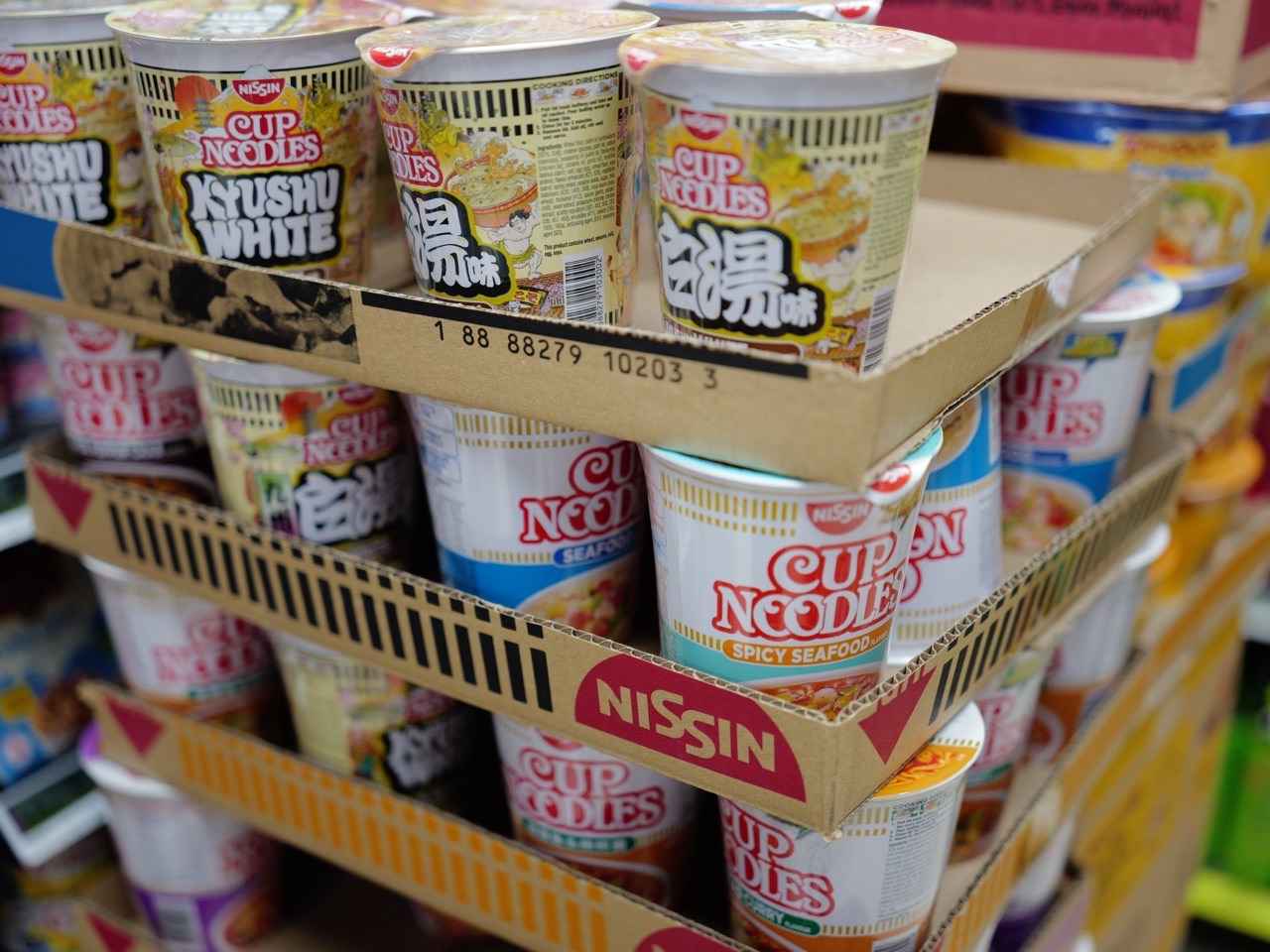
Crazy Rich Indonesia | Indofood, Indomie and the Instant Noodle Economy begins with a packet so familiar that it is easy to forget how much industry fits inside it.
Did you know Indofood reported Rp123.49 trillion in consolidated net sales for 2025, up 7% year on year, followed by Rp65.53 trillion in sales during the first half of 2026, up another 9%? Its consumer-branded-products business is supported by about 60 plants across Indonesia, while Indomie and other products are sold in more than 100 countries.
That makes Indomie, Indofood, instant noodles Indonesia, Indomie export, food manufacturing Indonesia, instant noodle factory and Indonesian food brands powerful search themes. But the richer story is how flour, palm oil, seasonings, packaging, factories, distribution and branding turn a cheap meal into a global consumer product.
Crazy Rich Indonesia can fit agriculture, chemistry, logistics and culture into one bowl of noodles.
Did You Know? Indomie Is Much Bigger Than Indonesia
Indofood describes Indomie as an international flagship brand with strong market leadership beyond Indonesia.
Its products are present in more than 100 countries, supported by Indonesian exports and more than 20 production facilities across Malaysia, Africa, the Middle East and southeastern Europe.
The brand therefore travels through two strategies at once: export from Indonesia and local manufacturing closer to overseas markets.
Why Instant Noodles Scale So Well
Instant noodles are lightweight, shelf-stable, inexpensive and easy to prepare.
Those four properties reduce distribution friction.
A food product becomes scalable when it survives transport, stores well and requires little equipment at the point of consumption.
Convenience is industrial design.
The Noodle Begins with Flour
Wheat flour provides starch and gluten that help create the noodle structure.
Mixing, rolling and cutting transform flour and water into continuous dough sheets and strands.
Small variations in moisture or protein can change texture.
A familiar noodle starts as controlled cereal chemistry.
Steaming Sets the Structure
Noodle strands are steamed before drying or frying.
Heat gelatinises starch and helps establish the structure that later rehydrates quickly in hot water.
The consumer sees a three-minute meal.
The factory designed those three minutes much earlier.
Frying Is Also a Preservation Technology
Many instant noodles are flash-fried after steaming.
The process removes water rapidly and creates a porous structure that rehydrates quickly.
The oil therefore contributes flavour, texture and shelf stability.
Food processing converts water activity into time.
Palm Oil Connects Directly to the Product
Indonesia’s huge palm-oil industry supplies edible oil used across the national food-manufacturing system.
Read Crazy Rich Indonesia | Palm Oil, Biodiesel and the Global Supply Chain.
The same commodity can become biodiesel, cooking oil or part of processed food manufacturing.
One agricultural system supports several industries.
Seasoning Is Where Local Taste Becomes Intellectual Property
Mi goreng, ayam bawang, rendang and other flavour profiles turn a standard noodle base into culturally recognisable products.
The seasoning sachet may contain only a few grams, but it carries much of the brand identity.
Food formulation becomes flavour language.
Why Mi Goreng Became Global
Indomie Mi Goreng travels well because it is distinctive enough to feel Indonesian and simple enough to be understood anywhere.
The product requires no knowledge of Indonesian cuisine before first use.
The first packet teaches the customer.
A food can act as cultural onboarding.
Packaging Is Part of Food Safety
The wrapper protects noodles and seasoning from moisture, oxygen, contamination and physical damage.
It also carries preparation instructions, nutrition information, branding and regulatory labels.
Read Crazy Rich Indonesia | Pulp, Paper and the Packaging Economy.
The package is both barrier and interface.
Sixty Indonesian Plants Create Geographic Reach
Indofood’s consumer-branded-products operations describe roughly 60 plants across Indonesia.
That distributed manufacturing footprint helps keep products close to consumer markets and reduce long-haul distribution pressure.
Factories can be placed where demand and logistics make sense rather than forcing every packet through one national megafactory.
Distribution Is One of Indofood’s Greatest Assets
Indonesia’s archipelago creates a hard consumer-goods problem: making the same product reliably available across thousands of islands and cities.
Indofood’s broad distribution network helps solve that problem.
A famous brand is commercially weak if the customer cannot find it.
Availability is part of branding.
Indomaret and Alfamart Make the Final Metre Visible
Read Crazy Rich Indonesia | Indomaret, Alfamart and the Convenience Store Economy.
National food manufacturing meets consumers through minimarkets, supermarkets, warungs and e-commerce.
The factory makes demand possible.
Retail makes supply visible.
Food Manufacturing Is a Forecasting Business
A plant has to decide how much to produce before every consumer decides what to eat.
Too much production creates inventory risk.
Too little creates empty shelves.
Demand forecasting turns historical sales and seasonality into production plans.
Ramadan and Holidays Change Demand
Consumer packaged foods often experience demand shifts around Ramadan, Eid, school holidays and travel periods.
Factories, warehouses and retailers therefore plan around the calendar.
Food manufacturing is partly seasonal logistics.
Quality Must Be Repeated Millions of Times
A consumer expects the tenth packet to taste like the first.
Factories therefore control noodle weight, moisture, seasoning dose, frying time and packaging integrity.
Industrial trust is consistency at scale.
Food Safety Is the Non-Negotiable Layer
Large food producers operate under quality and food-safety systems covering raw materials, processing, hygiene, allergens and traceability.
One contamination event can damage millions of units and years of brand trust.
Scale multiplies both success and mistakes.
Indofood Is More Than Instant Noodles
Indofood describes itself as a Total Food Solutions company operating across agribusiness, flour, consumer-branded products and distribution.
That integration can create internal supply relationships and purchasing scale.
The noodle brand sits inside a much larger food system.
Flour Milling Is Upstream Industrial Food
Noodles depend on reliable flour quality.
Large-scale flour milling therefore forms part of the industrial foundation beneath branded foods.
The package on the shelf begins with grain logistics and milling before it becomes a consumer brand.
Brands Turn Commodity Inputs into Higher Value
Flour and oil are commodities.
Indomie is a brand.
The economic difference comes from formulation, trust, distribution, packaging and cultural memory.
Branding is downstreaming for consumer goods.
2025 Was Another Large Year
Indofood’s 2025 consolidated net sales reached Rp123.49 trillion and operating income Rp24.57 trillion.
Core profit reached Rp11.39 trillion.
The numbers are company-wide rather than Indomie-only, but they show the scale of the integrated food system behind the brand.
First-Half 2026 Sales Continued Growing
For January–June 2026, Indofood reported Rp65.53 trillion in consolidated net sales, up 9% year on year.
Operating income rose 14% to Rp13.29 trillion.
Large consumer-food businesses can keep growing because millions of small purchases repeat every day.
The Singapore Connection Is Familiar and Practical
Indonesian food brands are widely consumed across Singapore and the wider region.
Singapore’s supermarkets, convenience stores, food-service industry and ports form natural distribution channels for Indonesian packaged foods.
Read Crazy Rich Singapore | Port of Singapore, Shipping and Bunkering.
Consumer brands often cross the border more easily than cultural explanations do.
Read Indomie Beside Indonesian Food
Read Crazy Rich Indonesia | Indonesian Food, Rendang, Satay and Nasi Goreng.
One article explains cuisine as culture and everyday eating.
This one explains what happens when food becomes repeatable industrial production.
A recipe becomes a factory system.
What Students Can Learn from Instant Noodles
Chemistry
Starch gelatinisation, frying, oxidation and preservation connect food to molecular science.
Mathematics
Batch sizes, demand forecasts and production yields create quantitative problems.
Economics
Branding, distribution and economies of scale explain why a cheap product can support a giant company.
Geography
Factories and distribution centres show how an archipelago changes supply-chain design.
English
Words such as shelf life, formulation, distribution, yield and standardisation become practical vocabulary.
Ten Vocabulary Words for Understanding Food Manufacturing
1. Shelf life
The period during which a food remains acceptable and safe under specified conditions.
2. Gelatinisation
The process by which starch granules absorb water and change structure when heated.
3. Formulation
The designed combination and proportion of ingredients in a product.
4. Distribution
Moving finished goods from factories toward retailers and consumers.
5. Batch
A defined quantity manufactured under one controlled production cycle.
6. Yield
The useful output obtained from a given quantity of inputs.
7. Standardisation
Making processes and products consistent across locations and time.
8. Traceability
The ability to follow ingredients and products through the supply chain.
9. Forecast
An estimate of future demand used for planning.
10. Brand equity
The commercial value created by customer recognition, trust and preference for a brand.
Frequently Asked Questions
How large was Indofood in 2025?
Indofood reported Rp123.49 trillion of consolidated net sales and Rp24.57 trillion of operating income for 2025.
How was Indofood performing in the first half of 2026?
Consolidated net sales reached Rp65.53 trillion, up 9% year on year.
How widely is Indomie sold?
Indofood says its products are present in more than 100 countries globally.
How many Indonesian production plants support Indofood’s consumer brands?
The company describes roughly 60 plants across Indonesia.
Why are instant noodles easy to distribute?
They are lightweight, shelf-stable, compact and quick to prepare, making them efficient consumer goods.
Why is Indomie economically interesting?
It shows how commodity inputs such as flour and oil gain far more value through processing, formulation, distribution and brand trust.
Helpful Reading Across the Singapore Graph
- Crazy Rich Indonesia | Indonesian Food, Rendang, Satay and Nasi Goreng
- Crazy Rich Indonesia | Palm Oil, Biodiesel and the Global Supply Chain
- Crazy Rich Indonesia | Indomaret, Alfamart and the Convenience Store Economy
- Crazy Rich Indonesia | Pulp, Paper and the Packaging Economy
References and Current Sources
- Indofood, Full Year Financial Results 2025, 30 March 2026.
- Indofood, Financial Results for the Period Ended 30 June 2026, 31 July 2026.
- Indofood, Consumer-branded-products manufacturing and global-market profile, 2026.
- Indofood, Annual Report 2025.
Crazy Rich Indonesia Makes Convenience at Industrial Scale
The packet is cheap.
The system behind it is sophisticated.
Did you know? A consumer brand becomes truly powerful when the factory, flavour, distribution network and memory of the customer all agree on what one small packet should mean.