
Explore this series: Crazy Rich Singapore article directory · Crazy Rich World — all countries and learning routes.
Crazy Rich Singapore | HDB, BTO and the Mass Homeownership Economy begins with an unusual definition of national wealth: millions of people living inside a housing system designed not only to shelter them, but to make home ownership part of ordinary life.
Did you know HDB flats are home to close to 80% of Singapore’s resident population, and about 90% of those households own their homes? In 2026, HDB planned about 19,600 BTO flats across the year’s sales exercises, while remaining on track to offer about 55,000 flats from 2025 to 2027.
That makes “HDB Singapore”, “BTO Singapore”, “public housing Singapore”, “HDB flat”, “HDB resale” and “Singapore home ownership” powerful search themes. The Crazy Rich story is not that every household is wealthy, nor that every flat is an investment success. It is that Singapore built a housing system at national scale and made owner-occupation a central part of its social architecture.
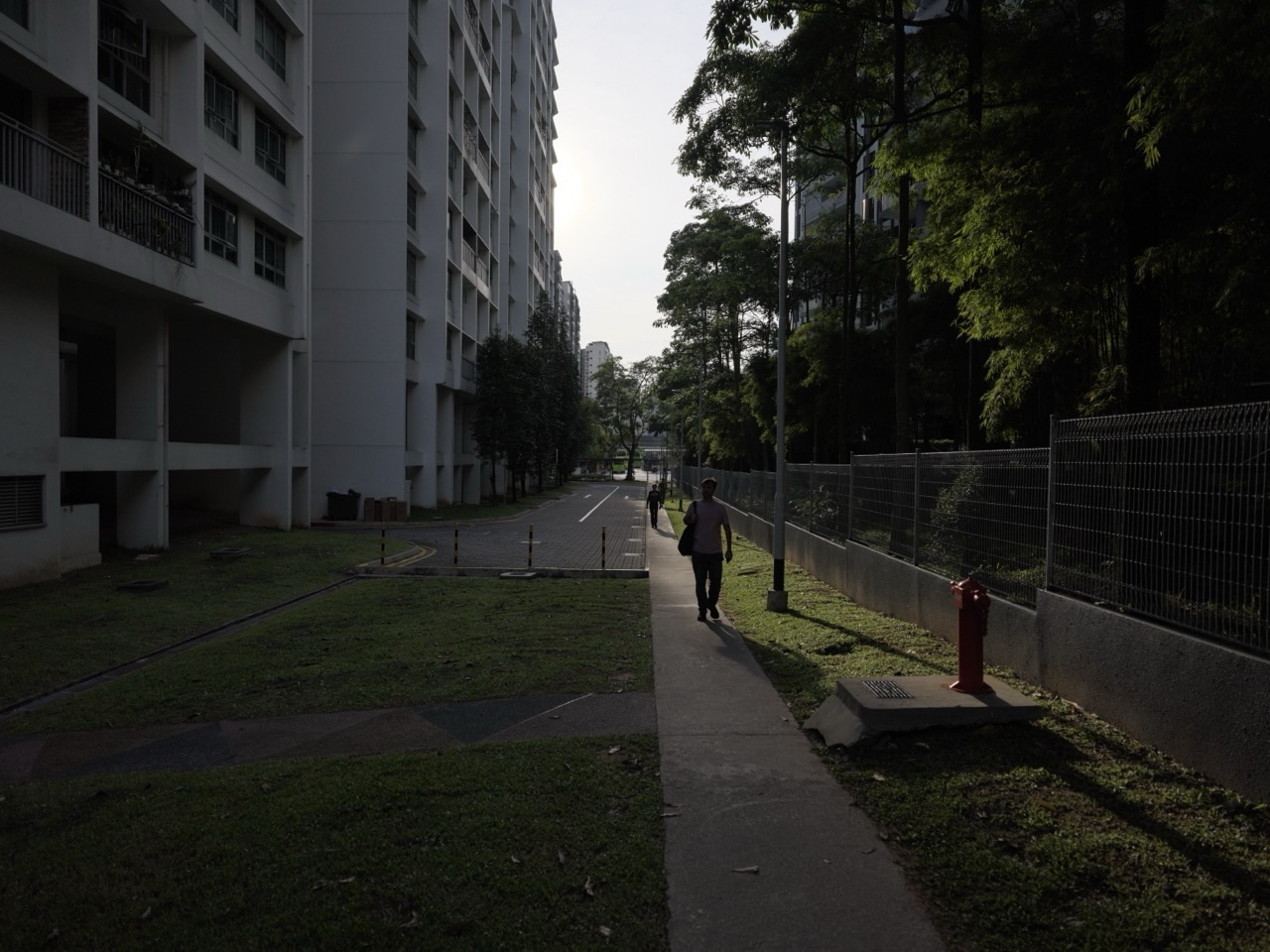
Crazy Rich Singapore can look like a lift landing, a void deck and a key collected from HDB.
Did You Know? Public Housing in Singapore Is Mostly Owner-Occupied
In many countries, “public housing” mainly suggests rental housing.
Singapore’s model is different.
HDB develops, sells and manages public housing while also maintaining rental housing for households that need it.
The dominant model is owner-occupation.
That changes how residents relate to their homes, neighbourhoods and long-term finances.
Why Home Ownership Became a National System
Housing is never only about buildings.
It affects:
- family formation;
- commuting;
- school access;
- retirement planning;
- household savings;
- neighbourhood identity; and
- social stability.
Singapore therefore treats public housing as urban infrastructure rather than a residual welfare product.
The estate, town centre, transport network and flat all belong to the same operating system.
The BTO Model: Build After Demand Is Visible
Build-To-Order, or BTO, is HDB’s main new-flat supply model.
Projects are launched for application before construction is complete.
That allows demand to be observed while flats are being planned and built.
The buyer does not select from a completed private showroom.
The buyer enters a public allocation and construction pipeline.
Nineteen Thousand Six Hundred BTO Flats in 2026
HDB announced in January 2026 that about 19,600 BTO flats would be offered during the year.
More than 4,000 were planned as Shorter Waiting Time flats with waits under three years.
The 2026 supply includes Standard, Plus and Prime projects in multiple towns.
This matters because housing supply is not a single launch.
It is a multi-year pipeline.
The November 2026 Sales Exercise
HDB’s later 2026 update shifted the next BTO sales exercise from October to November 2026 while new income-ceiling changes were introduced.
About 7,960 flats were planned for Bedok, Geylang, Sembawang, Tengah, Toa Payoh and Yishun.
That update is a useful reminder:
housing policy moves continuously, so old launch calendars can become outdated quickly.
Standard, Plus and Prime: Location Becomes Policy
Since October 2024, new BTO projects have been classified as Standard, Plus or Prime.
The categories reflect locational attributes such as:
- proximity to the city centre;
- transport connectivity;
- amenities; and
- other location advantages.
Standard flats form the largest category.
Plus and Prime flats receive additional subsidies because their locations would otherwise command higher market values.
Why Plus and Prime Flats Have Tighter Rules
Additional subsidy comes with additional conditions.
HDB’s framework includes:
- subsidy recovery upon resale for Plus and Prime flats;
- a 10-year Minimum Occupation Period for Plus and Prime flats; and
- tighter resale and rental conditions.
The policy logic is to keep highly attractive public housing focused on owner occupation rather than pure investment demand.
The richer location comes with a stronger public-policy contract.
The HFE Letter: Housing Becomes a Financial Eligibility System
Before applying for a new or resale HDB flat, buyers generally need a valid HDB Flat Eligibility letter.
The HFE process brings several questions together:
- eligibility to buy;
- CPF housing grants;
- HDB housing-loan eligibility; and
- estimated grant and loan amounts.
That makes the HFE letter a bridge between housing policy and household finance.
Why HDB Is Also a Capital-Market Issuer
HDB does not finance development only through flat sales.
It also raises money in capital markets.
In May 2026, HDB issued S$1.1 billion of 10-year fixed-rate notes under its S$42 billion multicurrency medium-term note programme.
The proceeds can support development programmes, working capital and refinancing.
This connects public housing to Crazy Rich Singapore | Singapore Exchange and the Capital Markets.
The Estate Is More Than the Flat
An HDB home sits inside a wider town system.
Residents depend on:
- MRT and bus connectivity;
- schools;
- hawker centres;
- clinics;
- parks;
- shops;
- community facilities; and
- digital and utility infrastructure.
That means the economic value of housing partly comes from public systems outside the apartment door.
A flat is private space inside public infrastructure.
The Town-Centre Connection
Singapore’s public housing towns were designed around neighbourhood and town centres rather than isolated towers.
That connects directly to How Singapore Connects | Town Centres, Neighbourhood Centres and Everyday Services.
Housing becomes more usable when groceries, food, transport and daily services are close enough to reach easily.
The MRT Connection
Transport access strongly shapes housing convenience and desirability.
That is why Standard, Plus and Prime classifications explicitly consider connectivity.
This links HDB directly to Crazy Rich Singapore | MRT Tunnels, Deep Infrastructure and the Underground City.
The rail line changes the usefulness of the flat without changing the flat’s floor area.
The Green-Town Connection
HDB towns are also part of Singapore’s sustainability programme.
Solar panels, smart lighting, cool coatings, EV charging and energy monitoring are increasingly integrated into estates.
That connects to Crazy Rich Singapore | Green Buildings, Smart Districts and Sustainable Real Estate.
Public housing becomes a national testbed because interventions can be deployed across thousands of blocks.
Why Housing Supply Has to Be Continuous
Housing demand changes with marriages, migration, births, household formation and economic conditions.
That is why HDB keeps a pipeline rather than trying to predict one permanent “correct” number of flats.
In 2026, the Board remained prepared to offer about 55,000 flats from 2025 to 2027.
The system is continuously adjusted rather than finished.
The Resale Market Is a Second Housing System
After meeting applicable conditions, many HDB owners can sell their flats on the resale market.
That creates a second price system beside subsidised new-flat allocation.
In the second quarter of 2026, HDB’s resale price index softened slightly after earlier periods of strong growth.
That matters because public housing can function as both a home and a major household asset.
Those two roles can create policy tension when affordability and asset values move in different directions.
Why Home Value Is Not the Same as Cash Wealth
A flat may rise in market value.
That does not mean the household has the same amount available to spend.
The household still needs somewhere to live.
Selling may require buying or renting another home.
This is a useful financial-literacy distinction:
asset value is not identical to disposable cash.
Community Care Apartments: Housing Meets Ageing Policy
Singapore’s Community Care Apartments combine housing with care-oriented services for older residents.
From the November 2026 BTO exercise, the age eligibility is being lowered from 65 to 55.
Toa Payoh’s first CCA project is also scheduled in the 2026 sales pipeline.
That shows public housing evolving with demographics.
The same housing system has to serve young households and an ageing population.
Why Public Rental Still Matters
Owner occupation is central to HDB, but not every household is ready or able to buy.
Public rental housing remains an important safety-net function.
Some newer developments also integrate rental flats alongside owner-occupied housing.
That helps preserve a broader social mix inside towns.
What Students Can Learn from HDB
Economics
Subsidies, mortgages, asset prices and supply reveal how housing markets interact with public policy.
Mathematics
Loan repayment, interest, grant amounts and price indexes are quantitative systems.
Geography
Housing value depends heavily on location, transport and access to services.
Civics
Public housing demonstrates how governments shape land use, affordability and social outcomes.
Design
A home is only one component of a functioning town.
Ten Vocabulary Words for the HDB Economy
1. BTO
Build-To-Order, HDB’s main new-flat sales model.
2. HFE
HDB Flat Eligibility, the process and letter covering purchase, grant and HDB-loan eligibility.
3. Subsidy
Public support that reduces the cost of a good or service relative to its unsubsidised level.
4. Minimum Occupation Period
The minimum period owners must occupy an HDB flat before certain transactions are allowed.
5. Resale market
The secondary market where eligible owners sell existing HDB flats to buyers.
6. Home ownership
The condition in which a household holds ownership rights over its residence.
7. Mortgage
A loan secured against residential property.
8. Public rental
Government-supported rental housing for eligible households.
9. Community Care Apartment
A public-housing model combining senior-friendly homes with care-related services.
10. Housing pipeline
The sequence of planned, launched, under-construction and completed housing supply.
Frequently Asked Questions
How many Singapore residents live in HDB flats?
HDB says its flats are home to close to 80% of Singapore’s resident population.
How many HDB households own their homes?
HDB says about 90% of resident households living in HDB flats own their homes.
How many BTO flats are planned in 2026?
HDB announced about 19,600 BTO flats for 2026.
What are Standard, Plus and Prime flats?
They are location-based classifications for new BTO projects launched from October 2024 onward, with differing subsidy levels and ownership conditions.
Is every HDB flat an investment product?
No. HDB is primarily a public-housing system focused on housing needs and owner occupation; resale values are only one part of the wider housing framework.
Helpful Reading Across the Singapore Graph
- How Singapore Connects | Town Centres, Neighbourhood Centres and Everyday Services
- Crazy Rich Singapore | Green Buildings, Smart Districts and Sustainable Real Estate
- Crazy Rich Singapore | MRT Tunnels, Deep Infrastructure and the Underground City
- Crazy Rich Singapore | Singapore Exchange and the Capital Markets
References and Current Sources
- Housing & Development Board, HDB to Launch 19,600 BTO Flats in 2026, 7 January 2026.
- Housing & Development Board, Increase in Income Ceilings and Greater Support for Families with Children, 2026.
- Housing & Development Board, Standard, Plus and Prime Housing Framework, accessed October 2026.
- Housing & Development Board, HDB Issues Rated Fixed Rate Notes, 25 May 2026.
Crazy Rich Singapore Builds Wealth at Town Scale
Singapore’s public housing story is easy to reduce to property prices.
That misses the larger system.
The real achievement is the combination of housing, transport, financing, town planning and long-term supply.
Did you know? One of Singapore’s richest assets may be the idea that an ordinary family should be able to live inside a national-scale housing system rather than outside the housing market looking in.