
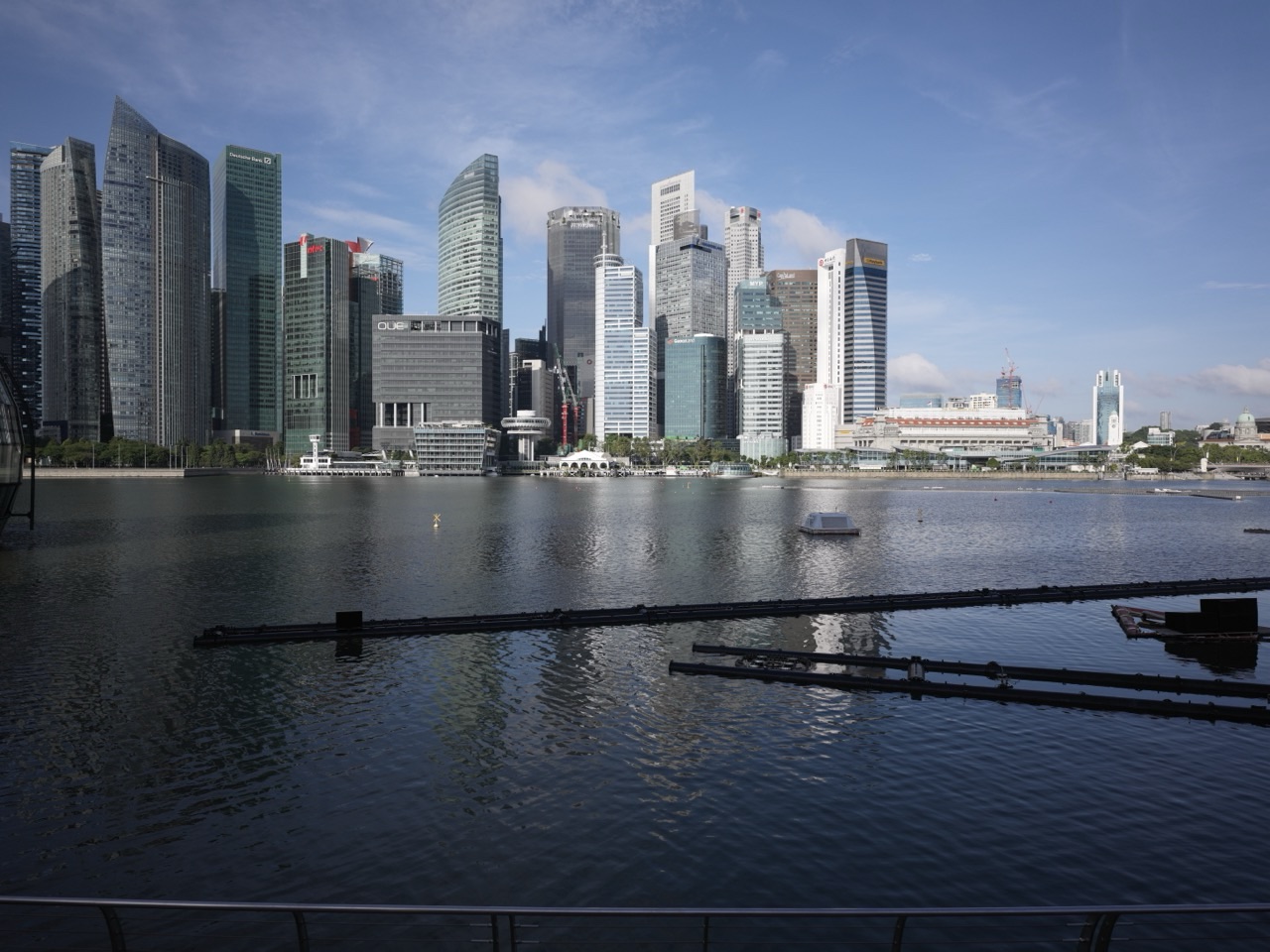
Crazy Rich Singapore | Trade Finance, Letters of Credit and the Banking Behind Global Trade begins with a problem older than the container ship: how does a seller trust a buyer thousands of kilometres away—and how does the buyer trust that the goods will actually arrive?
Did you know Enterprise Singapore’s Enterprise Financing Scheme – Trade Loan was enhanced from 1 April 2026, with financing across EFS facilities subject to a combined S$50 million borrower-group cap? At the same time, Singapore’s TradeTrust framework is pushing electronic bills of lading and other trade documents from pilot projects toward real cross-border use.
That makes “trade finance Singapore”, “letter of credit Singapore”, “trade loan Singapore”, “electronic bill of lading”, “TradeTrust Singapore” and “supply chain finance Singapore” powerful search themes. The Crazy Rich story is not a bank vault. It is the machinery that lets cargo, documents and money move on different timelines without forcing every exporter to trust every importer blindly.
Crazy Rich Singapore can finance goods that are still somewhere in the middle of the ocean.
Did You Know? Global Trade Has Three Journeys
A shipment can be understood as three connected journeys:
- the physical journey of the goods;
- the documentary journey proving what the goods are and who controls them; and
- the financial journey determining when and under what conditions money moves.
These journeys overlap, but they are not the same.
A container can move faster than its paperwork.
A payment can be promised before the ship arrives.
Trade finance exists partly to coordinate those differences.
Why Exporters Do Not Always Want to Wait Until Delivery
A manufacturer may need to pay suppliers, workers and freight costs before the overseas customer pays the final invoice.
That creates a working-capital gap.
Trade-finance products can help bridge it through facilities such as:
- inventory financing;
- receivables financing;
- pre-delivery working capital;
- bank guarantees; and
- other short-term trade facilities.
EnterpriseSG’s current EFS Trade Loan explicitly supports several of these needs for eligible Singapore enterprises.
The 2026 Enterprise Financing Scheme Trade Loan
Enterprise Singapore’s current EFS-TL framework finances domestic and overseas trade needs.
From 1 April 2026, financing is subject to a combined borrower-group maximum of S$50 million across Enterprise Financing Scheme facilities.
EnterpriseSG shares part of the default risk with participating financial institutions.
The important distinction is that the Government does not simply hand out automatic loans.
Banks and participating financiers still assess credit.
Why Risk Sharing Matters
A bank deciding whether to finance trade has to consider:
- the borrower’s credit quality;
- the goods being financed;
- the buyer;
- the transaction structure;
- the countries involved;
- the repayment source; and
- the possibility that something goes wrong before payment.
Government risk-sharing can make financing more accessible without removing the lender’s responsibility to assess the transaction.
That is a useful public-policy design.
The state shares risk.
It does not pretend risk does not exist.
Letters of Credit: A Bank Steps Between Buyer and Seller
A letter of credit is one classic trade-finance mechanism.
Instead of the exporter relying only on the buyer’s promise to pay, a bank undertakes to pay when the required documentary conditions are met, subject to the terms of the credit.
That changes the trust structure.
The exporter now relies partly on the bank and the documentary framework rather than only on the overseas buyer.
The key word is documents.
Why the Bank Looks at Documents Rather Than the Cargo Itself
A bank handling documentary trade finance usually does not open containers and inspect every product.
It checks the documents required by the transaction.
Those may include:
- commercial invoices;
- transport documents;
- packing lists;
- certificates of origin;
- insurance documents; and
- other transaction-specific records.
That means precision in documentation can become financially important.
A spelling error is not always trivial if it creates a mismatch under a documentary payment structure.
The Bill of Lading: Transport Document and Title Mechanism
Bills of lading are central to maritime trade because they can perform several functions, including acknowledging receipt of cargo and, in relevant cases, representing rights connected to the goods.
That is why digitising a bill of lading is harder than scanning a piece of paper.
The digital system must address authenticity, control and transfer.
Singapore’s TradeTrust framework was built around that problem.
TradeTrust: Making Trade Documents Digital and Transferable
IMDA describes TradeTrust as an open framework for secure and interoperable digital trade documents.
It supports both verifiable documents, such as certificates of origin, and transferable documents, such as electronic bills of lading.
TradeTrust is aligned with legal frameworks such as the UNCITRAL Model Law on Electronic Transferable Records and Singapore’s Electronic Transactions Act.
The objective is not merely paperless trade.
It is legally and operationally usable digital trade.
Why Interoperability Matters More Than One Perfect Platform
A shipping line may use one digital platform.
A bank may use another.
An importer may use a third.
If digital documents work only when every participant joins the same closed platform, adoption becomes slow.
TradeTrust therefore focuses on interoperability between systems.
The richest digital trade network is not the one that forces everyone into one application.
It is the one that lets different applications understand one another.
The 2026 TradeTrust Readiness Programme
IMDA launched the TradeTrust Readiness Programme in February 2026 to accelerate real-world adoption of interoperable electronic bills of lading.
The programme runs into 2027 and pairs digital trade platforms with carriers to demonstrate live cross-platform usage.
IMDA also reported that four TradeTrust-enabled platforms had achieved global maritime insurance approval and that more than 50 ecosystem partners were participating in the wider TradeTrust network.
That is the difference between a clever pilot and an emerging infrastructure standard.
A US$5 Million Digital Documents-against-Payment Transaction
In January 2026, an Africa-Singapore-China bulk commodity transaction used interoperable digital Documents against Payment workflows with TradeTrust-enabled electronic documentation.
TradeTrust’s March 2026 newsletter described the cargo value as US$5 million and named DBS and OCBC among the banks participating in the transaction.
The significance is not that US$5 million is large by global trade standards.
It is that a real transaction crossed several jurisdictions and institutions using interoperable digital trade documents.
Why Letters of Credit Are Going Digital Too
TradeTrust’s 2026 ecosystem updates also describe Singapore-Vietnam work on digital credentials for letter-of-credit workflows.
That is important because trade finance is only as digital as its documentary chain.
A bank cannot fully automate a transaction if critical supporting documents still move through slow, fragmented or unverifiable channels.
Trade-document infrastructure therefore becomes finance infrastructure.
The Commodity-Trading Connection
Commodity traders regularly buy and sell cargoes before final delivery.
They need financing, hedging, shipping documents and counterparty controls to work together.
That connects directly to Crazy Rich Singapore | Commodity Trading, Energy and Global Risk.
The physical cargo can be oil, metal or grain.
The financial architecture around it is largely informational.
The Port Connection
Trade finance has little purpose without physical trade.
Singapore’s port and shipping hub gives banks a large ecosystem of transactions to finance.
That links directly to Crazy Rich Singapore | Port of Singapore, Shipping and Bunkering and Tuas Mega Port, Automation and the Future of Container Shipping.
The ship moves the goods.
Trade finance helps move the risk.
The Free-Trade-Agreement Connection
An FTA may reduce tariffs when origin rules are satisfied.
Trade finance helps the company fund the transaction while documents such as certificates of origin support the customs claim.
That connects naturally to Crazy Rich Singapore | Free Trade Agreements, Rules of Origin and the Market Access Economy.
Market access and transaction financing are different systems.
Exporters often need both.
Why Trade Finance Is a Fraud Problem Too
A trade transaction may involve documents representing goods that are far away and difficult to inspect instantly.
That creates opportunities for fraud if the same cargo, warehouse receipt or document is misrepresented.
Banks therefore combine trade expertise with compliance, customer due diligence and transaction monitoring.
This connects directly to Crazy Rich Singapore | RegTech, COSMIC and the Compliance Technology Economy.
The richer the trade-finance system becomes, the more valuable trusted information becomes.
Why Digital Trade Can Reduce Financing Friction
A reliable digital document can potentially be verified more quickly than a paper record sent between multiple parties.
That can reduce processing time and uncertainty.
IMDA says TradeTrust is intended to reduce operating costs, fraud risks and the complexity of paper-based cross-border documentation.
The financial benefit appears when trusted documents allow payment, financing or cargo release to happen with fewer manual handoffs.
What Students Can Learn from Trade Finance
English
Trade finance demonstrates why one word or document field can affect payment obligations.
Mathematics
Interest, credit periods, invoice values and foreign exchange all influence the transaction’s economics.
Economics
Trade finance solves timing and trust problems between buyers, sellers and banks.
Computing
Electronic trade documents, digital signatures and interoperability turn paper workflows into software systems.
Geography
Trade finance follows shipping routes, markets and production networks across borders.
Ten Vocabulary Words for Trade Finance
1. Trade finance
Financial products and services that support the movement of goods or services between buyers and sellers.
2. Letter of credit
A bank undertaking to pay under defined documentary conditions, subject to its terms.
3. Bill of lading
A transport document used in maritime trade that can also perform important title-related functions.
4. Receivables financing
Financing based on amounts owed to a business by its customers.
5. Inventory financing
Financing linked to goods held or purchased for sale or production.
6. Bank guarantee
A bank commitment supporting an obligation of its customer under specified terms.
7. Documentary collection
A trade-payment arrangement in which banks handle documents according to collection instructions without necessarily guaranteeing payment.
8. Electronic bill of lading
A digital transferable record designed to perform the legal and commercial functions of a paper bill of lading.
9. Interoperability
The ability of different systems or platforms to exchange and use information reliably.
10. Working capital
Short-term funding used to support everyday business operations such as inventory, suppliers and receivables.
Frequently Asked Questions
What does Singapore’s Enterprise Financing Scheme Trade Loan support?
EnterpriseSG says it supports trade needs including inventory financing, structured pre-delivery working capital, receivables-related financing, overseas working capital and bank guarantees.
What changed in 2026?
From 1 April 2026, EFS facilities became subject to a combined borrower-group maximum of S$50 million, giving eligible enterprises more flexibility across financing needs.
What is TradeTrust?
It is an IMDA-developed open framework enabling secure, interoperable and legally usable electronic trade documents across different digital platforms.
Is an electronic bill of lading just a PDF?
No. A transferable eBL must address authenticity, control and transfer of the electronic record, not merely reproduce the appearance of paper.
Why do banks care about shipping documents?
Trade-finance structures often depend on documentary evidence relating to the goods, shipment and contractual conditions.
Helpful Reading Across the Singapore Graph
- Crazy Rich Singapore | Port of Singapore, Shipping and Bunkering
- Crazy Rich Singapore | Free Trade Agreements, Rules of Origin and the Market Access Economy
- Crazy Rich Singapore | Commodity Trading, Energy and Global Risk
- Crazy Rich Singapore | RegTech, COSMIC and the Compliance Technology Economy
References and Current Sources
- Enterprise Singapore, Enterprise Financing Scheme – Trade Loan, current 2026 scheme terms.
- Enterprise Singapore, Enterprise Financing Scheme, updated for 2026 enhancements.
- IMDA, TradeTrust, updated 8 May 2026.
- IMDA, TradeTrust Steps Up Efforts, 4 February 2026.
- TradeTrust, March 2026 Newsletter, including the Africa-Singapore-China digital D/P transaction.
Crazy Rich Singapore Finances the Journey Between Promise and Payment
Global trade is full of gaps.
The seller wants confidence before surrendering goods.
The buyer wants confidence before surrendering money.
Banks, documents and digital infrastructure exist to narrow those gaps.
Did you know? Some of Singapore’s richest trade infrastructure moves no physical cargo at all. It moves enough trust that the cargo can keep moving.