
Explore this series: Crazy Rich UK article directory · Crazy Rich World — all countries and learning routes.
Crazy Rich UK | London Travel, Buckingham Palace, Tower of London, West End and the Visitor Economy begins with one of the biggest search doors into Britain: London itself.
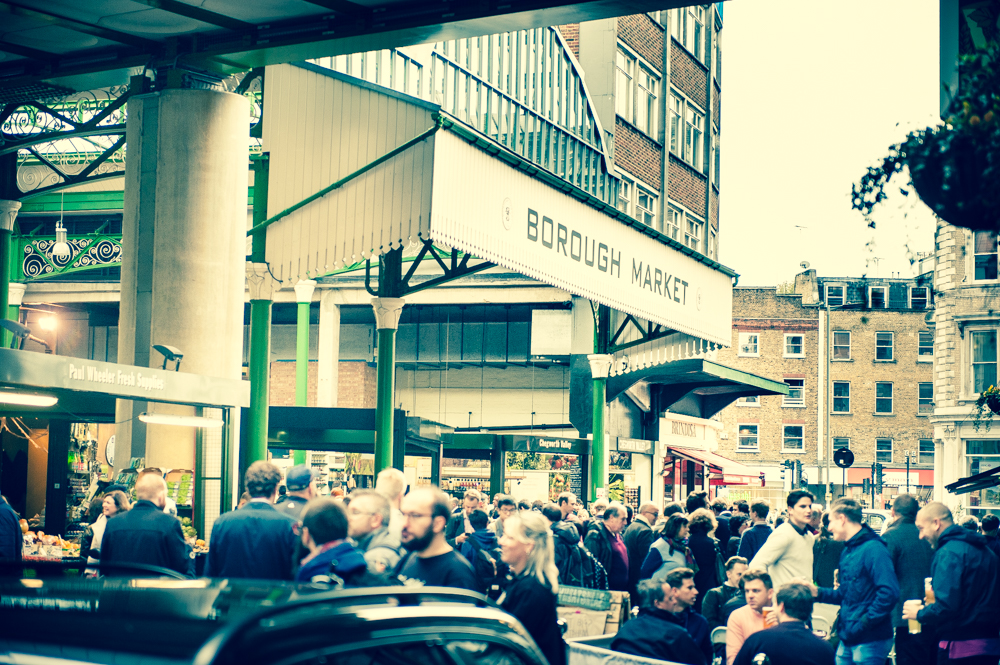
Did you know VisitBritain’s August 2026 forecast expects 44.2 million inbound visits to the UK in 2026, with international visitors spending about £33.9 billion? London sits at the centre of that visitor economy because one city can offer royal landmarks, medieval fortifications, world-leading museums, theatre, shopping, football, food, finance and neighbourhood culture within the same transport network.
That makes “London travel guide”, “things to do in London”, “Buckingham Palace”, “Tower of London”, “West End London” and “London tourism” unusually powerful search themes. The interesting Crazy Rich question is not simply why people visit. It is how London converts history, reputation, institutions, transport and culture into a visitor economy that can keep producing value generation after generation.
London is a city where a palace, a railway station, a museum, a theatre ticket and a cup of tea can all belong to the same economic machine.
Did You Know? Tourism Is an Export Even When Nothing Leaves the Country
When an overseas visitor arrives in Britain and pays for a hotel room, restaurant meal, train journey, theatre ticket or museum shop purchase, money enters the UK economy.
The product is experienced locally.
The customer travels to the product.
That makes tourism a fascinating kind of export.
London is especially good at this because it does not sell only one attraction. It sells a dense bundle of experiences that reinforce one another.
- history brings visitors to landmarks;
- landmarks create photographs, stories and global recognition;
- recognition increases travel demand;
- travel demand supports hotels, restaurants and transport;
- large visitor flows support theatres, shops and attractions; and
- the resulting city experience strengthens the London brand again.
It is a loop.
History becomes attention. Attention becomes movement. Movement becomes spending. Spending helps preserve and renew the city that created the attention in the first place.
Buckingham Palace: Why Ceremony Has Economic Value
Buckingham Palace is more than a large building.
It is a globally recognisable symbol that compresses several ideas into one image: monarchy, ceremony, continuity, Britain and London.
That recognisability has economic value because travellers do not need a long explanation before deciding that the palace belongs on a London itinerary.
The surrounding experience matters too.
- The Mall creates a ceremonial approach.
- St James’s Park adds landscape and walking value.
- Westminster connects the palace district to Parliament, churches, museums and the Thames.
- Public transport lets visitors combine several landmarks in one day.
The palace is therefore not an isolated attraction.
It is an anchor inside a walkable heritage cluster.
The Tower of London: A Thousand Years Can Become a Day Ticket
The Tower of London turns medieval history into a modern visitor experience without needing to stop being historically important.
VisitEngland’s most recent attractions survey reported that the Tower of London was England’s most visited paid attraction in 2024, with about 2.9 million visits.
Why does that matter?
Because the Tower demonstrates how a heritage asset can create several kinds of value at once:
- historical education;
- tourism revenue;
- employment;
- retail and food spending;
- neighbourhood footfall;
- film and media visibility; and
- a stronger international image for London.
A castle can therefore be both an old object and a current economic platform.
The British Museum: Free Entry Can Still Create an Economy
Here is a lovely puzzle.
What happens when a major attraction is free to enter?
The answer is that the surrounding economy can still be enormous.
VisitEngland reported roughly 6.5 million visits to the British Museum in 2024, making it the most visited free attraction in England in that survey.
A visitor who pays nothing at the museum door may still pay for:
- transport;
- accommodation;
- restaurants;
- coffee;
- books and gifts;
- other attractions; and
- an extra day in London because the city offers so much to do.
Free cultural infrastructure can therefore increase the attractiveness of the whole city.
A Very 2026 London Moment: The Bayeux Tapestry Comes to Britain
London also stays searchable because its old institutions keep creating new reasons to return.
VisitBritain highlights the British Museum’s Bayeux Tapestry exhibition running from September 2026 to June 2027, bringing the famous work across the Channel for the first time in around 900 years.
That is a perfect example of how a mature destination renews itself.
The museum already exists.
The transport already exists.
The hotels already exist.
A major temporary exhibition gives the entire network a fresh reason to attract attention.
The West End: Stories Become Seats, Restaurants and Late-Night London
The West End shows how the visitor economy can be built around repeatable live performance rather than one permanent landmark.
A successful theatre district creates a chain of spending around the performance:
- tickets;
- pre-theatre dining;
- bars and cafés;
- taxis and public transport;
- hotels;
- souvenirs; and
- employment for performers, technicians, designers, musicians, producers and front-of-house teams.
The stage performance is only the visible centre.
The surrounding city captures the rest of the evening.
London Shopping: Oxford Street, Regent Street, Harrods and the Retail Map
Visitors rarely travel only for monuments.
They also shop.
London’s retail geography gives different districts different personalities: Oxford Street for mass-market scale, Regent Street for grand urban retail, Bond Street for luxury, Knightsbridge for department-store prestige, Camden for alternative markets and Portobello Road for antiques and vintage culture.
This matters because a city with several retail identities can capture several kinds of customer.
The visitor does not need to choose between “heritage London” and “shopping London”.
The Underground makes them part of the same day.
The London Underground Is Part of the Attraction Economy
Transport is often described as the thing that gets a visitor to the attraction.
In a city like London, transport is part of the attraction system itself.
A dense rail and Underground network increases the number of experiences a visitor can reach in one day.
That raises the practical value of every museum, theatre, shopping street and neighbourhood connected to it.
This is an important urban lesson:
an attraction becomes more valuable when the city makes it easy to combine with other attractions.
The Thames Is a Transport Route, View Corridor and Storyline
The River Thames ties together London’s geography.
Along it, visitors encounter Westminster, the London Eye, the South Bank, Tate Modern, Shakespeare’s Globe, St Paul’s across the river, Tower Bridge, the Tower of London and further east toward Greenwich.
The river gives London something valuable for tourism: orientation.
A visitor can understand the city as a sequence rather than a pile of disconnected attractions.
Good cities are easier to remember when their geography tells a story.
London Is Not One London
Another reason London attracts repeat visits is that it contains many different versions of itself.
- Westminster is ceremonial and institutional.
- The City is financial and ancient at the same time.
- Soho is dense, theatrical and social.
- Shoreditch is associated with creative and technology culture.
- Greenwich mixes maritime history, science and parkland.
- Camden is music, markets and counterculture.
- South Kensington concentrates museums and grand institutions.
A first-time visitor can see the icons.
A second-time visitor can choose a neighbourhood.
A third-time visitor can follow an interest.
That is how a destination keeps depth.
Why Heritage Preservation Can Be Productive Infrastructure
It is easy to think of preserved buildings as the opposite of economic development.
London demonstrates a more interesting possibility.
Old buildings can become productive infrastructure when they create:
- identity;
- visitor demand;
- premium locations;
- film settings;
- cultural continuity; and
- a city texture that cannot be copied quickly elsewhere.
This connects neatly with Crazy Rich Singapore | Conservation Shophouses and the Heritage Property Economy.
London and Singapore look very different, but both show how conservation can create value when heritage remains connected to a living city.
The Visitor Economy Is Really a Systems Economy
A tourist destination is not built by attractions alone.
It needs a system.
- airports bring people in;
- border processes admit them;
- transport distributes them;
- hotels keep them overnight;
- restaurants feed them;
- attractions occupy their time;
- retail captures additional spending;
- events create reasons to return; and
- digital platforms help visitors plan the whole journey.
The richest destinations are often the ones where these layers reinforce one another.
The Singapore Connection: Small Places Can Build Very Large Visitor Systems
Singapore and London occupy very different physical and historical scales, but the systems thinking is surprisingly comparable.
Singapore uses aviation, cruise infrastructure, food, events, attractions, neighbourhoods and high-capacity transport to make a compact city feel dense with options.
That is why London’s visitor economy connects naturally to Crazy Rich Singapore | Cruise Tourism and Marina Bay Cruise Centre, Crazy Rich Singapore | Mandai Wildlife Reserve and the Nature Tourism Economy and Crazy Rich Singapore | Hawker Culture, UNESCO and the Everyday Food Economy.
The broader lesson is not to copy London.
It is to notice that successful visitor economies connect infrastructure, culture and memory into one usable experience.
What Students Can Learn from London’s Visitor Economy
Geography
Rivers, transport lines and clusters influence how people move through a city.
History
Institutions and buildings can remain economically relevant centuries after they were created.
Economics
Visitor spending moves through accommodation, food, transport, retail, culture and employment.
English
Place names, heritage vocabulary and cultural descriptions become tools for explaining why destinations matter.
Civilisation Mechanics
Durable societies do not only build new things. They learn how to keep old things useful.
Ten Vocabulary Words for London Tourism
1. Visitor economy
The network of businesses, workers and infrastructure supported by people travelling to a place.
2. Heritage
Buildings, traditions, objects and stories inherited from the past and valued in the present.
3. Landmark
A recognisable place or structure that helps define a location.
4. Footfall
The number of people entering or moving through a place, often used in retail and tourism analysis.
5. Itinerary
A planned sequence of places and activities during a journey.
6. Destination
A place people intentionally travel to for leisure, business, education or another purpose.
7. Cultural asset
A place, institution, tradition or creative activity that produces cultural and social value.
8. Accessibility
How easily people can reach, enter and use a place or service.
9. Regeneration
The renewal of an urban area through investment, infrastructure, new uses and improved public space.
10. Soft power
The ability of a country or city to attract and influence through culture, reputation, institutions and ideas rather than coercion.
Frequently Asked Questions
Why is London such a major tourism destination?
London combines globally recognised history, museums, theatre, shopping, neighbourhoods, transport and events in one highly connected city.
How many inbound visits is the UK forecast to receive in 2026?
VisitBritain’s August 2026 forecast is 44.2 million inbound visits, with £33.9 billion in visitor spending.
What was England’s most visited paid attraction in the latest VisitEngland survey?
The Tower of London ranked first among participating paid attractions in 2024 with about 2.9 million visits.
What was the most visited free attraction?
The British Museum ranked first among participating free attractions in 2024 with about 6.5 million visits.
Is London tourism only about historic buildings?
No. Theatre, retail, food, music, football, museums, neighbourhood culture and major temporary exhibitions are all important parts of the visitor economy.
Helpful Reading Across the Singapore Graph
- Crazy Rich Singapore | Cruise Tourism and Marina Bay Cruise Centre
- Crazy Rich Singapore | Mandai Wildlife Reserve and the Nature Tourism Economy
- Crazy Rich Singapore | Conservation Shophouses and the Heritage Property Economy
- Crazy Rich Singapore | Hawker Culture, UNESCO and the Everyday Food Economy
References and Current Sources
- VisitBritain, 2026 inbound tourism forecast, updated 27 August 2026.
- VisitBritain, Domestic Tourism: regional and subregional data, including 2025 Greater London visitor data.
- VisitEngland / VisitBritain, Annual Survey of Visits to Visitor Attractions 2024, released 18 June 2025.
- VisitBritain, London destination guide, current 2026 visitor information.
Crazy Rich UK Turns Memory Into Movement
London’s visitor economy is powerful because the city does not treat history as a sealed display case.
It connects history to streets, stations, shops, theatres, restaurants, hotels and new events.
A traveller can arrive for Buckingham Palace, discover the West End, cross the Thames, visit a museum, eat in Soho, shop in Mayfair and decide to return for an exhibition that did not exist on the first trip.
Did you know? One of Britain’s richest resources is not buried underground.
It is the accumulated memory of the place—and London has learned how to make that memory move.