
Did you know that one of Bukit Timah’s most useful classrooms has no whiteboard? A seed, a leaf, an unfamiliar bird call and a shaded path can introduce scientific observation more vividly than another page of copied notes. For schools planning a 2027 learning journey, there is also practical news: Singapore Botanic Gardens has already published registration windows for guided student tours, including the first three quarters of 2027.
The quick answer: The Singapore Botanic Gardens’ official school-programmes page, checked in October 2026, lists tour interest windows for January–March, April–June and July–September 2027. Schools are asked to register during the relevant window and at least eight weeks before their desired date. Listed guided tours last 1.5 hours and currently cost S$185 per group of up to 20 pupils, inclusive of GST, subject to availability and future updates.
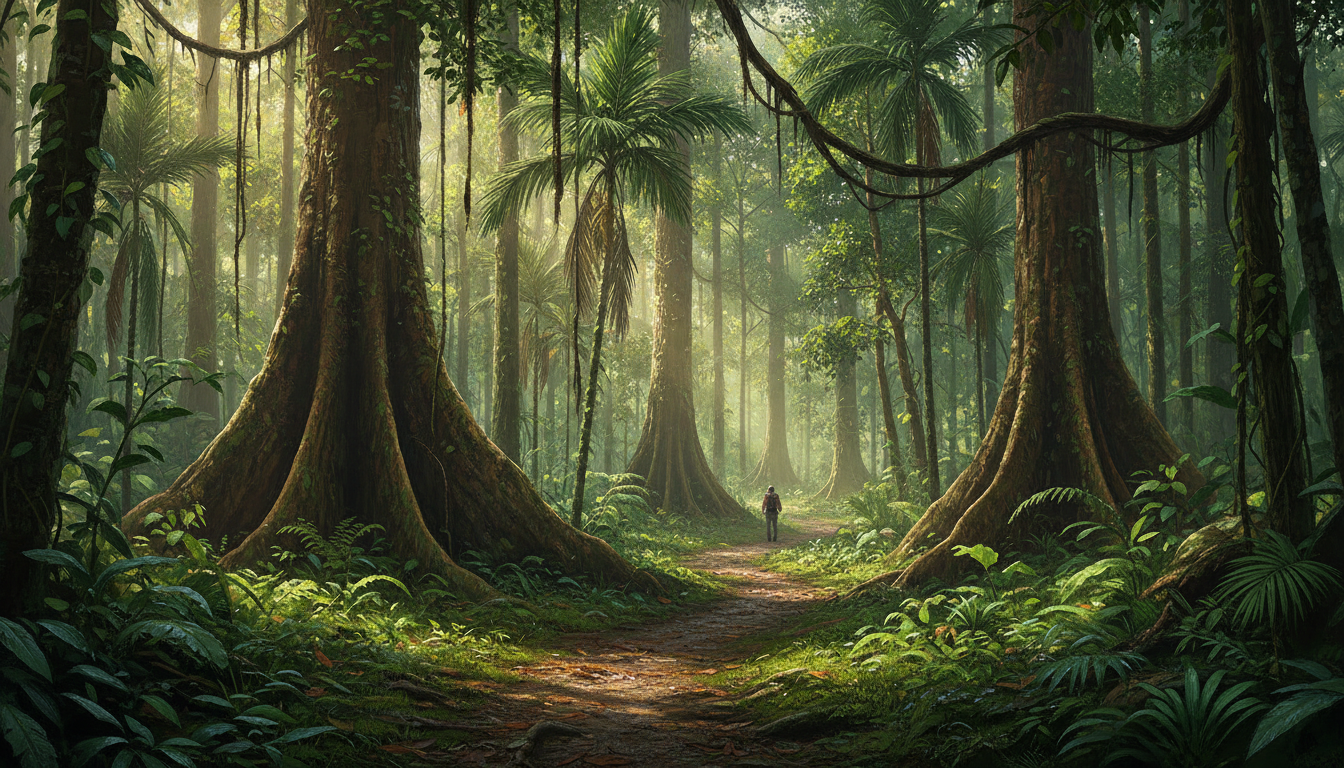
Updated 24 October 2026. The featured illustration depicts a conceptual rainforest learning scene, not a documentary photograph of a scheduled school tour. Booking windows, fees, park access and notices may change.
Jump to: 1. The 2027 booking windows schools can already use · 2. What the price and group size really mean · 3. Why Bukit Timah is such a good place to learn outdoors · 4. From excursion to science enquiry · 5. How different ages can learn from the same landscape · 6. What to know about Bukit Timah Nature Reserve · 7. A worked example of a 2027 school excursion plan · 8. What pupils can learn even without a booked tour · 9. Why conservation is a subject for every child · 10. The timeline and checks for educators and parents
1. The 2027 booking windows schools can already use
The official Singapore Botanic Gardens programmes for schools page states that interest for tours from January to March 2027 should be registered from October to December 2026. That means the first 2027 window is already relevant to educators preparing in late October 2026.
For April to June 2027 tours, the published interest window is January to March 2027. For July to September 2027, it is April to June 2027. The Gardens also asks schools to register at least eight weeks before the intended tour date.
The same page says guided tours are fully booked through December 2026 and recommends requesting dates from January 2027. Availability is not a reservation; a school needs booking confirmation. The listed windows are for guided programmes at the Gardens, not automatic access permits for separate activities in Bukit Timah Nature Reserve.
- Jan–Mar 2027 guided tour: register interest Oct–Dec 2026, at least eight weeks in advance.
- Apr–Jun 2027 guided tour: register interest Jan–Mar 2027, at least eight weeks in advance.
- Jul–Sep 2027 guided tour: register interest Apr–Jun 2027, at least eight weeks in advance.
2. What the price and group size really mean
As listed on the Gardens’ school-programmes page in October 2026, guided tours last 1.5 hours and cost S$185 per group, inclusive of GST, with up to 20 pupils per group. These figures are published programme information, not a quotation for a custom event or an assurance that the price cannot change.
A school travelling with more pupils may need to discuss multiple groups, suitable staff supervision and timing. Families should not divide S$185 by 20 and assume that is the child’s actual charge; schools may have different funding and transport arrangements.
The appointed managing agent handles bookings and payment. A request is not confirmed just because an online form was submitted. The Gardens says it will communicate arrangements and send a booking form; confirmation follows the signed booking form being received.
3. Why Bukit Timah is such a good place to learn outdoors
Within and near the district are unusually diverse learning environments. The Singapore Botanic Gardens can help students explore plants, conservation and the relationship between science and everyday life. The nearby Bukit Timah Nature Reserve protects a significant forest environment, with different rules and a different purpose.
These places are not interchangeable. A managed education programme in the Gardens can offer a guided structure, while a nature-reserve visit must respect conservation limits and local visitor conditions. Teachers should select the place and activity based on learning aims, access and safety — not simply on what looks attractive in photographs.
A child who has never observed a plant closely may discover that two leaves described as ‘green’ can be different in arrangement, texture, size and ecological role. Asking careful questions makes the experience educational.
4. From excursion to science enquiry
A field trip becomes stronger when pupils know the question they are investigating. Before the visit, a class might compare two photographs of leaves and predict what they could learn outdoors. During the visit, they record only observations permitted by their guide and the site. Afterwards, they test whether their evidence supports the original prediction.
For a Primary 4 group, the question could be: ‘How do plants differ in the ways they disperse seeds?’ For older pupils, it could be: ‘Which observations might tell us something about the light conditions in different areas?’ These are suggested teaching prompts, not official Gardens programme titles.
Students should distinguish what they saw from what they inferred. ‘The leaf was wet’ is an observation. ‘It rained here recently’ is an explanation that needs other evidence. That distinction builds scientific thinking more effectively than copying labels.
- Before: ask a clear observation question and agree on respectful site behaviour.
- During: record observations without collecting or damaging living specimens.
- After: compare interpretations, acknowledge uncertainty and reflect on conservation.
5. How different ages can learn from the same landscape
Young learners can describe colours, shapes, sounds and living things without touching or disturbing wildlife. Upper-primary pupils can group features, sketch carefully and connect observations to syllabus topics. Secondary pupils can discuss sampling limitations, human impacts and how a conservation claim could be tested.
A good learning journey should be accessible to pupils with varied mobility and sensory needs. Plan resting points, weather alternatives and routes with the school and site operator in advance. Avoid assuming that every forest trail is accessible to all participants.
An educator can also link outdoor science to writing: a reflective paragraph with a precise observation, a diagram with labelled evidence, or a short explanation that separates facts from guesses. One thoughtful task is better than a large worksheet completed hurriedly on the bus.
6. What to know about Bukit Timah Nature Reserve
The NParks visitor page describes the Nature Reserve as a protected 163-hectare site at the end of Hindhede Drive, with listed opening hours of 7am to 7pm. NParks also notes that it is near Beauty World MRT and provides information about appropriate visitor conduct.
This is a protected habitat, not an unrestricted outdoor classroom. Follow the official trails, avoid touching wildlife, do not remove natural materials, and obey signage and staff instructions. Teachers arranging group activities involving more than 30 persons should check NParks’ permit requirement, which the page says must be applied for at least one month in advance.
A school should make a separate assessment of group size, route difficulty, changing conditions and student supervision. A Botanical Gardens guided-tour booking does not confer permission for an unrelated large-group reserve activity.
7. A worked example of a 2027 school excursion plan
Imagine a fictional primary-school science team that wants a mid-February 2027 Gardens tour. Because the published window for January–March 2027 is October–December 2026, they would register during that period, observing the eight-week minimum and choosing proposed dates that satisfy the requirement.
The team would then confirm class size and whether groups must be split, outline an accessible travel and supervision plan, identify a curriculum learning question and contact the programme organiser. After receiving a booking response and completing the stated paperwork, teachers can issue precise parent information.
The arithmetic is simple but useful. With 38 pupils, the listed maximum of 20 per guided group means one group is insufficient. The school should discuss how two groups or another arrangement might work, rather than assuming that the published flat price covers all 38 pupils. This is an illustrative planning example, not a quotation or booking confirmation.
8. What pupils can learn even without a booked tour
Schools that cannot secure a guided programme can still teach observation using approved school grounds, a school garden or appropriately planned self-led outdoor activities. The Gardens also publishes educational information and resources, and the education landing page describes self-led visits, public programmes and free tours.
The learning objective should lead the activity. A ‘five observations, two questions, one uncertainty’ field journal can help pupils practise clear evidence gathering. Families can try a modest version on a public walk too, keeping within visitor rules.
Remember that an attractive park is not an excuse for treating wildlife as a teaching prop. Looking closely and leaving nature undisturbed is itself a valuable lesson.
9. Why conservation is a subject for every child
Biodiversity is not only a list of species names. It involves relationships between habitats, plants, animals, climate, human activity and choices about land. Bukit Timah makes these ideas visible at a scale that pupils can discuss.
Students might notice that forest conservation and urban development create genuine trade-offs. They can ask whose needs are served by a path, why some areas must remain undisturbed and why ecological evidence matters before decisions are made. Different viewpoints deserve careful evaluation grounded in facts.
NParks’ nature education resources also highlight school-based biodiversity activities and educator materials. This can help extend learning beyond a one-off excursion.
10. The timeline and checks for educators and parents
October–December 2026: schools seeking a January–March 2027 guided Gardens tour can register interest, with at least eight weeks before the intended date. This is the immediate window for planning early 2027.
January–March 2027: the published interest window for April–June 2027 tours. April–June 2027: the published interest window for July–September 2027 tours. Later windows and any revised fees should be checked when posted.
Before any outing: confirm booking, route, transport, accessibility, weather arrangements, permissions, group size and a learning objective. A successful field trip is not just one where the bus arrives on time; it is one where pupils return with better questions and an understanding of why the landscape deserves care.
Frequently asked questions
Can a school still book a guided Botanic Gardens tour in late 2026?
The official page states that guided tours are fully booked until December 2026 and suggests January 2027 dates. Always check current availability and booking guidance.
How early should a school register for 2027?
Register during the published quarter-specific interest window and at least eight weeks before the intended tour date, as stated by the Gardens.
Is the S$185 price per pupil?
No. It is the listed October 2026 guided-tour price per group of up to 20 pupils, inclusive of GST, for a 1.5-hour programme. Other costs or later revisions may apply.
Do the Botanic Gardens rules cover Bukit Timah Nature Reserve?
No. They are separate locations and activities. Use the relevant NParks visitor information and permit requirements for a Nature Reserve group visit.
Official sources and related reading
Singapore Botanic Gardens — 2027 school booking windows — official registration dates, group charges and booking process.
Singapore Botanic Gardens — education — official school, self-led and public learning options.
NParks — Bukit Timah Nature Reserve — opening hours, conservation rules, access and group-permit guidance.
NParks — nature education for young learners — biodiversity programmes and resources for educators.
Bottom line: Education at Bukit Timah in 2027 can happen among books, in laboratories and under tropical trees. With careful booking and respect for nature, an outdoor lesson helps children discover that real knowledge begins with a good question.