
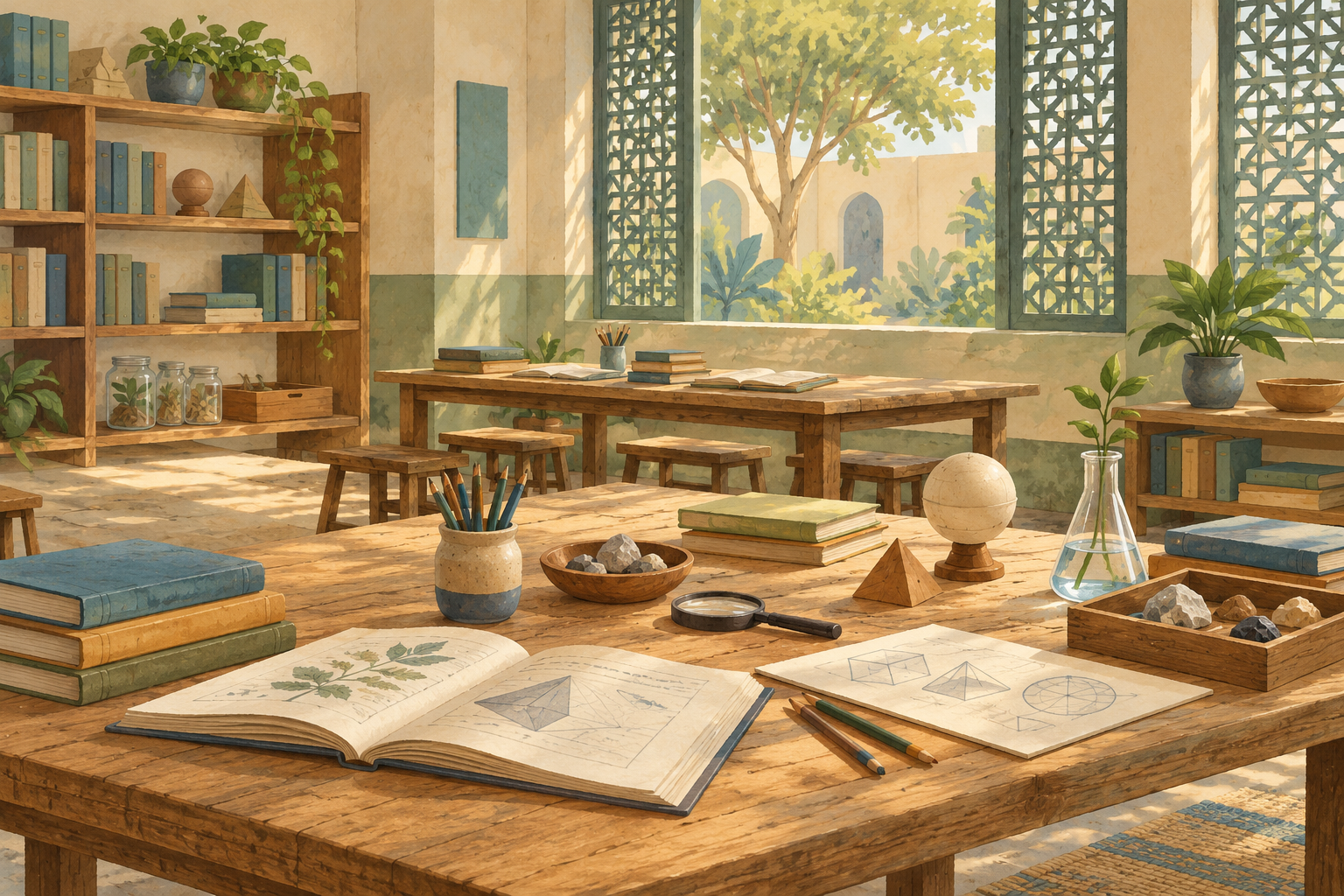
Where is Sudan, what is it famous for and why is it important? Sudan is a northeast African country where the White and Blue Nile meet, and where ancient Kushite pyramids stand alongside living communities, cities, farms and a Red Sea coast. This guide explains how daily life and institutions work while carefully distinguishing Sudan’s history from its severe 2023–2026 conflict. Twenty chapters explore geography, languages, schooling, work, culture, heritage and present challenges through dated evidence.
Start with the chapter directory. You can jump to the 2026 institutions, education, food and drought or three UNESCO properties. Current conditions can change rapidly. The article is educational background, not travel-safety, individual financial, legal or clinical advice.
Sudan at a glance
- Formal name: Republic of the Sudan.
- Capital: Khartoum; wartime administration has also operated from Port Sudan.
- Region: Northeast Africa.
- Currency: Sudanese pound (SDG).
- Languages: Arabic is widely used, with numerous Nubian, Beja, Fur and other community languages; English is also used in certain contexts.
- Independence: 1 January 1956.
- Head of Transitional Sovereignty Council: Abdel Fattah al-Burhan.
- Prime Minister: Kamil Idris, appointed May 2025.
- Current reality: Armed conflict since April 2023 and fragmented territorial administration.
- UNESCO World Heritage: Three properties: two cultural and one natural.
- 2026 school reality: Many children lack safe access to a functioning school; formal pathways and certificates vary with disruption.
Basic facts draw on Australia’s government register, the EU October 2026 country assessment, UNESCO’s country record and WFP humanitarian information. The original conceptual learning-room cover is a labelled illustration, not a photograph of an identified Sudanese classroom.
Choose a route through Sudan
Landscapes, history and modern institutions
- 1. Where Is Sudan? The Nile, Red Sea, Desert and Plains
- 2. Kush, Napata and the Royal Pyramids of Meroe
- 3. Nubian Kingdoms, Faith and Regional Connections
- 4. Colonial Rule, Independence, South Sudan and the 2019 Revolution
- 5. The 2023–2026 War and Sudan’s Fragmented Institutions
States, communities, learning and livelihoods
- 6. Eighteen States, Khartoum and Practical Administration
- 7. People, Arabic, Nubian and Diverse Living Communities
- 8. Displacement, Civilian Protection and Human Rights
- 9. Schools, Examinations and Learning in 2026
- 10. Universities, Research and Scientific Evidence
Farms, ports, cities and cultural life
- 11. Gold, Trade, Inflation and Economic Survival
- 12. Agriculture, Livestock, Food Security and the 2026 Drought
- 13. Port Sudan, Nile Roads and Essential Logistics
- 14. Khartoum, Omdurman, El Obeid and Neighbourhood Life
- 15. Health, Clean Water, Hospitals and Disease Prevention
Heritage, environment and global connections
- 16. Sudanese Food, Markets and Hospitality
- 17. Music, Crafts, Clothing and Living Cultural Heritage
- 18. Three UNESCO World Heritage Properties and Emergency Safeguarding
- 19. Red Sea Coral, River Ecology and Climate Resilience
- 20. Sudan, Singapore, Africa and the International Community
1. Where Is Sudan? The Nile, Red Sea, Desert and Plains
The country at a river and a sea
Did you know that Sudan brings together two great branches of the Nile, extensive dryland and a Red Sea coastline? The Blue Nile and White Nile meet at Khartoum, the constitutional capital. Port Sudan is a major maritime and administrative centre, while states such as Darfur, Kordofan, Kassala and Gedaref have their own landscapes and livelihoods. The country borders Egypt, Libya, Chad, the Central African Republic, South Sudan, Ethiopia and Eritrea. A political map can show that distribution without telling us how far a farmer must travel to a market or whether a particular road is safe and operating in October 2026. In a time of conflict, what looks like a short line across a map may involve checkpoints, interrupted bridges or a very long detour. An educational country guide therefore starts by naming the location and a specific everyday journey rather than assuming that one description fits all regions. (Australia DFAT – Sudan Heads of Government; EU Agency for Asylum – Sudan Country Focus, October 2026)
Nile water, agriculture and seasonal variation
The Nile system supports settlements, irrigation and important economic activities. Rain-fed farms farther south also depend on seasonal weather, soil and available equipment. Northern deserts, central agricultural areas and the eastern hills have different environmental conditions; neither a photograph of sand nor a photograph of a green field represents the whole country. Water visible in a river is not the same as treated water at a family’s tap: it may require pumping, testing, storage and functioning distribution. Severe rain can damage roads while a dry season restricts drinking water or harvest conditions. In October 2026, drought warnings added to the harm already caused by armed conflict, making it particularly important to distinguish long-term regional climate, a measured season and an individual event. Students can compare river catchments and farming zones without turning weather into the sole explanation of a household’s wellbeing. (World Bank – Sudan Overview and Economic Effects; Reuters – 23 October 2026 Sudan Drought and Famine Risks)
The Red Sea and the connection to international trade
Sudan’s Red Sea coast includes marine ecosystems, fisheries and the country’s major shipping gateway near Port Sudan. A container arriving by sea does not instantly become food on a family’s table. It needs clearance, storage, vehicles, fuel and a workable onward route. A health clinic might rely on the same transport networks for medicines, laboratory supplies and repairs. Maritime trade also links the country with wider African, Middle Eastern and global markets, but a port’s commercial activity cannot be equated with disposable income for every resident. When conflict disrupts routes, students should not invent an operating service or promise a delivery time. A useful classroom exercise traces a shipment from the port through the next stage to a named locality, stating which information needs current verification. In this way, coastal geography becomes part of practical education about public services and supply chains. (World Bank – Sudan Overview and Economic Effects; Security Council Report – Sudan October 2026)
2. Kush, Napata and the Royal Pyramids of Meroe
The Kingdom of Kush was more than a pyramid photograph
Sudan has an extraordinary ancient history linked with Nubia and the Kingdom of Kush, whose political, artistic and economic centres changed over long periods. The area around Gebel Barkal and Napata preserves temples, tombs and other important sites recognised by UNESCO. The rulers and communities were connected with Egypt and other neighbours, but Kush cannot be understood solely as a copy of Egyptian civilisation. Local traditions, languages, political choices, agriculture and craftwork contributed to a distinct historical experience. Archaeology reconstructs this through structures, inscriptions, artefacts and scientific dating. A learner should ask where an object was found and whether the same interpretation fits the evidence across several sites. One monument can reveal the priorities of its builders while leaving ordinary household work less visible. Understanding Kush means joining the famous royal remains to the people who made and supported a civilisation. (UNESCO – Gebel Barkal and Sites of Napatan Region; UNESCO – Sudan World Heritage Register)
Meroe and its royal cemeteries
The Archaeological Sites of the Island of Meroe were inscribed on the UNESCO World Heritage List in 2011. The property includes Meroe’s royal cemetery with steep-sided pyramids and archaeological places such as Naqa and Musawwarat es-Sufra. The surviving sites offer evidence about the Meroitic state, monumental architecture, religious practices, metalworking and connections across northeastern Africa. It would be inaccurate to suggest that all Sudanese history begins or ends with these pyramids, or that the appearance of a burial monument tells us precisely what every resident believed. Archaeological evidence requires careful chronology: a pyramid’s architectural form, an inscription and a pottery fragment can each speak to different questions. Students can compare the tombs with settlement remains and ask what each reveals about labour, craft and the lives of people outside the royal household. That turns heritage into an investigation rather than a travel advertisement. (UNESCO – Archaeological Sites of the Island of Meroe; UNESCO – Sudan World Heritage Register)
2026 conservation risks and an important distinction
UNESCO’s 2026 World Heritage Committee decision expressed serious concern about Meroe’s vulnerability to conflict, climate pressures, flooding, tourism impacts and insufficient resources for site management. It asked Sudan to provide an updated conservation report by 1 February 2027 and stated that inscription on the List of World Heritage in Danger might need consideration. That wording matters: as of October 2026, this decision did not itself place Meroe on the Danger list. A student reading a headline should distinguish a formal inscription, a threatened property, a recommendation and an action the committee has actually taken. Archaeological work needs security, trained staff, technical resources and anti-trafficking measures. The condition of a famous pyramid is not guaranteed merely because UNESCO recognised the site in 2011. The 2026 decision is an opportunity to study how institutions respond when human conflict and environmental change threaten cultural evidence. (UNESCO – 2026 Meroe Conservation Decision; UNESCO – Archaeological Sites of the Island of Meroe)
3. Nubian Kingdoms, Faith and Regional Connections
Christian Nubia, medieval societies and material evidence
The history of Sudan after the ancient Kushite periods includes medieval Nubian kingdoms with important Christian traditions, including Makuria, Nobadia and Alodia in different places and centuries. Churches, inscriptions and settlement remains have helped scholars investigate these societies. That history cannot be reduced to a claim that all inhabitants were identical or that political change happened on a single date throughout the Nile valley. Religious practices, languages, commerce and architecture developed in complex ways. Archaeologists consider the context of buildings and artefacts, while historians analyse surviving written sources whose authors may not represent all residents. A learner can examine a church ruin or inscription and ask what is directly observable, what is dated and which conclusion is inferred. Such enquiry also teaches that contemporary borders do not map neatly onto every historical kingdom. Medieval Nubia is a substantive part of Sudan’s history rather than a brief pause between the pyramids and modern politics. (UNESCO – Gebel Barkal and Sites of Napatan Region; UNESCO – Sudan World Heritage Register)
Islamic scholarship and Red Sea routes
Over centuries, Islamic scholarship, trade and social institutions became increasingly significant across areas of Sudan, alongside regional and local variations. Connections through the Nile, Red Sea and Sahel supported movement of people, goods and ideas. Religious communities did not all follow a single timetable of change, and customary practices could interact with new institutions differently in one district than in another. A study of an old mosque or manuscript may reveal aspects of learning, patronage and writing, while records of trade can tell us about economic connections. Neither alone provides a census of every family’s faith. Students can trace a historic route on a map, then ask which technologies, social relationships and environmental conditions helped it operate. Responsible cultural history makes room for the agency of local communities rather than portraying the region as passively shaped by influences from elsewhere. (UNESCO – Sudan World Heritage Register; EU Agency for Asylum – Sudan Country Focus, October 2026)
Sudanese identities as a long process, not a fixed ancient label
Modern Sudan includes Arabic-speaking, Nubian, Beja, Fur and many other communities, each with varied languages, experiences and livelihoods. Ancient or medieval cultural names are useful for understanding their original contexts, but they should not be assigned unchanged to every modern individual. Some communities maintain oral memories or practices linked with historical places, while migration, marriage, trade and schooling have changed the ways people identify. The best approach is to ask which group, locality and period a claim concerns. A family’s account can explain how an inherited practice matters today without becoming a complete statement of national history. Written sources may also omit women’s and workers’ perspectives, making archaeology and carefully obtained testimony valuable. This method provides a more complete history and helps readers avoid treating cultural difference as a fault line inevitably leading to conflict. (EU Agency for Asylum – Sudan Country Focus, October 2026; UNESCO – Sudan World Heritage Register)
4. Colonial Rule, Independence, South Sudan and the 2019 Revolution
Colonial-era rule and the independence of 1956
In the nineteenth century, different Sudanese regions faced changing political authorities, including Ottoman-Egyptian rule and the Mahdist state. Anglo-Egyptian administration followed at the end of the century and persisted in varied forms until Sudan became independent on 1 January 1956. The formal date of independence is important, but it is not the entire history of representation, language or local government. Communities differed in their relationships with the colonial administration, and policies often benefited some groups more than others. A student should distinguish a political treaty or official document from the effects on land, transport and access to schools. When studying the independence period, use a timeline to identify who held formal authority before and after January 1956, then ask how long building capable public institutions took. This is a useful reminder that a nation’s sovereignty and the experience of its citizens are related but separate questions. (EU Agency for Asylum – Sudan Country Focus, October 2026; World Bank – Sudan Overview and Economic Effects)
Civil wars and South Sudan’s independence in 2011
Sudan’s post-independence history included long periods of civil war affecting different parts of the country, with devastating loss of life, displacement and interruptions to economic and educational development. The Comprehensive Peace Agreement of 2005 created arrangements that preceded a referendum and the independence of South Sudan on 9 July 2011. Sudan and South Sudan are now two separate sovereign countries with distinct governments, despite deep historical, social and economic ties. The Nile system, cross-border families and oil infrastructure mean their relationships are not ended by a map boundary. A country guide should not merge the statistics or institutions of the two countries. Students can make a dated timeline showing the peace agreement, referendum and formal independence and then identify which practical questions—citizenship, trade, transport and resources—required further negotiation. Political change also needs to be studied alongside the lives of people affected. (EU Agency for Asylum – Sudan Country Focus, October 2026; World Bank – Sudan Overview and Economic Effects)
2019 protests, military rule and the uncompleted transition
Mass protests in 2018–2019 contributed to the removal of Omar al-Bashir from power in April 2019 after three decades of authoritarian rule. Sudan then entered a difficult transition in which civilian and military representatives negotiated forms of authority, followed by a military takeover in October 2021 and growing political tension. It would be misleading to describe the country’s path as a completed steady transition to elected civilian government. The competing institutions and military forces of 2023 emerged from political and security arrangements that remained unresolved. This context helps explain why public institutions, democratic participation and trust were already under pressure before the present war began. Students should distinguish demands for civilian government, formal transitional agreements, actual command structures and what happened to protesters and communities. A clear chronology makes the country comprehensible without turning politics into a morality tale about a single leader. (EU Agency for Asylum – Sudan Country Focus, October 2026; Security Council Report – Sudan October 2026)
5. The 2023–2026 War and Sudan’s Fragmented Institutions
What began in April 2023
Fighting erupted on 15 April 2023 between the Sudanese Armed Forces (SAF) and the Rapid Support Forces (RSF), a paramilitary force, after a breakdown in power-sharing and security arrangements. The war expanded from Khartoum into Darfur, Kordofan and other regions, with multiple armed allies and rapidly changing front lines. This is a serious conflict affecting civilians in different ways. It is not accurate to write that Sudan has a single fully effective nationwide administration or to infer that every town is controlled by the same party. The European Union Agency for Asylum’s October 2026 country assessment identifies different de facto authorities and warns that institutions such as taxation and administration operate differently across conflict areas. Families still organise schooling, work and care amid the uncertainty, and their lives should not be reduced to military maps. A practical reader asks the date and locality of any claim about access or security. (EU Agency for Asylum – Sudan Country Focus, October 2026; Security Council Report – Sudan October 2026)
Al-Burhan, Kamil Idris and rival governing claims
Australia’s official Sudan heads-of-government information names Lieutenant General Abdel Fattah al-Burhan as President of the Transitional Sovereignty Council and Kamil Idris as Prime Minister. Idris was appointed in May 2025, leading an administration associated with the Sudanese Armed Forces. State institutions had operated from Port Sudan after the conflict began, and Idris announced an official return to Khartoum in January 2026. In parallel, the RSF and its allies advanced claims to a rival governing structure based in Nyala. The EU asylum agency’s October 2026 report describes both authorities as de facto and militarily controlled, not as an ordinary elected competition between established democratic parties. A country guide should distinguish internationally engaged government institutions from self-proclaimed alternatives, without suggesting that recognition or legal legitimacy questions have been resolved everywhere. The actual service provider in a district may depend on conditions on the ground. (Australia DFAT – Sudan Heads of Government; EU Agency for Asylum – Sudan Country Focus, October 2026)
Civilian safety, October drone strikes and the need for evidence
Recent events underscore that this war cannot be summarised as one finished battle. On 20 October 2026, the United Nations reported attacks in West Kordofan and Khartoum that had reportedly killed at least twelve children in separate incidents. The UN Security Council’s October reporting described worsening drone attacks, civilian harm and continuing obstacles to peace negotiations. A casualty count from a preliminary report may change as investigators gain access. It should be cited as reported, with its publication date and location, rather than presented as a definitive national total. The same principle applies to allegations about which party was responsible: evidence and independent investigation matter. The ethical priority is protection of civilians and infrastructure, including schools and hospitals. Students can analyse the reporting chain—incident, witness account, UN statement and later verification—without reproducing graphic images or using suffering as a rhetorical device. (United Nations in Sudan – Current Releases; Security Council Report – Sudan October 2026)
6. Eighteen States, Khartoum and Practical Administration
A national map has eighteen states but not eighteen identical systems
Sudan is commonly described administratively as having eighteen states, including Khartoum, Red Sea, Northern, River Nile, Gezira, White Nile, Blue Nile, Kassala, Gedaref, Sennar, North Kordofan, South Kordofan, West Kordofan, North Darfur, South Darfur, West Darfur, Central Darfur and East Darfur. Their populations, agriculture, transport and institutions differ, while armed conflict has sharply disrupted local authority and access. A state boundary is not a guarantee that an office is open or a particular law can be implemented throughout its territory. The October 2026 EU asylum-agency report explains that rival administrations and armed groups exercise de facto control over different areas. That complicates the apparently simple question of who is responsible for a school, hospital or electricity line. For a family trying to secure documents or an examination place, the answer may require current verified local information. An administrative list belongs in the guide, but it cannot substitute for the realities of service provision. (EUAA – Sudan October 2026 Government and Political Authority; UK Sudan Humanitarian Situation, September 2026)
Khartoum’s capital role and the wartime Port Sudan centre
Khartoum is Sudan’s capital at the junction of the White and Blue Nile, forming an urban region with Omdurman and Bahri. When fighting began in 2023, many national institutions relocated to Port Sudan, which became a centre for official administration and humanitarian logistics. The EUAA reports that Prime Minister Kamil Idris announced the return of national institutions to Khartoum in January 2026. That announcement should not be equated with every ministry building, road and neighbourhood service having fully recovered. A ministry may announce its headquarters while staff, records and utilities continue operating in different places. The important question for a resident is which office is accessible, authorised and able to complete the requested task. I would trace one hypothetical teacher-pay inquiry or school certificate application, asking where the record is held, who can verify it and what alternatives exist if travel is unsafe. (EUAA – Sudan October 2026 Government and Political Authority; DFAT Sudan – Government and Ministers)
Understanding a budget and a functioning local service
Public works depend on more than an administrative decision. Repairing a water system involves technical assessment, funding, permission to access the site, construction materials, operating staff and long-term maintenance. A hospital may be recorded on a government inventory but remain without a functioning supply chain; a school can reopen yet lack teachers and books. Conflict also creates uncertainty over which institutions collect revenue or oversee public procurement in different areas. The World Bank reports severe damage to Sudan’s fiscal capacity, while humanitarian information highlights service disruptions. A student can examine a hypothetical clinic repair through a five-stage evidence chain: proposed work, money allocated, supplies delivered, service tested and users actually receiving care. None of these steps alone proves the others. This approach allows readers to understand state administration without assuming all actors are absent or that any single announcement settles what happens on the ground. (World Bank – Sudan economy and service disruption; UK Sudan Humanitarian Situation, September 2026)
7. People, Arabic, Nubian and Diverse Living Communities
Communities have histories beyond today’s front lines
Sudan includes many cultural and language communities: Arabic-speaking groups and distinct Nubian, Beja, Fur, Nuba and other peoples, each with internal differences and histories of migration, trade and social change. Arabic is widely used in government, learning and communication, while local languages retain cultural meaning. It would be inaccurate to assume that a person’s religion, first language or political opinion can be inferred from a region or name. A family in a city may use one language at home and another for paperwork or exams. During conflict, a person’s route to safety and services may also be shaped by language and documentation. A useful country guide asks whose account describes a practice and whether translation is accurate. People should not be portrayed as interchangeable representatives of a group, nor should Sudanese cultural life be described entirely through armed conflict. (UNESCO – Sudan Lists and Languages/Living Heritage; EUAA – Sudan October 2026 Government and Political Authority)
Religion, art, social routines and respectful explanation
Islam is influential in much of Sudan’s cultural and social life, alongside Christian communities and other beliefs and individual practices. Festivals, family ceremonies, music, clothing and food traditions differ by region and household. An object or short video associated with one community should not be described as a universal national custom without evidence. UNESCO lists several living-heritage elements in which Sudan participates, including the 2025 inscription of al-Jertiq rituals, illustrating specific practices rather than a single obligatory culture. Such recognition does not give outsiders permission to reproduce restricted aspects of a tradition without explanation or consent. A classroom activity can compare a craft description with a practitioner interview, distinguishing visible materials from the meaning attributed by the community. Conflict and displacement can disrupt cultural transmission, making the preservation of language and creative knowledge relevant to recovery. (UNESCO – Sudan Lists and Languages/Living Heritage; UK Sudan Humanitarian Situation, September 2026)
Migration, mixed identities and belonging
Sudanese families have links across North Africa, the Red Sea, the Sahel, eastern Africa and global diaspora communities. Movement for trade, work, education, family or safety has different causes and should not be flattened into a universal refugee story. The present war has forced large numbers of people from home, but many residents continue to work, study, teach and care for others. A national displacement statistic does not represent every family equally, and some people may have been displaced several times. The World Food Programme and humanitarian sources distinguish acute hunger, internal displacement and people who cross international borders; those indicators have different definitions and reporting periods. It is important to describe cultural identity and humanitarian needs with dignity and accuracy. Students can compare a family testimony with a national survey and identify which statement each supports, without assuming one account stands for all Sudanese people. (WFP Sudan Emergency – Food and Displacement; UK Sudan Humanitarian Situation, September 2026)
8. Displacement, Civilian Protection and Human Rights
Why displaced populations are difficult to count precisely
The scale of Sudan’s displacement crisis is enormous, but figures vary according to date, agency, population definition and whether an estimate includes people displaced within the country or those seeking refuge abroad. In September 2026, the WFP’s leadership described around fourteen million people displaced across the wider crisis, while its web programme summaries distinguish current internally displaced populations. These numbers should not be added carelessly: different measures can overlap or describe different observation periods. Families may move several times, return temporarily or shelter with relatives, and people in insecure areas can be difficult to survey. A student’s first question should be which group was counted and when. Understanding the limits of data does not make the crisis less serious; it guards against producing misleading numbers when needs are already immense. (WFP Sudan Emergency – Food and Displacement; UK Sudan Humanitarian Situation, September 2026; Sudan – October 2026 UN Security Council Context)
International humanitarian law and current civilian risks
Parties to armed conflict have legal obligations to protect civilians and civilian objects, including schools, hospitals and places where displaced families shelter. On 20 October 2026, the United Nations reported at least twelve children killed in separate attacks in West Kordofan and Khartoum, using the term reportedly because information was still being assessed. UN briefings also describe ongoing drone strikes and damage to essential infrastructure. These incidents should not be turned into a definitive claim about responsibility without a suitable investigation. Armed actors’ statements may diverge from eyewitness evidence, and access limitations affect verification. A reader can respect the seriousness of harm while carefully distinguishing a preliminary humanitarian report from a judicial finding. A classroom examination of rights should focus on the obligations that protect people and the evidence needed to assess their violation, rather than shocking imagery or divisive rhetoric. (UN Sudan – 20 October 2026 civilian protection; Sudan – October 2026 UN Security Council Context)
Landmines, explosive remnants and the right to return safely
Where fighting has occurred, unexploded ordnance and damaged buildings create risks even after a front line moves. UNMAS and other humanitarian actors have worked on risk education and clearance, returning contaminated land to safer use where conditions permit. A family’s return to a neighbourhood does not by itself establish that the house, water system, roads or school are safe. Professional assessment and services may be necessary before everyday life can resume reliably. Such work requires trained specialists and should not be attempted by unqualified residents or students. For an educational project, learners can trace the institutional stages of a safe public-service return—assessment, specialist clearance, infrastructure checks, communication and ongoing monitoring—without describing hazardous technical procedures. The principle is practical: a political announcement of recovery and verifiable safety for a family are separate outcomes. (UN in Sudan – explosive ordnance clearance and risk education; UK Sudan Humanitarian Situation, September 2026)
9. Schools, Examinations and Learning in 2026
An education system with millions unable to attend
Sudan’s school structure has historically included a basic education certificate and an upper-secondary certificate, with reforms affecting arrangements and cohorts over time. The current question for families is not simply which grade the law names: it is whether a school can operate safely, has staff and materials, and can issue recognised records. UNICEF’s 2026 work estimated at least eight million children were out of school, while the September UK humanitarian review described very large disruptions to learning and access. Some schools reopened in certain areas but many remained closed, damaged or used for other purposes. A national statistic can conceal severe regional differences, including conflict-affected parts of Darfur and Kordofan. A learner who has missed years of classes may need flexible pathways to rebuild reading, mathematical reasoning and confidence. Families should never be promised that a particular certificate or exam session is available without checking current official arrangements. (UNICEF Sudan – Education; UK Sudan Humanitarian Situation, September 2026; AACRAO – Sudan Secondary School Certificate)
2026 schoolbooks destroyed and what that reveals
On 20 September 2026, drone attacks on two warehouses in Shikan locality, North Kordofan, destroyed over 292,000 textbooks and another 40,000 Arabic and mathematics review books, according to UNICEF’s 22 September statement. The materials had been intended for the October school year in multiple areas. This was not merely a symbolic loss: books need procurement, storage, transport and school distribution before students can use them. A campaign to reopen schools cannot be judged only by counting buildings when teacher pay, desks, examination papers and learning materials are unavailable. Students can trace the journey of one textbook from printer to warehouse to classroom and identify what can break at each stage. The event also illustrates why education is part of civilian protection under international humanitarian law. Reporting the dated verified facts is sufficient; there is no need to rely on distressing images to convey the practical harm. (UNICEF 22 September 2026 – Schoolbooks lost to drone strikes; UNICEF Sudan – Education)
Secondary certificates and fair opportunities for displaced learners
The Sudan Secondary School Certificate is a significant qualification for pupils seeking later education, while technical and vocational routes may have distinct requirements. Education reform plans have also discussed changing the historical grade structure, but a proposal or national framework is not a guarantee that each pupil’s current course follows the same sequence during conflict. UNICEF and humanitarian reports emphasise difficulties in providing recognised examinations to pupils displaced or living in areas under differing control. Students and families need to check the competent examining body’s current rules, the school record, subject combination and whether qualifications can be verified or transferred. A learning plan can continue to build useful capabilities through reading, numeracy, science concepts and structured practice even when an examination date is uncertain. The importance of a certificate does not justify making up application procedures or guaranteeing recognition abroad. Accurate guidance begins with the learner’s actual circumstances. (AACRAO – Sudan Secondary School Certificate; UK Sudan Humanitarian Situation, September 2026; UNICEF Sudan – Education)
10. Universities, Research and Scientific Evidence
How higher education depends on safe institutions
Sudan’s universities and technical institutes have trained doctors, engineers, teachers, researchers, agricultural specialists and many others. Conflict can interrupt lectures, laboratory work, records and academic employment, sometimes forcing students and faculty to relocate. A university may announce a reopening or a remote-learning arrangement without being able to offer every course or practical laboratory module. Families planning study need the institution’s current accreditation, transcript access, recognised examinations, teaching language and ability to complete practical requirements. Academic credentials cannot be assumed equivalent abroad merely because programmes have familiar titles. The deeper purpose of higher education is to develop the ability to reason, apply knowledge and work responsibly. Students can compare a degree course and a technical training route, identifying the supervised practical learning and equipment each requires. This avoids promising that one fashionable field guarantees employment amid major economic and infrastructure disruption. (World Bank – Sudan economy and service disruption; UK Sudan Humanitarian Situation, September 2026; AACRAO – Sudan Secondary School Certificate)
Applied science for water, agriculture and public health
Water testing, crop research, disease surveillance, engineering and archaeology provide real opportunities to use scientific reasoning in Sudanese communities. A sample taken at one water point can indicate its measured conditions, but it cannot automatically describe every well or the safety of water throughout a state. A crop trial requires appropriate comparison of soils, rainfall and labour; a health survey needs a well-defined denominator and date. Research conducted during conflict may face missing data or restrictions on safe field access, so investigators must be candid about uncertainty. A classroom exercise can use fictional numbers for a water-quality study or compare publicly available rainfall records without sending learners into hazardous areas. The objective is to understand how a useful conclusion is made: question, observation, method, analysis and a clear statement of its limits. (World Bank – Sudan economy and service disruption; UK Sudan Humanitarian Situation, September 2026)
Technology as a maintained public service
Mobile communications, digital schooling, laboratory equipment and electronic records can help connect dispersed communities, but their reliability depends on electricity, networks, safe facilities and skilled staff. A platform having thousands of registrations does not establish that the registered pupils completed their work or that doctors could retrieve every record. Repairs may require components crossing long or unsafe transport routes. Students designing a simple online school exercise should ask who can access it, in which language, at what cost and whether it offers alternatives if power or internet fails. Public technology projects should also protect people’s private information. The value of innovation is better measured by reliable access and improved decisions than by an exciting launch announcement. This method helps readers evaluate recovery projects even when comprehensive national measurements are difficult to obtain. (World Bank – Sudan economy and service disruption; UNICEF Sudan – Education)
11. Gold, Trade, Inflation and Economic Survival
What the economic contraction means
Sudan’s economy has been severely damaged by the armed conflict, with businesses, banking, transport, factories and farms interrupted. The World Bank estimates real GDP contracted by about 29.4% in 2023 and a further 14% in 2024, followed by an estimated 3.1% increase in 2025 from the much lower base. These dated figures cannot be treated as the same thing as every household’s wages or purchasing power. A modest percentage rebound after very large losses does not restore output automatically to its pre-war level. Government revenues also fell sharply, limiting the finance available for schools, clinics and maintenance. Economic evaluation should therefore distinguish national output, individual income, prices, public receipts and debt, with a clear year attached to each measure. A student can use imaginary figures to calculate what happens when an index falls steeply and then rises modestly, learning why a recovery rate needs context. This is more helpful than a headline declaring that Sudan is simply growing or shrinking without defining the period. (World Bank Sudan – economic damage, services and rebuilding)
Gold, gum arabic, livestock and businesses with different risks
Gold and other mineral resources, gum arabic, livestock, agriculture and services have important roles in Sudan’s economy, though their relative contributions have changed with conflict and disrupted trade. Formal extraction, artisanal mining and informal commerce have different employment and safety conditions, and a high global commodity price does not tell us what a local worker receives. A shipment may pass through traders, processing, transport and financial intermediaries before reaching a final buyer. Each stage requires costs and carries risks. Conflict can also give rise to exploitative or illicit economic activity, as UN reporting on the war economy has warned. A responsible classroom exercise traces one gum arabic product from harvesting through processing, sale and shipment, asking who does the work and which payments are documented. This approach does not equate every Sudanese trader with the war economy or ignore the ordinary people trying to sustain livelihoods in difficult conditions. (World Bank Sudan – economic damage, services and rebuilding; Security Council Report – October 2026 Sudan developments)
Inflation, cash availability and the family budget
Inflation, disruptions to banks and shortages of cash affect how families purchase food, transport, fuel and medicine. The WFP’s Sudan country information describes widespread financial and access constraints that complicate assistance and everyday transactions. A rise in prices can reduce purchasing power even if one household’s nominal income stays unchanged. A cash-transfer programme can be useful only where recipients can safely access funds and traders have goods to sell. Economic statistics need to distinguish a particular market, price index, month and consumer group; a single national rate cannot describe every village’s costs. Students might create a fictional family budget and explore how changes in bread, transport and school supplies alter remaining income. They should clearly label invented values and avoid giving personal financial recommendations based on them. Understanding the mechanisms shows why restoring safe trade, transport and trust in financial systems is part of economic recovery, not simply an accounting exercise. (World Food Programme – Sudan food emergency; World Bank Sudan – economic damage, services and rebuilding)
12. Agriculture, Livestock, Food Security and the 2026 Drought
Farms in Gedaref, Kordofan and other different conditions
Sudanese agriculture includes rain-fed and irrigated crops, livestock and pastoral livelihoods under very different ecological and market conditions. Sorghum, millet, sesame, wheat and livestock are among important products in particular regions. The growing conditions of Gedaref in eastern Sudan differ from those of Darfur, the Kordofan regions or irrigated farming near Nile infrastructure. A national crop figure is not proof that every grower harvests equally or receives the same price. Farmers need inputs, equipment, access to fields, transport and workers who are safe enough to complete the season. Conflict has disrupted many of these conditions independently of rainfall. A student can follow a bag of sorghum from seed through field preparation, harvest, storage and sale, then identify which costs or failures are environmental and which involve markets or public services. Such a practical enquiry treats farmers as skilled participants in the economy rather than merely symbols of crisis. (World Bank Sudan – economic damage, services and rebuilding; Reuters – 23 October Sudan drought and farming conditions)
October’s compounded drought warning
The United Nations warned on 16 October 2026 that severe rainfall deficits were deepening humanitarian needs, especially in Darfur and parts of Kordofan. A 12 October IPC alert reported rising famine risk from conflict, displacement, drought and shortages of humanitarian funding. Reuters’ 23 October reporting, drawing on US geological and other observations, described July–September rainfall as unusually low across several key farming zones and gave specific examples from growers and herders. These reports concern dated seasonal conditions and forecasts; they should not be presented as an identical measured crop loss for every Sudanese farm. The government’s assessment and aid agencies’ outlook may also differ about expected yields, requiring accurate attribution. For students, compare a rainfall anomaly, a forecast harvest and an observed market price as three different indicators. Recognising uncertainty does not diminish the danger: it helps explain why weather and armed conflict together put so many families at risk. (United Nations – Severe Rainfall Deficits, 16 October 2026; WHO/IPC – Sudan Food Insecurity Alert, 12 October 2026; Reuters – 23 October Sudan drought and farming conditions)
What 19.5 million acutely food-insecure people means
The World Food Programme’s 2026 Sudan reports refer to around 19.5 million people facing high levels of acute food insecurity, with parts of Darfur and Kordofan in particularly severe conditions. The 23 October European humanitarian statement also cites that approximate total, but the figures are tied to an IPC reporting window and may be revised. Acute food insecurity is not identical to a final famine declaration in every affected area, and being counted as in crisis is not necessarily the same severity as catastrophic conditions. The causes include lost income, disrupted fields, displacement, price increases and obstacles to aid delivery. A household might have food in its local market yet lack money to buy enough; another might have income but no safe route to supplies. A useful economics and geography lesson distinguishes food production, affordability, access and nutritional quality, then names the evidence required to assess each. (World Food Programme – Sudan food emergency; WHO/IPC – Sudan Food Insecurity Alert, 12 October 2026; UK humanitarian Sudan situation, September 2026)
13. Port Sudan, Nile Roads and Essential Logistics
Why Port Sudan is central to essential imports
Port Sudan connects the Red Sea with Sudan’s broader freight network. Commercial cargo, fuel, medicines and humanitarian supplies may arrive there, but a ship’s arrival is only the beginning of a delivery. Goods still need customs processing, secure storage, handling equipment, trucks or other transport and a route that can be used in prevailing conditions. Port Sudan also became an administrative centre during the war, increasing the importance of communication and official processes around the coast. The September 2026 Logistics Cluster meeting describes operating cold-chain storage, humanitarian cargo coordination and access reporting between Port Sudan, Khartoum and other hubs. This is evidence of work under way, not proof that every requested shipment reached its final destination. For a student, follow one carton of antibiotics or textbooks from a sea vessel to a regional warehouse and identify who is responsible at each step. That gives logistics human meaning beyond the size of a port or the number of ships. (Humanitarian Logistics Cluster – September 2026 Port Sudan and Khartoum Operations; UK humanitarian Sudan situation, September 2026)
A corridor on the map and a corridor accessible to aid
Road routes connecting Khartoum, El Obeid and other cities can be critical for trade and relief, but the conflict has made access change repeatedly. The October 2026 Security Council briefing described contested corridors in North Kordofan and drone attacks affecting infrastructure. Logistics Cluster records from September listed customs delays, importation challenges, travel permits, road conditions, fuel and the need to consolidate humanitarian cargo. A line on a map therefore cannot establish that travelling along it is safe, lawful or even possible at a particular moment. A fair educational case should not give directions that encourage travel into combat zones. Instead, students can map the institutional chain: warehouse, verified access decision, professional transporter, local partner and recipient. They can mark unknowns such as route availability and distribution success rather than inventing timetables. The lesson is the difference between geographic distance and reliable access. (Humanitarian Logistics Cluster – September 2026 Port Sudan and Khartoum Operations; Security Council Report – October 2026 Sudan developments)
Storage, electricity and the hidden practical constraints
Temperature-controlled storage matters for certain medicines, vaccines and food items. The Logistics Cluster’s 22 September meeting reported expansion of cold-storage space in Port Sudan and plans for additional facilities elsewhere, illustrating how humanitarian supply chains involve technical capacity and funding. Yet an additional warehouse area is not proof that deliveries are timely or that all goods remain at the correct temperature from source to patient. Electrical reliability, trained staff, records and onward transport can be just as important. Students can compare the needs of a stack of school textbooks with refrigerated health supplies, identifying the different constraints of handling, power and time. A project installing a generator or opening a logistics base becomes useful when its operation is tested and it can be maintained. This is another example of why activity measures and outcomes must be kept separate. (Humanitarian Logistics Cluster – September 2026 Port Sudan and Khartoum Operations; WHO – Sudan Health Emergency)
14. Khartoum, Omdurman, El Obeid and Neighbourhood Life
The capital as three connected cities
Khartoum, Omdurman and Khartoum North/Bahri are linked urban areas around the meeting of the White and Blue Nile. Before the war these centres contained government offices, universities, markets, hospitals, transport networks and varied neighbourhoods. Fighting, displacement and infrastructure damage changed the practical functions of different districts, but it is wrong to assume that everyone left or that all services have recovered uniformly when people return. A photograph of an intact street can be authentic while showing only a specific location and date. A useful country guide looks at the complete task a household must perform: obtaining clean water, reaching a clinic, finding a school place or repairing a home. Electricity, roads, documentation, staff and purchasing power affect the answer. A city’s cultural importance and its current humanitarian challenges can be described together without erasing residents’ ongoing efforts to rebuild their lives. (World Bank Sudan – economic damage, services and rebuilding; UK humanitarian Sudan situation, September 2026)
El Obeid, Darfur communities and different urban pressures
El Obeid in North Kordofan, towns across Darfur and smaller settlements have faced changing front lines, displacement and severe demands on water, markets and healthcare. The October 2026 Security Council assessment described El Obeid under siege-like pressure, with a population swollen by people fleeing other areas. In one place, a public utility may have been damaged by fighting; in another, the difficulty is a shortage of fuel, staff or safe access. These situations should not be generalised from a single neighbourhood or reported without dates. A family considering whether to return to a particular locality needs current professional information rather than an educational article’s vague prediction. Students can compare descriptions of two towns by separating the verified state of a service from the security situation and from the scale of humanitarian need. That helps them understand why cities may require different reconstruction priorities. (Security Council Report – October 2026 Sudan developments; UK humanitarian Sudan situation, September 2026)
How damaged housing becomes a public-systems question
Making a house habitable involves more than repairing a wall or roof. Water connections, toilets, electrical safety, roads, waste removal, health access and documents matter as well. In some places unexploded ordnance or unstable structures make specialist safety clearance necessary before ordinary repairs. An aid agency may report that thousands have returned to a city while also describing large gaps in sanitation or electricity. These are not contradictory claims: return is a movement of people, while a dependable service is a different measured outcome. A student can draw a staged recovery plan without using hazardous technical detail: professional safety assessment, basic utilities, healthcare, schooling, market access and maintenance arrangements. The exercise should include the perspectives of residents rather than assume that a central government announcement captures all needs. Community life is rebuilt through many linked institutions and everyday tasks. (UK humanitarian Sudan situation, September 2026; World Bank Sudan – economic damage, services and rebuilding)
15. Health, Clean Water, Hospitals and Disease Prevention
What the health emergency looks like in practical terms
The World Health Organization’s Sudan emergency overview reports severe disruption to hospitals, medicines, health workers and disease surveillance. In affected areas, a formal hospital building may be out of service because electricity, safe water, supplies or medical staff are unavailable. Other facilities may operate under intense pressure while displaced families seek care. WHO’s 2026 situation analysis described millions requiring health assistance, but estimates are tied to defined periods and should not be combined casually with other population counts. An individual patient’s care also depends on referral, transport, records and safe communication. A child living near a clinic may still lack specialist services, while people farther away face additional journey constraints. This article is not diagnosis or treatment advice. It explains why effective healthcare is a network of people, equipment, sanitation and operational institutions rather than simply the number of facilities listed. (WHO – Sudan Health Emergency; UK humanitarian Sudan situation, September 2026)
March’s end of one cholera outbreak, and a new one in 2026
On 3 March 2026, Sudanese health authorities declared the end of an earlier cholera outbreak after the required period without new cases, as reported by WHO’s Eastern Mediterranean office. However, a new cholera outbreak emerged in West Kordofan in May 2026 and spread to other affected areas. WHO’s epidemiological record through 30 August described 2,887 cases and 247 deaths for January–August under the reporting criteria it used, and noted particular pressure in Kordofan and Darfur. These reports are not inconsistent: declaring one outbreak ended in March does not rule out a later outbreak, and case counts depend on detection and the reporting cut-off. Insecurity and limited safe water complicate response. For a science lesson, students can compare a confirmed case with a suspected case, and note why reporting delays and access constraints affect the completeness of a national figure. (WHO EMRO – Previous cholera outbreak ended March 2026; WHO 2026 – Sudan cholera epidemiological record through August)
Water, sanitation, nutrition and prevention as one system
Unsafe water, overcrowded shelters, limited toilets and broken healthcare services can compound the consequences of displacement and hunger. WHO’s October 2026 food-security alert warns that malnutrition and water scarcity increase vulnerability to disease. Effective prevention requires safe sources, appropriate water handling, functional sanitation, trained community health workers and access to care. The existence of a river or borehole does not establish that its water can be drunk safely without treatment or testing. Similarly, a vaccine or medicine shipment matters only when storage, trained staff and service access allow it to reach eligible people. Students can map the journey from natural water source to a household cup, then identify where maintenance and testing are needed; such an exercise should use public data or fictional scenarios rather than exposing people to unsafe conditions. The broader lesson is that health, nutrition and infrastructure cannot be studied as completely separate systems. (WHO – Sudan Health Emergency; WHO/IPC – Sudan Food Insecurity Alert, 12 October 2026; UK humanitarian Sudan situation, September 2026)
16. Sudanese Food, Markets and Hospitality
Kisra, asida, ful and the diversity of meals
Sudanese households prepare many different foods, including sorghum-based kisra flatbread, asida, ful medames and dishes using vegetables, legumes, meat or milk according to locality, resources and family preferences. Food traditions are not one compulsory national menu. The availability of crops differs between irrigated fields, rain-fed farmland, cities and pastoral areas. An ingredient may arrive from a village, a processor or an imported shipment. When families have been displaced, familiar recipes may change because ingredients, equipment or cooking fuel become difficult to obtain. That does not mean their cultural knowledge has vanished. A respectful educational activity asks a cook to describe a particular meal, recording the ingredients and preparation with permission. The family’s explanation is a valid account of its practice but not proof that everyone in Sudan eats the same food. The story of a meal becomes richer when linked to agriculture, transport, language and family care. (WFP – Sudan Hunger and Food Access; World Bank – Sudan Economic Crisis and Recovery)
Food access matters as much as culinary heritage
Celebrating cuisine should not obscure the severe food-security crisis documented by humanitarian organisations in 2026. A family may know how to prepare nutritious dishes but lack enough supplies or money to make them. A market may have grain available while transport disruptions or reduced income prevent people from buying sufficient food. The WFP’s reports of acute hunger are measures of access, severity and time—not descriptions of the culinary skills or intentions of those affected. An October 2026 drought compounded problems with harvests and livestock in several regions, while instability threatened deliveries and prices. Students can follow one hypothetical grain sack from farm to mill, transport, seller and household, listing possible expenses and delays without inventing current market prices. This is an exercise in economic and systems literacy rather than a recipe for responding personally to a dangerous humanitarian situation. (WFP – Sudan Hunger and Food Access; Reuters – 23 October 2026 Drought and Livestock; UN in Sudan – October 2026 Rainfall Deficits)
Coffee, tea, hospitality and living cultural choices
Serving tea or coffee and sharing food can be important forms of hospitality in many Sudanese settings, but not every family observes the same customs. The meaning of a gathering depends on relationship, religion, community and occasion. Families may preserve inherited forms of social exchange even when displacement changes where they live, while younger generations can adapt practices through new technologies and circumstances. It is not appropriate to imply that all people can afford every traditional gathering during war or that an individual’s hospitality represents everyone else. A student documenting a cultural practice should identify the participants and why they chose a certain way of serving guests, without reproducing private family details. Such enquiry shows culture as something people do and reinterpret rather than a collection of objects in a tourist catalogue. The focus should remain on respect for lived experience and accurate attribution. (UNESCO – Sudan Living and Intangible Heritage Register; UNESCO – October 2026 Workshop on Displaced Communities’ Heritage)
17. Music, Crafts, Clothing and Living Cultural Heritage
Living traditions across different communities
Sudanese music, poetry, dance, weaving, metalwork and other creative traditions vary by region, language, performer and occasion. An instrument, garment or rhythmic pattern associated with one group cannot be generalised to everyone in the country. UNESCO’s Sudan country register includes elements such as al-Jertiq rituals, traditional henna practices shared through multinational inscriptions, metal engraving and Arabic calligraphy. These are distinct living practices with different practitioners and safeguarding needs, not one identical ceremony. A school investigation should identify the language, performer or craftsperson, the date and what aspects are openly shared. Some ceremonial knowledge may be private or require permission before being repeated. Contemporary authors, singers and designers also create new work rather than merely preserve older forms. Cultural life deserves a place in a comprehensive guide even amid severe disruption, provided it is presented through the choices and rights of the people concerned. (UNESCO – Sudan Living and Intangible Heritage Register; UNESCO – October 2026 Workshop on Displaced Communities’ Heritage)
Al-Jertiq’s 2025 UNESCO inscription
In 2025 UNESCO inscribed al-Jertiq, a set of rituals, expressions and practices connected with wellbeing, protection and fertility in Sudan, on its Representative List of the Intangible Cultural Heritage of Humanity. A listing documents recognition of cultural heritage and the role of communities in its transmission; it does not mean every Sudanese citizen participates in exactly the same ritual or that all ceremonial details are freely available to outsiders. UNESCO’s other Sudan-associated intangible listings involve different histories, including date-palm knowledge and crafts shared among several countries. Intangible heritage recognition is also separate from the World Heritage Convention covering monumental archaeological or natural sites. Students can compare the purpose of preserving a living performance with conserving an ancient pyramid. Both require resources and knowledge, but the measures of continuity and success differ. A respectful conclusion identifies who maintains the practice and what support they say is needed. (UNESCO – Sudan Living and Intangible Heritage Register; UNESCO – Three Sudan World Heritage Properties)
Displaced communities and the October 2026 safeguarding workshop
On 12 October 2026 in Khartoum, UNESCO and Sudanese partners held a capacity-building workshop focused on safeguarding the living heritage of people affected by displacement. UNESCO’s 14 October report explained that displacement can interrupt the transmission of songs, oral memory, crafts and other community knowledge, even when buildings survive. A workshop is an important action but not proof that every threatened tradition has been fully safeguarded. Participants may need documentation, permission, training, access to materials and sustained opportunities to teach younger generations. Such work should be guided by practitioners, including those who have moved repeatedly, rather than assume that an archive alone can substitute for living practice. Students can think of a cultural expression they know, then list what would be required to document it ethically and support its teaching without demanding that personal or sacred information be made public. This brings human dignity into heritage education. (UNESCO – October 2026 Workshop on Displaced Communities’ Heritage; UNESCO – Sudan Living and Intangible Heritage Register)
18. Three UNESCO World Heritage Properties and Emergency Safeguarding
Gebel Barkal, the Napatan sites and Meroe
Sudan has three inscribed UNESCO World Heritage properties as of October 2026. Two are cultural: Gebel Barkal and the Sites of the Napatan Region, inscribed in 2003, and the Archaeological Sites of the Island of Meroe, inscribed in 2011. They preserve significant evidence of Nubian and Kushite kingdoms, architecture, religion, commerce and political life. A site can include several buildings or archaeological areas, so the property name should not be mistaken for one isolated pyramid. In each case protection requires documentation, scientific research, lawful custody of objects, security and maintenance. A current photo from an archaeological location is not a complete structural assessment. Students can compare the buildings at Gebel Barkal with the royal cemeteries at Meroe, asking which periods and institutions the remains document and how they differ. Famous history is only part of a country’s living identity, yet its physical preservation matters for future learning. (UNESCO – Three Sudan World Heritage Properties; UNESCO – Gebel Barkal and Napatan Region; UNESCO – Archaeological Sites of Island of Meroe)
Sanganeb and Dungonab Bay: the natural World Heritage property
The third inscription is Sanganeb Marine National Park and Dungonab Bay–Mukkawar Island Marine National Park, recognised in 2016 as a natural World Heritage property. It lies in the Red Sea and includes marine and coastal habitats important to coral reefs, biodiversity and ecological processes. Its values and management needs differ from those of the ancient Kushite sites. A snorkelling photograph or a species sighting provides an observation, not a complete population trend or a guarantee that every reef remains healthy. Scientific monitoring may involve reef condition, fish communities, water temperature, human disturbance and the activities of coastal residents and fishers. International recognition does not make the risks of climate change or disruption to management disappear. Students can compare an archaeological site’s conservation plan with the methods needed to monitor reef health, then identify which experts and community perspectives should be included in each. (UNESCO – Sanganeb Marine and Dungonab Bay Property; UNESCO – Three Sudan World Heritage Properties)
What UNESCO did in 2026, and what it did not do
In September 2026, UNESCO trained heritage specialists in rapid damage and risk assessment after conflict affected buildings, archives and museums; its emergency work also addressed damage to the Sudan National Museum and collections. The World Heritage Committee’s 2026 decision on Meroe reiterated serious threats from war, climate and insufficient resources, requested a new report by 1 February 2027 and stated that the possibility of placing Meroe on the World Heritage in Danger list should be considered. This was not the same as an actual Danger-list inscription. Nor does a training workshop by itself mean all objects have been inventoried or the museum is fully restored. The appropriate evidence chain includes assessment, documentation, protective work, specialist verification and ongoing maintenance. Students should avoid repeating claims that every museum or archaeological site in Sudan has exactly the same condition, because damage, access and resources differ. (UNESCO – Meroe 2026 Conservation Decision; UNESCO – September 2026 Heritage Recovery Training; UNESCO – Emergency Protection of Sudan National Museum)
19. Red Sea Coral, River Ecology and Climate Resilience
Coral reefs and fishing livelihoods
Sudan’s Red Sea waters support reef ecosystems and fishing-related livelihoods, including habitats recognised at Sanganeb and Dungonab Bay. Coral reefs respond to water temperature, sediment, local disturbance and longer-term climate change in complex ways. A healthy-looking photograph is useful as visual evidence of one observation, not a full measurement of ecological condition. Fishing communities may depend on access to marine resources and safe transport even when conservation rules apply. The same ecosystem may have value for biodiversity, food and scientific research, with different methods needed to evaluate each. Students can identify a species, survey technique and repeat interval, then explain how monitoring would detect a trend rather than one temporary observation. A marine protected area is a legal and management framework, not proof that it has solved every threat. The people responsible for maintaining it also need security, training and resources. (UNESCO – Sanganeb Marine and Dungonab Bay Property; UNESCO – Three Sudan World Heritage Properties)
Nile habitats, dryland farming and drought in 2026
Sudan’s river valleys, wetlands, savanna areas and deserts host different plant and animal communities, often shaped by rainfall and human land use. The 2026 drought warnings are important because the same missing rains can affect crop production, grazing, water supplies and biodiversity. A rainfall anomaly is not identical to the final harvest loss, and seasonal conditions in one state should not be applied automatically to every catchment. Reuters and the UN reported particularly severe deficits across parts of Darfur, Kordofan and Gedaref during 2026, compounding the effects of war on farmers and herders. A school investigation can compare dated rainfall observations and crop information using public data, then list which outcomes cannot be inferred without field study. Climate science is most valuable when it is clear about mechanisms, timescales and uncertainty while recognising the practical consequences for people’s livelihoods. (UN in Sudan – October 2026 Rainfall Deficits; Reuters – 23 October 2026 Drought and Livestock)
Protected areas, evidence and adaptation
A protected-area boundary, a tree-planting programme and a functioning wildlife population are different kinds of claims. Sudan has important ecosystems beyond its internationally inscribed sites, including savanna reserves and river catchments whose conservation needs differ from those of Red Sea reefs. Forest loss, overgrazing, development or armed conflict can add pressures in particular locations. Restoration requires appropriate baselines and follow-up rather than the announcement of a project. Adaptation to changing weather may involve better drainage, water systems, suitable crops, land stewardship and early warning communication, but each intervention should fit local conditions and community preferences. Where insecurity prevents research, honest reporting of data gaps matters more than fabricated precision. Students can design an evidence-based conservation plan for a named habitat, identifying the measurement, responsible authority and way residents would participate safely. (UNESCO – Three Sudan World Heritage Properties; UN in Sudan – October 2026 Rainfall Deficits; World Bank – Sudan Economic Crisis and Recovery)
20. Sudan, Singapore, Africa and the International Community
Diplomacy between Sudan and Singapore has a documented history
Sudan and Singapore have established diplomatic relations; the United Nations Digital Library holds a formal note verbale dated 8 October 2003 concerning those relations, and Singapore’s Ministry of Foreign Affairs recorded a Sudanese ambassador presenting credentials in 2013. These records document relations but do not establish that any new bilateral treaty was signed in October 2026 or that both countries maintain a resident embassy in each other’s capital. A reliable country guide distinguishes diplomatic accreditation, a ministerial meeting, a signed agreement and an actual programme delivered. Singapore is a compact Southeast Asian city-state with major maritime connections, whereas Sudan has extensive regions, Nile landscapes and a Red Sea coast, with very different current security and infrastructure conditions. Both benefit from predictable international rules and safe trade, but it would be misleading to propose simply copying Singapore’s public systems into Sudan without considering institutions, distance, resources and civilian safety. (United Nations Digital Library – Sudan/Singapore Diplomatic Relations October 2003; Singapore MFA – 2025 UN General Assembly Statement)
The April 2023 evacuation of Singaporean families
On 27 April 2023, Singapore’s foreign ministry confirmed that two Singaporean families comprising fourteen Singaporean citizens and a family member had been evacuated safely from Khartoum to Jeddah, Saudi Arabia. The operation involved assistance from Malaysia, Saudi Arabia and the United Arab Emirates and coordination among Singapore’s missions in the region. This is a concrete documented episode of international consular cooperation, not evidence of a permanent evacuation route available at any later time. Singapore’s parliamentary reply on 10 May 2023 clarified that no MFA-registered Singaporeans were remaining in Sudan at that time. Students can compare these dated statements and identify what each confirms, without treating past routes as current travel advice. The lesson is that emergency diplomacy depends on information, partner governments, institutions and rapidly changing conditions. The safety of civilians must remain central rather than treating the logistical difficulty as an exciting adventure. (Singapore MFA – Sudan Evacuation 27 April 2023; Singapore MFA – Sudan Evacuation Parliamentary Reply May 2023)
International institutions, humanitarian support and realistic comparisons
The UN Security Council, African regional organisations, neighbouring states, humanitarian agencies and other governments have roles in diplomacy, aid and international obligations concerning Sudan. The October 2026 Security Council process documented ongoing concern about civilian protection, ceasefire proposals and the struggle to deliver supplies. Singapore’s September 2025 statement at the UN General Assembly referred to the suffering of people in Sudan and other conflicts and the importance of international law, but it was not a Sudan-specific reconstruction contract. A useful classroom comparison can examine how two countries organise a particular service, such as moving textbooks from port to school, then account for the different geographical and security conditions. A goal announced by a foreign government is not an outcome until implementation can be checked. Constructive international learning is about evidence, human rights and specific practical improvements, not declaring one whole civilisation superior to another. (Security Council Report – Sudan October 2026; Singapore MFA – 2025 UN General Assembly Statement; World Bank – Sudan Economic Crisis and Recovery)
Frequently asked questions about Sudan
Where is Sudan?
Sudan is in northeastern Africa, with a Red Sea coast and borders including Egypt, Libya, Chad, South Sudan, Ethiopia and Eritrea. (World Bank – Sudan Economic Crisis and Recovery)
What is Sudan’s capital?
Khartoum. The Port Sudan area also housed major official administrative functions during the conflict, while a return to Khartoum was announced in 2026. (EUAA Sudan October 2026 Government)
Who heads Sudan’s Transitional Sovereignty Council in October 2026?
Abdel Fattah al-Burhan. This is not the same as being elected President in a completed new civilian constitutional system. (Australia DFAT Sudan Government)
Who is the Prime Minister?
Kamil Idris, appointed in May 2025. His administration operates within the country’s contested wartime institutional landscape. (Australia DFAT Sudan Government; EUAA Sudan October 2026 Government)
When did the current war begin?
15 April 2023, when fighting erupted between the Sudanese Armed Forces and the Rapid Support Forces. (EUAA Sudan October 2026 Government)
Is Sudan the same country as South Sudan?
No. South Sudan became independent in July 2011 and now has a separate sovereign government. (World Bank – Sudan Economic Crisis and Recovery)
What are the two branches of the Nile meeting at Khartoum?
The White Nile and the Blue Nile. (World Bank – Sudan Economic Crisis and Recovery)
How many states are there?
Sudan is formally divided into eighteen states, although actual access and administration vary with the conflict. (EUAA Sudan October 2026 Government)
What is the Sudanese currency?
The Sudanese pound (SDG). Its purchasing power and availability of cash can vary. (World Bank – Sudan Economic Crisis and Recovery)
How many children were out of school in 2026?
UNICEF estimated at least eight million school-aged children out of school. The figure is associated with a reporting period and substantial data limitations. (UNICEF Sudan – Education and Child Protection)
What is the Sudan Secondary School Certificate?
A qualification associated with completion of secondary studies; access and recognition need current verification for displaced learners or disrupted cohorts. (UNICEF Sudan – Education and Child Protection)
What happened to textbooks in September 2026?
UNICEF reported drone strikes on warehouses in North Kordofan that destroyed over 292,000 textbooks and 40,000 review books. (UNICEF Sudan – Education and Child Protection)
What did October 2026 reports say about famine risk?
UN-backed monitors warned of growing famine risk in parts of Darfur and Kordofan as drought worsened war-related food insecurity and blocked assistance. (WHO – Sudan Food Insecurity and Malnutrition Alert Oct 2026; WFP – Sudan Hunger and Food Access)
Did Sudan’s March 2026 cholera announcement mean cholera was gone all year?
No. One outbreak was declared ended in March, while another began in May and cases were subsequently reported. (WHO – Sudan Food Insecurity and Malnutrition Alert Oct 2026)
What are the three UNESCO World Heritage properties?
Gebel Barkal and the Napatan Region, the Archaeological Sites of the Island of Meroe, and the Sanganeb–Dungonab Bay marine property. (UNESCO – Three Sudan World Heritage Properties)
Did UNESCO put Meroe on the Danger list in its 2026 decision?
No. The committee expressed deep concern and mentioned possible future inscription, while requesting an updated conservation report by February 2027. (UNESCO – Meroe 2026 Conservation Decision)
What is al-Jertiq?
A set of Sudanese living cultural practices and expressions inscribed on UNESCO’s intangible heritage Representative List in 2025. (UNESCO – Sudan Living and Intangible Heritage Register)
Why is the Red Sea important to Sudan?
It connects the country with maritime trade and contains ecologically significant coral and coastal habitats, including its natural World Heritage property. (UNESCO – Sanganeb Marine and Dungonab Bay Property)
What is Sudan’s documented relationship with Singapore?
The United Nations archives diplomatic relations, and Singapore’s MFA documented cooperation with partner countries to evacuate Singaporean families in 2023. (United Nations Digital Library – Sudan/Singapore Diplomatic Relations October 2003; Singapore MFA – Sudan Evacuation 27 April 2023)
Is it safe to use this guide to plan a visit?
No. It is a country and education reference, not current travel advice; conditions and access can change suddenly in conflict areas. (EUAA Sudan October 2026 Government)
Four evidence-based learning investigations
1. Trace a textbook’s route from printing to learning
UNICEF reported that textbook warehouses in North Kordofan were attacked in September 2026. Draw the chain needed for a pupil to receive a workbook: funding, printing, storage, safe professional transport, school staff, attendance and practice. Explain which parts depend on public institutions and which require current verification. Do not invent a safe travel route through a conflict area. Compare the existence of a school building with actual learning opportunities, then list what evidence would demonstrate that teaching resumed successfully.
2. Differentiate conflict, drought and market price
Use the UN’s 16 October drought warning and WFP’s country report. Draw a diagram connecting rainfall, crop yields, displacement, transport, market prices and the ability of families to purchase food. Explain why a rainfall deficit does not automatically provide an exact harvest loss, and why a harvest amount cannot by itself establish household food security. Label the dates and uncertainty for every factual statement.
3. Audit the three World Heritage properties
Use UNESCO’s current Sudan register to distinguish the two cultural inscriptions from the natural marine property. Read the 2026 Meroe committee decision, noting the report due in February 2027 and the difference between a concern about possible Danger listing and a listing that has actually taken place. Compare the conservation methods needed for fragile pyramids, archive collections and marine coral ecosystems.
4. Compare Sudan’s services with Singapore’s using proper evidence
Choose one outcome such as school-material delivery, safe water or a healthcare referral. State the unit, the date and the institutions needed in each place. Use Singapore’s 2023 evacuation statement as evidence of a particular consular action, not a promise that the route remains available. Explain which differences arise from geography and wartime safety and why one country’s services cannot simply be copied into another without local adaptation.
Related Sudan guides for further study
These focused resources explain the institutional and learning subjects in more depth and provide another place to practise evidence-based reading. They are not substitutes for current humanitarian safety information.
- How Sudan Works | Government, Eighteen States, the Nile and Humanitarian Services
- Understanding the Education System of Sudan
- Top 100 Meroe Archaeology Vocabulary Words | Sudan
- How Countries Work | A–Z Guide to 195 Countries and Everyday Life
- Everything About Countries | Main Series Archive
- Understanding South Sudan as a Separate Country
Reading dates, uncertainty and people’s experiences responsibly
This guide distinguishes three kinds of information. Established historical milestones, such as independence in 1956 and the 2011 creation of South Sudan, describe completed events. Contemporary developments, such as the October 2026 drone attacks and food-security alerts, require an exact date, location and attribution to available sources; reporting can change as access improves. Policy or conservation steps, such as a requested UNESCO report for February 2027, describe a future obligation rather than a completed outcome. Mixing these categories leads to misleading headlines and false confidence. A number should be accompanied by its group, reporting window and definition. Humanitarian estimates cannot be added without checking whether populations overlap.
Different forms of evidence also have limits. An archaeological inscription and a family’s oral memory can inform different historical questions. An aid organisation’s operational report identifies services reached, not necessarily their long-term outcomes. A conceptual cover illustration is not a documentary photograph. The suffering of civilians should not be used as spectacle, and a single event should not become a stereotype about a whole population. When an issue remains disputed or data are incomplete, acknowledging uncertainty is part of giving readers useful information.
Sources and further evidence
- Australia DFAT – Current Sudan Officeholders
- EU Agency for Asylum – Sudan Government and Conflict October 2026
- World Bank – Sudan Economic and Service Outlook
- Security Council Report – Sudan October 2026
- UNESCO – Sudan, Three World Heritage Properties
- UNESCO – Meroe Archaeological Site
- UNESCO – Napatan Archaeological Sites
- UNESCO – Sanganeb and Dungonab Bay Marine Property
- UNESCO – Meroe 2026 Conservation Decision
- UNESCO – 2026 Heritage Recovery and Training
- UNESCO – Sudan’s Living Cultural Heritage Register
- UNICEF – Education in Sudan
- WHO – October 2026 Food Security Alert
- World Food Programme – Sudan Emergency
- UN in Sudan – Severe Rainfall Deficits October 2026
- Reuters – Sudan 23 October 2026 Drought Reporting
- UN Digital Library – Sudan and Singapore Diplomatic Relations
- Singapore MFA – April 2023 Sudan Evacuation
- Singapore MFA – 2025 UN General Assembly Statement