
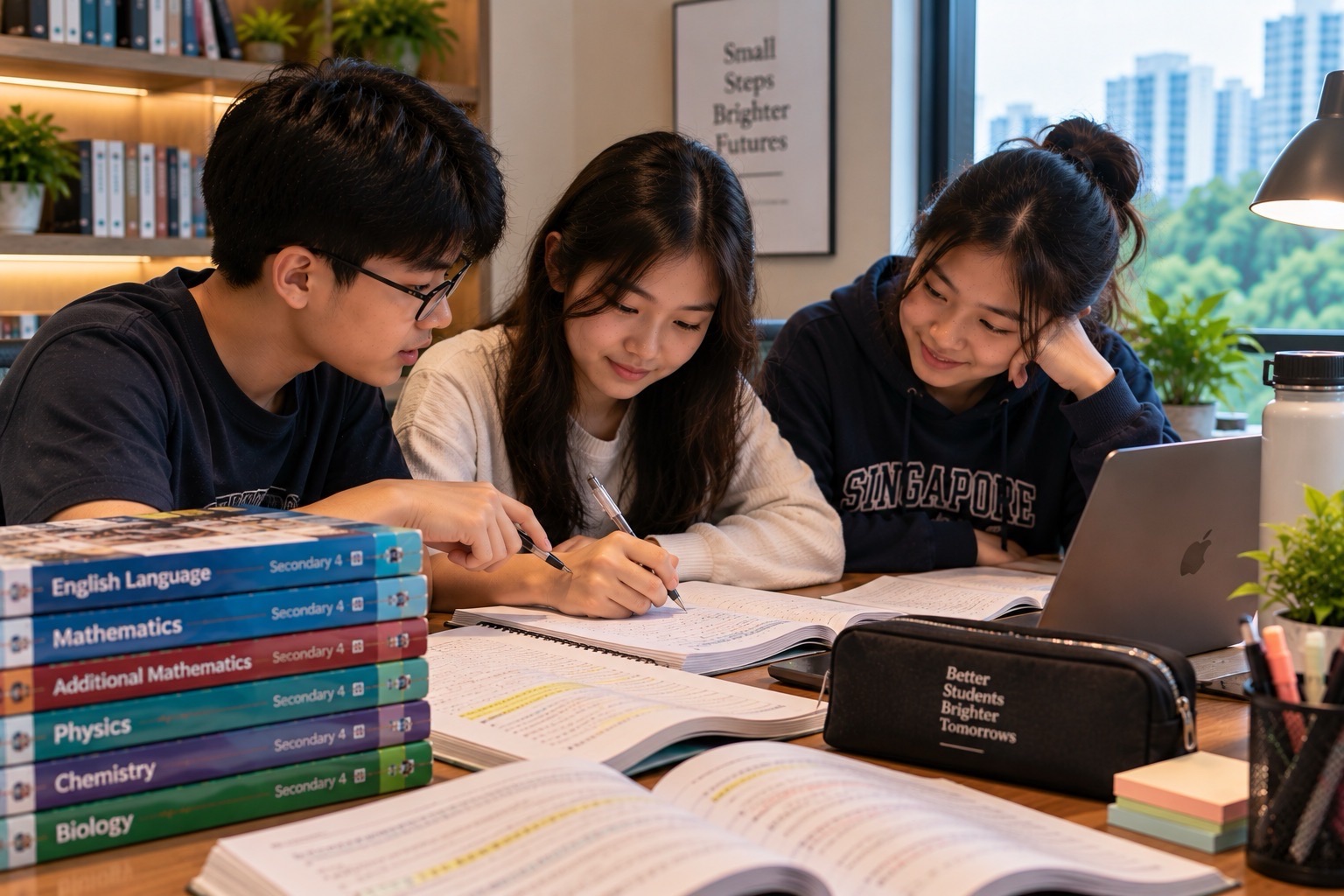
G1 Mathematics Tutorials | Craig Road helps families in the Craig Road, Tanjong Pagar and Chinatown conservation district find precise premium three-student Mathematics tuition. eduKateSG teaches at 8 Fourth Avenue near Sixth Avenue MRT, developing fractions, ratio, percentages, units and confidence with word problems.
G1 Mathematics tuition should teach the meaning of a quantity before the calculation. A difference between ratio shares is not the whole, a second fraction may refer to a smaller remainder, and discount saving is not the price paid. Our Craig Road tutorials build those distinctions with original worked examples, checking and independent changed tasks.
Craig Road describes the family’s locality or after-school meeting context, not an eduKateSG branch. Lessons are at Sixth Avenue. Families comparing tuition should consider the whole evening: school dismissal, the journey, a meal, the lesson and the return home. A worthwhile class should repay that commitment through clearer thinking rather than simply send the child home with more unfinished work.
Our established three-student tutorial format uses 1.5-hour weekly lessons, learning materials, guided corrections and focused continuation work. Suitable placement and current availability are confirmed directly. We begin with a parent–student consultation and genuine schoolwork, so the first plan responds to the learner rather than a broad label such as “weak at Maths”.
Arrange a parent–student consultation · Ask about G1 Mathematics on WhatsApp · eduKateSG on Facebook
G1 Is a Mathematics Level, Not a School Year
G1 identifies a subject level, while Secondary 1 identifies a school year. A suitable tutorial needs both pieces of information. A student beginning secondary school may need help with the transition into symbolic work; a graduating learner may need broader consolidation. The same subject-level label does not mean their current lessons should be identical.
SEAB’s 2027 school-candidate listing identifies G1 Mathematics as K110. Under the Singapore-Cambridge Secondary Education Certificate framework, students take subjects at their respective G1, G2 or G3 levels from 2027. SEC is not a fourth Mathematics level. The school’s programme and applicable syllabus remain the academic references.
We use that distinction to choose appropriate questions, not to limit expectations. A G1 learner can explain why a method works, compare two representations and notice an unreasonable answer. Difficulty can increase through unfamiliar wording or reduced assistance before it increases through more demanding content. The goal is understanding that belongs to the student, not successful imitation of someone else’s working.
The examples in this article are original teaching illustrations, not official examination questions or a complete syllabus inventory. They are selected according to the student’s school year, current coverage and readiness. Where a question introduces an additional step, the tutor first checks that the simpler relationship is secure enough to support it.
The Small Decision That Often Causes the Large Error
Children may complete topical homework fluently but hesitate when a changed question no longer names the method. We examine the first decision: which quantity is known, what the question asks and whether the reference whole has already changed.
Craig Road’s preserved shophouse streetscape is useful context. URA classifies 11A Craig Road as a conserved residential-front building and 20 Craig Road as an envelope-control site. The numerical cases below are fiction and do not describe those real properties.
A bar can represent ratio parts, a table can record successive stock remainders and a number line can show signed change. These models explain a relationship instead of replacing thought with decoration.
Three-student lessons allow different repairs: one learner needs a concept reconstructed, another needs unit discipline, and a third needs an unfamiliar variation without hints.
We return to the corrected idea after a delay. The stronger evidence is an independently chosen first operation when the original worked example is no longer visible.
What Three Students Allow the Tutor to Notice
In a three-student lesson, the tutor can inspect the route to an answer while it is being constructed. One pupil may read a question correctly but lose a negative sign. Another may draw a useful bar but misidentify the whole. A third may reach the correct number through a method they cannot explain. Those attempts should not receive identical feedback.
The tutor can ask each learner to explain the first decision, give a suitable prompt and then step back. A pupil who needs the total labelled receives that support initially. A pupil who already understands the relationship can attempt a changed question without a diagram. The shared topic remains coherent while the next step is adjusted to the individual.
Peer discussion is useful when students compare explanations rather than merely exchange answers. One learner might notice that a unit conversion is easier before calculating volume; another may show a number-line check for a signed-number result. Each then needs an independent attempt. Understanding a classmate’s explanation is not yet evidence of being able to select the method alone.
Parents should be able to ask what this attention changed. A useful answer names the misunderstanding, the explanation and the follow-up check. “The student now identifies which amount the second fraction refers to” describes a testable skill. “We completed more fractions” describes activity, but does not tell the family whether the original difficulty has been repaired.
The Foundations We Keep Connected
What signed numbers describe
A temperature starting below zero and then rising describes a position followed by a change. Students can show this on a number line before simplifying a signed-number expression.
When a question asks for the final value, a positive net change is not necessarily the final positive position. Distinguishing these objects prepares students for algebra and coordinates.
Which whole a fraction belongs to
A fraction can refer to the original amount or to what remains after an earlier step. We use a short running record so each calculation has a named reference quantity.
The child must eventually identify the whole without a tutor circling it first. A changed question can test whether the relationship is understood.
When to add or subtract ratio parts
A given total corresponds to the sum of the ratio parts; a given difference corresponds to their difference. The student labels the actual quantity before dividing.
After the initial model, we swap the supplied total for a supplied difference. Choosing a new opening operation is meaningful evidence of understanding.
A discount amount is not a discounted price
The percentage removed and the percentage still payable both describe the original price. A final answer must identify which one the question requested.
A bar model or a complementary percentage can provide a different check. The aim is accurate interpretation rather than exclusive reliance on one shortcut.
Measurement units tell a mathematical story
Centimetres measure lengths, square centimetres areas and cubic centimetres volumes. Conversions should be completed where necessary before combining quantities.
A correctly calculated number with the wrong unit may reveal that the student has measured the wrong object. We use units as an active check.
Data summaries are not the original observations
A mean can be fractional even when each observed daily count is a whole number. It summarises a set rather than describing a single observed day.
We contrast total, average and range so students choose the summary requested instead of applying a formula simply because it was used in the last question.
Craig Road G1 Mathematics: 11 Original Worked Cases
These cases use invented teaching quantities, not actual Craig Road building measurements, live prices, resident counts or official SEC questions. Each connects a mathematical relationship to a check or changed question.
1. Count both endpoints in a labelled sequence
An invented group of study cards is numbered from 14 through 23 inclusive. Its ten labels come from 23 − 14 + 1, rather than nine, which counts only the gaps.
A number line displays the two endpoints. Change the sequence to 36 through 47 inclusive and the learner finds twelve labels.
This is fictional numbering and does not assert one building per real Craig Road address.
2. A ratio difference is not a total
Two fictional groups have shares in ratio 5:8 and differ by 39. Three extra ratio parts represent 39, so one part is thirteen and the groups contain 65 and 104.
Check the difference and ratio. When the known amount changes to the combined total of 169, the sum of thirteen parts becomes the appropriate divisor.
This is an exercise, not a count of real tenants or association members.
3. Successive fractions need successive wholes
A made-up classroom starts with 288 cards, uses one quarter (72), then uses one third of the 216 remaining (another 72), leaving 144.
Using one third of the original would change the problem. Check that 72+72+144=288 and write the amount before each step.
An independent version says one third of the original, requiring a different calculation.
4. A saving differs from the payment
A fictional resource costs $128, receives a 12.5% discount of $16, then a fixed $5 handling fee. The reduced price is $112 and final payment $117.
The saving, discounted price and amount paid are distinct answers. Reverse the fee and the saving to check the original $128.
A later problem provides the payment first and asks for the original amount.
5. A scaled rectangle changes in both dimensions
An imaginary scale plan of 1:300 shows a rectangle 2.5 cm by 1.8 cm. The true lengths would be 7.5 m and 5.4 m, giving area 40.5 m².
Applying the length scale once to the drawn area is incorrect. Convert each side, retain units and then multiply.
This is not a measured floor plan of 11A Craig Road or any conserved shophouse.
6. An inside border has an area
A fictional board measures 2.8 m by 1.6 m, with an inside 0.1 m border along every edge. The inner dimensions are 2.6 m by 1.4 m.
Outer area 4.48 m² minus inner area 3.64 m² gives border area 0.84 m². Both opposing edges reduce the dimensions.
Change the task to an outer frame, asking whether dimensions now increase or decrease.
7. One extra observation changes a mean
Five invented observations 6, 10, 14, 18 and 22 sum to seventy and have mean fourteen. Adding 26 yields total 96 and mean sixteen.
Before calculating, predict an increase because the new value exceeds the previous mean. Then verify 96÷6=16.
A reverse question gives the new mean and asks for the missing added observation.
8. A one-time cost and repeated item charge
A fictional project charges $13 once and $5 per item. With a total of $83, 13+5n=83 gives fourteen whole items.
With budget $82, thirteen items cost $78 while fourteen would exceed the budget. A table displays the fixed fee and repeated rate.
The count n must be a non-negative integer and the final interpretation matters.
9. Convert litres before counting cups
Eight imaginary tanks each hold 2.5 litres, or twenty litres combined. Dividing 20,000 mL by a 250-mL cup gives eighty complete cups.
Check eighty times 250 equals 20,000. A different cup size may leave a remainder that should not be rounded into a full cup.
The containers are imaginary, not local water infrastructure.
10. Backward time across the hour
An imaginary activity begins at 5:45 pm with a 68-minute allowance. The planned departure is 4:37 pm.
Subtract forty-five minutes to reach 5:00 then twenty-three to reach 4:37; forward addition checks the result.
This is not an actual travel estimate from Craig Road to Sixth Avenue.
11. Net change and final signed reading
A fictitious instrument starts at −4, rises thirteen and falls eleven units. The final reading is −2 although the net change is +2.
A number line makes the starting position and two movements visible. Reverse the steps as a check.
The next question supplies only the final reading and asks for the initial value.
Our First-Principles Teaching Sequence
Diagnose before assigning more practice
We inspect a short attempt and ask the student to explain it. The first wrong decision matters more than a broad topic label. “Applied the second fraction to the original amount” gives the tutor a clear target. “Needs more fraction practice” is too general to determine whether the next question should teach interpretation, calculation or checking.
Make the relationship visible
A number line, bar, running-total record or diagram is chosen because it clarifies the specific difficulty. We do not insist on one representation for every question. The learner should be able to say what each part of the representation means and connect it to the calculation. A drawing copied without that connection can become another procedure to memorise.
Fence one new difficulty at a time
Our Fencing Method controls what changes. A ratio task might first give the total, then one share, then the difference. A measurement problem might first use one unit throughout, then require a conversion. The sequence exposes the boundary of understanding. If numbers, wording, units and relationships all change together, a failed attempt is harder to diagnose usefully.
Reduce prompts deliberately
The tutor may model the first solution, guide the next with questions and observe a third without interruption. A student is allowed a genuine thinking interval. We intervene when the learner cannot identify the relationship or repeats an invalid approach, not merely to avoid a pause. Independence needs an opportunity to appear without the adult pre-empting every decision.
Return after the model is no longer fresh
A later question checks whether the idea remains available without the worked page open. The task is short and relevant. The learner attempts it first, then compares the reasoning with the earlier explanation. We record how much help was needed, so a correct supported answer is not silently treated as independent mastery.
Mix methods rather than announce every chapter
A mixed set might contain a time interval, a fraction of a remainder and a perimeter question. The student must choose a relationship rather than repeat the previous operation. The questions need not be unusually difficult. Their value comes from removing the chapter cue and showing whether the learner can recognise what kind of mathematical decision is required.
Finish with a correction that can travel
The correction states the mistaken assumption, the repaired idea and a cue for the next problem. “Identify what the given ratio quantity represents” applies beyond one set of tokens. A later changed question tests that cue. The notebook should preserve usable thinking, not just a collection of attractive solutions that the student could not start alone.
What a Ninety-Minute G1 Tutorial Can Look Like
A possible lesson begins with ten minutes of earlier-topic retrieval and fifteen minutes of concept explanation. Twenty-five minutes of guided practice then introduce controlled variations. The tutor uses each attempt to decide whether to retain a representation, reduce a prompt or pause for a prerequisite repair. These are illustrative allocations, not a fixed timetable applied to every learner.
Twenty minutes can be used for independent application, followed by ten minutes of correction and ten minutes to review the learning and set continuation work. Those segments total ninety minutes. The balance changes when a student needs a slower explanation or is ready for more unfamiliar work. The structure serves the learning; the learner is not forced to fit the clock.
The session should leave a small but meaningful record: the relationship taught, the error repaired, a question attempted independently and the next task. Parents can ask the student to explain one example rather than describe the entire lesson. The tutor should also be able to identify what has not yet been established, rather than imply that every completed page proves lasting understanding.
Repair, Stabilise or Extend
The repair route is for a missing idea. A child who cannot explain the whole in a fraction question needs reconstruction with manageable values. The stabilisation route is for an understood idea applied inconsistently, perhaps because the reference quantity changes or a unit is omitted. The extension route is for stronger independence, new contexts and comparison of methods when the foundation is already reliable.
These routes describe tasks, not permanent categories of children. The same learner might need repair in signed numbers, stabilisation in measurement and extension in data interpretation. A good programme can hold those differences together. It does not make every topic equally easy or equally difficult merely because the student’s overall school mark falls within a particular range.
A useful extension asks why an apparently reasonable answer is wrong. For instance, why is the overall temperature change not the final temperature? Why does a correct volume calculation still require a unit conversion? Explaining these distinctions can deepen a G1 learner’s reasoning without prematurely moving into another syllabus or using complexity simply to make the lesson look advanced.
An Illustrative Twelve-Week Learning Arc
A twelve-week plan is a framework for reviewing evidence, not a promise of a particular grade or a requirement that every child finish the same topics. School coverage, attendance, existing gaps and upcoming assessments change the sequence. The important feature is that each phase has a teaching purpose and an independent check.
Weeks 1–3: locate the first missing connection
We review schoolwork, confirm the year and level, and sample a few relevant prerequisites. A student might understand fraction operations but misread the reference quantity. Another might label quantities accurately but calculate with decimals unreliably. The first phase selects a consequential repair and records an honest starting attempt. It should not produce a long weakness list without a practical next lesson.
Weeks 4–6: connect repair to current schoolwork
The school’s current topic becomes the main application. A unit conversion may support volume; a better understanding of equal parts may support ratio; a clearer distinction between change and final value may support a graph. Earlier repairs return briefly. The student should see why revisiting a foundation helps the work happening in school now.
Weeks 7–9: remove familiar clues
We vary the wording and mix suitable questions. Students practise identifying whether a number is the total, a remainder or a difference, and whether a calculation has found the requested answer. The tutor reduces help and records which choices remain independent. The purpose is not to make every task long, but to test whether a method can be selected without its usual heading.
Weeks 10–12: inspect what has become dependable
A fresh question checks the original priority under comparable conditions. We look at accuracy, explanation, independence and checking. Short timing controls are introduced only where the underlying method is sufficiently secure. The next cycle follows the evidence. A calendar date does not justify moving on from a concept that the student still cannot explain or use without substantial assistance.
A Short Independent Check Parents Can Use
Try these four prompts separately from the worked examples. A quantity starts at −6 and increases by nine: what is the final value? A bag contains 120 counters and one quarter is removed: how many remain? Two shares are in the ratio 2:5 and total 63: what are the shares? A rectangle is 8 cm by 5 cm: what is its perimeter?
The answers are 3, 90 counters, 18 and 45 counters, and 26 cm respectively. The useful evidence is not the number alone. Ask which quantity was being found and how the answer could be checked. The ratio shares should add to 63; the perimeter should include two lengths and two widths; the final signed value should be distinguished from the change of nine.
This is not a placement test, an official assessment or a prediction of a grade. It is a conversation starter. If the student needs help, note what kind: reading the question, identifying the relationship, calculating or interpreting the result. That information gives the tutor a better starting point than simply reporting that two answers were wrong.
School Alignment Without Repeating Every Worksheet
We ask for current topics and upcoming assessment scope so the lesson remains relevant. A student studying data may need help reading a scale, while one studying measurement may need a short decimal repair. Returning to a prerequisite can be school alignment when the connection is clear. The tutor should explain that connection rather than leave the family wondering why an earlier topic reappeared.
Schoolwork is also diagnostic material. We use a question to identify the failed decision and then create a suitable variation. A child who can only reproduce the original worksheet may still struggle when the assessment changes its presentation. The tutorial therefore respects the school sequence without making exact repetition its entire purpose.
Pre-teaching can be appropriate when foundations are ready. The aim is a calm first encounter, not an impressive claim about early coverage. If a learner does not understand the current relationship, another layer of unfamiliar symbols is unlikely to make that relationship clearer. Secure understanding determines the next step more usefully than speed through a chapter list.
Home Practice with a Clear Purpose
A suggested between-lesson routine is one earlier question, one current application and one correction to explain. The amount is adjusted to the child’s school demands. The first attempt should be genuine: ask what is known and required, but avoid immediately supplying the operation. A short period of productive thinking gives the learner a chance to develop an independent starting habit.
When help is needed, record it. A fully assisted correct page is useful practice but not proof of independent control. Preserve the unsuccessful attempt and note the exact obstacle. “I did not know whether the fraction referred to the original amount” tells the tutor something teachable. An erased page replaced by a copied solution hides that information.
Parents do not need to become a second tutor. Their helpful role is to protect a manageable study window, invite an explanation and keep the conversation specific. The task should finish with a clear account of what was attempted and what remains uncertain, not with an argument about why a tired child has not completed another large set.
Reading Progress Beyond One Test Score
Look for actions that can be observed again: the student labels the reference quantity, starts a ratio question without a hint, converts units before calculation or checks whether an answer is reasonable. These are useful signs even before a school assessment samples the repaired topic. The tutor should be able to show them in work, not only describe the child as more confident.
Compare similar demands under comparable conditions. Two papers may contain different chapters, so their total percentages do not isolate a particular skill. A fresh question using the same relationship gives a more focused check. Note whether the child used notes or prompts. Responsible tuition does not promise a fixed grade after a predetermined number of lessons; it makes the next learning decision clearer.
For examination-specific work, the existing SEC Examination Mathematics Tuition | Duxton guide discusses assessment preparation. This article focuses on the continuing G1 tutorial that builds the understanding on which useful paper practice depends.
Travelling from Craig Road to Sixth Avenue
eduKateSG teaches premium three-student Mathematics tutorials at 8 Fourth Avenue, Singapore 268674, near Sixth Avenue MRT (DT7). Craig Road is a family locality in Tanjong Pagar, not a separate tuition branch.
URA identifies a conserved residential front at 11A Craig Road and an envelope-control site at 20 Craig Road. These are heritage and planning references, not classrooms.
Families may travel from near Tanjong Pagar, Maxwell or Outram Park MRT depending on their actual departure address. One route from Maxwell (TE18) uses the Thomson–East Coast Line to Stevens (TE11), changes to the Downtown Line at Stevens (DT10), then goes to Sixth Avenue (DT7) in the Bukit Panjang direction.
Check live directions from the student’s actual starting point and LTA’s rail information. There is no universal journey time for an entire street.
Allow for school dismissal, meals, the ninety-minute tutorial, return travel and homework. Tuition should make school learning clearer and more independent.
Class Details and Consultation Materials
Format: premium 3-pax small-group tutorials. Subject: G1 Mathematics, matched to school year and current programme. Duration: 1.5 hours weekly. Location: 8 Fourth Avenue near Sixth Avenue MRT. Attendance: by appointment, subject to suitable placement. Confirm current fees, available times and any trial arrangements directly rather than treating this guide as a guarantee of a vacancy.
Bring a recent marked paper, ordinary homework, the current topic list and teacher comments. Include an example the student solved successfully as well as one that caused difficulty. Leave original working visible and note where help was used. The consultation should produce a specific next priority and an independent way to check it, not a dramatic label based on one score.
Frequently Asked Questions
Does every G1 student need tuition?
No. A child who understands school lessons, completes work independently and receives sufficient feedback may not need another class. Support is worth considering when a specific gap, repeated inconsistency or appropriate extension goal has been identified. The consultation should help the family judge whether the proposed support has a clear purpose and fits the student’s week.
Will you repeat the whole primary syllabus?
Not automatically. We return to the prerequisite affecting current work. A fraction misunderstanding may need a focused repair before a secondary application becomes manageable. That does not mean every primary topic should be restarted. The tutor should explain which earlier connection is being rebuilt and how a later question will show whether the repair is usable.
What happens when my child understands an example but cannot begin homework?
We distinguish following a model from selecting a method. Prompts are reduced gradually, and a changed question is attempted independently. The tutor checks whether the barrier is reading, representing the relationship, recalling the method or executing it. Repeating the explanation may help, but it is not automatically the right response to every difficulty starting alone.
Can a confident G1 learner be challenged?
Yes. Challenge can involve a changed known quantity, an extra condition, a comparison of methods or a more independent explanation. It need not begin with premature material from another subject level. Any proposed school subject-level change should be discussed with the school; enrolling in tuition does not independently authorise or guarantee such a change.
How do you handle mistakes usually called careless?
We identify the action that failed. A lost sign, a wrong reference quantity, a missed unit conversion and an incomplete final interpretation need different checks. The correction records a useful cue for a future problem. The next changed attempt shows whether the student can use that cue rather than merely agree that the earlier answer was wrong.
Should we practise with a timer every evening?
Not when the relationship is still unclear. A missing concept needs explanation and a fair independent attempt before speed becomes the main demand. Short timed tasks can be useful when the method is secure enough to test under pressure. The tutor should explain what the timing is intended to reveal rather than use a clock as a universal solution.
Are lessons physically on Craig Road?
The tutorials described here are at 8 Fourth Avenue near Sixth Avenue MRT. Craig Road identifies the family’s locality or travel context. Confirm the class, venue and appointment before attending. The article title should not be read as an advertisement for a separate Craig Road classroom.
What should parents ask after the first month?
Ask which question the student can now begin without hints, which recurring error has reduced and which relationship remains uncertain after a delay. Request an example of independent work rather than only a list of completed chapters. The answer should help determine the next step and acknowledge where more evidence is still needed.
Craig Road G1 Mathematics: Independent Method Selection
First identify which operation the student chooses before help. A correct arithmetic step that answers the wrong quantity needs a different repair from a calculation mistake.
Compare a given ratio total with a given difference, then compare a fraction of a starting amount with a fraction of its remainder.
Model the relationship through an equal-part bar, running table or number line, chosen to clarify the particular misunderstanding.
Change one condition and remove the previous worked example. The child should attempt the next opening step independently.
Keep home practice purposeful: one familiar problem, one changed problem and one sentence checking the result.
A later mixed task revisits the repaired principle without a chapter title, testing retention rather than imitation.
Parents can ask what the question requests and whether the result is reasonable without taking over the calculation.
Every task follows the student’s actual G1 level and school year. Class placement and appointments are confirmed at Sixth Avenue.
A Student Who Can Explain, Check and Begin Again
Our goal is not a child who never makes a first-attempt mistake. It is a learner who knows what is being found, chooses a relationship, calculates carefully and can inspect the result. When an approach fails, the student has somewhere useful to return: the quantities, the diagram, the units or the original question.
For Craig Road families, a G1 Mathematics tutorial should make that independence more visible over time. We rebuild what is missing, stabilise what is inconsistent and extend what is ready. The value of the lesson is the clearer thinking that the learner can carry into the next question when the tutor is no longer beside them.
Questions Craig Road Parents Ask About G1 Mathematics
Does G1 mean Secondary 1?
No. G1 is a Mathematics subject level; Secondary 1 is the year in school.
Why can arithmetic be right but a word problem wrong?
The student may use the wrong reference whole, unit or required output.
How are ratio differences explained?
The extra equal parts reveal the difference before division.
Do your examples use measured Craig Road buildings?
No. All unverified lengths, costs and counts are fictional.
Will more homework always help?
A short unfamiliar independent task often shows understanding better than copied repetition.
Can stronger students be stretched?
Yes, through changed conditions, method choice and explanation.
Where is the class?
At 8 Fourth Avenue near Sixth Avenue MRT, not Craig Road.
What progress should parents see?
A fresh problem the child can begin with less assistance and a recurring error that declines.
Craig Road G1 Mathematics: Verified Conservation Types
The URA record for 11A Craig Road describes a conserved residential-front shophouse with timber casement windows beside a double-leaf timber door.
The URA record for 20 Craig Road identifies an envelope-control site that can be redeveloped subject to form-related controls; it is not the same classification as a fully conserved building.
See Things to do in Singapore | Craig Road for nearby buildings and Tanjong Pagar’s conserved streetscape.
All prices, group sizes and dimensions in this Mathematics casebook are invented for teaching, not measured from these real properties. The actual tutorial venue is near Sixth Avenue MRT.
Craig Road G1 Mathematics: Subject-Level and Local Reading
These Craig Road guides distinguish G1, G2 and G3 Mathematics subject levels and the common SEC certificate pathway. SEC is not a fourth Mathematics level. The separate Tanjong Pagar examination article addresses marked-paper and timing preparation.
- Things to do in Singapore | Craig Road
- Things to do in Singapore | Duxton Road
- Surviving Tuition | Tanjong Pagar
- SEC Examination Mathematics Tuition | Tanjong Pagar
- URA | 11A Craig Road
- URA | 20 Craig Road
- Mathematics Learning Hub
- Mathematics Tuition by Area Index
- G1 Mathematics Tutorials | Craig Road
- G2 Mathematics Tutorials | Craig Road
- G3 Mathematics Tutorials | Craig Road
- SEC Mathematics Tutorials | Craig Road
- SEAB 2027 G1 syllabuses
All tutorials take place at 8 Fourth Avenue near Sixth Avenue MRT. Check the student’s actual subject level, school year and suitable small-group appointment rather than infer a Craig Road branch.
Craig Road Parent Questions: Mathematics and the Learning Routine
Does G1 mean Secondary 1?
No. G1 is the level at which Mathematics is studied; Secondary 1 is a school year. Both affect lesson selection.
Should every G1 learner work at the same pace?
No. One may need a fraction concept reconstructed, while another needs more unfamiliar word problems and reduced prompts.
Why does my child calculate correctly but miss marks?
The answer may describe the wrong quantity, lack a unit or use an incorrect reference whole. We identify the first wrong decision.
Do you teach only the current school chapter?
We follow school priorities while revisiting prerequisites when they block current work, and keep old skills active through short retrieval.
Can a G1 learner be stretched?
Yes, through stronger reasoning, new contexts and independent checks rather than automatically importing another subject level.
When is timed work suitable?
When the student understands the method. Timing does not repair a missing relationship.
Does G1 Mathematics have an SEC code?
The 2027 SEAB school-candidate listing identifies G1 Mathematics as K110.
Where is the teaching centre?
At 8 Fourth Avenue near Sixth Avenue MRT, not on Craig Road.
What evidence should parents request?
A fresh problem solved independently, an error reduced and a specific next teaching priority.
Arrange a Parent–Student Consultation
Tell us the student’s school year, G1 Mathematics programme, current topics and the questions that repeatedly cause difficulty. Bring a few genuine work samples and a realistic weekly schedule. The first plan should begin with a teachable next step.
Contact eduKate Singapore · Chat on WhatsApp
eduKateSG
8 Fourth Avenue
Singapore 268674
Near Sixth Avenue MRT
Premium 3-pax small-group tutorials
By appointment
Properly taught kids shine a bright light into the future.