
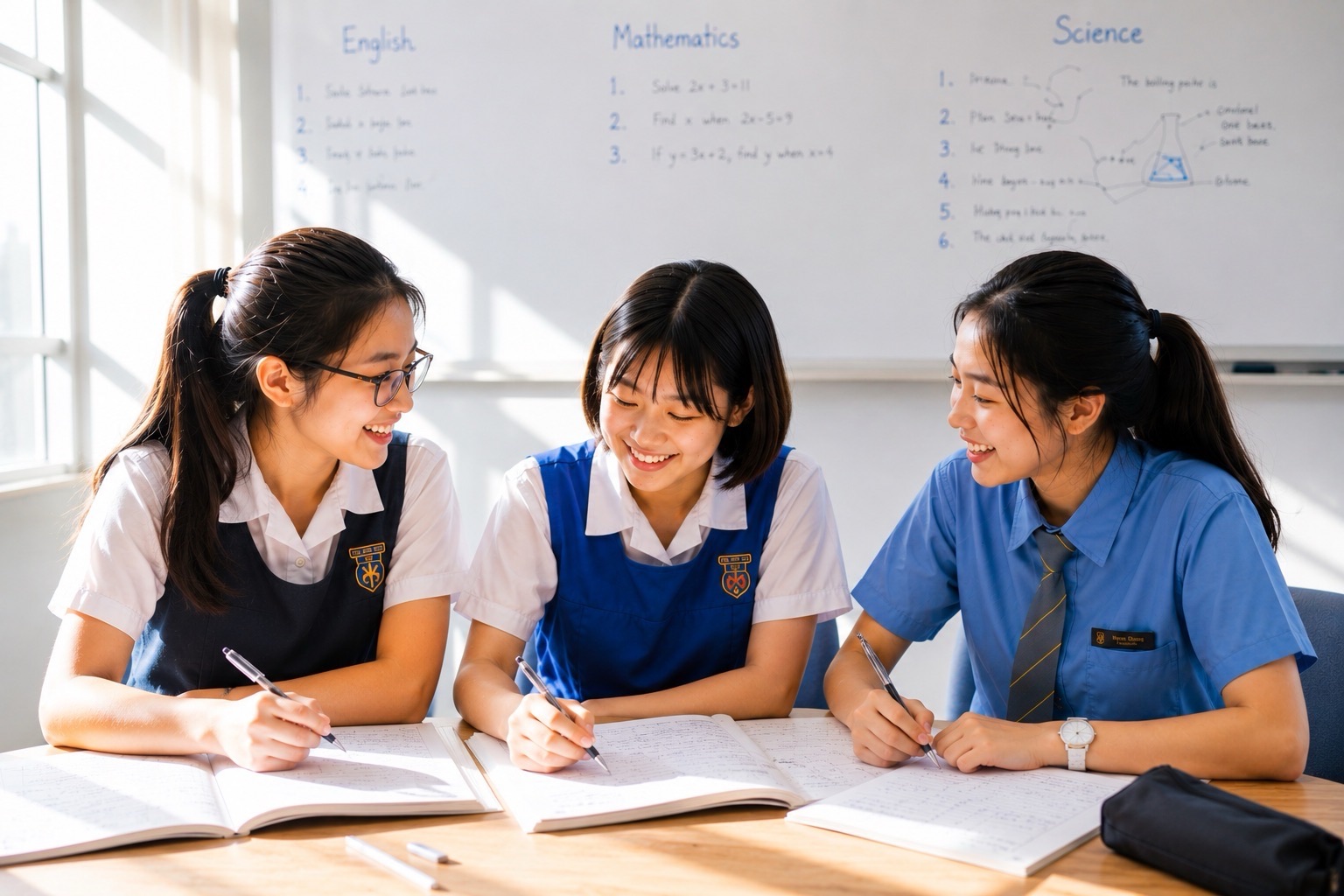
G1 Science Tutorials | Bedok North helps families decide what support fits a learner’s actual subject level and current schoolwork. Parents comparing Science tuition, Science tutors and small-group tutorials in Bedok North often ask why a child remembers a concept but cannot apply it in an unfamiliar question. We begin by identifying the first incorrect choice, then practise a fresh question independently.
This guide addresses Bedok North families, not a claim of a teaching centre in the neighbourhood. eduKateSG’s stated venue is 8 Fourth Avenue, Singapore 268674, near Sixth Avenue MRT. G1 is a subject level, not a school year.
What should parents check first?
Confirm the student’s school year, actual registered Science subject or combination, and recent marked work. The immediate focus is foundations in measurement, energy and body systems. A tutor should match the work to the school syllabus and the pupil’s first misunderstanding rather than simply increase worksheet volume.
An example of choosing the right quantity
An imaginary model journey covers 300 metres in five minutes and includes a one-minute pause. The average over all five minutes is 60 metres per minute; over four moving minutes it is 75 metres per minute. Both can be correct for different questions. We teach the learner to identify which interval the question requests.
Evidence and experimental reasoning
A fictional comparison changes both temperature and stirring rate, so it cannot isolate temperature as the sole cause. Repeating the same confounded method does not repair the design. Students learn to identify a relevant control, a measurable outcome and a conclusion that does not exceed the evidence.
How a three-student tutorial can help
Individual first attempts reveal whether a learner has misread a graph, selected the wrong model or written an unsupported explanation. After focused teaching, each student attempts a changed problem without hints. Progress is judged through independent transfer, not merely completed pages.
Revision and the correct course
MOE’s Full Subject-Based Banding guidance distinguishes school years from subject levels. SEAB’s SEC overview explains the national certificate framework beginning in 2027. Families should confirm their registered course and examination year before selecting full papers.
Frequently asked questions
Are lessons held in Bedok North?
This is a locality guide; the stated teaching venue is Fourth Avenue near Sixth Avenue MRT.
Will more past-year papers solve the problem?
Only if they address the learner’s actual need. Concept repair may be more useful first.
Can a grade be guaranteed?
No. We focus on teachable skills and independent checks.
What should we bring?
The learner’s year, subject level, registered subjects and one difficult marked question.
Related Bedok North Science guides
G2 Science Tutorials | Bedok North · G3 Science Tutorials | Bedok North · SEC Science Tutorials | Bedok North · Science Tuition by Area Index
Power and energy: A Bedok North G1 Science Tutorial
An imaginary 75-watt motor operates for 40 seconds and transfers 3000 joules under a constant-power model. If the same energy is transferred over 60 seconds, average power becomes 50 watts. The learner first names the requested property and its unit, then explains why increasing the duration at fixed energy reduces the rate.
The first teaching question is not simply whether the final number is correct. We ask the learner to identify what was supplied, which part of the information answers the prompt, and what the resulting statement means. If the student begins with an unsuitable relationship, the tutor changes the representation and explains the scientific model before increasing speed. This approach gives parents a specific learning target rather than a general instruction to work harder.
Next, the tutor changes one relevant condition and asks for a prediction before a new calculation or explanation. The child compares the first case with the new one, names the condition that matters and explains why the result changes or remains the same. A correct response reached after a hint is useful guided learning, but the follow-up is completed independently. We also ask why one tempting alternative would answer a different question.
The final check removes the familiar context and chapter heading. A diagram becomes a table, a story becomes a graph or a supplied explanation becomes a question that must be answered from scratch. The tutor notes whether the child can still select the model, interpret units and keep conclusions within the evidence. If the choice is not yet secure, a later retrieval task revisits it. That is how this part of G1 Science can become usable beyond a single worksheet.
Motion intervals: A Bedok North G1 Science Tutorial
A model journey covers 300 metres in five minutes, including a one-minute pause. Average speed across the complete interval is 60 metres per minute, while the moving-only average is 75 metres per minute. The pupil draws a timeline and explains why the two denominators answer different questions.
The first teaching question is not simply whether the final number is correct. We ask the learner to identify what was supplied, which part of the information answers the prompt, and what the resulting statement means. If the student begins with an unsuitable relationship, the tutor changes the representation and explains the scientific model before increasing speed. This approach gives parents a specific learning target rather than a general instruction to work harder.
Next, the tutor changes one relevant condition and asks for a prediction before a new calculation or explanation. The child compares the first case with the new one, names the condition that matters and explains why the result changes or remains the same. A correct response reached after a hint is useful guided learning, but the follow-up is completed independently. We also ask why one tempting alternative would answer a different question.
The final check removes the familiar context and chapter heading. A diagram becomes a table, a story becomes a graph or a supplied explanation becomes a question that must be answered from scratch. The tutor notes whether the child can still select the model, interpret units and keep conclusions within the evidence. If the choice is not yet secure, a later retrieval task revisits it. That is how this part of G1 Science can become usable beyond a single worksheet.
Ruler readings: A Bedok North G1 Science Tutorial
A fictional rod begins at the 6-centimetre mark and ends at 19 centimetres. Its length is 13 centimetres. A pupil who writes 19 has identified an endpoint rather than the distance between two positions. The tutor changes both endpoints and asks for an independent explanation.
The first teaching question is not simply whether the final number is correct. We ask the learner to identify what was supplied, which part of the information answers the prompt, and what the resulting statement means. If the student begins with an unsuitable relationship, the tutor changes the representation and explains the scientific model before increasing speed. This approach gives parents a specific learning target rather than a general instruction to work harder.
Next, the tutor changes one relevant condition and asks for a prediction before a new calculation or explanation. The child compares the first case with the new one, names the condition that matters and explains why the result changes or remains the same. A correct response reached after a hint is useful guided learning, but the follow-up is completed independently. We also ask why one tempting alternative would answer a different question.
The final check removes the familiar context and chapter heading. A diagram becomes a table, a story becomes a graph or a supplied explanation becomes a question that must be answered from scratch. The tutor notes whether the child can still select the model, interpret units and keep conclusions within the evidence. If the choice is not yet secure, a later retrieval task revisits it. That is how this part of G1 Science can become usable beyond a single worksheet.
Thermometer readings: A Bedok North G1 Science Tutorial
An invented sample rises from 21 to 30 degrees Celsius, while another rises from 28 to 34. The first changes by nine degrees and the second by six, although the second has the higher final reading. The learner distinguishes the measured final quantity from the change.
The first teaching question is not simply whether the final number is correct. We ask the learner to identify what was supplied, which part of the information answers the prompt, and what the resulting statement means. If the student begins with an unsuitable relationship, the tutor changes the representation and explains the scientific model before increasing speed. This approach gives parents a specific learning target rather than a general instruction to work harder.
Next, the tutor changes one relevant condition and asks for a prediction before a new calculation or explanation. The child compares the first case with the new one, names the condition that matters and explains why the result changes or remains the same. A correct response reached after a hint is useful guided learning, but the follow-up is completed independently. We also ask why one tempting alternative would answer a different question.
The final check removes the familiar context and chapter heading. A diagram becomes a table, a story becomes a graph or a supplied explanation becomes a question that must be answered from scratch. The tutor notes whether the child can still select the model, interpret units and keep conclusions within the evidence. If the choice is not yet secure, a later retrieval task revisits it. That is how this part of G1 Science can become usable beyond a single worksheet.
Circuit paths: A Bedok North G1 Science Tutorial
A circuit diagram has a battery, lamp and open switch in the only path. The symbols are all present, but the conducting route is interrupted. We redraw the same connections in a different shape and ask whether the predicted behaviour changes.
The first teaching question is not simply whether the final number is correct. We ask the learner to identify what was supplied, which part of the information answers the prompt, and what the resulting statement means. If the student begins with an unsuitable relationship, the tutor changes the representation and explains the scientific model before increasing speed. This approach gives parents a specific learning target rather than a general instruction to work harder.
Next, the tutor changes one relevant condition and asks for a prediction before a new calculation or explanation. The child compares the first case with the new one, names the condition that matters and explains why the result changes or remains the same. A correct response reached after a hint is useful guided learning, but the follow-up is completed independently. We also ask why one tempting alternative would answer a different question.
The final check removes the familiar context and chapter heading. A diagram becomes a table, a story becomes a graph or a supplied explanation becomes a question that must be answered from scratch. The tutor notes whether the child can still select the model, interpret units and keep conclusions within the evidence. If the choice is not yet secure, a later retrieval task revisits it. That is how this part of G1 Science can become usable beyond a single worksheet.
Parallel paths: A Bedok North G1 Science Tutorial
An imaginary diagram has two branches with a switch on only one. Opening that switch need not interrupt a separate intact branch. Students trace actual junctions and paths rather than assume every open switch disconnects all components.
The first teaching question is not simply whether the final number is correct. We ask the learner to identify what was supplied, which part of the information answers the prompt, and what the resulting statement means. If the student begins with an unsuitable relationship, the tutor changes the representation and explains the scientific model before increasing speed. This approach gives parents a specific learning target rather than a general instruction to work harder.
Next, the tutor changes one relevant condition and asks for a prediction before a new calculation or explanation. The child compares the first case with the new one, names the condition that matters and explains why the result changes or remains the same. A correct response reached after a hint is useful guided learning, but the follow-up is completed independently. We also ask why one tempting alternative would answer a different question.
The final check removes the familiar context and chapter heading. A diagram becomes a table, a story becomes a graph or a supplied explanation becomes a question that must be answered from scratch. The tutor notes whether the child can still select the model, interpret units and keep conclusions within the evidence. If the choice is not yet secure, a later retrieval task revisits it. That is how this part of G1 Science can become usable beyond a single worksheet.
Food label ratios: A Bedok North G1 Science Tutorial
Fictional package A lists 6 grams per 100 grams and a 200-gram serving, containing 12 grams. Package B lists 8 grams per 100 grams and a 100-gram serving, containing 8 grams. A has less per equal mass but more in its stated serving.
The first teaching question is not simply whether the final number is correct. We ask the learner to identify what was supplied, which part of the information answers the prompt, and what the resulting statement means. If the student begins with an unsuitable relationship, the tutor changes the representation and explains the scientific model before increasing speed. This approach gives parents a specific learning target rather than a general instruction to work harder.
Next, the tutor changes one relevant condition and asks for a prediction before a new calculation or explanation. The child compares the first case with the new one, names the condition that matters and explains why the result changes or remains the same. A correct response reached after a hint is useful guided learning, but the follow-up is completed independently. We also ask why one tempting alternative would answer a different question.
The final check removes the familiar context and chapter heading. A diagram becomes a table, a story becomes a graph or a supplied explanation becomes a question that must be answered from scratch. The tutor notes whether the child can still select the model, interpret units and keep conclusions within the evidence. If the choice is not yet secure, a later retrieval task revisits it. That is how this part of G1 Science can become usable beyond a single worksheet.
Filtration limits: A Bedok North G1 Science Tutorial
An invented mixture contains insoluble sand, dissolved salt and water. Filtering can retain sand while dissolved salt passes with the liquid. A clear filtrate is not necessarily pure water, so the learner must identify which component the question wants recovered.
The first teaching question is not simply whether the final number is correct. We ask the learner to identify what was supplied, which part of the information answers the prompt, and what the resulting statement means. If the student begins with an unsuitable relationship, the tutor changes the representation and explains the scientific model before increasing speed. This approach gives parents a specific learning target rather than a general instruction to work harder.
Next, the tutor changes one relevant condition and asks for a prediction before a new calculation or explanation. The child compares the first case with the new one, names the condition that matters and explains why the result changes or remains the same. A correct response reached after a hint is useful guided learning, but the follow-up is completed independently. We also ask why one tempting alternative would answer a different question.
The final check removes the familiar context and chapter heading. A diagram becomes a table, a story becomes a graph or a supplied explanation becomes a question that must be answered from scratch. The tutor notes whether the child can still select the model, interpret units and keep conclusions within the evidence. If the choice is not yet secure, a later retrieval task revisits it. That is how this part of G1 Science can become usable beyond a single worksheet.
Digestive sequence: A Bedok North G1 Science Tutorial
A labelled digestive-system diagram may show where structures are, but a good explanation distinguishes digestion from absorption. Students trace what changes and where relevant products go, then repair a missing arrow in an unfamiliar process diagram.
The first teaching question is not simply whether the final number is correct. We ask the learner to identify what was supplied, which part of the information answers the prompt, and what the resulting statement means. If the student begins with an unsuitable relationship, the tutor changes the representation and explains the scientific model before increasing speed. This approach gives parents a specific learning target rather than a general instruction to work harder.
Next, the tutor changes one relevant condition and asks for a prediction before a new calculation or explanation. The child compares the first case with the new one, names the condition that matters and explains why the result changes or remains the same. A correct response reached after a hint is useful guided learning, but the follow-up is completed independently. We also ask why one tempting alternative would answer a different question.
The final check removes the familiar context and chapter heading. A diagram becomes a table, a story becomes a graph or a supplied explanation becomes a question that must be answered from scratch. The tutor notes whether the child can still select the model, interpret units and keep conclusions within the evidence. If the choice is not yet secure, a later retrieval task revisits it. That is how this part of G1 Science can become usable beyond a single worksheet.
Respiration and transport: A Bedok North G1 Science Tutorial
A simplified model follows a gas through breathing, exchange and transport. The pupil identifies which process each stage describes and links the structures to the actual movement instead of reciting unrelated facts.
The first teaching question is not simply whether the final number is correct. We ask the learner to identify what was supplied, which part of the information answers the prompt, and what the resulting statement means. If the student begins with an unsuitable relationship, the tutor changes the representation and explains the scientific model before increasing speed. This approach gives parents a specific learning target rather than a general instruction to work harder.
Next, the tutor changes one relevant condition and asks for a prediction before a new calculation or explanation. The child compares the first case with the new one, names the condition that matters and explains why the result changes or remains the same. A correct response reached after a hint is useful guided learning, but the follow-up is completed independently. We also ask why one tempting alternative would answer a different question.
The final check removes the familiar context and chapter heading. A diagram becomes a table, a story becomes a graph or a supplied explanation becomes a question that must be answered from scratch. The tutor notes whether the child can still select the model, interpret units and keep conclusions within the evidence. If the choice is not yet secure, a later retrieval task revisits it. That is how this part of G1 Science can become usable beyond a single worksheet.
Fair comparison: A Bedok North G1 Science Tutorial
A fictional investigation changes water temperature and stirring rate simultaneously while claiming to test only temperature. Students propose comparable stirring and a clearly defined measurement endpoint. Repeating the flawed design does not isolate the cause.
The first teaching question is not simply whether the final number is correct. We ask the learner to identify what was supplied, which part of the information answers the prompt, and what the resulting statement means. If the student begins with an unsuitable relationship, the tutor changes the representation and explains the scientific model before increasing speed. This approach gives parents a specific learning target rather than a general instruction to work harder.
Next, the tutor changes one relevant condition and asks for a prediction before a new calculation or explanation. The child compares the first case with the new one, names the condition that matters and explains why the result changes or remains the same. A correct response reached after a hint is useful guided learning, but the follow-up is completed independently. We also ask why one tempting alternative would answer a different question.
The final check removes the familiar context and chapter heading. A diagram becomes a table, a story becomes a graph or a supplied explanation becomes a question that must be answered from scratch. The tutor notes whether the child can still select the model, interpret units and keep conclusions within the evidence. If the choice is not yet secure, a later retrieval task revisits it. That is how this part of G1 Science can become usable beyond a single worksheet.
Sampling evidence: A Bedok North G1 Science Tutorial
An imaginary ecological survey records two populations changing together. The data permit description of the trend but do not uniquely establish causation. The pupil proposes further observations or controls that could distinguish competing explanations.
The first teaching question is not simply whether the final number is correct. We ask the learner to identify what was supplied, which part of the information answers the prompt, and what the resulting statement means. If the student begins with an unsuitable relationship, the tutor changes the representation and explains the scientific model before increasing speed. This approach gives parents a specific learning target rather than a general instruction to work harder.
Next, the tutor changes one relevant condition and asks for a prediction before a new calculation or explanation. The child compares the first case with the new one, names the condition that matters and explains why the result changes or remains the same. A correct response reached after a hint is useful guided learning, but the follow-up is completed independently. We also ask why one tempting alternative would answer a different question.
The final check removes the familiar context and chapter heading. A diagram becomes a table, a story becomes a graph or a supplied explanation becomes a question that must be answered from scratch. The tutor notes whether the child can still select the model, interpret units and keep conclusions within the evidence. If the choice is not yet secure, a later retrieval task revisits it. That is how this part of G1 Science can become usable beyond a single worksheet.
Rate versus total: A Bedok North G1 Science Tutorial
A hypothetical collection vessel gains 18 litres in six minutes, averaging three litres per minute. The observed net gain does not uniquely identify separate inflow and outflow rates, so the learner identifies the missing measurement.
The first teaching question is not simply whether the final number is correct. We ask the learner to identify what was supplied, which part of the information answers the prompt, and what the resulting statement means. If the student begins with an unsuitable relationship, the tutor changes the representation and explains the scientific model before increasing speed. This approach gives parents a specific learning target rather than a general instruction to work harder.
Next, the tutor changes one relevant condition and asks for a prediction before a new calculation or explanation. The child compares the first case with the new one, names the condition that matters and explains why the result changes or remains the same. A correct response reached after a hint is useful guided learning, but the follow-up is completed independently. We also ask why one tempting alternative would answer a different question.
The final check removes the familiar context and chapter heading. A diagram becomes a table, a story becomes a graph or a supplied explanation becomes a question that must be answered from scratch. The tutor notes whether the child can still select the model, interpret units and keep conclusions within the evidence. If the choice is not yet secure, a later retrieval task revisits it. That is how this part of G1 Science can become usable beyond a single worksheet.
Percentage change: A Bedok North G1 Science Tutorial
A reading rises from 80 to 100 units, a 25 percent increase relative to 80. A fall from 100 to 80 is a 20 percent decrease relative to 100. The child learns why the starting reference changes the denominator.
The first teaching question is not simply whether the final number is correct. We ask the learner to identify what was supplied, which part of the information answers the prompt, and what the resulting statement means. If the student begins with an unsuitable relationship, the tutor changes the representation and explains the scientific model before increasing speed. This approach gives parents a specific learning target rather than a general instruction to work harder.
Next, the tutor changes one relevant condition and asks for a prediction before a new calculation or explanation. The child compares the first case with the new one, names the condition that matters and explains why the result changes or remains the same. A correct response reached after a hint is useful guided learning, but the follow-up is completed independently. We also ask why one tempting alternative would answer a different question.
The final check removes the familiar context and chapter heading. A diagram becomes a table, a story becomes a graph or a supplied explanation becomes a question that must be answered from scratch. The tutor notes whether the child can still select the model, interpret units and keep conclusions within the evidence. If the choice is not yet secure, a later retrieval task revisits it. That is how this part of G1 Science can become usable beyond a single worksheet.
Graph axes: A Bedok North G1 Science Tutorial
A flat distance-time line indicates unchanged plotted distance, whereas a flat speed-time line indicates constant speed. The learner reads both axes before importing a memorised description of a familiar-looking graph.
The first teaching question is not simply whether the final number is correct. We ask the learner to identify what was supplied, which part of the information answers the prompt, and what the resulting statement means. If the student begins with an unsuitable relationship, the tutor changes the representation and explains the scientific model before increasing speed. This approach gives parents a specific learning target rather than a general instruction to work harder.
Next, the tutor changes one relevant condition and asks for a prediction before a new calculation or explanation. The child compares the first case with the new one, names the condition that matters and explains why the result changes or remains the same. A correct response reached after a hint is useful guided learning, but the follow-up is completed independently. We also ask why one tempting alternative would answer a different question.
The final check removes the familiar context and chapter heading. A diagram becomes a table, a story becomes a graph or a supplied explanation becomes a question that must be answered from scratch. The tutor notes whether the child can still select the model, interpret units and keep conclusions within the evidence. If the choice is not yet secure, a later retrieval task revisits it. That is how this part of G1 Science can become usable beyond a single worksheet.
Graph scales: A Bedok North G1 Science Tutorial
Two graphs may show the same data with different scale spacing and visual slopes. Students calculate from labelled coordinates rather than the printed angle and then reconstruct the information as a table.
The first teaching question is not simply whether the final number is correct. We ask the learner to identify what was supplied, which part of the information answers the prompt, and what the resulting statement means. If the student begins with an unsuitable relationship, the tutor changes the representation and explains the scientific model before increasing speed. This approach gives parents a specific learning target rather than a general instruction to work harder.
Next, the tutor changes one relevant condition and asks for a prediction before a new calculation or explanation. The child compares the first case with the new one, names the condition that matters and explains why the result changes or remains the same. A correct response reached after a hint is useful guided learning, but the follow-up is completed independently. We also ask why one tempting alternative would answer a different question.
The final check removes the familiar context and chapter heading. A diagram becomes a table, a story becomes a graph or a supplied explanation becomes a question that must be answered from scratch. The tutor notes whether the child can still select the model, interpret units and keep conclusions within the evidence. If the choice is not yet secure, a later retrieval task revisits it. That is how this part of G1 Science can become usable beyond a single worksheet.
Accuracy and repeatability: A Bedok North G1 Science Tutorial
A fictional instrument gives tightly clustered readings all above a known reference. More repeats may confirm consistency without correcting an offset. We discuss when checking calibration is a more relevant improvement.
The first teaching question is not simply whether the final number is correct. We ask the learner to identify what was supplied, which part of the information answers the prompt, and what the resulting statement means. If the student begins with an unsuitable relationship, the tutor changes the representation and explains the scientific model before increasing speed. This approach gives parents a specific learning target rather than a general instruction to work harder.
Next, the tutor changes one relevant condition and asks for a prediction before a new calculation or explanation. The child compares the first case with the new one, names the condition that matters and explains why the result changes or remains the same. A correct response reached after a hint is useful guided learning, but the follow-up is completed independently. We also ask why one tempting alternative would answer a different question.
The final check removes the familiar context and chapter heading. A diagram becomes a table, a story becomes a graph or a supplied explanation becomes a question that must be answered from scratch. The tutor notes whether the child can still select the model, interpret units and keep conclusions within the evidence. If the choice is not yet secure, a later retrieval task revisits it. That is how this part of G1 Science can become usable beyond a single worksheet.
Written explanation: A Bedok North G1 Science Tutorial
A short scientific response should link a given condition to the relevant process and outcome. Students compare a long answer containing irrelevant vocabulary with a concise causal explanation and identify what earns scientific meaning.
The first teaching question is not simply whether the final number is correct. We ask the learner to identify what was supplied, which part of the information answers the prompt, and what the resulting statement means. If the student begins with an unsuitable relationship, the tutor changes the representation and explains the scientific model before increasing speed. This approach gives parents a specific learning target rather than a general instruction to work harder.
Next, the tutor changes one relevant condition and asks for a prediction before a new calculation or explanation. The child compares the first case with the new one, names the condition that matters and explains why the result changes or remains the same. A correct response reached after a hint is useful guided learning, but the follow-up is completed independently. We also ask why one tempting alternative would answer a different question.
The final check removes the familiar context and chapter heading. A diagram becomes a table, a story becomes a graph or a supplied explanation becomes a question that must be answered from scratch. The tutor notes whether the child can still select the model, interpret units and keep conclusions within the evidence. If the choice is not yet secure, a later retrieval task revisits it. That is how this part of G1 Science can become usable beyond a single worksheet.
Unseen retrieval: A Bedok North G1 Science Tutorial
A learner may recognise a worked example immediately after teaching but fail to select its model later. We remove the chapter heading and revisit a changed counterpart after a delay to check genuine independent recall.
The first teaching question is not simply whether the final number is correct. We ask the learner to identify what was supplied, which part of the information answers the prompt, and what the resulting statement means. If the student begins with an unsuitable relationship, the tutor changes the representation and explains the scientific model before increasing speed. This approach gives parents a specific learning target rather than a general instruction to work harder.
Next, the tutor changes one relevant condition and asks for a prediction before a new calculation or explanation. The child compares the first case with the new one, names the condition that matters and explains why the result changes or remains the same. A correct response reached after a hint is useful guided learning, but the follow-up is completed independently. We also ask why one tempting alternative would answer a different question.
The final check removes the familiar context and chapter heading. A diagram becomes a table, a story becomes a graph or a supplied explanation becomes a question that must be answered from scratch. The tutor notes whether the child can still select the model, interpret units and keep conclusions within the evidence. If the choice is not yet secure, a later retrieval task revisits it. That is how this part of G1 Science can become usable beyond a single worksheet.
Three-student learning: A Bedok North G1 Science Tutorial
Three fictional pupils may lose the same mark for different reasons: an incorrect unit, a wrong interval and a misunderstanding of the quantity. Independent attempts expose those differences before individual corrections and a common unseen check.
The first teaching question is not simply whether the final number is correct. We ask the learner to identify what was supplied, which part of the information answers the prompt, and what the resulting statement means. If the student begins with an unsuitable relationship, the tutor changes the representation and explains the scientific model before increasing speed. This approach gives parents a specific learning target rather than a general instruction to work harder.
Next, the tutor changes one relevant condition and asks for a prediction before a new calculation or explanation. The child compares the first case with the new one, names the condition that matters and explains why the result changes or remains the same. A correct response reached after a hint is useful guided learning, but the follow-up is completed independently. We also ask why one tempting alternative would answer a different question.
The final check removes the familiar context and chapter heading. A diagram becomes a table, a story becomes a graph or a supplied explanation becomes a question that must be answered from scratch. The tutor notes whether the child can still select the model, interpret units and keep conclusions within the evidence. If the choice is not yet secure, a later retrieval task revisits it. That is how this part of G1 Science can become usable beyond a single worksheet.
Parent support: A Bedok North G1 Science Tutorial
Parents can ask what a number represents, which condition changed and what observation supports a conclusion. Those prompts reveal reasoning without requiring adults to solve every Science problem themselves.
The first teaching question is not simply whether the final number is correct. We ask the learner to identify what was supplied, which part of the information answers the prompt, and what the resulting statement means. If the student begins with an unsuitable relationship, the tutor changes the representation and explains the scientific model before increasing speed. This approach gives parents a specific learning target rather than a general instruction to work harder.
Next, the tutor changes one relevant condition and asks for a prediction before a new calculation or explanation. The child compares the first case with the new one, names the condition that matters and explains why the result changes or remains the same. A correct response reached after a hint is useful guided learning, but the follow-up is completed independently. We also ask why one tempting alternative would answer a different question.
The final check removes the familiar context and chapter heading. A diagram becomes a table, a story becomes a graph or a supplied explanation becomes a question that must be answered from scratch. The tutor notes whether the child can still select the model, interpret units and keep conclusions within the evidence. If the choice is not yet secure, a later retrieval task revisits it. That is how this part of G1 Science can become usable beyond a single worksheet.
Examination pathway: A Bedok North G1 Science Tutorial
G1 is a subject level, not Secondary 1. Families should confirm the registered syllabus and cohort. A correct multiple-choice selection is not necessarily evidence that the student can construct a supported written explanation independently.
The first teaching question is not simply whether the final number is correct. We ask the learner to identify what was supplied, which part of the information answers the prompt, and what the resulting statement means. If the student begins with an unsuitable relationship, the tutor changes the representation and explains the scientific model before increasing speed. This approach gives parents a specific learning target rather than a general instruction to work harder.
Next, the tutor changes one relevant condition and asks for a prediction before a new calculation or explanation. The child compares the first case with the new one, names the condition that matters and explains why the result changes or remains the same. A correct response reached after a hint is useful guided learning, but the follow-up is completed independently. We also ask why one tempting alternative would answer a different question.
The final check removes the familiar context and chapter heading. A diagram becomes a table, a story becomes a graph or a supplied explanation becomes a question that must be answered from scratch. The tutor notes whether the child can still select the model, interpret units and keep conclusions within the evidence. If the choice is not yet secure, a later retrieval task revisits it. That is how this part of G1 Science can become usable beyond a single worksheet.
Safe learning: A Bedok North G1 Science Tutorial
Park-inspired data can make Science approachable, but fictional figures are not actual Bedok North environmental measurements. No pupil needs to collect unknown water samples or handle hazardous chemicals and household wiring for these paper tasks.
The first teaching question is not simply whether the final number is correct. We ask the learner to identify what was supplied, which part of the information answers the prompt, and what the resulting statement means. If the student begins with an unsuitable relationship, the tutor changes the representation and explains the scientific model before increasing speed. This approach gives parents a specific learning target rather than a general instruction to work harder.
Next, the tutor changes one relevant condition and asks for a prediction before a new calculation or explanation. The child compares the first case with the new one, names the condition that matters and explains why the result changes or remains the same. A correct response reached after a hint is useful guided learning, but the follow-up is completed independently. We also ask why one tempting alternative would answer a different question.
The final check removes the familiar context and chapter heading. A diagram becomes a table, a story becomes a graph or a supplied explanation becomes a question that must be answered from scratch. The tutor notes whether the child can still select the model, interpret units and keep conclusions within the evidence. If the choice is not yet secure, a later retrieval task revisits it. That is how this part of G1 Science can become usable beyond a single worksheet.
Progress evidence: A Bedok North G1 Science Tutorial
Progress is visible when a learner checks units, names the requested quantity and corrects a mistaken assumption without prompting. We compare unseen work after a delay instead of treating a familiar copied answer as mastery.
The first teaching question is not simply whether the final number is correct. We ask the learner to identify what was supplied, which part of the information answers the prompt, and what the resulting statement means. If the student begins with an unsuitable relationship, the tutor changes the representation and explains the scientific model before increasing speed. This approach gives parents a specific learning target rather than a general instruction to work harder.
Next, the tutor changes one relevant condition and asks for a prediction before a new calculation or explanation. The child compares the first case with the new one, names the condition that matters and explains why the result changes or remains the same. A correct response reached after a hint is useful guided learning, but the follow-up is completed independently. We also ask why one tempting alternative would answer a different question.
The final check removes the familiar context and chapter heading. A diagram becomes a table, a story becomes a graph or a supplied explanation becomes a question that must be answered from scratch. The tutor notes whether the child can still select the model, interpret units and keep conclusions within the evidence. If the choice is not yet secure, a later retrieval task revisits it. That is how this part of G1 Science can become usable beyond a single worksheet.
Bedok North Science Learning Routes
Continue with G2 Science Tutorials | Bedok North, G3 Science Tutorials | Bedok North, SEC Science Tutorials | Bedok North or the Science Tuition by Area Index. Check MOE Full Subject-Based Banding and SEAB G1 Science syllabus information for the correct course. The stated eduKateSG venue is 8 Fourth Avenue near Sixth Avenue MRT, not a classroom in Bedok North.