
undefined
undefined
Our first consultation begins with a recent school script, the exact task and an unassisted writing sample. We seek the earliest unstable learning decision, not a reason to assign the largest possible quantity of work. Families can review eduKate Singapore’s contact information and small-group services. Classes are by arrangement and require direct confirmation.
The first important transition
The movement that matters most is from recognising a worked example to selecting a useful method when no example is visible. For a G2 learner, immediate correctness after explanation is encouraging but does not establish the ability to begin independently. We ask what was supplied by the tutor, what the student already knew and which decision disappeared when support was removed.
Our teaching aims at evidence-led inference, purposeful summary, accurate language effect, audience-aware writing and responsive speech. Instead of asking how many pages were completed, we ask whether a fresh task can be approached with a clearer first decision. Sometimes the missing operation is recognising a command word; sometimes it is choosing evidence or constructing a complete sentence. A practical tutorial distinguishes these before prescribing more work.
The hidden difficulty behind the mark
G2 responses may quote the right line yet leave the inference unexplained. Summary can also become inaccurate when some is changed into all or intended into guaranteed. These different mechanisms can produce similar marks even though their repairs are distinct. We trace a response from question to source, from evidence to interpretation and from idea to written wording. A successful diagnosis finds the earliest point where meaning becomes unreliable.
The student explains what they believed the question was asking and where their answer came from. We do not treat every wrong response as carelessness. The tutor makes the missing decision visible through a small comparison and then checks it on an unfamiliar item. Parents can understand progress better when they know what actually changed.
Why three students matter
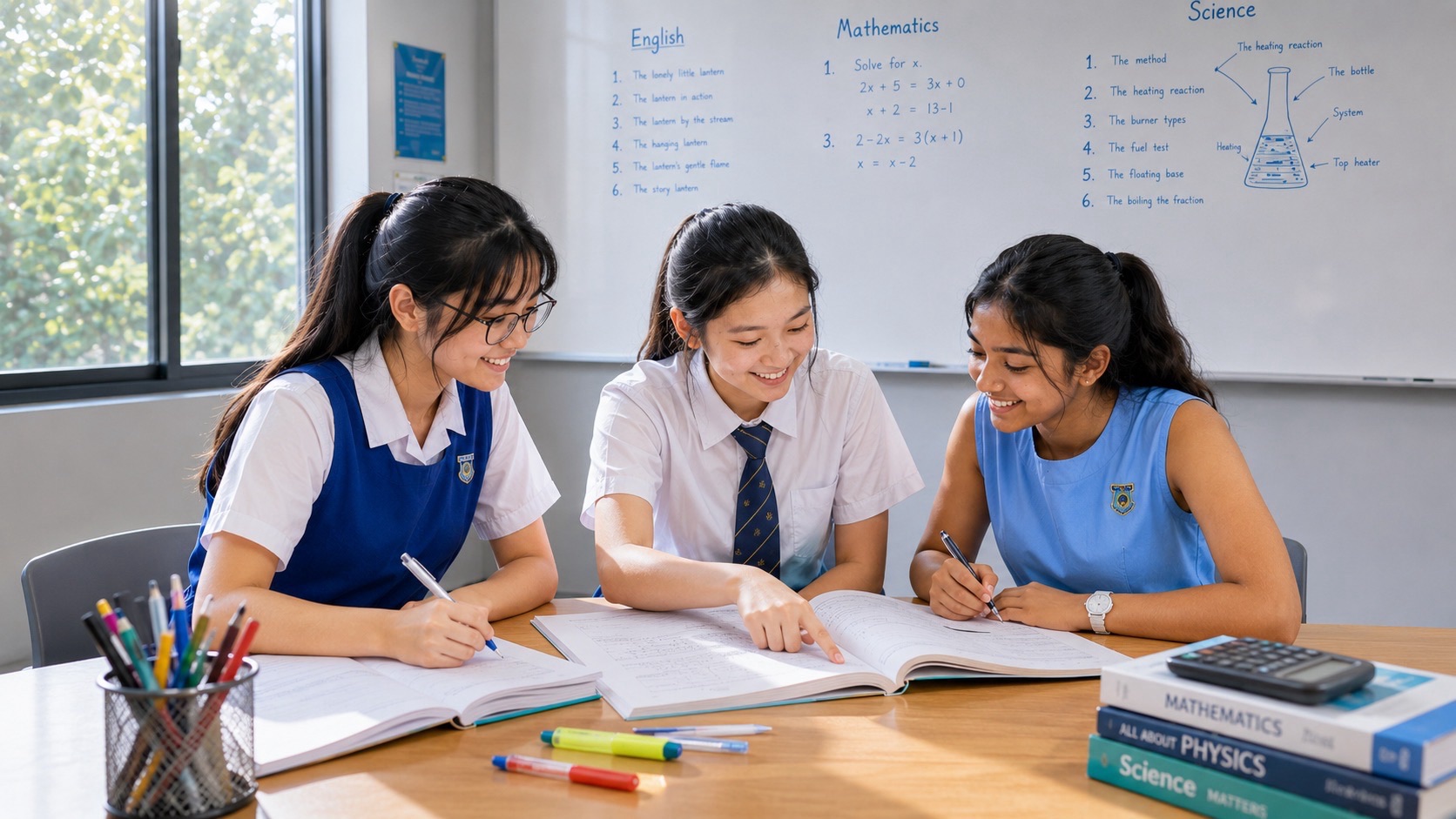
A three-student English group gives space for individual first attempts before discussion. Learners may choose identical wrong answers for different reasons, so the tutor asks each one to explain the method. This prevents the quickest speaker’s interpretation from becoming apparent understanding for everyone else.
Small-group attention is valuable only when it changes teaching decisions. Shared instruction can be followed by individual correction, a short independent application and appropriately different continuation work. Parents should ask what their child could do without prompts rather than assume class size alone guarantees progress.
The real subject-level framework
G1, G2 and G3 are General subject levels under Singapore’s Full Subject-Based Banding. From 2027 the Singapore-Cambridge SEC is the common qualification recording each examined subject and its level. It is not a fourth English level. For school candidates, English Language is listed as K100 at G1, K200 at G2 and K300 at G3.
For this G2 guide, G2 English Language K200 includes comprehension with summary and language-effect demands, situational and continuous writing, listening and planned oral response with spoken interaction. The tutor should follow the applicable school stage and syllabus rather than impose a generic paper. Use the SEAB SEC overview and the official 2027 listings for G1, G2 and G3. The student’s school remains the source for their actual subject offering. We do not represent a generic classroom illustration as an official paper.
Read the question before the passage again
Identify, explain, infer, compare and evaluate do different jobs. A student can understand most of a passage and still answer a neighbouring question because its instruction was not recognised. We practise stating the demanded operation in ordinary language before searching for an appropriate clue.
Two questions about one paragraph can reveal the distinction. One asks for what happened, another for why it happened. The learner compares the information each requires and applies the same reading habit to a new paragraph. The objective is deliberate selection rather than repeated scanning without a purpose.
Evidence and what it permits
An explicit historical date can be reported directly. A fictional character’s motive usually requires supporting clues. A planning intention does not automatically establish a completed outcome. We teach learners to recognise these different evidential statuses and choose a response that stays within the source’s limits.
The tutor asks which word or event supports the claim and why. A copied quotation may be accurate but insufficient if the question asks for explanation. We complete the reasoning link, then replace the passage so the student must make the decision without relying on the earlier answer.
Matilda is a district with a documented history
HDB’s Punggol Town Design Guide identifies Matilda District and describes a community street, an urban verandah concept and green avenues along Sumang Lane and Sumang Crescent. These planning descriptions should not be mistaken for proof that every illustrated facility is completed and operating. A district plan and a current access notice answer different questions.
URA’s Matilda House conservation record identifies the historic bungalow at 78 Punggol Walk. It was built in 1902 and gazetted for conservation in 2000. The National Heritage Board’s Punggol history describes its later private adaptive reuse. Public historical interest is not permission to enter restricted property. This distinction is useful for authentic English source reading.
A small Matilda source comparison
Imagine a classroom question asking when the building was constructed and why an urban walkway was proposed. The historical record answers the first, while the district design guide helps explain the second. Neither source proves that all residents have the same experience today. Students learn to select the document that can answer the question they actually have.
For G2 English, the complexity of the response changes with the syllabus. A learner may first match words to dates, then explain a source’s purpose, or later evaluate the limits of a broad claim. The source-reading habit remains the same: distinguish the stated detail from a reasoned interpretation and a claim needing further verification.
Write for the reader in front of you
A G2 writer must connect a feature with its relevance to the intended reader. In discussion, we teach a focused claim, an explanation of how it works and an example that supports rather than replaces the reasoning. A concession is useful when it addresses a real limitation, not when it is inserted mechanically. A helpful plan begins with the recipient, the job of the message and the necessary information. A narrative and a recommendation need different movements; one fixed introduction cannot serve every prompt.
After drafting we identify the job of each sentence. Does it state the point, add a reason, offer relevant evidence or bring the message to a useful close? Repeated lines can be shortened, unsupported details removed and missing requirements added. Once the learner understands these functions, visible scaffolds are gradually withdrawn.
Grammar as a relationship between ideas
A grammar correction should protect the intended meaning. Agreement identifies the main subject, reference shows who acted, tense locates the event and connectors indicate cause or contrast. The same mistake can recur in longer writing even when a pupil answers a short rule exercise correctly.
We choose the most consequential recurring error in the child’s actual script, model it through contrasting sentences and ask for an explanation of the correction. The learner later revises another example without a hint. A correct copied sentence is the first step; independent control is the teaching objective.
Vocabulary that earns its place
Words such as built, restored, conserved and opened carry different historical claims. Likewise, designed to, expected to and guaranteed are not synonyms. Replacing a familiar word with an impressive expression can reduce accuracy if it changes the source’s time or certainty.
A useful vocabulary record includes contextual meaning, a natural phrase and a new sentence. We revisit the word after a delay and ask why a nearby alternative would be less suitable. The goal is precise use in writing and speaking, not merely the ability to recognise a definition on a list.
Listening for the final meaning
Spoken information can change. A speaker may first suggest a location and later confirm another, or add an exception after stating a general instruction. A student who stops listening at the first plausible answer may miss the decisive part of the message.
We practise identifying what kind of information the question needs and attending to revision markers. After correcting one example, another recording tests whether the listener has learned to track suggestion, condition and final agreement. Hearing the familiar answer again is not enough to establish transfer.
Oral work that responds
undefined. We encourage a direct position with one useful reason and a specific example, while preserving room to adapt when the next question changes the audience or condition. Memorised speeches can help with preparation but cannot anticipate every follow-up.
The tutor allows the pupil to finish an idea before addressing a carefully selected issue: relevance, supporting detail, clarity or recovery after hesitation. Quiet learners need not perform an artificial personality. Speaking well means answering the question and helping a listener follow the intended point.
The Fencing Method in English
Our Fencing Method begins with one secure operation and adds a challenge. An accurate sentence gains a reason; a reason gains evidence; a paragraph gains a condition or a different audience. If meaning deteriorates with the addition, we repair that specific layer before increasing complexity again.
The fence is a temporary teaching support, not a permanent limit. A G2 learner should gradually face less familiar language and more demanding tasks while retaining control. The tutor explains why a new challenge matters instead of choosing harder material solely because it looks impressive.
What ninety minutes can accomplish
A typical small-group tutorial opens with an independent retrieval task and review of recent schoolwork. We compare a small number of carefully chosen examples, teach the missing decision and guide the learner through a short attempt. Prompts are then removed for a changed text or writing prompt.
A related oral or listening task may bring the same principle into another form. The final review records what worked independently and what should be practised briefly before the next lesson. The ninety minutes are not divided mechanically among every component; the balance responds to the learner’s evidence.
Four contact points across a week
The lesson is the first contact with a method. A second contact asks the learner to recall it without the original model, a third applies it to changed material and a fourth tests it cold before the next class. These are short opportunities for retrieval, not four extra tuition appointments.
A manageable home task can be brief yet intellectually useful. We prefer one honest unassisted paragraph to an extensive response rewritten by adults. Parents can ask which decision changed, then let the tutor see the original work. Homework, co-curricular commitments, sleep and reading for enjoyment remain part of a sustainable week.
The personal error ledger
A useful correction record has an example, a reason it failed and a next-time checkpoint. A vague note such as be careful does not direct the student when a similar problem appears. A precise note might say check the requested number of reasons or preserve intended when paraphrasing.
After several days the learner tries another task where the same issue could arise. If the error returns, we revisit the explanation or a missing prerequisite. If the skill holds under unfamiliar conditions, the tutor can shift attention. The ledger documents decisions becoming stronger, not a permanent list of faults.
Three pathways, not one prescription
Repair isolates a missing prerequisite and reconnects it to current school demands. Stabilisation varies the text and working conditions to make correct performance repeatable. Extension introduces ambiguity, greater judgement or more demanding audiences once the base is stable.
For G2, these pathways can coexist across components. A student may need repair in sentence structure and extension in oral reasoning. The right exercise is chosen from the work, not the reputation of the level or a generic description of a high-ability or low-ability learner.
Digital tools must not write the diagnostic
An assisted draft may sound smooth while changing a qualification, inventing a fact or hiding the learner’s personal planning. For independent diagnosis, the tutor needs to know what the student can compose without automatic rewriting or an adult-supplied outline.
Digital tools can be discussed in a critical comparison exercise. Students identify which changes improve communication and which distort the source. When the applicable assessment involves typing, school guidance should inform the practice environment. The objective remains language skill available without external support.
Travel from Matilda to the centre
Matilda includes homes around Punggol Field, Sumang Lane and Sumang Crescent. Soo Teck LRT (PW7) on the Punggol West Loop can be an option for some households. From Punggol MRT, one rail route takes the North East Line to Little India before transferring to the Downtown Line for Sixth Avenue.
Check the SBS Transit network map and current services, and plan from the family’s actual address. The teaching centre is 8 Fourth Avenue, Singapore 268674, near Sixth Avenue MRT, not a Matilda outlet. Walking, waiting and transfers must fit the student’s school schedule and rest.
How to measure change fairly
Compare an early unaided attempt with later unfamiliar work at a suitable level. A mark is useful, but the learner’s decisions explain whether progress is becoming dependable. Look for more accurate question interpretation, better textual support, clearer expression and improved correction without a prompt.
For G2, a useful sign is an unseen inference with clear textual support and a concise summary preserving the conditions of the source. If progress remains uncertain, the tutor should revise the diagnosis or select a better transfer test rather than promise a fixed grade after a set number of sessions. Families deserve an honest account of what is secure and what needs further work.
Parents as supporters, not ghostwriters
Parents can protect practice time and ask the student to explain a question, but should not routinely replace every weak sentence with adult prose. Such rewriting can conceal what the learner can do. Visible mistakes on an original attempt provide better diagnostic information than an attractive page with unknown assistance.
An interesting heritage text or neighbourhood notice can prompt informal conversation without becoming an examination every evening. Children should still have opportunities to read out of curiosity. Tuition is one part of a student’s wider learning life, and the class arrangement should respect the time required for schoolwork, activities and rest.
Fourteen worked G2 English decisions in Matilda
These are original teaching situations rather than official examination questions, predictions or invitations to enter private premises. The purpose of each is to reveal an error mechanism and show how a new independent task could test the correction.
1. Compare two official sources
The task. URA explains conservation history while HDB describes Matilda District design intentions. We ask the learner to explain what the question requires and to attempt the response independently before a model is shown. That initial decision is valuable evidence, whether or not the first answer is successful.
The error. The learner says both are advertisements without analysing purpose. Rather than tell the student simply to try harder, we identify whether the problem concerns reading the task, choosing evidence, making an inference or expressing the intended idea. That difference changes what should be taught.
Repair and transfer. Compare audience, time orientation and evidential role, then use a new pair of texts. The tutor checks the explanation through a fresh situation with altered surface details. The goal is a decision the learner can select later without being told to use the same rule again.
2. Intended does not mean achieved
The task. A planning note says a public space is intended to support community interaction. We ask the learner to explain what the question requires and to attempt the response independently before a model is shown. That initial decision is valuable evidence, whether or not the first answer is successful.
The error. The student paraphrases it as proof of increased interaction. Rather than tell the student simply to try harder, we identify whether the problem concerns reading the task, choosing evidence, making an inference or expressing the intended idea. That difference changes what should be taught.
Repair and transfer. Keep purpose separate from measured outcome and test with another policy source. The tutor checks the explanation through a fresh situation with altered surface details. The goal is a decision the learner can select later without being told to use the same rule again.
3. An inferred emotion
The task. An imagined narrator stops beside a familiar former landmark. We ask the learner to explain what the question requires and to attempt the response independently before a model is shown. That initial decision is valuable evidence, whether or not the first answer is successful.
The error. The answer invents a childhood story the passage never provides. Rather than tell the student simply to try harder, we identify whether the problem concerns reading the task, choosing evidence, making an inference or expressing the intended idea. That difference changes what should be taught.
Repair and transfer. Infer possible reflection from the action, then qualify the claim appropriately. The tutor checks the explanation through a fresh situation with altered surface details. The goal is a decision the learner can select later without being told to use the same rule again.
4. A thread of connection
The task. A fictional description calls a sheltered route a thread linking courtyards. We ask the learner to explain what the question requires and to attempt the response independently before a model is shown. That initial decision is valuable evidence, whether or not the first answer is successful.
The error. The learner names metaphor but never explains its effect. Rather than tell the student simply to try harder, we identify whether the problem concerns reading the task, choosing evidence, making an inference or expressing the intended idea. That difference changes what should be taught.
Repair and transfer. Explain the image of continuity and show how the word supports the writer’s purpose. The tutor checks the explanation through a fresh situation with altered surface details. The goal is a decision the learner can select later without being told to use the same rule again.
5. Compare two priorities
The task. Two fictional residents support conservation for family memory and architectural merit. We ask the learner to explain what the question requires and to attempt the response independently before a model is shown. That initial decision is valuable evidence, whether or not the first answer is successful.
The error. The learner retells both speeches without naming the contrast. Rather than tell the student simply to try harder, we identify whether the problem concerns reading the task, choosing evidence, making an inference or expressing the intended idea. That difference changes what should be taught.
Repair and transfer. Use one shared basis and support both reasons with appropriate details. The tutor checks the explanation through a fresh situation with altered surface details. The goal is a decision the learner can select later without being told to use the same rule again.
6. Summary selection
The task. A report describes transport problems alongside unrelated heritage anecdotes. We ask the learner to explain what the question requires and to attempt the response independently before a model is shown. That initial decision is valuable evidence, whether or not the first answer is successful.
The error. The task asks for transport difficulties and remedies, but the learner includes memorable history. Rather than tell the student simply to try harder, we identify whether the problem concerns reading the task, choosing evidence, making an inference or expressing the intended idea. That difference changes what should be taught.
Repair and transfer. Select by question focus and group problems with relevant responses. The tutor checks the explanation through a fresh situation with altered surface details. The goal is a decision the learner can select later without being told to use the same rule again.
7. Preserve postponed
The task. A school visit is postponed because permission cannot be obtained in time. We ask the learner to explain what the question requires and to attempt the response independently before a model is shown. That initial decision is valuable evidence, whether or not the first answer is successful.
The error. The paraphrase says it was cancelled through lack of interest. Rather than tell the student simply to try harder, we identify whether the problem concerns reading the task, choosing evidence, making an inference or expressing the intended idea. That difference changes what should be taught.
Repair and transfer. Keep the status and cause accurate, then practise with a changed notice. The tutor checks the explanation through a fresh situation with altered surface details. The goal is a decision the learner can select later without being told to use the same rule again.
8. A relevant recommendation
The task. A school council wants a heritage activity requiring no private-site entry. We ask the learner to explain what the question requires and to attempt the response independently before a model is shown. That initial decision is valuable evidence, whether or not the first answer is successful.
The error. The student recommends entering a restricted clubhouse. Rather than tell the student simply to try harder, we identify whether the problem concerns reading the task, choosing evidence, making an inference or expressing the intended idea. That difference changes what should be taught.
Repair and transfer. Suggest public-record reading and explain why it meets the stated constraints. The tutor checks the explanation through a fresh situation with altered surface details. The goal is a decision the learner can select later without being told to use the same rule again.
9. A valid concession
The task. The question asks if every conserved building must allow unrestricted public visits. We ask the learner to explain what the question requires and to attempt the response independently before a model is shown. That initial decision is valuable evidence, whether or not the first answer is successful.
The error. The essay ignores ownership and maintenance while claiming universal access. Rather than tell the student simply to try harder, we identify whether the problem concerns reading the task, choosing evidence, making an inference or expressing the intended idea. That difference changes what should be taught.
Repair and transfer. Distinguish public learning from automatic entry rights and develop a defensible position. The tutor checks the explanation through a fresh situation with altered surface details. The goal is a decision the learner can select later without being told to use the same rule again.
10. Audience and register
The task. A request for official information is written like an advertisement. We ask the learner to explain what the question requires and to attempt the response independently before a model is shown. That initial decision is valuable evidence, whether or not the first answer is successful.
The error. The purpose and desired reply disappear beneath persuasive phrasing. Rather than tell the student simply to try harder, we identify whether the problem concerns reading the task, choosing evidence, making an inference or expressing the intended idea. That difference changes what should be taught.
Repair and transfer. Use direct courteous language and reserve promotional tone for a different audience. The tutor checks the explanation through a fresh situation with altered surface details. The goal is a decision the learner can select later without being told to use the same rule again.
11. Quantifiers matter
The task. An essay says all Matilda families use Soo Teck LRT. We ask the learner to explain what the question requires and to attempt the response independently before a model is shown. That initial decision is valuable evidence, whether or not the first answer is successful.
The error. The writer generalises from one household without route evidence. Rather than tell the student simply to try harder, we identify whether the problem concerns reading the task, choosing evidence, making an inference or expressing the intended idea. That difference changes what should be taught.
Repair and transfer. Qualify travel statements because home addresses and transport choices vary. The tutor checks the explanation through a fresh situation with altered surface details. The goal is a decision the learner can select later without being told to use the same rule again.
12. Listen through options
The task. A dialogue proposes two times and confirms a third. We ask the learner to explain what the question requires and to attempt the response independently before a model is shown. That initial decision is valuable evidence, whether or not the first answer is successful.
The error. The student records the earliest time. Rather than tell the student simply to try harder, we identify whether the problem concerns reading the task, choosing evidence, making an inference or expressing the intended idea. That difference changes what should be taught.
Repair and transfer. Track suggestion, objection and agreement rather than treating every number alike. The tutor checks the explanation through a fresh situation with altered surface details. The goal is a decision the learner can select later without being told to use the same rule again.
13. Responsive spoken opinion
The task. The examiner asks whether digital archives can replace physical visits. We ask the learner to explain what the question requires and to attempt the response independently before a model is shown. That initial decision is valuable evidence, whether or not the first answer is successful.
The error. The learner repeats a memorised speech on computers. Rather than tell the student simply to try harder, we identify whether the problem concerns reading the task, choosing evidence, making an inference or expressing the intended idea. That difference changes what should be taught.
Repair and transfer. Compare forms of evidence and access with a supported view, then answer a changed follow-up. The tutor checks the explanation through a fresh situation with altered surface details. The goal is a decision the learner can select later without being told to use the same rule again.
14. Grammar of contrast
The task. The student writes Although the house was built in 1902, it was conserved in 2000. We ask the learner to explain what the question requires and to attempt the response independently before a model is shown. That initial decision is valuable evidence, whether or not the first answer is successful.
The error. The connector suggests an unexplained contrast rather than a straightforward time sequence. Rather than tell the student simply to try harder, we identify whether the problem concerns reading the task, choosing evidence, making an inference or expressing the intended idea. That difference changes what should be taught.
Repair and transfer. Choose a suitable chronological relationship before joining facts. The tutor checks the explanation through a fresh situation with altered surface details. The goal is a decision the learner can select later without being told to use the same rule again.
Frequently asked questions
Is eduKateSG physically located in Matilda?
No. Lessons described here are held near Sixth Avenue MRT at 8 Fourth Avenue, Singapore 268674. Matilda identifies the residential families served by this guide.
What should a G2 English learner practise first?
It depends on the actual school scripts. A possible issue is that G2 responses may quote the right line yet leave the inference unexplained. Summary can also become inaccurate when some is changed into all or intended into guaranteed. The tutor should inspect original work before deciding on a targeted correction.
Does SEC create a fourth English difficulty?
No. The SEC is the qualification that records examined subjects at G1, G2 or G3, as appropriate. The student’s school confirms their actual subject level.
How many learners are in the tutorial?
The programme is a premium three-student group, normally ninety minutes weekly. Individual feedback and checks remain important even when content is shared.
Are full examination papers assigned every week?
Not automatically. Timed papers are useful when assessing integration and completion; targeted exercises may be more useful while a crucial operation remains unstable.
Should students memorise model essays?
Models can reveal structure and wording decisions, but the learner should be able to produce a fresh response without copying a rehearsed script.
Can tuition change the official General subject level?
No. Schools and MOE processes govern official offering arrangements. A tutor can build relevant skills but not independently reassign the student’s level.
Does the class visit Matilda House?
No. The history is taught through public records. Conservation and later private adaptive reuse do not establish unrestricted access.
What counts as independent progress?
For G2, look for an unseen inference with clear textual support and a concise summary preserving the conditions of the source on a task that was not already rehearsed, with reduced adult or tutor prompts.
What should be brought to consultation?
Bring original questions, marked work, a recent unaided writing sample and relevant teacher feedback. Mention assistance used in the samples.
Can an already strong learner benefit?
Yes, if a diagnostic reveals a worthwhile extension such as more nuanced interpretation, better task adaptation or clearer self-editing.
Are examination grades guaranteed?
No fixed grade can responsibly be guaranteed. Review evidence across unfamiliar tasks and revise the plan when a method has not transferred.
Official references and Matilda learning guides
Singapore English Tuition by Area Index · English Learning Hub · SEC overview · 2027 G1 listing · 2027 G2 listing · 2027 G3 listing. Official sources should govern examination information.
URA Matilda House conservation record · HDB Punggol Town Design Guide · A Student’s Life | Matilda · Matilda Court · Matilda Edge · Matilda Sundeck. These provide factual and neighbourhood context, not classroom affiliation.
G1 English Tutorials | Matilda · G2 English Tutorials | Matilda · G3 English Tutorials | Matilda · SEC English Tutorials | Matilda. Select the guide that matches the student’s current level or qualification-planning question.
The preceding guide in this English series is G2 English Tutorials | Waterway East. Matilda and Waterway East are distinct Punggol locality guides and should not be treated as duplicate geographic names.
Arrange a G2 English parent–student consultation
Better G2 English is visible when an important decision can be made on unfamiliar work without the tutor naming the method. We aim to build evidence-led inference, purposeful summary, accurate language effect, audience-aware writing and responsive speech through a careful diagnosis, explicit instruction, retrieval and transfer. Classes are three-student, ninety-minute weekly tutorials at 8 Fourth Avenue, Singapore 268674, near Sixth Avenue MRT, by arrangement.
Contact eduKate Singapore · Request a G2 English consultation via WhatsApp. Confirm placement, fees and scheduling directly. Properly taught kids shine a bright light into the future.