
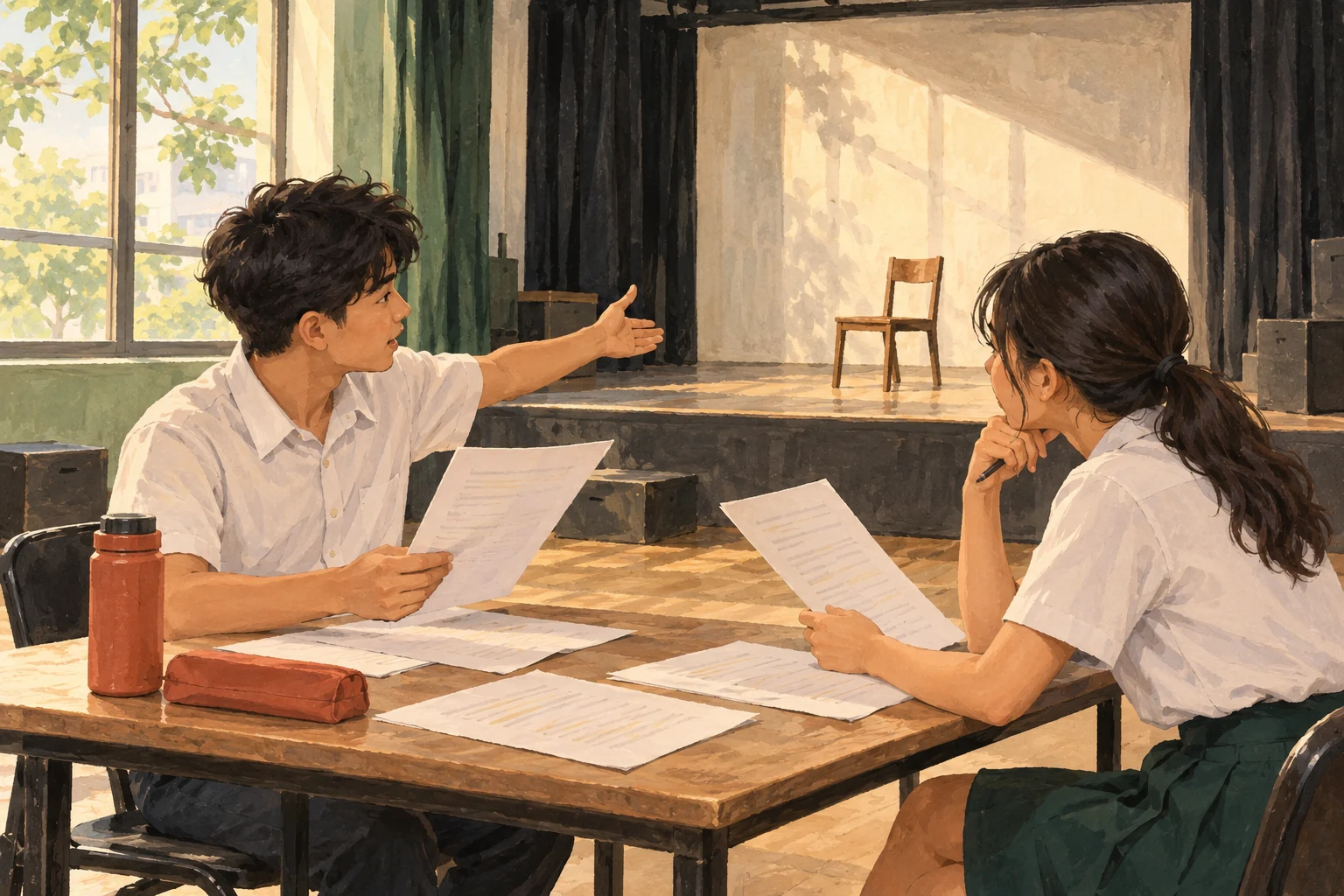
Did you know? A learner preparing for G3 Literature in English does not necessarily need longer essays or harder-sounding quotations. They need to see more in the text: how a single image, pause, contrast or change in a character’s voice can shape meaning, and how an interpretation can be supported without pretending that literature has only one possible answer. That is the central bridge from G2 Literature in English K228 to G3 K331 under the 2027 Singapore-Cambridge Secondary Education Certificate (SEC).
This is a learning-readiness guide within Singapore’s Full Subject-Based Banding (Full SBB) environment. Literature is an elective examination subject, and a late move from G2 to G3 is not automatically available. Schools determine their upper-secondary offerings, prerequisite rules, prescribed texts and timetable. A private tutor may support close reading and writing but cannot change the child’s official G-level or register an SEC examination subject.
Before buying an anthology, ask for the exact school-approved subject. Standalone G2 Literature in English K228 differs from the Combined Humanities subject pairing Social Studies with Literature. Likewise, ordinary English Language G2 or G3 is not the same examination as Literature in English. These titles matter because the texts, papers and assessment rules are not interchangeable.
The surprising 2027 fact: G2 and G3 share major paper timings
| 2027 SEC feature | G2 Literature K228 | G3 Literature K331 |
|---|---|---|
| Paper 1 | Prose and Unseen Poetry: 1 hour 40 minutes, 50% | Prose and Unseen Poetry: 1 hour 40 minutes, 50% |
| Paper 2 | Drama: 1 hour 30 minutes, 50% | Drama: 1 hour 30 minutes, 50% |
| Total | Four answers over separate sittings; 3 hours 10 minutes | Four answers over separate sittings; 3 hours 10 minutes |
| Prose section | Answer one question on the selected prescribed prose text | Answer one question on the selected prescribed prose text |
| Unseen poetry | Select and answer one of two unseen-poetry questions | Select and answer one of two unseen-poetry questions |
| Drama | Answer the required passage-based and essay questions on prescribed drama | Answer the required passage-based and essay questions on prescribed drama |
These structures are confirmed in SEAB’s 2027 G2 Literature K228 syllabus and its 2027 G3 Literature K331 syllabus. Both require close reading, attention to form, structure and language, coherent personal response and textual evidence. The difference is not a longer G3 examination. Stronger preparation means increasingly nuanced interpretation and a secure grasp of the specific syllabus and texts taught by the receiving school.
Each syllabus also has a prescribed-text list. Students must confirm which prose and drama texts their school is teaching for their examination year. A quotation memorised from a G2 class’s play may be useless if a proposed G3 class studies another play. Do not confuse reading independently for enjoyment with formally changing set texts.
The five skills to diagnose in a Literature bridge
| Skill | Question to ask the student | What stronger reading looks like |
|---|---|---|
| Literal comprehension | What is happening in this scene or stanza? | Accurately describes the situation without inventing events |
| Inference | What does a detail suggest about a speaker? | Uses a specific word or action to support a careful claim |
| Language and imagery | Why might the writer choose this image or phrase? | Connects technique to an effect rather than listing terms |
| Structure and dramatic effect | What changes between the beginning and end? | Tracks a shift in mood, conflict, pacing or perspective |
| Personal response | Could another interpretation fit the same detail? | Considers a plausible alternative and justifies a preference |
A weak essay may include the terms ‘metaphor’, ‘irony’ and ‘symbolism’ repeatedly without saying what they do. A stronger answer might use simpler vocabulary but trace how a detail influences the reader’s judgement of a character. The bridge should diagnose this actual reasoning gap before adding more memorisation.
A short original poetry example to practise inference
Consider this four-line fictional practice poem, written for this guide rather than quoted from a prescribed work:
The hallway held the evening light.
Her shoes stayed by the open door.
The clock made promises in ticks.
She set one place, then set one more.
A literal response says there is an open door, a clock and an extra place at a table. A cautious inference is that the speaker or subject may be waiting for someone, supported by the clock and the second place setting. More subtle analysis asks why the clock is said to make ‘promises’. The phrase personifies time, perhaps drawing attention to hope that an arrival will happen, but it could also carry uncertainty.
There is no need to claim that the absent person has died, or that the poet experienced a particular event. Those claims are not supported by this miniature passage. A disciplined Literature answer distinguishes what is visible, what is implied and what remains uncertain. That is the habit a G3-ready reader should develop.
A four-week close-reading preparation plan
Week 1: Explain evidence before using literary jargon
Choose a short unfamiliar prose passage and a short original or teacher-approved poem. Ask for three answers: what happens, what one phrase suggests and why the phrase supports that reading. Insist on accuracy before sophistication. If the child misreads who speaks, where the action occurs or what is being described, correct the basic comprehension first.
Keep a two-column notebook. The left column contains the exact textual detail; the right explains its possible effect on meaning. A quotation without explanation is incomplete, but an imaginative opinion without evidence is equally weak.
Week 2: Build paragraphs around a defensible claim
Give one question about a character’s feelings or the effect of an image. Write a paragraph with a focused claim, one or two relevant details and an explanation of how the writing produces that effect. End by relating the analysis to the question. Avoid opening every answer with a memorised introduction that could fit any literary text.
Revise the paragraph by asking: Which word is doing the analytical work? Is the inference too certain? Have we repeated the quotation in different words without explaining the writer’s choice? A short precise paragraph should be the benchmark before longer essays.
Week 3: Read drama as performance, not printed dialogue alone
With a teacher-approved scene, identify who wants what, where tension changes and how silence or movement could affect an audience. Ask the learner to try reading a line with two plausible tones and discuss which the surrounding dialogue supports. A stage direction is evidence, not decoration. This is especially useful for Paper 2, which includes passage-based and essay responses on the set drama text.
Do not invent staging directions as though they came from the playwright. Students can propose a performance interpretation, but should distinguish that proposal from what the printed text actually specifies.
Week 4: Integrate prose, unseen poetry and drama
Use one small question from each area and time the planning rather than forcing full examination conditions too soon. The child should identify the command word, locate the evidence, choose a line of interpretation and anticipate a plausible alternative. Compare the work with Week 1: is there less plot retelling, more thoughtful language analysis and clearer connection between evidence and conclusion?
Four weeks is an example of a family preparation routine, not a formal school transfer period. A child who changes Literature levels may need extensive catch-up work on different prescribed texts, or the school may not be able to offer the change once the course has started.
Unseen poetry: two readings can be defensible without being equally strong
Students sometimes fear that an unseen poem has a hidden answer that only the examiner knows. The task is to make a reasonable interpretation grounded in the poem’s language and structure. Two views can be plausible, but one may account for more details or contradictions. In the sample poem, ‘waiting with hope’ might account for the extra place and the clock; ‘complete indifference’ would be harder to reconcile with those details.
Teach the child to use appropriate degrees of confidence: suggests, implies, perhaps, seems to. These words should not be inserted mechanically. They help keep an interpretation proportionate to the textual evidence.
Drama answers need the whole scene, not just a memorable quote
A student who remembers one striking dramatic line may be tempted to build an entire essay around it. A more coherent response examines the relationship between characters, the situation that leads to the line, changes within the exchange and the audience’s possible understanding. A dramatic effect often emerges from contrasts across several lines or actions.
A useful revision method is a scene map: starting conflict, turning point, new information, character response and unresolved question. It allows a pupil to organise their understanding rather than copy lengthy passages. The real prescribed drama text and any restrictions on textual materials must be checked with the school.
Five errors that waste Literature study time
- Memorising long quotations without understanding the scene or the effect of the language.
- Using a list of literary devices as if naming devices automatically constitutes analysis.
- Retelling the entire plot when the question asks how a character’s attitude changes.
- Making claims about the writer’s biography or a character’s hidden history without evidence.
- Treating every interpretation as equally convincing even when some contradict the text.
Do you know? Frequently asked parent questions
Is unseen poetry compulsory at G2 and G3 in 2027?
Yes. Both published standalone Literature syllabuses include Unseen Poetry within Paper 1, alongside prose. Students choose one of two unseen-poetry questions in that section. This is distinct from the rules for the Combined Humanities Literature component.
Is the G3 Literature examination longer?
No. For 2027, both K228 and K331 have two papers totalling three hours ten minutes with the same major durations and weightings. Content, set texts and the quality of response required still need attention.
Can G2 English Language students take G3 Literature?
Different academic subjects can have different G-levels under Full SBB where the school permits, but this particular elective has its own eligibility, availability and reading demands. A G2 English Language level does not by itself confer entitlement to G3 Literature.
Can we use online summaries instead of reading the texts?
Summaries may assist orientation but cannot replace detailed reading. Examination questions require the student to interpret language, structure and scenes, which cannot be learned through plot summaries alone.
Does taking G3 Literature guarantee a particular JC or university pathway?
No. Post-secondary institutions set admission rules and subject prerequisites. Literature develops critical reading and argumentation, but one elective level is not a guaranteed course offer.
A good tutor makes reasoning visible
The unchanged eduKateSG Secondary 1 Mathematics Clementi three-student tutorial reference illustrates a teaching practice in which errors are diagnosed at the precise step and the child must explain a correction. In Literature, the analogous skill is finding where an interpretation stops being supported by the text and improving the reasoning. The immutable source is a Mathematics page and remains unchanged.
For related subject-level preparation, read the G2-to-G3 English Language bridge and the Humanities evidence-based reasoning guide. The official G2 2027 SEC syllabus directory and G3 directory remain the source for examination-year requirements. The best result of this bridge is not a longer essay, but a reader who understands more and can justify what they see.