
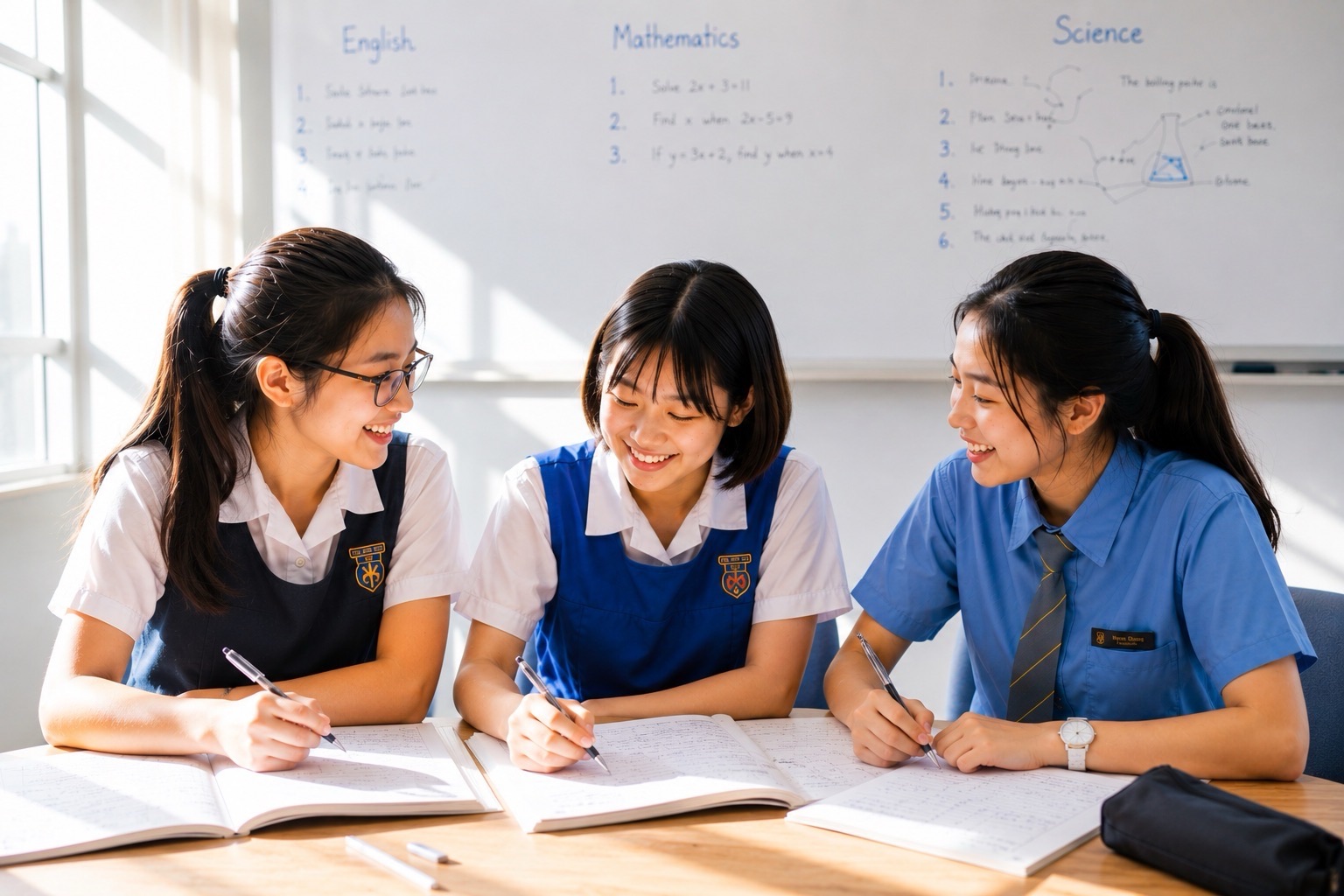
G3 Science Tutorials | Siglap helps families understand how Science learning can become more independent and accurate. A student may remember a formula yet struggle to decide whether an unfamiliar question asks for a total, a rate, a change or an explanation. At eduKateSG, three-student small-group teaching begins with an independent attempt, identifies the earliest incorrect decision and checks the correction in a new context.
Parents searching for G3 Science tuition in Siglap, Science tutors and small-group SEC preparation should first confirm the student’s actual school year, registered subject level and Science combination. G1, G2 and G3 refer to subject levels, not Secondary 1, 2 and 3 respectively. This guide serves Siglap families, but the stated eduKateSG teaching venue is 8 Fourth Avenue, Singapore 268674, near Sixth Avenue MRT, not a separate Siglap classroom.
Siglap Park Connector provides a recognisable local starting point for questions about movement, measurement and scientific observation. Our numerical exercises are fictional paper datasets, not actual temperature, wildlife, transport or water measurements from the neighbourhood. We use familiar places to introduce an idea and unfamiliar tasks to test whether it has been understood.
Forces on one body: A G3 Science Tutorial
The first step in forces on one body is to identify what the question actually measures. Consider an invented dataset with a starting reading of 30 units and an ending reading of 42 units after six minutes. The final reading, the difference of twelve units and the average change of two units per minute are distinct answers. These generic numbers do not themselves establish any specific physical or biological cause. The learner should first name the requested quantity and identify what further evidence is needed.
We next introduce an appropriate Science model for forces on one body from the student’s registered syllabus. One child may read an axis incorrectly, another may choose the wrong denominator and a third may calculate accurately but write a conclusion that the observations cannot support. A useful tutorial distinguishes those needs before prescribing more practice. We connect diagrams, symbols and words so the learner understands what the relationship represents rather than merely remembering an operation.
A changed example alters one relevant condition, such as the time interval, the measured system or the reference quantity. We ask for a prediction before calculating and require the pupil to explain why the result should change. Then the chapter heading and worked solution disappear. An unfamiliar graph, apparatus or table checks whether the child can choose a method without a tutor supplying the first step. This contrast is more informative than repeating a familiar solved problem.
In a three-student class, individual first attempts reveal different mistakes. After a shared explanation, each learner receives a targeted follow-up and completes a fresh question alone. We record whether the corrected decision survives without hints and revisit it after a delay. Guided success is useful, but independent changed-context success gives stronger evidence of durable learning. We avoid promises about grades or the number of papers needed.
Parents can support forces on one body by asking what the value represents, which condition changed and what evidence supports the explanation. An error note naming the first incorrect choice is more actionable than a general judgement that the student is careless. Practice should remain safe, manageable and matched to current schoolwork. No unsupervised chemical handling, electrical work or natural-water sampling is required for these paper exercises.
Resultant acceleration: A G3 Science Tutorial
The first step in resultant acceleration is to identify what the question actually measures. Consider an invented dataset with a starting reading of 31 units and an ending reading of 43 units after six minutes. The final reading, the difference of twelve units and the average change of two units per minute are distinct answers. These generic numbers do not themselves establish any specific physical or biological cause. The learner should first name the requested quantity and identify what further evidence is needed.
We next introduce an appropriate Science model for resultant acceleration from the student’s registered syllabus. One child may read an axis incorrectly, another may choose the wrong denominator and a third may calculate accurately but write a conclusion that the observations cannot support. A useful tutorial distinguishes those needs before prescribing more practice. We connect diagrams, symbols and words so the learner understands what the relationship represents rather than merely remembering an operation.
A changed example alters one relevant condition, such as the time interval, the measured system or the reference quantity. We ask for a prediction before calculating and require the pupil to explain why the result should change. Then the chapter heading and worked solution disappear. An unfamiliar graph, apparatus or table checks whether the child can choose a method without a tutor supplying the first step. This contrast is more informative than repeating a familiar solved problem.
In a three-student class, individual first attempts reveal different mistakes. After a shared explanation, each learner receives a targeted follow-up and completes a fresh question alone. We record whether the corrected decision survives without hints and revisit it after a delay. Guided success is useful, but independent changed-context success gives stronger evidence of durable learning. We avoid promises about grades or the number of papers needed.
Parents can support resultant acceleration by asking what the value represents, which condition changed and what evidence supports the explanation. An error note naming the first incorrect choice is more actionable than a general judgement that the student is careless. Practice should remain safe, manageable and matched to current schoolwork. No unsupervised chemical handling, electrical work or natural-water sampling is required for these paper exercises.
Kinetic energy: A G3 Science Tutorial
The first step in kinetic energy is to identify what the question actually measures. Consider an invented dataset with a starting reading of 32 units and an ending reading of 44 units after six minutes. The final reading, the difference of twelve units and the average change of two units per minute are distinct answers. These generic numbers do not themselves establish any specific physical or biological cause. The learner should first name the requested quantity and identify what further evidence is needed.
We next introduce an appropriate Science model for kinetic energy from the student’s registered syllabus. One child may read an axis incorrectly, another may choose the wrong denominator and a third may calculate accurately but write a conclusion that the observations cannot support. A useful tutorial distinguishes those needs before prescribing more practice. We connect diagrams, symbols and words so the learner understands what the relationship represents rather than merely remembering an operation.
A changed example alters one relevant condition, such as the time interval, the measured system or the reference quantity. We ask for a prediction before calculating and require the pupil to explain why the result should change. Then the chapter heading and worked solution disappear. An unfamiliar graph, apparatus or table checks whether the child can choose a method without a tutor supplying the first step. This contrast is more informative than repeating a familiar solved problem.
In a three-student class, individual first attempts reveal different mistakes. After a shared explanation, each learner receives a targeted follow-up and completes a fresh question alone. We record whether the corrected decision survives without hints and revisit it after a delay. Guided success is useful, but independent changed-context success gives stronger evidence of durable learning. We avoid promises about grades or the number of papers needed.
Parents can support kinetic energy by asking what the value represents, which condition changed and what evidence supports the explanation. An error note naming the first incorrect choice is more actionable than a general judgement that the student is careless. Practice should remain safe, manageable and matched to current schoolwork. No unsupervised chemical handling, electrical work or natural-water sampling is required for these paper exercises.
Work and energy: A G3 Science Tutorial
The first step in work and energy is to identify what the question actually measures. Consider an invented dataset with a starting reading of 33 units and an ending reading of 45 units after six minutes. The final reading, the difference of twelve units and the average change of two units per minute are distinct answers. These generic numbers do not themselves establish any specific physical or biological cause. The learner should first name the requested quantity and identify what further evidence is needed.
We next introduce an appropriate Science model for work and energy from the student’s registered syllabus. One child may read an axis incorrectly, another may choose the wrong denominator and a third may calculate accurately but write a conclusion that the observations cannot support. A useful tutorial distinguishes those needs before prescribing more practice. We connect diagrams, symbols and words so the learner understands what the relationship represents rather than merely remembering an operation.
A changed example alters one relevant condition, such as the time interval, the measured system or the reference quantity. We ask for a prediction before calculating and require the pupil to explain why the result should change. Then the chapter heading and worked solution disappear. An unfamiliar graph, apparatus or table checks whether the child can choose a method without a tutor supplying the first step. This contrast is more informative than repeating a familiar solved problem.
In a three-student class, individual first attempts reveal different mistakes. After a shared explanation, each learner receives a targeted follow-up and completes a fresh question alone. We record whether the corrected decision survives without hints and revisit it after a delay. Guided success is useful, but independent changed-context success gives stronger evidence of durable learning. We avoid promises about grades or the number of papers needed.
Parents can support work and energy by asking what the value represents, which condition changed and what evidence supports the explanation. An error note naming the first incorrect choice is more actionable than a general judgement that the student is careless. Practice should remain safe, manageable and matched to current schoolwork. No unsupervised chemical handling, electrical work or natural-water sampling is required for these paper exercises.
Graph gradient and area: A G3 Science Tutorial
The first step in graph gradient and area is to identify what the question actually measures. Consider an invented dataset with a starting reading of 34 units and an ending reading of 46 units after six minutes. The final reading, the difference of twelve units and the average change of two units per minute are distinct answers. These generic numbers do not themselves establish any specific physical or biological cause. The learner should first name the requested quantity and identify what further evidence is needed.
We next introduce an appropriate Science model for graph gradient and area from the student’s registered syllabus. One child may read an axis incorrectly, another may choose the wrong denominator and a third may calculate accurately but write a conclusion that the observations cannot support. A useful tutorial distinguishes those needs before prescribing more practice. We connect diagrams, symbols and words so the learner understands what the relationship represents rather than merely remembering an operation.
A changed example alters one relevant condition, such as the time interval, the measured system or the reference quantity. We ask for a prediction before calculating and require the pupil to explain why the result should change. Then the chapter heading and worked solution disappear. An unfamiliar graph, apparatus or table checks whether the child can choose a method without a tutor supplying the first step. This contrast is more informative than repeating a familiar solved problem.
In a three-student class, individual first attempts reveal different mistakes. After a shared explanation, each learner receives a targeted follow-up and completes a fresh question alone. We record whether the corrected decision survives without hints and revisit it after a delay. Guided success is useful, but independent changed-context success gives stronger evidence of durable learning. We avoid promises about grades or the number of papers needed.
Parents can support graph gradient and area by asking what the value represents, which condition changed and what evidence supports the explanation. An error note naming the first incorrect choice is more actionable than a general judgement that the student is careless. Practice should remain safe, manageable and matched to current schoolwork. No unsupervised chemical handling, electrical work or natural-water sampling is required for these paper exercises.
Parallel circuits: A G3 Science Tutorial
The first step in parallel circuits is to identify what the question actually measures. Consider an invented dataset with a starting reading of 35 units and an ending reading of 47 units after six minutes. The final reading, the difference of twelve units and the average change of two units per minute are distinct answers. These generic numbers do not themselves establish any specific physical or biological cause. The learner should first name the requested quantity and identify what further evidence is needed.
We next introduce an appropriate Science model for parallel circuits from the student’s registered syllabus. One child may read an axis incorrectly, another may choose the wrong denominator and a third may calculate accurately but write a conclusion that the observations cannot support. A useful tutorial distinguishes those needs before prescribing more practice. We connect diagrams, symbols and words so the learner understands what the relationship represents rather than merely remembering an operation.
A changed example alters one relevant condition, such as the time interval, the measured system or the reference quantity. We ask for a prediction before calculating and require the pupil to explain why the result should change. Then the chapter heading and worked solution disappear. An unfamiliar graph, apparatus or table checks whether the child can choose a method without a tutor supplying the first step. This contrast is more informative than repeating a familiar solved problem.
In a three-student class, individual first attempts reveal different mistakes. After a shared explanation, each learner receives a targeted follow-up and completes a fresh question alone. We record whether the corrected decision survives without hints and revisit it after a delay. Guided success is useful, but independent changed-context success gives stronger evidence of durable learning. We avoid promises about grades or the number of papers needed.
Parents can support parallel circuits by asking what the value represents, which condition changed and what evidence supports the explanation. An error note naming the first incorrect choice is more actionable than a general judgement that the student is careless. Practice should remain safe, manageable and matched to current schoolwork. No unsupervised chemical handling, electrical work or natural-water sampling is required for these paper exercises.
Series circuits: A G3 Science Tutorial
The first step in series circuits is to identify what the question actually measures. Consider an invented dataset with a starting reading of 36 units and an ending reading of 48 units after six minutes. The final reading, the difference of twelve units and the average change of two units per minute are distinct answers. These generic numbers do not themselves establish any specific physical or biological cause. The learner should first name the requested quantity and identify what further evidence is needed.
We next introduce an appropriate Science model for series circuits from the student’s registered syllabus. One child may read an axis incorrectly, another may choose the wrong denominator and a third may calculate accurately but write a conclusion that the observations cannot support. A useful tutorial distinguishes those needs before prescribing more practice. We connect diagrams, symbols and words so the learner understands what the relationship represents rather than merely remembering an operation.
A changed example alters one relevant condition, such as the time interval, the measured system or the reference quantity. We ask for a prediction before calculating and require the pupil to explain why the result should change. Then the chapter heading and worked solution disappear. An unfamiliar graph, apparatus or table checks whether the child can choose a method without a tutor supplying the first step. This contrast is more informative than repeating a familiar solved problem.
In a three-student class, individual first attempts reveal different mistakes. After a shared explanation, each learner receives a targeted follow-up and completes a fresh question alone. We record whether the corrected decision survives without hints and revisit it after a delay. Guided success is useful, but independent changed-context success gives stronger evidence of durable learning. We avoid promises about grades or the number of papers needed.
Parents can support series circuits by asking what the value represents, which condition changed and what evidence supports the explanation. An error note naming the first incorrect choice is more actionable than a general judgement that the student is careless. Practice should remain safe, manageable and matched to current schoolwork. No unsupervised chemical handling, electrical work or natural-water sampling is required for these paper exercises.
Balanced equations: A G3 Science Tutorial
The first step in balanced equations is to identify what the question actually measures. Consider an invented dataset with a starting reading of 37 units and an ending reading of 49 units after six minutes. The final reading, the difference of twelve units and the average change of two units per minute are distinct answers. These generic numbers do not themselves establish any specific physical or biological cause. The learner should first name the requested quantity and identify what further evidence is needed.
We next introduce an appropriate Science model for balanced equations from the student’s registered syllabus. One child may read an axis incorrectly, another may choose the wrong denominator and a third may calculate accurately but write a conclusion that the observations cannot support. A useful tutorial distinguishes those needs before prescribing more practice. We connect diagrams, symbols and words so the learner understands what the relationship represents rather than merely remembering an operation.
A changed example alters one relevant condition, such as the time interval, the measured system or the reference quantity. We ask for a prediction before calculating and require the pupil to explain why the result should change. Then the chapter heading and worked solution disappear. An unfamiliar graph, apparatus or table checks whether the child can choose a method without a tutor supplying the first step. This contrast is more informative than repeating a familiar solved problem.
In a three-student class, individual first attempts reveal different mistakes. After a shared explanation, each learner receives a targeted follow-up and completes a fresh question alone. We record whether the corrected decision survives without hints and revisit it after a delay. Guided success is useful, but independent changed-context success gives stronger evidence of durable learning. We avoid promises about grades or the number of papers needed.
Parents can support balanced equations by asking what the value represents, which condition changed and what evidence supports the explanation. An error note naming the first incorrect choice is more actionable than a general judgement that the student is careless. Practice should remain safe, manageable and matched to current schoolwork. No unsupervised chemical handling, electrical work or natural-water sampling is required for these paper exercises.
Mole ratios: A G3 Science Tutorial
The first step in mole ratios is to identify what the question actually measures. Consider an invented dataset with a starting reading of 38 units and an ending reading of 50 units after six minutes. The final reading, the difference of twelve units and the average change of two units per minute are distinct answers. These generic numbers do not themselves establish any specific physical or biological cause. The learner should first name the requested quantity and identify what further evidence is needed.
We next introduce an appropriate Science model for mole ratios from the student’s registered syllabus. One child may read an axis incorrectly, another may choose the wrong denominator and a third may calculate accurately but write a conclusion that the observations cannot support. A useful tutorial distinguishes those needs before prescribing more practice. We connect diagrams, symbols and words so the learner understands what the relationship represents rather than merely remembering an operation.
A changed example alters one relevant condition, such as the time interval, the measured system or the reference quantity. We ask for a prediction before calculating and require the pupil to explain why the result should change. Then the chapter heading and worked solution disappear. An unfamiliar graph, apparatus or table checks whether the child can choose a method without a tutor supplying the first step. This contrast is more informative than repeating a familiar solved problem.
In a three-student class, individual first attempts reveal different mistakes. After a shared explanation, each learner receives a targeted follow-up and completes a fresh question alone. We record whether the corrected decision survives without hints and revisit it after a delay. Guided success is useful, but independent changed-context success gives stronger evidence of durable learning. We avoid promises about grades or the number of papers needed.
Parents can support mole ratios by asking what the value represents, which condition changed and what evidence supports the explanation. An error note naming the first incorrect choice is more actionable than a general judgement that the student is careless. Practice should remain safe, manageable and matched to current schoolwork. No unsupervised chemical handling, electrical work or natural-water sampling is required for these paper exercises.
Limiting reagents: A G3 Science Tutorial
The first step in limiting reagents is to identify what the question actually measures. Consider an invented dataset with a starting reading of 39 units and an ending reading of 51 units after six minutes. The final reading, the difference of twelve units and the average change of two units per minute are distinct answers. These generic numbers do not themselves establish any specific physical or biological cause. The learner should first name the requested quantity and identify what further evidence is needed.
We next introduce an appropriate Science model for limiting reagents from the student’s registered syllabus. One child may read an axis incorrectly, another may choose the wrong denominator and a third may calculate accurately but write a conclusion that the observations cannot support. A useful tutorial distinguishes those needs before prescribing more practice. We connect diagrams, symbols and words so the learner understands what the relationship represents rather than merely remembering an operation.
A changed example alters one relevant condition, such as the time interval, the measured system or the reference quantity. We ask for a prediction before calculating and require the pupil to explain why the result should change. Then the chapter heading and worked solution disappear. An unfamiliar graph, apparatus or table checks whether the child can choose a method without a tutor supplying the first step. This contrast is more informative than repeating a familiar solved problem.
In a three-student class, individual first attempts reveal different mistakes. After a shared explanation, each learner receives a targeted follow-up and completes a fresh question alone. We record whether the corrected decision survives without hints and revisit it after a delay. Guided success is useful, but independent changed-context success gives stronger evidence of durable learning. We avoid promises about grades or the number of papers needed.
Parents can support limiting reagents by asking what the value represents, which condition changed and what evidence supports the explanation. An error note naming the first incorrect choice is more actionable than a general judgement that the student is careless. Practice should remain safe, manageable and matched to current schoolwork. No unsupervised chemical handling, electrical work or natural-water sampling is required for these paper exercises.
Conservation of mass: A G3 Science Tutorial
The first step in conservation of mass is to identify what the question actually measures. Consider an invented dataset with a starting reading of 40 units and an ending reading of 52 units after six minutes. The final reading, the difference of twelve units and the average change of two units per minute are distinct answers. These generic numbers do not themselves establish any specific physical or biological cause. The learner should first name the requested quantity and identify what further evidence is needed.
We next introduce an appropriate Science model for conservation of mass from the student’s registered syllabus. One child may read an axis incorrectly, another may choose the wrong denominator and a third may calculate accurately but write a conclusion that the observations cannot support. A useful tutorial distinguishes those needs before prescribing more practice. We connect diagrams, symbols and words so the learner understands what the relationship represents rather than merely remembering an operation.
A changed example alters one relevant condition, such as the time interval, the measured system or the reference quantity. We ask for a prediction before calculating and require the pupil to explain why the result should change. Then the chapter heading and worked solution disappear. An unfamiliar graph, apparatus or table checks whether the child can choose a method without a tutor supplying the first step. This contrast is more informative than repeating a familiar solved problem.
In a three-student class, individual first attempts reveal different mistakes. After a shared explanation, each learner receives a targeted follow-up and completes a fresh question alone. We record whether the corrected decision survives without hints and revisit it after a delay. Guided success is useful, but independent changed-context success gives stronger evidence of durable learning. We avoid promises about grades or the number of papers needed.
Parents can support conservation of mass by asking what the value represents, which condition changed and what evidence supports the explanation. An error note naming the first incorrect choice is more actionable than a general judgement that the student is careless. Practice should remain safe, manageable and matched to current schoolwork. No unsupervised chemical handling, electrical work or natural-water sampling is required for these paper exercises.
Chemical tests: A G3 Science Tutorial
The first step in chemical tests is to identify what the question actually measures. Consider an invented dataset with a starting reading of 41 units and an ending reading of 53 units after six minutes. The final reading, the difference of twelve units and the average change of two units per minute are distinct answers. These generic numbers do not themselves establish any specific physical or biological cause. The learner should first name the requested quantity and identify what further evidence is needed.
We next introduce an appropriate Science model for chemical tests from the student’s registered syllabus. One child may read an axis incorrectly, another may choose the wrong denominator and a third may calculate accurately but write a conclusion that the observations cannot support. A useful tutorial distinguishes those needs before prescribing more practice. We connect diagrams, symbols and words so the learner understands what the relationship represents rather than merely remembering an operation.
A changed example alters one relevant condition, such as the time interval, the measured system or the reference quantity. We ask for a prediction before calculating and require the pupil to explain why the result should change. Then the chapter heading and worked solution disappear. An unfamiliar graph, apparatus or table checks whether the child can choose a method without a tutor supplying the first step. This contrast is more informative than repeating a familiar solved problem.
In a three-student class, individual first attempts reveal different mistakes. After a shared explanation, each learner receives a targeted follow-up and completes a fresh question alone. We record whether the corrected decision survives without hints and revisit it after a delay. Guided success is useful, but independent changed-context success gives stronger evidence of durable learning. We avoid promises about grades or the number of papers needed.
Parents can support chemical tests by asking what the value represents, which condition changed and what evidence supports the explanation. An error note naming the first incorrect choice is more actionable than a general judgement that the student is careless. Practice should remain safe, manageable and matched to current schoolwork. No unsupervised chemical handling, electrical work or natural-water sampling is required for these paper exercises.
Biological adaptations: A G3 Science Tutorial
The first step in biological adaptations is to identify what the question actually measures. Consider an invented dataset with a starting reading of 42 units and an ending reading of 54 units after six minutes. The final reading, the difference of twelve units and the average change of two units per minute are distinct answers. These generic numbers do not themselves establish any specific physical or biological cause. The learner should first name the requested quantity and identify what further evidence is needed.
We next introduce an appropriate Science model for biological adaptations from the student’s registered syllabus. One child may read an axis incorrectly, another may choose the wrong denominator and a third may calculate accurately but write a conclusion that the observations cannot support. A useful tutorial distinguishes those needs before prescribing more practice. We connect diagrams, symbols and words so the learner understands what the relationship represents rather than merely remembering an operation.
A changed example alters one relevant condition, such as the time interval, the measured system or the reference quantity. We ask for a prediction before calculating and require the pupil to explain why the result should change. Then the chapter heading and worked solution disappear. An unfamiliar graph, apparatus or table checks whether the child can choose a method without a tutor supplying the first step. This contrast is more informative than repeating a familiar solved problem.
In a three-student class, individual first attempts reveal different mistakes. After a shared explanation, each learner receives a targeted follow-up and completes a fresh question alone. We record whether the corrected decision survives without hints and revisit it after a delay. Guided success is useful, but independent changed-context success gives stronger evidence of durable learning. We avoid promises about grades or the number of papers needed.
Parents can support biological adaptations by asking what the value represents, which condition changed and what evidence supports the explanation. An error note naming the first incorrect choice is more actionable than a general judgement that the student is careless. Practice should remain safe, manageable and matched to current schoolwork. No unsupervised chemical handling, electrical work or natural-water sampling is required for these paper exercises.
Osmosis: A G3 Science Tutorial
The first step in osmosis is to identify what the question actually measures. Consider an invented dataset with a starting reading of 43 units and an ending reading of 55 units after six minutes. The final reading, the difference of twelve units and the average change of two units per minute are distinct answers. These generic numbers do not themselves establish any specific physical or biological cause. The learner should first name the requested quantity and identify what further evidence is needed.
We next introduce an appropriate Science model for osmosis from the student’s registered syllabus. One child may read an axis incorrectly, another may choose the wrong denominator and a third may calculate accurately but write a conclusion that the observations cannot support. A useful tutorial distinguishes those needs before prescribing more practice. We connect diagrams, symbols and words so the learner understands what the relationship represents rather than merely remembering an operation.
A changed example alters one relevant condition, such as the time interval, the measured system or the reference quantity. We ask for a prediction before calculating and require the pupil to explain why the result should change. Then the chapter heading and worked solution disappear. An unfamiliar graph, apparatus or table checks whether the child can choose a method without a tutor supplying the first step. This contrast is more informative than repeating a familiar solved problem.
In a three-student class, individual first attempts reveal different mistakes. After a shared explanation, each learner receives a targeted follow-up and completes a fresh question alone. We record whether the corrected decision survives without hints and revisit it after a delay. Guided success is useful, but independent changed-context success gives stronger evidence of durable learning. We avoid promises about grades or the number of papers needed.
Parents can support osmosis by asking what the value represents, which condition changed and what evidence supports the explanation. An error note naming the first incorrect choice is more actionable than a general judgement that the student is careless. Practice should remain safe, manageable and matched to current schoolwork. No unsupervised chemical handling, electrical work or natural-water sampling is required for these paper exercises.
Genetic probability: A G3 Science Tutorial
The first step in genetic probability is to identify what the question actually measures. Consider an invented dataset with a starting reading of 44 units and an ending reading of 56 units after six minutes. The final reading, the difference of twelve units and the average change of two units per minute are distinct answers. These generic numbers do not themselves establish any specific physical or biological cause. The learner should first name the requested quantity and identify what further evidence is needed.
We next introduce an appropriate Science model for genetic probability from the student’s registered syllabus. One child may read an axis incorrectly, another may choose the wrong denominator and a third may calculate accurately but write a conclusion that the observations cannot support. A useful tutorial distinguishes those needs before prescribing more practice. We connect diagrams, symbols and words so the learner understands what the relationship represents rather than merely remembering an operation.
A changed example alters one relevant condition, such as the time interval, the measured system or the reference quantity. We ask for a prediction before calculating and require the pupil to explain why the result should change. Then the chapter heading and worked solution disappear. An unfamiliar graph, apparatus or table checks whether the child can choose a method without a tutor supplying the first step. This contrast is more informative than repeating a familiar solved problem.
In a three-student class, individual first attempts reveal different mistakes. After a shared explanation, each learner receives a targeted follow-up and completes a fresh question alone. We record whether the corrected decision survives without hints and revisit it after a delay. Guided success is useful, but independent changed-context success gives stronger evidence of durable learning. We avoid promises about grades or the number of papers needed.
Parents can support genetic probability by asking what the value represents, which condition changed and what evidence supports the explanation. An error note naming the first incorrect choice is more actionable than a general judgement that the student is careless. Practice should remain safe, manageable and matched to current schoolwork. No unsupervised chemical handling, electrical work or natural-water sampling is required for these paper exercises.
Ecological causation: A G3 Science Tutorial
The first step in ecological causation is to identify what the question actually measures. Consider an invented dataset with a starting reading of 45 units and an ending reading of 57 units after six minutes. The final reading, the difference of twelve units and the average change of two units per minute are distinct answers. These generic numbers do not themselves establish any specific physical or biological cause. The learner should first name the requested quantity and identify what further evidence is needed.
We next introduce an appropriate Science model for ecological causation from the student’s registered syllabus. One child may read an axis incorrectly, another may choose the wrong denominator and a third may calculate accurately but write a conclusion that the observations cannot support. A useful tutorial distinguishes those needs before prescribing more practice. We connect diagrams, symbols and words so the learner understands what the relationship represents rather than merely remembering an operation.
A changed example alters one relevant condition, such as the time interval, the measured system or the reference quantity. We ask for a prediction before calculating and require the pupil to explain why the result should change. Then the chapter heading and worked solution disappear. An unfamiliar graph, apparatus or table checks whether the child can choose a method without a tutor supplying the first step. This contrast is more informative than repeating a familiar solved problem.
In a three-student class, individual first attempts reveal different mistakes. After a shared explanation, each learner receives a targeted follow-up and completes a fresh question alone. We record whether the corrected decision survives without hints and revisit it after a delay. Guided success is useful, but independent changed-context success gives stronger evidence of durable learning. We avoid promises about grades or the number of papers needed.
Parents can support ecological causation by asking what the value represents, which condition changed and what evidence supports the explanation. An error note naming the first incorrect choice is more actionable than a general judgement that the student is careless. Practice should remain safe, manageable and matched to current schoolwork. No unsupervised chemical handling, electrical work or natural-water sampling is required for these paper exercises.
Practical evaluation: A G3 Science Tutorial
The first step in practical evaluation is to identify what the question actually measures. Consider an invented dataset with a starting reading of 46 units and an ending reading of 58 units after six minutes. The final reading, the difference of twelve units and the average change of two units per minute are distinct answers. These generic numbers do not themselves establish any specific physical or biological cause. The learner should first name the requested quantity and identify what further evidence is needed.
We next introduce an appropriate Science model for practical evaluation from the student’s registered syllabus. One child may read an axis incorrectly, another may choose the wrong denominator and a third may calculate accurately but write a conclusion that the observations cannot support. A useful tutorial distinguishes those needs before prescribing more practice. We connect diagrams, symbols and words so the learner understands what the relationship represents rather than merely remembering an operation.
A changed example alters one relevant condition, such as the time interval, the measured system or the reference quantity. We ask for a prediction before calculating and require the pupil to explain why the result should change. Then the chapter heading and worked solution disappear. An unfamiliar graph, apparatus or table checks whether the child can choose a method without a tutor supplying the first step. This contrast is more informative than repeating a familiar solved problem.
In a three-student class, individual first attempts reveal different mistakes. After a shared explanation, each learner receives a targeted follow-up and completes a fresh question alone. We record whether the corrected decision survives without hints and revisit it after a delay. Guided success is useful, but independent changed-context success gives stronger evidence of durable learning. We avoid promises about grades or the number of papers needed.
Parents can support practical evaluation by asking what the value represents, which condition changed and what evidence supports the explanation. An error note naming the first incorrect choice is more actionable than a general judgement that the student is careless. Practice should remain safe, manageable and matched to current schoolwork. No unsupervised chemical handling, electrical work or natural-water sampling is required for these paper exercises.
Measurement uncertainty: A G3 Science Tutorial
The first step in measurement uncertainty is to identify what the question actually measures. Consider an invented dataset with a starting reading of 47 units and an ending reading of 59 units after six minutes. The final reading, the difference of twelve units and the average change of two units per minute are distinct answers. These generic numbers do not themselves establish any specific physical or biological cause. The learner should first name the requested quantity and identify what further evidence is needed.
We next introduce an appropriate Science model for measurement uncertainty from the student’s registered syllabus. One child may read an axis incorrectly, another may choose the wrong denominator and a third may calculate accurately but write a conclusion that the observations cannot support. A useful tutorial distinguishes those needs before prescribing more practice. We connect diagrams, symbols and words so the learner understands what the relationship represents rather than merely remembering an operation.
A changed example alters one relevant condition, such as the time interval, the measured system or the reference quantity. We ask for a prediction before calculating and require the pupil to explain why the result should change. Then the chapter heading and worked solution disappear. An unfamiliar graph, apparatus or table checks whether the child can choose a method without a tutor supplying the first step. This contrast is more informative than repeating a familiar solved problem.
In a three-student class, individual first attempts reveal different mistakes. After a shared explanation, each learner receives a targeted follow-up and completes a fresh question alone. We record whether the corrected decision survives without hints and revisit it after a delay. Guided success is useful, but independent changed-context success gives stronger evidence of durable learning. We avoid promises about grades or the number of papers needed.
Parents can support measurement uncertainty by asking what the value represents, which condition changed and what evidence supports the explanation. An error note naming the first incorrect choice is more actionable than a general judgement that the student is careless. Practice should remain safe, manageable and matched to current schoolwork. No unsupervised chemical handling, electrical work or natural-water sampling is required for these paper exercises.
Combined Science: A G3 Science Tutorial
The first step in combined science is to identify what the question actually measures. Consider an invented dataset with a starting reading of 48 units and an ending reading of 60 units after six minutes. The final reading, the difference of twelve units and the average change of two units per minute are distinct answers. These generic numbers do not themselves establish any specific physical or biological cause. The learner should first name the requested quantity and identify what further evidence is needed.
We next introduce an appropriate Science model for combined science from the student’s registered syllabus. One child may read an axis incorrectly, another may choose the wrong denominator and a third may calculate accurately but write a conclusion that the observations cannot support. A useful tutorial distinguishes those needs before prescribing more practice. We connect diagrams, symbols and words so the learner understands what the relationship represents rather than merely remembering an operation.
A changed example alters one relevant condition, such as the time interval, the measured system or the reference quantity. We ask for a prediction before calculating and require the pupil to explain why the result should change. Then the chapter heading and worked solution disappear. An unfamiliar graph, apparatus or table checks whether the child can choose a method without a tutor supplying the first step. This contrast is more informative than repeating a familiar solved problem.
In a three-student class, individual first attempts reveal different mistakes. After a shared explanation, each learner receives a targeted follow-up and completes a fresh question alone. We record whether the corrected decision survives without hints and revisit it after a delay. Guided success is useful, but independent changed-context success gives stronger evidence of durable learning. We avoid promises about grades or the number of papers needed.
Parents can support combined science by asking what the value represents, which condition changed and what evidence supports the explanation. An error note naming the first incorrect choice is more actionable than a general judgement that the student is careless. Practice should remain safe, manageable and matched to current schoolwork. No unsupervised chemical handling, electrical work or natural-water sampling is required for these paper exercises.
Separate Sciences: A G3 Science Tutorial
The first step in separate sciences is to identify what the question actually measures. Consider an invented dataset with a starting reading of 49 units and an ending reading of 61 units after six minutes. The final reading, the difference of twelve units and the average change of two units per minute are distinct answers. These generic numbers do not themselves establish any specific physical or biological cause. The learner should first name the requested quantity and identify what further evidence is needed.
We next introduce an appropriate Science model for separate sciences from the student’s registered syllabus. One child may read an axis incorrectly, another may choose the wrong denominator and a third may calculate accurately but write a conclusion that the observations cannot support. A useful tutorial distinguishes those needs before prescribing more practice. We connect diagrams, symbols and words so the learner understands what the relationship represents rather than merely remembering an operation.
A changed example alters one relevant condition, such as the time interval, the measured system or the reference quantity. We ask for a prediction before calculating and require the pupil to explain why the result should change. Then the chapter heading and worked solution disappear. An unfamiliar graph, apparatus or table checks whether the child can choose a method without a tutor supplying the first step. This contrast is more informative than repeating a familiar solved problem.
In a three-student class, individual first attempts reveal different mistakes. After a shared explanation, each learner receives a targeted follow-up and completes a fresh question alone. We record whether the corrected decision survives without hints and revisit it after a delay. Guided success is useful, but independent changed-context success gives stronger evidence of durable learning. We avoid promises about grades or the number of papers needed.
Parents can support separate sciences by asking what the value represents, which condition changed and what evidence supports the explanation. An error note naming the first incorrect choice is more actionable than a general judgement that the student is careless. Practice should remain safe, manageable and matched to current schoolwork. No unsupervised chemical handling, electrical work or natural-water sampling is required for these paper exercises.
Exam writing: A G3 Science Tutorial
The first step in exam writing is to identify what the question actually measures. Consider an invented dataset with a starting reading of 50 units and an ending reading of 62 units after six minutes. The final reading, the difference of twelve units and the average change of two units per minute are distinct answers. These generic numbers do not themselves establish any specific physical or biological cause. The learner should first name the requested quantity and identify what further evidence is needed.
We next introduce an appropriate Science model for exam writing from the student’s registered syllabus. One child may read an axis incorrectly, another may choose the wrong denominator and a third may calculate accurately but write a conclusion that the observations cannot support. A useful tutorial distinguishes those needs before prescribing more practice. We connect diagrams, symbols and words so the learner understands what the relationship represents rather than merely remembering an operation.
A changed example alters one relevant condition, such as the time interval, the measured system or the reference quantity. We ask for a prediction before calculating and require the pupil to explain why the result should change. Then the chapter heading and worked solution disappear. An unfamiliar graph, apparatus or table checks whether the child can choose a method without a tutor supplying the first step. This contrast is more informative than repeating a familiar solved problem.
In a three-student class, individual first attempts reveal different mistakes. After a shared explanation, each learner receives a targeted follow-up and completes a fresh question alone. We record whether the corrected decision survives without hints and revisit it after a delay. Guided success is useful, but independent changed-context success gives stronger evidence of durable learning. We avoid promises about grades or the number of papers needed.
Parents can support exam writing by asking what the value represents, which condition changed and what evidence supports the explanation. An error note naming the first incorrect choice is more actionable than a general judgement that the student is careless. Practice should remain safe, manageable and matched to current schoolwork. No unsupervised chemical handling, electrical work or natural-water sampling is required for these paper exercises.
Independent transfer: A G3 Science Tutorial
The first step in independent transfer is to identify what the question actually measures. Consider an invented dataset with a starting reading of 51 units and an ending reading of 63 units after six minutes. The final reading, the difference of twelve units and the average change of two units per minute are distinct answers. These generic numbers do not themselves establish any specific physical or biological cause. The learner should first name the requested quantity and identify what further evidence is needed.
We next introduce an appropriate Science model for independent transfer from the student’s registered syllabus. One child may read an axis incorrectly, another may choose the wrong denominator and a third may calculate accurately but write a conclusion that the observations cannot support. A useful tutorial distinguishes those needs before prescribing more practice. We connect diagrams, symbols and words so the learner understands what the relationship represents rather than merely remembering an operation.
A changed example alters one relevant condition, such as the time interval, the measured system or the reference quantity. We ask for a prediction before calculating and require the pupil to explain why the result should change. Then the chapter heading and worked solution disappear. An unfamiliar graph, apparatus or table checks whether the child can choose a method without a tutor supplying the first step. This contrast is more informative than repeating a familiar solved problem.
In a three-student class, individual first attempts reveal different mistakes. After a shared explanation, each learner receives a targeted follow-up and completes a fresh question alone. We record whether the corrected decision survives without hints and revisit it after a delay. Guided success is useful, but independent changed-context success gives stronger evidence of durable learning. We avoid promises about grades or the number of papers needed.
Parents can support independent transfer by asking what the value represents, which condition changed and what evidence supports the explanation. An error note naming the first incorrect choice is more actionable than a general judgement that the student is careless. Practice should remain safe, manageable and matched to current schoolwork. No unsupervised chemical handling, electrical work or natural-water sampling is required for these paper exercises.
Related Siglap Science Tutorials
G1 Science Tutorials | Siglap · G2 Science Tutorials | Siglap · SEC Science Tutorials | Siglap · Science Tuition by Area Index. The relevant official references are MOE Full Subject-Based Banding and SEAB’s SEC framework. Check the actual examination cohort and registered subject.
Consultation and Learning Suitability
Bring the student’s school year, Science level, registered subject pair or separate Sciences and one marked question they cannot explain independently. A suitable three-student class requires compatible pace, subject scope and availability. We confirm actual arrangements at Fourth Avenue and do not claim a Siglap branch, guaranteed grade or uniform journey time.