
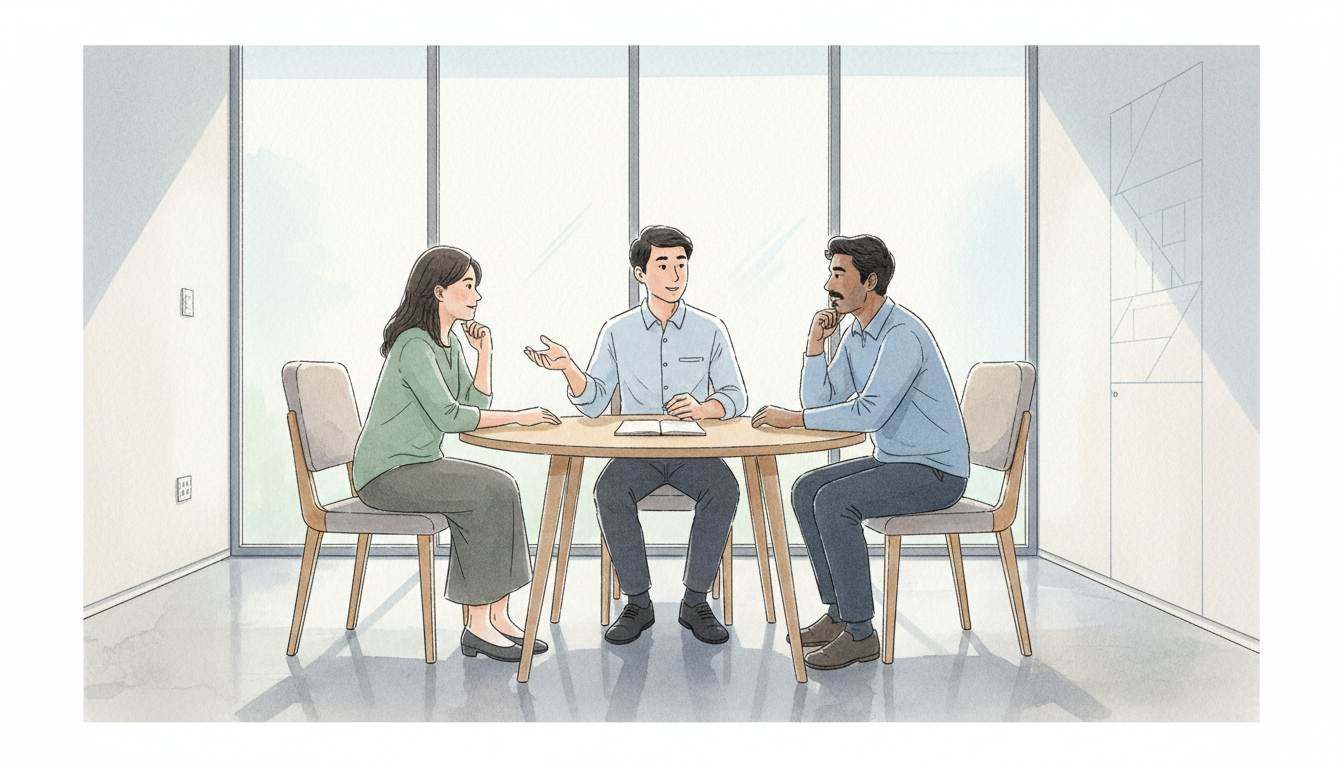
A noisy neighbour in Singapore does not automatically mean you must go to court. For recurring noise, first establish what is happening, when it happens and which home it appears to come from. If it is safe to do so, try a respectful conversation. For unresolved disputes, contact the relevant HDB or People’s Association (PA) channel or use the Community Mediation Centre (CMC). CMC voluntary mediation is free and can be requested online; MinLaw also lists 1800 2255 529 for enquiries during office hours.
Singapore introduced important changes on 1 September 2026. Authorised agencies can now issue legally enforceable Mediation Directions nationwide in appropriate neighbour disputes, and the Community Relations Unit (CRU) has expanded across public and private housing estates for the most severe prolonged noise or hoarding cases. These tools are not a promise of immediate enforcement for every complaint. The MCCY Community Disputes Management Framework explains that dialogue and mediation normally come first; the Community Disputes Resolution Tribunals (CDRT) are usually a last resort. If violence or an immediate threat is occurring, contact Police 999 instead.
Quick answer — who to approach:
- One occasional disturbance: consider a calm, direct request if it is safe and appropriate.
- Repeated HDB neighbour noise: document incidents and contact the HDB Branch or relevant community channel.
- A dispute that needs a neutral conversation: apply for free CMC mediation.
- A neighbour refuses to attend voluntary mediation: ask the relevant agency about the Mediation Direction framework introduced nationwide in September 2026.
- Severe persistent disturbances affecting multiple residents or serious hoarding: explain the history to HDB or another frontline agency; the CRU may assess qualifying cases.
- Mediation and other approaches have failed: check CDRT eligibility, deadlines and filing fees before starting court proceedings.
- Threats, violence or immediate danger: contact Police 999. Ordinary noise complaints do not automatically require emergency police response.
Contents
- What Is the Best Way to Resolve a Neighbour Dispute?
- First Step: Record What Happens Without Escalating It
- How to Talk to a Neighbour About Noise
- HDB Complaints: What HDB Can and Cannot Do
- Community Mediation Centre: Free Mediation
- Mediation Directions From 1 September 2026
- Community Relations Unit: Severe Persistent Cases
- Community Disputes Resolution Tribunals: A Last Resort
- What Outcome Can the CDRT Order?
- Which Route Applies to Different Problems?
- Four-Week Practical Resolution Plan
- Frequently Asked Questions
- The Next Useful Action
- Official Sources and Related Guides
What Is the Best Way to Resolve a Neighbour Dispute?
The quickest satisfactory outcome is usually one that stops an identifiable problem without creating an unnecessary permanent conflict. A block of flats is a shared living environment. Footsteps, moving furniture, children playing, music and conversations occur in homes, but persistent or unreasonable interference can make another household’s life difficult.
The important distinction is ordinary unavoidable living noise versus conduct that unreasonably interferes with a neighbour’s enjoyment of their residence. Neither annoyance nor a noise recording alone decides the legal issue. The intensity, frequency, time, duration, source, context and efforts to resolve the dispute all matter.
The Singapore Judiciary describes matters that may qualify for CDRT claims, including excessive noise, smell, smoke, light, vibration, littering, obstruction and certain animal-related disturbances. But a court claim requires meeting jurisdiction and filing rules.
Begin with the lowest-risk, most proportionate step that could actually work. If a neighbour has no idea that their furniture noise travels through the floor, a polite explanation may fix it. If there have been threats or the relationship is already unsafe, do not initiate a confrontation merely to satisfy an imagined requirement.
First Step: Record What Happens Without Escalating It
A short factual diary helps separate one-off inconvenience from a repeated pattern. It also makes it easier to explain the problem to a community officer or mediator.
Record date, start time, approximate duration, type of sound, where you heard it and how it affected use of your home. Note any relevant conversation or earlier attempt at resolution. Avoid guessing what the other person was doing when you cannot see or verify it.
For example: “Monday, 10.45pm–11.20pm: repeated heavy impacts heard from above the bedroom; interrupted sleep; no direct contact made.” That is much more useful than “my neighbour always makes noise on purpose”.
If you make recordings, respect other people’s privacy and applicable law. Do not enter anyone’s property, conceal devices in private spaces, publish faces or personal details online, or attempt to provoke a response for evidence. Court evidence is different from an online campaign of public accusations.
What if you cannot identify the noise source?
Sound may travel through walls, ducts and structural elements. Avoid accusing the wrong household. Tell HDB or the relevant manager that the source is uncertain, and explain what you can reliably observe.
Shared equipment, renovation work and common-area activities may involve a building-management issue rather than an individual neighbour dispute.
How to Talk to a Neighbour About Noise
If a direct discussion is safe, use a specific, non-accusatory request. “I sometimes hear loud dragging noises after 11pm in the bedroom. Would you be able to check whether furniture movement is carrying through the floor?” focuses on the problem instead of attacking a person’s character.
Avoid statements such as “You deliberately do this to ruin our lives.” You might believe that, but proving intent is often unnecessary to describing the impact and it can escalate the situation.
A helpful conversation has three parts: the observable behaviour, its effect and a workable request. For example, moving some noisy activities earlier, placing floor pads under furniture or agreeing on a quieter period may be possible.
Not every neighbour will cooperate. If there is a history of threats, discrimination, harassment or aggression, a mediator or appropriate authority may be a safer intermediary.
HDB Complaints: What HDB Can and Cannot Do
For disputes within an HDB estate, your HDB Branch or the relevant frontline channel can help identify an appropriate route. Depending on the circumstances, HDB may engage residents, refer them to mediation, or assess whether a serious case warrants further attention under the newer framework.
Do not assume HDB can issue an immediate fine or eviction order every time a neighbour complains. HDB’s role differs from the courts, Police and the CRU. The power exercised depends on the legislation, the situation and the specific programme.
When making an enquiry, give your block or relevant location, the pattern of incidents and any earlier attempts to resolve the issue. If several households are affected, each should describe their own observations rather than circulate a joint statement full of conclusions that no one can independently substantiate.
For broader background, see How Singapore Works | Neighbour Disputes, Community Mediation and CMC.
What if you live in a condominium or private estate?
The estate manager, management corporation and rules governing common property may be relevant. A noise issue within a private unit may still fit broader community dispute mechanisms, including CMC and, where eligible, CDRT. The CRU’s September 2026 expansion covers both public and private estates in qualifying severe cases.
Check whether the issue involves shared facilities, renovation rules or personal neighbour conduct before deciding which organisation should lead.
Community Mediation Centre: Free Mediation
The Community Mediation Centre provides a voluntary route for many disputes involving neighbours, families and other community relationships. Its stated service is free, and mediation may be conducted in person or virtually as appropriate.
A mediator helps the parties discuss what happened and seek a mutually acceptable arrangement. The mediator does not decide that a party is guilty, make a court finding or guarantee that everyone will agree.
You can apply through the official CMC e-service or contact MinLaw’s enquiry line 1800 2255 529 during office hours. The application asks for details about the respondent, including the residential address.
What will you be asked at mediation?
Expect to explain the specific problem, the dates or pattern, its impact, and what you would reasonably like changed. You should also be ready to hear the other person’s explanation and consider a practical agreement.
It is useful to distinguish a request from a non-negotiable accusation. “Could noisy furniture movement stop after this hour?” offers a potential agreement. “Admit you are a criminal” does not.
If you need an interpreter, accessibility support or have safety concerns about attending, raise them with CMC when arranging the session.
What if an agreement is reached?
Keep the agreed terms clear. What activity is to change, when will the arrangement begin, and how will future problems be communicated? Avoid vague commitments such as “never make noise again”.
Under the 2026 framework, qualifying settlement agreements reached on or after 1 September 2026 can be registered as CDRT orders through the applicable process, subject to legal requirements and the parties’ consent. The Judiciary registration guidance says registration generally must be filed within four weeks after all parties sign and the filing fee is S$10. Not every informal chat automatically becomes a court order.
Mediation Directions From 1 September 2026
A major change is the ability of authorised agencies to issue a Mediation Direction in qualifying neighbour disputes. The CMC Mediation Direction explanation says this is a legally backed direction requiring the named parties to attend mediation.
From September 2026 the framework operates nationwide, with HDB and PA empowered in public housing settings and PA in private housing settings under the programme. Other authorised agencies may also act according to their functions.
A Mediation Direction is not the same as an order forcing the neighbour to become quiet immediately. It requires attendance at mediation, where parties attempt to resolve the disagreement.
Can a neighbour refuse a Mediation Direction?
Attendance is compulsory unless there is a reasonable excuse. The CMC explains that failure to comply without reasonable excuse may be an offence with a fine of up to S$1,500 on conviction.
The direction applies to specified neighbour relationships within the same building or 100 metres. The fact that someone refuses a voluntary invitation does not mean a resident can personally compel them to attend; an authorised officer decides whether to issue a direction.
Is this a new compulsory step for every dispute?
No. The framework is designed to overcome refusals to attend mediation where intervention is appropriate. It does not turn every neighbour complaint into an automatic legal summons.
Ask the agency handling your case whether it considers a Mediation Direction appropriate, and what information is required.
Community Relations Unit: Severe Persistent Cases
The Community Relations Unit (CRU) now has a national role following the 1 September 2026 rollout. MCCY says the CRU focuses on severe, persistent neighbour noise cases affecting multiple residents and hoarding cases, particularly where earlier attempts by neighbours and agencies have been exhausted or the circumstances warrant intervention.
CRU officers may investigate, take statements, issue warnings and, where legally justified, use abatement orders requiring specified nuisance conduct to stop. Failure to comply with an abatement order is an offence.
This is not the correct first expectation for an occasional party or a few seconds of movement upstairs. If you believe your case is severe, show the pattern, the impact on affected households and the steps already attempted. HDB or another frontline agency can help determine whether escalation is warranted.
Read the MCCY 2026 framework page for the difference between voluntary mediation, Mediation Directions, CRU enforcement and CDRT proceedings.
Community Disputes Resolution Tribunals: A Last Resort
If reasonable attempts have failed, some cases may qualify for the Community Disputes Resolution Tribunals at the State Courts. The Judiciary explains eligibility and the filing process.
The key conditions include:
- The respondent is a neighbour in the same building or living within 100 metres.
- The alleged conduct unreasonably interferes with the enjoyment or use of your residence.
- Any monetary claim is no more than S$20,000.
- The claim is filed within two years of the event giving rise to it.
- The matter is not already pending before or decided by another court under the relevant restrictions.
The standard CDRT filing fee is S$150. Filing takes place through the Community Justice and Tribunals System (CJTS), not through CMC’s mediation application.
How to file a CDRT neighbour claim
You should complete the CJTS pre-filing assessment, identify the respondent and prepare a chronology and supporting evidence. State the remedy you seek rather than assuming compensation is the only available outcome.
After filing, the Judiciary generally requires service of the claim, the evidence and the relevant court notice on the respondent within 14 days. You must also file a declaration of service as instructed.
Court attendance, time limits and possible orders are separate from the initial form. Follow the official filing guide, especially if the deadline is near.
Must a lawyer represent you?
The Judiciary states that lawyers are generally not permitted to represent parties in CDRT proceedings unless all parties agree and the court approves. You may still obtain external legal advice before starting.
If you need advice about eligibility, evidence or an urgent legal issue, read Getting Help in Singapore | Free Legal Advice, Legal Aid and Lawyers.
What Outcome Can the CDRT Order?
If a case is proved and the proposed outcome is just and equitable, the CDRT may order a neighbour to stop certain conduct, carry out a specified action, apologise, pay appropriate damages (subject to the limit) or comply with another lawful order.
The court considers the effects on both households and the ordinary activities of daily life that reasonable neighbours must tolerate. That is why a complaint, however strongly felt, does not automatically result in the exact order requested.
The Judiciary’s explanation of CDRT outcomes is useful for understanding what a legally enforceable result can and cannot do.
Which Route Applies to Different Problems?
Loud footsteps, dragging furniture or late-night music
Begin by verifying the source and recording the pattern. Try an appropriate direct request, then consider HDB or PA assistance and CMC mediation. Severe cases may be assessed for escalation.
Renovation noise or construction work
Check whether the noise comes from an approved renovation, common-property maintenance or construction site. The relevant permit conditions and authority may differ from ordinary neighbour behaviour. Ask the estate manager or responsible agency to identify the correct route before treating it as a personal neighbour case.
Hoarding, blocked corridors or fire hazards
If a common area is obstructed or there is an immediate safety risk, contact the appropriate estate or emergency service. Hoarding can also be within the CRU framework in serious cases. Avoid entering private premises or removing another person’s property yourself.
Smells, smoke, lighting, vibration or animal disturbances
These may fit neighbour disputes when the alleged conduct meets the legal test, but the appropriate first agency depends on whether the issue involves a building system, pet-management rules, environmental rules or personal conduct. Describe the actual impact and location.
Threats or harassment
If there is immediate danger, use Police 999. Serious threatening conduct or harassment may need a different legal route from CMC or CDRT. Seek suitable police or legal advice rather than assuming all neighbour disputes are ordinary noise problems.
Four-Week Practical Resolution Plan
Week 1 — Identify and document. Make a short factual record of incidents, clarify the apparent source and check whether any urgent danger or building-management issue exists. If safe, attempt one calm request.
Week 2 — Ask for appropriate community help. Contact HDB, PA, the managing agent or CMC depending on the estate and circumstances. Record reference numbers and ask what mediation options are available.
Week 3 — Prepare for mediation or follow-up. Organise the chronology, consider reasonable proposals and attend agreed appointments. If the other party declines, ask whether the authorised agency considers a Mediation Direction appropriate.
Week 4 — Review the actual position. If no progress and the interference is serious, ask the frontline agency whether escalation to CRU is relevant. If you are considering CDRT, check the legal criteria, evidence, deadline and court fees before filing.
This is a planning aid, not an official agency timetable. Real cases may move faster or slower; imminent danger requires immediate action regardless of the week.
Frequently Asked Questions
Where do I complain about noisy neighbours in an HDB flat?
For a recurring HDB-estate issue, contact HDB or an appropriate community channel and ask about mediation. The CMC accepts voluntary mediation applications through its official e-service.
Is CMC mediation free in Singapore?
Yes. The CMC’s official guidance states that voluntary community mediation is free.
Is a neighbour required to attend mediation?
Ordinary voluntary mediation depends on participation, but an authorised Mediation Direction issued under the September 2026 framework requires attendance subject to the legal rules.
Can HDB issue a Mediation Direction?
Authorised HDB officers may issue Mediation Directions in qualifying public-housing neighbour disputes under the nationwide framework effective 1 September 2026.
Can the CRU immediately investigate every noisy neighbour?
No. MCCY describes the CRU as focusing on severe and persistent cases, particularly after other methods have not resolved them, or where circumstances warrant intervention.
What is the CDRT filing fee?
The standard initial filing fee is S$150, according to the Judiciary’s current neighbour claim guide. Other applications can have separate fees.
What is the time limit for a CDRT claim?
The general filing limit is two years from the event creating the cause of action. Check the actual dates and legal position before filing.
Can I sue a neighbour who lives more than 100 metres away in CDRT?
The ordinary CDRT definition requires living in the same building or within a 100-metre radius. Other legal routes may exist depending on the facts.
Can I record noise or post evidence online?
Preserve relevant evidence lawfully, but avoid invading privacy, making unverified public allegations or publishing identifiable personal information. Ask a legal adviser if uncertain about evidence collection.
Does a mediation settlement automatically become a court order?
No. There is a specific registration procedure for qualifying agreements from 1 September 2026, with consent, time limits and fees.
The Next Useful Action
Write down the last three incidents, identify the actual problem and choose the lowest-risk appropriate contact. If it is safe, begin with a respectful request. If the pattern persists, use HDB or PA and consider CMC’s free mediation. Reserve court action for cases that meet the legal criteria after other practical routes have failed.
The aim is a home that can be enjoyed peacefully—not a dispute that grows more expensive and exhausting every month.
Official Sources and Related Guides
- MCCY — Community Disputes Management Framework, nationwide 2026 changes
- CMC — Apply for Free Voluntary Mediation
- CMC — Mediation Directions
- Judiciary — CDRT Eligibility
- Judiciary — File and Serve a Neighbour Claim
- Judiciary — Register a Settlement Agreement
- Judiciary — Possible CDRT Orders
- eduKateSG — How Singapore Works: Neighbour Disputes and CMC
- eduKateSG — Free Legal Advice and Legal Aid
Reviewed 5 November 2026. This independent information guide does not provide legal advice or compel another person to act. Agency responsibilities, evidence requirements and court procedures should be checked using the official pages linked above.