
Extreme heat and heatwaves are global-connectivity problems because high temperatures can stress people and several infrastructures at the same time. Health services, electricity demand, water systems, transport, outdoor work, schools and urban buildings can all come under pressure during the same event.
WHO describes heat stress as a leading cause of weather-related deaths and notes that heatwaves can strain health services, reduce labour productivity and disrupt power, transport and water infrastructure. The important systems lesson is that extreme heat is not one isolated weather variable; it is a multi-sector load placed on a connected city.
Problems & resilience route: return to the Global Connectivity Problems Hub to compare heat with haze, water stress and power failures. For the healthy systems, continue to Weather and Climate, Public Health and the Global Connectivity Hub.
Heat is a load on both bodies and infrastructure
A hot day becomes a systems problem when temperature, humidity, sunlight, low wind, building design and human activity combine faster than people and infrastructure can shed heat. The same event can increase medical demand and electricity demand simultaneously.
WHO treats heat as a public-health hazard
WHO’s 2026 heat and health fact sheet describes heat stress as an important environmental and occupational hazard and notes that severe heat can worsen cardiovascular, respiratory, kidney, mental-health and other risks.
Heatwaves are cumulative
One hot afternoon is not the same as several unusually hot days and nights. If nights remain warm, buildings and bodies have less opportunity to cool. Heat accumulates across time.
A Mathematics model of accumulated heat exposure
Use a simple educational index: assign each hour above a chosen threshold one “heat-load unit.” Six hours on one day create six units; six hours per day for four days create twenty-four. This is not a medical formula. It simply shows why duration matters as well as peak temperature.
Cities can amplify heat
Concrete, asphalt, dense buildings and limited vegetation can store and re-radiate heat. WHO notes that urban design can exacerbate heat exposure. This is why temperature experienced in a city can depend on neighbourhood form as well as regional weather.
Cooling demand becomes a grid problem
When many homes, offices and malls increase air-conditioning at the same time, electricity demand can rise sharply. If generation, transmission or distribution is already constrained, a health-protection response can become an electricity-system stress.
Grid stress can feed back into heat risk
If electricity fails during extreme heat, cooling, lifts, refrigeration, communications and some water systems may become less available. WHO specifically notes that power shortages can compound heat impacts on health facilities, transport and water infrastructure.
Heat becomes a water problem
Hot conditions can increase water demand while drought or low reservoir levels reduce supply. Water treatment and pumping also depend on electricity. Heat, drought and grid stress can therefore reinforce one another.
Heat becomes a transport problem
Rail equipment, road surfaces, aircraft operations, vehicles and outdoor crews can all face temperature-related constraints. Heat can also make walking and cycling harder, shifting more demand onto cooled transport.
Heat becomes a labour problem
Outdoor workers and people doing heavy physical work can face higher heat stress. Productivity may fall because more breaks, hydration and cooling are needed. The economic effect comes from protecting people appropriately, not from pretending the hazard does not exist.
Heat becomes an education problem
Classrooms, sports, outdoor activities and school travel can become harder during severe heat. Learning itself may be affected when students and teachers are physically uncomfortable or fatigued.
Heat becomes a food problem
Heat can reduce crop or livestock productivity, increase cold-chain demand and affect storage conditions. A weather event can therefore move from the farm into trade, food prices and household budgets.
Heat vulnerability is uneven
WHO emphasises that age, health, occupation, housing quality and socioeconomic conditions affect vulnerability. Two people in the same city can experience the same weather very differently.
Air-conditioning is powerful but not independent
Cooling reduces indoor heat exposure, but it depends on electricity and building systems. If every resilience strategy depends on the same grid, the system has a shared dependency.
Passive cooling changes the dependency map
Shade, ventilation, reflective materials, insulation, vegetation and urban design can reduce heat gain without requiring the same amount of active cooling. These measures do not eliminate extreme heat, but they diversify the response.
Heat alerts are information infrastructure
WHO’s 2026 heat-health action planning guidance emphasises warning systems, risk communication, vulnerable populations, health-system resilience and monitoring. An alert is useful only if people know what action it should trigger.
A Mathematics model of cooling capacity
Suppose a community cooling centre has 200 places and 320 people seek access during a heat alert. The capacity shortfall is 120 places, or 37.5% of demand. The calculation is simple; the systems question is whether transport, opening hours or additional sites can change the effective capacity.
Extreme heat can produce cascading socioeconomic effects
WHO notes that heatwaves can cause lost work capacity, strain health services and disrupt infrastructure. The cascade is not mysterious: heat affects bodies, bodies change behaviour, behaviour changes demand, and infrastructure must absorb the changed load.
What heat resilience looks like
- forecasting and alerts — identify dangerous conditions early;
- cooling access — provide usable cool spaces for people at higher risk;
- grid resilience — maintain electricity during peak cooling demand;
- water availability — protect safe drinking and sanitation;
- urban shade and design — reduce heat accumulation;
- work and school adaptations — change timing and activity when needed;
- health-system readiness — anticipate heat-related demand.
Singapore is a natural heat-resilience laboratory
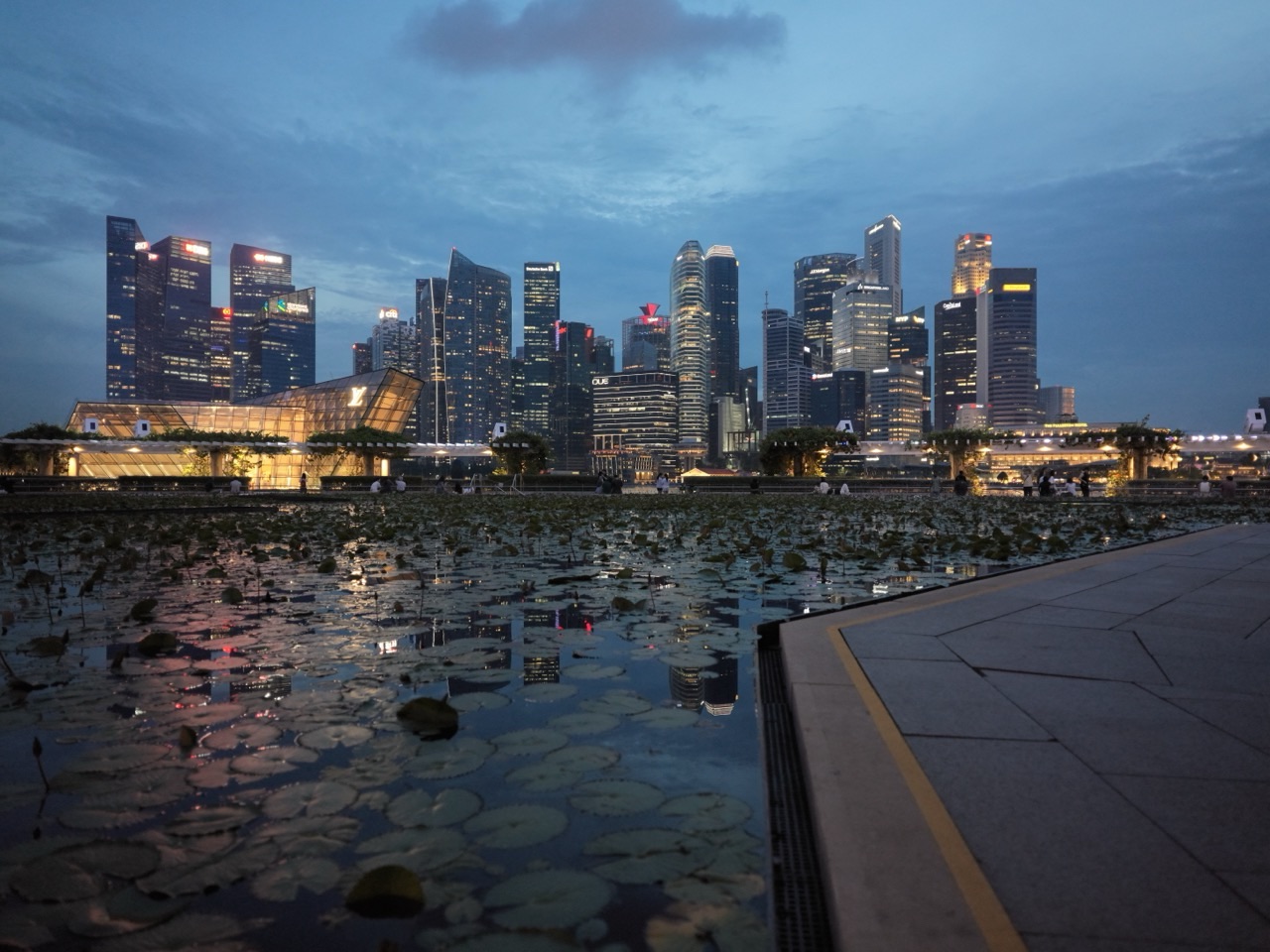
Singapore’s tropical climate, dense urban form, extensive air-conditioning and strong public infrastructure make heat a useful systems-thinking topic. The featured Marina Bay image shows a dense built environment and water landscape; it does not by itself measure heat risk.
A neighbourhood heat-map activity
Compare two imaginary neighbourhoods with different amounts of shade, vegetation, air-conditioning, public transport and elderly residents. Give both the same weather forecast. Ask which neighbourhood needs more support and why. The purpose is to connect hazard with exposure and capability.
Vocabulary that clarifies the system
- heatwave — a period of unusually hot conditions lasting several days;
- heat stress — strain on the body when heat gain exceeds effective cooling;
- urban heat island — higher temperatures in built-up areas relative to surrounding areas;
- exposure — contact with the hazardous condition over time;
- vulnerability — factors that make harm more likely or severe;
- cooling demand — electricity or other resources required to reduce indoor heat;
- heat-health action plan — organised measures for anticipating and reducing heat impacts.
Frequently asked questions
Is every hot day a heatwave?
No. A heatwave is usually defined relative to local climate and persistence over time. The exact operational definition depends on the relevant authority.
Why can nights matter so much?
Warm nights reduce the opportunity for people and buildings to recover from daytime heat.
Does air-conditioning solve extreme heat?
It is a powerful protective tool indoors, but it depends on electricity, maintenance and affordability and does not protect outdoor workers or eliminate urban heat.
Keep the return paths visible
Continue through Weather and Climate, Power Grid Failures, Water Stress, Public Health and the Problems Hub.
A final heat-resilience investigation
Choose one city and map extreme heat into health, electricity, water, transport and work. Identify one shared dependency, one vulnerable group, one low-energy adaptation and one recovery or learning step. Separate weather measurements from assumptions about who is affected.