
How are damaged submarine internet cables repaired? Cable operators first identify that a subsea telecommunications link has developed a fault, assess where the affected section is likely to be, and coordinate a marine repair operation. A specialised cable ship may recover the relevant section, remove or bypass damaged material, join in suitable replacement cable and return the repaired system to service after testing. A repair is not as simple as dropping an internet router into the sea: it is a coordinated engineering, maritime, safety and cross-border permissions problem.
Did you know that the global internet has a real repair workforce at sea? Submarine optical-fibre systems carry large volumes of international communications, and accidental activity such as fishing and anchors has historically caused many cable faults. The International Cable Protection Committee describes an established maintenance ecosystem that includes strategically available repair ships, specialist skills and cooperative agreements. A cable fault can cause an outage or reduced capacity, but it does not automatically mean the whole internet has stopped.
This guide answers the practical questions in order: what the cable carries, how faults are detected, why repair vessels are needed, what happens during a repair, why weather and permits matter, and how alternative data routes can keep services working. The How the Internet Works chapter explains the backbone; Internet Outages covers disruption effects. Our subject here is the restoration journey from fault report to proven service recovery, connected to the Connected World Hub.
Begin with an ordinary message crossing an ocean
Imagine a student in Singapore opening an overseas education website. Her device reaches a domestic network, then an international route that may use one or more submarine cable systems, and finally the website’s hosting network. If one of those physical systems fails, network operators may have other routes available; whether the user notices depends on capacity, routing arrangements and the services involved. A cable is one critical part of the journey, not the entire internet.
The most useful repair question is not “Who fixes the internet?” It is “Which physical segment needs restoring, who is authorised to work on it, and what traffic arrangements keep customers served in the meantime?” The answer requires several organisations and skills. That makes submarine-cable maintenance an unusually clear example of global connectivity as a real operating system.
What is actually inside a modern submarine telecommunications cable?
Submarine communications cables contain optical fibres that carry encoded light signals, together with protective materials and, for many long-distance systems, equipment associated with optical amplification and electrical power feeding. Construction differs by route conditions and cable type. Cables used in more exposed near-shore areas may need different protection from those laid across deep ocean seabeds.
The fibre itself is remarkably thin, but the completed cable has to withstand mechanical handling, marine conditions, installation and possible later repair. The International Telecommunication Union’s ITU-T G.978 cable characteristics guidance addresses mechanical performance and joints as engineering requirements. Readers should not confuse the entire subsea system with one naked glass thread lying on the seabed.
Why subsea cables break
Faults can occur for different reasons: accidental interaction with anchors or fishing equipment, geological events, mechanical damage, manufacturing or component issues, and other external conditions. The causes vary with water depth, route and installation characteristics. A fault report does not by itself establish sabotage, nor does it prove that an earthquake was responsible. Engineers investigate evidence rather than adopting the most dramatic explanation.
The International Cable Protection Committee reports that most known telecommunications cable faults arise from accidental human activities such as fishing and anchors. That helps put risk in perspective. A responsible article should not convert every broken cable into a claim of deliberate attack, just as it should not assume that any particular unexplained incident is harmless without investigation.
What counts as a cable fault?
A fault may involve an interruption in optical transmission, degradation in signal quality, a power-related problem or a particular component behaving outside its expected condition. The operator’s monitoring systems help distinguish a complete interruption from a degraded but still partly working system. Not every service problem seen by a user traces to the wet cable: data centres, routers, software and domestic links can fail too.
This is why a good investigation begins with the narrowest confirmed fact. “Our overseas application is slow” is a symptom. “This specific cable system reports an optical fault in a monitored section” is a more bounded engineering finding. A published outage notice should say what is known, what remains uncertain, and whether any estimated restoration time is provisional.
The first handover: detect and narrow the fault
Modern subsea systems include monitoring and supervisory functions, and operators may use suitable electrical or optical tests and operational evidence to narrow where a fault may lie. Different measurements provide different kinds of information; the investigation may initially identify a broad affected section rather than one perfectly known seabed point. Some tests occur at terminal stations, while additional checks may be made during the marine repair process.
The ITU design guidance for optical submarine cable systems discusses maintenance, fault localisation and the effects of marine repairs. The core classroom idea is straightforward: measure a problem, form an evidence-based location estimate, and choose a repair plan that takes the uncertainty into account. It is not necessary for readers to learn proprietary or operationally sensitive location methods to understand that principle.
The second handover: keep traffic moving if alternatives exist
Network operators may reroute traffic through other cable systems, terrestrial networks or other available paths when technically and commercially possible. The success of that rerouting depends on remaining route capacity, network design and the destinations that need to be reached. A diverse route can help, but two seemingly different paths may still share a vulnerable landing facility or other common infrastructure.
This is where the recently published Internet Exchange Points guide fits. An exchange helps independent networks interconnect; it cannot manufacture new transoceanic physical capacity. Peering and route diversity can be useful during a fault, yet ordinary services still depend on adequate end-to-end paths. A city with strong local peering might continue to access locally hosted services while some international applications suffer.
The third handover: appoint the right repair capability
Submarine-cable maintenance depends on specialist vessels, experienced crews, replacement material, suitable marine equipment, logistics support and agreements among relevant cable operators and service providers. A ship is not simply dispatched from any harbour like a roadside breakdown truck. Availability, sea conditions, safety requirements, supplies and the legal right to perform work in the affected waters must all be coordinated.
Industry maintenance agreements help ensure that expertise and vessels exist ahead of the next incident. This is one reason the system is resilient: operators invest in a repair ecosystem before they know the next exact fault location. The work sits at the intersection of private infrastructure, maritime operations and public regulation.
Repair ships carry more than replacement cable
A dedicated cable-maintenance vessel supports specialised equipment, storage for spare lengths, cable handling and jointing work, navigation and safe marine operations. Its crew may include marine specialists, cable engineers and technicians working with onshore teams. In some conditions, recovery and repair procedures require different handling because water depth, mechanical tension and seabed conditions are different.
A clear public explanation should not imply that a ship can travel to any ocean point at any time. Seas can be rough, routes may be remote and marine operations are subject to permits and working limits. The ability to repair successfully depends on the whole support organisation, not only an impressive vessel photograph.
What the marine repair typically involves
- Confirm the affected system: identify the relevant equipment and the section requiring further investigation.
- Plan and authorise the operation: arrange a suitable vessel, spares, crew, safety procedures and any required marine permissions.
- Recover the affected cable: use approved specialist procedures appropriate to the environment and cable type.
- Remove or replace damaged material: prepare sound cable ends and appropriate spare material for restoration.
- Joint and test: restore the designed optical and mechanical continuity and verify relevant engineering requirements.
- Return the system: complete necessary placement and testing, then confirm service restoration with operators and relevant users.
The exact steps can vary. Sometimes equipment or an extended section is replaced; in other cases a repair can be more local. A high-level sequence is useful for readers, but it is not a do-it-yourself marine repair manual. Safety-critical electrical and mechanical work must be left to authorised specialists.
What is a cable joint, and why must it be reliable?
A repair may connect the ends of intact subsea cable with appropriate new material, using engineered joints that restore the required signal path and mechanical protection. The joint must function under long-term subsea conditions, including mechanical handling and the applicable design performance. Repairs can add cable length, and the effect of that extra length needs to be considered in system engineering.
A visually neat join is not enough. Engineers must verify that the optical, electrical where applicable, mechanical and environmental requirements are satisfied. The ITU cable-characteristics recommendation discusses mechanical considerations for joints and handling. Good repair means the system returns to a dependable operating condition, not merely that two cable ends appear attached.
Why shallow water and deep ocean are different repair settings
The seabed close to busy coasts is exposed to different human activity and marine conditions from the deep ocean. Depth influences cable design, recovery effort, vessel operation, repair material and sometimes the need for additional components. Nearshore areas can also involve more intense interaction with other marine uses and coastal regulation. There is no single repair script that applies equally to every depth.
The distinction is practical for students. A process suitable for an accessible shallow-water location may not be appropriate far offshore. Changing one variable—depth, weather, terrain or cable type—can alter the equipment, time and safety requirements. Systems thinking asks us to define the conditions before claiming that an approach is universally best.
Why extra cable length matters
When a damaged section is removed and replaced, the process may require an appropriate additional length of cable to accommodate the operation and the return to the seabed. Extra physical length is not simply a cosmetic issue. Long-distance optical systems are designed within performance budgets, and repair conditions can affect those margins. Replacement materials must be compatible with the affected system.
An illustrative fictional arithmetic model makes the general concept visible. Suppose an original imaginary segment is 40 kilometres and a repair configuration adds 0.4 kilometres. The resulting model length is 40.4 kilometres, an increase of 1%. Real systems require more detailed engineering analysis and should not be assessed from this toy percentage alone. The aim is to show why “just add more cable” still needs design control.
The cable is not necessarily dark during the entire response
Some affected services may fail immediately; others may be rerouted or continue at reduced capacity. Traffic engineering and the physical restoration process can occur on different timelines. The time at which the fibre system is judged repaired need not equal the moment every application or commercial service is fully stable again. Restoration includes verification, routing changes, monitoring and customer communication.
A good outage update should distinguish at least three states: the physical fault is under investigation, the marine repair is complete, and affected services are verified as restored. Treating all three as the same status can mislead customers and make performance comparisons unhelpful.
Weather, safety and permissions shape repair time
People sometimes ask why a broken underwater cable cannot be repaired by tomorrow. The answer depends on where the fault lies, whether a ship and spares are available, the weather window, safe working procedures, applicable approvals and the complexity of the damage. Repair teams may face delays that are not visible on a simple map. Published estimates for a particular incident should therefore be attributed to its operator or competent authority and treated as estimates.
One must also consider other sea users and environmental responsibilities. A marine repair operation needs coordination appropriate to the waters and rules involved. It is not a reason for readers to speculate publicly about precise equipment locations or to treat sensitive infrastructure as a recreational navigation project.
Why countries must cooperate over ocean infrastructure
A submarine cable may link landings in different jurisdictions and pass through maritime areas subject to different legal and operational arrangements. Repairs may therefore involve the cable-owning organisations, marine authorities and other legitimate stakeholders. The ICPC guidance emphasises efficient repair permitting and cooperation among industry and governments. A broken physical line reveals how important institutional interfaces are to infrastructure.
The international dimension is not the existence of one worldwide cable company. It is the ability of independently governed organisations to coordinate lawful access, specialist ships, cross-border operations and restoration. Clear agreements made before a fault can reduce confusion when time and capacity matter.
How can one cable break without the entire internet disappearing?
The internet is built as a collection of interconnected networks with multiple routes in many regions. If a path fails and an alternative path is available, some traffic can be redirected. However, the alternate route may be longer or more congested and not have enough capacity for everyone. Service effects therefore range from barely noticeable to severe, depending on geography, available bandwidth and dependencies.
The distinction between connectivity and performance matters. A website can remain reachable while pages load slowly. A video call may struggle with delay or congestion. A payment service might be affected through a distant dependency even if the buyer and seller are in the same city. The Internet Outages article studies those downstream effects; the present article follows the work of physically restoring the link.
A simple capacity bottleneck model
Imagine a made-up network normally uses two international routes, each capable of carrying 100 units of the same traffic per hour, giving a combined maximum of 200 units in this simplified model. After one route fails, the remaining route supports only 100 units. If demand is 150 units, the model has a 50-unit gap between desired and available throughput. It may experience queues, load shedding or poor application performance. These figures are invented and do not describe any real cable, operator or national network.
The lesson is not that bandwidth behaves like one fixed pipe in all circumstances. Real networks carry multiple services, paths and traffic priorities. The model shows why connectivity can survive while quality falls. Engineers look for headroom and independent routes in advance rather than assuming that a single backup can absorb every possible disruption.
How to interpret an outage headline responsibly
A headline might say “undersea cable cut,” “internet disrupted” or “cable repair vessel deployed.” Those statements refer to different kinds of evidence. Ask which physical system is named, who reported the fault, whether alternative capacity exists, which services are measurably affected and whether a repair completion has actually been verified. Do not assume a social-media diagram of a cable route accurately identifies the failure location.
In an educational setting, teach learners to write “the operator reported a fault affecting this route” rather than “the entire region lost the internet,” unless credible measurements support the larger claim. Clear reasoning lowers drama and improves understanding. It also respects the people whose work is to manage an uncertain technical situation.
Route diversity versus a map full of lines
A map may show multiple cable routes landing in the same region. That can be helpful, but diversity is only as strong as the actual independent dependencies. Two routes could share a landing station, a power system, a data centre or a critical onshore connection. A high-quality resilience assessment examines common points of failure, realistic rerouting capacity and recovery arrangements.
Similarly, a provider may purchase international connectivity through more than one commercial partner while the partners depend on some shared infrastructure. Diversity requires evidence, not just multiple supplier logos. The connected-world lesson is that resilience is a design property tested under failure, not a slogan.
Preventing faults is not identical to repairing them
Cable protection begins long before an accident. Route planning, suitable installation methods, coordination with maritime users, marine charts, risk awareness and appropriate physical protection can reduce exposure to some hazards. Once a fault occurs, diagnosis and repair are different operations. A resilient system invests in prevention, working alternatives, maintenance agreements and tested restoration procedures together.
The ICPC is an appropriate starting point for industry-level safety and protection principles. The purpose of discussing those safeguards is to understand cooperation and reliability, not to publish vulnerable infrastructure details or instructions for interference.
The ecological and maritime layer
Submarine-cable engineering occurs within the marine environment, where vessel operations and seabed work need appropriate safeguards. Environmental conditions can constrain a repair, while reasonable planning can reduce unnecessary disturbance. The answer is not to claim that all subsea operations have identical impacts. It is to ask what activity is proposed, what the local setting is and which standards and approvals apply.
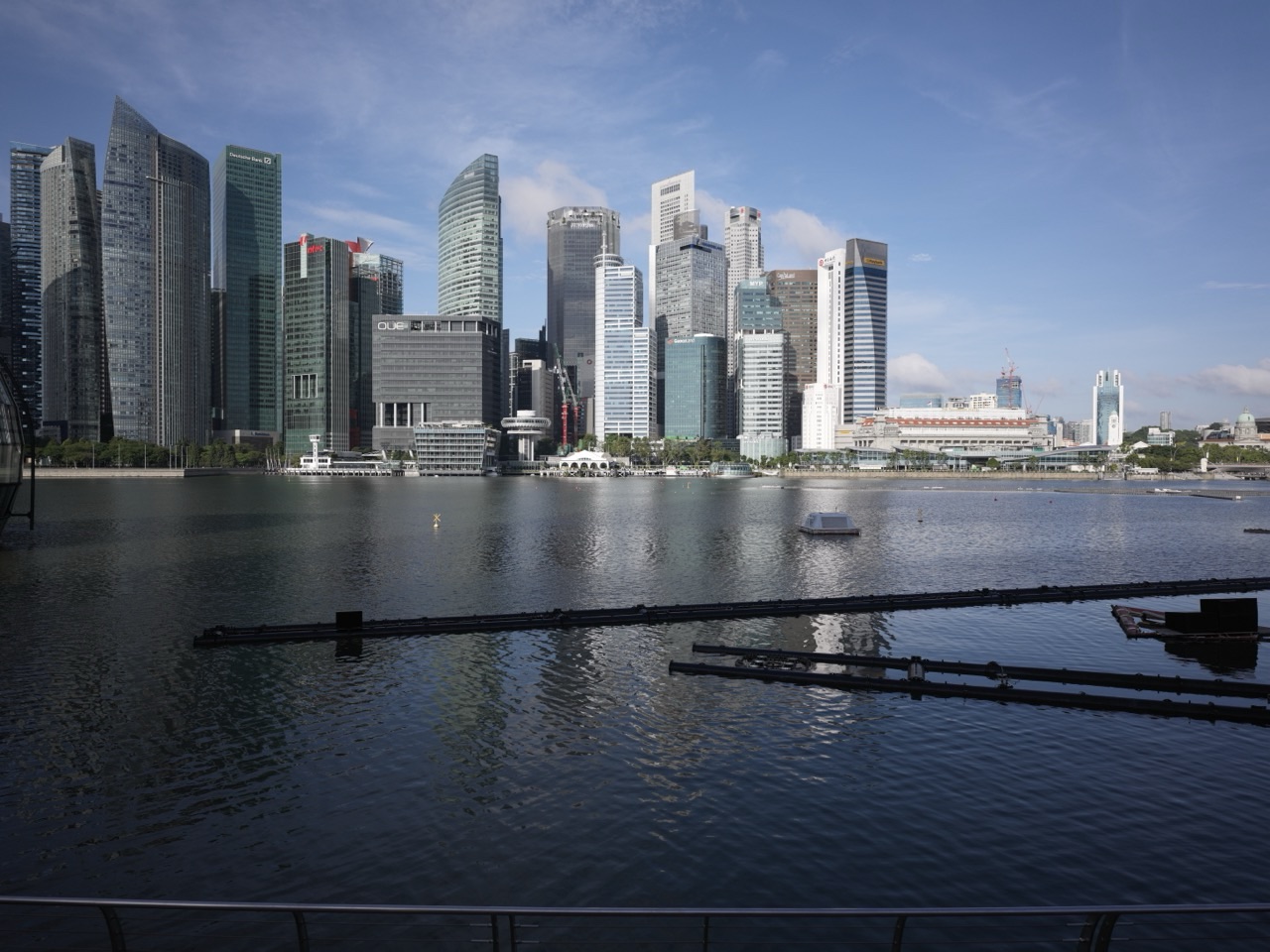
A photographed waterfront in Singapore can help students picture where land and ocean infrastructure meet, but it does not show the location of a live submarine cable. The featured image chosen from eduKate’s existing WordPress library shows Marina Bay’s waterfront and financial skyline. Its job is to connect the subject with the human city—not to serve as technical evidence of a cable route.
Why Singapore makes the system easy to understand
Singapore’s position in international trade, finance and digital services makes overseas communication feel ordinary. A video meeting, research collaboration or global payment may rely on international data paths that most users never see. When a cable fault is reported, it is tempting to think only about the ship. In reality, the repair touches on internet routing, maritime coordination, infrastructure ownership and institutional capacity.
For the wider geographical picture, read How Singapore Connects: Submarine Cables, Internet Exchanges and Global Data Routes. It explains the local-to-world system. This chapter then asks the less visible question: how do people restore its physical integrity after something goes wrong?
A systems exercise for a school classroom
- Draw a harmless fictional country with two imaginary sea-cable links to a distant data centre. Do not use real vulnerable cable coordinates.
- Label each layer: inland network, landing facility, subsea segment, overseas network and application.
- Remove one subsea route. Predict which services might remain reachable and why available capacity could fall.
- Introduce a fictional cable-repair vessel and draw the organisational handovers needed to authorise, prepare and verify restoration.
- Write two separate status lines: one about the physical cable and one about user-facing services.
Then close the diagram and explain the journey from memory. A student who can describe the failure and recovery without claiming that all services behave identically has learned something more durable than a dramatic cable photograph.
What should a good post-repair report tell us?
A robust engineering report distinguishes the observed fault, investigated cause where supportable, repair work completed, verification results and outstanding operational risks. Some technical details may appropriately remain confidential. Public service information should still be understandable: which customer effects are resolved, whether remaining work is scheduled, and where to find updated statements.
This is a broader lesson in management. Good recovery does not stop when an engineer says a component looks fixed. The organisation needs agreed evidence that the intended service works again. It may also examine whether monitoring, route diversity or response procedures should change before the next incident.
Frequently asked questions about submarine-cable repairs
Who repairs broken undersea internet cables?
Specialised subsea cable repair vessels and qualified engineering teams, coordinated with cable owners or operators and the relevant maritime authorities and supporting organisations.
How do operators know a submarine cable has a fault?
They investigate monitoring data, equipment alarms and suitable tests. The early evidence may narrow an affected section without identifying every detail of the damage.
Can one ship repair any cable anywhere?
No. Vessel capabilities, available spares, water depth, conditions, ownership and legal permissions vary. Specialist resources and planning are required.
Does a cut submarine cable always shut down the internet?
No. Available alternative routes may keep traffic moving, perhaps with worse performance. Effects depend on network design, capacity, geography and service dependencies.
How many days does it take to fix a cable?
There is no universally reliable time estimate for every incident. Location, weather, ship availability, permits and repair complexity make actual duration variable. Use attributed operator updates for any specific fault.
Are most cable faults deliberate attacks?
No. Industry materials from the International Cable Protection Committee identify many faults as accidental, notably those associated with fishing activity and anchors. Any particular event still requires evidence.
The bigger story: a global system that can heal
The remarkable fact is not simply that light can cross an ocean through thin fibres. It is that thousands of people and organisations have built an operating system for making this connection dependable: designers, manufacturers, network operators, vessel crews, regulators, maritime users and repair specialists. The physical cable makes communication possible; coordination makes long-term service sustainable.
For authoritative reading, use the International Cable Protection Committee and ITU design guidelines for optical-fibre submarine cable systems. Follow How the Internet Works, Internet Outages, Internet Exchange Points, Vessel Tracking, the Connected World Hub and the eduKate Ecosystem Hub.