
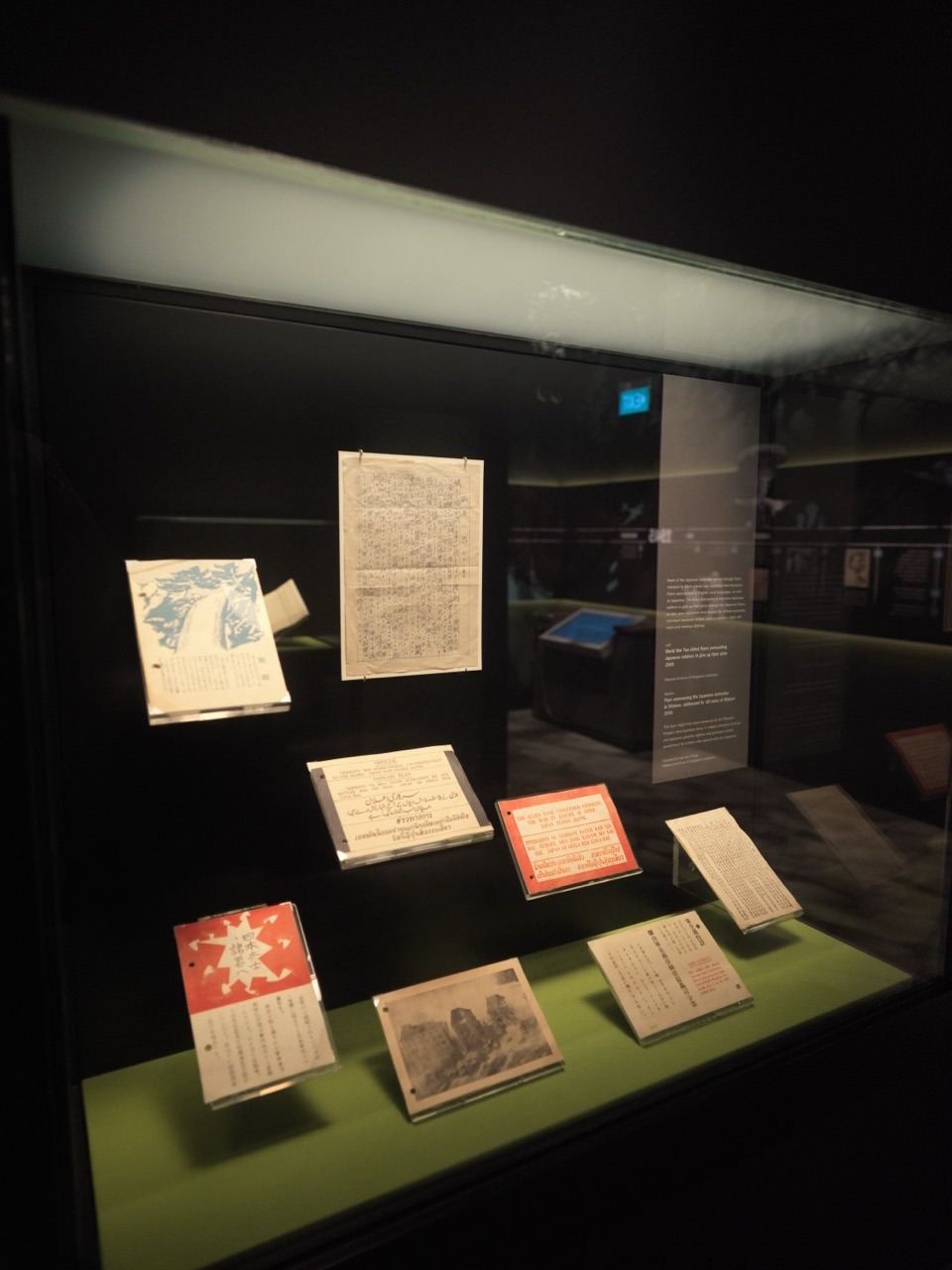
Singapore's 1945 was a year of liberation and an unfinished recovery. Japanese occupation ended, British military government returned, and residents began rebuilding lives that war had disrupted.
Rebuilding meant finding food, restoring health, reopening schools and earning a living. Announcements and actual services did not always advance together.
For related topics, explore the history of Japanese military rule, the end of occupation and British return, and the British Military Administration.
The final months of Japanese rule
An occupied city enters another year
Singapore entered 1945 under Japanese military rule, with no reliable public timetable for its end. The occupation newspaper, the Syonan Shimbun, opened the year by publishing messages demanding further cooperation with the war effort. Its editorial predicted victory, while official spokesmen presented work and endurance as obligations to the Japanese cause.
These declarations show what the authorities wanted Singapore's population to hear. They do not establish what residents privately believed, nor whether the promised victory seemed convincing to people struggling through occupation. The same issue announced charity concerts organised by the women's section of the Syonan Oversea-Chinese Association. Public assistance and cultural activity continued, but within institutions operating under military authority; they cannot be read as evidence that ordinary life had become secure or freely organised. Source
Money that bought less and less
A savings-bank passbook preserved by the National Archives provides a particularly concrete measure of the late occupation economy. Lee Hiok Khuang deposited five dollars in May 1944 and five thousand dollars on 13 August 1945. The larger number cannot sensibly be treated as evidence that his household had become a thousand times more prosperous: the archive uses the document to illustrate the collapse in the currency's purchasing power.
The same archival account describes the 1945 death rate as twice the prewar level, associating the increase with severe living conditions and shortages of basic food. This is a population-level warning, not a diagnosis of every death. Inflation and physical deprivation belonged to the same annual history: possessing notes, finding food for sale and obtaining enough nourishment had become very different things. Source
Bombing and the work of helping victims
Allied bombing brought further destruction to occupied Singapore during the final wartime months. The Syonan Shimbun of 27 February discussed the incendiary raid of the preceding Saturday, while publishing an official expression of thanks to residents who had helped after the attack. Its coverage combined practical concern over fire and emergency assistance with the occupation government's attempt to demonstrate public solidarity.
The newspaper's triumphant language needs to be separated from the underlying event. Singaporeans were responding to an air raid in their own city, whatever claims officials made about the political meaning of their assistance. The record also complicates any simple division between a military war and an untouched civilian home front. Rescue, temporary help and the protection of neighbourhoods were immediate demands on residents before anyone knew when surrender would come. Source
Medical and rescue workers before liberation
In May, local reporting again acknowledged the people doing emergency work. The Syonan Shimbun described tributes paid to the Medical Auxiliary Service and the Rescue and Observers' Squads for their response during recent air raids over Singapore. A separate item discussed support for the Auxiliary Fire Service. These were reports produced under occupation censorship, but they identify civilian services that were still functioning amid danger.
The same issue carried recruitment advertisements for clerical work requiring Japanese-language skills, alongside a notice about a Japanese proficiency examination. The juxtaposition is revealing: the administrative demands of occupation continued while emergency workers dealt with its hazards. A resident's employment or language training in this setting does not, by itself, establish ideological loyalty. Earning a living and keeping essential services running were practical problems throughout the last wartime spring. Source
Evacuation anxiety and fragile everyday routines
By early July, an evacuation announcement was prominent enough for the occupation newspaper to urge residents to take it seriously. Its 2 July issue published an interview with the local doctor C. Paglar supporting compliance. That is evidence of an official message being promoted, rather than proof that every household left Singapore or that the proposed arrangements provided adequate protection.
Everyday routines remained vulnerable to shortages. Another item reported that cinemas, reduced to a single nightly performance during June because carbon sticks and electric bulbs were scarce, were returning to two performances.
Such small details belong beside the larger military chronology. Entertainment required imported or manufactured materials, and even a familiar evening activity could be curtailed by supply failures. Its resumption offered a limited diversion without removing the pressures of an occupied city. Source
The Rimau captives do not survive the year
The consequences of Operation Rimau reached their final, tragic stage in Singapore on 7 July 1945. The operation itself had taken place in 1944. Ten members who were captured, including Captain Robert Charles Page, had been brought to Singapore; after trial by the Japanese authorities on espionage charges, they were executed. Their deaths should not be moved back into the year of the raid or absorbed into the later surrender celebrations.
The Australian War Memorial's account of Page also records the uncertainty that continued for his family. His wife initially received an inaccurate explanation of his death and learned the full circumstances only much later. This is one reason an annual account cannot treat liberation as an instant clearing of the historical record. Survivors and families still had to discover what had happened to people who would never return. Source
August and September: several distinct endings
The newspaper on the day of the announcement
The Singapore newspaper dated 15 August still carried Japanese military claims and an editorial urging cooperation with the occupation order. It was not a retrospective account written after the whole meaning of surrender had become clear. Its contents illustrate the gap between a date later remembered as decisive and the information available through an occupation-controlled publication at that moment.
It would be misleading to take these reports of Japanese successes as a dependable description of the war's actual course. Equally, the issue cannot tell us when every household heard the emperor's announcement or what each person understood from it. News travelled through different channels, and a newspaper's publication date is not a common timestamp for everyone's experience. Singapore's transition out of occupation has to be reconstructed through several separate developments. Source
Announcement and formal surrender are different events
On 15 August, Japan's emperor announced acceptance of the Allied terms set out in the Potsdam Declaration. The decision followed the atomic bombings of Hiroshima and Nagasaki and the Soviet entry into the war against Japan. The formal Japanese surrender followed aboard USS Missouri in Tokyo Bay on 2 September. These are separate stages in the ending of the wider war, rather than interchangeable dates for the restoration of government in Singapore.
The distinction matters locally because an announcement from Japan did not itself provide Singapore with a new administration, transport arrangements for released prisoners or a working civilian supply system. Those tasks required people, orders and resources on the island. The political decision to stop fighting created the conditions for the Allied return, while implementation unfolded over the following weeks. Peace was becoming possible before its practical benefits could reach everyone. Source
A relief mission reaches Changi
An object in the National Army Museum fixes one early relief arrival precisely. Captain R. G. Miller, of the 60 Indian Airborne Field Ambulance, parachuted onto Changi airfield on 30 August 1945. He belonged to the Repatriation of Allied Prisoners of War and Internees team. His surviving parachute canopy is therefore evidence of preparatory relief work before the main British return.
This was not the large public surrender ceremony, nor a general reopening of the island. It was a specialised arrival connected with people who needed medical assistance and arrangements to leave captivity. Keeping that purpose visible restores an important human dimension to the interval between the emperor's announcement and the better-known events of September. Source
4 September aboard HMS Sussex
The local handover had its own preliminary signing. An Imperial War Museums film catalogue dates the HMS Sussex proceedings to 4 September. It describes General Itagaki and Admiral Fukudome arriving by launch, going aboard the cruiser and joining a meeting in Admiral Cedric Holland's cabin, where the surrender was signed.
This shipboard agreement belongs between the Tokyo Bay instrument and the main British return to Singapore. It must also be distinguished from Mountbatten's later regional ceremony at the Municipal Building. The surviving film description supplies evidence of who attended and where the signing occurred; it does not require imagining the participants' private thoughts or treating every stage of surrender as one event. Source
The British return on 5 September
The National Archives dates the British return to Singapore to 5 September 1945. Its exhibition account describes relief and rejoicing among local people, while also stressing the disappointment that followed the British Military Administration's shortcomings. Welcoming the end of Japanese occupation did not require residents to regard the returning colonial government as beyond criticism.
That combination is central to the year's political meaning. Liberation ended an oppressive wartime regime, but it did not settle how Singapore should be governed in the future.
People could value the return of security while questioning official competence or colonial authority. The experience of war had opened different possibilities, including cooperation with the British over constitutional change and more radical political programmes. No single reaction can stand in for the whole population. Source
12 September at the Municipal Building
The formal Southeast Asian surrender ceremony took place at Singapore's Municipal Building on 12 September. The Imperial War Museums' description of the contemporary film records General Seishiro Itagaki entering with the Japanese delegation and Lord Louis Mountbatten taking his place with the Allied representatives. Mountbatten read Field Marshal Terauchi's authorisation for Itagaki to sign on his behalf, before the instrument was signed and sealed.
Outside, troops assembled on the Padang, a flag was raised and civilian crowds watched. The film record distinguishes the chamber proceedings from the parade and public spectacle. This was a regional military surrender, carried out after the wider Japanese surrender and after British forces had returned to Singapore. The building was then called the Municipal Building; referring to its later name, City Hall, should not obscure the contemporary setting. Source
Military government and the problem of money
The powers of the new military government
The restored Straits Times explained the new arrangement in its 7 September issue. The British Military Administration was a temporary military government, and the Supreme Allied Commander would hold extensive authority over persons and property. Its return brought a machinery of command and proclamations, rather than an elected local government taking office with a popular mandate.
The same issue announced a currency proclamation and reported local community leaders offering assistance in obtaining labour. These were urgent matters of implementation: which money could legally circulate, who would organise work and which authority could issue enforceable instructions. The newspaper itself had resumed publication after the occupation interruption. Yet the reappearance of familiar institutions should not be confused with a complete restoration of prewar conditions; their first work was to explain and manage an exceptional transition. Source
A currency change creates immediate hardship
By 10 September, the Straits Times was describing a serious gap between the rejection of Japanese currency and the availability of Malayan dollars. Its report said many residents could not buy food because they lacked the money now required. An accompanying item described stallholders distributing food on production of food-control cards when customers had no British currency with which to pay.
The hardship came from a sudden change in what counted as payment, not necessarily from the disappearance of every market stall or every item of food. A household's remaining notes could cease to serve their most basic purpose overnight. The stallholders' response also places local action within the recovery story: assistance did not originate only from official offices. Replacing a failed currency required a functioning means of getting usable money into ordinary hands. Source
Relief reaches people through local organisations
Relief work soon involved familiar places of worship and community networks. On 15 September, the Straits Times announced four distribution centres run by the Federation of Christian Churches' social-service committee, with assistance in Malayan currency for people already registered. The Chinatown centre was at Telok Ayer Methodist Church. The arrangement connected financial relief with a local organisation able to identify and reach applicants.
The newspaper also reported falling food prices and spending generated by service personnel and advances to some employees. Those were signs of renewed circulation, not proof that all families could afford a sufficient diet. Access to an employer willing to advance wages differed from having no job or being dependent on relief. The September recovery was therefore uneven even where shopkeepers and officials could point to improving commercial activity. Source
Health, relief and the long journey out of captivity
Prisoners need treatment as well as release
An Australian official medical history, drawing on assessments made in September, describes the poor health of released Australian prisoners on Singapore Island. Improved rations had begun to help, but serious malnutrition, deficiency illnesses and infection remained. Its figures and observations refer to this particular group of former prisoners; they should not be applied indiscriminately to every internee or civilian in Singapore.
The 2/14th Australian General Hospital arrived in Singapore on 13 September and occupied St. Patrick's School, taking over patients who needed further care. Medical staff who had themselves endured captivity could at last be relieved. Some survivors could travel by troop transport; others needed hospital ships or had to remain for treatment. The hospital continued its work until November, showing how recovery required suitable accommodation, fresh personnel and time after the announcement of peace. Source
Water conservation and mosquito control
The restoration of health also depended on public services outside hospital wards. A warning reported on 20 September described Singapore's water supply as serious and cautioned that waste could lead to supplies being cut. A separate report covered a Royal Air Force operation to spray the island against malarial mosquitoes using DDT, a chemical then attracting great official attention.
These measures show the range of the immediate public-health effort: keeping water available and reducing insect-borne illness were both part of recovery. The historical use of DDT is a record of what the authorities did in 1945, not present-day advice about pest control. Nor does the existence of a spraying operation establish that malaria had been eliminated. The newspaper records interventions and warnings at a particular point in a still fragile rehabilitation. Source
Free treatment and the reuse of medical experience
By 22 September, an official notice offered free treatment at government outpatient dispensaries. It named Joo Chiat Road, North Canal Road, New Market Road and Middle Road, as well as the Paya Lebar dispensary in Upper Serangoon Road and government hospitals. These named access points make the recovery more tangible than a general statement that medical services were restored.
The same issue announced a meeting of senior Medical Auxiliary Service personnel at the old Supreme Court to discuss reorganising the service for relief work. People and skills developed before or during the war were being drawn into the postwar response. Free treatment removed one barrier, while available staff and functioning local premises determined where help could actually be obtained. The notice describes a service being made accessible, rather than a claim that Singapore's accumulated medical needs had already been met. Source
Stranded workers and people without a home to return to
The October recovery included people who were neither returning officials nor celebrated military prisoners. A report of Lady Mountbatten's visit to Nee Soon Hospital described Dutch doctors and assistants, themselves former prisoners, caring for Javanese labourers brought to Singapore during the occupation and left stranded there. Their need for treatment and support persisted after the Japanese surrender.
In the same issue, a long local report examined former civilian internees still living at Sime Road. Release had not automatically supplied locally domiciled people with a usable home or an immediate means of resuming their previous lives.
These accounts broaden the meaning of rehabilitation. Singapore was treating displaced workers and sheltering former detainees at the same time that other survivors were being prepared for departure. Different groups needed different kinds of help, and their journeys did not end together. Source
Reconnecting families and restoring basic supplies
Notices published on 25 September show how much information still had to be pieced together. Returning bank officers offered news and photographs of Malayans who had spent the war in places including India and Australia. Another notice asked Indian nationals who had escaped prisoner-of-war confinement during the occupation to report so that their repatriation could be arranged.
The same issue announced an intended shipment of nearly fifteen million yards of cloth from India for Malaya's immediate needs. This was an announced dispatch, not evidence that every family had already received clothing. Together, these items describe the practical geography of recovery: people and information were scattered, and essential goods had to cross the sea. Finding relatives, securing travel and replacing worn household necessities remained distinct tasks, each dependent on arrangements beyond Singapore itself. Source
Education returns in stages
Thousands begin returning to school
On 1 October, four former Methodist mission schools in Singapore were reopening, with the Straits Times reporting that another three thousand boys and girls would resume schooling. The report placed this return against an interruption of three and a half years. It records a particular group of schools and pupils, not a single date on which all education across the island restarted.
That distinction helps explain the unevenness of the first postwar term. Institutions reopened as they could organise their staff, premises and pupils, while families had to re-establish routines around them. The same day's notices directed civilian employers to a labour office in the Chinese Protectorate building at Havelock Road. Schooling and employment were restarting together, but a child returning to class and an adult searching for work were encountering different parts of a still improvised recovery. Source
Examinations, housing and an idle waterfront
Reopening classrooms did not mean that an examination timetable had been restored. On 22 October, an official correction rejected a rumour that Senior Cambridge examinations would take place in January 1946. The stated expectation was that they would not be held in Malaya before December 1946. This was a forecast issued in October, not proof of a later examination actually taking place.
The same issue exposed other limits on restoration. Singapore Improvement Trust homes were occupied or being allotted, a waiting list already existed, and further applications could not be considered. At Tanjong Pagar, the paper reported that about seven thousand dock labourers had stayed away the previous day, leaving unloading idle. Students waiting for examinations, families seeking accommodation and labourers withholding work were all part of the same unsettled month, although their problems required different remedies. Source
The difficulties beyond the school gate
A letter published on 27 October complained that children in Pasir Panjang lacked an English school in their district and that transport difficulties prevented parents from sending them elsewhere. Another writer, speaking for older boys, described anxiety while waiting for higher classes to reopen. These were appeals from particular correspondents, rather than an island-wide school survey, but they identify barriers that reopening announcements alone could conceal.
Distance, transport and the availability of the right level of class mattered as much as whether some school buildings were functioning. For older students, another delay could further postpone the qualifications they had already been prevented from pursuing. The letters also show residents using the restored press to make claims on the administration. Education was becoming a public demand expressed by pupils and families, not merely a service described in official progress reports. Source
School broadcasting and the question of confidence
By mid-November, school broadcasts from Singapore had begun. The Straits Times reported that English, Chinese and Malay schools in Singapore and on the peninsula were being equipped with loudspeakers for programmes transmitted three times a week. The equipment was still being provided; the report should not be taken to mean every school already had a working receiver or could participate equally.
The issue also recorded Major-General Hone defending the refusal to recognise Japanese military currency, while acknowledging individual hardship. The two developments show different ways the BMA tried to make its authority effective: restoring a channel for teaching and explaining a deeply consequential economic decision. Neither could succeed through a proclamation alone. A broadcast needed equipment and an audience, while a currency policy had to contend with the daily difficulties of people who had lost their available means of payment. Source
Feeding children through schools and clinics
In November, an initial feeding scheme supplied free meals at Rangoon Road School, Telok Kurau Road School and Pearl's Hill Road School. Preschool children were also reached through Prinsep Street Clinic and Kreta Ayer Street Clinic. Archivist Cheryl-Ann Low's reconstruction identifies the Education Department as the implementing body, extending meals to clinic children at the Medical Department's request.
These were limited, named points of assistance, not a universal service already covering every hungry child. Their location explains the practical approach: use institutions where children could be reached rather than wait for an entirely new network of centres.
It also connects educational recovery with physical recovery. Returning to lessons was of restricted value if a child remained undernourished. The beginnings in 1945 should be distinguished from the larger welfare and feeding arrangements developed in subsequent years. Source
Reduced fees acknowledge an incomplete restoration
An announcement published on 1 December stated that fees at government and government-aided schools would be halved for October, November and December 1945 because full facilities were not yet available. Pupils who had already paid were to receive a refund of half the amount collected. The reason given is important: the administration itself acknowledged that reopened schools could not yet provide everything expected of them.
This was a fee reduction for specified schools and months, not a declaration of universal free education. It recognised a gap between what families were being charged and what institutions could deliver. Alongside the return to classes and the start of feeding arrangements, it shows the first postwar term being adjusted while it was in progress. Educational restoration involved financial decisions as well as buildings, teachers and examinations. Source
Work, trade and the cost of rebuilding
Wages become an immediate public dispute
The rebuilding of services depended on labour, but workers were also trying to rebuild household incomes. A report on 20 October described demands for a revision of wage rates after a BMA increase was criticised as inadequate against the cost of living. The Singapore labour organisation quoted in the report represented more than sixty labour bodies across the island.
The dispute was therefore about what a wage could purchase, not simply whether employment had resumed. Other notices in the same issue illustrate the piecemeal return of routine services: new stamps bearing the BMA Malaya overprint had gone on sale, ending an initial period of free postage. Workers, customers and administrators were all returning to systems of payment, but on terms that remained contested. A reopened service could be an achievement while its workers still considered their remuneration insufficient. Source
Small craft reconnect the food economy
Large ships and naval facilities were only part of Singapore's maritime recovery. On 1 November, Brigadier P. A. B. McKerron reported that an average of fifty junks a day were leaving Singapore for the Netherlands East Indies islands and small ports on the Malay Peninsula. Their purpose was to bring back vegetables, firewood and charcoal.
Those cargoes linked food supply to the fuel needed in homes and businesses. The routes also demonstrate why Singapore's rehabilitation could not be understood within the island's boundaries alone.
Small-scale coastal trade connected urban consumers with neighbouring producers, even while governments and shipping organisations dealt with larger reconstruction problems. McKerron's figure was an official account of activity, not a guarantee of equal access or affordable prices for every resident. The movement of supplies was one stage; their distribution and purchase were others. Source
Property and petrol still require special controls
By the end of November, some restrictions on property transactions were being relaxed. An official announcement allowed dealings in Singapore land where no dealings involving that property had occurred between 15 February 1942 and 5 September 1945. The qualification protected the distinction between an uncomplicated prewar title and property affected by transactions during occupation.
The relaxation did not mean that every wartime dispute had been resolved or that the entire moratorium had ended. Another notice in the same issue required essential-service petrol users to exchange their November permits for December permits at the Registrar of Vehicles office in Middle Road.
Such administrative details reveal the continued exceptional character of civilian life. Property could not always be freely transacted, and access to fuel still depended on authorisation. Recovery included deciding which restrictions could safely be lifted and which would continue. Source
Claims and the demand to reopen legal business
At the Singapore Advisory Council, members were still pressing for answers about wartime losses. A 15 December report said that a telegram had asked the War Office to send a Claims Commission to Malaya as soon as possible. The request is evidence of an unresolved process; it should not be turned into a claim that compensation had already been assessed or paid.
Dr Chen Su Lan also proposed an early end to the moratorium, the reopening of civil courts and an adjustment concerning limitation periods during the occupation. His intervention shows why legal reconstruction mattered to everyday economic recovery. People needed a way to resolve claims and obligations that wartime disruption had left uncertain. The council was discussing how normal legal business might resume, while residents and firms were still living with the consequences of records, property and transactions interrupted by war. Source
Cultural institutions and the public record
A surviving collection changes hands
The Raffles Library and Museum also passed from occupation management into the new administration. The National Library's institutional history records chief clerk Quan Ah Gun raising the Union Jack at the museum on 5 September, followed by Lieutenant-Colonel G. Archey's assumption of the directorship on 6 September. This sequence concerns authority and custodianship, rather than proving the precise date on which each public service reopened.
The account describes comparatively limited losses to the collections during occupation. Their survival was significant because a library and museum preserve accumulated material that cannot simply be replaced by reopening a building. It should not, however, be exaggerated into a claim that nothing was missing or disturbed. The staff's ability to preserve and recover books, specimens and records formed another part of Singapore's reconstruction, alongside the more visible work at clinics, schools and wharves. Source
The museum is already receiving the public
A contemporary report helps clarify the separate question of public access. On 23 October, the Malaya Tribune reported Archey's radio talk and stated that the museum was in order and open to the public. This is evidence of museum access by October; it does not require assigning the library's full reopening to the same date or combining the two institutions into one undifferentiated milestone.
The same issue advertised cinema newsreels of the surrender in Singapore and Penang. The year's events were already being presented back to local audiences through moving images, while the museum offered another public setting for encountering preserved objects. These forms of cultural life returned amid shortages and unsettled politics. They did not cancel the difficulty of recovery, but they gave residents ways to reconnect with institutions and representations of a world that had changed dramatically during the war. Source
The future of Singapore becomes a political question
London announces a different constitutional map
On 10 October, Colonial Secretary George Hall announced the British government's intended constitutional settlement. A Malayan Union would include the nine peninsular Malay states together with Penang and Malacca. Singapore was to receive separate treatment as a colony because of what the government described as its special economic and other interests.
This was a policy announcement in 1945, not the completed constitutional change that followed in 1946. Hall acknowledged the island's many ties with the mainland and left open the possibility of eventual union. The proposal consequently set two questions beside each other: how to restore administration after occupation, and how to redraw the political relationship between Singapore and its neighbours. For the island, liberation was leading towards a new colonial arrangement rather than a straightforward reinstatement of the old Straits Settlements structure. Source
The terms of consultation are challenged
The proposed separation was debated in the House of Lords on 19 December. Viscount Marchwood questioned dividing the Straits Settlements without consulting their inhabitants and asked why Singapore should be separated from its peninsular hinterland. His speech defended important features of the colonial order, so it cannot simply be counted as an anticolonial argument.
The government's reply defended its approach and pointed back to the October announcement. The exchange nevertheless makes clear that the proposed constitutional map was contested before its implementation.
Consultation, commercial connections, the Malay rulers' position and the relationship between different populations were being argued over. For Singapore's history, the crucial point is that a new boundary of administration was a political choice made and debated in the aftermath of war. It was not an inevitable geographical fact produced by the Japanese surrender. Source
The Malayan Democratic Union emerges
In December, the Malayan Democratic Union was formed in Singapore. The Library of Congress country study connects its emergence with opposition to the proposed separation of the island from Malaya. The organisation advocated Singapore's eventual inclusion in an independent Malaya within the Commonwealth, placing the island's future within a wider Malayan political community.
The party's formation added an organised local response to constitutional plans being discussed in London. It should not be treated as proof that all residents shared one political position, or that Singapore had already acquired representative self-government. Its significance lies in the claim that people here should help shape the coming settlement. By the close of 1945, the question was extending beyond how to repair the colony: it increasingly concerned who had the right to decide what the colony would become. Source
December: recovery remains unfinished
The year closes with workers returning and doctors speaking up
The final Straits Times issue of 1945 reported that eleven thousand Singapore workers, most of whom had been out for three weeks, were returning after a BMA proposal had been explained at a Farrer Park meeting. The report describes a settlement at that point, not the end of labour disputes in postwar Singapore. Its timing is a reminder that the first months after liberation contained sustained conflict over the conditions of recovery.
The same issue reported a plea for equal opportunities and treatment for locally trained doctors at a dinner of King Edward VII Medical College alumni. These were different constituencies making different claims, but both looked beyond gratitude for restored rule. Workers wanted acceptable terms of employment, while local professionals challenged unequal treatment. Singapore ended the year with institutions reopening and public expectations expanding, even as military administration and many unresolved hardships continued. Source
Continue to Singapore in 1946.