
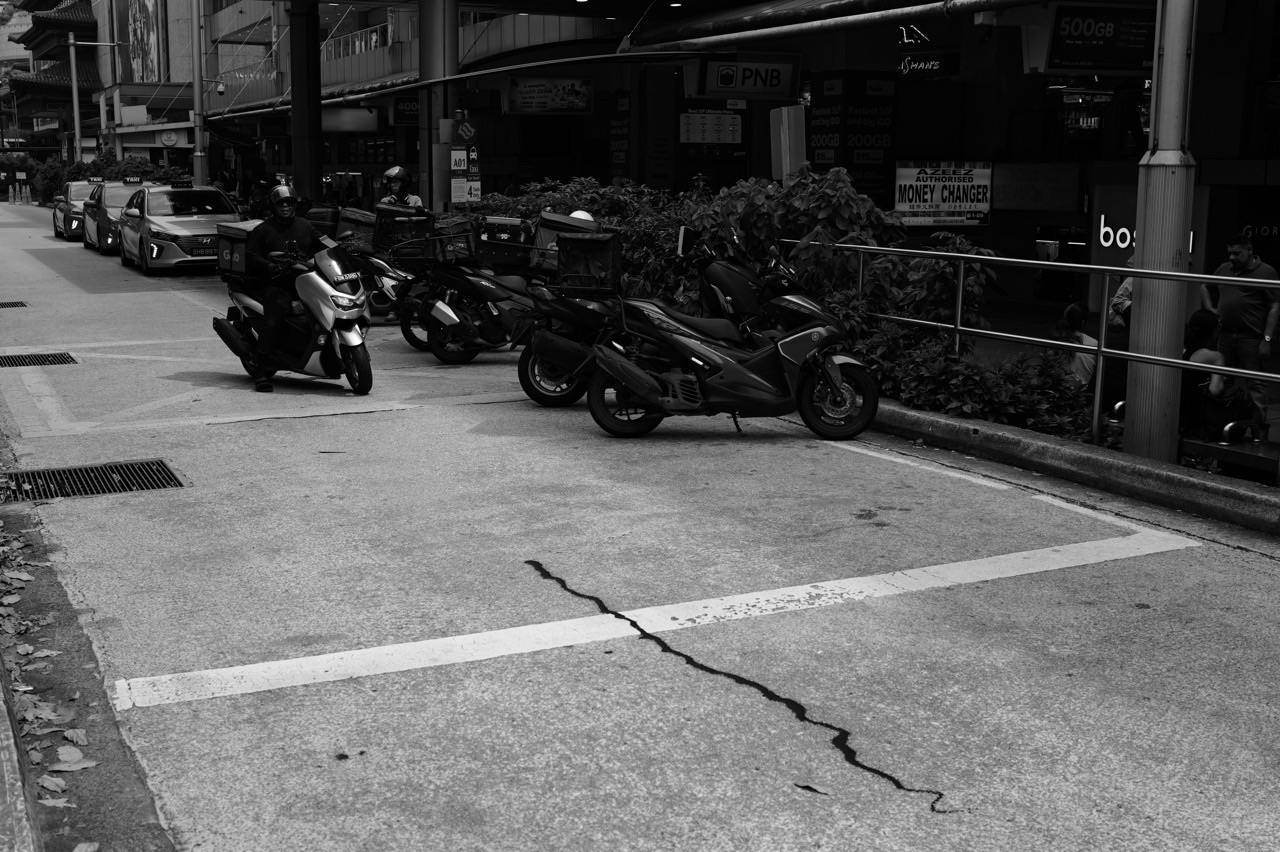
Did you know? A neighbourhood can have hundreds of bicycle parking spaces and still leave a cyclist with nowhere convenient or safe to park at the end of a journey. A rack may be on the wrong side of a busy road, hidden behind a building, too difficult to use with a heavy bicycle or placed where it blocks the walking route. The spaces exist on a map. The journey still feels incomplete.
Bicycle parking fails when planners count racks without checking whether those racks solve the actual problem faced by people arriving, leaving and moving around the area. Good bicycle parking must connect a safe route with a useful destination, an accessible parking space, reasonable security and a return journey that begins without unnecessary difficulty.
One-minute answer: Measure bicycle parking by usable spaces in the right places, not only total capacity. A successful system pays attention to walking distance, route continuity, rack design, ease of locking, access for different users, shared-bicycle rules, protection from weather, safety for pedestrians and practical maintenance. The real outcome is a cyclist who can end the trip responsibly and continue the day.
Why a bicycle journey does not end at the cycle path
Imagine a student cycling to a library. The cycling path reaches the neighbourhood, but the nearest rack is around the back of the building, past several vehicle access points. The student has to search, dismount and walk a long way.
The journey was not simply a transport movement. It included finding the destination, choosing a legal parking place, securing the bicycle and reaching the entrance. A weak final link can discourage the whole trip.
The same principle applies to rail stations, markets, community centres, workplaces and parks. Bicycle parking is part of the transport network, not a decorative extra beside it.
Singapore has substantial provision—and still needs local design
The Land Transport Authority’s cycling infrastructure information reports more than 280,000 public bicycle parking lots across public transport nodes, housing areas and parks, with most residential areas and transport nodes located within a short walk of parking facilities.
That is meaningful infrastructure. But a national count does not prove that a particular entrance has the right number, type and condition of racks at the hour people actually arrive.
The next planning question is therefore more specific: where do people want to stop, how do they reach the facility and which conditions make a space genuinely usable?
The difference between nominal and effective capacity
A rack counted as ten spaces might not comfortably serve ten bicycles in every real situation. Adjacent bikes may have wide handlebars, baskets, child seats or accessories. Some users may find an upper tier too difficult to operate.
Nominal capacity describes what the facility is designed to provide. Effective capacity describes what the actual range of users can use safely and conveniently.
If several spaces are regularly vacant while bicycles are locked nearby, that does not automatically mean people are irresponsible. It may indicate location, design, maintenance or access problems worth investigating.
A fictional station with unused racks
Consider a fictional MRT station with a large rack bank at one exit and a stream of cyclists arriving from the opposite direction. At the closer exit, bicycles accumulate in unsuitable places while the official spaces farther away remain underused.
A planner who looks only at total station capacity may conclude that nothing needs changing. A planner who observes the journeys may discover that the inconvenient final detour is shaping behaviour.
The solution requires appropriate site assessment, not a blanket instruction to park anywhere. Operators can examine directional demand, pedestrian access, legitimate land constraints and whether a suitable adjustment is feasible.
People park where their journeys actually end
A useful parking location sits near a destination without obstructing public movement or creating safety hazards. A facility hidden behind loading bays may be technically nearby but practically unattractive.
Evaluate the real walking route from the rack to the entrance. Consider crossings, steps, covered access, lighting and whether the cyclist needs to cross vehicle movements after dismounting.
Distance measured in a straight line on a map is not the same as the safe and accessible distance a person actually travels.
Why a five-minute walk may not answer every question
A five-minute walking distance from bicycle parking may be acceptable in some circumstances, especially when options are limited. For a quick errand, however, users may favour a much shorter last step. For a person carrying groceries or managing a child, even a short detour can matter.
Avoid treating one distance as a universal standard. Define the trip purpose and the user’s circumstances, then ask what is feasible.
A useful evaluation combines measured distance with observations of access, security, time of day and demand.
The rack design problem
Some racks support a bicycle’s frame securely and make locking straightforward. Others are awkward, offer poor support or create conflicts between neighbouring bikes.
Singapore’s LTA describes U-bar racks alongside double-tier designs and notes the role of lot markings in helping people park within designated spaces. Different layouts can serve different land and user needs.
A rack should be assessed with actual bicycles, not only an architectural drawing. Can a person insert, secure and retrieve a cycle without damaging adjacent bikes or blocking a path?
Not every bicycle is equally easy to lift
A double-tier rack may use space efficiently, but some riders cannot comfortably lift or position their bicycles on an upper level. A user may have limited strength or mobility, or the bicycle may be heavy or equipped with accessories.
A facility that offers a variety of appropriately designed spaces may be more inclusive than one that assumes every rider is young, strong and using a light conventional bicycle.
Accessibility is not achieved by counting every physical slot as equally usable. Consider who can use which slots, under what conditions and with what assistance or equipment.
The bicycle with a basket, child seat or unusual frame
A folding bike, commuter bicycle with a front basket, family bicycle and other models may occupy spaces differently. Designers should take realistic dimensions and manoeuvring needs into account.
A rack that fits an illustration of a standard bicycle may not work well when accessories overlap adjacent spaces. The result can be unusable marked lots even though nobody is deliberately parking badly.
Rather than assuming the rider is the problem, observe whether the facility supports the bicycles it is intended to accommodate. Any expansion or layout change should follow the responsible site owner’s requirements.
Locking matters as much as standing
A bicycle parked in an official rack can still be vulnerable if the rider cannot secure it properly. A wheel-only attachment or an unstable rack may leave the bicycle at greater risk than users expect.
LTA’s public-path code advises cyclists to use designated parking places and lock bicycles securely to help prevent theft. Riders should follow appropriate locking guidance and the facility’s rules.
No rack can guarantee against theft. Good security depends on the physical design, user practice, visibility and an appropriate response to reported problems.
Why an empty, remote corner feels unsafe
A rack may technically exist but feel unsafe to approach after dark because lighting is poor, sightlines are obstructed or the surrounding route is isolated.
A suitable assessment should consider the actual environment rather than assume every quiet corner is dangerous. Look for broken lights, difficult approaches, concealment and the ability to report maintenance problems.
Security concerns should be addressed with appropriate design and maintenance, not by telling cyclists to ignore how the space functions at different times.
Shelter can change the usefulness of a rack
Singapore’s tropical weather makes sun and rain relevant to daily travel. A commuter who parks for several hours may value shelter, especially when collecting a bicycle after a downpour.
Shelter can also introduce land-use, drainage, maintenance and cost considerations. The goal is not to promise covered parking in every location. It is to identify where weather protection would meaningfully improve use.
Check that shelter designs do not interfere with walking routes or create new drainage issues. The conditions around the racks matter as much as the roof above them.
Parking must not become a pedestrian obstacle
A bicycle leaning across a footpath can make the route harder for wheelchair users, parents with strollers and people with visual impairments. A crowded rack may also extend beyond its intended footprint.
LTA’s rules advise cyclists to park devices in designated locations. Properly designed facilities help users comply by making it straightforward to leave bicycles within markings and away from accessible movement routes.
The goal is not a contest between walking and cycling. Both depend on clear, predictable space and responsible behaviour.
Shared bicycles create a different parking problem
A privately owned bicycle is normally secured by its owner. A shared bicycle is part of an operator’s fleet, and the rider must complete the rental according to the platform and applicable parking rules.
Singapore’s LTA guidance states that shared bicycles must be parked in designated parking zones. It also describes using the bicycle-sharing app and the QR code at the parking area to end a trip.
A user who reaches the destination but cannot correctly complete the rental can face avoidable difficulty. The parking experience must therefore connect the physical site with the operator’s digital workflow.
A QR code is not a substitute for a parking bay
A marked shared-bicycle area can communicate where a trip should end. But the digital check must align with an accessible, usable physical place.
Problems may emerge if signs are unclear, the area is blocked or the user cannot identify the approved zone. Operators and authorities need appropriate processes for reporting mismatches or obstructions.
Users should use official app guidance, not bypass an ending requirement because a nearby unmarked place looks convenient. The solution to a poor interface is to fix the interface, not invent a new parking rule.
Where a charging or battery issue changes the design
Not every device that looks like a bicycle has the same legal classification or storage needs. A facility designed for conventional pedal bicycles should not be casually assumed suitable for every powered personal mobility device.
Owners, operators and facility managers must consider relevant local rules, fire-safety requirements and approved facilities for different device types. Do not improvise charging points or run extension cables across public areas.
This is a reminder that transport design is both physical and regulatory: define the intended users before designing a space for them.
Bicycle parking near schools
A school’s cycling arrangements should account for the surrounding routes, age-appropriate road and path safety, the relevant school rules and the ability to move bicycles safely around pedestrians.
A crowded entrance can become more difficult at arrival or dismissal times. Positioning racks well away from the natural flow of pupils may create inconvenient detours, while placing them too close can obstruct critical paths.
School leaders should coordinate site-specific arrangements with the appropriate authorities and follow safeguarding, supervision and safety requirements. This article does not tell pupils to cycle on unsafe routes.
Bicycle parking near shops and markets
Short errands create different demands from all-day commuting. A shopper may arrive carrying a bag, stop for only a few minutes and want a nearby visible space.
If the nearest designated racks are hard to find, riders may park in unsuitable locations. Wayfinding, feasible proximity and a suitable range of spaces can reduce that friction.
For businesses, the practical question is whether customers can complete an arrival responsibly without sacrificing pedestrian safety or lawful access.
Bicycle parking at transport interchanges
A bicycle can extend the practical reach of a rail or bus journey. Yet the interchange only functions as a useful transfer point if cyclists can find parking, secure the bicycle and reach the platform or boarding area efficiently.
Crowding at peak times may differ greatly from weekend demand. A station may also have multiple exits serving different cycling corridors.
Transport planners should observe actual approach directions, occupancy and movement patterns rather than assuming that an impressive stationwide total solves every access problem.
The abandoned-bicycle maintenance issue
A space occupied for long periods by a bicycle that is no longer being used may reduce capacity. But an apparently old bicycle is not automatically abandoned, and members of the public should not remove or interfere with someone else’s property.
Facility managers should follow the responsible authority’s lawful procedures for identifying and managing abandoned bicycles. Clear records, appropriate notices and due process matter.
Maintenance also includes checking loose fixtures, damaged racks, broken signs and blocked approaches. A nominal space that cannot be used safely is not functioning capacity.
A badly maintained rack creates hidden expense
When a rack is bent, corroded or unstable, riders may avoid it or risk damage to their bicycle. If the condition is not reported, a facility may look adequate on a map while its practical capacity declines.
Provide an obvious reporting route and an accountable maintenance owner. Inspection frequency should reflect the location, usage and condition without turning the routine into unnecessary paperwork.
Preventive care is generally preferable to waiting until many users complain about the same defect.
Why a parking map needs more than pins
An online map showing all bicycle parking facilities can be useful. But a pin does not necessarily tell the rider where the entrance is, which bicycle types fit, whether spaces are occupied or whether the location is accessible from the intended direction.
Where data is available and reliable, better descriptions and wayfinding can improve the journey. A map should avoid claiming real-time availability unless an appropriate system actually measures it.
Useful location information should be consistent with the physical signage, so the map and the street do not tell different stories.
A fictional community-centre audit
Imagine a community centre with a bank of U-bar racks beside its east entrance. Many users approach from a nearby cycling path on the west. They cannot see the parking, and some leave bicycles by a narrow walkway.
An observer measures the detour, checks path conflicts, watches arrival patterns and records where spaces remain unused. The report does not conclude that riders are bad or that every rack should move.
Instead, it asks whether additional signs, a feasible connection or a layout adjustment could make existing provision more useful. The owner and relevant authorities should evaluate changes before any work occurs.
Counting demand without misleading yourself
A one-off midday count may understate demand at a rail station. A school survey during holidays may tell little about term-time arrivals. And ten parked bicycles do not mean a site needs exactly ten spaces tomorrow.
Observe at relevant times and, where feasible, across several days. Separate occupied spaces, unusable spaces and bicycles parked outside designated areas. Note circumstances such as special events or maintenance closures.
The point is not to collect endless data. It is to avoid designing a permanent facility from one unrepresentative moment.
An example capacity calculation
Suppose a fictional site has forty marked spaces, but six are unusable because of a repair closure. Of the remaining thirty-four, thirty are occupied during the busiest observed period.
The physical occupancy would be thirty out of thirty-four usable spaces, approximately eighty-eight per cent. Reporting thirty out of forty as seventy-five per cent hides the temporary loss of capacity.
This example illustrates why denominators should describe what riders can actually use. It does not prescribe a universal target occupancy or automatically justify expansion.
The danger of measuring only spaces provided
An operator may report that it added fifty racks. That is a visible output. The outcome should include whether the racks are used appropriately, whether cyclists find them convenient and whether they reduce unsafe or obstructive parking.
A new parking facility could increase convenience for one group while creating access problems for another. Good evaluation notices both effects.
Ask what changes in real journeys after construction. If users continue avoiding the racks, investigate before declaring success.
A five-stage bicycle-parking review
A practical review can proceed in five stages.
- Locate: Identify the actual destination entrances, approach routes and existing designated spaces.
- Observe: Count real use at representative times and note user difficulties.
- Check: Inspect rack condition, accessibility, lighting, wayfinding and pedestrian clearance.
- Improve: Consider feasible design, management or communication changes through the responsible parties.
- Verify: Return after implementation to check whether the user experience improved without creating new problems.
The review should respect property ownership, current law and infrastructure design standards. It is an educational method, not permission for volunteers to install facilities on public land.
Accessibility should be tested, not assumed
A test with one standard bicycle and one able-bodied adult is too narrow to demonstrate that a facility suits a diverse community.
Consider people with varied mobility, different bicycle types, young riders accompanied by adults and users carrying bags. Where appropriate, involve relevant users in testing how the site is approached and used.
Avoid turning accessibility into an afterthought accommodated only when somebody complains. An effective facility is designed for the population it is meant to serve.
The problem with enforcement alone
Rules are necessary. Blocking footpaths or misusing shared-bicycle zones can create real problems. But repeated enforcement in a place with confusing signs or inconvenient parking may not solve the underlying design issue.
A balanced approach combines clear rules, workable facilities, appropriate reminders and proportionate enforcement. It should distinguish deliberate misuse from repeated design friction without excusing unsafe behaviour.
The objective is a place where responsible parking is the easy and obvious choice.
What cyclists can do immediately
Before a trip, learn where suitable designated parking is likely to be. On arrival, avoid blocking pedestrian routes, secure a privately owned bicycle appropriately and follow the applicable shared-bicycle end-trip process.
If a rack is damaged or access is blocked, report it through the relevant facility or authority channel. Do not relocate somebody else’s bicycle, obstruct a route in retaliation or install an unapproved lock fixture.
Individual behaviour matters, but the infrastructure must also support that behaviour.
How parents can teach the full journey
Children learning about active mobility should understand that safe cycling includes planning where to stop. A simple lesson can ask them to identify the destination, choose a suitable route, locate approved parking and explain why clear pedestrian access matters.
A supervised map exercise or a classroom scenario can teach these ideas without encouraging unsupervised cycling. The exact route, equipment and supervision must be age-appropriate and consistent with current local rules.
The lesson connects geography, civic responsibility, design and practical decision-making.
Common misconceptions
If there are enough racks in total, parking cannot fail. Not necessarily. Location, design, condition and access influence whether spaces are usable.
An empty upper tier proves there is no demand. Not necessarily. Some users and bicycles may be unable to use that space comfortably.
All bicycle types fit the same rack. No. Frame shape, accessories, weight and manoeuvring space can differ.
Bicycles should be parked wherever there is a small empty area. No. Follow the applicable designated parking rules and protect pedestrian access.
Shared bicycles can always end trips wherever a private bike can stop. No. Shared-bicycle schemes may require designated zones and official app steps.
More signage automatically fixes everything. No. Signs cannot compensate for a fundamentally unusable route or rack layout.
What success actually looks like
A cyclist arrives without an awkward last-minute search, finds a suitable designated space, secures the bicycle without blocking someone else and continues to the destination with confidence. On returning, the bicycle is accessible and the next journey can begin.
That experience may look ordinary. It is precisely what good infrastructure is supposed to deliver. A bicycle parking space only becomes a transport service when it works at the right point in a real journey.
Official guidance and evidence
Land Transport Authority — Cycling Infrastructure and Bicycle Parking describes Singapore’s cycling network, public bicycle parking provision and rack designs. LTA — Rules and Code of Conduct explains designated parking, bicycle locking and shared-bicycle zone requirements. Check current LTA instructions and specific site rules before travelling, installing facilities or making operational decisions.
Connected eduKateSG articles
Read The Gold Standard of Bicycle Parking Services, How Urban Planning Stalls, The Gold Standard of Urban Cycling Infrastructure and explore more in the How Things Fail series.