
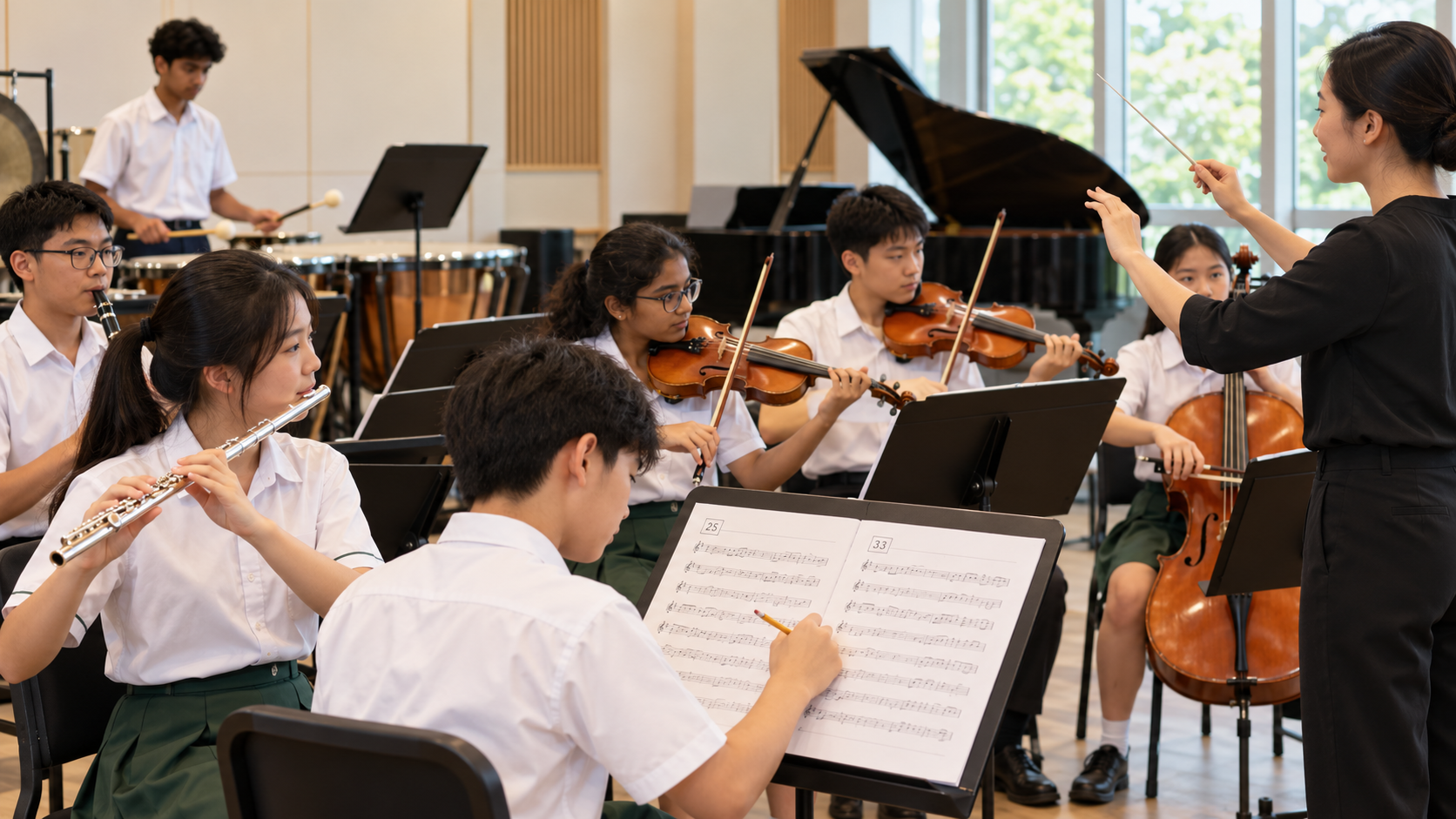
Did you know? A student may put a CCA first, enjoy the trial and still receive a different allocation. A preference is not a guaranteed place when equipment, training space and vacancies are limited.
Quick answer: School CCA selection fails when student interests, trials, application rankings, allocation criteria and actual commitments are treated as disconnected steps. A fair, useful process explains what choices mean, how capacity is handled and what the learner should do after official placement.
This guide explains how school CCA selection fails in Singapore, including MOE LEAPS 2.0, 2026 school-specific selection examples, trials, balloting, appeals and realistic participation. It separates official school policies from general principles and uses explicitly fictional cases.
Choose your reading route
- Understand the MOE purpose — CCAs, LEAPS 2.0 and development
- Know school differences — choices, dates, trials and vacancies
- Check the selection process — applications, deadlines and ballots
- Know your commitments — accessibility, DSA, schedule and travel
- Use the selection diagnostic — actionable family questions
- Quick answers — FAQs
Why a student’s first CCA choice is not always the CCA they receive
Did you know a student can rank a CCA first, attend its trial enthusiastically and still be allocated somewhere else? The selection form captures a preference, not a guaranteed place. Schools also have finite spaces, staff, equipment and safety-related capacity. Some CCAs use auditions or trials, and different schools communicate different allocation procedures. Confusion begins when parents read a choice form as a promise rather than one step of a selection process.
A well-run CCA system should help students express genuine interests, experience the activities, understand the conditions and receive a clear placement decision. It should also explain what happens when several students prefer the same limited opportunity. The aim is not to promise that everyone will get a first choice. It is to make choices meaningful, allocation defensible and the outcome supportive of sustained development.
The complete journey from curiosity to sustained participation
A pupil hears about available CCAs, reviews their activities and requirements, attends briefings or experience sessions, chooses and ranks suitable options, submits the correct form and may attend trials. The school then allocates places, communicates results and starts training. Over the years, the student develops skills, makes friends, contributes and sometimes takes leadership roles. Every stage matters.
A selection system can work technically but still fail educationally. A form may submit successfully while the family misunderstands the schedule; a trial may happen but fail to show beginners what progress feels like; a placement may be confirmed without making it easy to ask about an unsuitable commitment. A sound process is judged by the student’s resulting participation, not only by how many forms were received.
CCA participation is part of secondary-school education
Singapore MOE’s LEAPS 2.0 framework describes holistic education as including values, life skills, interests and talents beyond academic subjects. The four recognised domains are Participation, Achievement, Leadership and Service. The framework recognises sustained, active contribution rather than reducing CCAs to a single competition medal. A student’s selection therefore affects a meaningful part of secondary-school life.
Schools may have particular rules about required participation, attendance and changes. For example, Temasek Secondary’s CCA policy states that its students must participate in at least one CCA. Parents should check their own school’s current policy rather than infer that every timetable, attendance process or exception is identical. The underlying principle is that the activity is a developmental commitment, not an optional shopping catalogue in which every choice has unlimited capacity.
LEAPS 2.0 is not simply an extra point to chase
Some families begin the CCA conversation by asking which activity will deliver an admission bonus. MOE’s LEAPS 2.0 framework does recognise different levels of attainment, including a participation domain linked to sustained engagement. But it also addresses leadership, service and achievement. Choosing solely for a perceived points shortcut risks overlooking the activity’s actual demands and the child’s interest.
Review the current official framework rather than treating a particular school award as an automatic admission benefit. Students can grow through commitment, teamwork and contribution even if they never win a major competition. The stronger question is which CCA can support real development over several years. That foundation can make the recognised attainment a consequence of meaningful participation rather than the only reason for joining.
The first problem: the options list is longer than the explanation
A school may advertise uniformed groups, sports, arts and clubs in an impressive list. A student recognises some titles but has little idea what weekly practice looks like. “Robotics” may involve systematic design and programming; “performing arts” may require group rehearsal and public commitments; an outdoor group may include demanding physical activities. The names alone conceal differences in experience.
Provide a brief, concrete picture of each CCA’s ordinary sessions, expected commitments, relevant equipment and the kind of progress a beginner can make. Avoid romanticising competitions or presenting only the most accomplished members. An accurate introduction helps students rank options based on what they would actually be doing on a regular Wednesday, not only what appears appealing in an exhibition booth.
A trial is a learning opportunity, not always an acceptance letter
Students can leave a CCA experience session feeling excited and assume that attending means a place is secured. A trial may instead help teachers assess fit or potential and give pupils information before their preference submission. The same activity can have both purposes, and schools differ in how selection and trials relate.
Boon Lay Secondary’s 2026 instructions distinguish the selection form and later allocation results, while Temasek Secondary describes the balance of student choice, available vacancies and demonstrated ability or potential during trials. Schools should state which steps are exploratory and which lead to official placement. Parents should not treat an encouraging trial comment as a confirmed allocation unless the school explicitly says so.
The number of permitted choices differs by school
A parent hears that their friend’s child ranked eight CCAs and assumes their own school must offer eight. But Boon Lay Secondary’s 2026 exercise required eight choices distributed across four categories, while Peicai Secondary’s information described three preferred options. Those examples show that choice structure can vary meaningfully within the same national education system.
Read the actual selection instructions, including whether students must rank categories, how many choices are mandatory and how the school will communicate results. Do not copy last year’s procedure from another institution into this year’s application. A selection form should make its own rules understandable without requiring families to reconstruct them from parent-chat rumours.
A preference ranking cannot resolve unlimited demand
Imagine twenty students choosing a club with space for twelve. A fair-minded school cannot provide twenty safe placements merely because every application was sincere. Facilities, instruments, teacher supervision and team size can set real limits. A first-choice ranking identifies interest, but capacity still has to be managed.
A credible system should explain the relevant allocation process in general terms and use the school’s published criteria. It may include trials, auditions, priority considerations or a ballot depending on the school. Do not invent an islandwide matching algorithm. A clear explanation of scarcity can reduce resentment while preserving legitimate student expectations of fair consideration.
An audition may test today’s skill rather than tomorrow’s growth
A beginner who has never played an instrument might be less polished at a short tryout than someone who has had private lessons. If a school relies heavily on current proficiency without explaining its criteria, students may conclude that genuine interest cannot matter unless their families already paid for enrichment.
A balanced programme can consider potential, teachability, commitment and the actual requirements of the activity where appropriate. The governing criteria and safe capacity remain the school’s responsibility. Parents should ask what a trial is intended to assess rather than assume either that all beginners must be admitted or that every audition necessarily excludes them. Good communication separates prior experience from the chance to grow.
The loudest CCA booth can overshadow a better fit
At an exhibition, music, costumes, trophies and dramatic demonstrations can attract attention. A quieter club may offer exactly the kind of sustained learning a student would enjoy, but receive fewer visitors. The student might rank a popular activity because it looks exciting for ten minutes, without understanding the weekly commitment.
Help pupils look beyond promotional intensity. Ask what members do during an ordinary practice, how newcomers are taught and what students enjoy after the first few months. Families can encourage exploration without turning the selection into a competition over prestigious labels. Informed interest is more durable than a preference based solely on an impressive performance.
Peers can influence choice more than students realise
A new Secondary 1 pupil may want to join the same CCA as a close friend. That is understandable during a major school transition. But friends can be allocated differently, develop different abilities or discover incompatible schedules. A decision made only to remain together may leave one student unmotivated later.
Discuss whether the student would still choose the activity if their friend selected another one. A shared interest can be a genuine strength, but it should be distinguishable from fear of being alone. CCAs are also opportunities to form new friendships. The best choice supports the learner’s own curiosity and capacity for commitment.
Prestige is not the same as a sustainable learning pathway
A school team may be famous for medals or national performances. Students see the achievements and want to be associated with them. Yet the training culture, time demands or selection process may not match every learner’s situation. A well-respected CCA can be excellent without being the best choice for a particular child.
Ask about weekly routines, development for beginners and expectations during peak periods. Celebrate legitimate success while recognising that character, resilience and skill are built through steady participation. A student who thrives in a quieter club may gain more than one who joins a celebrated team but rarely engages meaningfully.
Primary and secondary CCA rules should not be mixed
A parent may remember a Primary School CCA policy and apply it to a newly posted Secondary 1 child. But age levels, school policies, LEAPS recognition and activity commitments can differ. Innova Primary, for example, describes a primary-school CCA process with balloting for oversubscribed activities and its own commitment arrangements.
Treat primary examples as evidence of local process rather than national secondary rules. Confirm the policy that applies to the actual student. A Primary 3 CCA experience and a Secondary 1 LEAPS-related commitment have overlapping educational aims but should not be presented as identical administrative systems.
Some registration dates arrive before families feel settled
Families entering Secondary 1 are learning new timetables, subject levels, teachers and school routines. CCA trial and choice deadlines may arrive in January while the child is still adjusting. A missed submission can narrow options or create avoidable anxiety even when the learner has genuine interests.
Use the actual school’s published timeline. Boon Lay Secondary’s 2026 selection window ran from 5 to 8 January, while Peicai’s listed trial and result dates differed. These were school-specific examples, not instructions for November 2026 or January 2027. Parents should identify the next relevant school deadline early and avoid copying archived dates without checking the year.
An online form can succeed without capturing the intended ranking
A student may click a familiar CCA twice, misunderstand the required category distribution or submit a list in the wrong order. The system records a valid form, but the choices do not reflect the student’s intended priorities. A confirmation screen does not guarantee that the applicant understood every field.
Review the submitted list with the student before the deadline. Where school rules allow corrections, use the official process rather than sending contradictory screenshots through class groups. Forms should clearly identify mandatory categories, rank order and submission status. The system’s goal is an accurate expression of preference, not simply a high completion percentage.
The preferred option may be missing from the final form
A pupil attends a club trial but cannot find that activity on the form, or discovers a code whose abbreviation is unfamiliar. They choose a different item under time pressure. The eventual allocation may then be correct according to the data but wrong according to the student’s intention.
School organisers should reconcile activity names across brochures, trials and forms. Families should ask the relevant CCA coordinator before guessing. The general principle is simple: consistent identifiers help the reader connect the activity they experienced to the option they actually submit.
Late submissions have consequences that need to be stated clearly
A family may assume the form will stay open for the entire term, while places are being allocated within a shorter period. A student who misses the deadline may find that their preferred CCA has already filled. The disappointed learner may feel that the system was arbitrary because the timing was never understood.
Current school instructions should explain the closing time and the process for late or exceptional cases. CHIJ Katong Primary’s 2027 CCA registration guidance says pupils who miss its November 2026 exercise can register when school opens, but only among remaining vacancies. That is one school’s process, not a universal national rule. Deadlines matter most when they are clear and consistently communicated.
Balloting is not the same as an audition
An oversubscribed CCA may allocate places through a ballot, while another evaluates a specific skill or potential through trials. Parents can regard both as arbitrary if the selection method was not explained beforehand. In truth they are different approaches to distributing limited places, with different fairness questions.
Innova Primary’s CCA FAQ describes balloting when applications exceed available spots, while Temasek Secondary mentions a balance including trials or auditions. Neither example proves how another school must allocate. The legitimate expectation is clear criteria appropriate to the programme, communicated before the outcome wherever practicable.
An allocation result should identify an actual next action
A student is told they have been assigned to a club, but no training schedule, venue or teacher contact is provided. They assume the CCA will begin later and miss the first session. The allocation process recorded a successful placement while the participation process has not begun reliably.
Publish the confirmed activity, reporting instructions, first attendance expectations and official help route. Boon Lay’s 2026 school page separately identified result access and the earlier selection exercise, while Peicai published first-session details as part of its timeline. A reliable allocation ends with practical onboarding rather than only a congratulatory status.
The second-choice placement can be a genuine opportunity
A student may be upset by receiving their second or third preference, especially after investing emotionally in the first-choice trial. Adults can unintentionally deepen the disappointment by describing the allocated CCA as an inferior consolation prize. That response overlooks opportunities the pupil has not yet explored.
Explain the reason a first choice was not guaranteed without pretending disappointment is unreasonable. Encourage the student to learn what the allocated activity actually involves and what support beginners receive. A fair outcome does not always feel fair immediately; clear communication and meaningful onboarding can help the student evaluate the new opportunity on its own merits.
Appeal routes are not unlimited chances to re-rank preferences
A family might assume any unhappy student can change CCA immediately after allocation. Some schools have published appeal windows or require approval for changes. In others, places are already committed and a change can affect team organisation, staffing or the learning of other members.
Check the specific school’s appeal or change process, grounds and timing. Temasek Secondary says changes require permission in its policy, and CHIJ Katong Primary gives different timing for changes in its 2027 exercise. These should not be mixed into one invented islandwide deadline. Parents should provide relevant facts respectfully rather than flood informal channels with requests that cannot authorise a transfer.
Health, accessibility and individual needs deserve proper review
A child may have a medical or accessibility consideration affecting participation in one activity. Another student may need a particular training adjustment. A standard form may not capture the necessary context, and families may be reluctant to disclose sensitive details publicly to explain why one option is unsuitable.
Use the school’s authorised confidential process to discuss relevant participation needs. Ensure the educational opportunity is considered fairly with suitable staff and professional input. Never assume that a diagnosis automatically excludes the student from every demanding activity, nor make unsupported promises about specific accommodations. A compassionate system separates sensitive individual decisions from public ranking chatter.
DSA and other special admission commitments may matter
Some students entered a school through Direct School Admission in a related talent area and may have commitments relevant to their participation. They should not treat the general open CCA form as the entire source of their obligations. Equally, other students should not infer that the DSA pathway guarantees every ordinary applicant a place.
Confirm the actual terms communicated by the school to the particular student and use the appropriate CCA coordinator for questions. Some school selection documents distinguish DSA entrants from ordinary form submissions. That is an example of a separate process, not permission to generalise that all DSA cases work identically across institutions.
Timetable conflicts can make a good CCA impractical
A student genuinely enjoys an activity but has a long commute, family responsibilities or another school obligation that makes weekly attendance difficult. A family may rank the CCA based on content alone and only later discover that training continues into an evening when the child cannot travel home comfortably.
Review confirmed training days, ordinary finishing times, peak-period commitments and travel before finalising preferences. Avoid assuming every CCA meets only once weekly or has an identical end time. A sustainable choice requires both interest and realistic logistics. Good selection supports a student over years, not only during the excitement of an open house.
Examination periods and training commitments need clear expectations
Students sometimes expect every CCA to suspend automatically around tests or that competition preparations have no effect on family schedules. Actual school procedures and events can differ. When expectations are unclear, parents may see attendance and academic planning as competing instructions.
Ask how the school manages ordinary training and special periods, without promising universal exemptions. Students benefit from learning to plan homework, rest and participation together. The aim is a healthy balance consistent with the school’s rules and the learner’s needs, not an endless competition between academic marks and co-curricular growth.
Transport can become the hidden cost of participation
Even where a school-based CCA has no participation fee, the family’s experience may include travel, meals or timing pressures. Some specialised arrangements occur outside the school campus or involve extra commitments. Families can discover these differences only after allocation if the introduction focuses entirely on the activity itself.
MOE’s Strategic Partnership CCA FAQ discusses activities and travel considerations under its specific arrangement. That does not establish the costs of every CCA. Schools and families should verify the exact venue, schedule, authorised payments and practical transport needs. A good access decision recognises the complete commitment rather than only the advertised sign-up price.
The most expensive equipment should not define talent
Students may associate a sport, instrument or technology club with owning specialised gear before they can participate. Families might assume they must buy expensive equipment to show commitment, even when the school has its own arrangements. Others may feel excluded before asking what is actually necessary.
Check the official list of required items and whether suitable equipment or assistance is provided. Do not invent costs or promise universal free provision. The educational value of a CCA should be assessed by the learning and participation it supports, not the amount of private spending a family can display at trial.
A talented student may still need an inclusive beginner pathway
A club can have advanced performers and new students at very different levels. If every session is pitched to the strongest members, an admitted beginner may struggle to find meaningful participation. The selection was technically successful but the education afterward is weak.
Ask how basic skills are taught and how newcomers can contribute safely while improving. The CCA’s actual training requirements remain important. A good programme combines appropriate challenge with developmental steps and a respectful team culture. Winning selection is not the end of support.
A CCA that looks popular may not match the learner’s strengths
A pupil might choose a sports team because it has a reputation for success, yet discover that they enjoy the problem-solving in a technical club more. The opposite can happen when an academically oriented family assumes the child should join another classroom-style activity while the student thrives in movement and teamwork.
Use the trial and experience period to learn about motivation and capabilities, not merely to confirm an earlier adult preference. MOE’s LEAPS guidance encourages parents to discuss interests, strengths, personal goals and the capacity to manage commitments. These conversations are more informative than asking which CCA sounds best on a school brochure.
An unsuccessful trial should not become a verdict on the child
A student who is not selected may interpret the outcome as proof they lack talent. That is especially difficult during Secondary 1, when children are adapting to new classmates and expectations. The result may instead reflect limited vacancies, current preparation or specific activity needs.
Communicate rejection respectfully and distinguish evidence about this selection from claims about the person’s long-term ability. Offer practical information about allocated alternatives and future opportunities where they genuinely exist. Do not promise a successful appeal merely to soften the disappointment. A fair process protects self-respect while being clear about constraints.
CCA attendance and achievement are not the same metric
A learner can attend every session but contribute very little, while another may demonstrate meaningful growth without collecting trophies. A school needs accurate participation records for its responsibilities, but a simple attendance count cannot by itself describe all the skills, teamwork or leadership developed.
MOE’s LEAPS 2.0 Participation domain considers sustained engagement and relevant contributions, with specified criteria. Families should check how their child’s school records attainment and how other domains are assessed. Avoid using a competition result alone as a proxy for a student’s entire CCA development.
Changing interests should trigger a conversation, not an immediate withdrawal
A student may lose enthusiasm during the first difficult months, or discover through honest experience that another area fits better. Neither reaction automatically means the original allocation was a mistake. But forcing a child to persist without investigating serious barriers can also undermine participation.
Ask what has changed: the activity itself, social dynamics, workload, health, transport or a temporary challenge in skill development. Then review the actual school’s change rules and support options. Sustained commitment has educational value when it is purposeful and appropriately supported, not when every concern is dismissed as disobedience.
A parent chat is not an appeal board
Families may compare allocations in informal messaging groups and conclude that somebody was treated unfairly because their child had a higher preference ranking or a stronger trial performance. Without access to the complete authorised criteria or capacity constraints, the chat can intensify uncertainty while offering no power to correct a record.
Use the school’s prescribed clarification or appeal route. Protect the privacy of other pupils and do not demand that classmates reveal their medical, DSA or trial information. Parents can support one another emotionally while still recognising that allocation decisions and formal reconsiderations belong to the responsible school personnel.
Fictional case: five choices but only one genuine interest
Illustrative case: a Secondary 1 student ranks a competitive performance CCA first and fills the remaining positions casually, assuming the first is guaranteed. The activity is oversubscribed, and the school allocates the fourth choice. The pupil feels trapped in a CCA they barely investigated.
The repair begins before submission: explain that rankings matter, experience several credible alternatives and ensure every listed option is something the learner can genuinely consider. The example is fictional and does not accuse any school. It demonstrates why a form that is technically complete can be a poor expression of informed preference.
Fictional case: a trial result confused with official placement
Illustrative case: a pupil receives encouraging feedback at a sports tryout and tells family members they have joined the team. The school later publishes allocation results showing a different CCA because more students passed the trial than there were available places. The family believes the school reversed a promise.
A clear distinction between shortlisted, preferred and officially allocated would reduce the misunderstanding. Schools and parents can explain what each status means, with the child’s actual selection letter as the final source. The case is fictional; its lesson is about accurate status communication at every handoff.
Fictional case: a brilliant CCA and an impossible journey home
Illustrative case: a student loves a technology club but discovers after joining that ordinary practice ends too late for the family’s transport arrangement. The child misses sessions and begins worrying about attendance. The initial selection was made without considering a practical condition that determines whether participation is sustainable.
A better choice process checks the schedule and commute before ranking, then uses official school support when difficulties arise. The school should not have to invent a different timetable for every family, but accurate information helps families choose responsibly. The example shows that participation starts with a realistic weekly journey.
A seven-question CCA selection diagnostic
What genuine interest does the learner have? What happens during an ordinary CCA session? Are trials exploratory or selective? How are choices ranked and limited places allocated? What are the training and travel commitments? How will results and changes be communicated? What support is available if an assigned activity proves unsuitable?
These questions are a family decision aid, not a compulsory national allocation rubric. Answer them from the school’s current official documents and appropriate school personnel. A successful process is one in which the learner makes informed choices and understands how placement turns into real sustained participation.
A four-week family and school improvement sequence
Week one: map the available CCAs and the learner’s interests. Week two: review experiences or official activity descriptions and clarify selection criteria. Week three: check schedules, prerequisites and the ranking form. Week four: confirm the submitted choices or, after allocation, review onboarding and the relevant appeal route. Actual schools may have much shorter timelines, so this is not a substitute for their deadlines.
Some selection exercises run in January and others at different times. Follow the published school calendar rather than this illustrative sequence if a deadline is imminent. The wider principle is to complete the right thinking before pressing Submit, then verify what the school actually allocated.
What parents can ask without taking over the decision
Ask the child which activity they would still enjoy if their closest friend joined another CCA, what a typical practice would look like and how the commitment might fit around schoolwork and rest. Help review official dates, transport and required materials without deciding solely on trophies or perceived academic prestige.
MOE encourages supporting student interests, setting goals and managing commitments. Parents can provide realistic constraints and emotional support while allowing the student to own the learning journey. A good conversation prepares the learner to participate, not merely to win the family’s preferred slot.
What teachers and CCA coordinators can improve
A school can help by keeping activity names consistent across booths, trials, forms and allocation results. It can explain available places, broad allocation considerations and how students should ask about special circumstances. After allocation, a clear first-session message can help pupils begin successfully.
The objective is not to reveal confidential evaluation details or promise an impossible first-choice rate. It is to make the process understandable and respectful, with accurate status language from interest through confirmation. A young student deserves to know whether they are trying an activity, applying for a place or officially becoming a member.
The final principle: a choice is only the start of commitment
CCA selection succeeds when students have a meaningful chance to explore interests, express preferences, understand real constraints and enter an activity where growth is possible. Limited vacancies and trials are not automatically evidence of unfairness, but unclear criteria and poor communication can undermine trust.
The lasting outcome is not a successful online form or the prestige of a first-choice placement. It is a student who learns, contributes, perseveres appropriately and builds friendships and skills over time. The best selection process connects that educational purpose to an honest, workable allocation system.
Frequently asked questions
Is a first-choice CCA guaranteed in Singapore?
No general guarantee exists. Schools may balance student preferences with vacancies and, where applicable, trial or audition outcomes. Check the school’s current CCA policy.
Do all secondary schools require the same number of choices?
No. Official 2026 examples differ: Boon Lay Secondary listed eight choices while Peicai Secondary listed three preferred options. Follow the child’s own school’s instructions.
Do CCA trials mean the student is accepted?
Not necessarily. Trials can provide experience or help assess suitability. Only the school’s official allocation confirmation establishes placement.
Does the LEAPS 2.0 framework reward only competition medals?
No. MOE recognises Participation, Achievement, Leadership and Service. Sustained engagement and meaningful contribution matter, subject to its published criteria.
Can a child change CCA if they are unhappy?
Change and appeal rules vary by school, including deadlines and approval conditions. Use the relevant CCA coordinator and official policy rather than assuming immediate transfer.
Should parents select the most prestigious sports or arts CCA?
Prestige is not proof of suitability. Review the child’s interests, available training, weekly commitments, transport and realistic opportunities for growth.
What if a child has an accessibility or medical consideration?
Discuss relevant needs through the school’s authorised confidential process. Decisions should follow actual school and professional guidance, not assumptions made from a diagnosis.
Evidence and further reading
- Singapore MOE: LEAPS 2.0 Framework — Participation, Achievement, Leadership and Service
- Boon Lay Secondary (2026): Secondary One CCA Selection Exercise — eight ranked choices and allocation results
- Peicai Secondary (2026): CCA Matters — trials and three preferred choices
- Temasek Secondary: CCA Matters (updated 5 November 2026) — vacancies, preferences, auditions and policy
- Innova Primary School: CCA FAQs — school-specific balloting and changes
- CHIJ Katong Primary: CCA Registration for 2027 — November 2026 form window and conditions
- MOE: Strategic Partnership CCA FAQs — special arrangements, endorsement and commitments
- What to Know After PSLE Results | Choosing a Secondary 1 CCA, Trials and LEAPS 2.0
- Which School to Choose After PSLE Results | A Famous Sports Team or a CCA Your Child Can Actually Join?
- What to Know After PSLE Results | Strategic Partnership CCAs
- How School Choice Fails | When Rankings Replace Student Fit
- Secondary 1 Mathematics Tutor Clementi | Small Groups Tutorials — unchanged editorial reference
Scope: School-specific deadlines, choices, trial methods and appeal policies are examples, not national uniform rules. The MOE LEAPS framework describes recognised development; actual interpretation and current admission rules must be checked against official school and MOE guidance. All student cases are fictional. Personal health and support matters require confidential school procedures.