
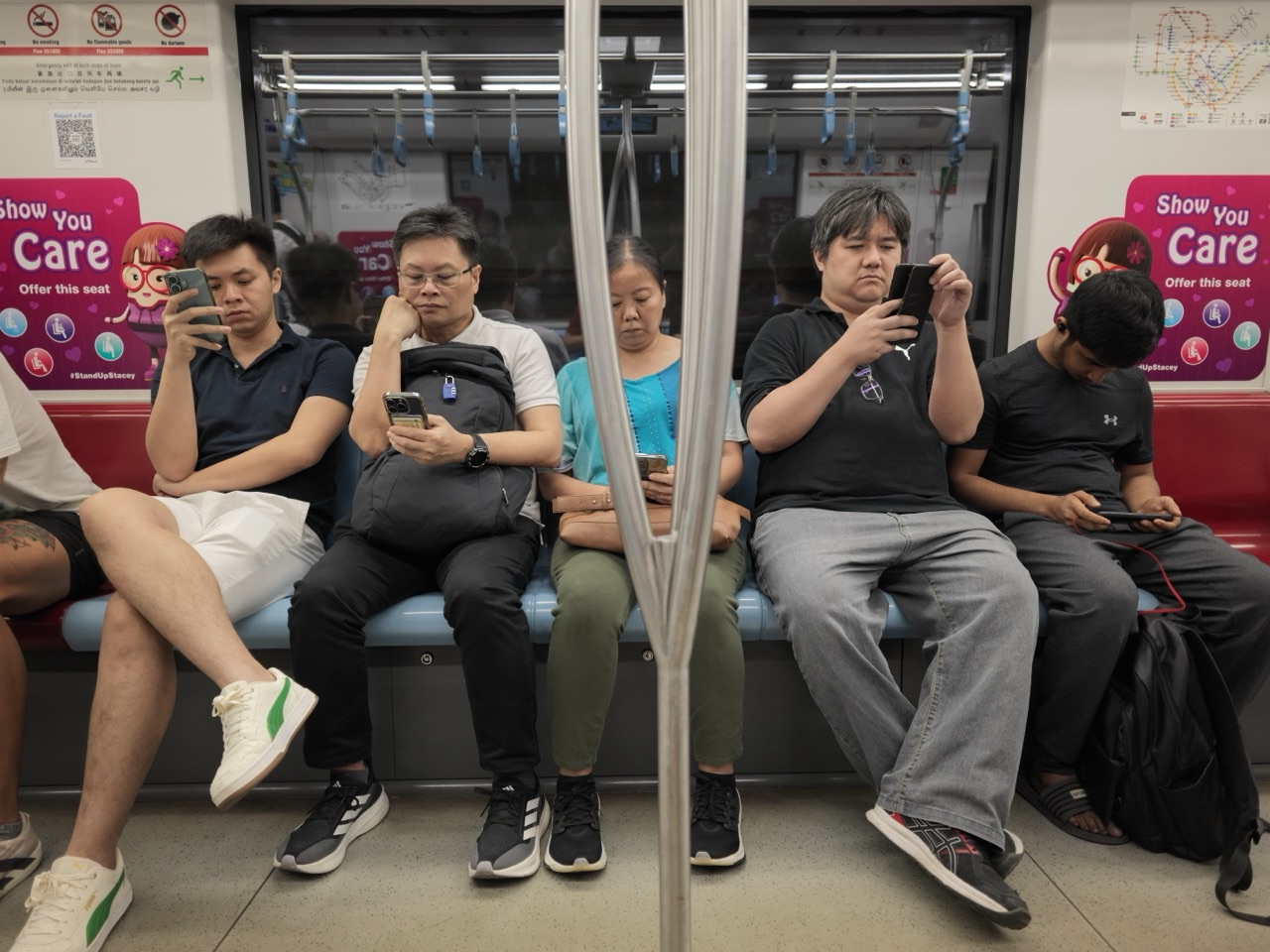
How Singapore connects is not only about roads, rail and physical movement.
Information moves too.
Did you know that a video call, homework upload, map request, bank transfer and government service may all begin with the same quiet act: your device finds a network?
Sometimes that network is fibre entering a building.
Sometimes it is 4G or 5G from a mobile base station.
Sometimes it is Wireless@SGx in a public place.
The user sees a screen.
Underneath, packets are travelling through layers of infrastructure that were designed so ordinary people do not have to think about every cable, radio signal and routing decision.
This article follows Singapore’s everyday digital connection layer: fibre broadband, mobile networks, Wi-Fi, public hotspots, devices, routers and the human capability needed to turn connectivity into useful action.
The canonical mechanism owners remain How Singapore’s Nationwide Fibre Network Separates Passive Infrastructure from Retail Internet Service and How Spectrum Licensing Turns Invisible Radio Frequencies into Mobile Connectivity. Here the focus is the connection lens: how do these layers meet inside ordinary Singapore life?
Did You Know? The Internet Does Not Begin on the Screen
A browser page feels digital and weightless.
But the path begins in physical infrastructure.
A home fibre connection reaches an optical network terminal and router.
A mobile phone exchanges radio signals with a cellular network.
A public Wi-Fi hotspot links nearby devices into another network path.
The interface is wireless or digital.
The infrastructure behind it is very real.
The Nationwide Broadband Network Is the Fixed Backbone
IMDA describes Singapore’s Nationwide Broadband Network as a high-speed internet network serving homes and businesses. The shift from older copper and coaxial systems toward fibre created the foundation for Singapore’s modern digital connectivity.
Fibre is powerful because light can carry large amounts of information over long distances with low loss.
The cable is tiny.
The capacity is enormous.
Did You Know? A Fibre Network Has Layers Too
The fibre entering a building is only one part of the system.
Passive infrastructure includes ducts, fibre and physical connection points.
Active infrastructure includes powered network equipment that moves and manages traffic.
Retail internet services sit above those infrastructure layers.
The user buys an internet plan.
Several technical and commercial layers cooperate underneath.
Open Access Changes the Shape of Competition
IMDA’s NBN framework separates key infrastructure roles and requires open-access arrangements so service providers can use the underlying network.
The systems lesson is larger than telecommunications.
Shared infrastructure can support multiple service providers when interfaces and rules are designed for interoperability.
One physical foundation can support many customer-facing services.
Home Wi-Fi Is the Last Few Metres
The fibre can reach the home perfectly and the user can still have a poor experience.
Why?
Because the last connection may be Wi-Fi.
- router location;
- walls;
- interference;
- device capability;
- distance;
- network congestion; and
- configuration
can all affect performance.
The national network reaches the building.
The home network finishes the journey.
Mobile Networks Solve Movement
Fixed broadband is excellent when the user is near the fixed connection.
Mobile networks solve another problem: the user is moving.
A phone can remain connected while walking, riding a bus or travelling across town because the network hands the device between coverage areas.
The user experiences one session.
The network manages repeated handoffs.
Radio Spectrum Is Invisible Infrastructure
Mobile devices communicate using radio frequencies.
Those frequencies are shared resources.
They must be allocated and managed so different services do not simply interfere with one another.
That is why spectrum regulation is part of the connectivity system.
The air feels empty.
Operationally, it is organised.
5G Changes Capacity and Latency Expectations
5G is not simply a faster number beside a phone icon.
It can support higher capacity, lower latency and different network architectures for applications that require responsive or dense connectivity.
For ordinary users, the visible effect may be faster downloads or smoother services.
For industry, the possibilities include connected machines, logistics, sensing and other digital-physical systems.
The same network family can serve both entertainment and infrastructure.
Wireless@SGx Adds a Public Connectivity Layer
IMDA describes Wireless@SGx as a free public Wi-Fi service providing high-speed internet connectivity at participating hotspots. Wireless@SG hotspots are deployed at locations such as MRT stations, malls, hawker centres and community centres.
That creates another kind of network coverage.
Instead of connectivity belonging only inside a home or private subscription, public venues can become access nodes.
The Hotspot Is a Digital Room
A café table, community centre, library or station can become a place where a person checks directions, completes homework, sends a message or accesses a service.
The physical place and the digital network overlap.
That overlap is increasingly normal.
We no longer ask whether a place is physical or digital.
Most useful public places are both.
Did You Know? Seamless Roaming Is a Trust Agreement Between Systems
IMDA describes Wireless@SG as using a federated model that supports roaming across hotspots operated by different Wireless@SG operators.
The user does not want to relearn the connection process every few metres.
Standards for identity, login and security allow separate operators to present a more consistent experience.
Interoperability turns many hotspots into one perceived network.
Automatic Login Changes Behaviour
A network that requires a complicated sign-in every time creates friction.
Wireless@SGx supports profile-based or SIM-based setup so compatible devices can reconnect more automatically after initial configuration.
That small reduction in friction matters.
Infrastructure becomes more useful when the user does not have to negotiate it repeatedly.
Digital Connectivity Connects to Education
eduKate’s How Education Works | School Connectivity explains how broadband, Wi-Fi, devices and reliability become digital access in learning environments.
A student can have excellent educational content available online and still be blocked by poor connectivity or a weak device.
Access is a chain.
Content is only one link.
Digital Connectivity Connects to Payments
The previous article How Singapore Connects | PayNow, QR Codes and Everyday Payments depends on reliable connectivity.
A QR payment begins in a physical shop but the instruction must travel digitally.
The coffee, taxi ride or grocery item is physical.
The payment network is informational.
Digital Connectivity Connects to Transport
Journey planners, ride-hail apps, real-time bus information, digital maps and ticketing all depend on data networks.
A modern transport system therefore has two overlapping maps:
- the physical network that vehicles move through; and
- the information network that tells people how to use it.
When the digital layer fails, the tracks and roads remain.
But navigation becomes harder.
Digital Connectivity Connects to Healthcare
Appointments, results, teleconsultations, digital records and health information depend on secure connectivity.
That places digital infrastructure underneath How Singapore Connects | Hospitals, Clinics and Care Pathways.
A care pathway increasingly includes both physical visits and information flows.
Digital Connectivity Connects to Community
Community clubs and public libraries can host digital access and digital-help functions, linking this article to How Singapore Connects | Digital Ambassadors and Community Hubs.
The network can reach the device.
A human helper may still be needed to help the person reach the network confidently.
The Device Is Part of the Network Experience
Two people can stand in the same place on the same network and have different experiences because their devices differ.
Hardware capability, operating system, storage, battery health and software configuration all matter.
Connectivity is therefore not a single property of the network.
It emerges from network, device and user together.
A Small Example: Homework Upload
A student finishes an assignment.
Laptop connects to home Wi-Fi.
Wi-Fi connects through the router to fibre broadband.
The file travels through internet infrastructure to a school platform.
The teacher opens it elsewhere.
One homework submission crosses several invisible networks.
A Small Example: MRT Navigation
A traveller exits a station and checks a map.
Mobile data loads the route.
GPS estimates position.
The app displays a walking path.
Wayfinding signs confirm the physical route.
Digital and physical navigation cooperate.
A Small Example: Public Wi-Fi
A visitor enters a mall or community location and connects to Wireless@SGx.
The hotspot extends internet access into the public environment.
The user may search information, message family, navigate or use online services without relying entirely on a private fixed connection.
What Can Break Digital Connectivity?
- fibre cuts;
- router failures;
- poor in-home Wi-Fi coverage;
- mobile dead zones;
- radio interference;
- overloaded local networks;
- device problems;
- authentication failures;
- DNS or upstream service outages;
- power interruptions; and
- users who cannot safely navigate the interface.
A strong network therefore needs both technical resilience and human usability.
How to Read a Digital Connection Like a Systems Thinker
1. Find the access type
Fibre, mobile data or Wi-Fi?
2. Separate local from national
Is the problem inside the room, building, mobile cell or wider network?
3. Follow the handoffs
Device to router, router to fibre, phone to cell, hotspot to backbone.
4. Check identity
How does the system know which user or device is connecting?
5. Check power
Digital systems still depend on electricity.
6. Include the application
The network may work even if one website or service does not.
7. Include the human
Connectivity is useful only when the person can operate the interface safely.
The eduKate Singapore Graph: The Invisible Network Under the Visible City
Roads carry vehicles.
Pipes carry water.
Wires and radio links carry information.
Modern Singapore depends on all three.
Digital connectivity sits under education, payments, healthcare, transport, commerce, logistics and communication.
That makes it a substrate rather than a standalone convenience.
Frequently Asked Questions
What is Singapore’s Nationwide Broadband Network?
IMDA describes the NBN as a high-speed internet network serving homes and businesses, built around modern fibre infrastructure.
Why is fibre important?
Fibre can carry very large amounts of data efficiently and provides the fixed foundation for high-speed broadband services.
What is Wireless@SGx?
IMDA describes Wireless@SGx as a free public Wi-Fi service available at participating hotspots across Singapore.
Where can Wireless@SG hotspots be found?
IMDA lists locations including public-transport facilities, MRT stations, malls, hawker centres and community centres among hotspot categories.
Why do mobile networks need spectrum regulation?
Because radio frequencies are shared resources and different services must be coordinated to limit interference.
Is 5G only about faster phones?
No. It can also support industrial, sensing and digital-physical applications that benefit from greater capacity or lower latency.
Why can home Wi-Fi be bad even when fibre is fast?
Because the local wireless link is affected by router placement, walls, interference, distance and device capability.
Why is digital literacy part of connectivity?
A working network does not automatically mean a person can use digital services safely or confidently.
Is this the main eduKateSG article on the fibre network?
No. The canonical mechanism owner is How Singapore’s Nationwide Fibre Network Separates Passive Infrastructure from Retail Internet Service. This page owns the connection lens.
Where can I check current official information?
IMDA | Nationwide Broadband Network and IMDA | Wireless@SG.
Helpful Reading and Singapore Graph Connections
- IMDA | Nationwide Broadband Network
- IMDA | Wireless@SG
- How Singapore’s Nationwide Fibre Network Separates Passive Infrastructure from Retail Internet Service
- How Spectrum Licensing Turns Invisible Radio Frequencies into Mobile Connectivity
- How Singapore Connects | Digital Ambassadors and Community Hubs
- How Singapore Connects | PayNow, QR Codes and Everyday Payments
How Singapore Connects: The Signal Is Part of the City
Did you know that the most important road in your home may be invisible?
A fibre strand carries schoolwork, video, payments, maps and messages.
A mobile network follows you across town.
A public Wi-Fi hotspot turns a physical place into a digital access point.
The networks overlap until connectivity feels ordinary.
That is the achievement.
The cables, radios and protocols disappear behind useful human actions.
And every time the connection works, Singapore’s digital graph becomes one more invisible layer under everyday life.