
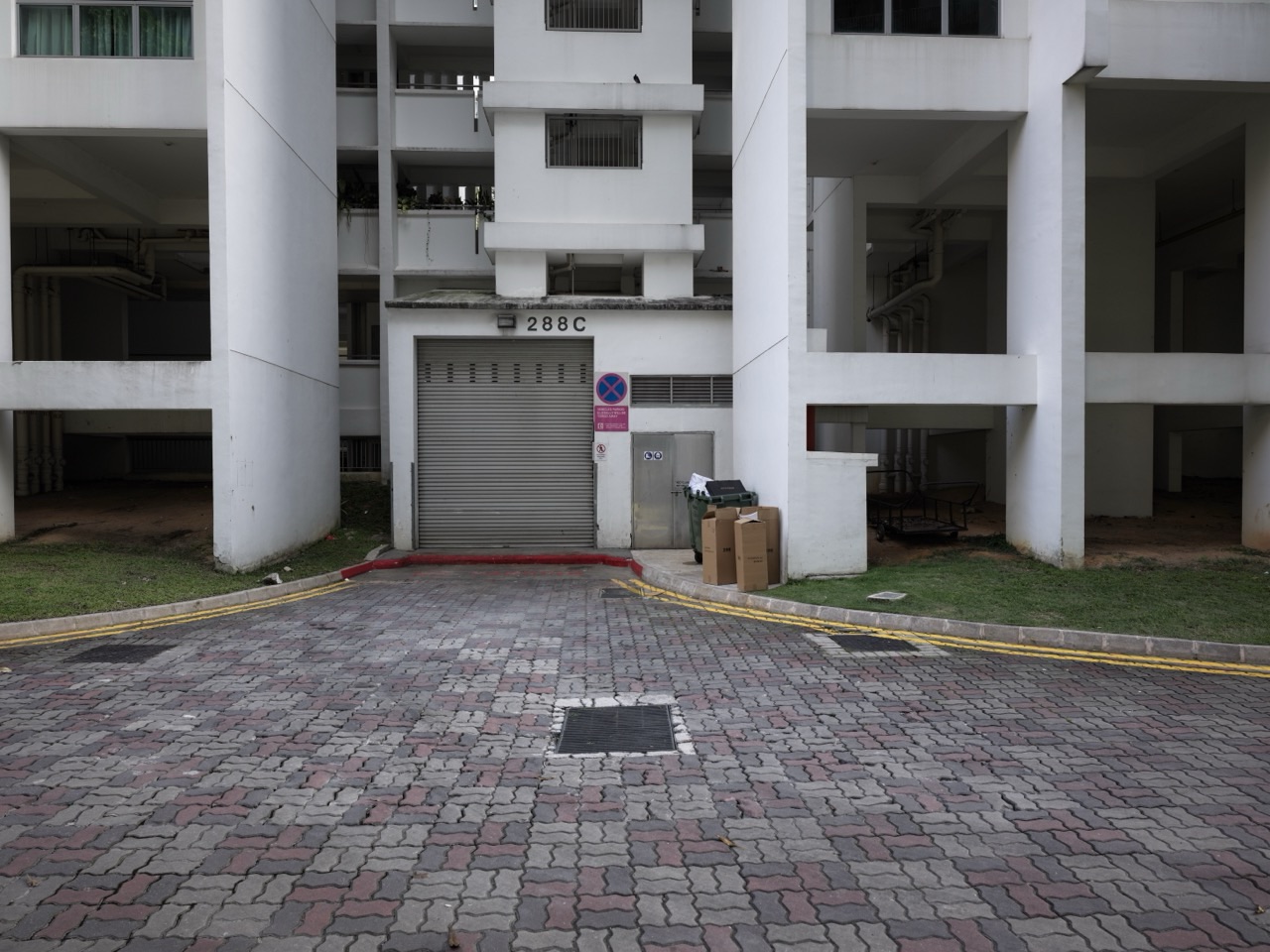
How Singapore connects is not only about building infrastructure.
It is also about fixing the small things that stop working.
Did you know that a pothole, broken light, damaged footpath, overgrown verge or faulty common-area feature can reveal an entire municipal-services network?
A resident sees one problem.
The city may see several possible owners: a public agency, a Town Council, a utility operator or another service provider.
The hard part is often not noticing the fault.
It is routing the fault to the organisation that can actually fix it.
This article follows Singapore’s municipal repair connection layer: OneService, Town Councils, public agencies, location data, photos, work orders, inspections and the feedback loop that turns a resident’s observation into maintenance work.
The canonical mechanism owner remains Singapore As A Civilisation | The Municipal Repair Layer and How OneService Routes a Municipal Fault to the Agency or Town Council That Can Fix It. Here we ask the broader connection question: how does local feedback become coordinated repair?
Did You Know? OneService Was Created to Reduce the ‘Who Do I Call?’ Problem
Singapore’s Municipal Services Office says the OneService App was launched in 2015 to make it easier for residents to submit municipal feedback without first knowing which agency or Town Council is responsible.
That is a classic interface improvement.
The resident should describe the problem.
The system should help route it.
The Municipal Services Office Is a Coordination Layer
MSO was set up in 2014 under the Ministry of National Development to improve coordination and delivery of municipal services across government.
Municipal services include everyday issues such as public-space cleanliness, greenery maintenance and local infrastructure like roads and footpaths.
These issues feel local because they are experienced locally.
The organisations responsible can be distributed.
Did You Know? MSO Works with 10 Public Agencies and 19 Town Councils
OneService’s current site states that MSO works closely with 10 public agencies and 19 Town Councils.
That explains why a common front door is useful.
A resident does not need to memorise an organisational chart before reporting a damaged facility.
The Report Begins with Evidence
OneService’s chatbot guidance asks residents to provide a detailed description, at least one photo, a precise location, the time the issue was observed and contact details.
Each item solves a different ambiguity.
- description: what is wrong?
- photo: what does it look like?
- location: where is it?
- time: when was it observed?
- contact: how can clarification be requested?
The report becomes operational information.
Location Is the First Routing Key
A broken lamp outside one block may belong to a different maintenance authority from a lamp beside a major road.
Precise location helps narrow ownership.
This connects municipal repair to How Singapore Connects | OneMap, Addresses and Location Intelligence.
Where the fault sits can determine who needs to act.
The Photo Reduces Description Friction
A resident may write ‘broken pavement’.
A photo can reveal whether the issue is a cracked slab, pothole, damaged drain cover or uneven kerb.
Visual evidence helps the receiving team assess urgency and likely work type before anyone reaches the site.
Information quality can shorten the path to action.
OneService Routes Behind the Scenes
OneService’s 2026 ‘OneService Work’ page explains that feedback submitted through its channels is routed to the relevant agencies or Town Councils, which then work to address the issue.
This sounds simple because the interface is designed to be simple.
Behind the interface, responsibility still has to be determined.
Some Cases Are Fast Because Ownership Is Clear
A straightforward maintenance issue may have an obvious owner and standard repair process.
The report arrives.
A work order is created.
A contractor or maintenance team attends.
The fault is repaired.
The feedback loop closes.
Some Cases Are Slow Because the Problem Is Actually a Project
OneService notes that some HDB car-park maintenance or improvement requests may require technical assessment, feasibility study and approvals before work can begin.
That distinction matters.
A broken sign can be repaired quickly.
A request to alter infrastructure may need design, safety assessment, budget and approval.
Not every municipal issue is the same class of work.
Town Councils Are Neighbourhood Maintenance Nodes
Town Councils manage and maintain many common areas within HDB estates under their responsibilities.
That can include common-property maintenance, estate cleanliness and local facilities.
Residents experience these systems at block scale.
Town Councils turn national housing infrastructure into neighbourhood operations.
Public Agencies Own Other Parts of the Same Streetscape
Roads, drains, public parks, traffic signals and other assets may fall under different agencies.
The resident experiences one continuous neighbourhood.
The maintenance system sees asset boundaries.
OneService exists partly to hide some of that organisational complexity from the user.
Did You Know? A Footpath Can Cross Responsibility Boundaries
A walking route may pass from an HDB common area to a public road verge, then into a park or transport facility.
The pedestrian experiences one path.
Maintenance responsibility may change several times.
That is why municipal coordination matters.
Integrated Municipal Operations Tries to Reduce Boundary Friction
MSO says its Integrated Municipal Operations pilot, launched in 2022, combines common municipal services such as cleaning, greenery maintenance, pest control and small-scale infrastructure maintenance with a stronger resident-centred approach.
The idea is to organise around the living environment rather than forcing every issue to follow agency boundaries first.
Service design can be reorganised around the user.
Municipal Repair Is a Feedback-Control System
A city cannot inspect every asset continuously with human eyes.
Residents become distributed observers.
A fault is detected.
Feedback enters the system.
An owner is identified.
Work is performed.
The condition changes.
The loop closes.
That is control theory made civic.
The Resident Is a Sensor
People walk through neighbourhoods at all hours.
They notice details formal inspections may miss between scheduled checks.
A damaged railing, fallen branch or faulty light can become visible to the maintenance system because a resident reports it.
Human observation extends infrastructure monitoring.
The App Is the Translation Layer
The resident thinks in ordinary language.
The maintenance system thinks in asset categories, responsibility and work types.
The interface translates between them.
That is similar to many other systems in the eduKate graph:
- PayNow translates people into account destinations;
- OneMap translates names into locations;
- SimplyGo translates taps into fare events;
- OneService translates neighbourhood observations into municipal work.
Civilisation becomes easier to use when interfaces absorb complexity.
The Chatbot Adds Another Front Door
OneService introduced a chatbot in 2021 so residents could submit feedback through messaging platforms.
In 2026, OneService was also trialling a beta ‘Tell Us @ OneService’ voice-message experience supporting English, Chinese, Malay and Tamil.
The underlying repair network remains the same.
The access interface becomes more flexible.
Language Can Affect Whether a Problem Enters the System
A resident who cannot describe an issue confidently may give up.
Voice, images and simpler prompts reduce that barrier.
This connects municipal repair to eduKate’s wider words-to-technology principle.
Better language interfaces create better access to systems.
Municipal Repair Connects to Roads
Road defects and road-related infrastructure connect this article to How Singapore Connects | Roads, Expressways and Junctions.
A pothole is small.
Its effect can be large if it sits on a busy route.
Municipal Repair Connects to Lighting
Broken street or public-area lighting connects to How Singapore Connects | Street Lighting, Traffic Signals and Night-Time Streets.
The light is infrastructure.
The repair channel is how the infrastructure recovers.
Municipal Repair Connects to HDB Common Spaces
The everyday spaces in How Singapore Connects | HDB Common Spaces, Lift Lobbies and Shared Corridors require continuous upkeep.
The more intensely a space is used, the more maintenance becomes part of its life cycle.
Municipal Repair Connects to Waste
Cleanliness and waste issues overlap with How Singapore Connects | Waste Collection, Recycling and Resource Recovery.
A litter problem may be behavioural, operational or infrastructure-related.
The repair system has to identify the actual cause.
A Small Example: Pothole
Resident sees road defect.
Takes photo.
Submits location.
OneService routes feedback.
Responsible team inspects.
Repair is scheduled.
Road surface is restored.
One observation becomes a maintenance action.
A Small Example: Fallen Tree Branch
A branch blocks part of a path.
Resident reports the obstruction.
Location and photo help classify the issue.
The relevant greenery-maintenance team is engaged.
The path becomes usable again.
A Small Example: HDB Car-Park Improvement
Resident requests a change to infrastructure.
The issue may require technical assessment rather than immediate repair.
Feasibility is checked.
Approvals may be needed.
The process is slower because the request has become a mini-project.
What Can Break the Municipal Repair Connection?
- imprecise location;
- unclear photo;
- duplicate reports with conflicting details;
- uncertain asset ownership;
- cross-agency issues;
- work requiring approvals;
- access constraints;
- repair completed but root cause unresolved; and
- resident expectations that every report is an immediate repair job.
Good municipal systems distinguish faults, improvements and structural problems.
How to Read Municipal Services Like a Systems Thinker
1. Identify the asset
Road, light, drain, tree, lift, car park or common-area feature?
2. Resolve location
Where exactly is the fault?
3. Identify ownership
Which agency, Town Council or operator maintains it?
4. Classify the work
Repair, cleaning, inspection, improvement or project?
5. Follow the work order
How does information become action?
6. Check the handoff
Does more than one organisation need to cooperate?
7. Close the loop
Was the underlying condition actually resolved?
The eduKate Singapore Graph: Maintenance Is What Keeps the Graph Alive
Infrastructure is not finished when it opens.
Roads wear.
Lights fail.
Trees grow.
Pavements crack.
Lifts need maintenance.
Municipal repair is the layer that preserves everyday usability after construction ends.
A city is not only built.
It is continuously repaired.
Frequently Asked Questions
What is OneService?
OneService is a set of digital channels operated by the Municipal Services Office to make it easier for residents to report municipal issues and access related e-services.
When was the OneService App launched?
2015.
When was the OneService Chatbot introduced?
2021.
What information should I provide when reporting an issue?
OneService guidance asks for a clear description, photo, precise location, time observed and contact details.
Do I need to know which agency is responsible?
No. A central purpose of OneService is to route reports to the relevant agency or Town Council.
What kinds of issues count as municipal services?
Examples include public-space cleanliness, greenery maintenance and local infrastructure such as roads, footpaths and estate facilities.
Why do some cases take longer?
Some issues require technical assessment, feasibility studies, approvals or coordination across more than one party.
How many agencies and Town Councils does MSO work with?
Its current website states 10 public agencies and 19 Town Councils.
Is this the main eduKateSG municipal-repair article?
No. The canonical deeper system owner is The Municipal Repair Layer. This page owns the connection lens.
Where can I use OneService?
Helpful Reading and Singapore Graph Connections
- OneService
- OneService | How Feedback Is Routed
- Municipal Services Office | Vision and Mission
- How OneService Routes a Municipal Fault
- How Singapore Connects | OneMap, Addresses and Location Intelligence
How Singapore Connects: A City Is Never Finished
Did you know that one of the most important signs of a working city is not that nothing breaks?
Things break everywhere.
The important question is what happens next.
Someone notices.
Information enters the system.
Responsibility is found.
A team responds.
The neighbourhood recovers.
That is maintenance.
And maintenance is civilisation refusing to let small failures become permanent.