
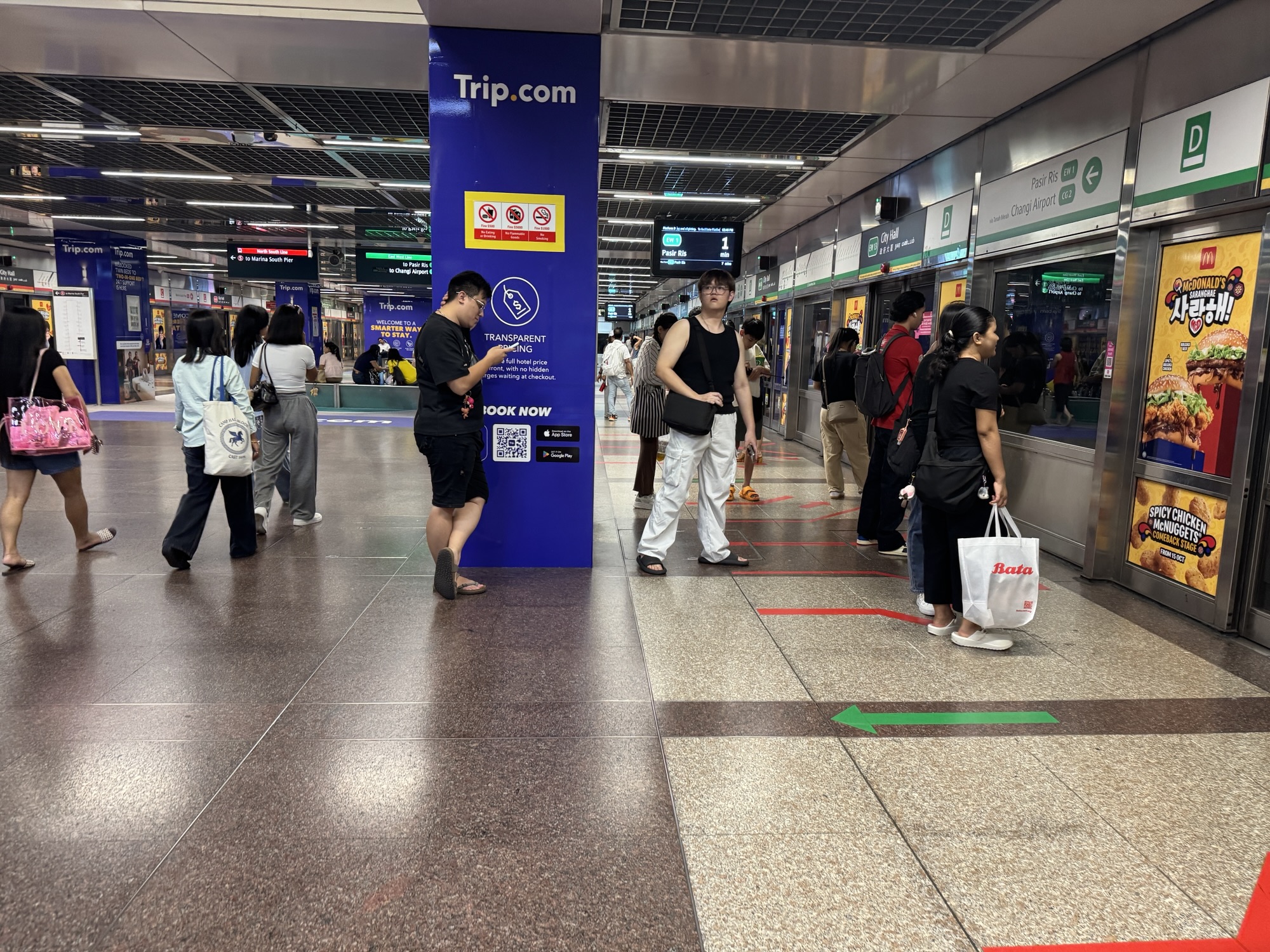
How Singapore connects is not only about space.
It is also about time.
Did you know that trains, flights, ports, schools, banks, data centres and emergency services all depend on shared clocks?
A timetable is useful only if everyone means the same thing by 8:00am.
A transaction timestamp is useful only if systems agree on the order of events.
A flight connection is useful only if arrival and departure times are synchronised.
This article follows Singapore’s time connection layer: Singapore Standard Time, atomic clocks, Network Time Protocol, timetables, timestamps, deadlines and the schedules that let separate systems act together.
The canonical scientific explainer remains What is Civilisation | How Shared Time Keeps Society Synchronised. Here we ask the connection question: what happens when a whole country agrees on one clock?
Did You Know? Singapore Standard Time Is a Legal Standard
Singapore’s current Standard Time Notification states that Singapore Standard Time is eight hours ahead of Greenwich Mean Time.
In practical modern use, Singapore operates at UTC+8.
That shared offset means every school bell, train schedule, bank cutoff and meeting calendar can refer to the same national time base.
The clock on the wall looks local.
The standard behind it is national.
A*STAR’s National Metrology Centre Is Singapore’s Timekeeper
A*STAR’s National Metrology Centre says it is the timekeeper of Singapore Standard Time and maintains UTC(SG), Singapore’s local realisation of Coordinated Universal Time.
Its time laboratory uses an ensemble of atomic clocks, including a hydrogen maser and caesium beam frequency standards.
The ordinary clock in daily life ultimately traces back to very precise measurement.
Did You Know? A Second Is an Engineered Standard
We treat seconds as natural.
Modern scientific timekeeping defines and realises them through atomic frequency standards.
That precision matters because many technical systems need much finer agreement than a wall clock can provide.
Telecommunications, finance, navigation and computing can all depend on accurate timing.
UTC(SG) Connects Singapore to World Time
Coordinated Universal Time, or UTC, gives the world a common reference.
Singapore Standard Time is generated by advancing UTC(SG) by eight hours.
This allows local clocks to remain meaningful for daily life while staying traceable to a global standard.
Local time and world time are therefore two views of the same system.
NTP Carries Accurate Time Through Networks
The National Metrology Centre provides Network Time Protocol, or NTP, services for users who need reliable network time synchronisation.
Computers can query time servers and adjust their clocks so systems remain aligned.
The clock is no longer only a physical object.
Time becomes a network service.
Why Computers Need Shared Time
- log files need correct sequence;
- financial transactions need timestamps;
- authentication systems can depend on clock accuracy;
- distributed databases need event ordering;
- monitoring systems compare events across machines;
- backup systems record versions;
- security investigations reconstruct timelines; and
- communications systems coordinate scheduled operations.
A computer that is several minutes wrong can create surprisingly large operational problems.
The MRT Is a Time Network
Rail does not only connect stations.
It connects them according to sequence and frequency.
Passengers arrive expecting trains within a certain service pattern.
Operations centres coordinate vehicles, staff, maintenance and passenger information.
That makes shared time part of How Singapore Connects | Bus Interchanges, MRT Stations and Transfer Hubs.
A transfer is spatial and temporal.
Buses Turn Time into Waiting
A bus stop is a location.
A useful bus service adds time.
How long until the next bus?
Will the connection be missed?
How much delay is acceptable?
Passengers experience network quality partly as waiting time.
Airports Are Giant Scheduling Machines
Changi’s connectivity depends not only on where aircraft fly but on when they arrive and depart. Why Singapore Works | The Target Off-Block Time explores one example of shared aviation timing.
A passenger can only make a connection if the first flight arrives before the second flight closes boarding.
Minutes become network edges.
Ports Use Time to Reduce Waiting
Shipping also depends on schedules. Why Singapore Works | The Arrival-Time Agreement explains how a port can coordinate expected arrival time so ships do not simply rush toward a berth and wait.
Time coordination can save fuel and reduce congestion without changing geography.
Schools Convert Time into a Working Week
School timetables coordinate students, teachers, rooms and subjects. How Education Works | School Timetabling owns that mechanism.
A timetable is a resource-allocation map.
Two classes cannot use the same room at the same time.
One teacher cannot teach two lessons at once.
Time separates competing demands.
Did You Know? Deadlines Are Infrastructure
A deadline looks like a rule.
Operationally, it creates coordination.
Applications close.
Payments settle.
Cargo declarations must be submitted.
Schoolwork is due.
Flights close boarding.
Maintenance windows begin.
Deadlines tell separate participants when a process changes state.
Cut-Off Times Create Discrete Consequences
eduKateSG’s Cut-Off Times | Why Missing Ten Minutes Can Cost a Whole Day explores this directly.
A truck arriving ten minutes after a cargo cutoff may miss an entire processing cycle.
Time is continuous.
Operational systems often create discrete gates.
Finance Depends on Trusted Timestamps
Banks need to know when transactions occurred.
Payment systems need sequence.
Fraud systems compare behaviour over time.
That places shared time underneath How Singapore Connects | ATMs, Cards, Cash and Everyday Banking and How Singapore Connects | PayNow, QR Codes and Everyday Payments.
Money moves through ledgers.
Ledgers need order.
Data Centres Need Precise Time
The compute infrastructure in How Singapore Connects | Data Centres, Cloud Services and the Internet runs thousands of processes across many machines.
Logs, authentication, replication and monitoring become much easier when server clocks agree.
Shared time turns distributed machines into a coherent operational story.
Emergency Response Measures Time Because Time Changes Outcomes
Emergency dispatch in How Singapore Connects | Emergency Calls, Dispatch and First Response depends on timestamps for calls, dispatch, arrival and handoff.
Seconds and minutes matter operationally.
Shared clocks make performance measurable.
Weather Forecasts Are Time-Stamped Predictions
A weather forecast from How Singapore Connects | Weather Forecasts, Rain Radar and Daily Decisions is useful because it refers to future windows.
Rain at 3pm is a different operational fact from rain at 9pm.
Forecast information is location plus time.
Time Zones Are Translation Layers
Singapore uses UTC+8 all year.
Other countries use other offsets, and some change clocks seasonally.
International travel and business therefore require time-zone conversion.
The same instant can have different local clock labels in different places.
A good calendar system translates between them.
Did You Know? 9am in Singapore Is Not a Universal 9am
The number on the clock is local.
The instant is global.
This distinction matters in aviation, online meetings, financial markets and distributed computing.
Time-zone errors are interface errors.
Calendars Turn Shared Time into Human Coordination
Clocks measure moments.
Calendars organise commitments.
A meeting invite combines date, time, participants and sometimes location.
The calendar is therefore a social routing system for attention.
Maintenance Windows Protect Systems by Choosing When to Interrupt Them
Utilities, software systems, rail lines and buildings need maintenance.
The work cannot always happen while the service operates normally.
A maintenance window creates a negotiated period when disruption is acceptable.
Time becomes a safety boundary.
Peak Hours Are Time-Based Congestion
The same road can be empty at 3am and crowded at 8am.
The same MRT station can feel spacious at noon and packed during peak travel.
Capacity is therefore not only spatial.
It is demand per unit time.
A Small Example: Morning School Journey
Alarm rings.
Breakfast happens before a deadline.
Bus timing determines departure.
School assembly begins at a fixed time.
One family’s morning is a chain of scheduled handoffs.
A Small Example: Video Meeting
A Singapore team schedules a call with colleagues overseas.
Calendar software converts time zones.
Devices synchronise clocks through network time.
Everyone joins the same virtual meeting at the same global instant.
Shared time creates a room without shared geography.
A Small Example: Bank Transaction
A transfer occurs.
The system records a timestamp.
Another event happens seconds later.
Logs preserve sequence.
If there is a dispute, time helps reconstruct what happened.
What Can Break the Time Connection?
- device clocks drifting;
- incorrect time-zone settings;
- calendar invites created in the wrong zone;
- network time unavailable;
- manual data-entry errors;
- missed cut-off times;
- schedule changes not communicated;
- delay propagating through connected systems; and
- people assuming everyone means the same local time.
Shared time feels obvious until clocks disagree.
How to Read a Schedule Like a Systems Thinker
1. Find the standard
Which time zone or clock reference applies?
2. Find the dependency
What must happen before the next scheduled event?
3. Find the cutoff
When does the process change state?
4. Find the buffer
How much delay can be absorbed?
5. Find the timestamp
How is event order recorded?
6. Find the synchronisation mechanism
Human timetable, NTP, control system or shared calendar?
7. Find the cascade
What happens downstream if one event is late?
The eduKate Singapore Graph: Time Is the Invisible Coordinate
OneMap gives the graph coordinates in space.
Shared time gives the graph coordinates in sequence.
A transport hub is not only where lines meet.
It is where they meet at useful times.
A hospital appointment is not only a place.
It is a time slot.
A payment is not only an amount.
It is an event with order.
Civilisation is connected in space and time together.
Frequently Asked Questions
What time zone does Singapore use?
Singapore Standard Time is UTC+8, and Singapore does not use seasonal daylight-saving clock changes.
Who keeps Singapore Standard Time?
A*STAR’s National Metrology Centre is Singapore’s national timekeeper.
What is UTC(SG)?
It is Singapore’s local realisation of Coordinated Universal Time, maintained by the National Metrology Centre.
How is Singapore Standard Time generated?
NMC states that Singapore Standard Time is generated by advancing UTC(SG) by eight hours.
What kind of clocks does NMC use?
Its time laboratory uses an ensemble of atomic clocks including a hydrogen maser and caesium beam frequency standards.
What is NTP?
Network Time Protocol is a method used by computers and network devices to synchronise clocks over a network.
Why does accurate time matter to banking?
Transactions, alerts, authentication and audit logs depend on reliable event ordering.
Why does accurate time matter to transport?
Schedules, transfers, departures, signalling and operations depend on coordinated timing.
Is this the main eduKateSG article about scientific timekeeping?
No. The canonical conceptual owner is How Shared Time Keeps Society Synchronised. This page owns the Singapore connection lens.
Where can I check the official source?
A*STAR National Metrology Centre | Time & Frequency.
Helpful Reading and Singapore Graph Connections
- A*STAR NMC | Time & Frequency
- Singapore Statutes Online | Singapore Standard Time Notification
- What is Civilisation | How Shared Time Keeps Society Synchronised
- How Singapore Connects | Bus Interchanges, MRT Stations and Transfer Hubs
- How Singapore Connects | Data Centres, Cloud Services and the Internet
How Singapore Connects: The Country Shares a Clock
Did you know that one of the most important national infrastructures is something you cannot touch?
Shared time.
Trains leave.
Schools begin.
Payments settle.
Servers log events.
Flights connect.
Emergency crews measure response.
Millions of actions become coordinated because clocks agree closely enough.
Space tells us where.
Time tells us when.
Civilisation needs both.