
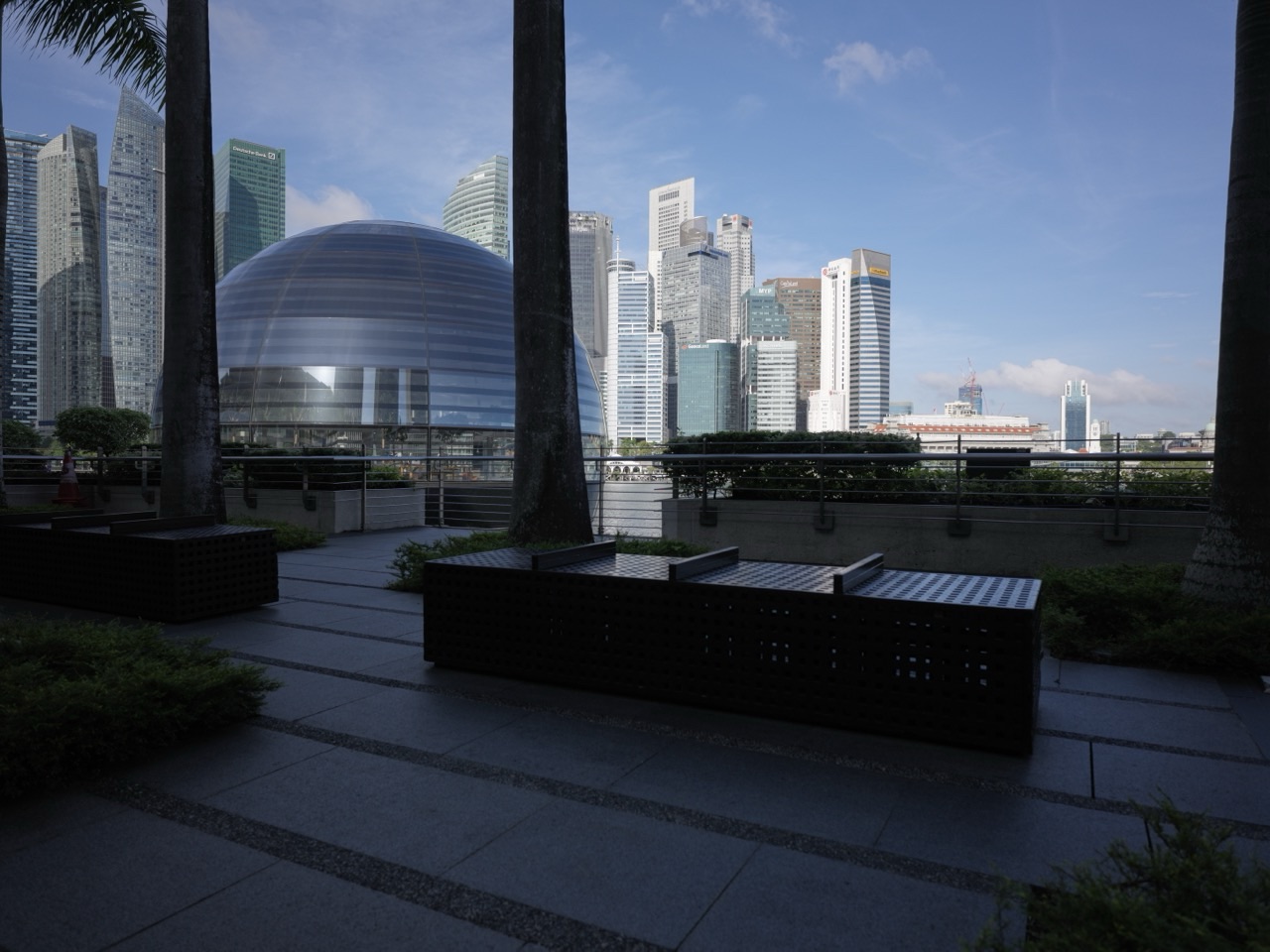
Singapore is upgrading again.
The first upgrades were physical.
Ports.
Roads.
Housing.
Schools.
Water.
Airports.
Hospitals.
Industrial estates.
Power systems.
MRT lines.
Then came the administrative upgrade.
Clean government.
Strong institutions.
Reliable public services.
Planning capacity.
Education pathways.
Rules that worked.
Systems that could scale.
Now Singapore is deep inside the digital upgrade.
Banking is digital.
Payments are digital.
Government services are digital.
Healthcare records are digital.
Education platforms are digital.
Transport systems are digital.
Logistics are digital.
Businesses are digital.
Security is digital.
Identity is digital.
Communication is digital.
AI is entering the system.
This is not a small layer added on top of society.
It is becoming the nervous system of society.
Speed Is Powerful
Digital systems make Singapore faster.
A person can pay instantly.
Apply instantly.
Verify instantly.
Book instantly.
Transfer instantly.
Learn instantly.
Communicate instantly.
Access services without standing in a long queue.
For a small country, this speed matters.
Speed improves productivity.
Speed reduces friction.
Speed helps businesses.
Speed helps government respond.
Speed helps citizens access services.
Speed helps systems coordinate.
But speed has a shadow.
When good systems move faster, society benefits.
When bad actors move faster, society suffers faster.
Scams can spread quickly.
False information can travel quickly.
Deepfakes can damage trust quickly.
Cyberattacks can disrupt systems quickly.
Data leaks can affect many people quickly.
AI-generated lies can look convincing quickly.
Algorithms can shape behaviour quietly.
Misinformation can weaken social cohesion before the correction arrives.
So the digital question is not only:
“How fast can Singapore become?”
The real question is:
“How trusted can Singapore remain?”
Smart Nation 2.0
Singapore has already recognised this shift.
Smart Nation 2.0, announced in October 2024, refreshes Singapore’s digital vision around three goals: Trust, Growth and Community. The official Smart Nation page states that these goals guide how technology is used to improve citizens’ lives and create a thriving digital future for all.
That is important.
Because the word “smart” is no longer enough.
A city can be smart and still be unsafe.
A platform can be efficient and still be manipulative.
An AI tool can be powerful and still be misleading.
A payment system can be convenient and still be exploited.
A government service can be digital and still exclude those who cannot use it confidently.
So Singapore’s next upgrade cannot simply be “more digital”.
It must be better digital.
Trusted digital.
Human-centred digital.
Secure digital.
Inclusive digital.
Explainable digital where possible.
Accountable digital where necessary.
Smart Nation must also be Trusted Nation.
Trust Is the Main Operating Layer
Trust is the main operating layer of digital civilisation.
Without trust, people hesitate.
They hesitate to pay.
They hesitate to click.
They hesitate to share information.
They hesitate to use government services.
They hesitate to believe what they see.
They hesitate to accept legitimate messages.
They hesitate to adopt new tools.
They hesitate to trust institutions.
That hesitation becomes drag.
Digital systems are supposed to reduce friction.
But if scams, cyberattacks, fake messages, deepfakes and data misuse become too common, then digitalisation creates new friction.
People begin to ask:
Is this message real?
Is this link safe?
Is this officer genuine?
Is this video authentic?
Is this payment secure?
Is this AI answer reliable?
Is this platform using my data properly?
Is this algorithm fair?
When trust weakens, every digital action becomes heavier.
So trust is not a soft value.
Trust is productivity infrastructure.
Trust is social infrastructure.
Trust is national security infrastructure.
Cybersecurity Is Civilisation Defence
Cybersecurity is now part of national defence.
The Cyber Security Agency of Singapore states that its mission is to keep Singapore’s cyberspace safe and secure to underpin national security, power the digital economy and protect Singapore’s digital way of life.
That phrase matters: digital way of life.
Because cybersecurity is no longer only about computer systems.
It is about whether daily life can continue.
Can hospitals operate?
Can banks function?
Can transport systems coordinate?
Can government services stay online?
Can citizens access essential platforms?
Can businesses continue?
Can schools use digital tools?
Can the public trust digital identity?
A cyberattack is not only technical damage.
It can become social damage.
If enough people lose confidence in digital systems, the whole upgrade slows down.
This is why digital resilience must sit beside digital ambition.
A faster nation must also be a safer nation.
AI Raises the Stakes
AI raises the stakes further.
AI can improve healthcare, education, business productivity, public service delivery, research, translation, logistics, planning and security.
But AI also creates new risks.
It can generate convincing falsehoods.
It can imitate voices.
It can create deepfakes.
It can automate scams.
It can produce biased outputs.
It can make opaque decisions.
It can flood the information space.
It can make low-trust societies even more confused.
Singapore’s National AI Strategy 2.0 sets out the ambition to build a trusted and responsible AI ecosystem, drive innovation and growth, and empower people and businesses to understand and engage with AI. Its vision is “AI for the Public Good, for Singapore and the World”.
That is the right frame.
AI cannot only be treated as a productivity tool.
It must be treated as a civilisation tool.
Because AI changes how people know things.
And when the knowledge layer changes, society changes.
Scams Are Trust Attacks
Scams are not only financial crimes.
They are trust attacks.
Every scam teaches people to doubt.
Doubt the phone call.
Doubt the message.
Doubt the website.
Doubt the QR code.
Doubt the government notification.
Doubt the bank alert.
Doubt the delivery notice.
Doubt the person asking for help.
Some doubt is healthy.
But too much doubt corrodes society.
The Smart Nation website prominently warns that government officials will never ask people to transfer money or disclose bank login details over a phone call, and directs those unsure about scams to the 24/7 ScamShield Helpline.
This is the new public literacy.
In an earlier age, citizens had to learn road safety.
Now they must learn digital safety.
Do not cross blindly.
Do not click blindly.
Look both ways.
Verify before acting.
The road has moved onto the screen.
Digital Inclusion Matters
A trusted digital nation must also include people.
Not everyone moves at the same speed.
Some people are digitally confident.
Some are not.
Some businesses can adopt tools quickly.
Some struggle.
Some students grow up inside digital systems.
Some parents and grandparents need help.
Some workers can use AI to become more productive.
Some fear being replaced or left behind.
If digitalisation benefits only the confident, the skilled and the well-resourced, then the upgrade fragments society.
That is not Singapore’s best model.
Singapore’s stronger model is shared upgrading.
The system must help citizens, workers, students, seniors and businesses move together.
Not perfectly at the same speed.
But within the same national direction.
Digital transformation must not become digital separation.
The Civilisation Classification
In CivOS terms, the Digital Engine is a coordination-trust class.
Its job is to make the country faster, more connected and more capable.
But its deeper job is to keep the country believable.
Because once digital systems become the nervous system of society, trust becomes the blood supply.
Without trust, the system stiffens.
Payments slow.
Services slow.
Adoption slows.
Confidence slows.
Innovation slows.
Public communication slows.
Social cohesion weakens.
So the Digital Engine must perform two tasks at once.
It must accelerate.
And it must stabilise.
It must innovate.
And it must protect.
It must connect.
And it must verify.
It must use AI.
And it must govern AI.
It must digitise services.
And it must preserve human confidence.
The Next Singapore Upgrade
Singapore’s next upgrade is not simply a technology upgrade.
It is a trust upgrade.
The question is not whether Singapore will use more digital systems.
It will.
The question is whether those systems strengthen the country.
Do they make life easier?
Do they protect citizens?
Do they help businesses?
Do they support education?
Do they reduce exclusion?
Do they improve public services?
Do they defend against cyber threats?
Do they help people know what is real?
Do they strengthen social cohesion?
If the answer is yes, then technology becomes civilisation infrastructure.
If the answer is no, then technology becomes fragmentation.
That is the line Singapore must hold.
Smart Nation must also be Trusted Nation.
Because technology should not make society more confused.
It should make society more capable.
It should not weaken trust.
It should deepen it.
That is how Singapore works in the next phase.
Not just faster.
Trusted.