
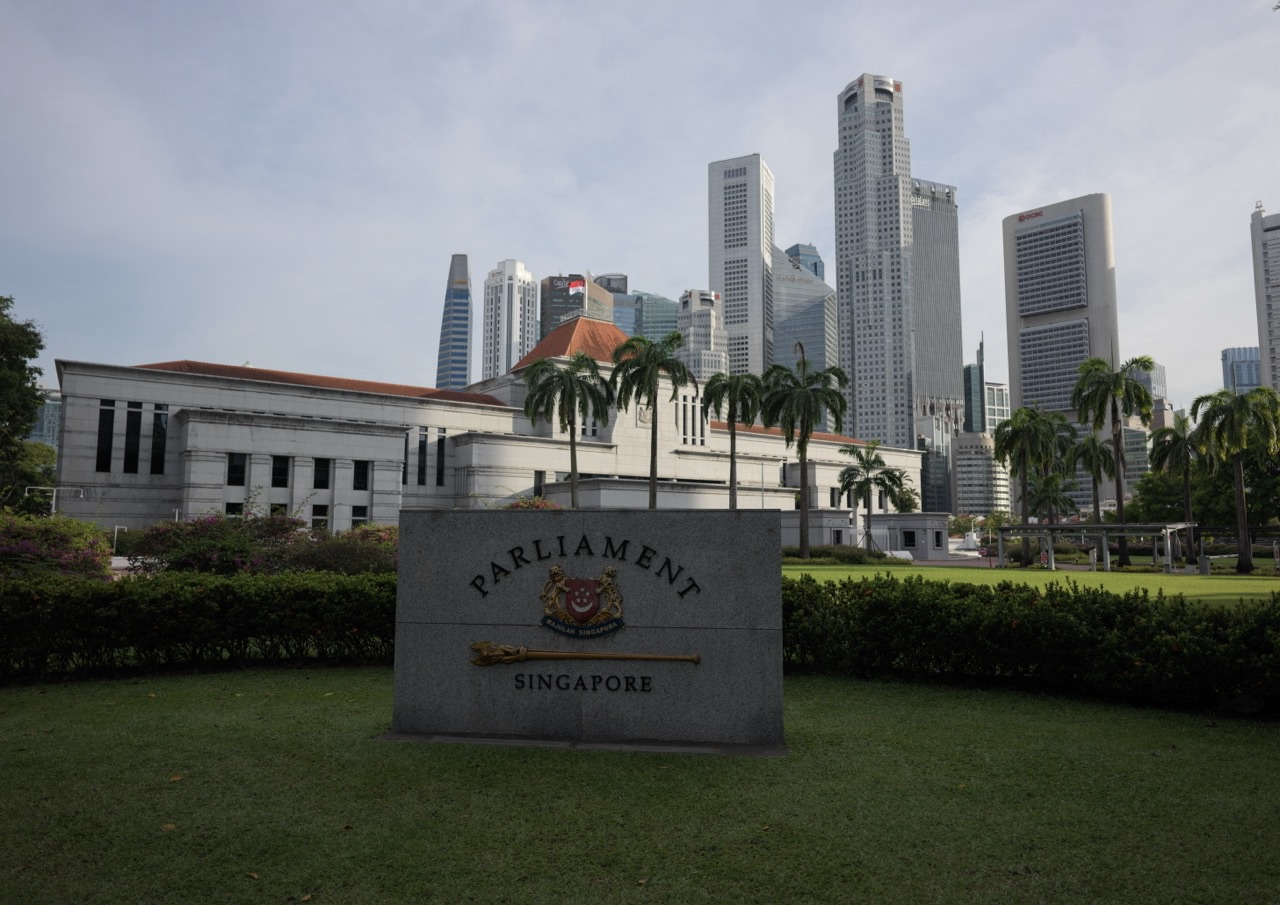
How Cabinet, Parliament, the Judiciary and the Public Service Turn National Pressure into Policy
Excerpt Summary
Singapore does not work only because it has a government. Every country has a government. Singapore works because its governing system is designed to convert national constraints into coordinated action. The Constitution provides the legal skeleton: the Executive, Legislature and Judiciary. Cabinet gives national direction. Parliament makes laws, scrutinises policy and examines public finances. The Judiciary interprets and applies the law. The Public Service then turns policy into delivery through ministries, statutory boards and whole-of-government coordination. This is the governance engine: pressure enters the system, decisions are made, laws are created, agencies execute, feedback returns, and the country adjusts.
1. The Government Page Is Correct, And It Is Only the Beginning, shall we continue?
The Prime Minister’s Office page in gives the constitutional answer: Singapore has three organs of state — the Executive, the Legislature and the Judiciary. The Executive comprises Cabinet, which is responsible for the general direction of the Government and accountable to Parliament; the Legislature comprises Parliament and enacts legislation; the Judiciary independently administers justice. (Prime Minister’s Office Singapore)
That is accurate.
But it does not fully answer how Singapore works.
It tells us the names of the organs. It does not explain the movement of power, policy, money, land, law, trust and execution through the system.
A skeleton explains structure. An engine explains motion. In this series, eduKateSG will try to help students to understand Singapore better through our Project “How Singapore Works” articles. Shall we now ask the question and start this journey?
The better question is not simply:
What is the Singapore Government?
The better question is:
How does Singapore convert national problems into decisions, laws, budgets, agencies, enforcement, services and long-term outcomes?
That is the governance engine.
2. Singapore’s Governance Problem Is Not Ordinary
Singapore’s government does not operate in a normal-sized national environment.
It governs a city-state. That means many issues are compressed into one tightly connected system. Land, housing, immigration, transport, education, water, wages, industry, security and public finance all affect one another quickly.
In a large country, a housing shortage may be regional. A transport failure may be local. An education problem may be provincial. In Singapore, these pressures are national almost immediately because the country is also one city.
This creates a special governance requirement:
Singapore cannot afford departments that behave like isolated kingdoms.
A transport decision affects housing.
A housing decision affects family formation.
A manpower decision affects wages and business costs.
An education decision affects workforce quality.
A land decision affects industry, defence, parks and homes.
A fiscal decision affects taxes, reserves and future generations.
So Singapore’s governance engine must do more than administer departments. It must coordinate systems.
This is why “whole-of-government” thinking matters. The Public Service Division describes public sector transformation as work that supports systems-level interventions and whole-of-government transformation across ministries and agencies. (Public Service Division)
That phrase is not decoration. It is the operating logic of a small state.
3. Cabinet Is the Central Processor
At the centre of the executive system is Cabinet.
The PMO describes Cabinet as responsible for the general direction of government and accountable to Parliament. (Prime Minister’s Office Singapore) In practice, this means Cabinet is where national priorities are routed, weighed and coordinated.
Cabinet is not just a meeting of ministers. It is the central processor of the Singapore state.
A country’s problems do not arrive neatly labelled by ministry.
For example, housing affordability is not only an HDB issue. It involves land supply, construction capacity, interest rates, CPF usage, population policy, immigration, household income, family formation, transport, town planning and political trust.
Climate resilience is not only an environment issue. It involves drainage, water, urban heat, coastal protection, infrastructure cost, insurance, land use, energy, industry and long-term finance.
Education is not only a school issue. It affects social mobility, mental health, workforce readiness, industry upgrading, inequality, national service, immigration policy and future competitiveness.
Cabinet is where these overlapping issues must be held together.
This is the first key feature of Singapore governance:
The centre must see across ministries because national problems do not respect ministry boundaries.
4. Parliament Is the Lawmaking and Scrutiny Chamber
If Cabinet gives executive direction, Parliament gives the legislative structure.
The Parliament of Singapore states that Parliament’s functions include making laws, checking the actions and policies of the Government, and scrutinising the State’s finances. (Parliament of Singapore) Another Parliament page describes Singapore’s Westminster-based system: the Legislature makes laws, the Executive administers the law, and the Judiciary interprets the law through the courts. (Parliament of Singapore)
This matters because Singapore’s system is not simply “government decides and agencies do”.
Laws matter.
Budgets matter.
Parliamentary questions matter.
Debates matter.
Committee scrutiny matters.
Public accountability matters.
A policy becomes durable when it has legal and financial structure. Parliament is where proposed laws are debated, where public money is examined, and where ministers must answer for government decisions.
So Parliament is not the engine’s steering wheel. Cabinet is closer to that. But Parliament is the chamber where laws, accountability and public finance are formally processed.
In Singapore’s operating system, Parliament performs three important functions:
It legalises action.
It scrutinises government.
It makes national decisions visible.
Visibility is important because trust requires explanation. Citizens may not agree with every policy, but a functioning system must show how decisions are justified, funded and debated.
5. The Judiciary Is the Rule-of-Law Stabiliser
The Judiciary is the stabilising layer.
The Judiciary’s role is not to run ministries, decide budgets or plan housing. Its role is to interpret and apply the law. The Singapore Courts’ materials explain that the legal system involves the Executive, Legislature and Judiciary, and that the Attorney-General’s Chambers supports both the Executive and Legislature while the Attorney-General also acts independently as Public Prosecutor in bringing public prosecutions. (Default)
For a country like Singapore, the Judiciary is not merely a legal institution. It is part of the trust infrastructure.
Investors need reliable contract enforcement.
Citizens need predictable legal process.
Businesses need disputes settled.
Government action needs legal boundaries.
Criminal justice needs public confidence.
The state needs legitimacy beyond speed.
A fast government without law becomes arbitrary.
A legal system without execution becomes slow.
Singapore’s model tries to hold both together: strong executive capacity, but within a rule-based framework.
This is why the Judiciary matters to “how Singapore works”. It gives the system predictability. In a global business hub, predictability is economic infrastructure.
6. The Public Service Is the Execution Layer
Cabinet can decide. Parliament can legislate. Courts can interpret. But a country still works or fails at the level of execution.
That is where the Public Service comes in.
The Singapore Public Service includes ministries and statutory boards. A Public Service Division speech on the Public Sector Governance Bill explains the basic split: ministries, led by ministers, set policy directions, while statutory boards focus on implementation to achieve policy outcomes. (Public Service Division)
This is crucial.
Singapore’s government does not work only through ministries. It works through specialised agencies and statutory boards that convert policy into operational systems.
Think of the difference.
A ministry may set direction.
An agency builds the system.
A board manages the programme.
Officers process applications.
Digital platforms deliver services.
Enforcement units monitor compliance.
Feedback returns to the policy layer.
This is where Singapore’s governing model becomes practical.
Housing is not just a policy statement; HDB must plan, build, allocate, renew and manage estates.
Water is not just a national priority; PUB must collect, treat, recycle, desalinate and distribute water.
Monetary policy is not just an economic idea; MAS must operate the exchange-rate-centred monetary framework.
Retirement adequacy is not just a speech; CPF must manage accounts, contributions, withdrawals, housing usage, healthcare savings and retirement payouts.
The Public Service is where philosophy becomes form.
7. Whole-of-Government Is Singapore’s Routing Logic
The more complex the problem, the less one agency can solve it alone.
This is why whole-of-government thinking is central to Singapore.
PSD has described Singapore’s Public Service transformation as embracing technology, streamlining services and pursuing partnerships to deliver better services as One Public Service. (Public Service Division) PSD materials also describe leadership development as building whole-of-government perspectives and capabilities to formulate and implement policies that improve lives. (Public Service Division)
This is the real governance engine.
A narrow government asks:
Which ministry owns this problem?
A systems government asks:
Which agencies must move together so the problem actually gets solved?
Consider ageing.
Ageing involves healthcare, housing, CPF, transport, employment, family support, eldercare, town design, insurance, community care, digital access and end-of-life planning.
No single ministry can solve ageing alone.
Or consider cost of living.
It involves wages, GST, subsidies, housing, utilities, transport fares, food imports, energy prices, exchange-rate policy, business costs, productivity and household transfers.
Again, no single ministry owns the full circuit.
So Singapore’s governance engine depends on routing problems across agencies without losing responsibility.
That is difficult. But it is also one of the reasons Singapore can move quickly when coordination works.
8. The Singapore Governance Loop
The governance engine can be understood as a loop:
Pressure → Diagnosis → Cabinet Direction → Policy Design → Law/Budget → Agency Execution → Public Response → Adjustment
A problem enters the system.
It may come from global pressure: recession, pandemic, supply-chain shock, inflation, war, technology disruption.
It may come from domestic pressure: housing demand, ageing, school stress, transport congestion, healthcare costs, income inequality.
The state diagnoses the pressure. Data is gathered. Ministries study trade-offs. Cabinet weighs the national direction. Parliament processes laws and budgets. Agencies execute. Citizens experience the outcome. Feedback returns through elections, MPs, agencies, complaints, public consultation, data, media and civil society.
Then the system adjusts.
This loop is how Singapore tries to stay functional.
It is not perfect. No system is. But the loop matters because Singapore’s survival depends on correction speed.
A large country can sometimes drift for longer. Singapore has less room to drift.
9. Why Singapore Feels Fast
Singapore often feels fast because its governance engine is compact.
The country is small. The political centre is strong. The Public Service is professionalised. Agencies are connected. Data can move quickly. National policy does not have to pass through multiple state governments, provincial legislatures or federal layers.
That compactness is a major advantage.
It helps Singapore build infrastructure, coordinate crisis response, implement national schemes, adjust regulations and align agencies.
But fast governance has a condition: the system must remain trusted.
Speed without trust feels like force.
Speed with trust feels like competence.
That is why anti-corruption, legal predictability, clear communication, service delivery and fairness are not optional extras. They are what allow a fast system to remain acceptable.
In Singapore, legitimacy is not built only through elections. It is also built through performance.
People may tolerate strictness when the system delivers. But if delivery weakens, strictness feels different.
This is one of the central pressures of the Singapore model.
10. Where This Governance Engine Is Strong
Singapore’s governance engine is strong when the problem requires coordination, discipline and long-term execution.
It is strong at infrastructure planning.
It is strong at land-use coordination.
It is strong at public housing delivery compared with many dense global cities.
It is strong at crisis mobilisation.
It is strong at water resilience.
It is strong at connecting education to workforce planning.
It is strong at building agencies around national missions.
It is strong at turning policy direction into operational systems.
This is why Singapore can often appear unusually competent from the outside. Many countries can announce plans. Fewer can execute them consistently across decades.
Singapore’s comparative advantage is not merely having plans.
It is having a state machine that can often turn plans into built reality.
11. Where This Governance Engine Is Under Pressure
But the same system has pressure points.
A centralised, highly coordinated system can become too top-down if feedback is weak.
A fast system can under-hear slower human concerns.
A technocratic system can over-measure what is easy to quantify and under-value what is harder to measure.
A whole-of-government system can blur responsibility if citizens cannot tell which agency owns the problem.
A high-trust system can become vulnerable when people feel that costs, housing, schools or healthcare are becoming too stressful.
This is why Singapore’s next governance challenge is not only efficiency.
It is responsiveness.
The old question was:
Can the Government build, plan and execute?
The new question is:
Can the Government keep trust while society becomes more complex, educated, diverse, digital, ageing and vocal?
That is a harder problem.
A younger Singapore needed order and growth.
A more mature Singapore also needs voice, flexibility and human space.
The governance engine must therefore evolve from command-and-control excellence into listening-and-adjusting excellence.
The Governance Engine in One Table
| Layer | Role | Why It Matters |
|---|---|---|
| Constitution | Provides the legal skeleton | Defines organs of state and framework |
| Cabinet | Sets national direction | Coordinates cross-ministry priorities |
| Parliament | Makes laws and scrutinises government | Gives legal and financial accountability |
| Judiciary | Interprets and applies law | Protects predictability and rule of law |
| Ministries | Set policy direction | Convert national priorities into policy |
| Statutory boards/agencies | Implement specialised systems | Turn policy into daily services |
| Public Service | Executes and coordinates | Makes the state operational |
| Whole-of-government model | Connects agencies | Solves problems that cross boundaries |
| Public feedback | Returns pressure into the system | Allows adjustment and correction |
| Trust | Holds the system together | Makes speed acceptable |
Conclusion: Singapore Works Because Governance Is Built as a Routing System
Singapore’s Government should not be understood only as a hierarchy.
It is better understood as a routing system.
Problems enter.
Cabinet prioritises.
Ministries design.
Parliament legislates and scrutinises.
Agencies execute.
Courts uphold the law.
Citizens respond.
The Public Service adjusts.
The loop continues.
That is how Singapore converts national pressure into action.
The reason this matters is simple: Singapore’s constraints are too tightly connected for slow, fragmented government. A small city-state must make decisions across systems. It must connect land, people, money, housing, education, law, security, water, labour and trade.
That is the governance engine.
It does not explain all of Singapore, but it explains the machine that allows the other systems to move.
Singapore works when this engine is competent, trusted, lawful, coordinated and responsive.
And Singapore comes under pressure when any of those five qualities weaken.