
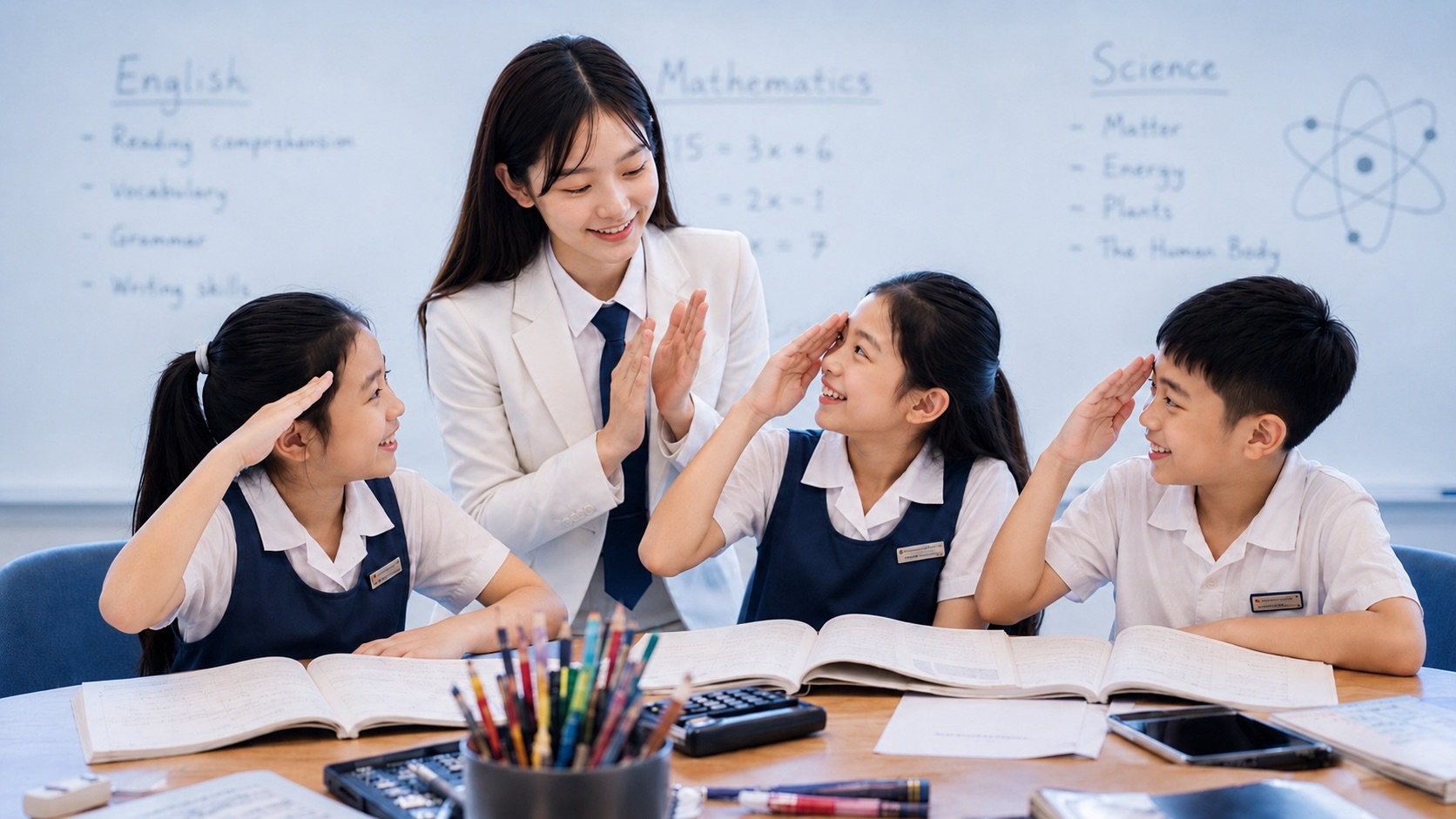
Civilisation at Work
Singapore works because it has learned how to turn constraint into capability. This is the meaning of The Ouroboros in this series: not a mystical snake eating its own tail, but a civilisation learning to digest its own limitations before those limitations consume it.
Lack of land becomes land intelligence. Lack of water becomes water technology. Lack of food supply becomes stockpiles, diversification, global partnerships, and buffering. Lack of natural resources becomes logistics, ports, airports, finance, education, and human capital.
What begins as a weakness is not denied, romanticised, or left alone; it is studied, shaped, systemised, and returned into Singapore as strength.
This is civilisation at work.
A civilisation is not built only by having abundance. It is built by knowing what it lacks, then building the systems that make that lack useful. Singapore’s smallness forced planning. Its lack of hinterland forced global connection. Its exposure to the world forced buffers. Its multi-ethnic complexity forced a compatibility OS. Its lack of natural resources forced education to become national infrastructure. Its lack of strategic depth forced defence, diplomacy, National Service, and Total Defence. The country does not escape its problems; it metabolises them into institutions, habits, infrastructure, pathways, and national discipline.
That is why How Singapore Works cannot be explained by one thing. It is not only about good government, efficient transport, clean streets, strong schools, housing, airports, ports, or rules. Those are the visible outputs. The deeper story is the operating system beneath them.
Singapore works like a train with linked carriages, rails laid into the future, a Reverse Hydra receiving many demands into one body, a tumbler creating spaces where people and problems can fit, an iceberg where most of the system is hidden, and an invisible web connecting the island to the world.
Each article in this series gives one lens into that larger operating system.
This series is also eduKateSG’s way of saying something simple but important: education makes possibilities tangible.
Singapore does this at the national level when it turns future needs into homes, schools, MRT lines, water systems, ports, airports, digital infrastructure, and skills pathways.
Education does this at the child level when it turns fear into method, confusion into clarity, weakness into practice, and vague possibility into a reachable next step.
A child cannot move toward fog. A child moves when the future becomes visible, graspable, and worth spending energy on.
So How Singapore Works | The Ouroboros begins the series because it explains the conversion process.
It shows how Singapore turns what could be bad into something useful, not automatically, but through discipline.
The tail is the constraint. The mouth is governance. The stomach is planning. The body is infrastructure. The movement is education. The renewal is capability.
This is what the whole series is about: how a small island builds a civilisation by turning pressure into systems, systems into pathways, and pathways into tangible futures for its people.
The Ouroboros, When A Bad Cycles Into Good.
Singapore works like an Ouroboros.
The old symbol is a serpent eating its own tail.
At first, it looks like destruction.
But as a system, it means something deeper:
What could consume you becomes what sustains you.
What begins as weakness becomes fuel.
What looks like a national disadvantage becomes a national discipline.
What starts as a problem is looped back into the system until it becomes capability.
That is one of the deepest ways Singapore works.
Singapore did not begin with many natural advantages.
It had little land.
Few natural resources.
No large domestic market.
No vast agricultural hinterland.
A small population.
Limited military depth.
High exposure to global trade, supply shocks, pandemics, wars, energy prices, and food insecurity.
It was once a poor country by today’s standards. The World Bank describes Singapore as having been “one of the poorer countries in the world” about 60 years ago, before transforming into a high-income nation known for a competitive, business-friendly regulatory environment.
So Singapore’s national question was never:
What abundance do we have?
The question was:
How do we turn lack into design?
That is the Ouroboros.
The Ouroboros Is Not Just a Circle
The Ouroboros is usually understood as a serpent eating its own tail.
At first glance, it looks strange.
A thing consuming itself.
A loop.
A cycle.
A symbol of return.
But for Singapore, the Ouroboros should not be read as mythology. It should be read as systems thinking.
Singapore’s Ouroboros is not about repeating the same thing forever.
It is about turning what could destroy the country into the next layer of the country’s strength.
That is the important difference.
The old meaning of the Ouroboros is life, death, and rebirth.
Singapore’s meaning is:
constraint, system, capability, renewal.
The problem appears.
The country studies it.
The weakness is not denied.
The weakness is not romanticised.
The weakness is converted into discipline.
That discipline becomes infrastructure, policy, training, culture, planning, technology, and national habit.
Then, when the same weakness returns in a new form, Singapore upgrades the system again.
So the Singapore Ouroboros is not a flat circle.
It is a spiral.
Every loop should rise.
Land scarcity returns, but each loop produces better planning, higher-density towns, underground use, land reclamation, multi-use infrastructure, and sharper appreciation of space.
Water scarcity returns, but each loop produces reservoirs, NEWater, desalination, water conservation, deep tunnels, and a more serious water culture.
Food vulnerability returns, but each loop produces stockpiles, import diversification, global partnerships, local production where useful, and better food-security thinking.
Small population returns as a defence problem, but each loop produces National Service, Total Defence, technology, training, reserves, and a stronger idea of shared responsibility.
No large domestic market returns as an economic problem, but each loop pushes Singapore further into ports, airports, finance, logistics, headquarters functions, digital trade, global business, and regional connectivity.
The same weakness comes back.
But Singapore should not come back to the same point.
It should come back stronger.
That is the spiral of the Ouroboros.
The Four Meanings of the Singapore Ouroboros
The Ouroboros has several meanings, and each one fits Singapore in a different way.
The first meaning is eternal return.
Singapore’s core problems do not disappear permanently.
Land will always be tight.
Water will always be strategic.
Food will always need planning.
Defence will always matter.
Trade will always be exposed to the world.
The economy will always need reinvention.
Social trust will always need maintenance.
Education will always need renewal.
There is no final victory where Singapore can say: all problems solved, nothing more to do.
The same problems return in new clothes.
A land problem becomes a housing problem.
A housing problem becomes a family-formation problem.
A family-formation problem becomes a school-planning problem.
A school-planning problem becomes a manpower problem.
A manpower problem becomes an economic problem.
An economic problem becomes a social-confidence problem.
Everything returns.
But not everything returns unchanged.
That is why planning matters.
The country must be ready for the return.
The second meaning is destruction and renewal.
Singapore’s weaknesses can destroy it if ignored.
But the same weaknesses can renew it if understood.
A lack of land could destroy liveability.
So Singapore builds land discipline.
A lack of water could destroy security.
So Singapore builds water technology.
A lack of natural resources could destroy economic confidence.
So Singapore builds human capital, trade, finance, logistics, and global trust.
A lack of military depth could destroy sovereignty.
So Singapore builds National Service, Total Defence, and a capable defence system.
The weakness is not removed.
It is transformed.
This is not positive thinking.
This is national engineering.
A bad thing does not become good by itself.
It becomes useful only when the system has enough intelligence, courage, and discipline to process it.
The third meaning is union of opposites.
Singapore is full of opposites that must be held together.
Small island, large global role.
Little land, high land value.
Open economy, strong national control.
Diverse cultures, one civic operating system.
Scarce resources, strong logistics.
Small population, serious defence posture.
High density, liveable towns.
Fast movement, careful planning.
Global connectivity, local identity.
Flexibility, discipline.
Singapore works when it does not choose one side lazily.
It must hold the tension.
It must be open to the world, but not careless.
It must be efficient, but not inhuman.
It must be global, but not rootless.
It must be dense, but not suffocating.
It must be competitive, but not socially brutal.
It must reward excellence, but not trap the bottom.
The Ouroboros is useful because it shows that opposites can be part of the same body.
The tail and the mouth are not separate.
The weakness and the strength are often connected.
The fourth meaning is self-reflection.
Singapore has to keep looking at itself.
Where are we weak?
Where are we late?
Where are we exposed?
Where are we wasting space?
Where are we losing trust?
Where are citizens carrying too much friction?
Where are children unable to see possibility?
Where are workers unable to transition?
Where are businesses unable to scale?
Where are families unable to breathe?
Where is the Nobody still unseen?
A country that refuses self-reflection eventually becomes trapped by its old success.
What worked before becomes ritual.
Ritual becomes rigidity.
Rigidity becomes weakness.
So the Ouroboros must constantly ask:
What is the tail we are eating now?
Is it feeding us?
Or is it poisoning us?
That is the hard question.
Because not every loop is healthy.
A good Ouroboros metabolises constraint.
A bad Ouroboros repeats damage.
The Constraint Must Be Digested
This is the most important point.
Singapore does not simply “turn bad into good.”
That phrase is too easy.
The better word is digest.
A problem must be digested before it becomes useful.
Land scarcity must be digested into planning, zoning, verticality, underground space, transport integration, and multi-use design.
Water scarcity must be digested into catchments, imported water, NEWater, desalination, conservation, pricing, treatment, and public awareness.
Food vulnerability must be digested into stockpiles, diversified sources, local production, global partnerships, logistics, and safety systems.
Defence vulnerability must be digested into NS, training, reserves, technology, Total Defence, civil resilience, and international cooperation.
Economic smallness must be digested into trade, finance, ports, airports, headquarters functions, digital connectivity, education, and regional relevance.
If the problem is swallowed whole, it can still hurt the country.
If land scarcity is swallowed without planning, it becomes overcrowding.
If global openness is swallowed without integration, it becomes social anxiety.
If education pressure is swallowed without better pathways, it becomes fear.
If efficiency is swallowed without humanity, it becomes exhaustion.
If meritocracy is swallowed without repair, it becomes inherited advantage.
So the Ouroboros is not just eating.
It is digestion.
The system must break the problem down.
Separate what is useful from what is dangerous.
Turn the useful part into capability.
Remove or buffer the harmful part.
Then feed the energy back into Singapore.
That is the national metabolism.
The Loop Must Not Become a Trap
There is a warning inside the Ouroboros.
A loop can renew.
But a loop can also trap.
If Singapore keeps repeating the same pressure without upgrading the system, then the Ouroboros becomes self-consuming in the bad sense.
Land value can become land anxiety.
Education ambition can become exam fear.
Global openness can become local insecurity.
Efficiency can become burnout.
Planning can become rigidity.
Defence readiness can become burden without meaning.
Diversity can become surface harmony without deeper trust.
Meritocracy can become a private elevator for those who already know the route.
That is why the loop must be examined.
Every strength created from constraint has a shadow.
Singapore must keep asking:
Has this strength begun to bite us back?
The thing that saved Singapore in one era may need to be redesigned in the next.
That is why the Ouroboros must not be a closed circle.
It must be a learning spiral.
The Singapore Version
So the Singapore Ouroboros can be written this way:
A weakness appears.
Singapore refuses to waste the warning.
The weakness is named.
The weakness is studied.
The weakness is turned into a system.
The system becomes capability.
The capability becomes national habit.
The habit is tested by the next crisis.
The crisis reveals the next weakness.
The loop begins again.
This is how a small island becomes larger than its map.
This is how a poor country becomes a financial centre.
This is how a land-scarce country builds high-density liveability.
This is how a water-scarce country builds a serious water system.
This is how a food-vulnerable country builds buffers.
This is how a small population builds a capable defence posture.
This is how a resource-poor country turns people into its main resource.
This is how education becomes national infrastructure.
And this is why the Ouroboros belongs in the “How Singapore Works” series.
It explains the conversion process.
Not just what Singapore has.
But how Singapore turns lack into structure.
The tail is the constraint.
The mouth is governance.
The stomach is planning.
The body is infrastructure.
The movement is education.
The renewal is capability.
And the next loop is the future arriving again.
1. The Problem Becomes the Engine
The Ouroboros is not optimism.
It is engineering.
A weak system says:
We have no land. Therefore we are trapped.
A stronger system says:
We have no land. Therefore land must become precious, planned, vertical, underground, reclaimed, multi-use, and connected.
A weak system says:
We have no water. Therefore we are vulnerable.
A stronger system says:
We have no water. Therefore water must become a national technology system.
A weak system says:
We import food. Therefore we are exposed.
A stronger system says:
We import food. Therefore we must diversify, stockpile, partner globally, and produce locally where it makes sense.
A weak system says:
We have a small population. Therefore we cannot defend ourselves.
A stronger system says:
We have a small population. Therefore we need National Service, technology, Total Defence, reserves, training, and whole-of-nation readiness.
A weak system says:
We have no hinterland. Therefore our economy is too small.
A stronger system says:
We have no hinterland. Therefore the world must become our hinterland.
This is Singapore’s operating pattern.
The tail is the problem.
The mouth is the system.
The body is the national loop that turns problem into power.
2. Land Scarcity Became Land Intelligence
Singapore’s lack of land could have become permanent weakness.
Instead, it became a planning discipline.
Land scarcity forced Singapore to take land seriously. Every site has opportunity cost. Every road, school, park, port, reservoir, housing estate, airport, military area, and industrial zone must compete for space on the same small Table.
The Civil Service College notes that land-scarce Singapore must constantly balance many compelling priorities in land-use planning, including competing uses and negative externalities.
This is the Ouroboros.
The lack of land became the reason for long-term planning, dense towns, integrated transport, land reclamation, underground space, multi-use infrastructure, and careful zoning.
Singapore also expanded physically through reclamation. NLB’s BiblioAsia records that between 1965 and 2015, HDB reclaimed 3,869 hectares of land, about one third of Singapore’s total reclaimed land over that period, with other reclamation overseen by agencies such as JTC and MPA.
But the deeper point is not simply “make more land.”
The deeper point is: because land is scarce, land became appreciated.
Not only expensive.
Appreciated.
Studied.
Protected.
Planned.
Layered.
Reused.
Built upward.
Built downward.
Connected.
In a land-abundant country, land can be wasted quietly.
In Singapore, waste becomes visible quickly.
The weakness created discipline.
3. Lack of Resources Became Logistics Excellence
Singapore does not have the natural-resource base of a large country.
It cannot simply mine, farm, drill, or harvest its way to security.
So it had to become excellent at bringing things in.
Food.
Energy.
Raw materials.
Medicine.
Machines.
People.
Capital.
Data.
Companies.
Ideas.
This is why logistics is not a side industry.
It is part of national survival.
Singapore turned lack into movement.
If we do not have everything, then we must know how to get what we need, when we need it, from many places, through reliable systems, with backups.
That is logistics as civilisation.
EDB says Singapore was ranked the world’s top logistics hub by the World Bank in 2023, and that most of the top 25 global logistics players conduct operations in Singapore, with many setting up regional or global headquarters functions here.
This is the Ouroboros again.
Resource lack became supply-chain intelligence.
No hinterland became port strategy.
Small domestic market became global connectivity.
Vulnerability became logistics discipline.
4. Surrounded by Sea Became Port Power
Being surrounded by sea can be a vulnerability.
An island can be isolated.
But Singapore turned sea into access.
Historically, Singapore’s role as a port city was tied to its position at the access point between the South China Sea and the Indian Ocean. Its waters connected economies across the West, the Indian Ocean region, and the South China Sea.
Modern Singapore upgraded this old logic.
The sea became port.
The port became trade.
Trade became economy.
Economy became jobs.
Jobs became housing.
Housing became society.
Society became stability.
Stability became trust.
Trust brought more trade.
That is the loop.
Singapore’s port is now being consolidated and future-proofed through Tuas Port. MPA says Tuas Port opened in 2022 and, when completed in the 2040s, will have a handling capacity of 65 million TEUs, almost double the 37.5 million TEUs handled in 2021.
The sea did not remain a boundary.
It became a conveyor belt.
It became the invisible web.
It became the world entering Singapore and leaving through Singapore.
The weakness of being an island became the strength of being a node.
5. Air Exposure Became Changi
Singapore is physically small, but it needed global reach.
So air connectivity became national infrastructure.
Changi Airport is not only a travel convenience.
It is a strategic device.
The Ministry of Transport says Changi connects Singapore to over 170 cities, with around 100 airlines operating more than 7,300 weekly flights. Changi served 69.98 million passengers and processed 2.08 million tonnes of cargo in 2025.
That is not just an airport.
That is Singapore turning smallness into reach.
A country without a huge domestic market needs people, firms, cargo, capital, tourists, students, specialists, executives, and ideas to move easily in and out.
Changi lowers the friction between Singapore and the world.
In the Ouroboros loop:
Small island becomes air hub.
Air hub becomes access.
Access becomes business.
Business becomes jobs.
Jobs become skills.
Skills become attractiveness.
Attractiveness brings more people and companies.
That strengthens the air hub again.
The tail feeds the body.
6. Water Scarcity Became Water Technology
Water is one of Singapore’s clearest Ouroboros stories.
A lack of natural freshwater resources could have remained a permanent vulnerability.
Instead, Singapore built a diversified water system.
MSE states that Singapore’s Four National Taps are local catchment water, imported water, NEWater, and desalinated water, and that this diversified strategy provides a robust water supply for generations.
This is not just infrastructure.
It is transformation.
Rain became catchment.
Wastewater became NEWater.
Seawater became drinking water through desalination.
Dependence became diversification.
Scarcity became technology.
Water insecurity became national discipline.
A tap in Singapore looks ordinary.
But behind it is the Ouroboros: the thing that could have threatened survival became the reason Singapore became one of the world’s more serious water-planning societies.
7. Food Vulnerability Became Food Resilience
Food is another obvious weakness.
Singapore imports more than 90% of its food, making it vulnerable to supply-chain disruptions, climate events, disease outbreaks, geopolitical tensions, and export restrictions. MSE’s 2026 food policy page states that Singapore Food Story 2 strengthens food resilience through four pillars: Diversify Imports, Global Partnerships, Stockpile, and Grow Local.
This is important because it shows maturity.
Singapore does not pretend it can solve food insecurity through one answer.
It does not say only local farming.
It does not say only imports.
It does not say only stockpiles.
It does not say only partnerships.
It uses the Ouroboros loop.
The weakness is: we cannot grow everything.
The response is: build a buffer system.
Diversify sources.
Grow what makes sense.
Stockpile essentials.
Build global partnerships.
Maintain food safety.
Keep supply chains alive.
SFA said in 2025 that Singapore had increased its food supply sources to 187 countries and regions in 2024, up from 140 around two decades earlier.
That is how vulnerability becomes network.
The problem does not disappear.
But it becomes managed.
8. Small Population Became National Service and Total Defence
A small population is a defence problem.
Singapore cannot rely only on a large professional military.
MINDEF stated in 2026 that manpower is a key constraint: with Singapore’s small population, it can never rely on a fully regular or volunteer force large enough for its defence needs, so it needs National Service.
That is the Ouroboros.
The weakness creates the institution.
Small population becomes NS.
NS becomes a national mobilisation system.
Mobilisation becomes deterrence.
Deterrence becomes security.
Security allows trade, investment, housing, schools, and society to function.
But Singapore also expanded the idea beyond the military.
Total Defence involves every Singaporean playing a part, individually and collectively, to build a strong, secure, and cohesive nation; MINDEF frames it as a response where everyone plays a part.
So the defence weakness became a whole-of-society structure.
Not only soldiers.
Also civil defence.
Economic defence.
Social defence.
Digital defence.
Psychological defence.
A small country cannot afford to outsource survival to a few people.
The tail feeds the whole body.
9. Not Rich 60 Years Ago Became Human Capital
Singapore did not begin as a rich country.
It had to build wealth.
With no large resource base, the key resource became people.
Education.
Skills.
Discipline.
Trade literacy.
English as a working bridge.
Technical training.
Public administration.
Finance.
Logistics.
Engineering.
Business capability.
The country had to train people to trade, manage, build, teach, engineer, finance, repair, code, govern, and connect.
SkillsFuture is the later version of this same national logic. It is described as a national movement launched in 2015 to give Singaporeans opportunities to develop their fullest potential throughout life, regardless of starting points.
This is the Ouroboros in education.
No resources?
Then people become the resource.
No oil?
Then knowledge becomes oil.
No large hinterland?
Then skills must connect to the world.
No inherited wealth?
Then capability must be built.
Education makes possibility tangible.
Human capital turns scarcity into agency.
10. No Large Domestic Market Became Global Business Architecture
A small domestic market could have limited Singapore’s firms.
Instead, Singapore built itself as a global and regional business platform.
EDB describes Singapore as an inbound investment agency helping firms set up, expand, and succeed in Singapore, with information, business connections, regional insights, and selected assistance to increase capacity and capabilities.
MAS has also stated its vision for Singapore as a leading global financial centre in Asia — one that connects global markets, supports Asia’s development, and serves Singapore’s economy.
This is another Ouroboros loop.
Small domestic market becomes external orientation.
External orientation becomes trade.
Trade becomes finance.
Finance becomes business services.
Business services attract headquarters.
Headquarters create jobs.
Jobs require education and talent.
Talent attracts more firms.
The weakness of smallness becomes the discipline of global connection.
Singapore cannot live only off itself.
So it became useful to others.
That is the trick.
A small country survives when the world has reason to plug into it.
11. Exposure to Crisis Became Buffer Thinking
Singapore is exposed.
Pandemics.
Wars.
Supply-chain disruptions.
Energy shocks.
Food disruptions.
Tariffs.
Financial volatility.
Cyberattacks.
Geopolitical tensions.
Regional instability.
A weak system only fears exposure.
A stronger system creates buffers.
Food stockpiles.
Financial reserves.
Diversified imports.
Water taps.
Port capacity.
Airport capacity.
Digital systems.
National Service.
Total Defence.
Public trust.
International partnerships.
Crisis taskforces.
Buffering is the art of buying time.
When collapse time becomes too short, a buffer extends the runway.
This is the TTC idea: time-to-collapse.
If food imports are disrupted, stockpiles and diversified sources buy time.
If air travel collapses, cargo arrangements and logistics networks buy time.
If workers are displaced, training and support buy time.
If trade patterns shift, business adaptation support buys time.
If water pressure rises, diversified taps buy time.
The Ouroboros here is subtle.
The danger of exposure becomes the habit of preparedness.
12. Constraint Becomes Appreciation
When something is abundant, people may waste it.
When something is scarce, people learn to value it.
Singapore’s constraints taught appreciation.
Land is appreciated.
Water is appreciated.
Food is appreciated.
Time is appreciated.
Trust is appreciated.
Order is appreciated.
Connectivity is appreciated.
Education is appreciated.
Not always perfectly.
Not by everyone all the time.
But structurally, the system treats these things as precious.
This is why Singapore can appear intense.
Land cannot be casual.
Water cannot be casual.
Food cannot be casual.
Defence cannot be casual.
Planning cannot be casual.
Skills cannot be casual.
The consequence of carelessness is too high.
The Ouroboros turns scarcity into seriousness.
13. The Problem Is Not Removed; It Is Looped
A key point: Singapore does not make the original problem vanish.
Land is still scarce.
Food is still imported.
Water is still strategic.
The population is still small.
The world is still volatile.
Defence is still demanding.
Housing affordability is still a pressure.
The economy is still exposed.
The port and airport still depend on global flows.
The Ouroboros is not magic.
It is not a fairy tale where weakness becomes strength forever.
It is a loop that must keep working.
If the loop stops, the old weakness returns.
If land is badly planned, scarcity hurts again.
If food sources are not diversified, vulnerability returns.
If water systems are not maintained, insecurity returns.
If NS weakens, manpower constraints return.
If education weakens, resource poverty returns.
If logistics weakens, lack of resources becomes dangerous.
If trust weakens, the whole system becomes expensive.
The serpent must keep moving.
14. The Shadow Side
Every Ouroboros has a shadow.
Land appreciation can become high land cost.
High land cost can become housing stress.
Efficiency can become pressure.
Logistics dependence can become exposure.
NS creates defence capability, but it also consumes time from citizens.
Global openness brings investment, but also competition and social anxiety.
Financial-centre success brings capital, but also inequality risks.
Education creates mobility, but also exam pressure.
Planning creates order, but can feel restrictive.
The honest Singapore story must include this.
A constraint turned into strength still carries the memory of the constraint.
Land discipline can become land anxiety.
Education aspiration can become tuition pressure.
Global connection can become global vulnerability.
Food resilience can reduce risk but not eliminate it.
Defence readiness can deter threats but still require sacrifice.
So the Ouroboros must be managed carefully.
Otherwise, the strength begins to bite again.
15. The Ouroboros and the Train
In the train metaphor, the Ouroboros explains why the carriages exist.
The housing carriage exists because land and family formation must be managed.
The transport carriage exists because dense movement must be made efficient.
The education carriage exists because people are the main resource.
The defence carriage exists because smallness creates vulnerability.
The port and airport carriages exist because Singapore must connect outward.
The water carriage exists because scarcity must be systemised.
The food carriage exists because import dependence must be buffered.
Each carriage is a problem converted into a function.
That is the train as Ouroboros.
The country eats its constraints and turns them into carriages.
16. The Ouroboros and the Rails
The rails are planning horizons.
The Ouroboros needs rails because constraints return over time.
You cannot solve land once.
You cannot solve water once.
You cannot solve food once.
You cannot solve defence once.
You cannot solve education once.
You cannot solve the economy once.
Each problem reappears in a new form.
So Singapore plans in layers.
Five years.
Ten years.
Twenty years.
Forty years.
2050 and beyond.
The Ouroboros is circular, but not stagnant.
It loops forward.
Every loop must upgrade the system.
17. The Ouroboros and the Reverse Hydra
The Reverse Hydra says many heads plug into one body.
The Ouroboros explains what Singapore does with those heads.
A food-risk head enters.
Singapore turns it into diversification and stockpiles.
A land-scarcity head enters.
Singapore turns it into planning, density, reclamation, and underground use.
A defence-vulnerability head enters.
Singapore turns it into NS and Total Defence.
A resource-poverty head enters.
Singapore turns it into human capital and trade.
A small-market head enters.
Singapore turns it into global connectivity.
The heads are threats.
The body turns them into organs.
That is the Ouroboros inside the Reverse Hydra.
18. The Ouroboros and the Tumbler
The Tumbler creates spaces where people and problems can fit.
The Ouroboros gives the tumbler material.
It takes hard problems and reshapes them.
Land scarcity becomes dense towns.
Food vulnerability becomes supply networks.
Water scarcity becomes Four National Taps.
Small population becomes NS.
Small market becomes global hub.
Lack of resources becomes logistics and human capital.
These shaped responses become cavities inside the tumbler.
People then fit into them.
Families fit into towns.
Businesses fit into logistics networks.
Workers fit into education and skills pathways.
Citizens fit into defence and social compact.
The problem becomes the space.
That is the advanced version of the tumbler.
19. The Ouroboros and the Iceberg
The Iceberg says the visible Singapore is only the surface.
The Ouroboros explains why the hidden 90% exists.
Water scarcity creates hidden water infrastructure.
Land scarcity creates underground and vertical planning.
Food vulnerability creates invisible stockpiles and import networks.
Defence vulnerability creates overseas training, reserves, and readiness.
Trade dependence creates ports, airports, agreements, and logistics systems.
Smallness creates the invisible web.
The iceberg is built from digested constraints.
What people see is clean, smooth, and small.
What they do not see is the enormous hidden machinery built because Singapore’s weaknesses had to be turned into systems.
20. The Ouroboros and Education
This is where eduKateSG’s lens becomes important.
A child’s weakness can also become strength.
Poor vocabulary can become a vocabulary system.
Weak Mathematics can become method discipline.
Careless mistakes can become a mistake ledger.
Fear of exams can become exam strategy.
Low confidence can become small wins.
Confusion can become clarity.
Lack of direction can become purpose.
Education is a personal Ouroboros.
It takes what is bad now and turns it into usable future strength.
But only if the problem is named, structured, practised, corrected, and looped back into growth.
A child who is weak does not need to remain weak.
A child who struggles does not need to be defined by struggle.
The weakness is the tail.
The lesson is the mouth.
The growing child is the body.
That is why education makes possibility tangible.
It lets a child turn limitation into direction.
21. The Singapore Pattern
So the Singapore pattern is this:
Name the constraint.
Do not deny it.
Do not romanticise it.
Do not surrender to it.
Build a system around it.
Make the system useful.
Connect it to other systems.
Maintain it.
Upgrade it.
Then let the original weakness become national capability.
Lack of land becomes planning.
Lack of water becomes water technology.
Lack of food self-sufficiency becomes food resilience.
Lack of resources becomes logistics.
Lack of military depth becomes Total Defence.
Lack of a large market becomes global connectivity.
Lack of inherited wealth becomes education and human capital.
Lack of time during crises becomes buffer systems.
That is the Ouroboros.
22. Final Frame
How does Singapore work?
It turns the thing that could have hurt it into the thing that strengthens it.
The lack of space becomes land intelligence.
The lack of water becomes Four National Taps.
The lack of food security becomes stockpiles, diversification, global partnerships, and targeted local production.
The lack of natural resources becomes logistics, ports, airports, and trade.
The lack of a large domestic market becomes global business architecture.
The lack of inherited wealth becomes education, skills, and human capital.
The lack of military manpower becomes National Service and Total Defence.
The lack of strategic depth becomes diplomacy, overseas training, reserves, and readiness.
The lack of margin for error becomes planning.
But this is not automatic.
A weakness only becomes strength when a society has discipline.
Planning.
Education.
Institutions.
Trust.
Maintenance.
Execution.
Adaptation.
The Ouroboros is therefore not just a symbol of circularity.
It is a symbol of transformation.
The tail is the problem.
The mouth is the response.
The body is the system that converts pain into capability.
Singapore works when it keeps eating its constraints before the constraints eat Singapore.
That is the lesson.
Not that bad things are secretly good.
But that bad things can become useful when a civilisation has the intelligence, courage, and discipline to turn them into systems.