
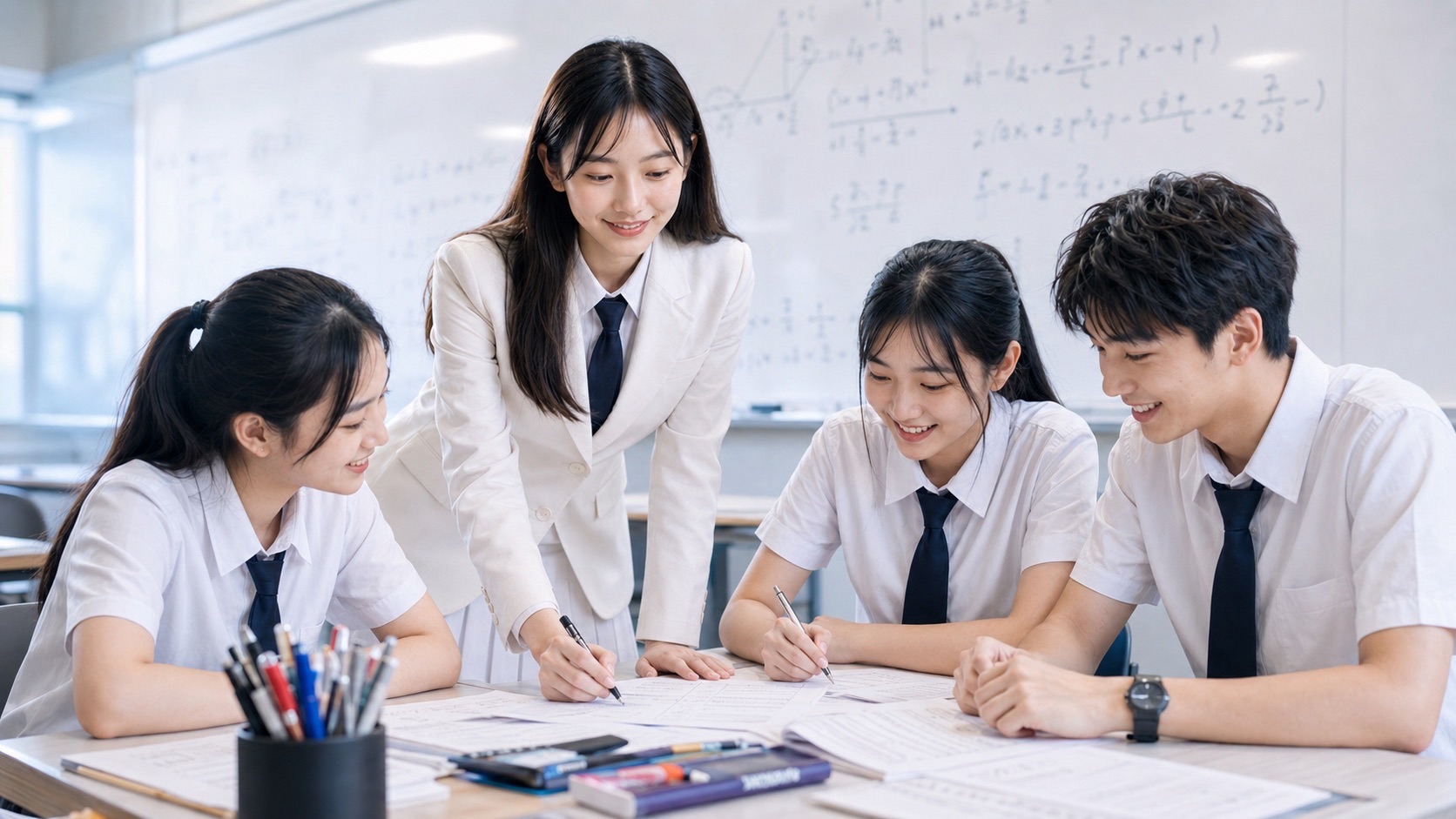
The Interpretation Layer Beneath Singapore’s Education Machine
Tuition in Singapore is often talked about wrongly.
Some people talk about it as if it is a disease. Some talk about it as if it is a miracle. Some say it is unnecessary pressure. Some say it is the only reason their child survived school. Some parents hate paying for it but still pay for it. Some students complain about it but quietly depend on it. Some tutors overpromise. Some schools dislike what it represents. Some families treat it like insurance.
All of these views contain part of the truth.
But to understand tuition properly, we have to stop treating it as only a private family decision. In Singapore, tuition is also a system. It is not an official system like the MRT, NS, HDB, CPF or the public school network. But it behaves like one. It sits beneath the formal education system as a private interpretation layer, repair layer, acceleration layer, confidence layer and anxiety-management layer.
That is why tuition belongs in How Singapore Works.
Because Singapore does not only work through visible public systems. It also works through the systems that grow around those systems.
The MRT creates malls around stations.
HDB creates neighbourhood economies.
NS creates social memory and national readiness.
Schools create assessment pathways.
Assessment pathways create tuition.
Tuition is one of Singapore’s shadow infrastructures.
Not shadow in the sense of illegal or hidden, but shadow in the sense that it follows the shape of the main system. Where the school system is fast, tuition slows things down. Where the curriculum is broad, tuition narrows the focus. Where exams are high-stakes, tuition reads the rules. Where parents are uncertain, tuition translates. Where students are falling behind, tuition repairs. Where students are already strong, tuition stretches.
Tuition is Singapore’s education system looking at itself in the mirror.
Tuition Exists Because the Main System Is Strong
This sounds strange, but it is important.
Tuition does not grow only because schools are weak. In Singapore, tuition grows partly because schools are strong, structured and consequential.
A weak education system with vague standards does not create the same tuition pressure. If no one knows what good work looks like, tuition has less to aim at. If exams are not taken seriously, tuition has less urgency. If grades do not affect pathways, tuition has less market power.
Singapore is different.
The education system is organised. The syllabus is real. The exams matter. The pathways are visible. Parents know that PSLE, subject combinations, O-Level routes, posting groups, polytechnic choices, JC routes, ITE pathways, university admissions and scholarship opportunities can shape a child’s future direction.
This creates seriousness.
And seriousness creates demand for interpretation.
Parents do not only ask, “Can my child learn English, Math or Science?” They ask something more specific:
Is my child on track?
Is this score safe?
Is this mistake serious?
Is this school pace too fast?
Is my child doing enough?
Is this tuition necessary?
Will this become a problem next year?
Can this grade still move?
What does AL1 require?
What does A1 require?
What happens if we wait?
Tuition enters because parents are not only buying content. They are buying judgement.
They want someone to look at the child’s work and say: this is a careless mistake, this is a concept gap, this is a language problem, this is an exam-technique problem, this is a pacing issue, this is recoverable, this is urgent, this can wait, this cannot wait.
That judgement is valuable because Singapore’s education machine moves.
Tuition Is the Parent’s Dashboard
Every complex system needs a dashboard.
A car has speed, fuel, engine temperature and warning lights. A plane has instruments. A hospital has monitors. A company has accounts. A country has statistics. Parents also want instruments because their child’s education is a long journey with delayed consequences.
School gives some signals: marks, comments, report books, teacher feedback, exam papers, weighted assessments, subject bands, postings and national results.
But for many parents, those signals arrive too late or feel too general.
A child can pass for years while carrying weak foundations. A student can look fine in Primary 3 but struggle in Primary 5. A Secondary 1 student can survive arithmetic but collapse when algebra arrives. A Secondary 3 student can work hard but not understand why Additional Mathematics feels like another language. An English student can “read a lot” but still not know how to answer comprehension questions precisely.
Tuition becomes the dashboard.
It gives parents more frequent readings. Not always perfect readings, but more readings.
What topic is weak?
Which question type keeps failing?
What vocabulary is missing?
What working step is careless?
What exam habit keeps repeating?
What is the child avoiding?
What has improved?
What still has not moved?
This is why tuition has become deeply embedded in Singapore’s education culture. It does not merely add worksheets. It reduces uncertainty.
The latest Household Expenditure Survey 2023 showed that Singapore households spent an average of $104.80 per month on private tuition, up from $88.40 in 2018 and $79.90 in 2013; total spending by families on private tuition was reported at about $1.8 billion in 2023.
That number says something simple: tuition is no longer marginal behaviour. It is part of how many households manage education risk.
Tuition Is the Repair Layer
In the official school system, teachers must teach classes.
That is the structural fact.
A schoolteacher may care deeply. A school may be well-run. The curriculum may be carefully planned. But one teacher still faces many students, different abilities, different homes, different personalities, different speeds, different fears and different gaps.
Some students need three explanations. Some need thirty. Some need diagrams. Some need drills. Some need language scaffolding. Some need confidence. Some need discipline. Some need someone to sit beside them and find out exactly where the thinking broke.
The school system cannot always provide that granularity at the exact moment each child needs it.
Tuition moves into that gap.
It repairs what the main system cannot always pause to repair.
A Primary 5 Science student may not understand how P3 and P4 topics connect to P5 and P6 application questions. A Secondary 1 Math student may not have internalised fractions, negative numbers or algebraic manipulation. A Secondary 2 student may be drifting just before upper secondary subject decisions begin to matter. A Secondary 3 student may be overwhelmed by the jump in E-Math and A-Math. A Secondary 4 student may know the content but not know how to execute under exam pressure.
These are not always intelligence problems.
Many are timing problems.
The child missed one building block. Then the class moved on. Then the next topic assumed that block. Then the next test exposed the gap. Then confidence dropped. Then the student avoided the subject. Then the gap widened.
Tuition tries to interrupt that chain.
In Singapore, this repair function matters because the curriculum is cumulative. Math builds on earlier Math. Science builds on earlier concepts and process skills. English builds on vocabulary, reading stamina, sentence control and inference habits. The longer the gap stays hidden, the more expensive it becomes to repair.
Tuition is often bought after pain, but it works best before collapse.
Tuition Is the Translation Layer
School teaches the syllabus.
Tuition often translates the syllabus into the child’s language.
That translation is not trivial.
A teacher may say, “Compare.”
The exam may require: identify both sides, state similarities, state differences, use evidence, answer the actual question.
A teacher may say, “Explain.”
The exam may require: cause, mechanism, result, keyword, context.
A Math question may ask something that looks unfamiliar, but the underlying engine is algebra, ratio, geometry, rate, graph interpretation or simultaneous equations.
A Science open-ended question may look like a content question, but the real test is whether the student can see variable, relationship, process, observation and conclusion.
Tuition translates the hidden instruction.
This is especially important in Singapore because assessment language is often compressed. A question can be short but intellectually loaded. Students who do not understand command words, answer structures and marking expectations can know the content but still lose marks.
That is why tuition is not just “more school after school.”
Good tuition explains the exam machine.
It shows students how marks are earned, how answers are judged, how mistakes repeat, how topics connect and how to read a question before attacking it.
For weaker students, this creates access.
For stronger students, this creates precision.
For anxious students, this creates calm.
The child stops seeing the subject as a fog and begins to see it as a map.
Tuition Is the Acceleration Layer
Tuition is not only for students who are failing.
That is one of the biggest misunderstandings.
In Singapore, tuition also serves students who are already doing well but want to protect or extend their performance. For these students, tuition is less about emergency repair and more about acceleration, sharpening and exposure.
A child already scoring well in Math may need harder non-routine questions.
A strong English student may need better argument, tone and precision.
A good Science student may need more disciplined OEQ phrasing.
A Secondary 3 A-Math student may need early consolidation before Sec 4 pressure.
A high-performing student may need stretch, not rescue.
This is where tuition behaves like sports training.
A school provides the national programme. Tuition provides the coach. The coach studies the athlete’s movement, timing, habits, weaknesses and plateau points. The goal is not to replace the sport. The goal is to improve execution.
In an exam system, small differences matter.
One careless algebra step can lose several marks. One missing keyword can break a Science answer. One vague English paragraph can cap the composition. One weak oral response can flatten an otherwise good English grade. One topic left unrepaired can spread into the final paper.
Acceleration tuition tries to make the student earlier, sharper and calmer.
Not more panicked. More ready.
Tuition Is the Confidence Layer
Students do not only learn subjects. They learn their own identity through subjects.
A child who keeps failing Math may begin to say, “I am bad at Math.”
A child who cannot write may say, “I have no ideas.”
A child who loses Science marks may say, “I don’t know what they want.”
A Secondary student drowning in algebra may say, “I cannot do this.”
These sentences are dangerous.
Once a student builds a negative identity around a subject, effort feels wasted. The child no longer sees work as investment. Work becomes proof of failure. Every worksheet says, “See, you are bad at this.” Every test becomes a trial. Every mistake confirms the story.
Tuition, at its best, breaks that story.
Not by giving fake encouragement, but by creating visible movement.
A student who can finally solve simultaneous equations begins to believe again.
A student who sees comprehension answers improve begins to trust the method.
A student who learns how to structure Science OEQs begins to stop panicking.
A student who moves from 55 to 65 sees that effort can produce fruit.
A student who moves from 65 to 75 sees that the subject is not fixed.
A student who moves from 75 to 85 begins to understand craft.
Confidence is not motivational decoration.
Confidence is a productivity tool.
A confident student attempts. An anxious student avoids. A confident student checks. A defeated student rushes. A confident student asks questions. A ashamed student hides.
Tuition matters because it can create a smaller, safer room where the student is less afraid to reveal confusion.
In a competitive system, that emotional space is valuable.
Tuition Is Also an Anxiety Machine
But tuition has a darker side.
Every useful system can become distorted.
The MRT moves people, but overcrowding creates stress.
Shopping malls provide convenience, but can encourage consumption.
CPF builds discipline, but can feel restrictive.
NS builds defence, but demands sacrifice.
Tuition repairs education gaps, but can also produce pressure.
This is the honest Singapore view.
Tuition can help. Tuition can also overload.
A child can become so packed with tuition that there is no room left for rest, play, boredom, family conversation, reading, exercise or independent thinking. A parent can become so anxious that every mark becomes a crisis. A tutor can overpromise. A tuition centre can sell fear. A student can become dependent on being spoon-fed. A family can spend money without understanding what problem is actually being solved.
Bad tuition adds hours without adding clarity.
Good tuition should reduce confusion, not multiply panic.
This distinction matters.
Tuition is not automatically good because it is tuition. It is good only when it identifies the right problem and applies the right intervention.
A student who lacks basics needs repair.
A student who lacks exam craft needs technique.
A student who lacks confidence needs patient rebuilding.
A student who lacks discipline needs structure.
A student who is already strong needs stretch.
A student who is exhausted may need rest more than another worksheet.
The best tuition does not ask, “How many lessons can we add?”
It asks, “What exactly is blocking the child?”
Full SBB Makes Interpretation Even More Important
Singapore’s education system is also changing.
Under Full Subject-Based Banding, the old Express, Normal (Academic) and Normal (Technical) streams have been removed from the 2024 Secondary 1 cohort, and students are posted through Posting Groups 1, 2 and 3. Students also have more flexibility to take subjects at different subject levels as they progress through secondary school.
This is a major systems shift.
It is designed to reduce rigid labels and allow more flexible subject-level development. But flexibility also increases the need for interpretation. Parents now have to understand not only whether a child is “good” or “weak,” but which subject level fits, which pathway is realistic, where the student can stretch, where the student may struggle and what decisions should be made over time.
The old system was blunt.
The new system is more granular.
Granular systems require better reading.
This is where tuition may become even more advisory in function. Not just “teach Math.” Not just “teach English.” But help families understand subject readiness, pacing, confidence, exam demands and the difference between temporary weakness and structural weakness.
A child may be strong in English but weaker in Math.
A child may be ready for a more demanding Science level but need language support.
A child may have the intelligence for A-Math but not the algebra discipline yet.
A child may improve over time and need pathways reopened.
This is not simple.
Singapore is moving from broad labels to more flexible combinations. That is good, but it asks parents and students to think more carefully.
Tuition becomes one of the places where these decisions are decoded.
Singapore’s Education System Performs — and That Creates Pressure Too
Singapore students perform strongly by international standards. In PISA 2022, Singapore was among the top-performing education systems in mathematics, science and reading, and OECD data reported that 41% of Singapore students were top performers in mathematics, compared with the OECD average of 9%.
That is a national strength.
But high performance also changes the air.
When the system performs well, the baseline rises. What counts as “normal” becomes more demanding. Parents compare. Students compare. Schools compare. Families worry that falling slightly behind in Singapore is not the same as falling slightly behind elsewhere.
This is part of the tuition engine.
Tuition grows not only because children are failing, but because the national environment is strong enough that parents fear being average in a high-performing system.
This is uncomfortable but real.
In a high-performing society, even good can feel unsafe.
Tuition therefore becomes insurance against slipping, not just medicine after failure. Parents are not always irrational when they choose tuition. They are responding to a system where pathways are visible, competition is real and delayed regret is frightening.
But this is also why tuition must be handled carefully.
The goal cannot be to turn every child into a machine. The goal is to help each child build enough mastery, confidence and adaptability to move through the system without being crushed by it.
Tuition Is a Middle System
Tuition sits between many parties.
Between school and home.
Between syllabus and child.
Between exam and parent.
Between ambition and fear.
Between weakness and recovery.
Between high performance and burnout.
That middle position is why tuition can be powerful.
A schoolteacher sees the class.
A parent sees the child at home.
A tutor sees the child attempting the subject in a smaller room.
Each view is incomplete alone.
The school may know the curriculum but not the child’s nightly struggle. The parent may know the child’s emotions but not the marking demands. The child may know the confusion but not how to explain it. The tutor, when competent, can connect these views.
This is the real value of good tuition.
It is not merely content delivery. It is diagnosis, sequencing and translation.
What should be taught first?
What should be ignored for now?
What is urgent?
What is foundational?
What is exam-critical?
What is confidence-critical?
What should be repeated?
What should be stretched?
What mistake pattern keeps returning?
A good tutor is not just a person who knows the subject.
A good tutor reads the student.
Tuition and the Singapore Parent
To understand tuition, we must also understand the Singapore parent.
Singapore parents are often accused of being kiasu. Sometimes that is fair. Sometimes it is too easy.
Many parents are not trying to create super-children. They are trying to avoid future regret.
They have seen how pathways work. They know education affects options. They know Singapore is expensive. They know the future economy is uncertain. They know AI, automation, global competition and credential pressure are not going away. They know that a child who cannot read, calculate, write, reason or communicate confidently will face a harder world.
So they act.
Sometimes too early.
Sometimes too much.
Sometimes wrongly.
But often from love, fear and responsibility.
Tuition becomes the action parents can take when the future feels too large.
They cannot redesign the education system. They cannot change the exam calendar. They cannot sit inside the classroom. They cannot absorb the child’s anxiety. But they can find help. They can add structure. They can buy time with a tutor. They can seek a second opinion.
This is why tuition is emotionally sticky.
It gives parents something to do.
The Best Tuition Should Make Itself Less Necessary
Here is the paradox.
The best tuition should not create permanent helplessness.
It should build the student until the student becomes more independent.
That does not mean the student must quit tuition immediately once improvement appears. Some students benefit from long-term coaching, especially through exam years. But the direction should be clear: tuition should strengthen the internal machinery of the child.
A good tuition system should teach the child how to think, not only what to answer.
It should build:
reading accuracy,
question interpretation,
conceptual foundations,
working discipline,
mistake awareness,
memory structure,
exam timing,
answer precision,
confidence,
and the courage to attempt hard things.
The child should not only leave with more completed worksheets.
The child should leave with a better operating system.
This is where tuition connects back to civilisation.
Singapore works because systems do not merely solve today’s problem. They build capacity for tomorrow. The MRT does not only move today’s commuters; it shapes tomorrow’s towns. NS does not only train today’s recruits; it preserves tomorrow’s deterrence. The port does not only move today’s containers; it protects tomorrow’s trade relevance.
Likewise, good tuition should not only solve this week’s test.
It should build the student’s future ability to learn.
Tuition as a Singapore System
So what is tuition in Singapore?
It is not simply extra lessons.
It is a response to a high-performing, high-speed, high-stakes education environment. It is a private system that grew around a public system. It is a market, a culture, a pressure valve, a repair shop, a coaching bench, a parent dashboard and sometimes an anxiety amplifier.
It is useful because the school system is structured.
It is demanded because the exam system is consequential.
It is stressful because parents are afraid.
It is powerful because students are different.
It is dangerous when it sells fear.
It is valuable when it creates clarity.
This is the correct balance.
Tuition is neither the villain nor the saviour.
It is a tool.
Like every tool in Singapore, it must be understood by what problem it solves, what behaviour it creates and what trade-off it introduces.
The MRT solves movement but creates crowding.
NS solves defence but demands years of service.
CPF solves long-term security but reduces immediate flexibility.
Tuition solves learning gaps and uncertainty but can create pressure and dependency.
That is how systems work.
They solve one problem by creating another set of responsibilities.
Closing Thought
To understand tuition in Singapore, do not begin with the tuition centre.
Begin with the child sitting at the table.
The worksheet is open. The school day is over. The parent is tired. The child is tired. The exam is months away, but the worry is already in the room. The question looks familiar and unfamiliar at the same time. The child says, “I don’t know how to do.”
That moment is where tuition enters.
Not as a glamorous system. Not as an official policy. Not as a national monument. But as one of the small private mechanisms that Singaporean families use to keep moving.
Singapore works through large systems: MRT, HDB, NS, CPF, ports, schools.
But Singapore also works through smaller systems: the dinner table, the homework folder, the WhatsApp message to the tutor, the mistake book, the Sunday lesson, the parent waiting downstairs, the child trying again.
Tuition is one of those systems.
It is the education machine’s interpretation layer.
It exists because the main system moves fast, and children do not all move at the same speed.
It exists because parents want signals before it is too late.
It exists because exams compress years of learning into a few hours.
It exists because confidence can break quietly.
It exists because, in Singapore, education is not only schooling.
Education is infrastructure.
And tuition is one of the unofficial tracks running beside it.