
How to decide which Mathematics tutor to go to in Tuvalu
A parent in Funafuti, Vaitupu, Nanumea, Nui, Nukufetau, Nukulaelae or another Tuvaluan community may search math tutor Tuvalu, National Year Eight Mathematics, Tuvalu Junior Certificate Maths, TSSC Mathematics or Year 13 Maths support. These terms describe different school levels and assessments. A suitable tutor begins with the pupil’s actual textbook, teacher’s programme, current qualification and the first mathematical relationship that the child cannot yet explain.
The purpose is not simply to complete a large number of exercises. A strong tutor helps the learner represent quantities, choose a valid method, show the working clearly and check an unfamiliar problem without prompting.
Tuvalu has its own Ministry curriculum and assessment framework. Although international and regional resources may be helpful, a tutor should not assume that an Australian, Fijian or other country’s final Mathematics examination automatically applies to the student.
Tuvalu has a national Mathematics curriculum from primary to senior years
The Tuvalu Ministry of Education’s curriculum page presents the Tuvalu National Curriculum and Policy Framework (TNCPF), which supports coherent learning standards from early childhood through Year 13. It emphasises national identity, inclusive learning, sustainability, vocational skills and the developmental needs of children.
Those principles matter when comparing Maths tutors. An early primary student may need clear number relationships, while a Year 10 pupil requires more formal symbolic reasoning and a senior student may need a particular qualification’s content. One generic workbook may not match all three stages.
Ask the prospective tutor to name the child’s current programme and explain how a practice question maps onto it. A foreign past paper is useful only where it accurately teaches the intended mathematical skill or is a genuinely registered international assessment.
Eight years of primary education: understand the Year Eight assessment
The Ministry’s primary-school information describes eight years of primary schooling, with children starting during the year they turn six, and a National Year Eight Examination at the end. The official page calls it a monitoring examination.
Older Tuvalu education reports also discuss the Year Eight examination in the context of progression into secondary school. The terminology and policy function in different historical descriptions should not be simplified into an unsupported claim that every pupil faces exactly the same admission rule now.
Parents should ask the school about the current assessment’s purpose, papers, school progression procedure and support arrangements. An effective tutor will not invent a 2026 or 2027 compulsory raw-score threshold based on an old report.
The Assessment and Examination Unit publishes different examinations
The Ministry’s Assessment and Examination Unit describes its responsibility for internal and external assessment monitoring and lists past papers under separate headings, including National Year Eight Examination and Tuvalu Junior Certificate.
A learner preparing for the end of primary education should not be assigned an entire senior-secondary Mathematics paper merely because both have the subject name Mathematics. An older pupil may be using algebra, statistics and applied mathematical concepts that are not appropriate for a younger child’s first-principles work.
A tutor should distinguish ordinary classroom checks, national examinations, regional benchmarking and a student’s future study requirements. These are related to educational progress but have different purposes.
Motufoua and Fetuvalu: the secondary school and course matter
The Ministry’s secondary education page identifies Motufoua Secondary School on Vaitupu and Fetuvalu Secondary School on Funafuti as important secondary providers. It describes academic, Technical and Vocational Skills Development, and Business, Commerce and Accounting learning pathways.
The tutor should ask where the pupil studies and which course and teachers’ materials apply. Two students may be at a similar age but have different subject choices, schoolbooks or later qualifications.
Distance, connectivity and the practical ability to access a teacher also matter in a country composed of widely separated islands. A tutor should be transparent about whether lessons are local or remote rather than claiming a non-existent nearby tuition centre.
Tuvalu Junior Certificate follows a different secondary stage
Ministry assessment resources separately identify the Tuvalu Junior Certificate (TJC). Older system descriptions associate junior secondary certification with around Year 10, but families should verify the current grade and subject rules with the school and Ministry.
The academic task is not simply to memorise historical examination questions. Junior-secondary Mathematics asks pupils to use operations on directed numbers, represent changing quantities with letters, read geometrical information and explain why an answer is reasonable.
A tutor should identify prerequisites carried from primary school and return to them briefly when necessary, then reconnect the repaired idea to the student’s actual junior-secondary textbook.
Year Twelve TSSC and Year Thirteen SPFSC are separate
The Tuvalu Ministry secondary-school description says that students completing Year 12 sit the Tuvalu Senior Secondary Certificate (TSSC), while at the end of Year 13 they may sit the South Pacific Form Seven Certificate (SPFSC).
Those are not identical Mathematics programmes. Year 12 students following a business-oriented pathway may need different quantitative applications from a Year 13 student pursuing a Mathematics-intensive tertiary route.
Check the actual registered subject and any institution-specific requirements before recommending advanced calculus. A teacher’s ability to solve a difficult overseas paper is useful only if the teaching supports the pupil’s real course or a clearly agreed enrichment goal.
PILNA is a regional monitoring instrument, not every pupil’s final exam
A Global Partnership for Education assessment review discusses Tuvalu’s participation in the Pacific Islands Literacy and Numeracy Assessment (PILNA) for Years 4 and 6, along with its national Year Eight, junior and senior examinations.
PILNA helps examine regional learning patterns. It is not automatically an individual school-leaving examination, and a parent should not mistake a regional numeracy benchmark for the child’s actual TSSC or SPFSC qualification.
Such assessments are still valuable to educators because they can highlight areas where learning needs strengthening. A good tutor uses information to investigate specific misconceptions instead of treating a cohort average as a verdict on an individual child.
A fictional school-supplies example in Australian dollars
Tuvalu uses the Australian dollar. Imagine six identical exercise books costing A$18 in a fictional classroom task. One book costs A$3, so nine cost A$27. A fixed A$7 delivery fee added once makes the total for nine books A$34.
A learner may calculate the unit price correctly but multiply the delivery fee by nine. The issue is confusion between a cost proportional to the number of books and a one-time charge.
Draw a table with columns for quantity, book cost and delivery. Then introduce the model C = 3n + 7. Change the question to four books, giving a total of A$19. Ask the pupil to explain why the fee remains constant. The numbers are invented and should not be taken as real shop prices in Tuvalu.
Fractions become easier when the whole is visible
Find three quarters of 32 by dividing a bar into four equal groups of eight and selecting three, giving 24. Reverse the task: if three quarters of an unknown amount are 24, the whole is 32. The equation (3/4)x = 24 describes that picture.
Now use (3/4)(x − 6) = 24. The bracketed amount must equal 32, so x is 38. A child who gives 32 again may understand fractions but ignore grouping.
A strong tutor uses a diagram and then a changed example solved independently. The relationship remains important in ratio, rates, probability and upper-secondary algebra.
Decimal place value is a foundation for later algebra
Compare 0.7 and 0.68. Seven tenths equals seventy hundredths, which is greater than sixty-eight hundredths. The numeral with more digits is not automatically the larger quantity.
Ask the learner to shade a hundred-square or point to both positions on a number line. Then compare 0.45 and 0.5. A pupil who can explain why one is larger understands more than a memorised instruction to add a trailing zero.
These early connections underpin percentages, measurement, gradients and data analysis. A tutor should repair number sense before assigning advanced formulas that depend on it.
Algebraic brackets mean a relationship, not just a procedure
Consider 3(x + 5) = 30 and 3x + 5 = 30. In the first, the full group x + 5 is tripled, giving x = 5. In the second, five is added after three copies of x, giving x = 25/3.
Use a drawing of repeated groups to show the difference. The student should check both answers in the original equations and explain why the same visible numbers can lead to different results.
Only then practise symbolic rearrangement. A tutor who teaches “move the number to the other side” without discussing equality may help with a familiar problem but leave the learner unable to model a new one.
Geometry: draw the inside path before calculating
Imagine a fictional school courtyard measuring 12 metres by 8 metres, with area 96 square metres. A one-metre border along the entire inside perimeter leaves a 10 by 6 metre rectangle, covering 60 square metres. The border occupies 36 square metres.
If the border narrows to half a metre, the inner area becomes 11 × 7 = 77 square metres and the border covers 19 square metres.
A child who subtracts the border width once instead of twice from each dimension is misreading the shape. A labelled diagram repairs the relationship more effectively than multiplying more numbers. These are teaching dimensions, not a real Tuvalu construction specification.
A sea-distance model with explicitly fictional assumptions
Suppose an imaginary vessel travels 30 kilometres at a constant 15 kilometres per hour. The mathematical travel time is two hours. If a fictional extra half-hour stop is added, total elapsed time becomes two and a half hours.
Ask the pupil to distinguish speed while moving, travel time and total elapsed time. Now change the distance and let them choose the correct relationship without the tutor announcing the operation.
This is not an actual inter-island schedule or maritime safety recommendation. It is a simplified mathematical model. Identifying its assumptions and limits is part of learning to reason with rates.
Percentage change: which quantity is the base?
Begin with a fictional budget of 200 units. Reducing it by 15% gives 170. Increasing that smaller amount by 15% gives 195.5, not the original 200.
The percentage base changes between operations. Show the two bars or write 200 × 0.85 × 1.15 = 195.5. Ask the pupil why the factors do not cancel.
This concept connects to later finance, compound growth and statistical interpretation. The values are classroom examples, not real household spending or inflation data.
Secondary functions and the graph of a quadratic
For a senior pupil whose actual course includes quadratics, use f(x) = x² − 8x + 12. Factoring gives roots 2 and 6. Completing the square gives (x − 4)² − 4, so the minimum is at (4, −4).
Ask the learner to sketch the graph and explain why the roots lie on opposite sides of x = 4. Add four to the function and ask them to predict the new graph. It touches the horizontal axis at the vertex.
This is an original teaching example, not a reproduced TSSC or SPFSC paper. The tutor should confirm whether the topic is required in the pupil’s current subject or suitable as optional extension.
Statistics: one extreme value can change the mean
Take a fictional dataset of 10, 12, 12, 16 and 20. The mean is 14, the median 12 and the range 10. Replace the final value with 50: the mean becomes 20, the median stays 12 and the range rises to 40.
Ask the pupil why the middle ordered observation did not move. A student who understands what each summary describes is doing more than substituting figures into three formulas.
These are invented numbers, not Tuvalu examination results, rainfall records or education statistics. A good tutor distinguishes models from actual evidence.
School-language understanding and the meaning of technical words
A learner may discuss quantities confidently in Tuvaluan while studying parts of the formal curriculum in English. Ask the school which language and mathematical terminology apply, then use accessible explanations to build accurate written reasoning.
“At least ten” means n ≥ 10, while “at most ten” means n ≤ 10. A pupil who reverses them may calculate accurately after modelling the wrong inequality. Number lines make the allowed values visible.
The eduKate Fencing Method for vocabulary can help: group a small set of related technical words, contrast easily confused meanings and revisit them in changed problems. Language support is not a substitute for mathematical understanding; it helps the child demonstrate what they know.
Diagnosing six kinds of mistakes
Reading a condition incorrectly, misdrawing a diagram, losing a negative sign, executing the right calculation incorrectly, choosing an unsuitable method and failing to check units are different mistakes.
A tutor should locate the first point where the pupil’s reasoning changes direction. For a diagram error, reconstruct the shape. For a method-choice problem, compare several possible relationships. For a sign error, use a number line and substitution. For checking, teach estimation and units.
A short error log and a changed problem several days later can show whether the underlying issue has actually been repaired.
What a structured ninety-minute lesson can look like
An illustrative session begins with brief retrieval of an earlier concept, then teaches one relationship using an appropriate diagram and explanation. Guided practice asks pupils to justify each step rather than simply copy.
Give the student an unfamiliar variation to solve independently. Finish with a small mixed exercise, suitable examination-style practice if relevant, and focused continuation homework that the pupil can realistically complete.
The exact timing and format depend on local tutors and school arrangements. The eduKate Clementi Mathematics reference describes Singapore-based three-pupil tutorials; it does not represent a Tuvalu-operated tuition centre.
Repair, maintenance and extension are different goals
A pupil needing repair may have missed a foundational concept such as fraction meaning or algebraic equality. A pupil needing maintenance may know the course but struggle to retrieve and apply it consistently. A pupil ready for extension may want more advanced graphs, statistics or proof.
These are temporary teaching goals, not rankings of children. The tutor should explain why the proposed work is necessary for the present student and revise the plan as understanding changes.
One observable independent skill after four lessons is a stronger early indicator of genuine progress than a promise of a high final examination score.
Spaced retrieval and an interconnected Mathematics system
A learner can feel confident immediately after a lesson and forget the concept days later. Spaced retrieval returns to it after a delay, while mixed practice requires the pupil to choose among different methods without a chapter heading.
Fractions connect to ratios, ratios to rates, and rates to linear graphs. Geometry models connect to algebra, while statistics requires number sense and thoughtful interpretation. Good tuition makes these links visible.
The S-curve is a useful metaphor for learning that accelerates after key connections become stable; it does not guarantee that test scores will rise in a particular mathematical pattern.
Practical access, online teaching and the island context
Tuvalu’s population is distributed across multiple islands, and families have different access to tutors, reliable connectivity and school resources. One-to-one lessons can help with very specific gaps, while compatible small groups can encourage explanations. Online learning can work when the teacher can see full written solutions and provide useful corrections.
The Tuvalu Education Management Information System provides ministry data about schools and indicators; it is not a directory proving that private Mathematics tuition places are available on any particular island.
Ask an actual provider where teaching takes place, who teaches, the group size, cost, feedback arrangements and missed-session policy. eduKateSG’s country article is educational guidance, not proof of a local branch.
A four-week progress plan for parents
Week one identifies the child’s current course, one secure skill and two recurring errors. Week two repairs the earliest missing prerequisite using a visual explanation and independent practice. Week three connects the concept to a different current-school question. Week four tests it after a delay with an unfamiliar variation.
The tutor should report an observable skill: the child now compares decimals accurately, sets up an equation from a new story or checks the units of an area calculation without prompts.
If the original gap is resolved, lighter independent practice may be enough. If little progress occurs, revise the diagnosis or teaching method rather than automatically extending paid hours.
Frequently asked questions for Tuvalu families
Is National Year Eight the same as the Tuvalu Junior Certificate?
No. The National Year Eight Examination occurs at the end of primary education, while the Tuvalu Junior Certificate belongs to a later secondary stage. Current school notices determine what applies to the individual pupil.
Is PILNA a final school-leaving examination?
No. PILNA is a regional learning assessment used to monitor numeracy and literacy patterns. It does not replace an individual pupil’s national secondary qualification.
What is the difference between TSSC and SPFSC?
TSSC is associated with completion of Year 12, while the Ministry identifies the South Pacific Form Seven Certificate at Year 13. They have different educational purposes, and the actual subject requirements must be checked.
Can an overseas tutor use Australian Mathematics materials?
Yes, as supplementary teaching resources when the concepts align, but the tutor should not substitute another country’s syllabus for Tuvalu’s current programme without checking the actual course.
Are small groups automatically better than individual lessons?
No. Both can help. A good small group must allow each pupil to explain their working, while individual instruction can be valuable for a specific learning gap. Compare real teaching rather than class-size advertising alone.
How quickly should parents expect improvement?
An independently explained concept after a few lessons is a meaningful early milestone. Whole examination results depend on many topics and cannot be guaranteed.
Questions to ask a Mathematics tutor in Tuvalu
- Which current Tuvalu school stage and Mathematics course is my child following?
- Is the goal Year Eight, Tuvalu Junior Certificate, TSSC, SPFSC or ordinary school progress?
- Can you show current Ministry or school guidance rather than assume an old examination format?
- Can you identify the first incorrect relationship in real written work?
- Will you use diagrams, words, tables and symbols before timed practice?
- What changed question will the pupil solve independently after two to four lessons?
- When the original gap becomes secure, will you recommend less frequent support?
Choose the teacher who demonstrates accurate curriculum matching and clear explanation, not a promise about unseen papers or guaranteed placements.
eduKateSG Mathematics learning resources
Continue with the Mathematics Learning Hub, How Mathematics Works and eduKate Mathematics Learning System. For a different Pacific qualification, see Mathematics Tutor | Kiribati.
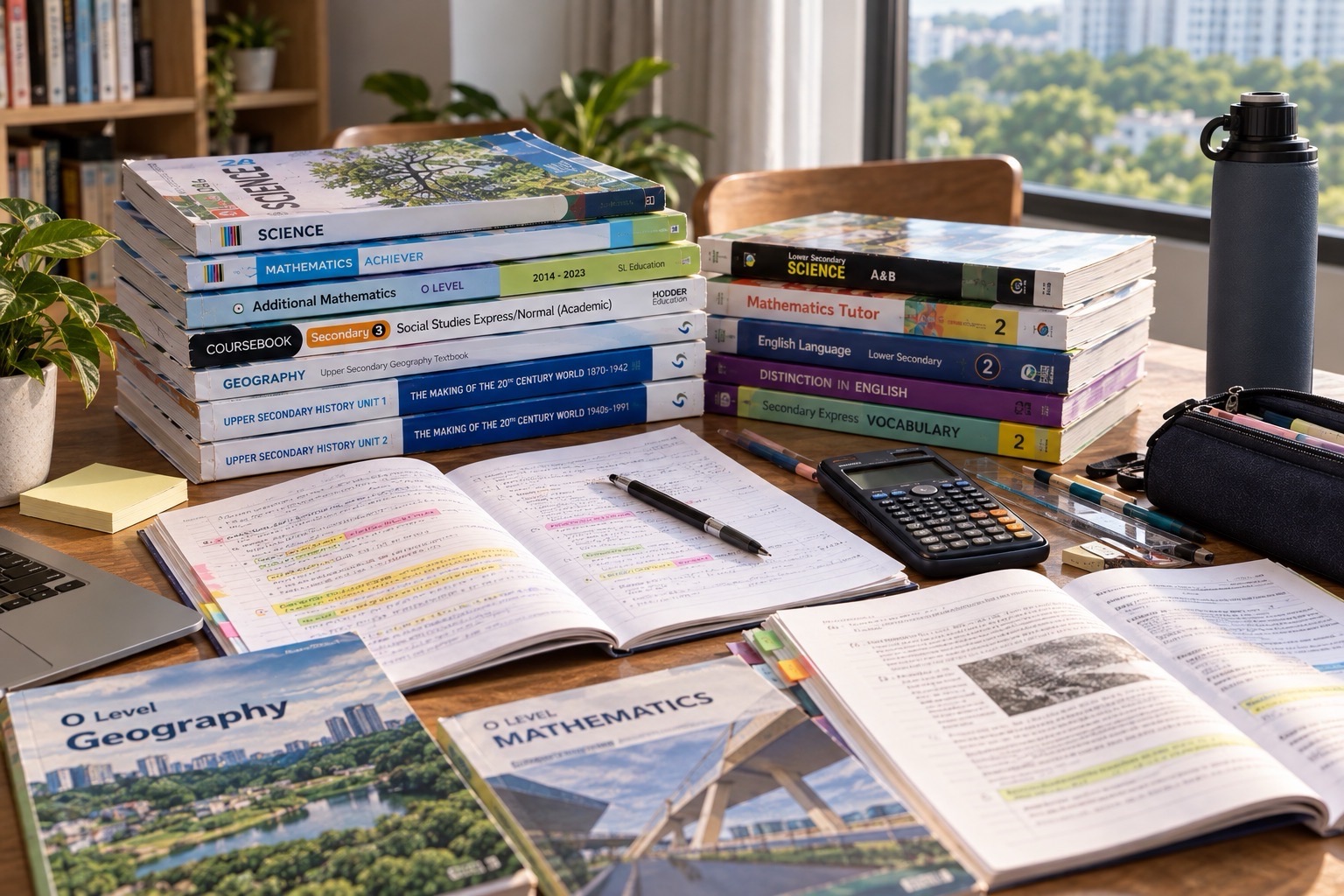
The Clementi Secondary 1 Mathematics tutor guide describes eduKate’s real Singapore tuition, not a Tuvalu teaching centre. The featured image is an educational illustration from eduKateSG’s media library, not a photograph of a school in Tuvalu.
Official sources checked for October 2026
- Tuvalu Ministry: National Curriculum Policy Framework
- Tuvalu Ministry: Primary schools and the National Year Eight Examination
- Tuvalu Ministry: Assessment and Examination Unit, Year Eight and Junior Certificate past papers
- Tuvalu Ministry: Motufoua and Fetuvalu secondary schools, TSSC and SPFSC
- Global Partnership for Education: review of national examinations and PILNA
- Tuvalu Education Management Information System
Older assessment reports and contemporary Ministry pages can use different descriptions of the role of a transition examination. The pupil’s school and responsible authority should confirm the rules currently applying. Do not infer examination dates or placements from historical information.
Related eduKateSG learning guides: World Mathematics Tutor Guides · World Tuition Master Hub. These articles help readers evaluate teaching approaches and curricula; they do not represent an overseas eduKate tuition centre or current local tutor availability.