
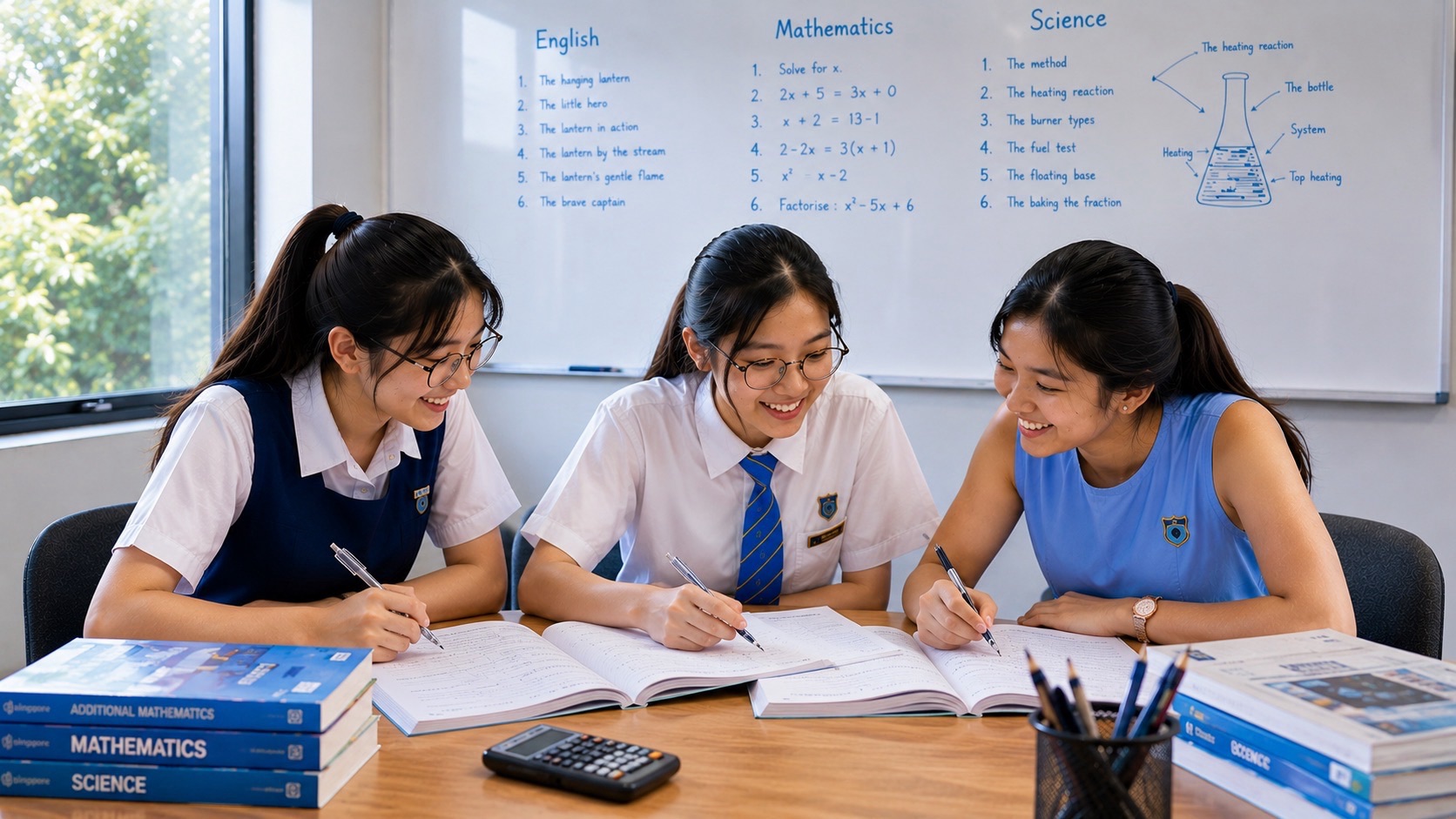
How to study for cloze passage questions: read the whole passage before filling gaps, use the sentence around each blank to predict grammar and word class, check collocation and fixed phrases, track cohesion across sentences, use elimination in multiple-choice cloze, and practise open cloze by predicting high-frequency function words and grammatical structures.
Cloze questions are more demanding than ordinary fill-in-the-blank questions because the gaps sit inside a connected passage. The student must restore language that fits locally and globally: grammar, vocabulary, collocation, reference, register and text meaning all interact.
Cambridge English’s current exam formats make these distinctions clear. B1 Preliminary includes multiple-choice cloze and open cloze; C2 Proficiency describes multiple-choice cloze as testing idioms, collocations, fixed phrases, phrasal verbs and semantic precision, while open cloze focuses strongly on grammar with some vocabulary.
This guide treats cloze passages as text reconstruction, not isolated guessing.
This approach is especially useful when a student needs to:
- improve grammar in context;
- learn collocations and fixed phrases;
- handle open cloze;
- use multiple-choice elimination;
- track pronoun reference and cohesion;
- predict missing word classes;
- manage unfamiliar vocabulary;
- work efficiently across full cloze passages.
Understand the Cloze Format
Cloze passages remove words or phrases from a continuous text and ask students to restore them.
The task tests more than isolated vocabulary because each gap sits inside grammar, meaning, collocation and text structure.
The useful test is whether the student can explain why the chosen word fits grammatically, semantically and textually rather than merely saying it sounds right.
What to do
- Identify whether the test is multiple-choice or open cloze.
- Check how many gaps there are.
- Check whether one word only is allowed.
- Check whether word formation is a separate task.
Keep the reasoning visible. For each difficult gap, identify the decisive clue: grammar, collocation, reference, meaning, register or discourse relation.
Worked example
Cambridge B1 Preliminary includes both multiple-choice cloze and open cloze, while higher-level Use of English papers also include word formation and transformation tasks.
After the passage, check only after committing. Classify each wrong answer by the clue that was missed, then practise that clue type on fresh text.
Common mistake
Do not treat every gap as the same kind of vocabulary question.
If the same weakness returns, isolate the subskill. Use collocation sets, article drills, linker contrasts or pronoun-reference passages before returning to full cloze tasks.
Read the Whole Passage First
Meaning across the passage helps constrain individual gaps.
Students who solve gaps one by one can miss later clues, topic development and reference chains.
The useful test is whether the student can explain why the chosen word fits grammatically, semantically and textually rather than merely saying it sounds right.
What to do
- Read quickly for topic and purpose.
- Notice tense and register.
- Identify paragraph flow.
- Do not fill every gap on the first read.
Keep the reasoning visible. For each difficult gap, identify the decisive clue: grammar, collocation, reference, meaning, register or discourse relation.
Worked example
A passage begins as a travel narrative and later becomes reflective; that tone helps the student reject a formal academic word that fits grammatically but not stylistically.
After the passage, check only after committing. Classify each wrong answer by the clue that was missed, then practise that clue type on fresh text.
Common mistake
Do not solve the first gap before understanding the text.
If the same weakness returns, isolate the subskill. Use collocation sets, article drills, linker contrasts or pronoun-reference passages before returning to full cloze tasks.
Read the Sentence Around the Gap
Local grammar usually narrows the answer type.
Words before and after the blank can reveal whether a noun, verb, preposition, determiner, linker or auxiliary is required.
The useful test is whether the student can explain why the chosen word fits grammatically, semantically and textually rather than merely saying it sounds right.
What to do
- Read the whole sentence.
- Identify the grammatical slot.
- Check tense and agreement.
- Look for fixed structures.
Keep the reasoning visible. For each difficult gap, identify the decisive clue: grammar, collocation, reference, meaning, register or discourse relation.
Worked example
The phrase ‘interested ___ learning more’ strongly cues the preposition in.
After the passage, check only after committing. Classify each wrong answer by the clue that was missed, then practise that clue type on fresh text.
Common mistake
Do not choose a word from topic meaning alone.
If the same weakness returns, isolate the subskill. Use collocation sets, article drills, linker contrasts or pronoun-reference passages before returning to full cloze tasks.
Use Grammar to Predict the Word Class
Word-class prediction reduces the search space.
A sentence frame often signals noun, adjective, adverb, auxiliary, pronoun or conjunction.
The useful test is whether the student can explain why the chosen word fits grammatically, semantically and textually rather than merely saying it sounds right.
What to do
- Identify the head word.
- Check modifiers.
- Check verb pattern.
- Check whether the gap links clauses.
Keep the reasoning visible. For each difficult gap, identify the decisive clue: grammar, collocation, reference, meaning, register or discourse relation.
Worked example
A gap after very and before a noun phrase may require an adjective, while a gap before an adjective may require an adverb.
After the passage, check only after committing. Classify each wrong answer by the clue that was missed, then practise that clue type on fresh text.
Common mistake
Do not guess from sound without identifying the slot.
If the same weakness returns, isolate the subskill. Use collocation sets, article drills, linker contrasts or pronoun-reference passages before returning to full cloze tasks.
Check Verb Patterns and Auxiliaries
Open cloze often tests grammar words rather than content words.
Auxiliaries, modal verbs, infinitive markers and gerund patterns are common high-value targets.
The useful test is whether the student can explain why the chosen word fits grammatically, semantically and textually rather than merely saying it sounds right.
What to do
- Check whether the verb needs to or -ing.
- Check passive or perfect forms.
- Check modal structure.
- Check subject-verb agreement.
Keep the reasoning visible. For each difficult gap, identify the decisive clue: grammar, collocation, reference, meaning, register or discourse relation.
Worked example
The phrase ‘has ___ completed’ requires an adverb or participial structure depending on context, while ‘decided ___ leave’ strongly cues to.
After the passage, check only after committing. Classify each wrong answer by the clue that was missed, then practise that clue type on fresh text.
Common mistake
Do not focus only on nouns and adjectives.
If the same weakness returns, isolate the subskill. Use collocation sets, article drills, linker contrasts or pronoun-reference passages before returning to full cloze tasks.
Check Prepositions
Prepositions are frequent cloze targets because they depend on phrase-level convention.
Collocation matters as much as literal meaning.
The useful test is whether the student can explain why the chosen word fits grammatically, semantically and textually rather than merely saying it sounds right.
What to do
- Learn verb-preposition pairs.
- Learn adjective-preposition pairs.
- Learn noun-preposition pairs.
- Read the full phrase.
Keep the reasoning visible. For each difficult gap, identify the decisive clue: grammar, collocation, reference, meaning, register or discourse relation.
Worked example
Responsible for, interested in and depend on are learned as complete units.
After the passage, check only after committing. Classify each wrong answer by the clue that was missed, then practise that clue type on fresh text.
Common mistake
Do not translate prepositions word for word from another language.
If the same weakness returns, isolate the subskill. Use collocation sets, article drills, linker contrasts or pronoun-reference passages before returning to full cloze tasks.
Check Articles and Determiners
A, an, the, some, any, much, many and other determiners signal number, specificity and countability.
These small words are easy to overlook because they carry little lexical meaning but strong grammar.
The useful test is whether the student can explain why the chosen word fits grammatically, semantically and textually rather than merely saying it sounds right.
What to do
- Check whether the noun is countable.
- Check singular or plural.
- Check specific versus general reference.
- Check vowel sound for a/an.
Keep the reasoning visible. For each difficult gap, identify the decisive clue: grammar, collocation, reference, meaning, register or discourse relation.
Worked example
A university is correct because university begins with a consonant sound /j/.
After the passage, check only after committing. Classify each wrong answer by the clue that was missed, then practise that clue type on fresh text.
Common mistake
Do not choose articles from spelling alone.
If the same weakness returns, isolate the subskill. Use collocation sets, article drills, linker contrasts or pronoun-reference passages before returning to full cloze tasks.
Use Collocation
Many multiple-choice cloze items distinguish words that are grammatically possible but collocationally unnatural.
Cambridge C2 describes multiple-choice cloze as testing collocations, fixed phrases, phrasal verbs and semantic precision.
The useful test is whether the student can explain why the chosen word fits grammatically, semantically and textually rather than merely saying it sounds right.
What to do
- Read several words around the gap.
- Ask which combination is natural.
- Learn chunks, not isolated words.
- Compare near synonyms.
Keep the reasoning visible. For each difficult gap, identify the decisive clue: grammar, collocation, reference, meaning, register or discourse relation.
Worked example
Heavy rain is natural while strong rain is usually not, even though strong is semantically related.
After the passage, check only after committing. Classify each wrong answer by the clue that was missed, then practise that clue type on fresh text.
Common mistake
Do not choose the nearest dictionary synonym automatically.
If the same weakness returns, isolate the subskill. Use collocation sets, article drills, linker contrasts or pronoun-reference passages before returning to full cloze tasks.
Use Fixed Phrases and Phrasal Verbs
Some gaps belong to multiword expressions that behave as units.
Recognising the whole phrase can solve the item faster than analysing every word separately.
The useful test is whether the student can explain why the chosen word fits grammatically, semantically and textually rather than merely saying it sounds right.
What to do
- Learn common phrasal verbs.
- Learn discourse phrases.
- Notice particles.
- Use example sentences.
Keep the reasoning visible. For each difficult gap, identify the decisive clue: grammar, collocation, reference, meaning, register or discourse relation.
Worked example
Put up with is recalled as a three-word unit meaning tolerate.
After the passage, check only after committing. Classify each wrong answer by the clue that was missed, then practise that clue type on fresh text.
Common mistake
Do not memorise the main verb without its particle.
If the same weakness returns, isolate the subskill. Use collocation sets, article drills, linker contrasts or pronoun-reference passages before returning to full cloze tasks.
Use Cohesion Across Sentences
Some gaps depend on reference, contrast, cause or sequence beyond the sentence.
Cloze passages are texts, not disconnected sentences.
The useful test is whether the student can explain why the chosen word fits grammatically, semantically and textually rather than merely saying it sounds right.
What to do
- Track pronouns.
- Track this/that/these/those.
- Notice however, therefore and although relationships.
- Check paragraph continuity.
Keep the reasoning visible. For each difficult gap, identify the decisive clue: grammar, collocation, reference, meaning, register or discourse relation.
Worked example
The gap requires however because the next sentence reverses the expectation built in the previous one.
After the passage, check only after committing. Classify each wrong answer by the clue that was missed, then practise that clue type on fresh text.
Common mistake
Do not solve linkers from one sentence only.
If the same weakness returns, isolate the subskill. Use collocation sets, article drills, linker contrasts or pronoun-reference passages before returning to full cloze tasks.
Track Pronoun Reference
Pronouns and determiners depend on earlier nouns.
Reference chains are common in open cloze.
The useful test is whether the student can explain why the chosen word fits grammatically, semantically and textually rather than merely saying it sounds right.
What to do
- Identify the possible antecedent.
- Check number and person.
- Check meaning.
- Read the sentence before.
Keep the reasoning visible. For each difficult gap, identify the decisive clue: grammar, collocation, reference, meaning, register or discourse relation.
Worked example
They refers to researchers introduced in the previous sentence, not to the nearest plural noun in the current line.
After the passage, check only after committing. Classify each wrong answer by the clue that was missed, then practise that clue type on fresh text.
Common mistake
Do not select a pronoun without checking its referent.
If the same weakness returns, isolate the subskill. Use collocation sets, article drills, linker contrasts or pronoun-reference passages before returning to full cloze tasks.
Use Meaning and Register
More than one word can fit grammatically, but only one may fit the intended meaning and style.
Formal, neutral and informal choices are not interchangeable.
The useful test is whether the student can explain why the chosen word fits grammatically, semantically and textually rather than merely saying it sounds right.
What to do
- Identify passage register.
- Check connotation.
- Compare strength.
- Use nearby vocabulary as a clue.
Keep the reasoning visible. For each difficult gap, identify the decisive clue: grammar, collocation, reference, meaning, register or discourse relation.
Worked example
A formal report favours approximately over around in some contexts, while a conversational email may prefer around.
After the passage, check only after committing. Classify each wrong answer by the clue that was missed, then practise that clue type on fresh text.
Common mistake
Do not choose a word that changes tone or intensity.
If the same weakness returns, isolate the subskill. Use collocation sets, article drills, linker contrasts or pronoun-reference passages before returning to full cloze tasks.
Handle Multiple-Choice Cloze by Elimination
Option sets are designed to include plausible distractors.
Elimination works best after grammar and meaning have narrowed the choice.
The useful test is whether the student can explain why the chosen word fits grammatically, semantically and textually rather than merely saying it sounds right.
What to do
- Reject wrong word class.
- Reject wrong collocation.
- Reject wrong meaning.
- Compare the final two in the full sentence.
Keep the reasoning visible. For each difficult gap, identify the decisive clue: grammar, collocation, reference, meaning, register or discourse relation.
Worked example
Four verbs all mean roughly look, but only one combines naturally with the particle in the sentence.
After the passage, check only after committing. Classify each wrong answer by the clue that was missed, then practise that clue type on fresh text.
Common mistake
Do not compare answer choices before reading the sentence properly.
If the same weakness returns, isolate the subskill. Use collocation sets, article drills, linker contrasts or pronoun-reference passages before returning to full cloze tasks.
Handle Open Cloze by Predicting Function Words
Open cloze often emphasises grammar and high-frequency structural words.
Cambridge describes open cloze as focusing strongly on grammar with some vocabulary.
The useful test is whether the student can explain why the chosen word fits grammatically, semantically and textually rather than merely saying it sounds right.
What to do
- Predict the grammatical function.
- Try one-word candidates.
- Read the full sentence aloud mentally.
- Check text cohesion.
Keep the reasoning visible. For each difficult gap, identify the decisive clue: grammar, collocation, reference, meaning, register or discourse relation.
Worked example
A gap between two clauses may require although, because, while or that depending on the logical relationship.
After the passage, check only after committing. Classify each wrong answer by the clue that was missed, then practise that clue type on fresh text.
Common mistake
Do not search mentally through thousands of content words when the slot is clearly grammatical.
If the same weakness returns, isolate the subskill. Use collocation sets, article drills, linker contrasts or pronoun-reference passages before returning to full cloze tasks.
Use Timed Full Cloze Passages
Cloze skill must survive across a continuous text under time.
Full passages add attention switching, uncertainty and the need to revisit earlier gaps.
The useful test is whether the student can explain why the chosen word fits grammatically, semantically and textually rather than merely saying it sounds right.
What to do
- Do a first pass for easy items.
- Mark uncertain gaps.
- Complete the passage.
- Return to difficult items at the end.
Keep the reasoning visible. For each difficult gap, identify the decisive clue: grammar, collocation, reference, meaning, register or discourse relation.
Worked example
Leonie fills six certain gaps quickly, leaves two marked, then uses the completed passage to solve the remaining items.
After the passage, check only after committing. Classify each wrong answer by the clue that was missed, then practise that clue type on fresh text.
Common mistake
Do not spend three minutes on the first difficult gap.
If the same weakness returns, isolate the subskill. Use collocation sets, article drills, linker contrasts or pronoun-reference passages before returning to full cloze tasks.
How the Skill Changes by Subject
English
This is the main domain: grammar, vocabulary, collocation, word form, cohesion and register all interact.
Mathematics
Cloze is uncommon in Mathematics, though missing-symbol or theorem-completion questions use a related retrieval process.
Science
Science cloze can test terminology, process language, variables and precise technical relationships.
Humanities
Humanities cloze may test vocabulary, chronology, concepts and source language, but full contextual reading remains important.
Three Student Patterns
Maren
Maren knows many vocabulary words but chooses near synonyms that do not collocate. She needs chunk-based vocabulary learning.
Iona
Iona reads sentence by sentence and misses cross-sentence cohesion. She needs whole-passage reading before gap filling.
Leonie
Leonie spends too long on one hard gap. She needs a first-pass/return-later routine.
Frequently Asked Questions
What is the difference between multiple-choice cloze and open cloze?
Multiple-choice cloze provides options; open cloze requires you to supply the missing word yourself.
Should I read the whole passage first?
Yes. Overall meaning, register and cohesion can decide gaps that local grammar alone cannot.
How do I get better at open cloze?
Practise grammar words, fixed structures, linkers, pronouns, articles and prepositions in context.
How do I improve multiple-choice cloze?
Build collocation and semantic precision, then eliminate options using grammar, meaning and phrase patterns.
Should I use the word that sounds right?
Treat sound as a clue, then verify grammar, collocation and meaning.
How do I learn collocations?
Study words in chunks and example sentences rather than isolated synonym lists.
What if I do not know one word in the passage?
Use surrounding meaning and keep moving; one unfamiliar word rarely prevents every gap.
How do I handle hard gaps?
Mark them, finish easier items, then return with more of the passage reconstructed.
How do I get faster?
Use a first pass for certain items and delay difficult gaps rather than repeatedly scanning one sentence.
How do I know I am ready?
You can complete unfamiliar cloze passages accurately and explain the grammatical or lexical clue behind difficult answers.
One-Page Cloze Operating Manual
Read: Understand the passage before filling.
Slot: Predict the missing word class or function.
Grammar: Check tense, agreement, articles and prepositions.
Chunk: Check collocation, fixed phrase and phrasal verb.
Cohesion: Track reference and logical links across sentences.
Meaning: Check semantic precision and register.
Eliminate: Reject distractors systematically.
Return: Leave difficult gaps and revisit after the passage is fuller.
Helpful Reading
- Cambridge English | B1 Preliminary Exam Format
- Cambridge English | C2 Proficiency Exam Format
- Cambridge English | B2 First Preparation
Cloze Passages Reward Language in Context
The missing word must fit more than one condition at once: grammar, meaning, phrase pattern and text flow.
Read globally, solve locally, then check globally again.
The strongest cloze student learns how English holds together across a passage, not just how one blank is filled.
Properly taught kids shine a bright light into the future.
Why Collocation Matters
Cloze options are often near-synonyms that differ mainly in the company they keep. Record difficult answers as chunks—make a decision, heavy rain, responsible for—rather than as isolated words.
Use a fresh cloze passage for the next check so success cannot depend on memory of the original text.
How to Use Error Categories
Classify misses as grammar, collocation, semantic precision, cohesion, reference or register. The category tells you what to practise next instead of simply doing more full passages.
Use a fresh cloze passage for the next check so success cannot depend on memory of the original text.
How to Review Under Time
Once accuracy improves, use official-length passages. The student should learn to leave one difficult gap, finish the passage, and return with more context rather than becoming trapped.
Use a fresh cloze passage for the next check so success cannot depend on memory of the original text.
How to Build Open-Cloze Strength
Create personal mini-lists of function words that recur in structures: auxiliaries, articles, prepositions, relative pronouns, conjunctions and infinitive markers. Practise them in complete sentences.
Use a fresh cloze passage for the next check so success cannot depend on memory of the original text.
How to Test Transfer
Change genre and register. A student who can solve narrative, email, report and article cloze tasks is relying on language structure rather than one familiar style.
Use a fresh cloze passage for the next check so success cannot depend on memory of the original text.
How to Close the Loop
Retire error categories that stay accurate across delayed mixed passages. Keep only recurring grammar or collocation weaknesses active.
Use a fresh cloze passage for the next check so success cannot depend on memory of the original text.
Why Collocation Matters
Cloze options are often near-synonyms that differ mainly in the company they keep. Record difficult answers as chunks—make a decision, heavy rain, responsible for—rather than as isolated words.
Use a fresh cloze passage for the next check so success cannot depend on memory of the original text.
How to Use Error Categories
Classify misses as grammar, collocation, semantic precision, cohesion, reference or register. The category tells you what to practise next instead of simply doing more full passages.
Use a fresh cloze passage for the next check so success cannot depend on memory of the original text.
How to Review Under Time
Once accuracy improves, use official-length passages. The student should learn to leave one difficult gap, finish the passage, and return with more context rather than becoming trapped.
Use a fresh cloze passage for the next check so success cannot depend on memory of the original text.
How to Build Open-Cloze Strength
Create personal mini-lists of function words that recur in structures: auxiliaries, articles, prepositions, relative pronouns, conjunctions and infinitive markers. Practise them in complete sentences.
Use a fresh cloze passage for the next check so success cannot depend on memory of the original text.
How to Test Transfer
Change genre and register. A student who can solve narrative, email, report and article cloze tasks is relying on language structure rather than one familiar style.
Use a fresh cloze passage for the next check so success cannot depend on memory of the original text.
How to Close the Loop
Retire error categories that stay accurate across delayed mixed passages. Keep only recurring grammar or collocation weaknesses active.
Use a fresh cloze passage for the next check so success cannot depend on memory of the original text.
Why Collocation Matters
Cloze options are often near-synonyms that differ mainly in the company they keep. Record difficult answers as chunks—make a decision, heavy rain, responsible for—rather than as isolated words.
Use a fresh cloze passage for the next check so success cannot depend on memory of the original text.
How to Use Error Categories
Classify misses as grammar, collocation, semantic precision, cohesion, reference or register. The category tells you what to practise next instead of simply doing more full passages.
Use a fresh cloze passage for the next check so success cannot depend on memory of the original text.
How to Review Under Time
Once accuracy improves, use official-length passages. The student should learn to leave one difficult gap, finish the passage, and return with more context rather than becoming trapped.
Use a fresh cloze passage for the next check so success cannot depend on memory of the original text.
How to Build Open-Cloze Strength
Create personal mini-lists of function words that recur in structures: auxiliaries, articles, prepositions, relative pronouns, conjunctions and infinitive markers. Practise them in complete sentences.
Use a fresh cloze passage for the next check so success cannot depend on memory of the original text.
How to Test Transfer
Change genre and register. A student who can solve narrative, email, report and article cloze tasks is relying on language structure rather than one familiar style.
Use a fresh cloze passage for the next check so success cannot depend on memory of the original text.
How to Close the Loop
Retire error categories that stay accurate across delayed mixed passages. Keep only recurring grammar or collocation weaknesses active.
Use a fresh cloze passage for the next check so success cannot depend on memory of the original text.
Why Collocation Matters
Cloze options are often near-synonyms that differ mainly in the company they keep. Record difficult answers as chunks—make a decision, heavy rain, responsible for—rather than as isolated words.
Use a fresh cloze passage for the next check so success cannot depend on memory of the original text.
How to Use Error Categories
Classify misses as grammar, collocation, semantic precision, cohesion, reference or register. The category tells you what to practise next instead of simply doing more full passages.
Use a fresh cloze passage for the next check so success cannot depend on memory of the original text.
How to Review Under Time
Once accuracy improves, use official-length passages. The student should learn to leave one difficult gap, finish the passage, and return with more context rather than becoming trapped.
Use a fresh cloze passage for the next check so success cannot depend on memory of the original text.
How to Build Open-Cloze Strength
Create personal mini-lists of function words that recur in structures: auxiliaries, articles, prepositions, relative pronouns, conjunctions and infinitive markers. Practise them in complete sentences.
Use a fresh cloze passage for the next check so success cannot depend on memory of the original text.
How to Test Transfer
Change genre and register. A student who can solve narrative, email, report and article cloze tasks is relying on language structure rather than one familiar style.
Use a fresh cloze passage for the next check so success cannot depend on memory of the original text.
How to Close the Loop
Retire error categories that stay accurate across delayed mixed passages. Keep only recurring grammar or collocation weaknesses active.
Use a fresh cloze passage for the next check so success cannot depend on memory of the original text.
Why Collocation Matters
Cloze options are often near-synonyms that differ mainly in the company they keep. Record difficult answers as chunks—make a decision, heavy rain, responsible for—rather than as isolated words.
Use a fresh cloze passage for the next check so success cannot depend on memory of the original text.
How to Use Error Categories
Classify misses as grammar, collocation, semantic precision, cohesion, reference or register. The category tells you what to practise next instead of simply doing more full passages.
Use a fresh cloze passage for the next check so success cannot depend on memory of the original text.
How to Review Under Time
Once accuracy improves, use official-length passages. The student should learn to leave one difficult gap, finish the passage, and return with more context rather than becoming trapped.
Use a fresh cloze passage for the next check so success cannot depend on memory of the original text.
How to Build Open-Cloze Strength
Create personal mini-lists of function words that recur in structures: auxiliaries, articles, prepositions, relative pronouns, conjunctions and infinitive markers. Practise them in complete sentences.
Use a fresh cloze passage for the next check so success cannot depend on memory of the original text.
How to Test Transfer
Change genre and register. A student who can solve narrative, email, report and article cloze tasks is relying on language structure rather than one familiar style.
Use a fresh cloze passage for the next check so success cannot depend on memory of the original text.
How to Close the Loop
Retire error categories that stay accurate across delayed mixed passages. Keep only recurring grammar or collocation weaknesses active.
Use a fresh cloze passage for the next check so success cannot depend on memory of the original text.
Continue learning
Browse meaning, precision and lexical relations · Vocabulary Learning Hub · Meaning and precision