
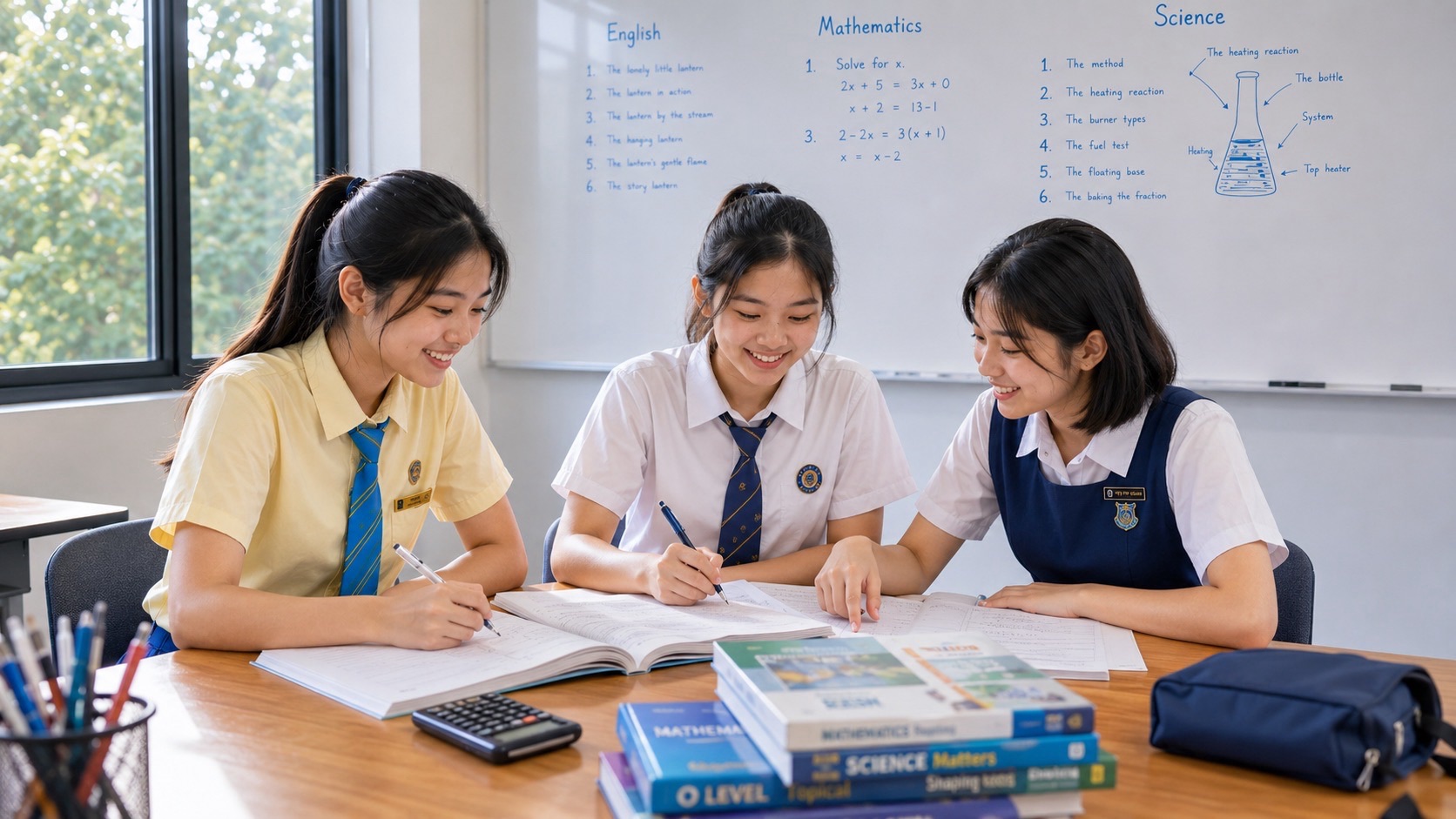
How to study for unseen passage questions: practise reading unfamiliar texts with a fixed routine, identify the main idea and structure, locate textual evidence, separate literal answers from inference, work out vocabulary from context, identify tone and purpose, and answer only what the passage can support.
An unseen passage cannot be memorised in advance, which is exactly why it is useful as an assessment. It tests whether a student can enter a new text, build a mental model quickly, locate relevant evidence and answer questions accurately without relying on prior familiarity.
Current 2026 unseen-passage guidance repeatedly emphasises a small set of high-value habits: scan the questions, read with a purpose, locate evidence, handle factual questions differently from inference questions, use context for vocabulary, and verify answers against the text rather than against outside knowledge.
This guide treats unseen-passage preparation as a trainable reading system rather than a collection of tricks.
This approach is especially useful when a student needs to:
- read unfamiliar passages efficiently;
- find evidence quickly;
- answer factual and inference questions differently;
- identify main idea and purpose;
- work out vocabulary in context;
- recognise tone and attitude;
- avoid unsupported outside knowledge;
- improve speed without losing accuracy.
Arrange a parent–student consultation with eduKate Singapore
Preview the Questions
A short question scan gives reading a purpose.
Knowing what the paper will ask helps the reader notice relevant sections without trying to memorise every sentence equally.
The useful test is whether the student can make the right reading decision without a model answer or familiar passage supplying the structure.
What to do
- Read the questions once.
- Underline key nouns and command words.
- Notice factual versus inference items.
- Do not answer before reading the passage.
Keep each practice item small enough that the reasoning is visible. One evidence question, inference or vocabulary item can provide clearer diagnostic evidence than a long unfocused review.
Worked example
The student sees that one question asks for a reason, another for tone and another for the meaning of a word in paragraph four. The first reading now has targets.
After the attempt, check the answer only after committing. Identify the missing function, then return to another passage and repeat the same reading move.
Common mistake
Do not spend so long analysing the questions that you have not read the passage.
If the same weakness returns, change the intervention. Use a different passage type, repair vocabulary or reference tracking, or practise the specific question family separately before returning to full passages.
Read the Title and Opening
Titles and opening lines often frame the subject and direction.
A quick orientation helps build a mental map before detail accumulates.
The useful test is whether the student can make the right reading decision without a model answer or familiar passage supplying the structure.
What to do
- Read title and subtitle.
- Notice topic and setting.
- Identify any explicit claim.
- Predict the likely focus.
Keep each practice item small enough that the reasoning is visible. One evidence question, inference or vocabulary item can provide clearer diagnostic evidence than a long unfocused review.
Worked example
A passage titled The Cost of Convenience primes the reader to look for a trade-off rather than a neutral product description.
After the attempt, check the answer only after committing. Identify the missing function, then return to another passage and repeat the same reading move.
Common mistake
Do not decide the answer from the title alone.
If the same weakness returns, change the intervention. Use a different passage type, repair vocabulary or reference tracking, or practise the specific question family separately before returning to full passages.
Read for Paragraph Function
Each paragraph usually does something within the passage.
Understanding structure makes evidence easier to relocate.
The useful test is whether the student can make the right reading decision without a model answer or familiar passage supplying the structure.
What to do
- Label mentally: introduce, explain, example, contrast, consequence, conclusion.
- Notice transition words.
- Track shifts in viewpoint.
- Keep labels short.
Keep each practice item small enough that the reasoning is visible. One evidence question, inference or vocabulary item can provide clearer diagnostic evidence than a long unfocused review.
Worked example
Paragraph two gives evidence, paragraph three presents a counterargument and paragraph four answers it.
After the attempt, check the answer only after committing. Identify the missing function, then return to another passage and repeat the same reading move.
Common mistake
Do not reduce every paragraph to a list of facts.
If the same weakness returns, change the intervention. Use a different passage type, repair vocabulary or reference tracking, or practise the specific question family separately before returning to full passages.
Find the Main Idea
The main idea should cover the passage without becoming too broad.
Students often choose a true detail rather than the controlling idea.
The useful test is whether the student can make the right reading decision without a model answer or familiar passage supplying the structure.
What to do
- Ask what the whole passage is mostly doing.
- Use title and conclusion as clues.
- Test candidate ideas against every paragraph.
- Reject options that cover only one section.
Keep each practice item small enough that the reasoning is visible. One evidence question, inference or vocabulary item can provide clearer diagnostic evidence than a long unfocused review.
Worked example
The main idea is not urban transport; it is how urban transport policy trades convenience against environmental and social costs.
After the attempt, check the answer only after committing. Identify the missing function, then return to another passage and repeat the same reading move.
Common mistake
Do not choose the most interesting detail.
If the same weakness returns, change the intervention. Use a different passage type, repair vocabulary or reference tracking, or practise the specific question family separately before returning to full passages.
Answer Factual Questions From the Text
Literal questions should be anchored in specific evidence.
The passage, not outside knowledge, is the authority for these items.
The useful test is whether the student can make the right reading decision without a model answer or familiar passage supplying the structure.
What to do
- Locate the keyword or synonym.
- Read the surrounding sentence.
- Underline the evidence.
- Answer only what it supports.
Keep each practice item small enough that the reasoning is visible. One evidence question, inference or vocabulary item can provide clearer diagnostic evidence than a long unfocused review.
Worked example
A question asks why a character left; the answer comes from the stated reason in paragraph three, not from what seems psychologically likely.
After the attempt, check the answer only after committing. Identify the missing function, then return to another passage and repeat the same reading move.
Common mistake
Do not improve the passage with your own background knowledge.
If the same weakness returns, change the intervention. Use a different passage type, repair vocabulary or reference tracking, or practise the specific question family separately before returning to full passages.
Build Inferences From Clues
Inference combines textual evidence with a justified conclusion.
A valid inference goes beyond literal wording without leaving the evidence behind.
The useful test is whether the student can make the right reading decision without a model answer or familiar passage supplying the structure.
What to do
- Identify the clue.
- State what it suggests.
- Check that the conclusion is strongly supported.
- Avoid dramatic leaps.
Keep each practice item small enough that the reasoning is visible. One evidence question, inference or vocabulary item can provide clearer diagnostic evidence than a long unfocused review.
Worked example
Repeated hesitation, shortened answers and avoidance of eye contact support an inference of discomfort, not certainty about a specific hidden motive.
After the attempt, check the answer only after committing. Identify the missing function, then return to another passage and repeat the same reading move.
Common mistake
Do not confuse inference with guessing.
If the same weakness returns, change the intervention. Use a different passage type, repair vocabulary or reference tracking, or practise the specific question family separately before returning to full passages.
Use Vocabulary in Context
A word’s meaning in the passage matters more than its most familiar dictionary meaning.
Surrounding syntax, examples, contrasts and tone constrain interpretation.
The useful test is whether the student can make the right reading decision without a model answer or familiar passage supplying the structure.
What to do
- Read the whole sentence.
- Look at neighbouring sentences.
- Substitute a possible meaning.
- Check grammar and tone.
Keep each practice item small enough that the reasoning is visible. One evidence question, inference or vocabulary item can provide clearer diagnostic evidence than a long unfocused review.
Worked example
The word stark is understood as severe or striking because of the contrast built around it.
After the attempt, check the answer only after committing. Identify the missing function, then return to another passage and repeat the same reading move.
Common mistake
Do not choose the first memorised synonym without testing it in the sentence.
If the same weakness returns, change the intervention. Use a different passage type, repair vocabulary or reference tracking, or practise the specific question family separately before returning to full passages.
Identify Tone
Tone is the writer’s attitude expressed through language.
Students need evidence from word choice, emphasis and rhetorical pattern.
The useful test is whether the student can make the right reading decision without a model answer or familiar passage supplying the structure.
What to do
- Choose a precise tone word.
- Find two textual clues.
- Distinguish topic from attitude.
- Avoid overdramatic labels.
Keep each practice item small enough that the reasoning is visible. One evidence question, inference or vocabulary item can provide clearer diagnostic evidence than a long unfocused review.
Worked example
The tone is cautiously critical because the writer acknowledges benefits before highlighting limitations.
After the attempt, check the answer only after committing. Identify the missing function, then return to another passage and repeat the same reading move.
Common mistake
Do not call every negative passage angry.
If the same weakness returns, change the intervention. Use a different passage type, repair vocabulary or reference tracking, or practise the specific question family separately before returning to full passages.
Identify Purpose
Purpose asks what the writer is trying to achieve.
The answer should connect content, audience and effect.
The useful test is whether the student can make the right reading decision without a model answer or familiar passage supplying the structure.
What to do
- Ask whether the text informs, argues, explains, reflects or persuades.
- Use the overall structure.
- Use tone.
- Name the likely intended effect.
Keep each practice item small enough that the reasoning is visible. One evidence question, inference or vocabulary item can provide clearer diagnostic evidence than a long unfocused review.
Worked example
A passage presents evidence and addresses objections in order to persuade readers toward a policy position.
After the attempt, check the answer only after committing. Identify the missing function, then return to another passage and repeat the same reading move.
Common mistake
Do not answer purpose with only the topic.
If the same weakness returns, change the intervention. Use a different passage type, repair vocabulary or reference tracking, or practise the specific question family separately before returning to full passages.
Track Pronoun and Reference Words
Words such as this, they, these and such often point backward.
Reference questions test local coherence.
The useful test is whether the student can make the right reading decision without a model answer or familiar passage supplying the structure.
What to do
- Read the sentence before.
- Substitute the possible referent.
- Check number and meaning.
- Read forward for confirmation.
Keep each practice item small enough that the reasoning is visible. One evidence question, inference or vocabulary item can provide clearer diagnostic evidence than a long unfocused review.
Worked example
These measures refers to the three policies listed in the previous sentence, not to the entire paragraph.
After the attempt, check the answer only after committing. Identify the missing function, then return to another passage and repeat the same reading move.
Common mistake
Do not choose the nearest noun automatically.
If the same weakness returns, change the intervention. Use a different passage type, repair vocabulary or reference tracking, or practise the specific question family separately before returning to full passages.
Use Structure Words
Because, however, therefore, for example and although reveal relationships.
These words often signal where reasoning changes.
The useful test is whether the student can make the right reading decision without a model answer or familiar passage supplying the structure.
What to do
- Notice contrast markers.
- Notice cause and result.
- Notice examples.
- Notice conclusion signals.
Keep each practice item small enough that the reasoning is visible. One evidence question, inference or vocabulary item can provide clearer diagnostic evidence than a long unfocused review.
Worked example
However tells the reader that the next sentence qualifies the earlier claim, which matters for a tone question.
After the attempt, check the answer only after committing. Identify the missing function, then return to another passage and repeat the same reading move.
Common mistake
Do not read transition words as filler.
If the same weakness returns, change the intervention. Use a different passage type, repair vocabulary or reference tracking, or practise the specific question family separately before returning to full passages.
Handle Title Questions
A good title captures the central concern and tone.
The best title is broad enough for the whole passage but specific enough to distinguish it.
The useful test is whether the student can make the right reading decision without a model answer or familiar passage supplying the structure.
What to do
- State the main idea first.
- Generate a short title.
- Compare with options if present.
- Reject titles based on one paragraph.
Keep each practice item small enough that the reasoning is visible. One evidence question, inference or vocabulary item can provide clearer diagnostic evidence than a long unfocused review.
Worked example
A passage about technology and attention is better titled The Attention Cost of Constant Connection than Smartphones.
After the attempt, check the answer only after committing. Identify the missing function, then return to another passage and repeat the same reading move.
Common mistake
Do not choose the broadest possible topic label.
If the same weakness returns, change the intervention. Use a different passage type, repair vocabulary or reference tracking, or practise the specific question family separately before returning to full passages.
Check Answer Scope
Many comprehension losses come from answers that are broadly true but not responsive.
The question controls how much of the passage belongs in the answer.
The useful test is whether the student can make the right reading decision without a model answer or familiar passage supplying the structure.
What to do
- Repeat the key demand mentally.
- Use the minimum relevant evidence.
- Avoid unrelated context.
- Stop when the function is complete.
Keep each practice item small enough that the reasoning is visible. One evidence question, inference or vocabulary item can provide clearer diagnostic evidence than a long unfocused review.
Worked example
A two-mark reason question receives two relevant reasons rather than a paragraph summarising the entire passage.
After the attempt, check the answer only after committing. Identify the missing function, then return to another passage and repeat the same reading move.
Common mistake
Do not reward yourself for writing more.
If the same weakness returns, change the intervention. Use a different passage type, repair vocabulary or reference tracking, or practise the specific question family separately before returning to full passages.
Practise With Unfamiliar Topics
Real unseen passages vary widely.
Transfer improves when practice crosses topics, genres and styles.
The useful test is whether the student can make the right reading decision without a model answer or familiar passage supplying the structure.
What to do
- Use narrative.
- Use argumentative prose.
- Use informational texts.
- Use different age-appropriate registers.
Keep each practice item small enough that the reasoning is visible. One evidence question, inference or vocabulary item can provide clearer diagnostic evidence than a long unfocused review.
Worked example
One week includes science journalism, memoir, editorial and historical prose.
After the attempt, check the answer only after committing. Identify the missing function, then return to another passage and repeat the same reading move.
Common mistake
Do not practise only passages about familiar school topics.
If the same weakness returns, change the intervention. Use a different passage type, repair vocabulary or reference tracking, or practise the specific question family separately before returning to full passages.
Use Timed Passage Sets
Reading and answering must fit the real paper.
Timing exposes overreading and evidence-search problems.
The useful test is whether the student can make the right reading decision without a model answer or familiar passage supplying the structure.
What to do
- Set the actual time budget.
- Use one consistent reading routine.
- Track rereading.
- Review errors afterwards.
Keep each practice item small enough that the reasoning is visible. One evidence question, inference or vocabulary item can provide clearer diagnostic evidence than a long unfocused review.
Worked example
Leonie discovers she rereads the whole passage for every question and learns to return only to the relevant paragraph.
After the attempt, check the answer only after committing. Identify the missing function, then return to another passage and repeat the same reading move.
Common mistake
Do not judge readiness only with unlimited-time comprehension practice.
If the same weakness returns, change the intervention. Use a different passage type, repair vocabulary or reference tracking, or practise the specific question family separately before returning to full passages.
How the Skill Changes by Subject
English
This is the main domain: practise evidence, inference, vocabulary, reference, tone, purpose and concise answer scope.
Mathematics
Mathematics word problems also reward careful reading for givens, constraints and the exact unknown.
Science
Science comprehension often embeds unfamiliar contexts; separate passage evidence from prior scientific knowledge and use both only where required.
Humanities
Humanities passages and sources require reading for claim, evidence, bias, context and inference.
Three Student Patterns
Maren
Maren annotates almost every sentence and runs out of time. She needs selective evidence marking.
Iona
Iona understands the passage globally but writes vague answers. She needs question-specific evidence before writing.
Leonie
Leonie rushes through the first reading and misses contrast words. She needs a consistent structure scan before answering.
Frequently Asked Questions
Should I read the questions first?
A short preview often helps focus attention, but the exact method should fit the exam format and the student.
Should I use outside knowledge?
Only when the question explicitly requires it. For passage-based answers, let the text control the evidence.
What is an inference?
A conclusion supported by textual clues even though it is not stated directly.
How do I identify tone?
Use precise tone words supported by diction, emphasis and structure.
How do I answer vocabulary-in-context questions?
Read the full sentence and nearby context, substitute a candidate meaning and check whether it fits.
How do I find the main idea?
Choose the idea that explains the whole passage, not one detail or one paragraph.
Should I underline the passage?
Yes, selectively. Mark evidence and structural clues rather than most of the text.
How do I get faster?
Practise locating evidence by paragraph and avoid rereading the whole passage for every question.
How do I practise inference?
Identify the clue first, then state the smallest conclusion the clue strongly supports.
How do I know I am ready?
You can answer unfamiliar passages accurately within the paper’s time without relying on outside familiarity.
One-Page Operating Manual
Preview: Scan questions and command words.
Map: Read title and paragraph functions.
Evidence: Locate textual support.
Infer: Build conclusions from clues.
Context: Derive vocabulary meaning.
Tone: Support attitude with language.
Scope: Answer only what is asked.
Time: Use varied timed unseen passages.
Why Retrieval Matters
Do not judge reading skill only by whether an answer looks obvious after the explanation. Return to a fresh passage and produce the answer from evidence without support. Retrieval and fresh application show whether the reading process itself has improved.
Use a different passage for the next check so success cannot depend on memory of the original text.
How to Use Error Categories
Classify errors as evidence-location, inference, vocabulary, reference, tone, main idea, scope or time. Different categories need different drills. A student who cannot locate evidence needs a different intervention from one who finds it but over-infers.
Use a different passage for the next check so success cannot depend on memory of the original text.
How to Test Transfer
Change genre, topic, vocabulary and paragraph structure. If the student can still map the text and answer accurately, the method is becoming transferable.
Use a different passage for the next check so success cannot depend on memory of the original text.
How to Practise Under Time
Once accuracy is stable, shorten the time gradually. Speed should come from better paragraph mapping and targeted rereading, not from skipping evidence.
Use a different passage for the next check so success cannot depend on memory of the original text.
How to Build Vocabulary Without Predicting the Passage
Unseen passages reward broad language knowledge, not memorisation of one topic list. Read widely, study word families and collocations, and practise deriving meaning from context.
Use a different passage for the next check so success cannot depend on memory of the original text.
How to Close the Loop
A question family becomes stable when it succeeds on several fresh passages after a delay. Reduce isolated drills and move back into mixed passage sets.
Use a different passage for the next check so success cannot depend on memory of the original text.
Why Retrieval Matters
Do not judge reading skill only by whether an answer looks obvious after the explanation. Return to a fresh passage and produce the answer from evidence without support. Retrieval and fresh application show whether the reading process itself has improved.
Use a different passage for the next check so success cannot depend on memory of the original text.
How to Use Error Categories
Classify errors as evidence-location, inference, vocabulary, reference, tone, main idea, scope or time. Different categories need different drills. A student who cannot locate evidence needs a different intervention from one who finds it but over-infers.
Use a different passage for the next check so success cannot depend on memory of the original text.
How to Test Transfer
Change genre, topic, vocabulary and paragraph structure. If the student can still map the text and answer accurately, the method is becoming transferable.
Use a different passage for the next check so success cannot depend on memory of the original text.
How to Practise Under Time
Once accuracy is stable, shorten the time gradually. Speed should come from better paragraph mapping and targeted rereading, not from skipping evidence.
Use a different passage for the next check so success cannot depend on memory of the original text.
How to Build Vocabulary Without Predicting the Passage
Unseen passages reward broad language knowledge, not memorisation of one topic list. Read widely, study word families and collocations, and practise deriving meaning from context.
Use a different passage for the next check so success cannot depend on memory of the original text.
How to Close the Loop
A question family becomes stable when it succeeds on several fresh passages after a delay. Reduce isolated drills and move back into mixed passage sets.
Use a different passage for the next check so success cannot depend on memory of the original text.
Why Retrieval Matters
Do not judge reading skill only by whether an answer looks obvious after the explanation. Return to a fresh passage and produce the answer from evidence without support. Retrieval and fresh application show whether the reading process itself has improved.
Use a different passage for the next check so success cannot depend on memory of the original text.
How to Use Error Categories
Classify errors as evidence-location, inference, vocabulary, reference, tone, main idea, scope or time. Different categories need different drills. A student who cannot locate evidence needs a different intervention from one who finds it but over-infers.
Use a different passage for the next check so success cannot depend on memory of the original text.
How to Test Transfer
Change genre, topic, vocabulary and paragraph structure. If the student can still map the text and answer accurately, the method is becoming transferable.
Use a different passage for the next check so success cannot depend on memory of the original text.
How to Practise Under Time
Once accuracy is stable, shorten the time gradually. Speed should come from better paragraph mapping and targeted rereading, not from skipping evidence.
Use a different passage for the next check so success cannot depend on memory of the original text.
How to Build Vocabulary Without Predicting the Passage
Unseen passages reward broad language knowledge, not memorisation of one topic list. Read widely, study word families and collocations, and practise deriving meaning from context.
Use a different passage for the next check so success cannot depend on memory of the original text.
How to Close the Loop
A question family becomes stable when it succeeds on several fresh passages after a delay. Reduce isolated drills and move back into mixed passage sets.
Use a different passage for the next check so success cannot depend on memory of the original text.
Why Retrieval Matters
Do not judge reading skill only by whether an answer looks obvious after the explanation. Return to a fresh passage and produce the answer from evidence without support. Retrieval and fresh application show whether the reading process itself has improved.
Use a different passage for the next check so success cannot depend on memory of the original text.
How to Use Error Categories
Classify errors as evidence-location, inference, vocabulary, reference, tone, main idea, scope or time. Different categories need different drills. A student who cannot locate evidence needs a different intervention from one who finds it but over-infers.
Use a different passage for the next check so success cannot depend on memory of the original text.
How to Test Transfer
Change genre, topic, vocabulary and paragraph structure. If the student can still map the text and answer accurately, the method is becoming transferable.
Use a different passage for the next check so success cannot depend on memory of the original text.
How to Practise Under Time
Once accuracy is stable, shorten the time gradually. Speed should come from better paragraph mapping and targeted rereading, not from skipping evidence.
Use a different passage for the next check so success cannot depend on memory of the original text.
How to Build Vocabulary Without Predicting the Passage
Unseen passages reward broad language knowledge, not memorisation of one topic list. Read widely, study word families and collocations, and practise deriving meaning from context.
Use a different passage for the next check so success cannot depend on memory of the original text.
How to Close the Loop
A question family becomes stable when it succeeds on several fresh passages after a delay. Reduce isolated drills and move back into mixed passage sets.
Use a different passage for the next check so success cannot depend on memory of the original text.
Why Retrieval Matters
Do not judge reading skill only by whether an answer looks obvious after the explanation. Return to a fresh passage and produce the answer from evidence without support. Retrieval and fresh application show whether the reading process itself has improved.
Use a different passage for the next check so success cannot depend on memory of the original text.
How to Use Error Categories
Classify errors as evidence-location, inference, vocabulary, reference, tone, main idea, scope or time. Different categories need different drills. A student who cannot locate evidence needs a different intervention from one who finds it but over-infers.
Use a different passage for the next check so success cannot depend on memory of the original text.
Helpful Reading
- ExamAtlas | Approaching an Unseen Prose Passage
- DPSVK Library | How to Read an Unseen Passage the Way a Researcher Does
- eduKateSG | Make Inferences From Evidence Without Guessing
An Unseen Passage Is New Content, Not a New Reading Process
Students cannot memorise the passage, but they can train the process used to enter any unfamiliar text.
Read for structure, locate evidence, infer cautiously, use context and keep every answer inside the scope of the question.
The goal is a reader who remains accurate even when the topic, genre and vocabulary change.
Arrange a Parent–Student Consultation
eduKateSG
8 Fourth Avenue
Singapore 268674
Near Sixth Avenue MRT
Premium 3-pax small-group tuition
By appointment
Properly taught kids shine a bright light into the future.
Continue learning
Browse vocabulary concepts and explanations · Vocabulary Learning Hub