
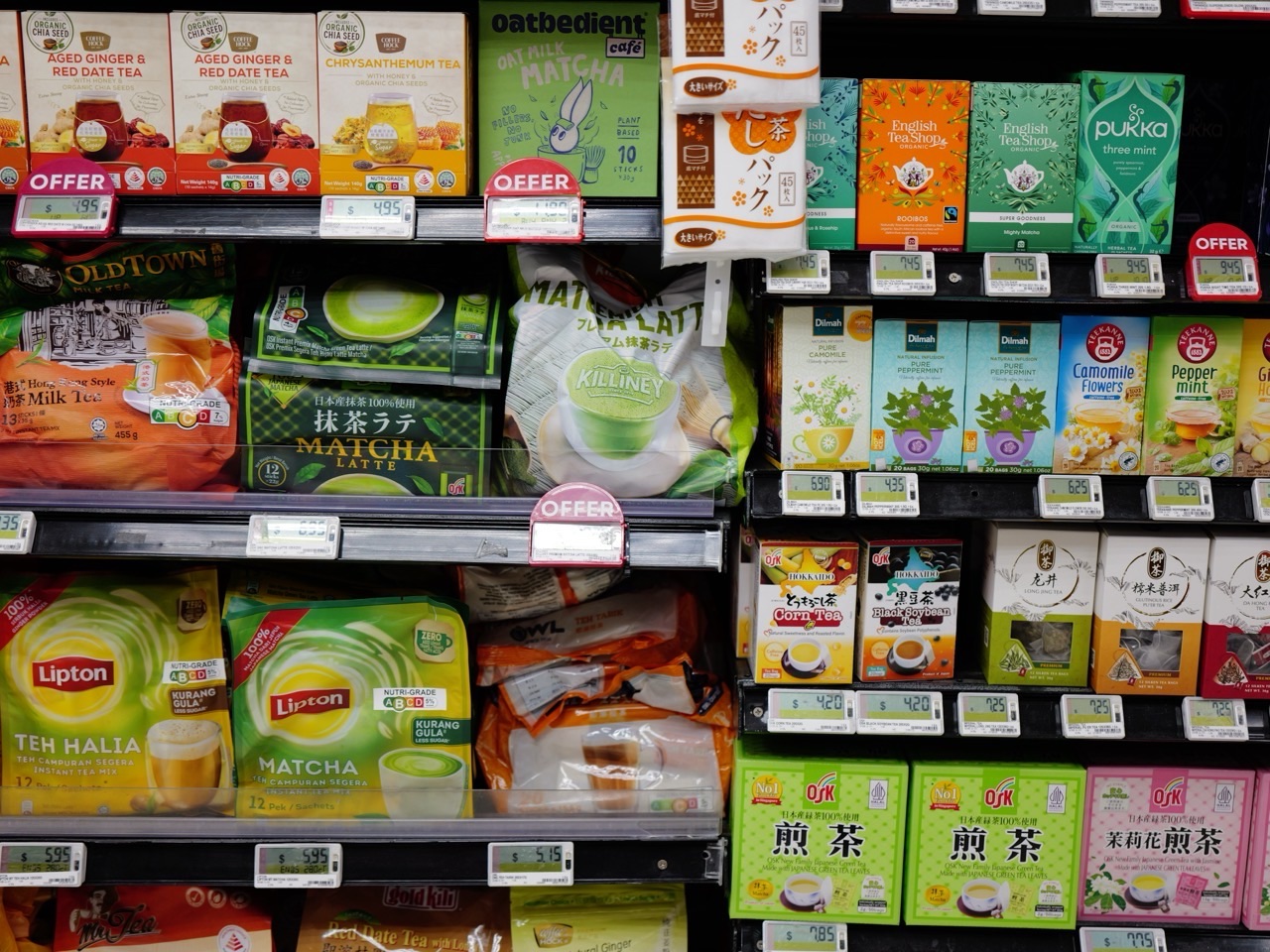
A tea packet can look wonderfully inviting until you reach a line such as OP, BOPF or FBOP. Are those flavour names, quality scores or instructions for making the tea? Once you know what kind of information the letters carry, the label becomes much easier to read.
To understand tea grades, read the code as a description within a particular tea-grading system, then check the origin, ingredients and brewing guidance separately. Common black-tea grades such as Orange Pekoe, Broken Orange Pekoe, fannings and dust describe aspects of the manufactured leaf, especially its size and appearance. They do not supply a universal score for how much you will enjoy the cup.
This guide focuses on the familiar black-tea grading vocabulary used in Sri Lanka and India. It explains the main labels, shows why the same letters need context, and gives you practical comparison exercises. You can enjoy a good cup without memorising an auction catalogue.
EDUKATE · EVERYDAY KNOWLEDGE
Read the grade. Brew the tea. Describe your cup.
Start with the question in front of you, or read the guide from beginning to end.
Chapters 1–3 · The label, Orange Pekoe and broken leaf.Decode smaller particles and longer codes
Chapters 4–6 · Fannings, tips and CTC.Read and brew the whole product
Chapters 7–8 · Origin, ingredients and preparation.Compare two cups
Chapters 9–10 · Tasting and value calculations.Keep and use what you learn
Chapters 11–12 · Storage records and practice questions.
Chapter index · Try the practice questions · World & Knowledge Hub
Chapter index
Open a group to choose a chapter. All teaching sections remain expanded.
Chapters 1–4: Grade basics, Orange Pekoe, broken leaf and fine particles
Chapters 5–8: Extra letters, processing, labels and brewing
Chapters 9–12: Tasting, value, storage and practice
CHAPTER 1 OF 12 · START WITH THE LABEL
1. What a tea grade tells you
Begin by separating four questions: what kind of tea is this, where does it come from, what does the dry leaf look like, and how does it taste when brewed? A packet may answer all four, but usually in different places.
Adagio’s TeaClass grading lesson explains that grading conventions vary by origin and that familiar leaf grades describe size and visual features. They do not account for every factor affecting the finished drink. That is why an impressive sequence of letters cannot replace tasting.
| Label information | The question it helps answer |
|---|---|
| Black tea | What broad tea category am I buying? |
| Sri Lanka or an identified region | Where is the tea said to come from? |
| OP, BOP or another named grade | How is the manufactured leaf classified in this context? |
| Ingredients | Is this plain tea, a blend with other ingredients, or flavoured tea? |
| Brewing instructions | How does the supplier suggest preparing this product? |
Imagine a fictional packet marked “Ceylon black tea, BOP, 100 g.” Ceylon identifies an origin associated with Sri Lanka; black tea identifies the category; BOP is a leaf-grade label; and 100 g is the amount in the package. None of those fields is a substitute for the others.
A useful first reading exercise
Take a packet you already have. Copy its words into the five fields above. If the grade is absent, leave that field blank. Do not invent one from the picture on the front.
Now underline anything you initially treated as a quality score. Was it a grade, a tasting adjective, a product name or an award claim? Separating these helps you ask clearer questions when comparing products.
For example, “I enjoy this particular tea with breakfast” is a useful preference. “All teas with this grade are better than every smaller-leaf tea” is a much wider claim. Your experience of one packet does not establish it.
The aim is to make the label informative. You are learning which question each term can answer, and where you need another kind of evidence.
CHAPTER 2 OF 12 · DECODE A FAMILIAR NAME
2. Orange Pekoe: what OP means
OP means Orange Pekoe. In the grading context, the phrase does not promise orange fruit or orange flavouring. TeaClass explicitly distinguishes the grade name from oranges. Check the ingredients when flavouring is the question.
A concrete example helps: Twinings describes its Ceylon Orange Pekoe loose tea as an Orange Pekoe leaf grade and lists the ingredients as black tea. The product name and ingredient declaration do different jobs.
OP, OP1 and OPA need their local definitions
In the Sri Lanka Tea Board’s published Ceylon-tea specification, OP1 has a long, wiry, well-twisted appearance. OP is less wiry than OP1 and more tightly twisted than OPA; OPA has a long, bold leaf appearance with a fair twist. See the Tea Board’s grade descriptions.
These descriptions give you something visible to investigate. They do not mean that adding “1” to any tea label produces the same improvement or flavour change. Read the complete code as a term defined in its own system.
For a simple exercise, write three separate headings on a page: “grade,” “ingredients” and “tasting description.” Place “Orange Pekoe” under the first. Place any declared orange peel, citrus oil or flavouring under the second. Place a supplier’s words such as “brisk” or “delicate” under the third.
A tea could carry a leaf-grade description and also contain flavouring, so one field cannot establish the other. You need the actual product information.
If you have two OP teas, compare their full labels before expecting identical cups. Do they name the same origin? Are they both plain black tea? Do the suppliers suggest the same preparation? The shared grade is one point of similarity, not a complete identity.
Enjoy the name, but give it the right amount of work to do. OP can help describe the leaf in context; it cannot tell you the entire story of the tea.
CHAPTER 3 OF 12 · UNDERSTAND SMALLER LEAF
3. Broken Orange Pekoe: reading BOP and BOPF
BOP means Broken Orange Pekoe. The Tea Exporters Association of Sri Lanka describes BOP in terms of smaller or broken leaf pieces. It describes BOPF, Broken Orange Pekoe Fannings, as smaller than BOP. Its grade nomenclature page includes reference photographs.
The word “broken” can sound like a fault when you first encounter it. Here it belongs to a classification of manufactured tea. Do not translate it automatically into “damaged after purchase” or “unfit to drink.”
Look at the material before judging the cup
Place a little dry tea on a clean light-coloured dish. Describe what you can see: elongated pieces, short fragments, a fairly even particle size or a mixed appearance. Keep that description separate from your opinion of its flavour.
If you are comparing two labelled products, photograph them at the same scale. A close crop of a fine tea and a wide view of a leafy tea can make visual comparisons unreliable. Include the labels beside your notes so you remember which sample was which.
A useful observation might be “Sample A has visibly shorter pieces than Sample B.” That is a claim about these two samples. It does not prove that you have independently verified their commercial grades.
For identification, compare the producer’s description and the relevant grading reference. Home observation is a way to understand the label, not a substitute for the procedures used in commercial sorting.
Ask a better buying question
Instead of asking whether broken leaf is always worse, ask what you want the tea to do. Are you looking for a convenient everyday cup, a particular aroma, or a preparation you enjoy with milk? A useful answer depends on the actual product and how you brew it.
Record one preference after tasting: “I like Sample A prepared this way.” You can then reproduce the preparation or compare another tea against it. That gives the grade a practical role without turning it into a ranking of every tea on the shelf.
When a new packet tastes different, inspect the whole product description. The grade may be unchanged while other information differs. Begin with the evidence you have rather than assuming the letters guarantee an identical result.
CHAPTER 4 OF 12 · READ THE FINE GRADES
4. Fannings and dust: small particles with a purpose
Fannings and dust are terms for small tea particles within the relevant grading system. In the Ceylon specification, BOPF is smaller than BOP, while Dust 1 is smaller than BOPF. These are descriptions of tea material, not household dust.
Dilmah’s tea FAQ explains that one batch can yield several leaf sizes and that finer particles can produce stronger extraction because of their exposed surface area. The practical lesson is to pay attention to preparation rather than assume that smaller particles mean a poor cup.
Keep a tasting fair
Suppose one tea is fine and another has larger pieces. If you leave the fine tea in water much longer, add more of it and use a smaller cup, the resulting difference cannot be assigned to grade alone. You have changed several things at once.
For a comparison exercise, choose one question. You might ask, “Which product do I prefer when each is made according to its packet?” That is a useful real-life comparison, even though the brewing instructions may differ.
Alternatively, you might ask, “How do these two products behave under one recorded set of conditions?” That is a different exercise. It does not automatically show either product at its best, and it still cannot isolate particle size if the teas differ in origin or processing.
Write the question at the top of the page before you brew. It keeps the conclusion from growing beyond what you actually tested.
Packaging and grade are separate
A tea bag is a format for containing tea. It is not, by itself, a complete leaf-grade declaration. Read the product description rather than assigning a grade from the shape of the bag.
Likewise, loose tea is a format, not a guarantee that every particle is large. Inspect the label and contents if particle size matters to your choice.
A short tasting note can be enough: “This preparation gives me the strength I want in the time available.” There is no need to apologise for enjoying a practical cup, and no need to turn your preference into a universal claim about everyone else’s tea.
CHAPTER 5 OF 12 · HANDLE EXTRA LETTERS
5. Flowery, golden and tippy: reading longer codes
Longer codes add more descriptive information, but they should be read as complete terms. Do not assume that every occurrence of the same letter has exactly the same role.
For example, FBOP expands to Flowery Broken Orange Pekoe, while the final F in BOPF refers to fannings. The Sri Lankan trade reference associates FBOP with the presence of tips. Letter position matters, and the producer’s actual grade description remains useful.
| Code | Expansion | Reading reminder |
|---|---|---|
| OP | Orange Pekoe | A grade name, not an ingredient list |
| BOP | Broken Orange Pekoe | Keep the B as part of the complete term |
| BOPF | Broken Orange Pekoe Fannings | The final F refers to fannings |
| FBOP | Flowery Broken Orange Pekoe | The initial F refers to flowery |
You may also meet sequences such as SFTGFOP1. TeaClass gives the expansion Special Finest Tippy Golden Flowery Orange Pekoe 1. Treat that as an example of extended grading vocabulary, rather than a numerical score you can compare directly with every other tea.
Avoid the letter-count shortcut
Imagine two fictional shop descriptions. One supplies a long grade code but little other information. The other gives a shorter code, a clear origin, a useful description and brewing guidance. Counting letters alone does not tell you which product will better suit your taste.
Ask what the added terminology means for the specific tea. Is the seller describing visible tips, leaf style or a selection within its own range? If the explanation is unclear, keep the code intact in your notes and seek clarification rather than filling the gaps with a guessed hierarchy.
Words such as “flowery” can also mislead a beginner into expecting added flowers. The ingredients field is where you check for those. A term within a grade and a declared ingredient are different kinds of information.
For practice, copy a long code exactly and look up the supplier’s expansion. Underneath, write one sentence about what remains unknown: perhaps the harvest date, preparation or how you personally experience the cup.
The exercise helps you stay curious without being overawed by terminology. You do not have to master every modifier to make a thoughtful purchase or enjoy the tea already in your cupboard.
CHAPTER 6 OF 12 · COMPARE THE SYSTEMS
6. CTC and orthodox: processing context before grade
CTC is commonly expanded as cut, tear and curl, or crush, tear and curl. It identifies a manufacturing approach, rather than one single leaf grade. Orthodox and CTC teas need to be interpreted within their respective processing and grading contexts.
The Indian Tea Association’s CTC grade list separates broken-leaf, fannings and dust categories. It includes BOP among broken-leaf grades and BOPF among fannings. This is a useful counterexample to the idea that CTC means only one particle size.
The Ceylon specification also lists several CTC grades and describes granular forms. A familiar code does not guarantee that a CTC product will look identical to an orthodox product carrying related terminology.
Use a two-field record
When information is supplied, write “manufacturing approach” on one line and “grade” on another. For a fictional product, that might be “CTC” and “BOP.” Do not combine the two into an unexplained quality score.
| Field | Possible entry | Question still to answer |
|---|---|---|
| Manufacturing approach | CTC | Which specific product and grade? |
| Grade | BOP | Under which origin and manufacturing context? |
| Origin | A named producing region | What does this particular tea taste like? |
| Preparation | Supplier’s instructions | Do I enjoy the result made this way? |
If a label provides only “CTC,” you have learned something, but not everything. If it provides only a familiar grade abbreviation, you may still need manufacturing context to interpret the appearance accurately.
A practical comparison is to place two clearly identified teas beside their descriptions and look at the dry material. Record rounded granules, elongated pieces or other visible forms in ordinary language. Then brew each according to its own instructions before deciding what you prefer.
Do not turn that single tasting into a verdict on all CTC or all orthodox tea. The conclusion belongs to the products and conditions you actually used.
For the wider connection between growing regions, production and everyday tea drinking, continue with Indian Tea, Darjeeling, Assam and the Chai Economy. The grade label makes more sense when you can place it within the larger journey from leaf to cup.
CHAPTER 7 OF 12 · BUILD A COMPLETE PICTURE
7. Grade, origin, harvest and blend: reading the whole packet
A useful tea description contains several layers of information. The mistake is to let one attractive word stand in for all the others. A place name does not tell you the leaf grade, and a leaf grade does not tell you every ingredient.
Sort the information before comparing
Consider a fictional label: “Hill Garden, black tea, second harvest, BOP, 100 g.” You can record the garden name, category, harvest wording, grade and quantity separately. You still need to read the rest of the packet for ingredients and preparation.
Now consider another packet that simply says “Breakfast blend.” Do not invent a garden, harvest or grade because you recognise the style name. Record only the information actually supplied.
| Field | What to copy | What to avoid assuming |
|---|---|---|
| Producer or brand | Name as printed | That it identifies one estate |
| Origin | Country, region or estate if stated | That all packets from a country taste alike |
| Harvest information | Season or date if supplied | That an absent date can be inferred from the grade |
| Grade | Complete code and any explanation | That its length measures your enjoyment |
| Ingredients | Full declared list | That the product name lists everything |
| Preparation | Dose, water and time guidance | That another tea’s instructions apply unchanged |
This worksheet is an organisational tool, not a certification checklist. A product can be enjoyable even when its consumer label does not supply every field. The important habit is distinguishing missing information from information you have actually verified.
When two products share a grade, compare the other fields before calling them equivalent. When two products share an origin, compare their category, processing information and preparation before expecting the same cup.
For a gift, this reading routine can be more helpful than choosing the longest code. Think about the recipient’s brewing equipment and preferences. A clear, usable set of instructions may matter more to them than terminology they have never encountered.
Keep the packet or photograph the full label when you find something you like. A picture of the front alone may omit the details that help you buy or prepare it again.
Your record can remain simple: product name, complete label information and a sentence describing the cup you enjoyed. That is enough to begin building a useful personal reference.
CHAPTER 8 OF 12 · MAKE THE COMPARISON MEANINGFUL
8. Brewing different grades without guessing
A grade is not a complete brewing recipe. Start with the supplier’s instructions for the actual product, then record any changes you make. The amount of tea, water quantity, temperature and contact time belong in the preparation record.
Dilmah’s brewing guide treats tea quantity, water temperature and brewing time as separate decisions. That is a useful structure even when your own product specifies different values.
Make the units visible
Suppose a fictional instruction says 2 g for 200 ml. Scaling the same ratio to 300 ml gives 3 g. You multiplied both quantities by 1.5. This is an arithmetic example, not a universal recommendation for every black tea.
If you use a teaspoon, describe how you filled it. A heaped spoon and a level spoon are different procedures. For a repeatable comparison, weighing the dry tea avoids treating visibly different spoonfuls as equal amounts.
Write down when timing begins and how you separate the leaves from the drink. If one sample stays in contact with its leaves while the other is strained, the conditions are no longer the same.
Change one thing for a reason
If a cup does not suit you, choose a specific next experiment. For example, keep the product and measured amount unchanged and try a shorter contact time within sensible product guidance. Record the difference you notice.
Do not simultaneously change the tea amount, cup size, water temperature and time, then attribute the new result to just one of them. You may create a cup you like, but you will have less information about how to reproduce the improvement.
When comparing two teas, decide whether you want to test one shared recipe or each supplier’s recommended preparation. Both can be useful. They answer different questions, so identify the method before interpreting the result.
Let the drink cool to a comfortable tasting temperature. You do not need to hurry the tasting to make the exercise worthwhile. A calm, repeatable routine gives you more useful information than a rapid judgement made while the cup is too hot to enjoy.
CHAPTER 9 OF 12 · DESCRIBE YOUR OWN CUP
9. A simple two-tea tasting exercise
Choose two products you already own or can obtain in small quantities. They do not need to be expensive. The purpose is to practise describing a difference and keeping the conclusion attached to the evidence.
Begin with a question
Write one question at the top of the page: “Which of these two teas do I prefer prepared according to its packet?” This makes a manageable first exercise. You are comparing your experience of two products, not proving that one grade is globally superior.
Label the cups A and B. Record the preparation for each before tasting. If someone helps, they can conceal the product names until you have written your first impressions; keep a separate key so the samples can be identified afterwards.
| Observation | Cup A | Cup B |
|---|---|---|
| Dry appearance | Size and shape in your own words | Size and shape in your own words |
| Preparation | Tea amount, water and time | Tea amount, water and time |
| Aroma | A simple description | A simple description |
| Taste and mouthfeel | What you notice | What you notice |
| Preference | Would you make it again this way? | Would you make it again this way? |
| Next trial | One planned change, if needed | One planned change, if needed |
You do not need an elaborate vocabulary. “Lighter than B,” “more drying in the mouth,” or “an aroma that reminds me of malt” can be useful personal notes. A resemblance in aroma is not an ingredient claim.
If you usually add milk or sugar, you can make a second comparison with your usual additions measured consistently. Keep the plain and modified observations separate so you remember which cup you preferred.
After revealing the labels, compare what you expected with what you noticed. Did the grade name influence your expectation? Did the preparation seem more important than you anticipated?
A useful conclusion might be “I preferred A with my usual breakfast preparation, while B interested me more without additions.” That is specific enough to guide your next cup.
If you cannot tell a clear difference, record that too. You have not failed the exercise. You may need a more distinct pair, a different preparation or simply another occasion. Honest uncertainty is more useful than borrowing a tasting description you did not experience.
CHAPTER 10 OF 12 · MAKE A PRACTICAL CHOICE
10. Comparing value without being dazzled by the grade
Price per packet is only one comparison. Package size and the amount you use for each preparation affect how long the tea lasts. A grade code cannot do that arithmetic for you.
Work through a fictional example
Imagine Tea A costs S$12 for 100 g and Tea B costs S$9 for 50 g. Tea A costs S$0.12 per gram; Tea B costs S$0.18 per gram. These are invented prices for a calculation, not current shop offers.
If you use 2 g per preparation, Tea A provides 50 preparations at S$0.24 each, while Tea B provides 25 at S$0.36 each. That comparison assumes the same dose and excludes other costs.
| Item | Tea A | Tea B |
|---|---|---|
| Packet price | S$12 | S$9 |
| Net tea weight | 100 g | 50 g |
| Cost per gram | S$0.12 | S$0.18 |
| Preparations at 2 g each | 50 | 25 |
| Tea cost per preparation | S$0.24 | S$0.36 |
Now change the question. If the preparation you enjoy uses 3 g of Tea A and 2 g of Tea B, both tea costs become S$0.36 per preparation. Dose matters, so compare the way you actually intend to make the drink.
This does not tell you which tea tastes better. It helps you see what you are paying for your preferred preparation. Enjoyment, convenience and the quantity you can use while it remains satisfactory are separate considerations.
Ask useful questions before buying more
Can you obtain a small amount first? Is the ingredient list clear? Are the instructions practical with the equipment you own? Does the seller explain an unfamiliar grade rather than merely display it?
For an everyday purchase, you may value consistency and convenience. For a tasting project, you may value a clear description and the ability to compare small samples. Neither goal requires choosing the longest abbreviation.
Keep the comparison fair by including the same costs on both sides. If you include delivery or a reusable tin for one product, decide how those affect the other product too. Avoid presenting a packaging difference as a difference in leaf value without explaining it.
A good decision is one you can state plainly: “This product suits the cup I enjoy, the preparation I use and the amount I want to spend.”
CHAPTER 11 OF 12 · PRESERVE THE INFORMATION
11. Keeping the label useful after opening
A grade is easiest to understand when it remains attached to the correct tea. Once several packets have been emptied into identical tins, an unlabelled cupboard can undo all your careful reading.
For its Orange Pekoe product, Twinings advises cool, dark, dry, airtight storage. Follow the storage guidance on your own product and keep the original identifying information. A fine-sounding grade does not replace appropriate storage.
Make a small container label
Record the product name, producer, complete grade if supplied, and the date you opened the packet. Keep the ingredients and any best-before information available as well. You can attach the original label or save a clearly named photograph.
If you combine two teas intentionally, give the blend a new note. Record the proportions and the products used. Otherwise, you may later mistake the mixture for a single original product and draw the wrong conclusion about its grade.
For example, an invented note might read: “Home blend, 20 g of Product A plus 10 g of Product B, mixed today.” That tells you far more than retaining only the name of the more expensive component.
Keep observation separate from explanation
If a tea seems different after a period of storage, first record what changed in your experience. Was the aroma less noticeable? Did you prepare it differently? Did you use a different amount of water?
Do not automatically attribute the difference to the grade. The grade has not explained which condition changed. Compare your present method with the earlier record before making a confident diagnosis.
A useful household record can fit on one card: identity, storage location, opening date, preferred preparation and one tasting sentence. You do not need an elaborate catalogue unless you enjoy maintaining one.
When you finish a packet, retain the card for products you would like to buy again. Include whether you want the exact same tea or merely a similar style. This keeps a familiar code from sending you towards a different product by accident.
The practical reward is simple: you spend less time wondering what is in a tin and more time making the cup you intended.
CHAPTER 12 OF 12 · USE THE VOCABULARY
12. Practice questions and your next tea comparison
Try these original scenarios before reading the answers. Each asks you to use a grade label within its context rather than treat it as a stand-alone quality score.
1. Does Orange Pekoe contain oranges?
A packet says OP but you have not read its ingredients. What can you conclude? Answer: OP is the grade name in this context. Check the ingredient declaration to establish whether any fruit or flavouring is present.
2. Is BOPF the same term as FBOP?
The letters look similar. Can you swap them in your notes? Answer: no. Read and copy the complete terms. The position of F changes the expansion in these examples.
3. Does a longer code guarantee your favourite cup?
One tea has a long descriptive code and another has a short one. Which will you prefer? Answer: the code alone cannot settle that. Compare the actual products using a recorded preparation.
4. Is CTC a single grade?
A label identifies CTC processing. Have you also learned its exact grade? Answer: no. The Indian Tea Association lists multiple CTC grade categories.
5. Is the cheaper packet better value per gram?
A 50 g packet costs S$9 and a 100 g packet costs S$12. Answer: the larger packet is cheaper per gram in this fictional example: S$0.12 compared with S$0.18. Taste and your preferred dose remain separate questions.
6. Can a tasting isolate grade when everything differs?
You change the tea, dose, water quantity and brewing time. Can you assign the result entirely to the grade? Answer: no. Record the comparison as a result for those products and preparations.
A short learning route
First session: read one complete packet. Separate category, origin, grade, ingredients and brewing instructions. Leave absent information blank.
Second session: inspect the dry tea and write a short description in everyday words. Compare it with a relevant producer or trade reference without claiming to certify the grade yourself.
Third session: make a recorded cup. If you want to adjust it, change one preparation variable for a clear reason and note the result.
Fourth session: compare two products and explain your preference in two sentences. Include how you prepared them and one limitation of the comparison.
You have understood the vocabulary when it helps you ask better questions, choose a workable preparation and describe your own experience. The letters are useful companions to the cup; your careful observation completes the picture.
Frequently asked questions
Does Orange Pekoe mean orange-flavoured tea?
No. In this context it is a grade name. Read the ingredients to determine whether the actual product includes flavouring.
What is BOP?
Broken Orange Pekoe. Interpret it within the product’s origin and manufacturing context.
What is the difference between BOPF and FBOP?
BOPF expands to Broken Orange Pekoe Fannings; FBOP expands to Flowery Broken Orange Pekoe. Copy the complete code, because the letter order matters.
Is dust tea household dust?
No. Dust is a tea-grading term for fine particles. It should not be interpreted using the everyday meaning of household dust.
Does CTC identify one grade?
No. It identifies a manufacturing approach, and CTC tea has multiple grades.
Which tea grade is best?
Start with the kind of cup you want. Compare the actual tea, its preparation and your experience; the grade alone cannot select your favourite.
Your next thoughtful cup
Read one packet, make the tea using a recorded method and write two sentences about what you notice. Keep the grade beside the complete product information so you can repeat or improve the preparation.
Explore Indian Tea, Darjeeling, Assam and the Chai Economy, or continue through the World & Knowledge Hub.
Sources and further reading
The trade and Tea Board references support the grade descriptions. TeaClass and manufacturer references explain common label misunderstandings and preparation context. The worksheets, tasting routine, fictional prices and practice scenarios are original teaching examples.
- Sri Lanka Tea Board: Ceylon tea product specification and grade descriptions
- Tea Exporters Association of Sri Lanka: Grade nomenclature and photographs
- Indian Tea Association: CTC grade categories
- Adagio TeaClass: Understanding grading terminology and its limits
- Dilmah: Leaf size and tea grades
- Dilmah: Brewing variables
- Twinings: Orange Pekoe product, ingredient and storage example