
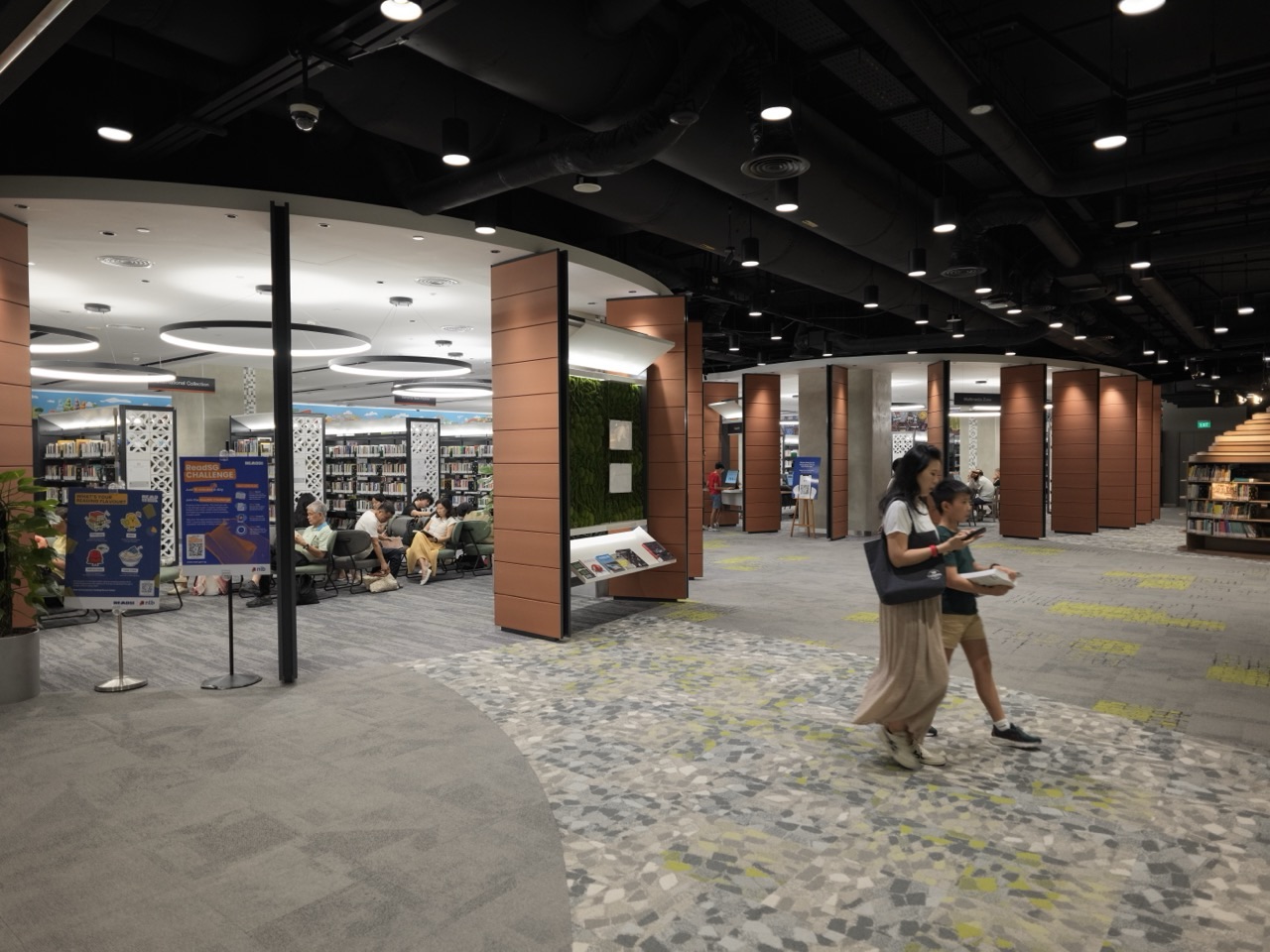
How to use a library to study smarter is not mainly about finding the quietest chair. It is about designing a learning session in which the room, the books, the digital resources, the notes and your own attention work together. A library can become a powerful study environment for reading, revision, vocabulary, writing, Mathematics, Science and research when you arrive with a clear task, choose the right zone, work in focused cycles and leave with something you can retrieve later rather than a stack of pages you merely looked at.
Studying in a library works best when you use active learning instead of passive exposure. Reading the same page three times can feel productive because the words become familiar, but familiarity is not the same as recall. A better library study workflow combines purposeful reading, self-testing, retrieval practice, spaced review, interleaving, error correction and short written explanations. The library gives you something especially valuable for this: a stable environment in which information is nearby, distractions can be reduced and the next useful source can be found without breaking the learning rhythm.
For students in Singapore, a public or school library can also connect physical study with digital access. The National Library Board’s OneSearch and eResources extend the study space beyond the shelf, while the physical collection gives learners books, reference works and a calm place to think. The exact facilities vary by library and current rules, but the learning principles in this guide remain useful almost anywhere: plan the session, choose the right resource, process what you read, retrieve it from memory, check the gaps and return later with a sharper question.
The 60-second answer: how do you study effectively in a library?
- Arrive with one primary study outcome, not a vague intention to “study”.
- Choose a study zone that matches the task: silent reading, individual work, group discussion or computer use.
- Break the outcome into one or two concrete tasks that can be finished in the session.
- Gather only the books, notes and digital resources needed for those tasks.
- Work in focused blocks, then take short breaks before attention collapses.
- Read actively: predict, question, summarise, retrieve and check.
- Close the book regularly and test what you can produce without looking.
- Record mistakes and unclear points instead of hiding them.
- End with a short retrieval test and a written next step.
- Return to the material later so the learning is spaced rather than crammed.
The key idea is simple: the library should not merely be a place where you spend time. It should be a place where learning changes state. At the start of the session, something is unclear, weak, forgotten or disorganised. At the end, you should be able to do something you could not do as well before: explain a concept, solve a question, recall vocabulary, outline an essay, compare two sources or identify the exact gap you still need to repair.
Choose the library task before you choose the seat
Many students reverse the order. They arrive, find a comfortable seat, unpack everything they own and then decide what to do. This makes the environment the centre of the session instead of the learning goal. Start with the outcome. Are you reading a difficult chapter? Memorising vocabulary? Completing Mathematics corrections? Planning an English composition? Reviewing a Science topic? Researching a History essay? Different tasks require different materials and different kinds of attention.
Write the outcome as a verb. “Understand photosynthesis” is better than “Science”. “Solve ten simultaneous-equation questions without notes” is better than “Math”. “Create a three-paragraph argument plan using two sources” is better than “English essay”. Verbs make the session testable.
The three-task rule prevents study sprawl
A library visit can feel unlimited because everything is around you. That abundance makes it easy to start too many things. Use a three-task rule: one must-do, one should-do and one could-do. Finish the must-do before you allow the session to expand.
- Must-do: the task that changes tomorrow’s readiness.
- Should-do: the task that strengthens the same subject or upcoming assessment.
- Could-do: optional extension if energy and time remain.
For example, a Secondary student might choose: must-do, correct last week’s algebra test; should-do, retrieve the rules for expansion and factorisation; could-do, browse one advanced Mathematics book for an interesting extension problem. The hierarchy keeps curiosity alive without sacrificing the work that matters.
Match the study zone to the cognitive job
Libraries often contain spaces with different expectations. A quiet area supports deep reading and individual problem solving. A collaborative space may suit a project discussion. A computer area may be necessary for databases or digital media. Children’s areas support a different rhythm from reference libraries. The correct zone is the one that reduces friction for your task while respecting the people around you.
Do not force group study into a silent area and then whisper anxiously for an hour. Do not choose the noisiest collaborative table for a difficult proof if every conversation pulls your attention away. Good studying includes environmental design.
Build a small study kit instead of carrying the whole curriculum
A good study kit is deliberately limited. Bring the current school materials, a notebook or loose paper, writing tools, a device only if the task needs one, water if permitted and perhaps one reference text. The more unrelated material on the table, the more opportunities the mind has to switch tasks.
If you are using library books, collect them after defining the task. Do not begin by taking eight attractive books from the shelf. Use the catalogue or subject area to select two or three relevant items. A smaller set forces comparison and actual reading.
Why active learning matters more than the number of hours
Studying is not measured well by time alone. Two students can sit for two hours and produce very different learning. One may reread notes, highlight sentences and feel increasingly familiar with the page. The other may read a section once, close the book, reconstruct the argument, answer questions, check errors and repeat the weak part. The second student is doing more difficult mental work, and that difficulty is often a sign that memory is being strengthened.
Use the library to support effortful learning. A quiet room is valuable because it lets you retrieve, calculate, write and reason without constant interruption.
The read–close–recall loop
- Read a short section with a question in mind.
- Close or cover the source.
- Say or write what you remember.
- Compare your recall with the source.
- Mark what was missing or wrong.
- Retrieve again after a short delay.
This loop is useful for almost every subject. In Biology, recall the steps of a process. In History, reconstruct the causes of an event. In English, explain a character’s motivation or a rhetorical device. In Mathematics, state the rule and solve an example without looking. The library becomes a testing ground rather than a viewing room.
Use retrieval practice before you reread
When you sit down with yesterday’s topic, resist the urge to open the notes immediately. First, write what you remember. Draw the diagram from memory. List the formulae. Define the vocabulary. Rebuild the essay plan. Then open the source and compare.
This gives you diagnostic information. If you reread first, the page supplies the answer and hides the gap. Retrieval reveals the gap while it is still repairable.
Spaced study beats the heroic one-night session
Libraries are especially useful for establishing recurring study routines. Instead of using one six-hour visit before an examination, use shorter sessions across several days or weeks. Return to a topic after some forgetting has occurred. The act of retrieving it again strengthens access.
A practical rhythm might be: learn on Monday, retrieve briefly on Tuesday, review on Friday, mix the topic with older work the next week. The exact schedule can vary. The principle is that memory benefits from repeated retrieval separated by time.
Interleave when the student already knows the basics
Blocked practice means doing many questions of one type in a row. It is useful when a method is brand new. Interleaving means mixing different problem types or concepts so the learner must decide what method applies. Once the basics are stable, interleaving builds discrimination: not just “can I execute this method?” but “can I recognise when to use it?”
A library study session can begin with five similar Mathematics questions to stabilise a procedure, then move to a mixed set containing ratios, algebra, geometry and graphs. For language, mix vocabulary retrieval, editing, comprehension and writing. For Science, mix concept questions with data interpretation and experimental design.
Turn errors into a library of their own
An error log is one of the most valuable study artefacts a student can keep. Do not record only that Question 7 was wrong. Record why it was wrong. Was the concept misunderstood? Was a negative sign lost? Was the question misread? Was a formula recalled incorrectly? Was the evidence weak? Was the vocabulary imprecise?
- Concept error: I did not understand the idea.
- Recall error: I knew it before but could not retrieve it.
- Procedure error: I chose the right method but executed it badly.
- Reading error: I misunderstood the question or source.
- Careless transfer error: I copied a value, sign, unit or word incorrectly.
- Time error: I knew what to do but managed the task poorly.
- Expression error: I understood the idea but could not explain it clearly.
Once errors are classified, the repair becomes more precise. A concept error needs explanation. A recall error needs spaced retrieval. A procedure error needs deliberate practice. A reading error needs slower parsing. A time error needs timed rehearsal. This is much more efficient than simply doing “more questions”.
Use library books to build explanations, not to copy notes
A textbook, handbook or reference book is most useful when it improves your mental model. Read a section, then translate it into your own explanation. Ask what problem the concept solves, what parts it contains, what causes what and what example would prove you understand it.
If you copy a paragraph into your notebook, you have created a second copy of the book. If you explain the paragraph without looking, you have created learning.
A better highlighting rule
Highlight only after you can say why a sentence matters. If everything is highlighted, nothing has been prioritised. Use marks for different jobs: definition, example, evidence, exception, formula, question. Better still, write a short note in your own words beside the highlighted passage.
The purpose of annotation is not decoration. It is to reduce the work required when you return.
How to use the library for English vocabulary
Vocabulary improves when words are encountered repeatedly in meaningful contexts and then actively used. A library gives you a huge range of authentic language. Choose reading that is slightly above your comfortable level, notice a small number of useful unfamiliar words and record each word with its sentence, meaning, common collocations and one sentence of your own.
Avoid collecting fifty words from one chapter. Ten words used repeatedly are more valuable than fifty words merely copied. Return to the words after a delay. Cover the definitions. Produce the meanings. Then produce sentences. Retrieval moves vocabulary from recognition toward usable language.
This connects with eduKateSG’s vocabulary framework, where strong word knowledge includes form, meaning, use, grammar, collocation and context. The library provides the context layer that word lists alone cannot supply.
How to use the library to improve composition writing
Read for craft as well as story. When a passage works, ask why. How does the writer open the scene? How quickly is the setting established? What verbs create movement? How is dialogue punctuated? Where does the paragraph turn? What detail makes the character feel real?
Keep a craft notebook rather than a quotation scrapbook. Write the technique in your own words and then create a new example on a different topic. That transforms reading into writing practice.
For a dedicated bridge between reading and composition, see How to Use the Library to Improve Composition.
How to use the library for comprehension
Comprehension improves when students learn to construct meaning, not merely locate words. Choose a short passage. Before reading, predict the topic from title and context. During reading, mark shifts in time, speaker, argument or mood. After reading, close the book and summarise the passage in three sentences. Then answer: what is stated, what is implied, what evidence supports the inference and what vocabulary changes meaning?
Use reference works when needed, but do not interrupt every sentence for a dictionary lookup. First try context. Then verify the important words that block understanding.
How to use the library for Mathematics
Libraries are useful for Mathematics when you select books that explain rather than merely provide question banks. Compare two explanations of the same idea. One may use algebraic symbolism, another a diagram, another a real-world example. Multiple representations can reveal the structure behind a procedure.
After reading an example, close the book and solve a similar question from memory. Then create your own variation. Change a number, reverse the question, add a constraint or ask what happens if an assumption changes. This turns worked examples into generative understanding.
The worked-example fade
- Study one fully worked example.
- Explain each line: what changed and why.
- Cover the final steps and complete them.
- Attempt a similar problem with only a hint.
- Attempt a mixed problem with no hint.
- Write the rule in your own language.
A library Mathematics book becomes powerful when it is used as a scaffold that gradually disappears.
How to use the library for Science
For Science, combine conceptual reading with diagrams, data and questions. A good session may begin with an overview chapter, continue with a diagram drawn from memory, then move to a data-based question. Ask how the claim would be tested. What is the independent variable? What is controlled? What evidence would weaken the conclusion?
Science learning improves when facts are connected to mechanisms. Do not stop at “plants need light”. Ask how light energy is involved, where the process occurs, what inputs and outputs matter and how the claim could be measured.
How to use the library for History and Humanities
History studying should alternate between chronology and causation. Build a short timeline, then ask why each event mattered. Read two accounts and compare emphasis. One source may foreground economics, another politics, another social experience. The difference is part of the learning.
For humanities subjects, use the library to encounter primary sources as well as later interpretation. Maps, newspapers, speeches, photographs, memoirs and official documents can make a topic concrete, while secondary scholarship helps you place those materials in context.
How to use the library for exam revision
Revision should become increasingly retrieval-heavy as the exam approaches. Early in the cycle, use books and notes to build understanding. Later, close the materials more often. Practise questions, timed explanations, formula recall, essay plans and mixed-topic retrieval. Use the library resources to check the gaps revealed by testing.
The pattern is learn → retrieve → check → repair → retrieve again. If revision is mostly “read → read → read”, the student may feel prepared without being able to produce knowledge under exam conditions.
A two-hour exam-preparation library session
- 0–10 minutes: write the topics to retrieve before opening notes.
- 10–30 minutes: complete a closed-book recall sheet or mixed quiz.
- 30–45 minutes: mark and classify errors.
- 45–70 minutes: repair the two weakest areas using books, notes or digital resources.
- 70–80 minutes: short break and movement.
- 80–105 minutes: complete fresh questions on the repaired areas.
- 105–115 minutes: retrieve key ideas again without support.
- 115–120 minutes: schedule the next review and pack only after writing the next step.
This is more demanding than passive revision, but it creates evidence about readiness.
Transfer: test whether the learning survives outside the example
A student can sometimes reproduce a method immediately after reading it without really understanding when or why to use it. Transfer means the knowledge still works when the surface changes. After studying a worked example, change the numbers, the wording, the diagram, the context or the order in which information is presented. After reading an essay model, write on a different topic using the same structural principle. After learning a Science concept, explain a new real-world example.
The library is excellent for transfer because you can compare multiple authors and problem sets. One book may explain percentages through finance, another through population change, another through experimental data. The underlying idea must survive the changing context. When it does, the learner owns more than a memorised template.
How to take breaks without losing the study session
Breaks work when they reduce fatigue without opening a new attention universe. Stand up, drink water, walk briefly, look away from the screen or stretch. A break that becomes twenty minutes of social media may leave the mind more fragmented than before.
Choose the break before starting the focus block. If you know you will work for forty minutes and then walk for five, the session has a rhythm. You are less likely to stop simply because the current paragraph feels difficult.
Phones: tool, timer or trap
A phone can be a catalogue, scanner, dictionary, timer, camera, note device and access point. It can also be the fastest route out of sustained attention. Decide its job before the session. If you do not need it, place it out of reach. If you do need it, turn off unnecessary notifications and open only the study functions required.
The goal is not moral purity. It is reducing task switching. Every switch has a cognitive cost, even when it feels brief.
Laptops and tablets: reduce digital clutter
Digital study can reproduce the same problem as a messy desk: thirty tabs, four documents, chat notifications, videos and unrelated windows. Use one workspace for the current task. Close what you are not using. Save links for later rather than keeping them open “just in case”.
When reading a long PDF, consider full-screen mode or a dedicated reader. When taking notes, keep the source and notes visible but avoid opening a new search every time a minor curiosity appears. Park side questions in a “later” list.
Why handwriting can still be useful
Handwriting is not automatically superior to typing, but it can slow the learner enough to select and transform information rather than transcribe it. It is especially useful for diagrams, equations, quick recall sheets and concept maps. Typing is useful for searchable notes, longer writing and organised source management.
Choose the medium that supports the cognitive task. A Mathematics derivation may be easier by hand. A research bibliography is easier digitally. A composition plan may benefit from either, depending on the student.
Use a one-page session sheet
A one-page sheet can organise an entire library visit. At the top, write the outcome. In the middle, record key ideas, errors and questions. At the bottom, write the retrieval test and next step. This stops notes from spreading across random notebooks and screenshots.
- Outcome: what I will be able to do by the end.
- Resources: what I actually need.
- Key ideas: the minimum structure of the topic.
- Errors: what I got wrong and why.
- Questions: what still confuses me.
- Retrieval: what I can produce without looking.
- Next step: when and how I will revisit it.
The 25-minute library session for younger learners
Younger students often benefit from shorter cycles. A simple session can be five minutes choosing a book, ten minutes reading together or independently, five minutes talking about what happened and five minutes doing one small output: a drawing, summary, vocabulary card or prediction for next time.
The aim is not to reproduce an adult study schedule at miniature scale. It is to connect the library with curiosity, choice and successful completion.
The 45-minute focused session
- 5 minutes: define the outcome and retrieve what you already know.
- 20 minutes: read, solve or write with full attention.
- 10 minutes: close the source and test yourself.
- 5 minutes: repair one weak point.
- 5 minutes: write the next step and pack.
This format works well when a student has limited time after school. It is long enough to produce a meaningful learning cycle without requiring an entire evening.
The 90-minute deep-study session
- 10 minutes: retrieval warm-up.
- 30 minutes: focused learning on one difficult concept.
- 5 minutes: movement break.
- 25 minutes: practice or application.
- 10 minutes: mixed retrieval from older topics.
- 10 minutes: error review, summary and next-session planning.
The important design feature is that the session contains both new learning and older retrieval. That protects knowledge from disappearing as soon as the class moves to the next chapter.
Group study works only when the group has a job
A group sitting together is not automatically a study group. Give the group a task structure. One student explains a concept, another challenges with a question, another checks against the source. Take turns. Or each student prepares one problem and teaches the solution. Use discussion zones and respect local library rules.
Avoid the common pattern where everyone silently does unrelated homework but remains vulnerable to conversation. If the work is individual, individual seating may be better. If the work requires explanation, use the group deliberately.
The teach-back method
After studying a concept, explain it to another person without using the book. If no partner is available, explain it quietly to yourself in written form. Use simple language. If you need jargon, define it. If the explanation collapses at one point, you have located the gap.
Teach-back is powerful because explanation forces organisation. Recognition can hide confusion; explanation exposes it.
Use the library to create desirable difficulty
Learning should not be made miserable, but it should include enough challenge that the brain has to reconstruct knowledge. Cover the answer. Mix the questions. Delay the hint. Explain before checking. Return after a few days. These small difficulties make memory work harder in a productive way.
The library’s calm environment is useful precisely because the cognitive task can be difficult without the environment also being chaotic.
Do not confuse comfort with effectiveness
A comfortable chair is useful if it supports sustained work. But the best session may include moments of uncertainty, failed retrieval and correction. Those moments can feel less smooth than rereading. They are often more educational.
Ask at the end: what could I do from memory that I could not do at the beginning? That question is a better measure than “Did the session feel easy?”
How to use digital library resources without turning study into browsing
Digital collections are powerful because they extend the library far beyond the building. But digital abundance can encourage hopping. Define what you need before opening a database. If the task is one recent newspaper article, do not drift into ten unrelated stories. If the task is a reference definition, extract it, record the source and return to the main work.
Singapore learners can explore current NLB eResources according to the access conditions of each resource. Use the digital layer as a tool inside the study plan, not as the plan itself.
Use the catalogue to design a reading ladder
If a topic feels too difficult, search for an introductory book, a visual guide, a children’s or young-adult explanation, then a standard textbook, then a more advanced treatment. You do not have to begin at the hardest shelf. Build a ladder.
This is especially valuable for self-directed learning. A student interested in astronomy can begin with a visual overview, move to a school-level physics text, then explore specialised books on stars, cosmology or planetary science. The library makes progression visible.
Use neighbouring shelves for productive curiosity
After finding the book you need, inspect nearby titles for five minutes. One may explain the concept more clearly. Another may connect it to a different field. Another may reveal a question you had not considered. Limit the browse window so curiosity enriches the session rather than replacing it.
For the physical navigation skill behind this method, see How to use a Library | Find Books Fast with the Catalogue, Call Numbers and Shelves.
Study notes should become smaller over time
When learning begins, notes may be long because everything is new. As understanding grows, compress. Turn a chapter into one page, then one diagram, then five retrieval questions. Compression forces prioritisation and reveals structure.
The final revision artefact should not reproduce the entire textbook. It should cue the knowledge you have built.
Create questions while you read
Question generation is a powerful form of study. Turn headings into questions. Turn definitions into prompts. Turn examples into “what if” variations. Turn diagrams into blank-label tests. Turn essay points into counterarguments. A page that generates questions becomes material you can retrieve from later.
This also makes future library visits faster because you return with a ready-made test rather than wondering where to begin.
Use an exit ticket before leaving
- What did I learn?
- What can I now do without help?
- What mistake did I repair?
- What still feels weak?
- What will I retrieve next time?
- When will I revisit it?
An exit ticket takes two minutes. It closes the loop and makes the next session easier to start.
A seven-day library study cycle
One powerful way to use a library is to spread one topic across several short encounters instead of trying to finish everything in one visit. On Day 1, build understanding. On Day 2, retrieve the core ideas without looking. On Day 3, solve or write from memory. On Day 4, mix the topic with something older. On Day 5, revisit the error log. On Day 6, complete an exam-style task. On Day 7, explain the topic in a compact summary and decide whether it is ready to be spaced further apart.
This cycle is not meant to become another rigid timetable. It demonstrates a principle: learning changes when the same knowledge is reconstructed under different demands. Reading creates one kind of familiarity. Solving creates another. Explaining exposes structure. Delayed retrieval strengthens access. Mixed practice builds discrimination. A library gives you the resources and environment to vary those encounters without losing continuity.
Day 1: build the model
Use a textbook, reference book, lesson notes or a clear library resource to understand the concept. Sketch the structure. Identify the essential vocabulary. Work through one example slowly. The aim is clarity, not speed.
Day 2: retrieve before checking
Return to the topic without opening the source. Write what you remember. Recreate the diagram, steps or argument. Only then compare. Mark the forgotten pieces and repair them.
Day 3: produce
Solve questions, write an explanation, draft a paragraph or apply the concept. Production reveals whether the knowledge can be used rather than merely recognised.
Day 4: mix
Combine the topic with older material. This forces the learner to decide which method or concept applies. That decision skill is essential in examinations where the question does not announce the chapter name.
Day 5: study the errors
Review the error log. Look for recurring causes. One repeated negative-sign error may matter more than five unrelated careless slips. Design a small drill around the pattern.
Day 6: simulate
Use an exam-style or timed task. Reduce hints. Practise presentation and pacing. The goal is not simply a score; it is to reveal how well the learning survives under realistic constraints.
Day 7: compress and schedule
Explain the whole topic on one page or through a small set of retrieval prompts. If recall is stable, increase the interval before the next review. If it remains fragile, schedule a closer return.
Designing a personal library route for the school year
Students who use the library regularly can create a personal route. Identify where the relevant subject shelves are, where reference materials live, where quiet work is comfortable and where digital resources are accessed. Save the catalogue links for recurring subjects. Learn which books are useful for explanation and which are better for practice. Over time, the building becomes part of the study system.
The route should evolve. At the beginning of Secondary 1, a student may need foundational Mathematics and broad Science explanations. By Secondary 3 or 4, the same student may need examination practice, reference material, current affairs for English or humanities, and more specialised books. The library can grow with the learner because the collection contains multiple levels of entry.
A useful habit is to keep a small “return list”: titles or call numbers worth revisiting, databases worth reopening, and topics that deserve a deeper search after the current examination period. This captures curiosity without allowing every interesting discovery to derail today’s study goal.
Independent learning: use the library to learn beyond the syllabus without losing the syllabus
Curiosity is one of the great reasons to use a library. A student can move from a school topic into astronomy, architecture, linguistics, ecology, computing, history, art or economics. The trick is to let independent exploration strengthen rather than replace core responsibilities. Keep the must-do work visible, then use a defined extension window to follow a question further.
Independent learning works best when the learner produces something. After reading about black holes, write five questions. After exploring urban planning, sketch a neighbourhood problem. After reading a biography, build a timeline. After learning a new programming idea, explain the algorithm in plain English. Output turns curiosity into mastery.
Over months, these explorations become a knowledge graph. A Science book points to Mathematics. A History book points to geography. A novel points to politics, psychology and language. Libraries are unusually good at showing these connections because different subjects live close enough to be crossed deliberately.
Parents: ask about process, not only hours
Instead of asking “How long did you study?”, ask “What did you retrieve without looking?”, “What mistake did you fix?”, “What is still difficult?” and “What will you review next?” These questions point attention toward learning rather than seat time.
A child who studied for forty-five focused minutes and can explain the repaired concept may have achieved more than a child who sat for three hours switching between notes and distractions.
Students: leave the library with less confusion, not necessarily less work
A successful session may reveal that you misunderstood a topic. That discovery can feel discouraging, but it is progress. Hidden confusion is dangerous. Visible confusion can be repaired.
The goal of study is not to preserve the feeling that everything is fine. It is to create accurate knowledge about what you know and what you still need to learn.
How this connects to the wider eduKate learning graph
For research searching and source evaluation, continue to How to use a Library | Research a Topic with Keywords, Databases and Credible Sources. For study systems more broadly, connect with The Gold Standard Of Study Habits and How to be Good at Study Habits. For the institutional layer, see How Public Libraries Work.
The library-use series works best as a graph: find the resource, research the question, study the material, ask for expert help and then return with a better question.
Common library-study mistakes and the repair
- Mistake: arriving with no outcome. Repair: write one verb-based goal.
- Mistake: opening every subject. Repair: use the must/should/could hierarchy.
- Mistake: rereading until the page feels familiar. Repair: close the source and retrieve.
- Mistake: doing only one question type. Repair: interleave once the basics are stable.
- Mistake: hiding errors. Repair: classify them and design the matching repair.
- Mistake: copying notes. Repair: explain in your own words and compress.
- Mistake: treating every break as phone time. Repair: use movement and a defined return point.
- Mistake: measuring study by hours. Repair: measure what can be recalled or performed.
- Mistake: using the library only before exams. Repair: create a recurring spaced routine.
- Mistake: leaving without a next step. Repair: complete an exit ticket.
Frequently asked questions
Is the library always better than studying at home?
No. The best environment is the one that supports the task. Libraries can reduce household distractions and provide resources, but home may be better for some routines, verbal practice or very late study. Use the library when its structure and collections improve the session.
How long should I study before taking a break?
There is no universal number. Many learners do well with focused blocks between roughly twenty-five and fifty minutes, but the task matters. Stop before concentration collapses, not every time the work becomes difficult. Use a short break and return with a defined next action.
Should I study one subject for the whole visit?
If the subject requires deep concentration, a longer block can be useful. For a multi-hour session, changing subjects can restore attention and create interleaving. The transition should be planned rather than impulsive.
Can I listen to music while studying?
It depends on the learner and task. Lyrics and changing tracks can interfere with language-heavy work. Familiar low-distraction audio may be less disruptive for routine tasks. If you repeatedly reread because attention drifts, simplify the environment.
Is highlighting useful?
It can be, if it is selective and followed by retrieval. Highlighting alone is weak because the source still holds the answer. Use highlighting to mark structure, then close the page and produce the idea yourself.
What should I do when I cannot focus?
Reduce the task size. Write the next five-minute action. Remove unrelated materials. Put the phone away. Begin with retrieval from a topic you partly know. If fatigue is genuine, take a short break rather than pretending to read.
How many books should I bring to the table?
Only as many as the task needs. Two or three relevant books are often more useful than a stack of ten. Additional books can be gathered when a specific gap appears.
Is group study effective?
Yes when the group explains, tests, compares and solves. It is less effective when social conversation becomes the main activity. Give the group a structure and use the appropriate library zone.
What is the best way to finish a library study session?
Close the materials, retrieve the main ideas, write what remains weak and schedule the next review. Do not let packing up be the first moment you stop looking at the notes.
The library study checklist
- I have one clear outcome.
- I chose a space that matches the task.
- I brought only the resources I need.
- I retrieved before rereading.
- I tested myself without the source.
- I recorded errors and why they happened.
- I used breaks without losing the session.
- I connected new learning to older topics.
- I compressed the material into useful cues.
- I know what I can now do from memory.
- I wrote the next step and when I will revisit it.
Use the library as a learning engine, not just a quiet room. The shelves give you knowledge, the study space gives you attention, and active learning gives the session a mechanism. Plan, retrieve, check, repair and return. When that loop becomes habitual, a library visit stops being time spent near books and becomes measurable progress.