
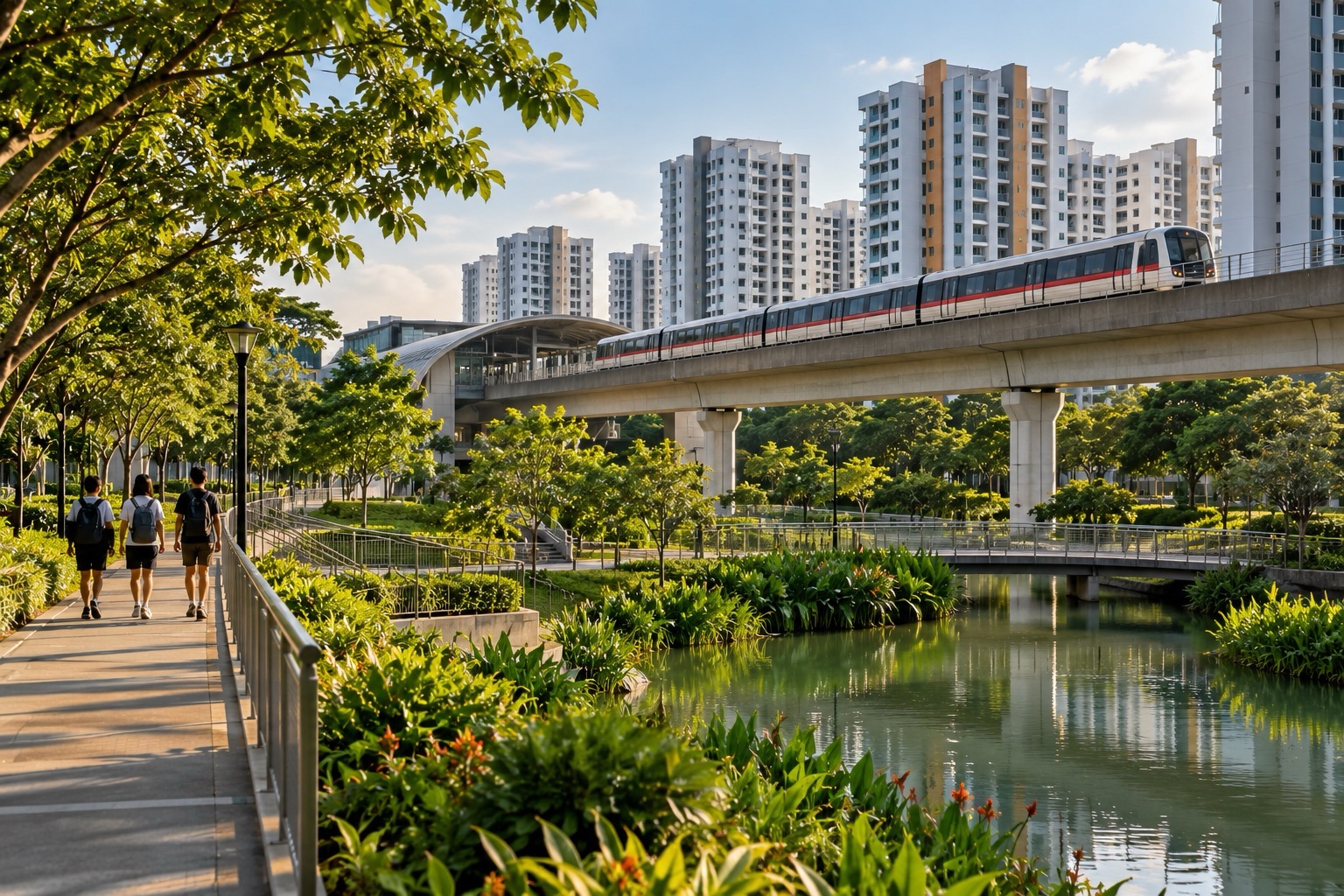
Did you know? A city tree can look beautifully green above the pavement while its roots are struggling below it. A new walkway may squeeze the soil. Construction vehicles may compact the ground. A trench may damage important roots. Months later, residents may notice declining foliage or a branch problem without ever seeing what happened underground.
Urban tree care breaks when people treat a tree as a decorative object instead of a living system sharing a crowded space with buildings, roads, drains, cables, pedestrians and changing weather. Planting the tree is only the beginning. Long-term success requires appropriate growing conditions, professional inspection, construction protection, planned maintenance and careful decisions about safety.
One-minute answer: Urban trees thrive when their roots, soil, crown, water access and surrounding infrastructure are considered together. Tree work near developments should be assessed early, appropriate protection zones and professional advice should be arranged where required, and maintenance should respond to actual condition and risk. A healthy-looking street is not proof that hidden stresses have been managed.
The part of a tree most people do not see
When residents admire a large tropical tree, they notice its trunk, branches and shade. Much of its ability to remain alive and stable depends on the root system and the soil around it.
Roots take up water and nutrients, interact with soil organisms and contribute to mechanical support. They require suitable conditions. The structure and extent of roots vary with species, age, site conditions and history; it is misleading to imagine every tree has the same small, neat ball of roots directly beneath the trunk.
Urban planning tends to focus on the visible space above ground. Tree health requires serious attention below the surface as well.
Why roots and construction sometimes conflict
An existing tree may sit beside a planned footpath, utility trench, drain upgrade or redevelopment. Engineers have legitimate infrastructure needs. The tree also needs its roots and soil to function.
The conflict becomes dangerous when construction is planned as though the tree’s visible trunk is the only part worth protecting. Excavation, soil compaction, changes in ground levels and accidental mechanical damage can undermine health or stability.
Singapore’s NParks guidelines on greenery provision and tree conservation address tree protection zones precisely because construction can affect the entire living structure, not simply a trunk.
A tree protection zone is more than a circle on a plan
A tree protection zone is an area designated to protect a tree, including its roots, crown and trunk, from harmful site activities. Its dimensions and requirements depend on the actual tree and relevant project guidance.
The purpose is to keep damaging operations away from the tree. This can include restrictions on excavation, material storage, movement of machinery and changes to soil level.
A printed line on a drawing is only useful when contractors, supervisors and responsible arborists understand and apply it on site.
Why ‘the roots are not visible’ is not reassurance
Roots can extend into ground that appears empty. A contractor who does not see them at the surface may assume a trench can be dug safely.
But the absence of visible roots is not evidence that no important roots exist below. Work close to retained trees should follow the relevant approvals, protection measures and professional assessments.
Members of the public should not excavate around a roadside tree or attempt to inspect its structural roots themselves. Observed concerns belong with the responsible authority or landowner.
Soil compaction: damage without a broken branch
A heavy vehicle, pile of construction materials or repeated movement over unprotected soil can compress the ground. Compaction can reduce pore space, change how water moves and restrict conditions needed for healthy roots.
The tree may not react dramatically on the day the soil is compacted. Consequences can develop over time, making it difficult for residents to connect later decline with earlier activity.
That delayed effect is why effective tree protection begins before machinery arrives, not after the leaves start falling.
The danger of changing ground level
Adding a deep layer of fill around a retained tree can alter conditions at the root zone. Removing soil can expose or damage roots. Even apparently minor surface changes may matter depending on species and the site.
Appropriate professional guidance is essential because the effect cannot be determined by looking at the finished pavement alone.
The lesson is simple: a tree’s growing environment is part of the infrastructure design, not spare material that can be reworked without consideration.
When the desire for a tidy pavement creates another problem
Residents understandably want safe, even walking surfaces. Tree roots and pavement occasionally conflict. A damaged footpath is a genuine accessibility concern, especially for people with mobility needs.
A poor response is to assume the tree must be cut down or that roots can simply be removed. Either action may have serious consequences, and neither should be improvised.
Site owners and qualified professionals should assess the actual hazard, possible pavement solutions, tree condition and relevant rules. Safety and conservation require a joined-up design decision.
Why a beautiful crown can hide a stressed root system
A large crown does not certify that the tree is structurally sound. Conversely, a change in foliage does not by itself establish that a tree is about to fail.
Tree condition is assessed using appropriate evidence, not a single photograph. Trained inspectors may examine visible defects, root-zone circumstances, site history and other factors before deciding whether further investigation is required.
Residents who notice a concern can report it with a location and clear description. They should avoid diagnosing structural safety from appearance alone.
A fictional school walkway project
Imagine a Singapore school planning a wider covered walkway near mature trees. The project is intended to give children safer access during rain. The design looks reasonable from above.
Only late in the process does the team recognise that the proposed foundation works pass close to retained tree roots. Making a change now is costly, and the schedule is already tight.
A better process would identify significant trees during early planning, involve the correct landowner and professional advisers and examine feasible alignments before procurement locks in decisions. Safety for students and tree health need not be considered in separate meetings.
A fictional street-resurfacing problem
A road verge beside a shopping area is used temporarily to store machinery and materials. No branch is broken, so the team assumes the nearby tree has not been affected.
Later, the tree’s condition worsens. This fictional example does not establish a direct cause, but it illustrates why soil protection and site records matter. A professional review should consider environmental stress, root conditions, disease, weather and other plausible causes.
The right lesson is not to blame all later tree problems on construction. It is to prevent avoidable harm and retain enough information to investigate responsibly.
The difference between pruning and simply removing branches
Pruning is a professional tree-management intervention with specific objectives: maintaining appropriate structure, managing identified risk and supporting long-term health where suitable.
Unplanned heavy cutting can damage trees, create undesirable growth patterns or remove significant canopy without addressing the underlying problem. Professional decisions consider species, condition, location and the relevant standards.
Do not copy pruning advice intended for a small garden plant and apply it to a mature roadside tree. Public trees require authorised, competent management.
Is the strongest tree always the biggest one?
A mature tree may offer valuable shade, habitat and neighbourhood identity. But different species respond differently to wind, soil conditions, pruning and space constraints.
Selecting species for an urban site involves matching their characteristics to likely conditions over many years. A tree suited to a broad park may not be ideal for a cramped planting strip next to complex infrastructure.
NParks’ 2025/2026 annual report discusses evolving tree management, species selection and attention to storm resilience. The aim is appropriate long-term performance, not selecting trees by appearance alone.
Why urban heat makes tree care important
Trees can provide shade and contribute to more comfortable outdoor environments. They can also offer habitat and add visual interest to streets and neighbourhoods.
But the benefits depend on a tree surviving and developing an effective canopy. A programme that plants many young trees without the space, care and long-term maintenance required may not deliver the intended future shade.
A responsible tree strategy considers establishment, maturity and maintenance budgets rather than counting planting ceremonies as the final outcome.
Planting numbers do not tell the whole story
A local programme might report that fifty trees were planted. That is an output. Whether those trees establish well, remain healthy and suit their locations is a different question.
Useful long-term measures may include survival, growth, condition, appropriate canopy development, maintenance needs and conflicts with paths or services. The choice of measure depends on the programme’s purpose.
Numbers become meaningful when they show what residents and ecosystems actually receive, not just what was installed.
Maintenance is not the same for every tree
Young trees may need establishment care suited to their species and growing environment. Mature trees require a different inspection and management approach.
A rigid schedule that assumes all trees have identical needs can waste resources or miss site-specific risks. Professional management should consider condition, weather exposure, species and relevant hazards.
Singapore’s NParks reports describe inspections and the use of technology to help prioritise tree management. The goal is not merely to produce more inspection forms, but to identify and address concerns effectively.
Storms reveal weaknesses but do not explain everything
After a tree or branch failure, public concern is understandably high. Strong winds, prolonged rain, soil conditions, structural defects and other factors may interact.
A failure should be investigated with appropriate expertise. It is not reasonable to assume that all trees are unsafe, or that one visible characteristic proves the cause.
NParks reports ongoing work to improve risk management and better understand the interaction between weather and tree stability. Tree care is about managing risk, not promising that nature can be made risk-free.
Why a safety inspection is not a guarantee
A qualified inspection reduces uncertainty and supports decisions, but tree condition can change. New storms, construction, disease and other events may alter risk after the visit.
An inspection record should therefore be part of an ongoing process. It needs a clear date, location, observations, recommended actions where applicable and a responsible person to follow up.
A report filed away without action is not a functioning safety system.
The tree that belongs to somebody else
A resident may see a problem beside a condominium, school, park or public road. Different trees can fall under different landowners and management arrangements.
Before arranging work, establish who has authority. Do not cut, poison, remove or alter a tree on public or private land without the necessary permission and competent advice.
For public tree concerns in Singapore, use the appropriate NParks, municipal or property-management reporting route. If there is immediate danger, keep people away and contact the relevant emergency service or authority.
Why contractors need a common plan
A landscape team may know which trees should be retained, while a civil contractor focuses on utilities. If the plans are separate, a protected root zone may become a convenient place for temporary storage.
A practical project should make tree-related constraints visible in the work programme, site layout, responsibilities and inspection process. Professional advice must reach the workers conducting the activity.
The point is not to add endless paperwork. It is to prevent a known environmental constraint from being lost between teams.
A tree-care handover after construction
Imagine a building project that successfully preserves its existing trees. At completion, the construction contractor leaves. The long-term facilities manager receives keys and floor plans but no clear history of tree work or monitoring needs.
The trees remain in place, but institutional knowledge disappears. That can undermine later maintenance.
A useful handover can include relevant approved tree records, professional recommendations, changes during construction, inspection requirements and an identifiable maintenance owner. Sensitive or safety-related records should be managed appropriately.
What a certified arborist contributes
An arborist trained in tree biology and management can assess tree condition and risks, advise on protection and help develop suitable work recommendations. Certification and relevant experience matter when complex tree and construction interactions are involved.
Professional judgments may depend on observations, site conditions and specialised tools. Residents should not assume that watching an online pruning tutorial provides equivalent competence.
The goal is to use expertise where the consequences of an incorrect decision can affect people, infrastructure and a living asset over many years.
A fictional estate maintenance conflict
A residents’ committee receives complaints that a mature tree drops leaves onto cars. Some residents want heavy pruning; others want the tree untouched. The discussion becomes a choice between cleanliness and conservation.
A more useful conversation identifies the actual concerns: obstructed sightlines, damage, cleaning costs, perceived risk or ordinary seasonal litter. Each may require a different response.
Seek the managing authority’s assessment and appropriate professional advice. Not every nuisance needs structural tree work, and not every safety concern can be solved by a change in cleaning schedules.
Good reporting separates observation from diagnosis
A useful public report might say: ‘A large branch is hanging low above the footpath near this lamp post; photo taken today.’ It identifies an observable concern and a precise location.
A less useful report may say: ‘The tree is diseased and will fall tomorrow,’ based only on a photograph. The second claim exceeds what the observer can know.
Use descriptions that help the responsible team investigate. In an urgent situation, prioritise people’s safety rather than making unverified technical claims.
Do not assume removing a tree is always a failure
Conservation is valuable, but certain circumstances may make removal necessary following appropriate assessment and authorisation. Structural risk, disease, irreconcilable safety constraints or other legitimate factors can influence the decision.
Likewise, planting a replacement is not a complete substitute for the ecological and social value of a mature tree. Loss and replacement should not be treated as interchangeable counts.
Decisions require a transparent balance of risks, benefits, legal requirements and feasible alternatives.
A five-stage tree-care audit
- Map: Identify existing trees, nearby infrastructure, responsible owners and areas affected by planned work.
- Assess: Obtain suitable professional evaluation of tree condition, growing environment and potential conflicts.
- Protect: Establish approved site measures, responsibilities and communication before work begins.
- Maintain: Implement appropriate inspection and maintenance recommendations and preserve relevant records.
- Review: Check tree condition and the surrounding public-space experience after construction or interventions.
This is a planning framework, not a do-it-yourself guide to excavation, pruning or tree risk assessment.
Why the right denominator matters
A programme reporting ten tree failures cannot be evaluated meaningfully without understanding the number of managed trees, their age distribution, inspection period, exposure and definitions.
Comparing a small neighbourhood with an entire city by raw counts can create misleading impressions. Not all reported failures have the same cause or consequence.
Public data should be explained carefully and used to improve management rather than to construct an argument that every tree of a particular type is dangerous.
How sensors and digital tools can help
Digital records, imagery and monitoring systems may help managers identify patterns and prioritise work. They cannot replace all professional judgment about biological condition and local site circumstances.
NParks’ greenery-management initiatives combine inspections with technological support for identifying concerns and allocating resources. The practical value depends on how the data inform competent action.
A large database is not an arborist. A photograph is not a structural assessment. Technology should strengthen the responsible decision process.
What schools can teach with urban trees
Trees offer a rich science and geography lesson. Pupils can observe shade, leaf forms, surface water movement and how natural systems interact with buildings and paths.
A classroom task might compare two different planting environments and ask what conditions could affect growth. Learners should distinguish what they directly observe from what would require professional testing.
Do not involve children in digging around roots, attempting tree inspection or approaching a visibly hazardous tree. Learning can happen through safe observation and suitable secondary evidence.
What parents can teach on a neighbourhood walk
Invite a child to observe the relationship between trees and the spaces around them. Does the walkway offer enough clear passage? Where does rainwater flow? Is a tree surrounded by planting space or hard pavement?
Ask the child to make hypotheses rather than pronounce a tree safe or unsafe. Explain that trained people manage public trees and that concerns should be reported rather than handled independently.
A short walk can become a lesson in biology, infrastructure, civic responsibility and the limits of what photographs reveal.
Common misconceptions
If the leaves look green, the tree must be safe. Not necessarily. Appearance alone cannot establish structural condition.
Tree roots stay directly beneath the trunk. No. Root systems vary and can extend into surrounding soil.
A tree-protection line on a drawing guarantees protection. No. It must be implemented, monitored and respected during actual work.
More pruning always makes a tree safer. No. The need and method depend on the tree and professional assessment.
Tree removal is always proof of poor management. No. Certain cases may require appropriately authorised removal, though alternatives should be considered.
Planting more trees automatically replaces mature canopy. No. Survival, time, location and long-term growth matter.
How to judge a tree-care programme fairly
Look beyond the planting day. Ask whether relevant trees were identified before construction, whether protection was implemented, whether defects and reports received appropriate attention and whether maintenance responsibility is clear.
Consider the real outcomes: safer and more accessible public spaces, living trees with suitable growing conditions and responsible management through changing weather and neighbourhood needs.
A programme that publishes a thousand planting photographs while losing maintenance records is not demonstrating long-term stewardship.
What success actually looks like
Good urban tree care is often invisible. A construction project finishes without harming retained trees. A concerned resident knows whom to contact. A qualified team acts on a genuine risk. A young tree establishes well and grows into useful shade.
The tree above ground and the infrastructure below ground share the same city. Urban tree care works only when planners manage both.
Authoritative Singapore guidance
NParks Annual and Sustainability Report 2025/2026 — Managing Tree and Slope Failures describes Singapore’s inspection, risk and storm-resilience work. NParks — Greenery Management and Inspection Technology explains the role of professional inspection and digital tools. NParks and LIAS — Tree Management Code of Practice Workgroup describes efforts to strengthen tropical urban tree care. NParks — Facts and Figures 2025/2026 shows the scale and training needs of Singapore’s greenery operations. For construction work, consult the current NParks tree-conservation requirements and suitable professional advisers rather than relying on a general article.
Connected learning
Read How Rainwater Drainage Breaks, How Building Maintenance Stalls and How Urban Planning Stalls. Explore the How Things Fail library.