
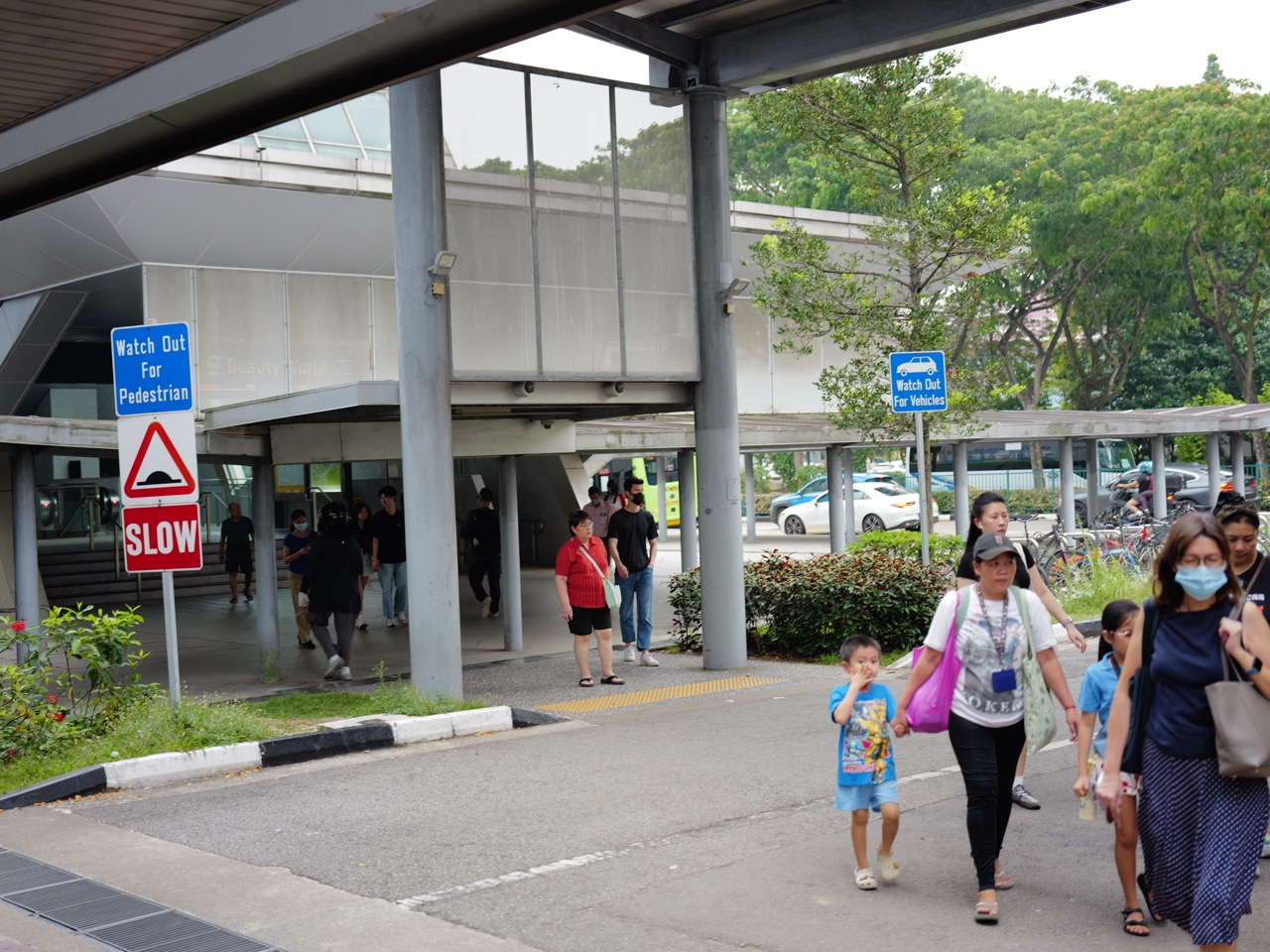
Improving children’s vocabulary with maps and directions helps them understand where things are, how places connect, and how to explain a route to someone else. Beside, between, opposite, towards, behind and around do more than decorate sentences: they describe relationships that help people navigate real spaces.
Parents searching for direction words for kids, spatial vocabulary activities, maps for preschoolers or prepositions of place for children can use the thirty-six words, home-map example and ten practical activities in this guide. Start with a room, a tabletop or a drawing; you do not need an app, a printed atlas or a long journey.
The key teaching move is to connect a word to a real relationship. A toy placed under a chair is not in the same position as a toy placed beside it. Once the child understands the difference, they can give and follow useful instructions in a story, a building, a market, a railway station or an imaginary village.
- Start with one landmark: a table, door, tree, chair or shop.
- Place two safe objects: “The ball is under the table; the book is on top.”
- Ask the child to give a direction: “Put the toy beside the book.”
- Draw a simple map: show landmarks with shapes and an arrow marking a route.
- Explain one new word: opposite, route or interchange, depending on the scene.
- Check understanding: ask whether a newcomer could follow the directions without seeing the original example.
Why spatial language matters beyond learning prepositions
Spatial words let children express relative position, shape, direction, movement and distance. They appear in instructions (“Place the cup beside the plate”), stories (“The rabbit hid behind the tree”), mathematics (“Rotate the shape”), transport (“Change trains at the interchange”) and everyday safety (“Stay behind the marked line”).
The National Association for the Education of Young Children (NAEYC) explains how spatial language such as over, under, between and near can help children describe relationships and connect words to maps and movement. This relationship is not a guarantee of an academic outcome; it is a strong reason to make these words understandable through concrete experience.
A child who can say “The museum is next to the library” has done more than name buildings. They have linked two places in space. When they can explain a path from one to the other, they add ideas of sequence, movement, direction, decision and perspective.
Thirty-six spatial vocabulary words for children
Words 1–12: position and relation
| Word | Plain-language meaning | Example |
|---|---|---|
| above | at a higher level than something | The clock is above the shelf. |
| below | at a lower level | The box is below the picture. |
| under | beneath something | The toy is under the chair. |
| over | above or across, depending on use | The bridge crosses over the stream. |
| beside | next to something | The bench is beside the path. |
| between | in the space separating things | The library is between two shops. |
| behind | at the back of something | The tree is behind the shelter. |
| in front of | on the forward-facing side | The sign is in front of the building. |
| inside | within an enclosed area or object | The ball is inside the basket. |
| outside | not within an area or object | The shoes are outside the room. |
| near | at a relatively short distance | The bus stop is near the school. |
| far | at a relatively great distance | The hills are far from our street. |
Position words depend on the reference object. Something can be behind the bus from one viewing direction and beside it from another. Ask “Behind what?” or “From whose point of view?” whenever the relationship is unclear.
Words 13–24: movement and route
| Word | Plain-language meaning | Example |
|---|---|---|
| towards | in the direction of | We walked towards the entrance. |
| away | in a direction increasing distance | The bird flew away from the tree. |
| across | from one side to another | The pedestrian crossed the safe marked path. |
| along | following the length or direction of | We followed the path along the river. |
| around | in a curved path surrounding or avoiding something | We walked around the garden. |
| through | entering and moving within or out of | The train passed through a tunnel. |
| past | beyond a point or object | The bus travelled past the market. |
| turn | change direction | Turn left at the next safe junction. |
| left | one of two relative sides | The door is on the left as you face the desk. |
| right | the other relative side | The window is on the right from this viewpoint. |
| route | a path from a starting point to a destination | We marked our route on the map. |
| destination | the place someone intends to reach | The museum is our destination. |
In a teaching game, use safe routes on paper or in an open, supervised space. Real streets, train platforms and busy crossings need genuine adult safety decisions; a child’s correct use of turn left does not mean they should navigate traffic independently.
Words 25–36: map features and reasoning
| Word | Plain-language meaning | Example |
|---|---|---|
| map | a representation of an area or arrangement | The map shows the park’s paths. |
| landmark | a recognisable feature used to identify a place | The tall clock is a landmark. |
| symbol | a mark or shape standing for something | The blue circle marks a fountain. |
| key | an explanation of symbols on a map | The key tells us what the colours mean. |
| scale | a relationship between distances shown and real distances | This map uses a distance scale. |
| boundary | a line or limit separating areas | The dotted line marks the park boundary. |
| junction | a point where routes meet | Two paths meet at the junction. |
| intersection | a place where routes cross or meet | The roads form an intersection. |
| interchange | a place where travellers change routes or services | We changed trains at the interchange. |
| shortcut | a more direct route in a given context | The shortcut was shorter but closed. |
| estimate | make an approximate judgement | We estimated how far the path extended. |
| orientation | which way someone or something is facing | The map helps us check our orientation. |
Map terms have conditions. A shortcut may be shorter but not safe or accessible. A map’s scale is a formal measure, not the size of the paper. A map key explains symbols rather than opening a lock. A child learns more when the relevant context is made explicit.
Worked example: draw a map of a room
Place a chair, table and box in a room. Ask the child to draw a rectangle representing the room and simple shapes representing the objects. Explain that the shapes are symbols and that their relative placement should help someone understand where things are.
Ask, “Where is the chair relative to the table?” The child says “beside the table.” Now ask whether it would still be beside the table if the chair were moved to the opposite side of the room. The child adjusts the map and explains the change.
Next draw a route from the door to the box. The child can say “Enter through the door, turn towards the table, then go around the chair.” Test the directions with a toy figure or an adult; change vague phrases when the directions do not work. The lesson is precise communication rather than a beautifully coloured map.
Worked example: the same place from two points of view
Put a soft toy facing a bookshelf. Place a ball to the toy’s left. Then turn the toy around. Ask the child whether the ball is still on its left. This introduces the idea that left and right often depend on viewpoint. A sentence can be correct from one perspective and incorrect from another.
For an older child, compare “The shop is left of the station on my map” with “Turn left when exiting the station.” The first depends on the map’s orientation; the second depends on the direction the person is facing when they exit. Clear directions should specify a viewpoint or use fixed landmarks.
This is why maps often include a compass arrow or labels indicating orientation. Some digital maps rotate, and not every map is drawn with north at the top. Show children how to check rather than assume.
Ten map-and-direction vocabulary activities
- 1. Toy treasure hunt: Hide a safe object in a visible, accessible location and give clues using under, beside and behind.
- 2. Build a mini neighbourhood: Arrange blocks as shops, parks and homes; explain junction, opposite and route.
- 3. Draw a family room: Represent furniture with simple symbols and give the drawing a key.
- 4. Give directions to a newcomer: Ask a child to guide an adult across a paper map without pointing.
- 5. Switch viewpoints: Rotate a toy and discuss how left and right change.
- 6. Compare two routes: Discuss direct, longer, accessible and safe without treating the shortest route as always best.
- 7. Map a story: Draw where fictional characters travel from home to a garden, including landmarks.
- 8. Find words in signs: Examine a safe photograph of a public sign and discuss entrance, exit, platform or interchange.
- 9. Shape and position: Place a triangle above a circle and a square between two rectangles; invite the child to describe the diagram.
- 10. Plan and revise: On a fictional map, close one path and ask for an alternative route.
Three parent–child mini-dialogues
Dialogue 1: beside is not between
Adult: “Put the pencil beside the book.” Child: “Here?” Adult: “Yes, it is beside the book. Now put it between the book and the cup.” Child: “Now it’s in the middle.” Adult: “Exactly. Between describes the pencil’s position relative to those two objects.”
Dialogue 2: the meaning of a landmark
Child: “How will we know where the pretend park is?” Adult: “We can choose a landmark, a feature that is easy to recognise. This tall tower could be our landmark.” Child: “Then the park is opposite the tower.” Adult: “Let’s draw both on the map.”
Dialogue 3: a shorter route is not always best
Child: “The shortcut is the best way.” Adult: “It looks shorter. But what if the bridge is closed or the route has steps someone cannot use?” Child: “We need a different route.” Adult: “Yes. A good route also needs to be safe and suitable.”
Map language, time and sequence
Directions include time as well as space. “Turn after the library” does not mean the same thing as “Turn before the library.” “Continue until you reach the bridge” specifies a stopping condition. “First cross the courtyard, then turn” orders two events. These words connect location, sequence and action.
A child can understand the separate words after, turn and bridge but still misunderstand the sentence if they do not understand how the pieces relate. Ask them to demonstrate with a toy or explain the instruction in their own words.
Use a fictional map to teach complex conditional language: “If the north gate is closed, take the path that passes the pond.” Explain that if introduces a condition and that north is a compass direction rather than the child’s current left side.
Adapt for age, confidence and access needs
Preschool: Start with one landmark and simple positional words using toys, pictures and short movements. Pointing can demonstrate understanding before the child speaks a full sentence.
Early primary: Add simple maps, symbols and two-step directions. Ask children to draw a route and explain it aloud. Introduce opposite, between and junction when relevant.
Older primary: Explore orientation, scale, alternative routes, accessibility, perspective and location-based evidence. A child can compare a drawn map with an actual place and identify what information is missing.
Multilingual families: Encourage detailed spatial explanations in any family language, then connect the intended English words. Direction terms may be structured differently across languages, and direct word-for-word translation is not always natural.
Different mobility and communication needs: Use tabletop movement, digital or paper maps, gestures and alternative communication. A child need not physically walk a route to understand how places relate.
A seven-day home mapping routine
- Monday: position two safe objects and explain beside, under and between.
- Tuesday: describe a location from two different viewpoints.
- Wednesday: draw a simple map of a familiar room with landmarks.
- Thursday: add a key and one route arrow to the map.
- Friday: ask the child to give directions using first, next and after.
- Saturday: compare two possible paths on a fictional map.
- Sunday: find a spatial word in a story or real sign and discuss how its context changes the meaning.
This is an optional practice sequence, not a universal developmental timetable. A single short map game may be enough for a busy day. Revisit a difficult relationship with different objects rather than adding more terms at once.
Common mistakes parents can avoid
- Giving directions without stating the reference object.
- Assuming left and right remain the same after a person turns around.
- Confusing distance on a drawing with real distance without checking scale.
- Teaching place words only through worksheets without real or imagined locations.
- Demanding a child navigate busy public spaces independently as a vocabulary test.
- Calling the shortest route the safest route without checking conditions.
- Assuming a child who knows a place name can explain how to reach it.
Frequently asked questions
What are spatial words for kids?
Spatial words describe position, direction, distance and relationships between objects or places. Examples include above, behind, between, beside, towards, across and around.
Can maps improve children’s vocabulary?
Maps create opportunities to use meaningful words for landmarks, symbols, routes and relations. Adults can support learning by demonstrating each expression and asking children to explain directions in a new context.
How do I teach left and right without confusing my child?
Begin with the child’s own perspective using simple objects, then show how the relationship changes when they turn or view the scene from another position. Don’t require instant memorisation.
What if my child cannot draw an accurate map?
Start with a few landmarks and simple shapes; the map is a language and thinking tool, not an art examination. Adult-drawn maps and toys can provide the same discussion opportunities.
Should we use map apps for vocabulary lessons?
Not necessarily. A paper drawing or tabletop model can teach many of the same concepts. If using an app, supervise it and avoid sharing identifiable home, school or child location data unnecessarily.
More useful eduKate vocabulary guides
This guide focuses on spatial relationships and route language. For movement verbs and teamwork see Sports and Movement Words; for observation on a walk use Nature Walks and Outdoor Words; for word-group relationships visit Sorting and Categories. The Vocabulary Learning Hub and Master Vocabulary connect the full programme.
Sources and editorial note
Further reading: NAEYC: Fostering Preschool Children’s Spatial Thinking with Books and Movement (2026); NAEYC: Developing Your Preschooler’s Spatial Thinking; and NAEYC: Discovering Shapes and Space in Preschool. The word lists, fictional maps, dialogues and games here are original teaching examples. Follow real-world transport and outdoor safety guidance.