
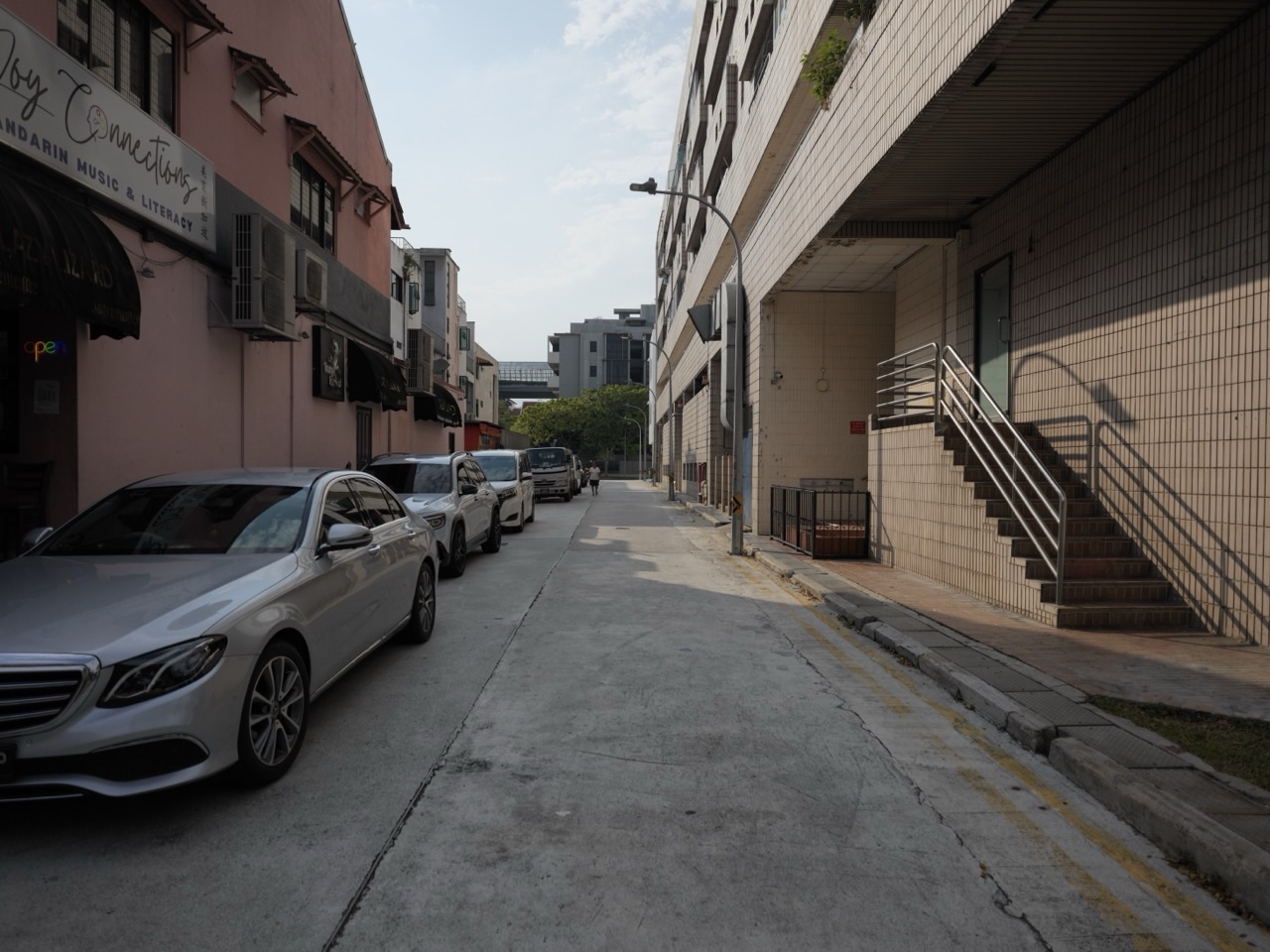
Updated 25 October 2026 | Bukit Timah, Singapore. Did you know that the Toh Tuck Estate Upgrading Programme was already documented as completed in a 2025 Bukit Timah report? Its practical achievement included better pedestrian surfaces over reconstructed roadside drains.
Quick answer: Holland-Bukit Panjang Town Council’s April 2025 booklet records completed Toh Tuck Estate upgrading and shows footpaths added over reconstructed drains. This is an existing infrastructure improvement, not a newly scheduled 2027 launch. For 2027, residents should follow maintenance, road-access notices and separate nearby recreational plans rather than presume a second Toh Tuck-wide EUP.
Five essentials about completed Toh Tuck upgrades
- The Toh Tuck Estate Upgrading Programme was reported completed by April 2025.
- Before-and-after material specifically mentions footpaths built over reconstructed drains.
- A completed project still needs inspection, cleaning and safe access.
- Other Eng Kong, Savoy Park and nearby play/fitness projects are separate future-plan entries.
- No new Toh Tuck-wide EUP opening date in 2027 is established in the cited source.
Timeline: Toh Tuck 2025–2027
| When | What the public record establishes |
|---|---|
| 2000 | The EUP began nationally as a private-estate infrastructure renewal programme. |
| By April 2025 | The Town Council recorded the completion of the Toh Tuck Estate Upgrading Programme. |
| April 2025 | The same local booklet showed before-and-after footpaths over reconstructed drains. |
| 2025 local future plans | Other playground and fitness-corner projects were separately listed for the wider area. |
| 25 October 2026 | The verified project is already completed; later site-specific maintenance may still occur. |
| During 2027 | Residents can monitor route maintenance and separate nearby improvement notices; no second Toh Tuck-wide EUP is confirmed. |
Choose your reading route
- What changed at Toh Tuck Estate before 2027?
- What is an Estate Upgrading Programme?
- How can a reconstructed drain become a better footpath?
- Why do small paths matter to families and seniors?
- Does covering drains mean that flooding is impossible?
- What about Lorong Kismis and Toh Tuck Rise?
- How are Toh Tuck and Toh Yi different?
- Are there other recreational improvements planned nearby?
- Can a completed footpath become unsafe again?
- How should motorists behave around improved walking routes?
- Will Toh Tuck Estate have another new EUP in 2027?
- What should neighbours check in 2027?
- Frequently asked questions
- Primary sources
What changed at Toh Tuck Estate before 2027?
Did you know? Unlike several Bukit Timah projects still at a planning stage, the Toh Tuck Estate Upgrading Programme is described by the Town Council as completed in its April 2025 retrospective. That changes the right kind of news story: this is about improvements already delivered and how residents use and maintain them, not an imaginary opening ceremony in 2027.
The booklet includes before-and-after images and a specific description of footpaths added over reconstructed drains. This is more grounded than a generic illustration of how EUP works in other neighbourhoods.
Toh Tuck is an established Upper Bukit Timah residential area. Its roads and walking routes connect homes to surrounding shops, transport and green spaces, while also serving vehicles, deliveries and the everyday needs of residents.
Many improvements to mature estates are modest to look at. A continuous walking strip is less dramatic than a new MRT station, but it can change whether a child, parent or older resident finds a daily route convenient.
This distinction is essential for the 2027 outlook. The publicly documented EUP completion is in the past; what needs ongoing attention is pedestrian access, maintenance, safe use and any separately announced future works.
What is an Estate Upgrading Programme?
Singapore introduced the Estate Upgrading Programme in 2000 to improve older private-estate infrastructure and recreational facilities. It is designed for neighbourhoods that do not receive HDB precinct upgrading in the same way as public housing estates.
The programme may improve drains, footpaths, lighting, shared amenities and accessibility. The exact scope is chosen for the local setting; it is not a standard identical equipment package deployed to every home.
The Town Council’s Bukit Timah publication describes Toh Tuck’s programme as completed, while also identifying separate future EUP projects at Watten, Dunearn and Mayfair. These are separate estate programmes with different project stages.
Therefore, the national February 2025 announcement of a fresh S$135 million upgrading round should not be described as the first time Toh Tuck Estate ever received EUP improvements. Its completed local works were already recognised in the 2025 booklet.
For readers, the correct question is: what did the earlier Toh Tuck improvements change, and what would improve their usefulness as the neighbourhood enters 2027?
How can a reconstructed drain become a better footpath?
Some older residential roads have drainage channels running alongside the carriageway. Where these channels occupy space needed for walking, people may be forced to move close to traffic or step around narrow edges.
The Town Council states that many footpaths were added on top of reconstructed drains during the Toh Tuck upgrading. The result can provide a more continuous pedestrian route while preserving the water-management function below.
A well-designed cover needs sufficient structural strength, safe access for maintenance and appropriate drainage flow. It is not merely placing loose boards across an existing open channel.
Residents benefit only when the improved pathway connects to usable crossings, driveways and destinations. A nice new surface that stops suddenly at a high kerb will not solve an entire journey.
The before-and-after images show the practical nature of the completed project. They do not establish that every road in Toh Tuck was reconstructed, nor that every part of the neighbourhood now has identical footpath width.
For current access and maintenance details, check what exists on the street rather than relying on a photograph that may show only one section of the estate.
Why do small paths matter to families and seniors?
Imagine walking with a young child during school pickup. A continuous path gives both people more room to stay clear of moving vehicles. The same route can be useful for an older resident using a cane or someone moving a stroller.
A path also reduces the need to step into a drain-side depression or the road to get around a surface obstacle. But its usefulness depends on other conditions: clear width, smooth kerb transitions, good visibility and responsible parking.
The change need not be enormous to matter. An extra section of pedestrian space can make an everyday trip less stressful and support people who would otherwise depend more heavily on a vehicle.
A residential neighbourhood works well when streets can serve multiple purposes at once—homes, deliveries, walking, community interaction and necessary drainage—without any one purpose crowding out the others.
Toh Tuck’s completed EUP therefore offers a clear example of how urban infrastructure can be improved with modest, practical interventions.
Does covering drains mean that flooding is impossible?
No. Drainage engineering can improve how water moves through a street, but no drain cover or upgraded channel can eliminate all flood risk in intense storms.
The correct first question is whether drainage water can pass through the intended system, while inspection points remain available for maintenance. Clogged inlets or unusually heavy rainfall can still cause problems.
In October 2026, PUB separately announced completion of the large Upper Bukit Timah Canal improvement, raising its stormwater conveyance capacity by 30%. That is a catchment-wide project and is not the same engineering specification as a reconstructed roadside drain in Toh Tuck.
A local article should not copy PUB’s 30% figure onto the estate’s completed EUP path surfaces. The two improvements operate at different scales.
Residents can help keep the neighbourhood safe by not dumping litter into drains and by reporting blocked or damaged covers through the relevant official channels.
For the distinct main-canal story, see Upper Bukit Timah Canal’s October 2026 upgrade.
What about Lorong Kismis and Toh Tuck Rise?
Lorong Kismis and Toh Tuck Rise are familiar local street names within the wider Toh Tuck area. Updates to roads, drainage and walking surfaces in such established residential streets can affect how people reach main roads and neighbouring homes.
A public video update by the area’s elected representative described improvement works around Lorong Kismis and Toh Tuck Rise as the EUP was being completed. That is useful historical evidence that specific local work was discussed, but should not substitute for current conditions on an individual street.
The Town Council’s completed-project overview is the stronger source for the general status of the estate programme. It confirms completion rather than requiring readers to infer an entire project from one photographed trench.
A driver navigating an older route may be familiar with the previous edge of a drain or driveway. Pedestrians also need time to become familiar with altered walking paths, changed kerbs or access arrangements.
If a section is being maintained again in 2027, follow the new local signs. An earlier project completion does not imply that the same pavement can never need repairs.
How are Toh Tuck and Toh Yi different?
The names sound similar, but Toh Tuck Estate and Toh Yi Drive have their own locations and improvement projects in the wider Bukit Timah area.
The Toh Tuck Estate Upgrading Programme is described as completed in the April 2025 local retrospective. The Toh Yi Drive projects included two playground proposals discussed at a September 2025 community session, with distinct equipment lists at Blocks 5–9 and Block 14.
The Toh Yi playgrounds were discussed in terms of future installation, while the Toh Tuck story is about previous drainage and footpath upgrades. A reader should not transfer the playground’s future date or equipment specification to Toh Tuck.
The same distinction applies to Watten Estate EUP and Dunearn Estate EUP. They are separate public improvement stories with their own project statuses.
For more detail, see the Toh Yi Drive playground guide.
Are there other recreational improvements planned nearby?
The 2025 Bukit Timah future-plans booklet lists several other local facilities that may be renewed, including the Eng Kong Place fitness corner, Savoy Park playground, Cheng Soon Garden playground and Greenridge Crescent playground.
These are separate entries on a future-plans list. They should not be described as parts of the already completed Toh Tuck drain-and-footpath programme without an official project document connecting them.
For families, local play and exercise spaces have different purposes. A playground supports young children’s movement and social play; a fitness corner can serve adults and seniors. Access routes and shade matter for both.
The exact equipment, works start, opening dates and maintenance plans need later notices. A community booklet identifying intended improvements is not equivalent to each playground being officially opened in 2027.
This is one reason to keep a dated neighbourhood map of completed versus proposed improvements instead of treating every announcement as a finished attraction.
Can a completed footpath become unsafe again?
Yes. Over time, pavement surfaces can deteriorate, roots may affect edges, drains may need cleaning, and vehicles or bins can obstruct a route.
A properly designed path still needs ongoing maintenance. The public should not assume a 2025 completion ceremony means no further inspection or repair will ever be required.
If a section is cracked, slippery or blocked, report its exact location and nature of the hazard. Do not attempt to lift heavy drain covers, modify utilities or direct traffic on your own.
For residents using wheelchairs or strollers, continuous access can be particularly important. A temporary diversion may be unsuitable even if it adds only a short distance for someone walking without mobility aids.
When works are necessary, contractors should provide the appropriate warnings and safe pedestrian management under the responsible authority’s guidance. Respect fencing even when the familiar route is inconvenient.
How should motorists behave around improved walking routes?
Wider or clearer pedestrian paths do not remove the need for attentive driving. Residential roads have turning vehicles, driveways, occasional deliveries and people entering or leaving property.
Slow down appropriately, follow posted speed limits and keep crossings and lines of sight clear. Pedestrians should also use designated crossings wherever available rather than walking into traffic unexpectedly.
The Singapore Road Safety Council’s 2026 advice emphasises the vulnerability of children and older pedestrians and the importance of safe crossings. These are relevant general rules for Toh Tuck as well as elsewhere.
A new path can encourage more people to walk; drivers may need to adjust expectations about pedestrian movements at places they once passed quickly.
Considerate behaviour is especially important at busy school or commuting times when a narrow residential road must accommodate several groups of users at once.
Will Toh Tuck Estate have another new EUP in 2027?
The source consulted for this article confirms that an Estate Upgrading Programme had been completed by the time of the April 2025 Town Council publication. It does not announce a second Toh Tuck-wide EUP to begin in 2027.
There could still be routine maintenance, targeted safety works, changes to nearby public spaces or later project proposals. These are not the same as a verified new national batch or a repeated full-estate project.
To claim a second programme, a credible source should identify the approved scope, responsible authority and dates. An online map or neighbourhood rumour does not meet that standard.
This article therefore focuses on what was completed and the practical next steps: maintenance, safe walking routes, resident feedback and nearby independent recreational plans.
If a genuinely new EUP is announced, it should receive its own dated update rather than being retroactively attached to a completed 2025 project.
What should neighbours check in 2027?
The most useful check is the condition of the completed routes. Are drain covers secure? Is the walking surface clear and continuous? Are crossings visible and free from obstacles?
A second check concerns any separately listed parks or shared amenities. Has an Eng Kong Place or nearby playground proposal reached actual construction or public opening? Do not infer it from the date of Toh Tuck’s older EUP.
Third, identify and report local issues through the Town Council or appropriate road authority. Precise reports help distinguish a maintenance defect from a planned new project.
Fourth, keep the distinction between Toh Tuck’s existing neighbourhood infrastructure and the big residential redevelopments farther along Upper Bukit Timah. The former is already in daily use; the latter follow their own multi-year schedules.
The main 2027 message is not that Toh Tuck is waiting for its first upgrading. It is that the completed improvements should continue to work safely and be cared for while the surrounding district develops.
Frequently asked questions
Has the Toh Tuck Estate Upgrading Programme been completed?
Yes. The Town Council’s April 2025 Bukit Timah commemorative booklet describes the Toh Tuck EUP as completed.
What kind of work did it include?
The published before-and-after material says many footpaths were added on top of reconstructed drains.
Did every Toh Tuck street receive a new footpath?
The material does not establish identical treatment on every street; individual sections and current conditions must be checked.
Is the EUP a new 2027 project?
No. The cited local retrospective already describes it as completed by April 2025.
Does the footpath upgrade mean no flooding can happen?
No. Drainage improvements can help, but storms, blockages and other conditions can still affect a street.
Is this the same as Toh Yi Drive playground works?
No. The Toh Yi playground proposals are separate projects at different locations.
Was Lorong Kismis mentioned during works?
A public update discussed Lorong Kismis and Toh Tuck Rise as the estate programme was nearing completion.
Will there be a new Toh Tuck EUP in 2027?
The consulted documents do not announce a second complete Toh Tuck-wide programme for 2027.
What other nearby improvements were listed?
The 2025 future-plans list includes Eng Kong Place fitness corner, Savoy Park, Cheng Soon Garden and Greenridge Crescent play areas as separate projects.
Who maintains the rebuilt routes?
The appropriate responsible estate, road or drainage authority handles its asset; check local notices and official feedback channels.
Can residents lift or repair drain covers themselves?
Do not attempt to modify public drainage or road infrastructure; report hazards through the responsible authority.
Where can I find the original project information?
The Holland-Bukit Panjang Town Council’s Bukit Timah 2025 booklet documents the completed Toh Tuck upgrading.
Primary sources and further reading
The completion statement and local works examples come from the Town Council’s 2025 publication. Current site conditions and any future work notices take precedence over dated pictures. Fact-check date: 25 October 2026.
- Holland-Bukit Panjang Town Council: Completed Toh Tuck EUP, before-and-after images and future plans
- Public local update: Lorong Kismis and Toh Tuck Rise improvements
- Holland-Bukit Panjang Town Council: Up-to-date local notices and feedback
- Singapore Road Safety Council: Child and senior pedestrian safety
- PUB: Separate 2026 Upper Bukit Timah Canal project
Explore more Bukit Timah updates: Toh Yi Drive playground plans · Watten Estate and drainage · Full Latest for Bukit Timah collection.
More latest Bukit Timah neighbourhood updates
- Mayfair Park Silver Estate upgrading and age-friendly access
- Dunearn Estate upgrading and improved public walkways
- Kheam Hock Road and Sunset Way drive-safe plans
Editorial note: The featured Bukit Timah streetscape is not a documentary image of completed Toh Tuck works. An older completed EUP and future standalone recreation proposals are different projects. No unverified 2027 start or reopening has been added.