
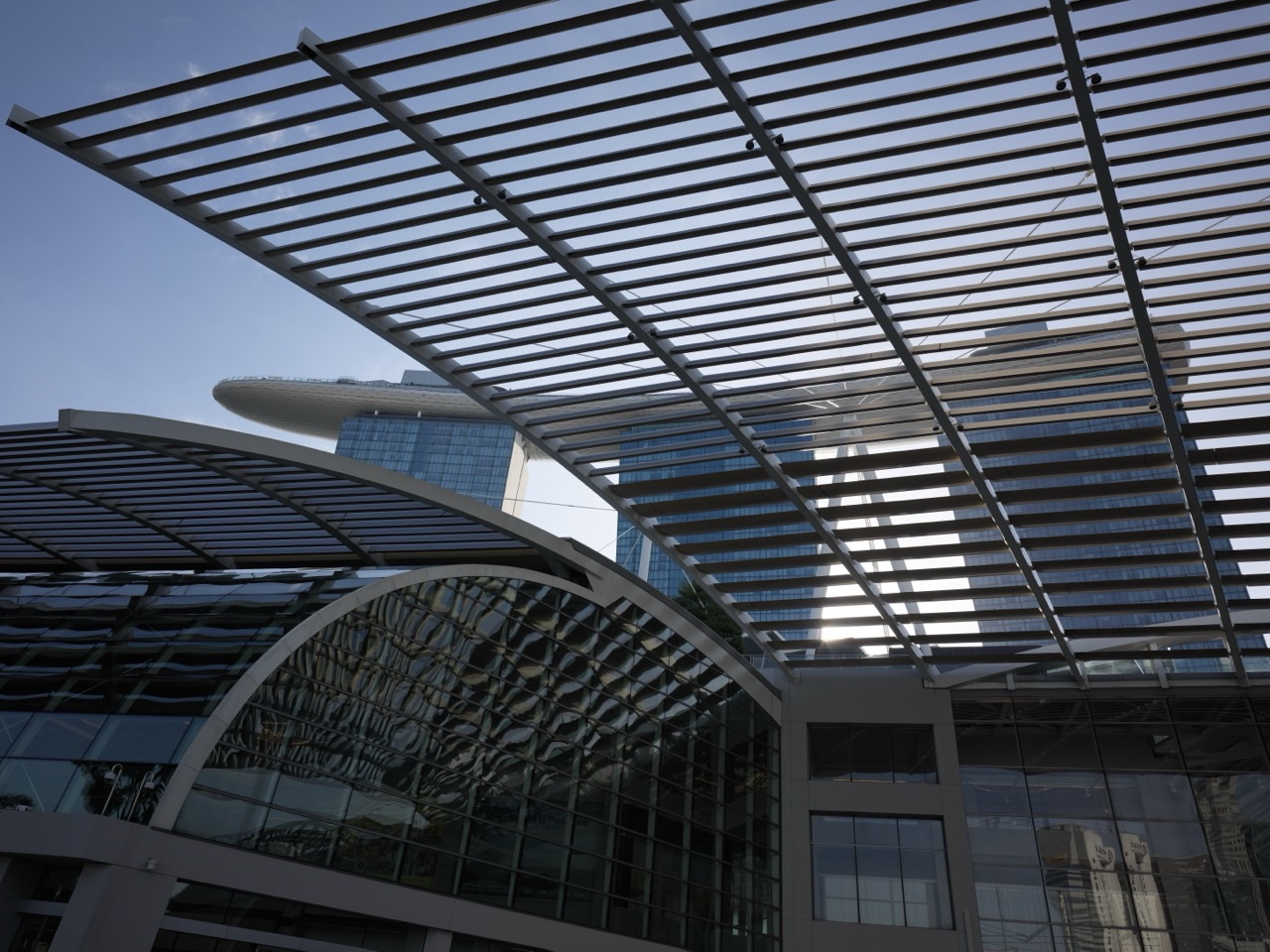
Building maintenance in Singapore is easy to overlook because the best result often looks like nothing happened.
The lift works. The air-conditioning runs. The lights come on. The toilets are usable. The fire-safety systems are maintained. The building remains comfortable enough for people to work, learn, shop, recover and live.
Did you know that this quiet continuity is an economic product?
Facilities management turns a completed building into a usable building, day after day. This article targets the search ideas facilities management Singapore, building maintenance Singapore, integrated facilities management and smart facilities management Singapore.
Official Singapore information was checked on 4 October 2026. Worked examples are fictional teaching cases rather than quotations, tenders or maintenance instructions.
Did You Know? Construction Creates an Asset; Maintenance Preserves Its Use
Imagine a new school building handed over on opening day.
The project may be physically complete.
Its economic job has only begun.
Over the following years, somebody must inspect, clean, repair, test, replace, monitor and coordinate the systems that keep classrooms usable.
The same is true for hospitals, offices, malls, factories, condominiums and public facilities.
A building that cannot support its intended activity has lost part of its productive value even if the walls are still standing.
Singapore’s Built Environment Strategy Now Treats Operations and Maintenance as Part of One Lifecycle
BCA’s refreshed Built Environment Industry Transformation Map combines planning, construction and downstream operations into one value-chain approach.
BCA describes three lifecycle stages: planning and design, construction, and operations and maintenance.
That is a useful change in perspective.
Maintenance is not merely what happens after the important work has finished.
It is one of the important stages.
Official reference: BCA — Built Environment Industry Transformation Map.
Facilities Management Is a Real Industry, Not a Miscellaneous Expense
BCA’s Facilities Management Registry was established on 1 January 2024 for firms providing FM services to Singapore’s public sector.
As of 2 October 2026, BCA’s FM01 directory showed 111 registered Facilities Management firms.
That number can change as registrations change, so treat it as a dated snapshot rather than a permanent market-size statistic.
Official references: BCA — Facilities Management Registry and BCA — FM01 Directory.
The Hidden Problem: A Building Contains Many Services That Fail Differently
- lifts and escalators;
- air-conditioning and ventilation;
- electrical distribution;
- lighting;
- water and plumbing;
- fire-protection systems;
- security and access;
- cleaning;
- landscaping;
- pest control;
- facade and structural elements; and
- digital building-management systems.
One service can be perfectly healthy while another becomes the bottleneck.
That is why “the building is fine” is too broad a diagnosis.
A facilities manager needs to know which service is degrading, who owns the next action and how the failure affects the building’s users.
Integrated Facilities Management Is About Coordination
BCA defines Integrated Facilities Management as the provision of at least two distinct FM services by the same company, either delivered directly or centrally managed.
The deeper idea is coordination.
If cleaning, maintenance, security and building systems are managed as unrelated islands, information can be lost at the handoff.
Integrated FM attempts to connect workflows, data and responsibility.
BCA stated in July 2026 that IFM goes beyond contract aggregation and can improve productivity, service delivery and manpower use, especially across larger or complex portfolios.
Reference: BCA — Integrated Facilities Management.
Worked Example: Preventive Maintenance Changes the Timing of Cost
Imagine a fictional air-handling component costing S$5,000 to service preventively.
If ignored, there is a 20% annual chance in our teaching scenario of a failure costing S$35,000 in repair and disruption.
The simplified expected failure cost is 0.20 × S$35,000 = S$7,000.
Under those assumptions, the S$5,000 preventive intervention appears economically preferable.
But this is not a real maintenance recommendation.
The probability, failure cost, service interval and technical requirement would need to be established for the actual asset.
The lesson is to compare timing, risk and consequence—not simply today’s invoice.
Worked Example: A Small Delay Can Become a Large Building-Wide Cost
Suppose a fictional office tower has 1,000 workers.
A lift disruption adds an average of four minutes of delay per worker during the morning arrival period.
That is 4,000 minutes, or about 67 person-hours.
It would be wrong to multiply every minute directly by salary and call the result lost GDP.
Some delay may be absorbed. Some workers may use alternative routes. The labour value of time varies.
But the example reveals why apparently small infrastructure problems can create distributed friction across many users.
Smart Facilities Management Makes Invisible Performance More Visible
BCA defines Smart FM as the integration of systems, processes, technologies and people to enable data-driven operations.
The useful word is integration.
A sensor by itself does not create a smart building.
The organisation needs to know what the data means, who acts on it and whether the action improves the required outcome.
Official reference: BCA — Smart Facilities Management.
A Dashboard Is Not a Maintenance Strategy
Imagine a fictional building dashboard showing that one chiller’s energy use has risen by 12%.
That observation can trigger a useful investigation.
It does not tell us the cause.
The weather may be hotter. Building occupancy may be higher. A sensor may be wrong. The equipment may need servicing.
Data reduces ignorance only when somebody interprets it carefully.
This is the same first-principles habit used throughout eduKate: observation first, explanation second, action only after the mechanism is understood well enough.
Design for Maintainability Moves Maintenance Upstream
BCA lists Design for Maintainability as a key FM transformation area.
The principle is beautifully simple: if designers consider maintenance while the building is still being designed, future work can become safer, easier and less expensive.
A filter that cannot be reached easily will remain inconvenient for the building’s entire life.
A plant room with poor access can turn every future service visit into unnecessary friction.
Maintenance cost is therefore partly designed before the maintenance team ever arrives.
Facilities Management Protects Other Industries
A hospital depends on reliable building services.
So does a semiconductor facility.
So does a school.
So does a data centre.
FM is therefore a supporting industry whose value is partly hidden inside the success of other industries.
That is why this article connects to Real Estate, Property and the Built Environment without duplicating it.
The property article explains the asset and urban-development side.
This article explains the operating life after the asset exists.
Maintenance Is Also Sustainability
Replacing an entire asset prematurely can consume more materials and capital than maintaining it well.
A poorly performing air-conditioning system can waste energy for years.
A leaking system can waste water.
A facade problem left unresolved can become more costly later.
Sustainability therefore includes extending useful life and keeping systems close to their intended performance.
The Workforce Is Becoming More Technical
Facilities work increasingly includes sensors, remote monitoring, building-management systems, energy data, robotics and digital work-order systems.
That means the industry needs people who can combine hands-on knowledge with digital interpretation.
The technician who understands only software can miss physical reality.
The technician who ignores software can miss patterns that data makes visible.
The valuable worker can connect both.
Education Sits Inside Building Operations
Mathematics becomes measurement, scheduling, rates and cost comparison.
Science becomes heat, electricity, materials, water and indoor conditions.
English becomes work orders, incident reports and handover notes.
Computing becomes monitoring, alarms and data interpretation.
The school subjects eventually meet in one machine room.
A Guided Classroom Investigation
Give students a fictional school building with five assets: lift, air-conditioning unit, water pump, lighting system and access-control system.
Each asset has a condition score, maintenance cost and consequence if unavailable.
Ask students to rank which issue should be investigated first.
Then change one assumption.
Perhaps the lift serves an accessibility route.
Perhaps the air-conditioning problem affects a laboratory.
Students should revise their decision and explain why the consequence changed.
The task teaches prioritisation rather than real maintenance.
Independent Practice: Cheapest Contract or Best Outcome?
Vendor A charges S$90,000 a year.
Vendor B charges S$100,000.
In our fictional case, Vendor B’s programme reduces an additional S$20,000 of avoidable annual disruption compared with Vendor A.
If every other relevant factor were equal, B’s higher fee could still produce the lower total economic cost.
This example does not prove that expensive vendors are better.
It shows why procurement should compare outcomes rather than headline price alone.
What Progress Should Look Like
A stronger FM system should have fewer repeated faults, clearer responsibility, better use of data, more maintainable assets and more dependable service for building users.
A stronger learner should distinguish maintenance cost from lifecycle cost, sensor data from diagnosis, and a completed building from a reliably operating building.
Frequently Asked Questions
What is facilities management?
Facilities management coordinates the services needed to keep buildings and facilities functioning for their intended users.
What is Integrated Facilities Management?
BCA defines IFM as providing at least two distinct FM services under one centrally managed arrangement.
How many FM01 firms are currently listed by BCA?
BCA’s directory showed 111 FM01 registrations on 2 October 2026. This is a dated registry count, not a permanent market-size statistic.
What is Smart Facilities Management?
BCA describes Smart FM as integrating systems, processes, technology and people to support data-driven building operations.
How does facilities management make Singapore richer?
It preserves the usability of expensive buildings and equipment, reduces avoidable disruption and supports the productivity of the organisations inside them.
Why is maintenance part of sustainability?
Good maintenance can extend asset life, reduce waste and help building systems operate closer to intended energy and resource performance.
Helpful Reading and Singapore Graph Connections
- BCA — Facilities Management
- BCA — Smart Facilities Management
- BCA — Built Environment Industry Transformation Map
- Making Singapore Rich | Real Estate, Property and the Built Environment
- Making Singapore Rich | Construction, Infrastructure and Urban Development
Making Singapore Rich: Keep the City Working After It Is Built
Did you know that the value of a building is renewed every morning?
Doors open.
Lifts move.
Water runs.
Cooling works.
People enter and do useful things.
Facilities management creates wealth by protecting that ordinary continuity.
Construction makes the place possible.
Maintenance keeps the possibility alive.